Heat Waves: Air Conditioners and Global Warming

GREEN INTERN

As the planet continues to heat up because of global warming, extreme heat waves have become more frequent and more lethal in parts of the world, causing devastating wildfires, sudden deaths and increased hospitalization. Recently, Canada smashed its all-time temperature record with 49.60C (121.3 0F) in Lytton, British Columbia. Amid this unprecedented heatwave, dozens of Canadians have been reported dead, likewise in Portland and Seattle, where temperatures reached 47 0c (116 F) and 420c (108 F), respectively. There have also been predictions of severe heat waves in Australia for the coming weeks.

In this unprecedented season with record-shattering temperatures, air conditioning has become essential to human survival. Governments in affected regions now have to build more cooling stations to cater for their populations, not to mention the significant increase in the purchase of household air conditioner units. According to available data, the numberof British Columbia homes that own air conditioners have tripled since 2001, from just 10% to 60% in 2017 and still rising.  As we experience this rapid shift towards air conditioning, I think it is critical to spotlight its influence on climate change while also noting the potential impact on the environment, in the case of increased usage. Based on predictions, the use of air conditioners worldwide is expected to multiply fivefolds by 2050.

Although, heating buildings is still a larger overall contributor to climate change than air conditioning because more people use heat for more hours to cook and warm the body during very cold seasons. However, air conditioning heats the planet in very subtle ways that are going to be harder to address.  Because air conditioners cool buildings by moving heat from inside to outside, they are capable of pumping out enough heat to warm a city by a few degrees, which means on sizzling days temperature can become even warmer with air conditioning systems on.

 Aside from the fossil fuel burned to power air conditioners, they are able to produce cool air by utilizing chemical refrigerants which have been proved to be a thousand times more powerful at trapping heat than CO2 - refrigerants such as; Chlorofluorocarbons (CFCs), Hydrochlorofluorocarbons (HCFCs), and Hydrofluorocarbons (HFCs). When we get rid of our old air conditioners, most of these chemical refrigerants leak out and evaporate. While only small overall amounts leak out, it warms the earth about 60% extra on top of the CO2 released to run the air conditioners; and as the earth gets a lot warmer, we use more air conditioners which heat the earth even more. It becomes a continuous vicious cycle that only gets worse as developing nations get richer and more people acquire air conditioners.

To avoid immense global impact in the future, we need to use the most efficient air conditioners, guarantee that manufacturers produce air conditioners that use refrigerants with zero ozone layer depletion potential. When we dispose of old air conditioners, the refrigerants must be recycled or destroyed instead of leaving them to leak out and ensure that the electricity that is used to power air conditioners come from a renewable source. We must also limit the use of air conditioners, which I believe can be achieved by using electric fans until it gets too hot; constructing buildings that are naturally cooler - buildings with green roofs that reflect, insulate and evaporates heat; buildings with rooms that have windows in opposite sides, so air can easily flow through; buildings with walls that can trap heat without letting it inside and then releases it at night.

Moving forward, governments need to fund and support innovative technologies on carbon capture. As well as,air conditioners can capture CO2 from the air and convert it to energy to power homes. These technologies already exist, it only require support and funding.

Finally, the earth is warm, and we need air conditioners to survive and stay healthy, but it is important we take note not to kill ourselves while trying to keep cool.
UN sets out Paris-style plan to cut extinction rate by factor of 10

Patrick Greenfield

Ambitious draft goals to halt biodiversity loss revealed, with proposed changes to food production expected to ‘raise eyebrows’

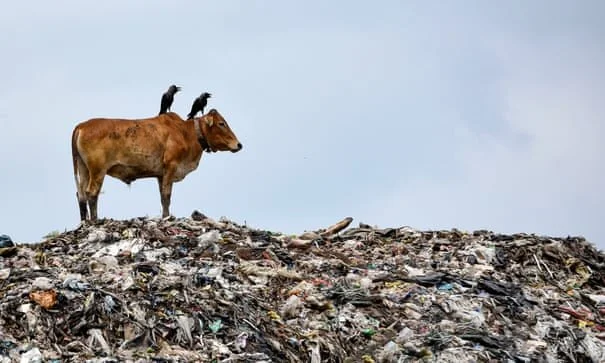
The agreement, to be scrutinised at the Kunming summit, aims to address how to feed the world’s growing population while protecting the environment. Photograph: David Talukdar/REX/Shutterstock

The agreement, to be scrutinised at the Kunming summit, aims to address how to feed the world’s growing population while protecting the environment. Photograph: David Talukdar/REX/Shutterstock

Eliminating plastic pollution, reducing pesticide use by two-thirds, halving the rate of invasive species introduction and eliminating $500bn (£360bn) of harmful environmental government subsidies a year are among the targets in a new draft of a Paris-style UN agreement on biodiversity loss.

The goals set out by the UN Convention on Biological Diversity (CBD)to help halt and reverse the ecological destruction of Earth by the end of the decade also include protecting at least 30% of the world’s oceans and land and providing a third of climate crisis mitigation through nature by 2030.

The latest draft of the agreement, which follows gruelling virtual scientific and financial negotiations in May and June, will be scrutinised by governments before a key summit in the Chinese city of Kunming, where the final text will be negotiated.

Alongside the 2030 draft targets, new goals for the middle of the century include reducing the current rate of extinctions by 90%, enhancing the integrity of all ecosystems, valuing nature’s contribution to humanity and providing the financial resources to achieve the vision.

The Guardian understands that the summit, scheduled for October, is expected to be delayed for a third time due to the coronavirus pandemic. It is now likely to take place in Kunming in the first half of 2022, pending in-person preparatory negotiations that could happen in Switzerland early next year.

Basile van Havre, co-chair of the CBD working group responsible for drafting the agreement, said the goals were based on the latest science. He added that, if adopted, it could represent a significant shift in global agriculture.

“Change is coming [in food production],” he said. “There will be a lot more of us in 10 years and they will need to be fed so it’s not about decreasing the level of activity. It’s about increasing the output and doing better for nature.

“Cutting nutrient runoff in half, reducing pesticide use by two-thirds and eliminating plastic discharge: those are big. I’m sure they’re going to raise some eyebrows as they present significant change, particularly in the agriculture.”

Last month, Van Havre warned the world was running out of time for an ambitious deal at Kunming, which is part of a multi-decade ambition to live in harmony with nature by 2050.

Scientists have warned that humanity is causing the sixth mass extinction in the planet’s history, driven by overconsumption of resources and overpopulation. One million species are at risk of extinction largely due to human activities, according to the UN’s assessment, threatening the healthy functioning of ecosystems that produce food and water.

The plan includes the goal of protecting 30% of the world’s oceans by 2030. Photograph: Soumyabrata Roy/NurPhoto/REX/Shutterstock

The plan includes the goal of protecting 30% of the world’s oceans by 2030. Photograph: Soumyabrata Roy/NurPhoto/REX/Shutterstock

In the latest set of 21 targets to be negotiated at Kunming, nature-based solutions such as restoring peatlands and adopting regenerative agriculture will contribute at least 10 GtCO2e (gigatonnes of equivalent carbon dioxide) a year to global climate crisis mitigation efforts – around a third of the 32 GtCO2e annual emission reductions needed as identified in the UN Environment Programme emissions gap report 2020 – while ensuring there are no negative impacts on biodiversity.

“We wanted to put [the contribution of nature] into an absolute number. We don’t control what is happening on the climate change agenda but science is telling us this is what we can bring to the issues,” Van Havre said. “The challenge is going to be how we do the carbon accounting.”

Other targets include efforts to restore freshwater and marine habitats, maintain genetic diversity of wild and domesticated species, increase financial flows to developing countries, improve business disclosures on how their activities damage the environment and respect the rights of indigenous communities in biodiversity decision-making.

Prof Sir Robert Watson, who has previously led the UN’s scientific organisations for climate and biodiversity, and has held various senior roles within the UK government, Nasa, the World Bank and the US government, welcomed the draft targets but cautioned that some were unrealistic and difficult to measure. Governments have failed to fully meet targets to stem the destruction of nature for consecutive decades, including the aims for the 2010s, which are known as the Aichi targets.

“Overall, the paper recognises and addresses all of the key issues, as did the 20 Aichi targets. The question is whether governments can set appropriate national targets and regulatory and legislative frameworks to enable the other actors, especially the private sector and financial institutions, to play their part,” Watson said.

“I would have hoped that the paper would have explicitly acknowledged that the issues of biodiversity, climate change and land degradation must be addressed together and the goals, targets and actions of the three conventions should be jointly developed and harmonised.”

The targets and goals must now be negotiated at in-person talks, where they will be updated after feedback from national governments. Once agreed, the final accord will be adopted by the 196 parties to the CBD.

Elizabeth Maruma Mrema, executive secretary of the CBD, said: “Urgent policy action globally, regionally and nationally is required to transform economic, social and financial models so that the trends that have exacerbated biodiversity loss will stabilise by 2030 and allow for the recovery of natural ecosystems in the following 20 years, with net improvements by 2050.”

Time running out for countries on climate crisis front line

UN NEWS

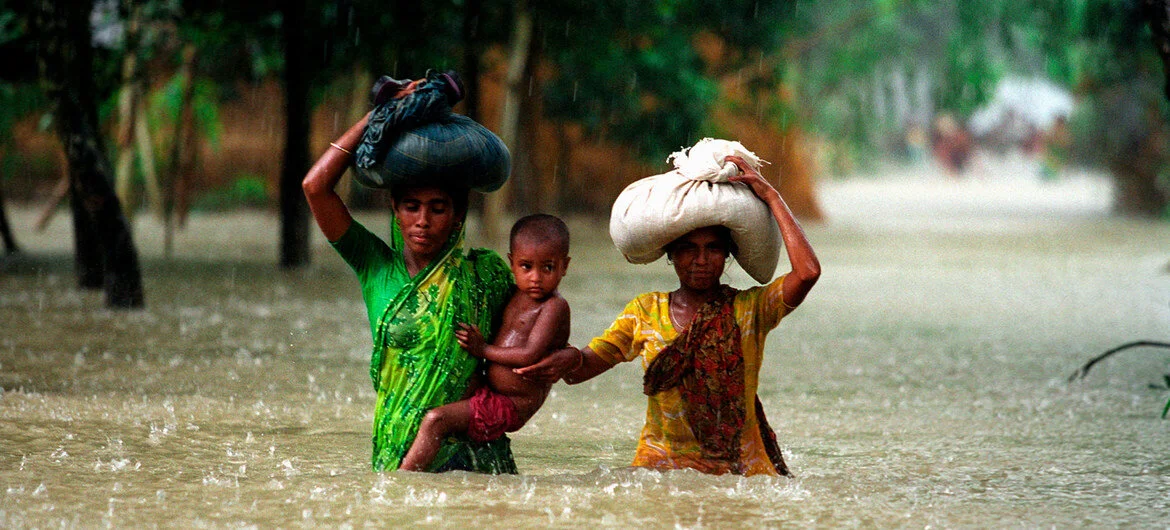
© UNICEF/G.M.B. Akash I People wade through water during floods in the Kurigram district of Bangladesh.

© UNICEF/G.M.B. Akash I People wade through water during floods in the Kurigram district of Bangladesh.

Speaking to the first Climate Vulnerable Finance Summit of 48 nations systemically exposed to climate related disasters, António Guterres said they needed reassurance that financial and technical support will be forthcoming.

 “To rebuild trust, developed countries must clarify now, how they will effectively deliver $100 billion dollars in climate finance annually to the developing world, as was promised over a decade ago”, he said.

The UN chief said that to get the “world back on its feet”, restore cooperation between governments and recover from the pandemic in a climate resilient way, the most vulnerable countries had to be properly supported.

Risk of calamity

Mr. Guterres asked for a clear plan to reach established climate finance goals by 2025, something he promised to emphasize to the G20 finance ministers at their upcoming meeting this week.

He added that the development finance institutions play a big role supporting countries in the short-term, and they will either facilitate low carbon, climate-resilient recovery, or it will entrench them in high carbon, business-as-usual, fossil fuel-intensive investments. “We cannot let this happen”, he said.

The Secretary-General reminded that the climate impacts we are seeing today - currently at 1.2 degrees above pre-industrial levels - give the world a glimpse of what lies ahead: prolonged droughts, extreme and intensified weather events and ‘horrific flooding’.

“Science has long warned that we need to limit temperature rise to 1.5 degrees. Beyond that, we risk calamity... Limiting global temperature rise is a matter of survival for climate vulnerable countries”, he emphasized.

Our climate is changing and weather becoming more extreme - heat, floods and drought.
We need to invest in weather, hydrological and climate services to adapt.
Leaders of the Alliance for #Hydromet Development on why we must step up #ClimateActionhttps://t.co/ysqE3nbhK4 pic.twitter.com/lymCwrThuq
— World Meteorological Organization (@WMO) July 8, 2021

More adaptation

The UN chief highlighted that only 21% of the climate finance goes towards adaptation and resilience, and there should be a balanced allocation for both adaptation and mitigation.

Current adaptation costs for developing countries are $70 billion dollars a year, and this could rise to as much as $300 billion dollars a year by 2030, he warned.

“I am calling for 50 percent of climate finance globally from developed countries and multilateral development banks to be allocated to adaptation and resilience in developing countries. And we must make access to climate finance easier and faster”.

Invest to save thousands of lives: WMO report

UNICEF/Sokhin I A 16-year-old child swims in the flooded area of Aberao village in Kiribati. The Pacific island is one of the countries worst affected by sea-level rise.

UNICEF/Sokhin I A 16-year-old child swims in the flooded area of Aberao village in Kiribati. The Pacific island is one of the countries worst affected by sea-level rise.

The UN chief also welcomed on Thursday a new report from the World Meteorological Organization (WMO) which reveals that an estimated 23,000 lives per year could be saved – with potential benefits of at least $162 billion per year – through improving weather forecasts, early warning systems, and climate information, known as hydromet.

In a video message to mark the publication of the first Hydromet Gap Report,, the Secretary-General said that these services were essential for building resilience in the face of climate change.

Mr. Guterres called once more for a breakthrough on adaptation and resilience in 2021, with significant increases in the volume and predictability of adaptation finance.

He noted that Small Island Developing States and Least Developed Countries where large gaps remain in basic weather data, would benefit the most.

“These affect the quality of forecasts everywhere, particularly in the critical weeks and days when anticipatory actions are most needed”, he said.

According to WMO, investments in multi-hazard early warning systems create benefits worth at least ten times their costs and are vital to building resilience to extreme weather.

Currently, only 40 percent of countries have effective warning systems in place. 

Heat waves caused warmest June ever in North America

Josh Marcus
Heat waves caused warmest June ever in North America

Temperatures set records in North America, Europe, the Arctic, and across the globe

A man cools off from the soaring temperatures(AFP via Getty Images)

A man cools off from the soaring temperatures

(AFP via Getty Images)

Last month was the warmest June ever on record for North America, and one of the hottest ever globally, according to newly released data, the latest manifestation of the intensifying climate crisis that sent deadly heat waves across the Pacific Northwest.

The record highs have temporarily subsided over parts of the Northwest, but forecasters are warning that the region could be in for yet another heat wave by as soon as the weekend.

The new figures, from the EU’s Copernicus Climate Change Service, were the result of “billions of measurements from satellites, ships, aircraft and weather stations around the world,” authorities said.

The findings come after a hellish month of heat across North America.

The small town of Lytton, British Columbia, broke Canada’s all-time temperature record three days straight with a high of 121 degrees before burning down in a wildfire, while readings in US cities like Portland and Seattle also shattered records.The heat strained governments across the region, as the most vulnerable—the poor, the unhoused, those without air conditions—baked in unseasonably early and unprecedentedly high heat.

The record temperatures were particularly disastrous for unhoused people, as The Independent reported, who’ve been battered with wildfires and the coronavirus over the last year.

“Last summer and fall we had the horrific wildfires,” said Scott Kerman, executive director of Blanchet House, which offers free meals, housing, and other services in Portland, Oregon.

“The smoke was unbearable. Then you get into the winter. Now we just went through an unprecedented heat wave. It was really a matter of life or death just to keep people hydrated.”

For many, the heat served as a reminder of the anomalous new normal of the climate crisis.

“I’m sure that people will – including public entities – start to build in cooling requirements and investments where that can be done,” Washington governor Jay Inslee said on Tuesday, but “there’s not enough chilling stations in the world to stop this problem if you don’t attack it at its source, which is climate change.”

“Temperatures,” he added, “are just the tip of the melting iceberg.”

It was also the second-warmest June on record, according to the figures, as well as the fourth warmest June ever in Arctic Siberia and across the whole globe.

Global Banks to Launch Voluntary Carbon Offset Market Platform

Susanna Twidale

Global Banks to Launch Voluntary Carbon Offset Market Platform

FILE PHOTO: A branch of NatWest Bank is seen in the City of London February 8, 2011. REUTERS/Chris Helgren REUTERS

FILE PHOTO: A branch of NatWest Bank is seen in the City of London February 8, 2011. REUTERS/Chris Helgren REUTERS

LONDON (Reuters) - Four global banks will next month launch a pilot platform for buying and selling voluntary carbon credits, they said on Wednesday, the latest sign of growing interest from the financial community in the burgeoning carbon offset market.

A private sector task force on scaling up the voluntary carbon market said earlier this year the market will need to grow 15-fold to meet goals set under the Paris climate agreement and could be worth $5-$50 billion by 2030.

Britain’s NatWest Group, Canada’s Canadian Imperial Bank of Commerce, Australia’s National Australia Bank and Brazil’s Itaú Unibanco said their Project Carbon initiative would help create a more liquid market for carbon offsets and help clients to manage risks associated with climate costs.

"Climate change is one of the most important challenges of our time. We’re helping our business and personal banking customers to understand and reduce their carbon footprints through partnerships like Project Carbon," said Alison Rose, chief executive officer of NatWest Group.

The platform will enable buyers to fully trace which projects the carbon credits have come from and act as a record of ownership of the credits, the banks said in a joint statement.

It will also look at how blockchain technology can be used to trade credits and help to make the market more accessible to customers.

"The team is keen to invite like-minded institutions to join the cohort to help deliver a shared service platform that the group believes will be fundamental to the scaling of the Voluntary Carbon Market," the banks said.

(Reporting By Susanna Twidale; editing by Emelia Sithole-Matarise)

Copyright 2021 Thomson Reuters.

U.S. announces millions in funding for projects focused on wave energy tech

Anmar Frangoul

U.S. announces millions in funding for projects focused on wave energy tech

It’s the latest attempt to encourage innovation within a sector that has a very small footprint compared to other types of renewable energy.

The development of wave energy technologies is not exclusive to the United States. Europe, for instance, is also home to a fledgling sector.

Scott Heaney | iStock | Getty Images

Scott Heaney | iStock | Getty Images

The U.S. Department of Energy has announced that as much as $27 million in federal funding will be provided for research and development projects focused on wave energy.

In the latest attempt to encourage innovation within a sector that has a very small footprint compared to other types of renewable energy, the DOE said Tuesday the funding would aim to “advance wave energy technologies toward commercial viability.”

Selected projects will undertake their research at the PacWave South facility, which is located off the coast of Oregon.

Construction of PacWave South — which has received grants from the DOE and the State of Oregon, among others — began last month and it’s hoped the site will be operational in 2023.

Breaking things down, the funding will be divided into three separate pots: As much as $15 million will be set aside for the testing of wave energy convertor tech; up to $7 million will go to wave energy research and development; and a maximum of $5 million will be assigned to the advancement of wave energy converter designs for PacWave. Full applications for the funding are due in October, the DOE said.

In a statement issued alongside the DOE’s announcement, U.S. Energy Secretary Jennifer M. Granholm said: “With wave energy, we have the opportunity to add more renewable power to the grid and deploy more sustainable energy to hard to reach communities.”

While the money will be welcomed in some quarters, preliminary figures from the U.S. Energy Information Administration show that a lot work will be needed if the country is to move away from fossil fuels in any significant way.

According to the EIA, natural gas and coal’s shares of utility-scale electricity generation in 2020 were 40.3% and 19.3%, respectively. By contrast, the total share for renewable sources came to 19.8%.

The development of wave energy technologies is not exclusive to the United States. Europe, for instance, is also home to a fledgling sector, with a number of companies now working on a wide variety of systems.

In one example of how wave energy firms are progressing, last month saw a firm called Mocean Energy announce that its Blue X wave machine — which is 20-meters long and weighs 38 metric tons — had started testing at the European Marine Energy Centre in Orkney, an archipelago located north of mainland Scotland.

Back in March, it was announced that some £7.5 million ($10.37 million) of public funding would be used to support the development of eight wave energy projects led by U.K. universities.

While there may be excitement in some quarters regarding the potential of marine energy, it has a way to go in order to catch up with other renewable technologies such as solar and wind.

Figures from Ocean Energy Europe show that only 260 kW of tidal stream capacity was added in Europe last year, while just 200 kW of wave energy was installed.

In comparison, 2020 saw 14.7 gigawatts of wind energy capacity installed in Europe, according to industry body WindEurope.

Japan: UN chief praises work of emergency responders in wake of deadly landslide

UN NEWS

The UN chief on Monday extended his condolences to the families of those who died in a landslide, which struck the Japanese coastal city of Atami in Shizuoka Prefecture, over the weekend.

@antonioguterres is saddened by reports of loss of life & destruction caused by a mudslide in Japan. He extends his deep condolences to the families of the victims, commends the work of the emergency responders & wishes a speedy recovery to those injured. https://t.co/dj2nXjTMp3
— UN Spokesperson (@UN_Spokesperson) July 5, 2021

According to news reports, at least four have been declared dead, with around 80 still missing, when record high levels of rain fell across the region, triggering the landslide in the residential area.

The resort town of around 36,000, famous for its hot springs, is near Mount Fuji, some two hours southwest of Tokyo. Officials have reportedly warned that more heavy rains are forecast this week, keeping the area on high alert.

Saddened

In a statement released by his Spokesperson, Secretary-General António Guterres said he was saddened by the reported loss of life and destruction caused.

“He extends his deep condolences to the families of the victims, the Government and people of Japan. He commends the work of the emergency responders and wishes a speedy recovery to those who are injured.

“The United Nations stands in solidarity with the Government and people of Japan”, the statement concluded.

Rescues

Around 1,500 rescue workers were reportedly searching the site of the disaster on Monday, and authorities said that an elderly couple were among 23 people rescued so far.

Atami saw more rainfall in the first three days of July, than it normally sees in the whole month, and has not been alone in suffering the impact of the heavy rains across Japan. Dozens of other cities and towns close to the capital have also recorded record levels.

The country has experienced a rise in floods in recent years, attributed to the effects of global warming, which has seen average rainfall increase.

Australia drops to bottom of UN climate action ladder

Maggie Coggan

Australia has ranked last on climate action out of nearly 200 countries, the latest report on progress towards the Sustainable Development Goals finds. 

Untitled-1.jpg

The report, released by the UN-backed Sustainable Development Goals Solutions Network (SDSN), placed Australia below 193 United Nations member countries including Brunei, Qatar, and Norway.  

A database provided alongside the report shows Australia scored just 10 out of 100 points  for the “climate action” goal which tracks fossil fuel emissions use, emissions associated with imports and exports, and progress towards implementing a price on carbon. 

The report also highlighted the nation’s failure to commit to net zero emissions by 2050.   

“More than 30 countries have included climate neutrality by 2050 (or 2060) in laws, proposed legislation, or a national policy document,” the report said.  

“These include all G20 countries except Australia, India, Indonesia, Mexico, Russia, Turkey, and Saudi Arabia. Brazil and China committed to climate neutrality by 2060.” 

Prime Minister Scott Morrison has instead signalled Australia wants to achieve carbon neutrality as soon as possible and “preferably” by 2050.

When it came to clean energy, the country was cited as having “major challenges” but recorded a moderate improvement over the past 12 months.

Pandemic stalls global progress 

Australia did score strongly in the areas of economic growth, education, and clean water and sanitation however, placing 35th overall. This is up from 37th in 2020, and 38th in 2019. 

But the report noted that this was the first time since the creation of the SDGs in 2015 that there had been a global reversal in progress towards the goals, predominantly due to the pandemic. 

Jeffrey D. Sachs, president of the SDSN and first author of the report, said that the pandemic had created “not only a global health emergency but also a sustainable development crisis”.

“To restore SDG progress, developing countries need a significant increase in fiscal space, through global tax reform and expanded financing by the multilateral development banks,” Sachs said. 

“Fiscal outlays should support the six key SDG transformations: quality education for all, universal health coverage, clean energy and industry, sustainable agriculture and land use, sustainable urban infrastructure, and universal access to digital technologies.”

Monash University professor John Thwaites, who is chair of SDSN for Australia, told Pro Bono News previously that the country’s speedy COVID-19 response offered a way forward. 

“[Our initial COVID] response demonstrates that when we follow the science and commit to action, we can perform very well,” Thwaites said. 

“We should learn the lessons from our good COVID response and apply the same approach to the other big challenges we face like climate change and broader environmental issues.”

See the full report here. 

Death toll in Florida condo collapse rises to 28 as lightning forces another pause in the search

Annie Nova

Rescuers have removed more than 4 million pounds of concrete in the search for survivors of the Champlain Towers South condo in Surfside, Florida.

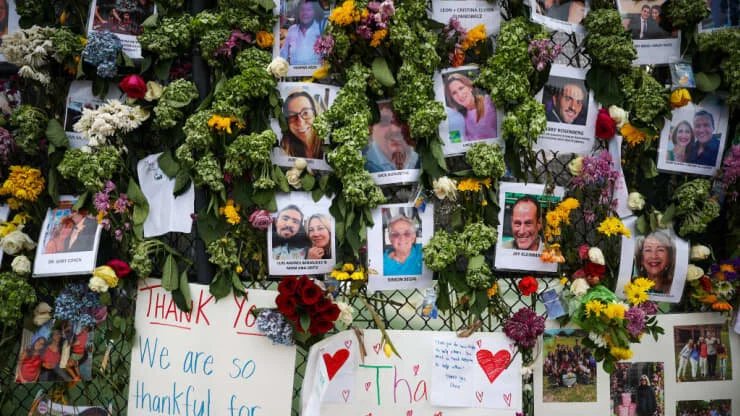
Family members hold vigil for the missing victims of Surfside condo collapse in Surfside, Florida, United States, on June 29, 2021. Tayfun Coskun | Anadolu Agency | Getty Images

Family members hold vigil for the missing victims of Surfside condo collapse in Surfside, Florida, United States, on June 29, 2021.
Tayfun Coskun | Anadolu Agency | Getty Images

A 28th victim of the Surfside, Florida, partial condo collapse has been recovered, officials said Monday. However, lightning and tropical weather conditions forced the search-and-rescue team to pause efforts once again.

After the new death toll, 117 people are still missing since part of the condo collapsed on June 24.

The search operation proceeded for most of the day Monday, after the rest of building was demolished in a controlled explosion Sunday night. Rescue teams have already removed more than 4 million pounds of concrete from the site.

“We are on day 12 and obviously, the longer we go, the harder it is” to find survivors, said Miami-Dade County Mayor Daniella Levine Cava, earlier Monday.

Officials on Saturday had paused the search-and-rescue operations before razing the rest of the partially-collapsed condo due to concerns about approaching Tropical Storm Elsa’s potential threat to the rest of the building.

Federal forecasters said gusts of high winds and heavy rain are still possible in the Miami area but the city is expected to escape the brunt of the storm, which is forecast to move northward on Monday and to the West of Florida’s Gulf Coast. 

Officials said Monday night that they hope to be able to return to searching on Tuesday, after the storm passes.

Earlier, local authorities told residents in the surrounding area to shelter in place as well as close all windows, doors and air intakes. Miami-Dade County Mayor Daniella Levine Cava said the shelter-in-place order lifts two hours after the demolition is complete. Florida Gov. Ron DeSantis, during a news briefing early Saturday, said the state will pay for all costs of the demolition.

Then and now: Arctic sea-ice feeling the heat

Mark Kinver

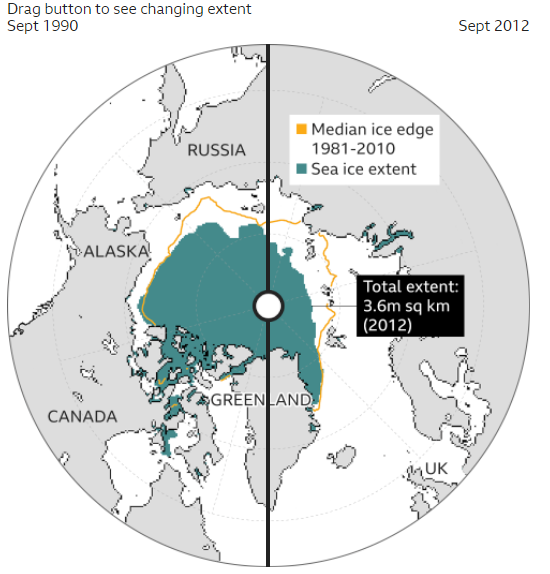
Source: National Snow and Ice Data Center I BBC

Source: National Snow and Ice Data Center I BBC

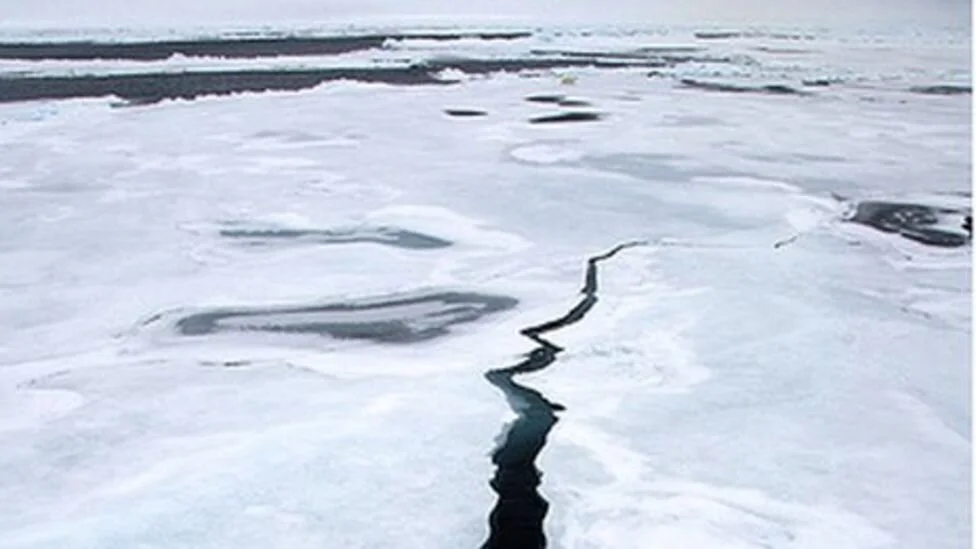
In our monthly feature, Then and Now, we reveal some of the ways that planet Earth has been changing against the backdrop of a warming world. The shrinking sea-ice in the Arctic is not only a sign of climate change, it is causing the planet to warm more quickly. This is because more sunlight is being absorbed by the darker ocean, rather than being reflected back into space.

Arctic sea-ice plays an important role in controlling the planet's temperature, and any problem with this natural thermostat is a cause for concern.

Figures from the US space agency (Nasa) suggest the loss of the minimum Arctic sea-ice extent is in the region of 13.1% per decade, based on the 1981 to 2010 average.

A major report on climate change in 2007 linked the growing concentration of greenhouse gases in the atmosphere, caused by human activity, with declining sea-ice extent in the region.

The disappearance of the sea-ice in a warming world also contributes to rising average surface temperatures. The sea-ice is estimated to reflect 80% of sunlight back into space, meaning it does not warm the surface.

But when the sea-ice has melted, the darker ocean surface is exposed, which absorbs about 90% of the sunlight hitting it. This results in warming of the region.

This phenomenon is known as the Albedo effect, and it occurs because light surfaces reflect more heat than dark surfaces.

Vanishing point

Data suggests that the extent of Arctic sea-ice is shrinking by 13% each decade as the world warms I ANGELIKA RENNER

Data suggests that the extent of Arctic sea-ice is shrinking by 13% each decade as the world warms I ANGELIKA RENNER

The freezing and thawing of the ocean in the Arctic is a seasonal occurrence, with the freezing peaking in March and the melting reaching its maximum in September.

However, data from on-the-ground observations and from satellites tell us that the extent of sea-ice in the Arctic polar region is declining as the planet warms.

As this occurs, the albedo (or reflectivity) is reduced, because the dark ocean waters absorb more heat than the lighter sea-ice. This in turn causes the land and oceans to warm even more.

Ultimately, scientists fear, the increasing amount of ground being exposed in regions traditionally covered with snow will trigger a "tipping point". This is where the warming of the atmosphere reaches a point where human interventions will no longer be able to halt it.

Smaller and warmer world

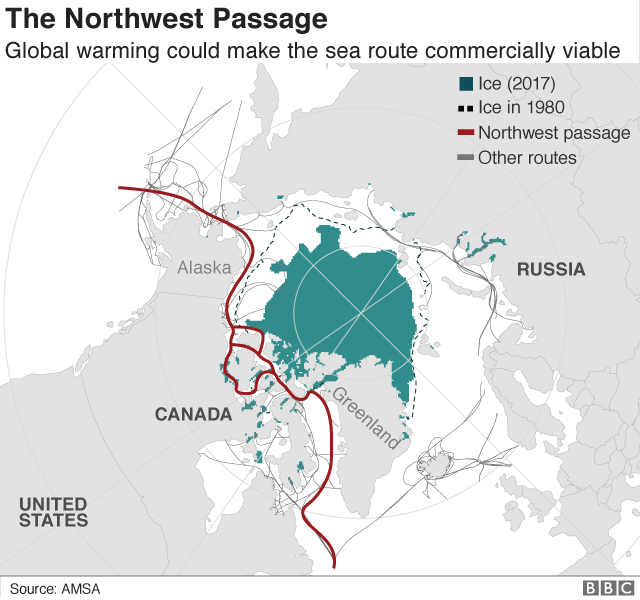
Another impact of the decreasing density of ice in the northern polar region is the opening of the Northwest Passage. This trading route links the North Atlantic Ocean with the North Pacific Ocean.

Since the 19th Century, there has been clamour to find a navigable route through frozen Arctic waters between Greenland and Canada's Arctic islands.

It has long been a deadly pursuit for mariners who braved the frozen seascape. However, some experts estimate that the route will become commercially viable in the near future as the sea-ice retreats in the summer months.

For some, it is going to revolutionise the global shipping sector. For others, it is a disaster waiting to happen.

Environmental groups fear a growing volume of shipping traffic through the pristine Arctic waters will damage slow-growing, long-lived marine ecosystems.

They particularly fear a ship encountering a mishap in the remote polar waters, resulting in a potentially devastating pollution incident.

Lack of food

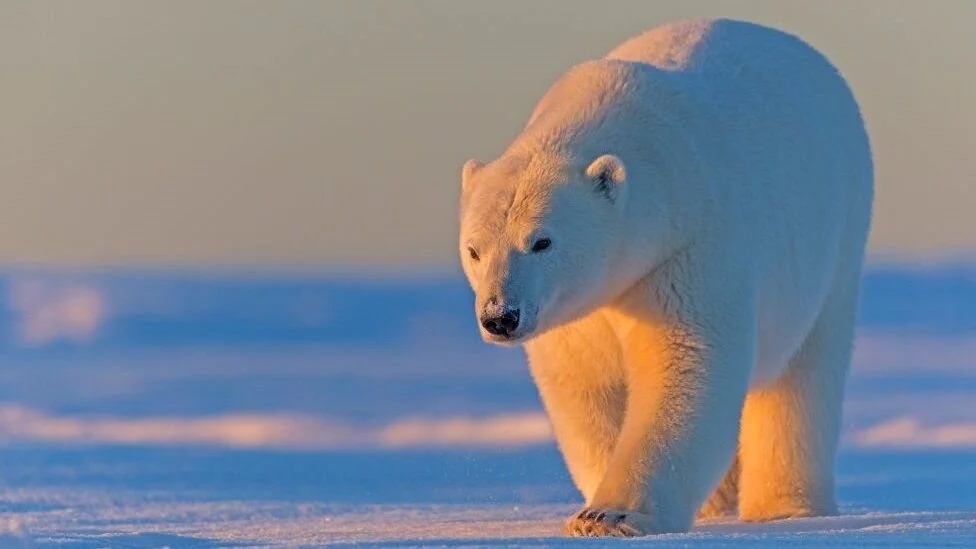
Evidence suggests that the thinning sea-ice is affecting wildlife, including top-of-the-food-chain predators such as polar bears. The ice is not strong enough to support the animals' weight, forcing them to embark on energy-sapping swims and making it more difficult to catch prey.

As well as causing starvation, it is also reportedly resulting in bears coming into human settlements looking for food.

Studies show that polar bears are struggling to hunt on the melting sea-ice during summer months

Studies show that polar bears are struggling to hunt on the melting sea-ice during summer months

Another concern among scientists is that melting sea-ice is affecting a major ocean current in the Arctic - the Beaufort Gyre.

Freshwater is less dense than salty seawater. The researchers said a sudden influx of freshwater from the Arctic Ocean into the northern Atlantic Ocean could alter the strength of the current.

This is because the force pushing water down the eastern coast of continental North America will be reduced, resulting in a smaller volume of warmer tropic waters from equatorial regions being displaced towards western Europe.

Models suggest the reduction in warmer waters heading towards western Europe will result in lower temperatures in the region. This, in turn, would also affect weather patterns in the global climate system.

Nowhere is safe, say scientists as extreme heat causes chaos in US and Canada

Matthew Taylor and Leyland Cecco

Governments urged to ramp up efforts to tackle climate emergency as temperature records smashed

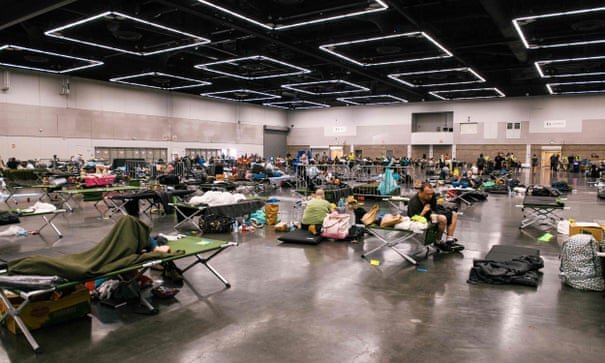
People rest at the Oregon Convention Center cooling station in Portland. On the US west coast, Seattle and Portland have registered consecutive days of exceptional heat. Photograph: Kathryn Elsesser/AFP/Getty Images

People rest at the Oregon Convention Center cooling station in Portland. On the US west coast, Seattle and Portland have registered consecutive days of exceptional heat. Photograph: Kathryn Elsesser/AFP/Getty Images

Climate scientists have said nowhere is safe from the kind of extreme heat events that have hit the western US and Canada in recent days and urged governments to dramatically ramp up their efforts to tackle the escalating climate emergency.

The devastating “heat dome” has caused temperatures to rise to almost 50C in Canada and has been linked to hundreds of deaths, melted power lines, buckled roads and wildfires.

Experts say that as the climate crisis pushes global temperatures higher, all societies – from northern Siberia to Europe, Asia to Australia – must prepare for more extreme weather events.

Sir David King, the former UK chief scientific adviser, said: “Nowhere is safe … who would have predicted a temperature of 48/49C in British Columbia?”

King, who along with other leading scientists set up the Climate Crisis Advisory Group earlier this month, said scientists had been warning about extreme weather events for decades and now time was running out to take action.

“The risks have been understood and known for so long and we have not acted, now we have a very narrow timeline for us to manage the problem,” he said.

In Canada experts have been shocked by the rise in temperature, which on Tuesday hit 49.6C (121.1F) in the town of Lytton, British Columbia, smashing the national record for the third day in a row.

On the US west coast, Seattle and Portland have registered consecutive days of exceptional heat. Local authorities said they were investigating about a dozen deaths in Washington and Oregon that could be attributed to the scorching temperatures.

Michael E Mann, professor of atmospheric science at Pennsylvania State University and author of The New Climate War, said as the planet warmed up such dangerous weather events would become more common.

“We should take this very seriously … You warm up the planet, you’re going to see an increased incidence of heat extremes.”

Mann said the climate was being destabilised in part by the dramatic warming of the Arctic and said existing climate models were failing to capture the scale of what was happening.

“Climate models are actually underestimating the impact that climate change is having on events like the unprecedented heatwave we are witnessing out west right now,” he added.

On Wednesday the US president, Joe Biden, blamed the climate crisis for the heatwave in the western US and Canada which officials said had already broken 103 heat records across British Columbia, Alberta, Yukon and Northwest Territories.

The US National Weather Service said the peak in the region was 42.2 C on Tuesday in Spokane, Washington, another local record. About 9,300 homes lost power and the local utility Avista Utilities said planned blackouts would be needed, affecting more than 200,000 people.

In British Columbia (BC) at least 486 sudden deaths were reported over five days during the heatwave. The chief coroner said typically there would have been about 165 sudden deaths, suggesting more than 300 deaths could be attributed to the heat.

“While it is too early to say with certainty how many of these deaths are heat related, it is believed likely that the significant increase in deaths reported is attributable to the extreme weather BC has experienced and continues to impact many parts of our province,” Lisa Lapointe said in a statement.

Lapointe said the figures were preliminary and would increase as coroners in communities across the province entered other death reports into the agency’s system.

“Our thoughts are with people who have lost loved ones,” said Canada’s prime minister, Justin Trudeau, warning the blistering temperatures in a region of the country ill-prepared for such heat was a reminder of the need to address the climate crisis.

Police sergeant Steve Addison said: “I’ve been a police officer for 15 years and I’ve never experienced the volume of sudden deaths that have come in such a short period of time.”

Many of those who died over the five-day period were elderly people who lived alone and were found in residences that were hot and not well ventilated.

“People can be overcome by the effects of extreme heat quickly and may not be aware of the danger,” Lapointe said.

Scientists said that the scale of the heatwave in the US and Canada should serve as a “wake-up call” to policymakers, politicians and communities around the world, especially in the buildup to the crucial UN Cop26 climate summit to be hosted by the UK in November.

“The risk of heatwaves is increasing across the globe sufficiently rapidly that it is now bringing unprecedented weather and conditions to people and societies that have not seen it before,” said Prof Peter Stott from the Met Office. “Climate change is taking weather out of the envelope that societies have long experienced.”

Prof Simon Lewis of University College London described the situation as “scary” and warned that extreme heat events could have huge impacts on everything from food prices to power supplies.

“Everywhere is going to have to think about how to deal with these new conditions and the extremes that come along with the new climate that we are creating. That means everyone needs plans.”

He said it was crucial governments and policymakers heeded the warning signs and dramatically ramped up plans to halt fossil fuel emissions and prepare societies to deal with more extreme weather events.

“This is a warning in two senses,” said Lewis. “We have to get emissions down to zero fast to cut off the new extreme heatwaves, and we have to adapt to the new climate conditions we are creating.”

Unprecedented, unbelievable, unsettling: what the heatwave feels like in Seattle

Justin Shaw

The city with the best summers in the nation just hit 108F (42.2C) degrees.

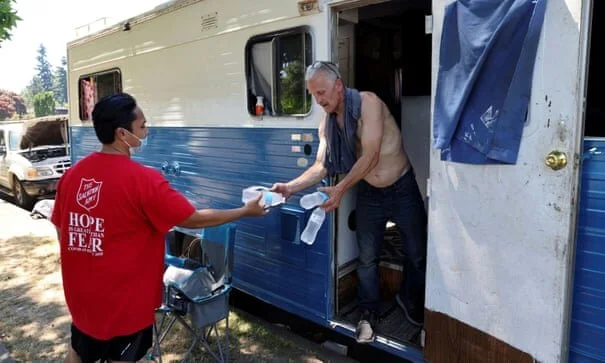
The Salvation Army’s Shanton Alcaraz gives bottled water to resident Eddy Norby, and invites him to a nearby cooling center during a heat wave in Seattle, Washington, on 27 June 2021. Photograph: Karen Ducey/Reuters

The Salvation Army’s Shanton Alcaraz gives bottled water to resident Eddy Norby, and invites him to a nearby cooling center during a heat wave in Seattle, Washington, on 27 June 2021. Photograph: Karen Ducey/Reuters

As a lifelong Seattle-area resident and so-called geriatric millennial, I can attest to the fact that, until recently, Seattle summers truly were second to none in the comfortability department. Highs in the 70s? Check. Bluebird skies after morning clouds? Check. Pleasant sea breezes in the evening to take the edge off the day’s warmth? Check.

And 100 degrees? Virtually unheard of. In 1994, the summer after I finished third grade, the temperature in Seattle briefly reached the century mark on a hot July afternoon, catching forecasters off guard and sending local media outlets scrambling to unearth when – if ever – such a feat had occurred in the past. The answer? In the previous 90 years of record-keeping, it had happened just once before, in the summer of 1941. So, Seattle shrugged and moved on. And for the next 15 years, our summertime weather by and large stayed the same: cool mornings under a deck of clouds, and sunny afternoons under room-temperature skies.

Then came the summer of 2009. Near the end of July, the mercury spent two days hovering in the mid-90s, taunting Seattleites with the potential for triple-digit heat before making good on its promise and soaring to 103 on day three. As a city, we were stunned. 103 degrees? How was our proudly un-air-conditioned town supposed to sleep? How could we cool off at night if there was no marine air to open our windows to?

Fortunately, the temperature fell each day after that, with highs dipping below 70F (21C) by the first week of August. Even more fortunately, we told ourselves, we’d just endured a once-in-a-lifetime heat wave, the likes of which we’d never see again. This was Seattle, after all.

And then came June 2021. As I write this, sunset is an hour away and it’s still 100F (38C). And it was over 100 yesterday and the day before, too. And just like that, Seattle has done in the span of three days what it previously took 125 years to accomplish: logging three 100-degree days. It’s unprecedented. It’s unbelievable. And it’s unsettling.

Neighborhood streets, which normally would be filled with the sounds of children laughing and playing, have become ghost towns. Parks are deserted. Trailheads are empty. All across the city, a stifling heat blankets the air, interspersed with the low drumming of over-worked fans and the occasional creaky air conditioner (if you’re among the 44% of Seattleites who happen to own one). Stepping outside feels like stepping into a sauna. A 10-minute stroll feels like a 20-minute run. And for pete’s sake, this is day three of the 100s. Did Seattle become Sacramento overnight?

The heat wave gripping our part of the country has gone from significant to sickening. When a city like Seattle, nestled up against the cool waters of Puget Sound, bakes in triple-digit heat for three days in a row, it’s not a good sign. When a city ringed by evergreen trees and lakes galore sizzles like the desert south-west, it’s disconcerting. It’s alarming. If Seattle, America’s capital of comfortable summers, can swelter more than Atlanta, Washington and New York (Seattle’s new high of 108F, or 42C, now tops the hottest temperatures ever observed in each of these cities), what does this mean for the rest of the nation? Will 110s soon invade the eastern seaboard? Will 120s become commonplace in Los Angeles?

The obvious answer, of course, is that we don’t really know. Yes, we have state-of-the-art weather models and fancy algorithms that can spit out various temperature projections for cities across the globe as the Earth continues to warm, and I have no doubt that many of them are, unfortunately, frighteningly realistic. But these same models didn’t tell those of us tucked away in the north-western corner of the country that we’d endure three days of triple-digit heat in June when we’d never done so before. They didn’t predict Seattle would flirt with 110 degrees, let alone top 100 back-to-back-to-back, in a place where warm weather typically never surfaces until after the Fourth of July.

RIP, Seattle summers. It was fun while it lasted.

Deaths Spike as Heat Wave Broils Canada and the Pacific Northwest

Vjosa Isai, Dan Bilefsky and Shawn Hubler

Hyperthermia claimed nearly a dozen lives in one day in one Washington county. A small town in British Columbia set Canada’s heat record at just over 121 degrees Fahrenheit.

Trying to get some relief in the shade during the heat wave this week in Vancouver, British Columbia.Credit...Jennifer Gauthier/Reuters

Trying to get some relief in the shade during the heat wave this week in Vancouver, British Columbia.Credit...Jennifer Gauthier/Reuters

Hundreds of deaths in British Columbia, Washington and Oregon have been linked to a heat wave that has roasted the Pacific Northwest for days and broken Canadian heat records, sending hundreds of thousands of people scrambling for relief.

Lisa Lapointe, British Columbia’s chief coroner, said 486 deaths had been reported there between Friday and Wednesday afternoon — a period in which about 165 deaths would normally be documented. Deaths were expected to increase, she said.

“While it is too early to say with certainty how many of these deaths are heat related, it is believed likely that the significant increase in deaths reported is attributable to the extreme weather B.C. has experienced,” she said.

Oregon’s state medical examiner’s office on Wednesday attributed at least 63 deaths in five days to the punishing heat in that state, including 45 in Multnomah County, which includes Portland — where temperatures have reached a record 116 degrees Fahrenheit.

In Washington, officials reported nearly a dozen lives lost to hyperthermia on Wednesday alone in King County, which includes Seattle; two heat-related deaths were reported there the day before.

In Snohomish County, Wash., at least three people died this week from heatstroke, according to the medical examiner’s office, which added that investigations are pending into at least two more suspected heat-related deaths.

“This was a true health crisis that has underscored how deadly an extreme heat wave can be, especially to otherwise vulnerable people,” Dr. Jennifer Vines, the Multnomah County health officer, said in a statement. “I know many county residents were looking out for each other and am deeply saddened by this initial death toll.”

This year a study found that 37 percent of heat-related deaths could be linked to climate change. Global warming has raised baseline temperatures by nearly 2 degrees Fahrenheit on average since 1900, experts say.

“Climate change is increasing the frequency, intensity and duration of heat waves,” said Kristie Ebi, a professor in the Center for Health and the Global Environment at the University of Washington. “When you look at this heat wave, it is so far outside the range of normal.”

In Canada, John Horgan, the premier of British Columbia, said on Tuesday that “the big lesson coming out of the past number of days is that the climate crisis is not a fiction.”

The heat wave in Canada has presented an additional public health concern even as authorities are still grappling with the challenge of the coronavirus and Canadians are just beginning to enjoy some of the pleasures of summer as restrictions ease.

On Tuesday, for the third consecutive day, British Columbia shattered its previous extreme heat record; the temperature in Lytton, a small town in the province, climbed to just over 121 degrees.

Such is the heat that some Vancouverites have fried eggs on their terraces. Others have traded in their sweltering homes for air-conditioned hotels or moved their home offices to shady places in their gardens.

The sizzling temperatures have also imperiled the crops of farmers in British Columbia, wilting lettuce and searing raspberries.

Capturing the national mood, Lyle Torgerson posted a video on Twitter on Sunday showing a bear and two cubs taking a dip in his backyard pool in Coquitlam, British Columbia. “The heat is unbearable, but if you take a quick dip you’ll survive,” he told The New York Times in a message on Instagram.

The Vancouver Police Department has dispatched dozens of additional officers to help deal with the situation, it said in a statement. While police usually attend to three to four sudden deaths a day, on average, the department said it has responded to more than 98 such calls since Friday, with 53 of those on Tuesday.

It also said two-thirds of the victims are aged 70 and older.

“We’ve never seen anything like this, and it breaks our hearts,” Sergeant Steve Addison said in a statement on Tuesday, noting that the extreme heat appears to be a contributing factor to most of the cases.

The Royal Canadian Mounted Police in Surrey, a municipality in metropolitan Vancouver, said in an email that it had responded to 35 sudden deaths in a 24-hour period.

The wildfire service of British Columbia was also coping with effects of the heat wave, grappling with overheated helicopter engines as it tried to contain severe wildfires. One had spread over about 5,700 acres as of Tuesday night, at Sparks Lake, about five hours northeast of Vancouver.

Before this week’s record-breaking heat, the last time Canada saw the mercury rise to similar heights was on July 5, 1937, when the temperature hit 113 degrees in rural Saskatchewan.

Experts warn of ‘alarming loss’ of biodiversity in Tropics

La Prensa Latina

17678849w-780x470.jpg

The Amazonian rainforest lost 2.3 million hectares last year, a conservationist group warned on Monday, highlighting the plight of the world’s Tropics, which are home to 80% of all the species in the world.

This “alarming” loss speeds up climate change, the Monitoring of the Andean Amazon Project said on the eve of the International Day of the Tropics.

Despite the huge biodiversity found in the Earth’s tropical regions, many of its species are endangered due to climate change, deforestation and logging, making it the area with the highest rate of biodiversity loss on the planet.

The Tropics, which span the center of the globe between the Tropic of Capricorn and the Tropic of Cancer, are home to rich areas of the natural world in countries like Brazil, Panama, Colombia, Thailand, Lagos, Indonesia and Malaysia among others.

Among the most characteristic areas of the tropical region are the mangroves, a unique ecosystem formed by trees or shrubs that grow in saltwater and live semi-submerged in the intertidal zone of the tropical or subtropical coasts.

Mangroves are highly sensitive to variations in environmental conditions, which makes climate change their main threat.

These ecosystems are “adapted to very special conditions of salinity, water level, substrate and climate, which are being altered, affecting the functioning of the mangroves very negatively,” Diana Colomina, the Forest Coordinator of the World Wildlife Fund (WWF), told Efe.

They play “a fundamental role” in the fight against climate change, as they are capable of absorbing up to five times more carbon dioxide than terrestrial forests, she added. EFE

Dispossessed, Again: Climate Change Hits Native Americans Especially Hard

Christopher Flavelle & Kalen Goodluck

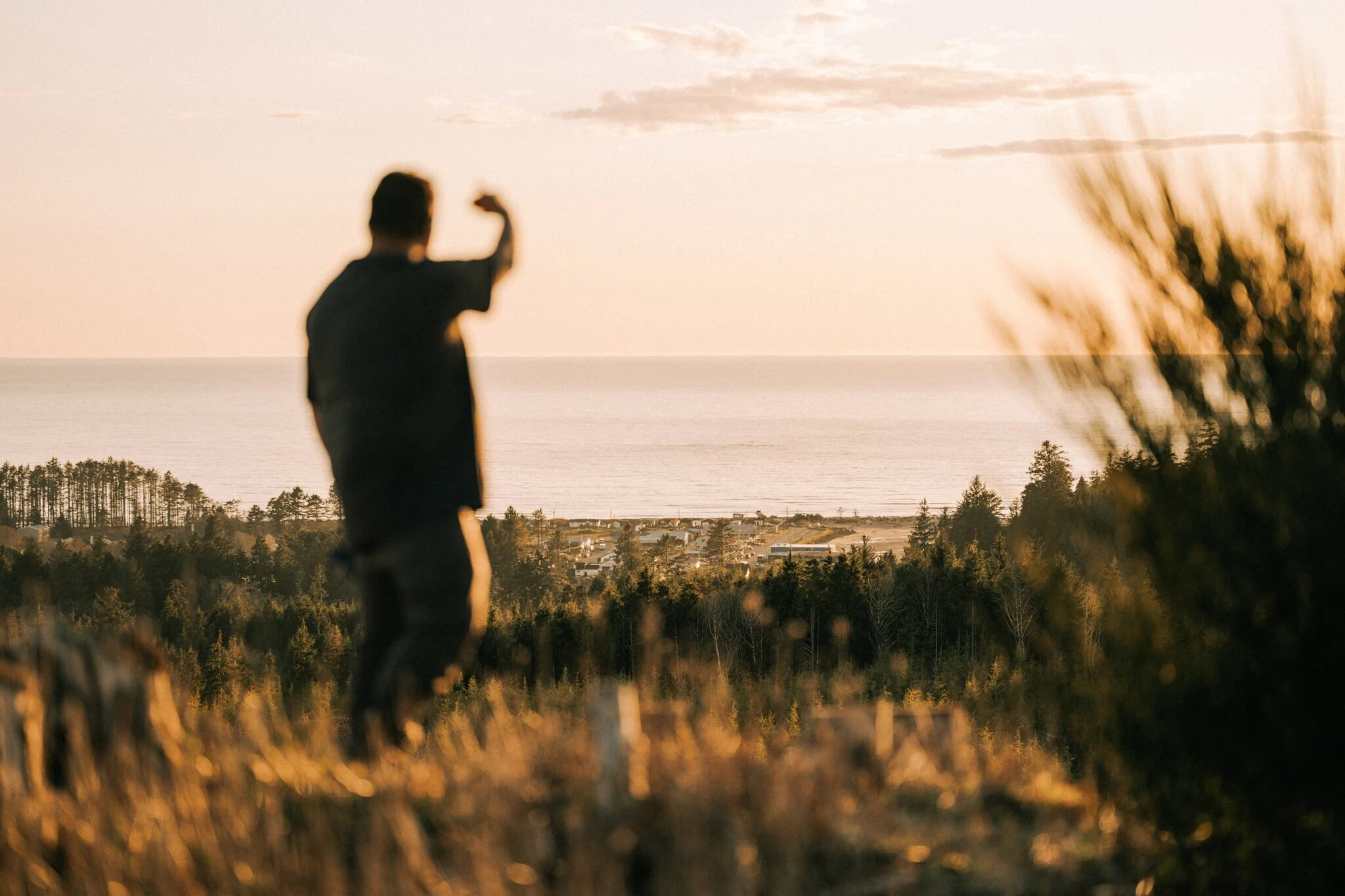
Pierre Augare, a member of the Quinault Nation in Taholah, Wash., a community on the Olympic Peninsula that has been planning a retreat from the ocean for almost a decade.Credit...Josué Rivas for The New York Times

Pierre Augare, a member of the Quinault Nation in Taholah, Wash., a community on the Olympic Peninsula that has been planning a retreat from the ocean for almost a decade.Credit...Josué Rivas for The New York Times

Many Native people were forced into the most undesirable areas of America, first by white settlers, then by the government. Now, parts of that marginal land are becoming uninhabitable.

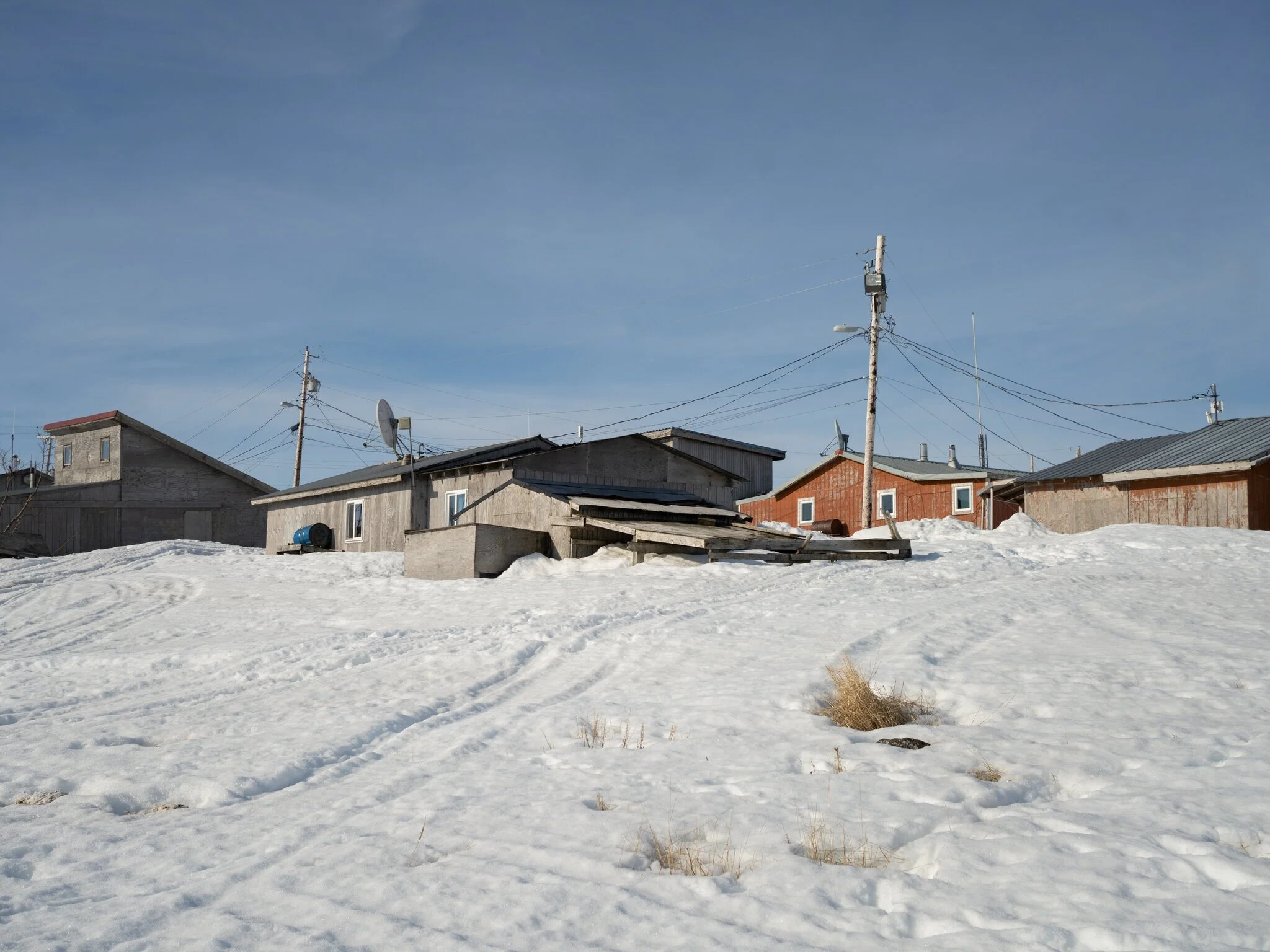
In Chefornak, a Yu’pik village near the western coast of Alaska, the water is getting closer.

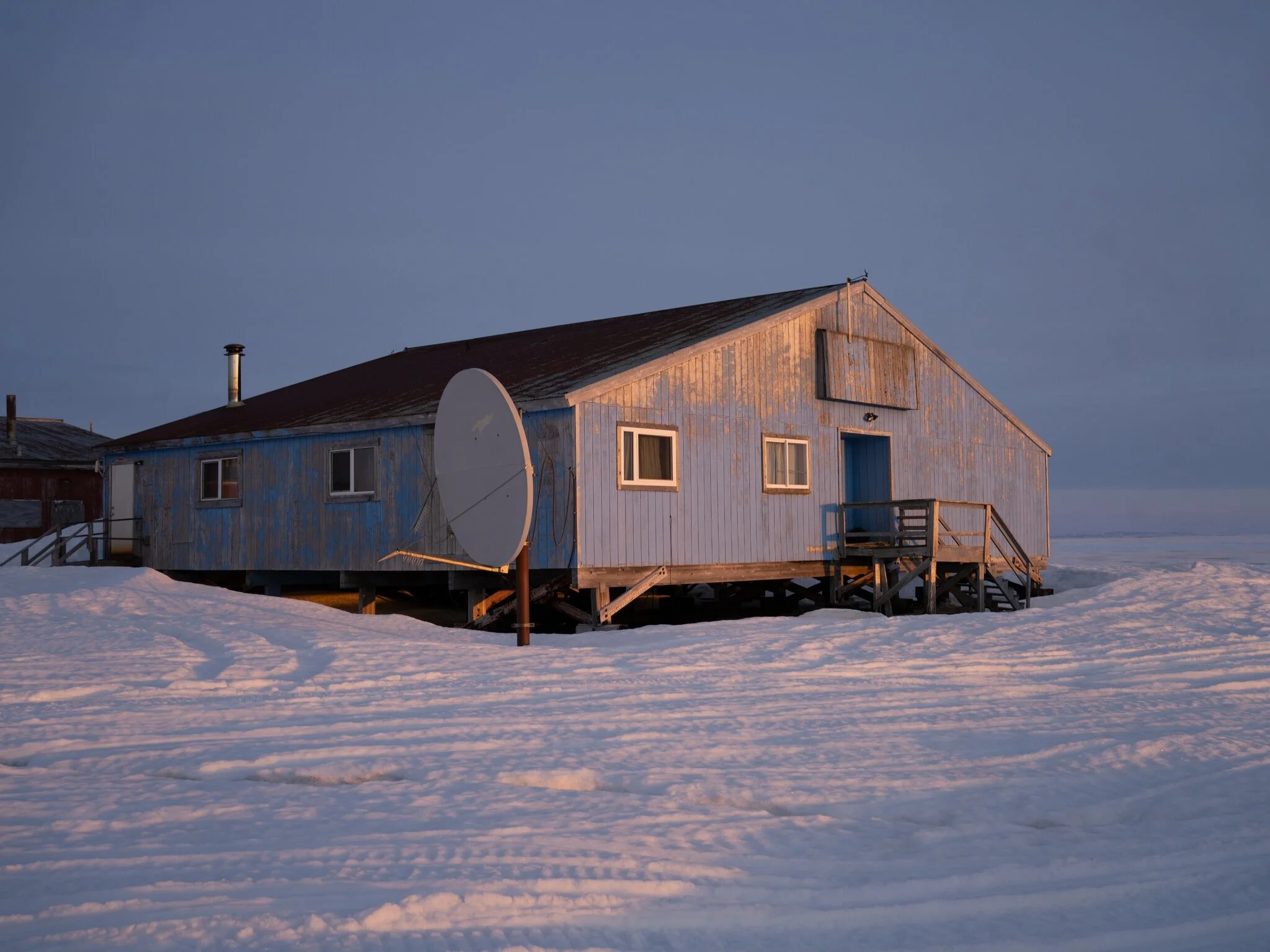
The thick ground, once frozen solid, is thawing. The village preschool, its blue paint peeling, sits precariously on wooden stilts in spongy marsh between a river and a creek. Storms are growing stronger. At high tide these days, water rises under the building, sometimes keeping out the children, ages 3 to 5. The shifting ground has warped the floor, making it hard to close the doors. Mold grows.

“I love our building,” said Eliza Tunuchuk, one of the teachers. “At the same time, I want to move.”

The village, where the median income is about $11,000 a year, sought help from the federal government to build a new school on dry land — one of dozens of buildings in Chefornak that must be relocated. But agency after agency offered variations on the same response: no.

From Alaska to Florida, Native Americans are facing severe climate challenges, the newest threat in a history marked by centuries of distress and dislocation. While other communities struggle on a warming planet, Native tribes are experiencing an environmental peril exacerbated by policies — first imposed by white settlers and later the United States government — that forced them onto the country’s least desirable lands.

And now, climate change is quickly making that marginal land uninhabitable. The first Americans face the loss of home once again.

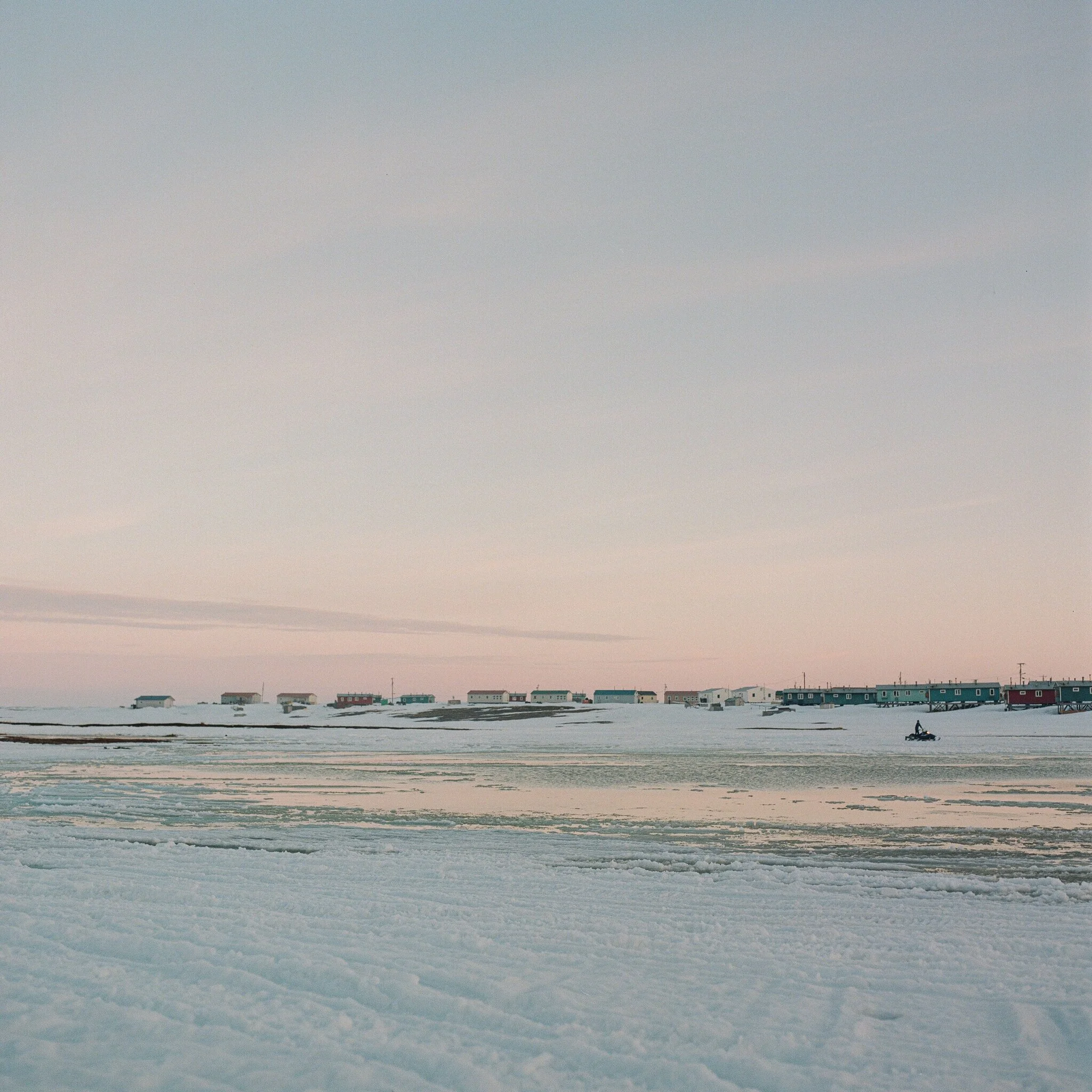
Chefornak, Alaska, where the foundations of many buildings are failing as the permafrost thaws, in April. Credit...Ash Adams for The New York Times

Chefornak, Alaska, where the foundations of many buildings are failing as the permafrost thaws, in April. Credit...Ash Adams for The New York Times

In the Pacific Northwest, coastal erosion and storms are eating away at tribal land, forcing native communities to try to move inland. In the Southwest, severe drought means Navajo Nation is running out of drinking water. At the edge of the Ozarks, heirloom crops are becoming harder to grow, threatening to disconnect the Cherokee from their heritage.

Compounding the damage from its past decisions, the federal government has continued to neglect Native American communities, where substandard housing and infrastructure make it harder to cope with climate shocks.

The federal government is also less likely to help Native communities recover from extreme weather or help protect them against future calamities, a New York Times review of government data shows.

Interviews with officials, members and advisers at 15 federally recognized tribes portray a gathering climate crisis and a test of the country’s renewed focus on racial equity and environmental justice.

Many tribes have been working to meet the challenges posed by the changing climate. And they have expressed hope that their concerns would be addressed by President Biden, who has committed to repairing the relationship with tribal nations and appointed Deb Haaland, the first Indigenous cabinet secretary, to run the Interior Department. But Mr. Biden has announced few specific policies or actions to directly reduce the climate risk already facing Native communities, and Ms. Haaland’s office declined repeated requests for an interview.

“The stakes are very, very high,” said Fawn Sharp, president of the National Congress of American Indians. “We’re running out of time.”

Forced Off Their Land, Again

Fawn Sharp, former president of the Quinault Nation and president of the National Congress of American Indians. “The stakes are very, very high,” she said.Credit...Josué Rivas for The New York Times

Fawn Sharp, former president of the Quinault Nation and president of the National Congress of American Indians. “The stakes are very, very high,” she said.Credit...Josué Rivas for The New York Times

The Quileute Nation is a collection of about 135 homes on a narrow slice of land at the edge of the Olympic Peninsula that juts into the Pacific, about 100 miles west of Seattle.

As temperatures rise, the atmosphere holds more water, producing more frequent and intense storms. High winds now regularly knock out the electricity, while homes along the main street are vulnerable to flooding. The single road that connects the community to the outside world is often rendered impassable by water.

“The village is 10 to 15 feet above sea level,” said Susan Devine, a project manager who is working with the Quileute. During major storms “those waves are bigger than you,” she said.

Hundreds of years ago, the reservation was a fishing village, among many locations used by the Quileute as they moved according to the demands of the weather.

That changed in 1855 when a treaty stripped the tribe of most of its land; President Grover Cleveland later issued an executive order confining the Quileute to a single square mile — all of it exposed to flooding.

“No one chose to be in a seasonal fishing area year-round,” Ms. Devine said.

The resulting vulnerability has pushed the tribe to pursue a solution that few non-Native towns in the United States have seriously considered: Retreating to higher ground.

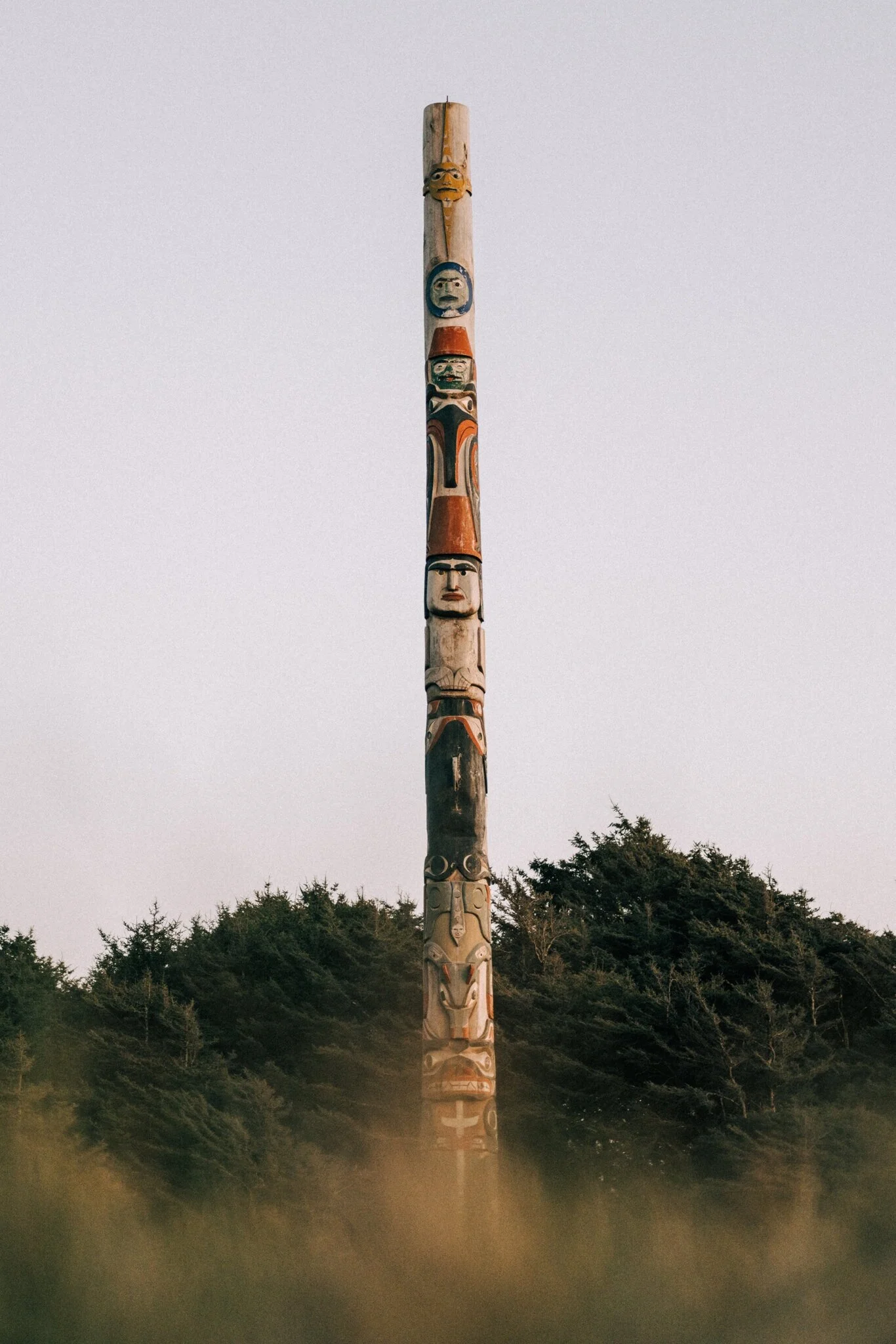
A totem pole in Taholah, Wash., that was carved to commemorate the 2013 Tribal Canoe Journey, an annual event for Pacific Northwest tribes.Credit...Josué Rivas for The New York Times

A totem pole in Taholah, Wash., that was carved to commemorate the 2013 Tribal Canoe Journey, an annual event for Pacific Northwest tribes.Credit...Josué Rivas for The New York Times

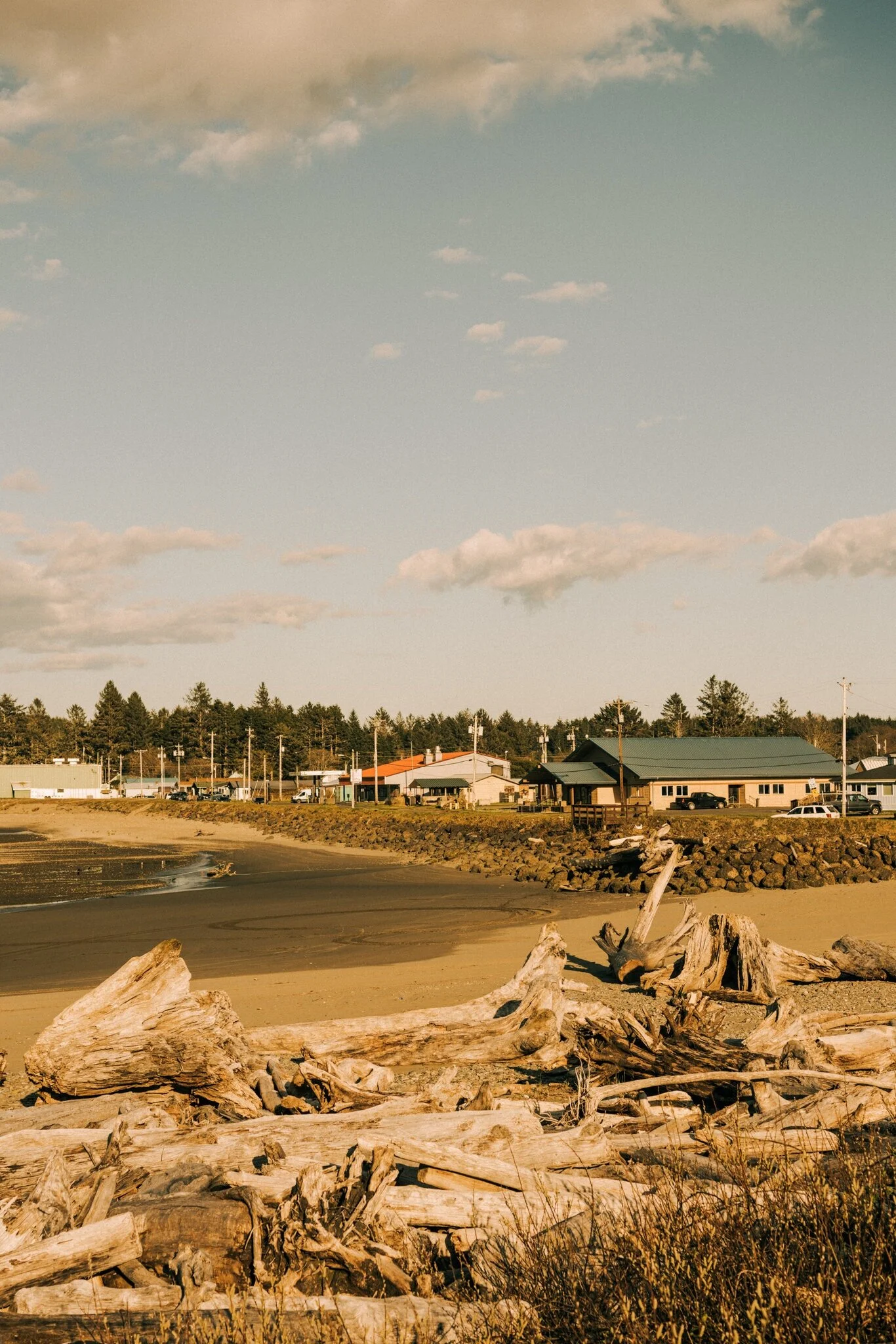
Taholah is exposed to storms and flooding but the tribe has struggled to get enough federal help to relocate.Credit...Josué Rivas for The New York Times

Taholah is exposed to storms and flooding but the tribe has struggled to get enough federal help to relocate.Credit...Josué Rivas for The New York Times

“Climate change has forced us to make the heart-wrenching decision to leave the village,” Doug Woodruff, chairman of the Quileute Tribal Council, said in a December statement. “Without a cohesive national and international strategy to address climate change, there is little we can do to combat these impacts.”

Through a spokeswoman, Mr. Woodruff and other members of the council declined repeated requests to be interviewed.

In 2012, Congress gave the tribe permission to relocate inside the adjacent Olympic National Park. But without a tax base to pay for its move, the tribe sought federal money. Progress has been slow: The Quileute received about $50 million in grants to build a new school farther from the coast, but the total cost to relocate homes and other facilities could be two or three times that much, according to Larry Burtness, who manages federal grant applications for the Quileute.

 Forty miles south, the Quinault tribe has been working on its own plan to retreat from Taholah, the reservation’s main town, for almost a decade. Tucked between a driftwood-strewn beach and a coastal rainforest, Taholah is exposed to storms, flooding and frequent power outages. That tribe has also struggled to get federal help.

“There’s no single source of revenue, at a state level or congressionally, to undertake these kinds of projects,” said Ms. Sharp, who was president of Quinault Nation until March.

A Struggle for Federal Aid

The federal government offers help to communities coping with the effects of climate change. But Native Americans have often been less able to access that help than other Americans.

“We’re the most disproportionately impacted by climate, but we’re the very least funded,” said Ann Marie Chischilly, executive director of the Institute for Tribal Environmental Professionals at Northern Arizona University.

The Federal Emergency Management Agency is less likely to grant requests for aid from native tribes recovering from disaster, compared to non-Native communities, according to FEMA data.

Native Americans are also less likely to have flood insurance, making it harder to rebuild. Of 574 federally recognized tribes, fewer than 50 participate in the National Flood Insurance Program, according to a review of FEMA data.

That’s partly because the federal government has completed flood maps for just one-third of federally recognized tribes, compared with the vast majority of counties. Flood maps can help tribal leaders more precisely understand their flood risks and prompt residents to purchase flood insurance.

But insurance premiums can be prohibitively expensive for Native Americans.

Individual households on Native lands are also less likely to get federal help girding for disasters. Of the 59,303 properties that have received FEMA grants since 1998 to prepare for disasters, just 48 were on tribal lands, according to Carlos Martín, a researcher at the Urban Institute.

Anna Abraham, Chefornak’s mayor, grew up hearing stories from elders about how the weather would warm. “I never thought that I’d be living to see it,” she said.Credit...Ash Adams for The New York Times

Anna Abraham, Chefornak’s mayor, grew up hearing stories from elders about how the weather would warm. “I never thought that I’d be living to see it,” she said.Credit...Ash Adams for The New York Times

Chefornak’s preschool sits on stilts in thawing permafrost. At high tide, water reaches the building, which needs to be moved to safer land. Credit...Ash Adams for The New York Times

Chefornak’s preschool sits on stilts in thawing permafrost. At high tide, water reaches the building, which needs to be moved to safer land. Credit...Ash Adams for The New York Times

A home that collapsed into the eroding coast. Its former occupant, Delores Abraham, now lives in a city building that was designated as a pandemic quarantine space.Credit...Ash Adams for The New York Times

A home that collapsed into the eroding coast. Its former occupant, Delores Abraham, now lives in a city building that was designated as a pandemic quarantine space.Credit...Ash Adams for The New York Times

FEMA said it is committed to improving tribal access to its programs.

Chefornak’s efforts to relocate its preschool illustrate the current difficulties of dealing with the federal government.

While FEMA offers grants to cope with climate hazards, replacing the school wasn’t an eligible expense, according to Max Neale, a senior program manager at the Alaska Native Tribal Health Consortium, who helped Chefornak search for federal aid.

The Department of Housing and Urban Development has a program to pay for infrastructure on tribal lands, but the maximum amount available wasn’t enough for a new school, and the agency wouldn’t grant money until the village had found other ways to make up the difference, Mr. Neale said.

HUD declined to comment on the record.

Replacing the preschool would only begin to address Chefornak’s troubles. Some two dozen homes need to be relocated, potentially costing more than $10 million, according to Sean Baginski, an engineer working with the village. And Chefornak is just one of more than 100 Native villages in Alaska alone that are exposed to significant climate risks.

“If the intent is for the government to find a way to fund this stuff,” Mr. Baginski said, “now would be a good time.”

Living Without Water

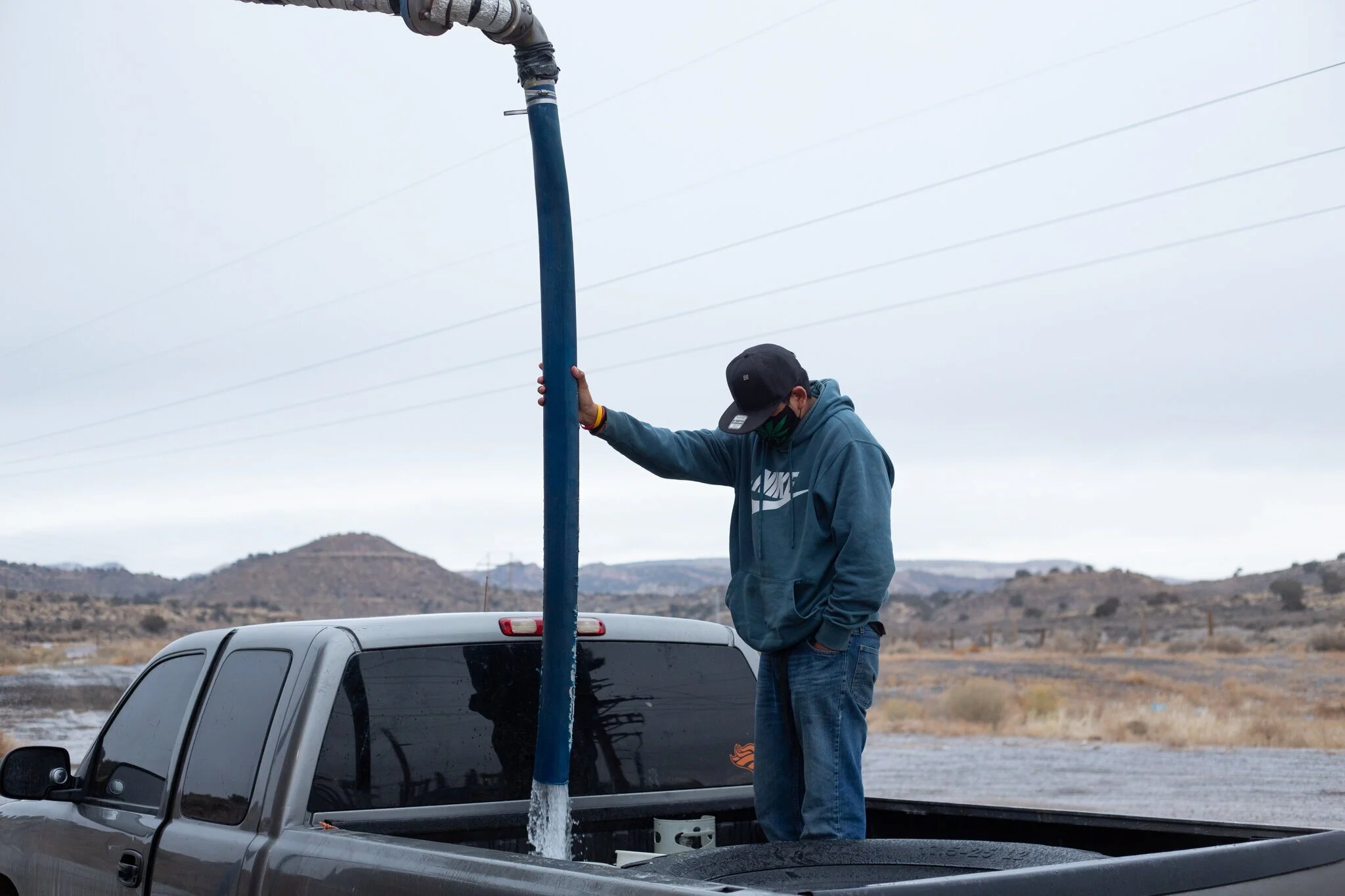
Damian Cabman, a member of the Navajo tribe, filled buckets of water to take home at the Bataan water loading station in Gallup, N.M. Many tribe members had relied on wells that have run dry with climate change. Credit...Kalen Goodluck for The New York Times

Damian Cabman, a member of the Navajo tribe, filled buckets of water to take home at the Bataan water loading station in Gallup, N.M. Many tribe members had relied on wells that have run dry with climate change. Credit...Kalen Goodluck for The New York Times

Twice a week, Vivienne Beyal climbs into her GMC Sierra in Window Rock, a northern Arizona town that is the capital of Navajo Nation, and drives 45 minutes across the border into New Mexico. When she reaches the outskirts of Gallup, she joins something most Americans have never seen: a line for water.

Ms. Beyal’s destination is a squat concrete building that looks like a utility shed, save for the hoses that extend from either side. Once there, she waits as much as half an hour for her turn at the pump, then fills the four 55-gallon plastic barrels in the back of her truck.

The facility, which is run by the city of Gallup, works like an air pump at a gas station: Each quarter fed into the coin slot buys 17 gallons of water. Most of the people in line with Ms. Beyal are also Navajo residents, crossing into New Mexico for drinking water. “You can show up whenever you want,” she said. “As long as you can pay for it.”

Ms. Beyal has lived in Window Rock for more than 30 years and once relied on the community well near her home. But after years of drought, the water steadily turned brown. Then last year, it ran dry. “It’s on us to get water now,” she said.

Like much of the American West, Navajo Nation, the largest tribe in the country, has been in a prolonged drought since the 1990s, according to Margaret Hiza Redsteer, a professor at the University of Washington.

“As snowfall and rain levels have dropped, so have the sources of drinking water,” Dr. Redsteer said. “Surface streams have disappeared, and underground aquifers that feed wells are drying up. Conditions are just continuing to deteriorate.”


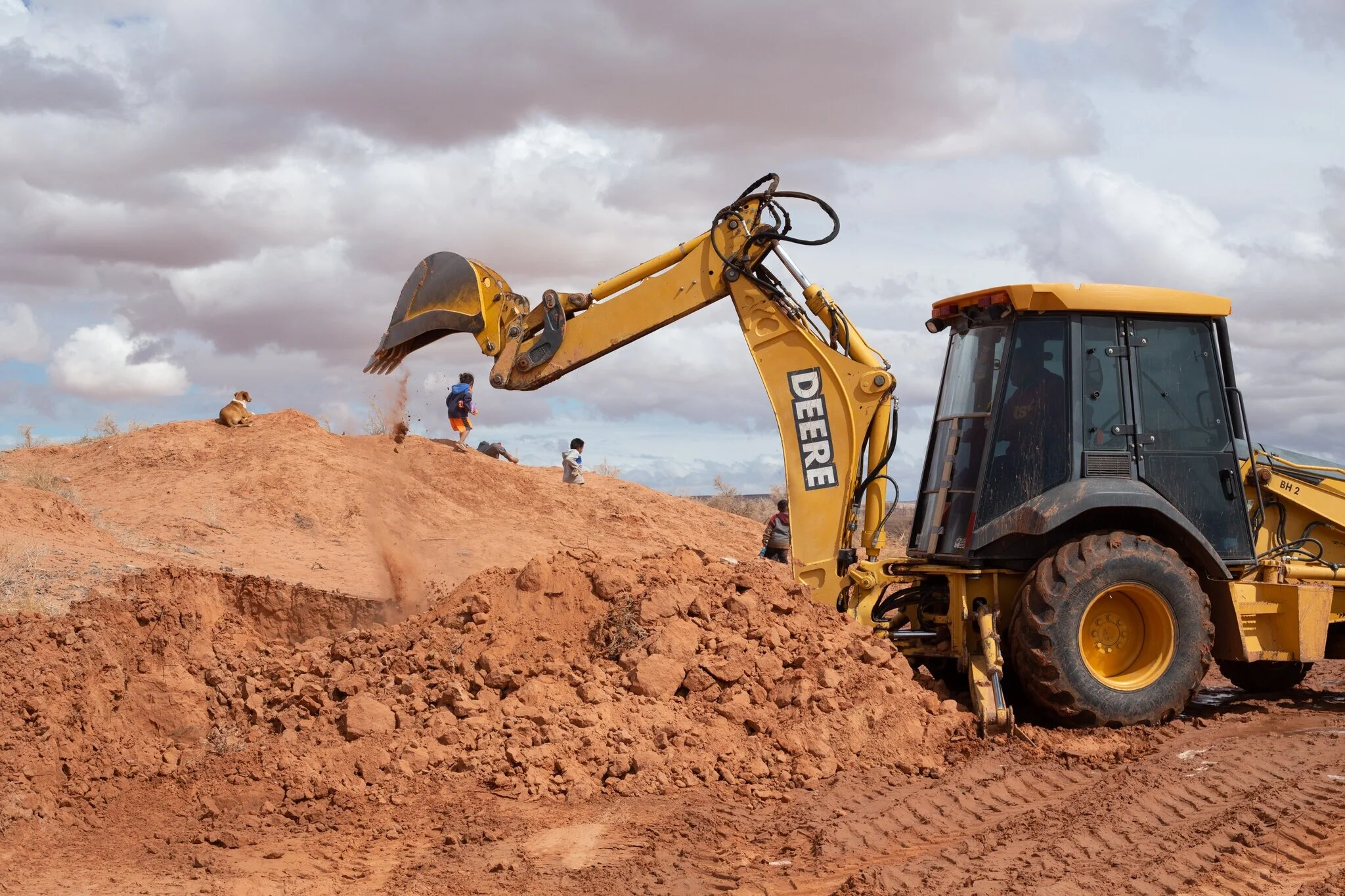
Leon Yellow Mexican used a backhoe to clear sand in Tuba City, Ariz., a Navajo town. Drought and loss of vegetation have unmoored sand, which forms dunes that block roads and threaten to bury structures.Credit...Kalen Goodluck for The New York Times

Leon Yellow Mexican used a backhoe to clear sand in Tuba City, Ariz., a Navajo town. Drought and loss of vegetation have unmoored sand, which forms dunes that block roads and threaten to bury structures.Credit...Kalen Goodluck for The New York Times

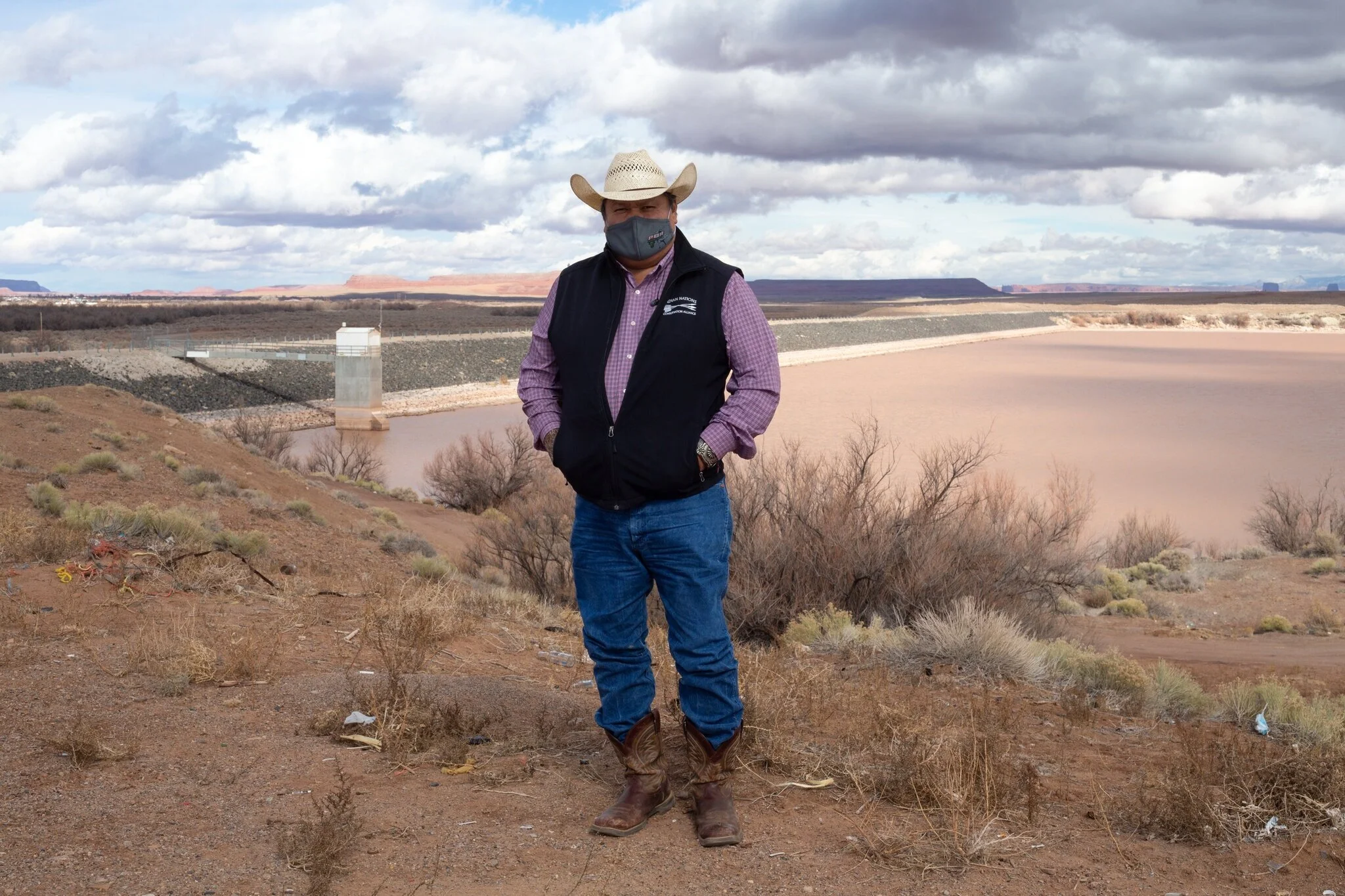
Roland Tso, a grazing official for the Navajo Nation at Many Farms Lake. “We’ve got to adapt to these conditions,” he said.Credit...Kalen Goodluck for The New York Times

Roland Tso, a grazing official for the Navajo Nation at Many Farms Lake. “We’ve got to adapt to these conditions,” he said.Credit...Kalen Goodluck for The New York Times

But unlike nearby communities like Gallup and Flagstaff, Navajo Nation lacks an adequate municipal water supply. About one-third of the tribe lives without running water.

The federal government says the groundwater in the eastern section of Navajo Nation that feeds its communal wells is “rapidly depleting.”

“This is really textbook structural racism,” said George McGraw, chief executive officer of DigDeep, a nonprofit group that delivers drinking water to homes that need it. Navajo Nation has the greatest concentration of those households in the lower 48 states, he said.

The federal government is working on a billion-dollar project to direct more water from the San Juan River to a portion of the reservation, but that work won’t be finished until 2028.

The drought is also changing the landscape. Reptiles and other animals are disappearing with the water, migrating to higher ground. And as vegetation dies, cattle and sheep have less to eat. Sand dunes once anchored by the plants become unmoored — cutting off roads, smothering junipers and even threatening to bury houses.

“We’ve got to adapt to these conditions,” said Roland Tso, an official in the Many Farms area of Navajo Nation, where high temperatures hovered near 100 degrees for much of June. “We’re seeing the weather going crazy.”

New Administration, New Promises

As a presidential candidate last year, Mr. Biden highlighted the connection between global warming and Native Americans, saying that climate change poses a particular threat to Indigenous people.

But Mr. Biden’s most ambitious climate proposal, written into his $2 trillion infrastructure plan, included just two references to tribal lands: unspecified money for water projects and relocation of the most vulnerable tribes.

A White House spokesman, Vedant Patel, declined to comment on the record.

Ms. Haaland’s role as interior secretary gives her vast authority over tribal nations. But the department declined to talk about plans to protect tribal nations from climate change.

Instead, her agency provided a list of programs that already exist, including grants that started during the Obama administration.

“At interior, we are already hard at work to address the climate crisis, restore balance on public lands, and waters, advance environmental justice, and invest in a clean energy future,” Ms. Haaland said in a statement.

Heritage at Risk

Beyond the threats to drinking water and other basic necessities, a warming planet is forcing changes in the ancient traditions.

In Northern California, wildfires threaten burial sites and other sacred places. In Alaska, rising temperatures make it harder to engage in traditions like subsistence hunting and fishing. And on Cherokee Nation land, at the northeastern corner of Oklahoma, changing precipitation and temperature patterns threaten the crops and medicinal plants that connect the tribe with its past.

In 1830, President Andrew Jackson signed the Indian Removal Act, which resulted in the forced relocation of five tribes, including the notorious march of the Cherokee, from the Southeastern United States to Oklahoma, known as the Trail of Tears.

Despite losing their land, the Cherokee retained part of their culture: Heirloom beans, corn, and squash, as well as a range of medicinal plants such as ginseng, which they continued to grow in the temperate highlands at the eastern tip of their reservation.

“There was certainly a lot lost, but there was also a lot that was able to be maintained,” said Clint Carroll, a professor at the University of Colorado and a citizen of Cherokee Nation.

Now, drought and heat make it harder to grow the plants and crops of their ancestors.

Mary Tunuchuk, 77, at her home in Chefornak. A neighbor’s house was recently condemned because of proximity to the eroding coast and because a sinkhole had formed beneath. “I’m next,” she said.Credit...Ash Adams for The New York Times

Mary Tunuchuk, 77, at her home in Chefornak. A neighbor’s house was recently condemned because of proximity to the eroding coast and because a sinkhole had formed beneath. “I’m next,” she said.Credit...Ash Adams for The New York Times

“It can be seen as another removal,” Dr. Carroll said. But this time, he said, “Cherokee people aren’t moving anywhere — it’s the environment that’s shifting.”

In March, Pat Gwin, senior director for Cherokee Nation’s environmental resources group, showed a visiting journalist the tribe’s heirloom garden in Tahlequah, an enclosed plot the size of a tennis court where traditional squash, tobacco, corn, beans and gourds grow.

Seeds from the plants are distributed to Cherokee citizens once a year, a link to centuries of culture and existence that is dimming.

“Our access to and use of the land is so tied up with identity,” said Anton Treuer, professor of Ojibwe at Bemidji State University in Minnesota. “It’s who we are as a people.”

The Guardian view on getting to net zero: the crunch is coming

GUARDIAN NEWS
Opinion

Bold climate targets are meaningless without policies to meet them. The PM should grab the chance to make Cop26 a success

2223.jpg

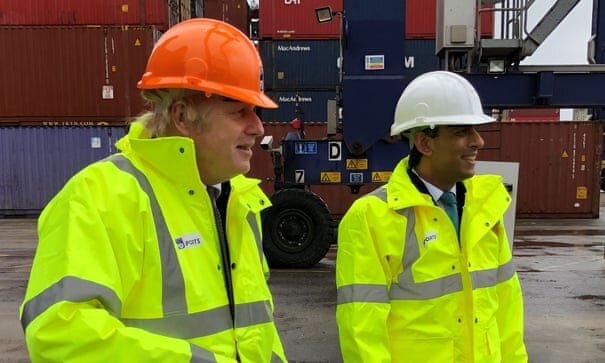
‘So far, the partnership of Boris Johnson and the chancellor, Rishi Sunak, has delivered nothing on climate.’ Photograph: Tom Wilkinson/PA

Targets are all very well. But not if there is no way of reaching them. In which case, they are a sham. This is the problem now confronting the government. The UK’s stated goal of reducing greenhouse gas emissions by 78% by 2035 compared with 1990 levels is very ambitious. “Remarkable” was the word used last week by Lord Deben (the former Conservative environment secretary John Gummer). He chairs the climate change committee (CCC) that advises the government. Its latest reports make an unflattering contrast between impressive aims and the absence of plans to meet them.

A strategy setting out how the UK intends to meet its net zero pledge is promised before the Cop26 climate talks in Glasgow in November. But there is little sign so far that ministers grasp the scale of the challenge. Not a single government department, the CCC finds, is moving at the necessary pace. Transport, agriculture, buildings, industry: in all the key emissions-producing sectors bar power generation, there has been an alarming lack of progress. Cuts to the aid budget now overseen by the Foreign Office mean that it too is implicated. Support for poor countries as they make the transition away from fossil fuels has long been recognised as a crucial element of the global climate process.

The UK is far from the only country that is falling far short on its commitments. Pakistan’s climate minister, Malik Amin Aslam, described the allocation of funding in the final communique of the recent G7 meeting as “peanuts”. Leaks from an upcoming report by UN scientists highlight growing concerns that – with emissions expected to bounce back rapidly after the pandemic – tipping points such as the melting of polar ice sheets could come sooner than expected. Alarm at such findings has led a group of scientists to form a new expert group, modelled on the UK’s Independent Sage, with a view to boosting public awareness. But as host of Cop26, and as one of the biggest historical emitters due to early industrialisation, the UK has a special responsibility to stop prevaricating.

The CCC sets out the steps that ministers should now take. The restoration of the green homes grant scheme and the phasing out of gas boilers could form part of plans to boost jobs and skills as well as cutting emissions. The outsize carbon footprint of the UK’s ancient (by international standards) and poorly insulated housing stock has been ignored for far too long. It shouldn’t need pointing out that any new housing must be built to the strictest environmental standards. That it does is scandalous, and speaks volumes about the housebuilding industry’s influence on the government.

The impact of Covid on transport has been tumultuous and requires addressing in a number of ways if increased pollution from road traffic is to be avoided. The Labour-led Welsh government struck the right note last week with a promise to freeze all road-building plans. The UK government’s £27bn plans for new roads must now be revised, while London’s mayor, Sadiq Khan, should follow Wales’s example by cancelling plans for a new tunnel under the Thames. Higher taxes on flying are unpopular, but necessary if people are to be persuaded to use trains instead. Meat consumption must be reduced.

None of these ideas is new. But the buildup to November’s conference is a unique and historic moment. So far, the partnership of Boris Johnson and the chancellor, Rishi Sunak, has delivered nothing on climate. According to the CCC, ministers “blunder into high-carbon choices”. If this doesn’t change in response to the latest warnings, the risk of a diplomatic and environmental catastrophe following not far behind the pandemic will continue to rise.

$1 billion fund for renewables among key energy commitments made during UN ministerial forums

The IKEA Foundation and The Rockefeller Foundation have announced plans to launch a $1 billion fund to boost access to renewable energy in developing countries – one of the key commitments made during a series of virtual UN ministerial forums this week.

image1170x530cropped (2).jpg

UNDP I New power cube technology on display in Vanuatu. The cubes are charged with electricity using solar rays.

All financial institutions must align with the #ParisAgreement. This means an end to financing energy projects reliant on unabated fossil fuels as soon as possible!

Learn more from the Financing #SustainableEnergy report for #HLDE2021➡️ https://t.co/vzkwkgN0rc pic.twitter.com/cCzvjq1BUb
— UN DESA (@UNDESA) June 25, 2021

Some 50 ministers outlined their plans to reduce emissions and ensure that all people have access to electricity and clean cooking fuels, as the world transitions away from fossil fuels, towards renewable energy.

Laying the groundwork

The ministerial gatherings laid the groundwork for the UN High-level Dialogue on Energy that will be held on 20 September to accelerate action on the Sustainable Development Goals, in particular, on the energy goal, SDG 7.

UN Secretary-General António Guterres told the Forums: “We are running far behind in the race against time to achieve Sustainable Development Goal 7 by 2030, and net-zero emissions by mid-century.

He called on “every country, city, financial institution and company to raise ambition and submit ‘Energy Compacts’” for the High-level Dialogue.

Globally, nearly 760 million people lack access to electricity and 2.6 billion continue to cook with traditional fuels like wood that not only contribute to carbon emissions but also causes 4 million deaths each year from indoor smoke.

Record pledge

The commitment by the IKEA and Rockefeller Foundations is the largest single philanthropic commitment ever on this issue. A consortium of organizations led by Kenya, Malawi and the Netherlands also advanced a call to action for clean cooking. 

During the Forums, more than 25 commitments were announced as “Energy Compacts” – voluntary actions pledged to achieve clean, affordable energy for all by 2030.

National Energy Compacts were previewed by ministers from Brazil, Denmark, the Dominican Republic, Germany, India, Nauru and the Netherlands.

A Compact setting a regional target of 70% renewable energy in the power matrix for Latin America, was signed onto by Chile, Colombia, the Dominican Republic and the Inter-American Development Bank, with other countries in the region invited to join.

Big business buy-in

The ambition of governments was met by strong private sector engagement, with tech giant Google reaffirming its commitment to source carbon-free energy for all of its operations in all places, at all times, by 2030.

Joining them were companies from the hard-to-abate cement sector – Ultratech and JK Cement – which made commitments for increased use of renewables and waste heat recovery systems for greater energy efficiency.  India’s largest power supplier, NTPC, pledged to achieve 60GW of renewable energy capacity by 2032.

GOGLA, a global association for the off-grid solar energy industry, committed to delivering improved electricity access for 1 billion people by 2030.

And the Association for Rural Electricity said it would work with the private sector to deliver sustainable electricity services to at least 500 million additional people.

A number of region and city networks said they will be putting commitments on the table for the September Dialogue, with the Basque region of Spain and the City of Ithaca, New York, announcing forward-looking Energy Compacts this week.

Youth leadership

At the Forums, young activists showed that they continue to lead from the front on energy and climate issues, with several strong keynote statements from youth calling on governments to take action.

IPCC steps up warning on climate tipping points in leaked draft report

Fiona Harvey and agencies

Scientists increasingly concerned about thresholds beyond which recovery may become impossible

Dried area of the Penuelas Lake, in Valparaiso, Chile. Hunger, drought and disease will afflict tens of millions more people within decades, according to a draft UN assessment. Photograph: Martin Bernetti/AFP/Getty Images

Dried area of the Penuelas Lake, in Valparaiso, Chile. Hunger, drought and disease will afflict tens of millions more people within decades, according to a draft UN assessment. Photograph: Martin Bernetti/AFP/Getty Images

Climate scientists are increasingly concerned that global heating will trigger tipping points in Earth’s natural systems, which will lead to widespread and possibly irrevocable disaster, unless action is taken urgently.

The impacts are likely to be much closer than most people realise, a a draft report from the world’s leading climate scientists suggests, and will fundamentally reshape life in the coming decades even if greenhouse gas emissions are brought under some control.
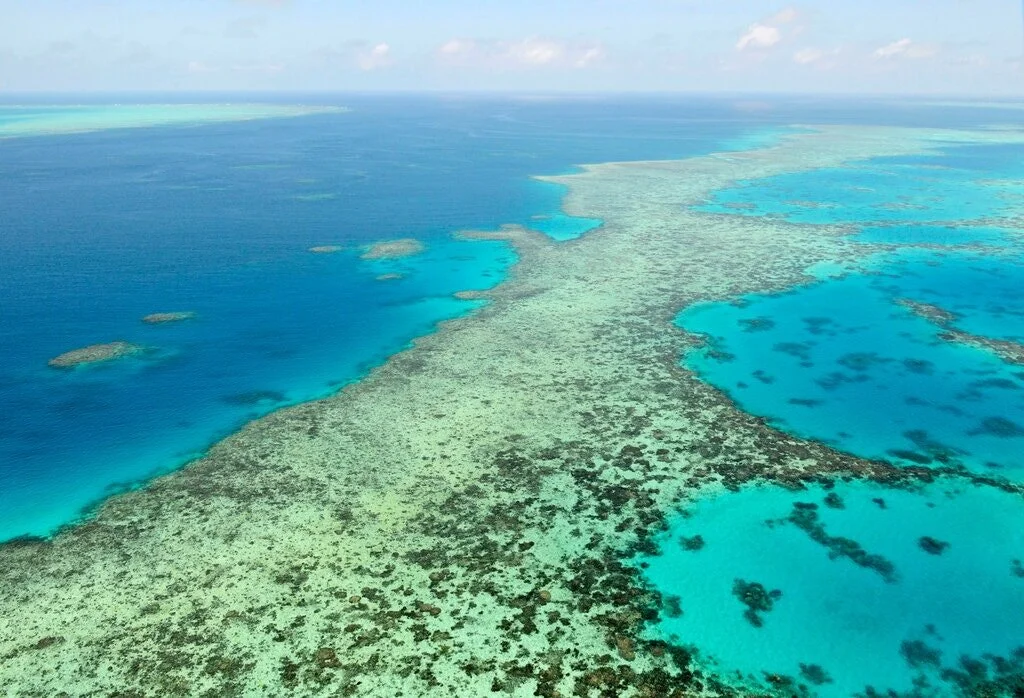
The Intergovernmental Panel on Climate Change is preparing a landmark report to be published in stages this summer and next year. Most of the report will not be published in time for consideration by policymakers at Cop26, the UN climate talks taking place in November in Glasgow.

A draft of the IPCC report apparently from early this year was leaked to Agence France-Presse, which reported on its findings on Thursday. The draft warns of a series of thresholds beyond which recovery from climate breakdown may become impossible. It warns: “Life on Earth can recover from a drastic climate shift by evolving into new species and creating new ecosystems … humans cannot.”

Tipping points are triggered when temperatures reach a certain level, whereby one impact rapidly leads to a series of cascading events with vast repercussions. For instance, as rising temperatures lead to the melting of Arctic permafrost, the unfreezing soil releases methane, a powerful greenhouse gas that in turn causes more heating.

Other tipping points include the melting of polar ice sheets, which once under way may be almost impossible to reverse even if carbon emissions are rapidly reduced, and which would raise sea levels catastrophically over many decades, and the possibility of the Amazon rainforest switching suddenly to savannah, which scientists have said could come quickly and with relatively small temperature rises.

Bob Ward, the policy and communications director at the Grantham Research Institute on Climate Change and the Environment at the London School of Economics, said: “Scientists have identified several potential regional and global thresholds or tipping points in the climate beyond which impacts become unstoppable or irreversible, or accelerate. They could create huge social and economic responses, such as population displacements and conflict, and so represent the largest potential risks of climate change. Tipping points should be the climate change impacts about which policymakers worry the most, but they are often left out of assessments by scientists and economists because they are difficult to quantify.”

Previous work by the IPCC has been criticised for failing to take account of tipping points. The new report is set to contain the body’s strongest warnings yet on the subject.

Simon Lewis, a professor of global change science at University College London, said: “Nothing in the IPCC report should be a surprise, as all the information comes from the scientific literature. But put together, the stark message from the IPCC is that increasingly severe heatwaves, fires, floods and droughts are coming our way with dire impacts for many countries. On top of this are some irreversible changes, often called tipping points, such as where high temperatures and droughts mean parts of the Amazon rainforest can’t persist. These tipping points may then link, like toppling dominoes.”

He added: “The exact timing of tipping points and the links between them is not well understood by scientists, so they have been under-reported in past IPCC assessments. The blunter language from the IPCC this time is welcome, as people need to know what is at stake if society does not take action to immediately slash carbon emissions.”

Myles Allen, a professor of geosystem science at the University of Oxford, declined to comment on the draft report but stressed that avoiding dire impacts was still possible. “It’s important people don’t get the message ‘we’re doomed anyway so why bother?’. This is a fixable problem. We could stop global warming in a generation if we wanted to, which would mean limiting future warming to not much more than has happened already this century. We also know how. It’s just a matter of getting on with it,” he said.

According to AFP, the IPCC draft details at least 12 potential tipping points. “The worst is yet to come, affecting our children’s and grandchildren’s lives much more than our own,” the report says.

The reportmay be subject to minor changes in the coming months as the IPCC shifts its focus to a key executive summary for policymakers.

It says that with 1.1C of warming above pre-industrial levels clocked so far, the climate is already changing. A decade ago, scientists believed that limiting global warming to 2C above mid-19th-century levels would be enough to safeguard the future.

That goal is enshrined in the 2015 Paris agreement, adopted by nearly 200 nations who vowed to collectively cap warming at “well below” 2C – and 1.5C if possible. On current trends the world is heading for 3C at best.

Earlier models predicted that Earth-altering climate change was not likely before 2100. But the UN draft report says prolonged warming even beyond 1.5C could produce “progressively serious, centuries-long and, in some cases, irreversible consequences.”

Water of death: how arsenic is poisoning rural communities in India

Deepa Padmanaban

‘A crisis is brewing’, experts warn, with contaminated water exposing villagers to increased risk of cancer and affecting children’s brain development

Women collect water in Bhopal, Madhya Pradesh. Arsenic contamination in communities across India has increased by 145% in the past five years. Photograph: Sanjeev Gupta/EPA

Women collect water in Bhopal, Madhya Pradesh. Arsenic contamination in communities across India has increased by 145% in the past five years. Photograph: Sanjeev Gupta/EPA

Nine members of Pankaj Rai’s family have died from cancer over the past 20 years. But the 25-year-old farmer from Bihar only found out their deaths were likely a result of arsenic poisoning when his father got sick.

In 2017, Pankaj took his father, Ganesh Rai, to the Mahavir Cancer Institute & Research Centre in Patna. Ganesh had stage 4 kidney cancer. But Dr Arun Kumar, a scientist at the institute, identified the severe skin lesions on his body as signs of arsenic poisoning.

Pankaj’s sister and a number of villagers had also developed skin lesions and gastric problems but did not know why.

Kumar and his team visited the family’s home in Sabalpur village, east of Patna, where they had moved in 2000. They analysed groundwater samples and took hair samples, where arsenic can accumulate if there is long-term exposure.

In April, they published their findings. The team discovered high levels of arsenic in the groundwater – 244ug/l. The World Health Organization recommended limit is 10ug/l. Almost 90% of hair samples had above permissible levels of 0.2mg/kg. The highest arsenic level in hair was 35.5mg/kg.

They also found six people who had participated in their research had died of cancer, including Pankaj’s father.

Arsenic is listed by the WHO as one of 10 chemicals of major health concern. About 300 million people worldwide are affected by arsenic-contaminated groundwater; chief among them are those living in India and Bangladesh.

Arsenic contamination in communities across India has increased by 145% in the past five years.

Arsenic occurs naturally and can be released from soil and rocks due to the weathering process into surrounding aquifers.

Ashok Kumar Ghosh, a scientist and chair of the Bihar State Pollution Control Board, says: “Our studies have shown a direct correlation between arsenic and cancer.”

Elevated levels of arsenic in groundwater have also been associated with neurological and cardiovascular disease, and other serious health concerns.

Arsenic contamination in India was widespread in the 1990s in West Bengal and later in Bihar, Jharkhand, Uttar Pradesh, Assam and Manipur. A study in Bihar found high levels of arsenic in water samples from hand pumps installed to access groundwater for drinking.

“In the Gangetic Plain [an extensive stretch of land in the country’s central north] people are unaware they are consuming arsenic-contaminated water and falling sick,” says Kumar.

According to Ghosh, more than 1 million people have died in Bihar from arsenic-contaminated groundwater. “In 18 districts out of 38, the arsenic level is over the permissible level 10ug/l. We have recorded levels up to 760ug/l.”

Lallanji Ojha, 70, a retired farmer from Semariya Ojha Patti village, has suffered from liver cirrhosis for the past 25 years. His village was the first in Bihar to report arsenic contamination, with levels up to 1,650ug/L. “Since I have got this disease, I am not able to eat well even though I feel hungry, due to gastrointestinal problems,” he says, adding that he believes everyone in the village has some sort of digestive problem.

But a complaint filed with the National Human Rights Commission of India by the Inner Voice Foundation, a research organisation based in Uttar Pradesh, has triggered action.

Saurabh Singh, the organisation’s founder, filed the complaint after discovering that children in the district were drinking water containing high levels of arsenic after testing school pipes.

“If they are exposed to this for more than five or six years, they will be impacted. This is a big crisis brewing,” he says. Studies have found arsenic exposure can affect brain development, impair memory and intelligence in children.

Skin lesions from arsenic poisoning. Photograph: Dr Arun Kumar

Skin lesions from arsenic poisoning. Photograph: Dr Arun Kumar

In 2019, India’s rights commission directed West Bengal, Bihar and Uttar Pradesh to address the problem.

Bihar state government says it will set up a taskforce to prevent, detect and manage arsenic poisoning. They also launched the har ghar nal ka jal (tap water for every house) project, aiming to provide clean and safe piped water.

In West Bengal a water quality database using geographic information systems to survey sites contaminated with arsenic is being developed and awareness programmes carried out.

In 2019, the Indian government introduced the Jal Jeevan Mission, which aims to supply safe drinking water through taps to households in rural areas by 2024.

Just before the pandemic led to a national lockdown last year, Kumar’s team installed an arsenic filtration pump in Pankaj’s house in Sabalpur. Although they have not been able to go back to check the impact, Pankaj says symptoms from arsenic exposure have improved. “My younger sister’s skin lesions have reduced in the last year,” says Pankaj. “If things improve, I hope to get her married soon, and achieve my dream of becoming a successful entrepreneur.”

U.N. Says Great Barrier Reef Is ‘in Danger.’ Australia Bitterly Disagrees

Livia Albeck-Ripka

UNESCO has called on the government to quickly mitigate the effects of climate change on the natural wonder and tourist destination, but officials say they are already doing plenty.

Tourists exploring the Great Barrier Reef last year. Credit...Natalie Grono for The New York Times

Tourists exploring the Great Barrier Reef last year. Credit...Natalie Grono for The New York Times

The United Nations has recommended that the Great Barrier Reef be placed on a list of World Heritage sites that are “in danger,” prompting a fierce reaction from the Australian government, which defended its management of one of the country’s top tourist destinations.

The recommendation, made in a report released on Monday by the U.N. Educational, Scientific and Cultural Organization, describes the long-term outlook for the natural wonder as having “deteriorated from poor to very poor” in the past several years.

“There is no possible doubt that the property is facing ascertained danger,” the report says. It calls on Australia to take decisive and immediate action to mitigate the impacts of climate change on the fragile reef, which stretches for 1,430 miles off Australia’s northeast coast and can be seen from space.

Inside Australia, climate activists seized on the UNESCO report to argue that the country’s conservative government, whose intimate ties to the coal industry have long stalled progress on climate change, had been put on notice.

Public support for stronger climate measures has grown steadily since devastating wildfires destroyed large areas of the country’s bushland in 2019 and 2020.

Sarah Hanson-Young, a senator and the environment spokeswoman for the Australian Greens party, said the recommendation was a “warning sign to Australia from a number of other countries that we really have to step up our climate ambitions.”

“We have to do better, and this is just the latest turning of the screws,” she added.

Public support for stronger climate measures has grown since the devastating wildfires of 2019 and 2020.Credit...Matthew Abbott for The New York Times

Public support for stronger climate measures has grown since the devastating wildfires of 2019 and 2020.Credit...Matthew Abbott for The New York Times

The government, however, rejected any such suggestion. It challenged the decision — a recommendation that will be considered by the United Nations next month — as unfounded, citing Australia’s “world-leading reef management” and its $2.3 billion investment in reef protection.

“This draft recommendation has been made without examining the reef first hand, and without the latest information,” Sussan Ley, Australia’s minister for the environment, said in a statement released on Tuesday, adding that she had expressed her concerns in a call to the director general of UNESCO.

“I made it clear that we will contest this flawed approach, one that has been taken without adequate consultation,” Ms. Ley said. “This sends a poor signal to those nations who are not making the investments in reef protection that we are making.”

Leading conservative politicians claimed that the move had been driven by politics, noting that the 21-nation U.N. committee is currently chaired by China, whose relations with Australia are at their lowest point in years.

Some reef tourism operators also contested UNESCO’s characterization of the reef’s health. They said it retains its pristine beauty despite the threats it faces, and that a perception that it is dying will only further damage tourism, an industry vital to coastal areas.

“People just think, ‘Oh well, go see something else,’” said Scotty Garden, the chief executive of Passions of Paradise, a reef tour company. He added that he and other operators were committed to educating tourists about the challenges the huge ecosystem is confronting.

But scientists said that it had long been clear that the reef was suffering, citing mass coral bleaching events in 2016, 2017 and 2020 that have seriously damaged the ecosystem and its capacity to recover.

“This hasn’t come as a surprise to anyone. For the government to complain they were blindsided and ambushed is a bit cute,” said Jon Day, a senior research fellow at the ARC Center of Excellence for Coral Reef Studies at James Cook University in Townsville, Australia.

“This isn’t just about the reef,” Dr. Day added, noting that climate change was becoming an increasing threat to most World Heritage sites, both natural and cultural.

Scientists warn that the reef’s future is in serious peril because of climate change.Credit...Kyodo News, via Associated Press

Scientists warn that the reef’s future is in serious peril because of climate change.Credit...Kyodo News, via Associated Press

UNESCO lists World Heritage sites based on criteria that prove their “outstanding universal value.” When these characteristics are threatened, most often by conflict and war, natural disasters, pollution or unchecked development, the council lists the sites as “in danger” in an effort to raise awareness and encourage governments to take action.

Sites listed as endangered have included the Galápagos Islands, some 600 miles off the coast of Ecuador, which were later removed, and the Iranian city of Bam, which was devastated by an earthquake in 2003. If sites are destroyed, they are sometimes removed completely.

In 2015, UNESCO recommended shifting the status of the Great Barrier Reef to “in danger.” But successful lobbying by a conservative-led government, which claimed that the group was engaged in a “misinformation” campaign, stopped the site from being reclassified.

A Reef 2050 Plan instituted that year has since made some commendable strides, according to a government report released in 2019, but ultimately has failed to stop the reef’s decline. The report added that “accelerated action at all possible levels is required to address the threat from climate change.”

Scientists warn that the reef’s future is in serious peril, as it faces compounding threats including rising sea temperatures, diminished water quality from sediment runoff, more powerful cyclones and swarms of crown-of-thorns starfish.

Coral is extremely sensitive to even minor rises in temperature, making it a barometer for the world’s overall progress in stalling global warming.

“Business-as-usual managing of the Great Barrier Reef is not stuff to stop its ongoing decline,” said Terry Hughes, a professor at the ARC Center of Excellence for Coral Reef Studies.

“If we can reach the Paris target, or very close to it, we’ll still have a Barrier Reef,” he said, referring to global climate pledges reached in France in 2015. But, he added, “we’ve got a narrowing window of opportunity.”