The Green Digest: Untold Toxicological impact of Chemicals and other global concerns

AFRICA: The perspective of Africa’s colonialism from the lens of a political administration has brought skeptical reviews from African historians. Highlighting Nigeria as an example, Colonialism has been more of commercial motives rather than nationalistic aspirations. The British rulers were more concerned about companies protecting their trading rights than establishing the communal rights of indigenes.

COVID-19: The environmental impact of the COVID-19 pandemic has set in motion two choices that humanity would have to embrace for environmental wellbeing: on one hand, we could accept the Great Reset initiative and become eco-conscious in our economic reformations or on the other hand we wait for another global catastrophe to impress earth’s restraining capacity. The paradox of this global catastrophe will indeed do more harm than good to humanity as evident in this pandemic.
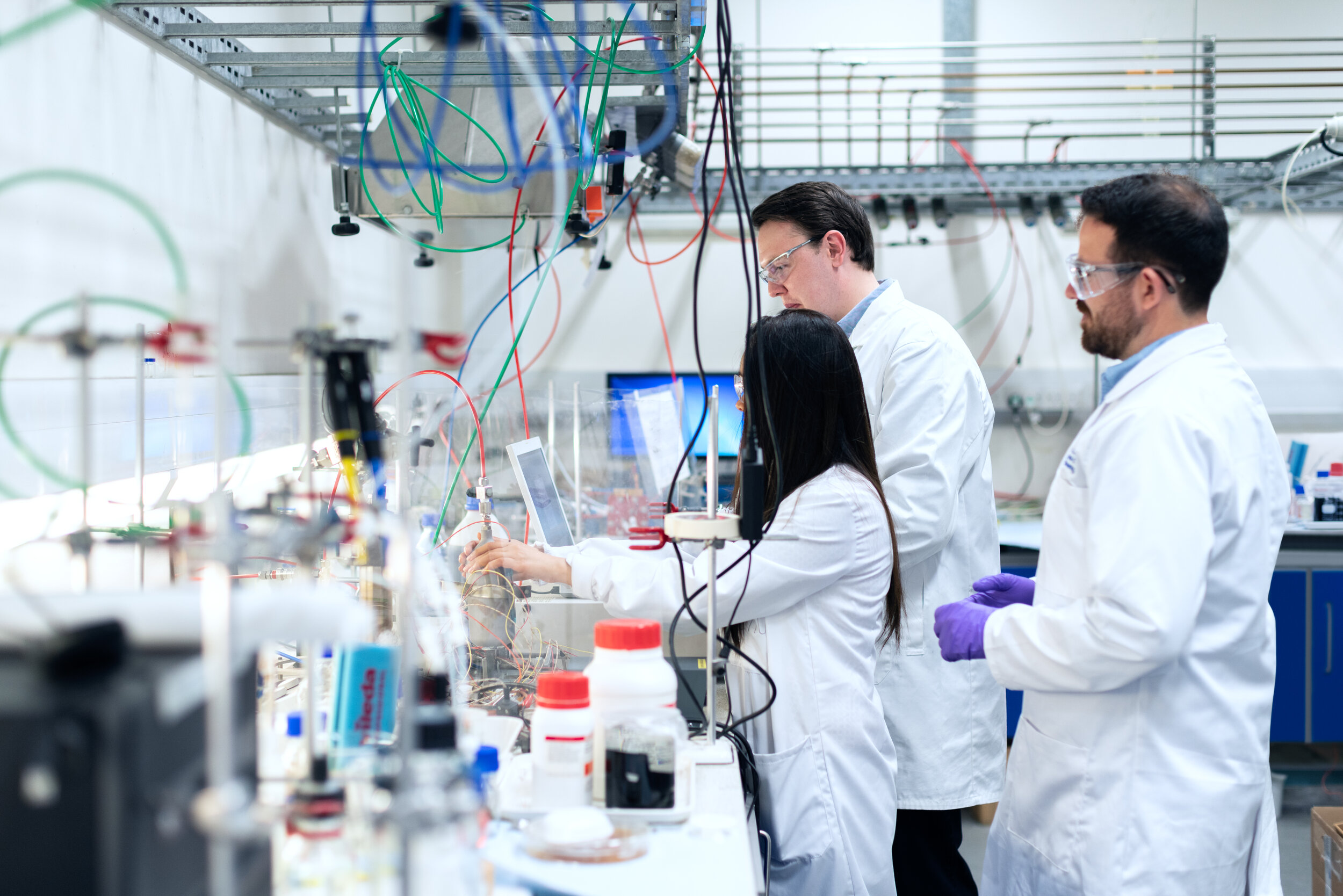

HEALTH: Man-made chemicals have untold consequences to human biology. These artificial chemicals have a way of disrupting biological processes such as aging, metabolism, and the immune system. According to American Chemical Society, CAS, there have been 167 million registered chemicals in 2020, and according to the Royal Society of Chemistry, less than 1% of these chemicals have been tested in the US. The result of this is untold toxicological effects on human health.
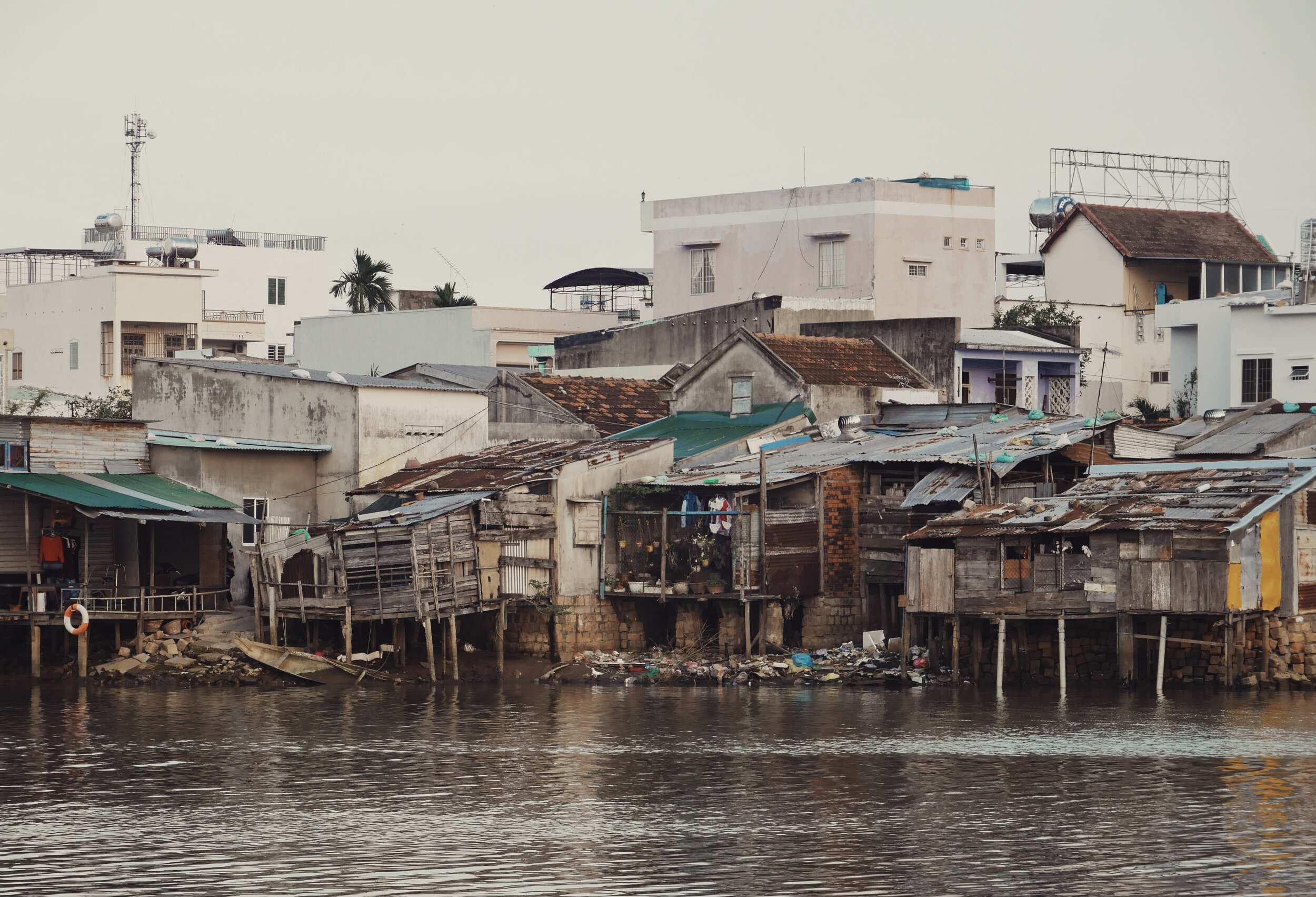
SUSTAINABILITY: Disregarding environmental mysticism and eschatology about the vengeance of the earth against negative human activities does not reduce the drastic impact of climate change. What will the world be like in a post COVID era? Expert opinions reveal that most countries, especially in Europe are bracing up to take the challenge of leading a green world post COVID-19.

SOUTH-EAST ASIA: The role of the private sector in the eradication of poverty and inequality is crucial to sustainable development. The United Nations in collaboration with the Global Compact Network of Businesses in Thailand are making sustainable innovations towards achieving a sustainable post-pandemic world. Such innovations include recycling of 500 billion plastics yearly by 2025, the use of electric motorcycle taxis, and the manufacture of biocups from palm trees rather than plastic cups from oil.

UNITED STATES: The importance of the United States upcoming election cannot be overemphasized. It will indeed be a game changer for global response against climate change. The US stands as the world second largest emitter of carbon after China, and another four years of Trump’s administration will see the race to carbon neutrality tossed aside indefinitely.


The Green Digest: World Food Day 2020 Grow, Nourish, Sustain. Together

The Green Institute

World Food Day should not be erroneously construed to mean a day for excessive eating or to encourage unhealthy eating habits. It proposes a scientific and empathetic evaluation of the global food system. As the website of the World Food Day, United States appropriately phrases it, “it is a day of action against hunger”. Furthermore, the FAO of the United Nations affirmed the importance of World Food Day by saying,

World Food Day is calling for global solidarity to help all populations, and especially the most vulnerable, to recover from the crisis, and to make food systems more resilient and robust so they can withstand increasing volatility and climate shocks, deliver affordable and sustainable healthy diets for all, and decent livelihoods for food system workers.”

This serves as a reminder that in handling global challenges such as food insecurity, multilateralism always trumps unilateral approaches. We cannot sit back and fold our arms as food insecurity rages unfettered. We must rise to the occasion amidst the COVID-19 pandemic because our collective action determines our collective future.

As the Food and Agriculture Organization (FAO) marks its 75th anniversary on World Food Day with the theme Grow, Nourish, Sustain. Together., we should bear in mind that the fight against chronic hunger and malnutrition is unending. The current pandemic has emphasized loopholes in our food systems, reinstating the need for a global recovery response that prioritizes resilient and sustainable food production. The FAO has been unwavering and creative in its recovery response to alleviate global food crises. According to the FAO, there has been a steady increase in hunger even before the COVID-19 pandemic. In their report, almost 690 million people went hungry and according to The State of Food Security and Nutrition in the World 2020, the stakes of an additional 130 million people drifting into chronic hunger by the end of 2020 are high. The Great Reset Initiative propounded by the World Economic Forum (WEF) will go a long way if it includes infrastructures for sustainable food production and distribution. FAO Director-General QU Dongyu quipped: “Our ability to act, in our shared best interest and for greater collective impact, has never been more important.” We need more cooperation, not less.

The COVID-19 pandemic has indeed brought to limelight the challenges of every aspect of human living including food production, distribution and supply. The response initiative forwarded by the FAO’s COVID-19 Response and Recovery Programme spans seven key areas including: Global Humanitarian Response Plan, Data for Decision-making, Economic Inclusion and Social Protection to reduce Poverty, Trade and Food Safety Standards, Boosting Small Holder Resilience for Recovery, Preventing the Next Zoonotic Pandemic, and Food Systems Transformation. The FAO is therefore calling for a 1.3billion dollars stimulus package during and after the pandemic to provide nutritious food to most affected and vulnerable regions.

There are various risk factors to food insecurity. Prominent among these are poverty and conflict. Poverty reduces people’s accessibility to nutritious food, and according to the United Nations 122 million out of 144 million stunted children are found in conflicted zones/countries.

According to the World Food Programme Hunger Statistics, 821 million people – one in nine – still go to bed on an empty stomach each night, and one in three suffers from some form of malnutrition. The challenges of our food systems go beyond food availability to include various forms of malnutrition which include: undernutrition (wasting, stunting, and underweight), inadequate vitamins or minerals, overweight, obesity, and resulting diet-related non-communicable diseases. Key statistics according to the World Health Organization are:

  • 1.9 billion adults are overweight or obese, while 462 million are underweight.

  • 47 million children under 5 years of age are wasted, 14.3 million are severely wasted and 144 million are stunted, while 38.3 million are overweight or obese.

  • Around 45% of deaths among children under 5 years of age are linked to undernutrition. These mostly occur in low- and middle-income countries. At the same time, in these same countries, rates of childhood overweight and obesity are rising.

In closing, World Food Day should indeed serve as a wake-up call that we are far from achieving Zero Hunger as stipulated in SDG 2 of the Sustainable Development Goals. Have a participatory World Food Day.

Are climate scientists being too cautious when linking extreme weather to climate change?

University of Washington

In this year of extreme weather events -- from devastating West Coast wildfires to tropical Atlantic storms that have exhausted the alphabet -- scientists and members of the public are asking when these extreme events can be scientifically linked to climate change.

Dale Durran, a professor of atmospheric sciences at the University of Washington, argues that climate science need to approach this question in a way similar to how weather forecasters issue warnings for hazardous weather.

In a new paper, published in the October issue of the Bulletin of the American Meteorological Society, he draws on the weather forecasting community's experience in predicting extreme weather events such as tornadoes, flash floods, high winds and winter storms. If forecasters send out a mistaken alert too often, people will start to ignore them. If they don't alert for severe events, people will get hurt. How can the atmospheric sciences community find the right balance?

Most current approaches to attributing extreme weather events to global warming, he says, such as the conditions leading to the ongoing Western wildfires, focus on the likelihood of raising a false alarm. Scientists do this by using statistics to estimate the increase in the probability of that event that is attributable to climate change. Those statistical measures are closely related to the "false alarm ratio," an important metric used to assess the quality of hazardous weather warnings.

But there is a second key metric used to assess the performance of weather forecasters, he argues: The probably that the forecast will correctly warn of events that actually occur, known as the "probability of detection." The ideal probability of detection score is 100%, while the ideal false-alarm rate would be zero.

Probability of detection has mostly been ignored when it comes to linking extreme events to climate change, he says. Yet both weather forecasting and climate change attribution face a tradeoff between the two. In both weather forecasting and climate-change attribution, calculations in the paper show that raising the thresholds to reduce false alarms produces a much greater drop in the probability of detection.

Drawing on a hypothetical example of a tornado forecaster whose false alarm ratio is zero, but is accompanied by a low probability of detection, he writes that such an "overly cautious tornado forecasting strategy might be argued by some to be smart politics in the context of attributing extreme events to global warming, but it is inconsistent with the way meteorologists warn for a wide range of hazardous weather, and arguably with the way society expects to be warned about threats to property and human life."

Why does this matter? The paper concludes by noting: "If a forecaster fails to warn for a tornado there may be serious consequences and loss of life, but missing the forecast does not make next year's tornadoes more severe. On the other hand, every failure to alert the public about those extreme events actually influenced by global warming facilitates the illusion that humankind has time to delay the actions required to address the source of that warming. Because the residence time of CO2 in the atmosphere is many hundreds to thousands of years the cumulative consequences of such errors can have a very long lifetime."

Why We Need Trees to End to Poverty - Landmark Report

Alison Kentish

Amid the Covid-19 pandemic and a projected rise in extreme poverty, a team of scientists says the world can no longer afford to overlook the role of forests and trees in poverty eradication. With extreme poverty (living on $1.90 a day) projected to rise for the first time in over 20 years, a new study has concluded that global poverty eradication efforts could be futile in the absence of forests and trees.

Forest cover on the east of Saint Lucia. Forests and trees play a significant role in poverty alleviation and ultimately, eradication. Credit: Alison Kentish/IPS

Forest cover on the east of Saint Lucia. Forests and trees play a significant role in poverty alleviation and ultimately, eradication. Credit: Alison Kentish/IPS

Twenty-one scientists and over 40 contributing authors spent the last two years studying the role of forests and trees in poverty alleviation and ultimately, eradication.  The Global Forest Expert Panel issued its findings on Oct. 15, in a report titled, "Forests, Trees and the Eradication of Poverty: Potential and Limitations".

The report comes amid two global challenges that are disproportionately impacting the poor and vulnerable - the COVID-19 pandemic and climate change. According to the United Nations, 71 million people are expected to be pushed back into extreme poverty in 2020, a major threat to Sustainable Development Goal 1, ending poverty in all its forms, everywhere.

Lead researcher and chair of the International Union of Forest Research Organisations Professor Daniel C. Miller told IPS that while forests and trees can help the severe losses at the intersection of climate change, zoonotic disease outbreaks and poverty alleviation, they continue to be overlooked in mainstream policy discourse.

"A quarter of the world's population lives in or near a forest and trees actively contribute to human well-being, particularly the most vulnerable among us. This research hopes to bring to light the available scientific evidence on how forests have contributed to poverty alleviation and translate it in a way that is accessible to policy makers," he said.

Globally forests are a vital source of food, fuel and ecotourism services. They also help to conserve water and soil resources and boast climate change mitigating properties such as carbon sequestration, the process of absorbing and storing carbon.

The report states that the rural poor need forests for subsistence and income generation, but in one of its chief findings, reported that inequality in the distribution of forest benefits continues to hurt the vulnerable. 

"To illustrate, in large scale logging on indigenous lands or where marginalised people live, timber is the most valuable forest product, yet that value is often not accrued to the people who have to deal with the aftermath of not having forests anymore," said Miller.

The researchers are hoping that the report can help to inform policy on issues such as equitable and sustainable forest use and conservation. Along with their findings, they have prepared a policy brief for lawmakers. That document takes a multi-dimensional look at poverty, assessing both the monetary value of forests and tree resources and their impact on human well-being, health and safety.

For two small islands in the Eastern Caribbean, the report's findings complement ongoing sustainable forestry for poverty alleviation programs. In 106, Saint Lucia, which boasts 25,000 acres of forest or 38 percent of its land area, launched a 10-year forest protection plan. The country's most senior forester Alwin Dornelly told IPS that this document was ahead of its time, as Saint Lucia's is well in keeping with some of the report's major recommendations.

"We simply cannot do without our forests. 85 percent of our country's water sources are in the forests. Our fresh water supply depends on the trees. The plan underscores forest protection for lives and livelihoods; from charcoal for fire and timber for furniture to agricultural produce for household use and for sale by residents of rural communities. Sustainability use of forest resources is a hallmark of this plan," he said.

The forestry department monitors the country' eco-trails, popular with nature tourists who take part in camping, hiking and bird watching, activities that create employment for nearby residents and based on the sustainable forest livelihoods component of the 10-year plan. According to the global report ecotourism activities are among the practices that may lead to greater equity in forest benefits.

The report is also a morale booster for forestry officials on the island of Dominica, who are celebrating reforestation gains. Known for its lush, green vegetation, forests carpet 60 percent of the island and its Morne Trois Piton National Park is a U.N. Educational, Scientific and Cultural Organisation World Heritage Site. It has taken just over three years, but the country has recovered the almost one-third of forest coverage destroyed by Hurricane Maria in 2017.

"Dominicans have the right to reap the benefits of sustainable forest resources. We suffered 90 percent defoliage after the 2017 hurricane and 33 percent forest destruction. We are thankful for both natural regeneration and our national tree planting initiative. We have eight community plant nurseries and propagation centres for sustained reforestation – nurseries we hope turn handover for community ownership. We understand that forest loss is livelihood loss, especially for those in rural areas," the country's forestry chief Michinton Burton told IPS.

The English-speaking Caribbean is not wildly cited in the study, something Miller says falls under its ‘limitations' segment, adding that more research is needed on smaller islands. The forest experts who spoke to IPS, however, say the report's warnings, calls to action and findings are instructive for policy makers globally.

The researchers have made it clear that forests and trees are not a cure-all for poverty but are essential to the overall solution. With health experts predicting future pandemics due to ecological degradation and climate scientists warning that the Caribbean will experience more intense hurricanes like Maria, the report states that these challenging times call for a rethink of current poverty eradication measures. It adds that the ability of forests and trees to positively impact lives, health and livelihoods must be a central part of discussions to lift people out of poverty, particularly in rural settings.

The report was launched ahead of this year's observance of International Day for the Eradication of Poverty, World Food Day and the International Day of Rural Women - three important days on the U.N. calendar that promote sustainable livelihoods, food security and poverty eradication.

Jeffrey Sachs: White House's new COVID-19 Strategy is madness

As if Donald Trump's irresponsibility was not already a national tragedy, the White House seems now to favor a controversial approach to Covid-19 that threatens to bring nothing less than mass suffering.

More than 216,000 Americans have already died. Yet on Tuesday, senior Trump administration officials said that they were receptive to pursuing "herd immunity," an approach touted by a group of scientists who have put out what they call the "Great Barrington Declaration." The idea is that the federal government should let the pandemic run its course until most of the population is infected and has ostensibly developed antibodies to ward off future infections. Typical estimates hold that 70% or more of the population would thereby become infected.

According to this idea, vulnerable groups would be targeted for "focused protection," for example, introducing extra precautions such as frequent Covid-19 testing to avoid infections of the elderly living in nursing homes. The rest of the population "should immediately be allowed to resume life as normal," according to the declaration.

This approach runs strongly against the overwhelming consensus of public health specialists, including Dr. Anthony Fauci, the director of the National Institute of Allergy and Infectious Diseases. The new Covid-19 approach would undoubtedly add massively to the suffering in the US in a very short period of time.

The idea that we should not try to control infections other than of vulnerable groups is based on a complete misunderstanding of the real choices facing the US -- or facing any country for that matter. The core mistake is the belief that the only alternative to an economic shutdown is to let the virus spread widely in the population. Instead, a set of basic public health measures is enough, as many other countries have shown, to control the spread of the virus. The proper measures include widespread testing, contact tracing, isolating of infected individuals, wearing face masks, physical distancing, and barring super-spreader events (like Trump rallies). South Korea has exemplified this policy approach, as have many of its neighbors in the Asia-Pacific region.

Sadly, this very basic information seems not to have reached the White House or been understood by it, even though experts already knew in April that the Asia-Pacific region was suppressing the pandemic through these public health measures, and without the need for comprehensive lockdowns (or with only brief lockdowns to give time to scale up the public health measures). By suppressing the virus, these countries have limited the economic fallout.


Indeed, according to the IMF's new report, China, which has suppressed the pandemic by means of public health control, will achieve positive growth of GDP 1.9% this year, compared with America's expected GDP decline of 4.3%. The Trump team is so obsessed with their anti-China propaganda that they utterly refused to learn from China's success in cutting transmission of the virus enabling an economic rebound. Trump and his team have also refused to learn from similar successes in Australia, Japan, New Zealand, and South Korea, all of which have very low transmission of the virus.


The herd immunity approach is a nightmare for four reasons:


First, according to a study published in The Lancet in late September, fewer than 10% of Americans have so far been infected with the novel coronavirus. Another 60% or so of Americans would likely become infected in a herd immunity strategy. That amounts to around 200 million additional cases of Covid-19 in the United States and countless deaths. This would obviously be wanton madness, since the pandemic can be controlled by low-cost and proven public health means.


Second, there would absolutely be no reliable way to protect vulnerable populations through "focused protection." Many older people do not live in nursing or retirement homes where protective measure can systematically be implemented. And as the CDC has alerted, there are vast numbers of vulnerable Americans who are not among the elderly, but who suffer from medical conditions as widespread as obesity, cancer, kidney disease, high blood pressure, chronic obstructive pulmonary disease, diabetes and others. And in addition to people with prior health conditions, the CDC also points to other groups that need extra precautions: pregnant and breastfeeding women, people with disabilities, people with developmental and behavioral disorders, and others.

For a White House team that can't even properly protect its guests at a White House event, the notion that it could suddenly oversee the implementation of "focused protection" to vulnerable people spread throughout the country in the midst of an uncontrolled pandemic is a fantasy.

Third, the proponents of herd immunity seem to discount the fact that in addition to the acute and short term effects of Covid-19, there are also long-term disease consequences for many, ranging from the Covid-19 "brain fog" to long-lasting damage to many organ systems. The evidence continues to mount that Covid-19 is a frighteningly dangerous disease for many people who survive the infection and in ways that scientists are still coming to understand.

Fourth, it's especially ill-timed to let the pandemic run wild when the White House is touting a vaccine as being just around the corner. If a reliable and safe vaccine will soon be available to protect citizens, surely there is overwhelming reason not to become infected now, but rather to stay safe until the vaccine arrives.

Trump's utter ignorance has already resulted in unprecedented suffering, and the latest bad idea would gravely multiply the damage. If implemented, a herd immunity strategy might just be the most reckless action by the White House yet.

For the sake of democracy, Nigeria’s #EndSars campaign against police brutality must prevail

Karen Attiah

People in the world’s largest Black nation have taken to the streets to demand one thing of their police: Stop killing us.

Demonstrators took to the streets of Lagos, Nigeria, Tuesday to protest against police brutality. (Sunday Alamba/AP)

Demonstrators took to the streets of Lagos, Nigeria, Tuesday to protest against police brutality. (Sunday Alamba/AP)

Over the last 10 days, Nigerians have been protesting against the Special Anti-Robbery Squad, a unit of the Nigerian federal police force, after a video emerged of officers allegedly killing a man. Soon the hashtag #EndSars, as the unit is known, began trending internationally. Nigerian President Muhammadu Buhari, a former military dictator, announced that SARS will be disbanded, but that promise has not been enough to quell the anger. Nigerians continue to protest.

Nigeria’s movement comes as protests demanding the protection of Black lives continue in the United States. At their core, the protests carry the same message: A country that allows state security agents to kill and abuse people with impunity is not a mature democracy. And, as in the United States, this is not the first time Nigerians have risen up against police brutality.

Amnesty International documented at least 82 cases of torture, extrajudicial killings, extortion and rape by SARS between January 2017 and May 2020. According to their report, victims held in SARS custody have been subjected to “mock execution, beating, punching and kicking, burning with cigarettes, waterboarding, near-asphyxiation with plastic bags, forcing detainees to assume stressful bodily positions and sexual violence.” Arrests and cases are rarely investigated. Despite the fact that Nigeria criminalized torture in 2017, no SARS officer has been convicted.

In December 2017, after a video circulated of SARS officers fleeing the scene after killing a man, Nigerians took to social media to share their stories of abusive encounters with the police. Back then the federal government promised all manner of reforms and investigations. But protest organizers were clear about what they wanted: SARS needed to be abolished.

In 2016, the World Internal Security and Police Index rated Nigeria’s police forces as the worst in the world. According to recent polls, Nigerians place the majority of the blame on police and government for high rates of human rights violations. For the last 25 years, the government’s response to calls for reform has been a running joke on the continent. Instead of providing better training and disciplining units guilty of abuses, successive Nigerian governments have instead responded with useless committees and panels. In 2006, President Olusegun Obasanjo set up the Danmadami police reform committee. Then, in 2008, President Umaru Musa Yar’Adua’s Presidential Committee on the Reform of the Nigerian Police was set up to investigate the implementation of previous recommendations. In 2012, after reports that the terrorist group Boko Haram had infiltrated the police force, President Goodluck Jonathan fired the inspector general of police. He then proceeded to, you guessed it, set up a yet another committee to reorganize the police force.

And as abuses and impunity persist, Nigeria’s democracy has been dying in the darkness of government committee panels.

The energy and spirit of the Nigerian people is on display. On the ground, it has been Nigerian women and youth who have been the driving force of the protests. Feeling the pressure, a governor this week in Rivers State unconstitutionally banned #EndSars protests, but protesters took to the streets anyway. Nigerians around the world are also rallying around the #EndSars movement. Nigerian superstars, including John Boyega, Davido, Burna Boy and Genevieve Nnaji, have been tweeting in support. Jackie Aina, a Nigerian American beauty influencer, has also been posting information and links to organizations on her social media channels. In Houston, home to one of the largest populations of Nigerians in the United States, the singer Adekunle Gold helped organize a rally to support Nigerians in their protest against police brutality.

Here in the United States, the Congressional Black Caucus has even posted messages of support and solidarity. The #BlackLivesMatter movement has reminded us that for all of our lecturing to other countries about security reform and human rights, the United States has a persistent problem of police brutality and impunity. Worse yet, we’ve exported our own policing methods to other countries. The United States has offered training to Nigerian police forces. In 2017, police officers from Prince William County in Virginia trained members of the Nigerian police in human rights. This is the same police department that recently used tear gas and rubber bullets against peaceful protesters. The United States has also sold equipment and weapons to the Nigerian army and security forces.

Now Nigerians around the world are saying “enough” to police brutality, reinforcing the importance of the fight against police abuse here in the United States. And vice versa: Black Americans could stand to learn more from the years-long fight against Nigeria’s corrupt police force.

Nigeria is one of the most vibrant and dynamic countries in Africa. Sadly, it has had the misfortune of being ruled by shambolic, corrupt governments. But now the country, which has long been divided along religious and ethnic lines, has come together against police brutality, showing the power and spirit of the Nigerian people when pushed to their limits. As they say in Nigeria, “Naija no dey carry last!”

The people of the world’s largest Black nation deserve to prevail over state-sponsored oppression.

Ending world hunger by 2030 would cost $330bn, study finds

Kaamil Ahmed

Research suggests that by targeting enhanced aid money more effectively and with greater innovation, a solution is possible

Malnourished children displaced by the conflict in the Democratic Republic of the Congo are given milk at a centre in Rwanda. Photograph: Simon Wohlfahrt/AFP/Getty Images

Malnourished children displaced by the conflict in the Democratic Republic of the Congo are given milk at a centre in Rwanda. Photograph: Simon Wohlfahrt/AFP/Getty Images

Ending hunger by 2030 would come with a price tag of $330bn (£253bn), according to a study backed by the German government.

Research groups compiled data from 23 countries and found international donors would need to add another $14bn a year to their spending on food security and nutrition over the next 10 years; more than twice their current contribution. Low and middle-income countries would also have to give another $19bn a year, potentially through taxation.

The study, published this week, coincided with warnings that the world has an “immense mountain” to climb in order to end hunger, with 11 countries showing “alarming” levels of hunger, and “serious” levels in another 40, according to the Global Hunger Index.

“We’re trying to solve a problem here – that is, hunger being on the rise – and still almost 700 million people are going to bed hungry at night. Whatever we’re currently spending is not helping those people,” said Carin Smaller, co-director of Ceres2030, a coalition funded by the German government and the Bill and Melinda Gates Foundation.

Smaller said researchers used an economic model that took existing spending and looked at how it could be improved in 14 areas, ranging from social protection and income support, to investment in research and training.

“It’s not about doubling spending to do the same things,” she said.

The research, from the Centre for Development Research, Cornell University, the UN Food and Agricultural Organization (FAO), the International Food Policy Research Institute, and the International Institute for Sustainable Development, found that advancements in technology needed to be matched by support for farmers, especially women, who were often not able to benefit from new techniques or crops that could make harvests more reliable.

It also suggested that work on reducing losses from harvests should be expanded beyond the existing focus on storage, to include more nutritious fruits and vegetables.

The study included the development of an AI tool that analysed half a million research articles from the past 20 years to find evidence on what works to end hunger.

“If rich countries double their aid commitments and help poor countries to prioritise, properly target and scale up cost effective interventions on agricultural R&D, technology, innovation, education, social protection and on trade facilitation, we can end hunger by 2030,” said Maximo Torero, chief economist at the FAO.

More than 7,000 extreme weather events recorded since 2000, says UN

Reuters in Geneva

Sharp rise in number of droughts, floods and wildfires has claimed 1.23 million lives and affected 4.2 billion people

Extreme weather events have increased dramatically in the past 20 years, taking a heavy human and economic toll worldwide, and are likely to wreak further havoc, the UN has said.

Heatwaves and droughts will pose the greatest threat in the next decade, as temperatures continue to rise due to heat-trapping gases, experts said.

China (577) and the US (467) recorded the highest number of disaster events from 2000 to 2019, followed by India (321), the Philippines (304) and Indonesia (278), the UN said in a report issued on Monday, the day before the International Day for Disaster Risk Reduction. Eight of the top 10 countries are in Asia.

Globally, 7,348 major disaster events were recorded, claiming 1.23 million lives, affecting 4.2 billion people and causing $2.97tn (£2.3tn) in economic losses during the two-decade period.

Drought, floods, earthquakes, tsunamis, wildfires and extreme temperature fluctuations were among the events causing major damage.

“The good news is that more lives have been saved, but the bad news is that more people are being affected by the expanding climate emergency,” said Mami Mizutori, the UN secretary general’s special representative for disaster risk reduction. She called for governments to invest in early warning systems and implement disaster risk reduction strategies.

Debarati Guha-Sapir of the centre for research on the epidemiology of disasters at the University of Louvain, Belgium, which provided data for the report, said: “If this level of growth in extreme weather events continues over the next 20 years, the future of mankind looks very bleak indeed.

“Heatwaves are going to be our biggest challenge in the next 10 years, especially in the poor countries,” she said.

Last month was the world’s hottest September on record, with unusually high temperatures recorded off Siberia, in the Middle East, and in parts of South America and Australia, the EU’s Copernicus Climate Change Service said.

Global temperatures will continue to warm over the next five years, and may even temporarily rise to more than 1.5C (2.7F) above pre-industrial levels, the World Meteorological Organization said in July. Scientists have set 1.5C as the ceiling for avoiding catastrophic climate change.

'We've had so many wins': why the green movement can overcome climate crisis

Fiona Harvey

Leaded petrol, acid rain, CFCs … the last 50 years of environmental action have shown how civil society can force governments and business to change

Leaflets printed on “rather grotty” blue paper. That is how Janet Alty will always remember one of the most successful environment campaigns of modern times: the movement to ban lead in petrol.

There were the leaflets she wrote to warn parents at school gates of the dangers, leaflets to persuade voters and politicians, leaflets to drown out the industry voices saying – falsely – there was nothing to worry about.

In the late 1970s, the UK was still poisoning the air with the deadly toxin, despite clear scientific evidence that breathing in lead-tainted air from car exhausts had an effect on development and intelligence. Recently returned from several years in the US, Alty was appalled. Lead had been phased out in the US from 1975. Why was the British government still subjecting children to clear harm?

Robin Russell-Jones asked the same question. A junior doctor, he quickly grasped the nature of the lead problem, moving his family out of London. His fellow campaigner, Robert Stephens, amassed a trove of thousands of scientific papers, keeping them in his garage when his office burned down – he suspected foul play.

Their campaign took years. But in 1983, a damning verdict from the Royal Commission on Environmental Pollution prompted the UK government to decree that both petrol stations and manufacturers must offer lead-free alternatives. Leaded petrol was finally removed from the last petrol pumps in the UK in 1999.

Today, it seems incredible that lead was ever used as a performance improver in car engines. Clean alternatives were available by the 1970s, but making the transition incurred short-term costs, so the motor industry, led by chemicals companies, clung on, lobbying politicians and ridiculing activists.

fuel+pump.jpg

Faced with multiplying, and interlinked, environmental crises in the 2020s – the climate emergency, the sixth extinction stalking the natural world, the plastic scourge in our oceans, the polluted air of teeming metropolises – it is easy to feel overwhelmed. Lockdown offered a tantalising glimpse of a cleaner world, but also revealed a starker truth: that the global economy is not set up to prioritise wellbeing, climate and nature. What can we do, in the face of these devastating odds?

It is easy to forget that environmentalism is arguably the most successful citizens’ mass movement there has been. Working sometimes globally, at other times staying intensely local, activists have transformed the modern world in ways we now take for granted. The ozone hole has shrunk. Whales, if not saved, at least enjoy a moratorium on hunting. Acid rain is no longer the scourge of forests and lakes. Rivers thick with pollution in the 1960s teem with fish. Who remembers that less than 30 years ago, nuclear tests were still taking place in the Pacific? Greenpeace’s Rainbow Warrior ship was blown up by the French government in 1985, with one death and many injuries, in a long-running protest.

As well as giving heart to activists now, these victories contain important lessons. “The environmental movement has been very successful,” says Joanna Watson, who has worked at Friends of the Earth for three decades. “We’ve had so many campaigns and wins. Sometimes it’s been hard to claim success, and sometimes it takes a long time. And sometimes things that worked before won’t work now. But there’s a lot we can learn.”

Lifeless lakes and leafless trees

Acid rain, first identified in the 1850s, took decades to address. The first murmurings of concern came about after the second world war and there were concerted efforts to solve it in the 1960s. But it is the campaign that Nat Keohane, vice-president at the Environmental Defense Fund and a former lecturer at Yale, points to when he wants to invoke the success of the global environmental movement. “The reason I talk about acid rain is that it’s one of the instances where we solved the problem.”

Acid rain occurs when sulphur dioxide and nitrogen oxides react with moist air to form weak acids, which then fall from clouds, killing plants and aquatic life. The scars can still be seen in parts of the US and northern Europe, where acid has etched limestone building facades, and faces have dissolved from statues. But in most of the world – except China, where the problem persists – the lifeless lakes and leafless trees that acid rain created have long since revived.

“Environmental groups led a drumbeat of campaigning on acid rain throughout the 1980s,” says Keohane.

Public pressure in the worst-offending countries – chiefly the US and the UK, which were responsible for acid rain that fell largely on neighbouring countries such as Canada and Scandinavia – was key. Watson recalls one telling advertising campaign: posters printed on litmus paper that said: “When acid rain is falling, you should see red” – offering a vivid illustration of the problem.

Getting businesses onside was a different matter. In the US, that was achieved through a novel mechanism that offered financial incentives from rivals, rather than the public purse. “It was the first successful demonstration of a market-based approach,” says Keohane. US power plant operators were issued with a limited number of allowances for how much sulphur and nitrogen oxides they could emit. They could buy and sell these among themselves, meaning the dirtiest companies had to buy them from those who cleaned up fastest, while the number of allowances available was gradually reduced. This cap-and-trade system operated successfully from 1990, becoming the model for a similar approach to greenhouse gases under the 1997 Kyoto protocol – though that attempt was less successful, because the US rejected it.

“The benefits were 40 times greater than the costs,” says Keohane. “There was an 86% reduction in pollutants, from 1990 to 2015, and there were huge unappreciated benefits beyond acid rain, on cleaning up particulates [an especially harmful form of air pollution].”

What acid rain showed is that businesses can be successfully regulated, without causing economic damage, says Keohane. As with the campaign against lead, companies resisted new rules for years, but when they came, they responded swiftly, showing governments they could afford to be less timid.

‘When we need to act, we can’

There are also lessons for today’s campaigners in the close shaves. Climate change threatens to melt the ice caps, raise sea levels, destroy agriculture over swaths of the world, and is already causing humanitarian disasters. Time is short. But a lesson from 40 years ago shows the world can move quickly and decisively if it has to.

About 15-35km above the surface of the Earth, the ozone layer acts as a filter against the sun’s radiation, blocking about 97% to 99% of medium-frequency ultraviolet light. That is important, because over-exposure to ultraviolet radiation is harmful to most living things, including plants and animals, and causes skin cancers, eye problems and genetic damage in humans.

In 1974 came the first indications that all was not well in the lower stratosphere. Research by Mario Molina, who died last week, and F Sherwood Rowland, both later awarded Nobel prizes, found that chemicals called chlorofluorocarbons (CFCs), commonly used as propellants in aerosols, were likely to be reacting with the ozone and depleting it.

The first moves against CFCs were in the US, Canada, Sweden and a few other countries in 1978, but others hung back, as chemical companies dismissed the fears as theoretical. Then, in 1985, the British Antarctic Survey published clear evidence of damage, in the form of a patch of drastically thinned ozone across the south pole. Their measurements showed 40% less ozone than had been detected 20 years earlier. The science was indisputable.

The world moved quickly. Governments got together under the aegis of the UN and forged the Montreal Protocol in 1987, which phased out ozone-depleting chemicals globally. “The Montreal protocol is the best environment treaty the world has ever created,” says Durwood Zaelke, the president of the Institute for Governance and Sustainable Development. “It solved the first great threat to the atmosphere, and put the ozone layer on the path to recovery by 2065. There’s very strong empirical evidence that it has done its job.”

ozone layer.jpg

When the Montreal protocol was signed, the world was rapidly approaching a precipice. The further the ozone depleted, the less likely it was to regenerate naturally. If the damage continued beyond a certain point, recovery and natural repair would have become virtually impossible, even if production of the harmful chemicals ceased. “It would have been beyond repair in about five or 10 years if we had not acted,” says Paul Bledsoe, a strategic adviser at the Progressive Policy Institute thinktank in Washington DC.The Montreal protocol shows, as the response to Covid-19 demonstrated, that the world can move quickly when governments want to.

“If a government needs to act, and Covid has shown this, my God can a government act,” says John Sauven, the executive director of Greenpeace UK. “All of a sudden, no regulation, no amount of money is a problem. When we need to act, we can.”

A key factor in the Montreal protocol and its preceding successes was making the economic case for action. When it came to ozone-depleting chemicals, the chemical companies found they could manufacture substitutes – and make more money doing so. Car companies made a similar calculation on lead in petrol, and US power plants had the incentives of cap-and-trade to halt acid rain. Today, a comparable economic shift has already happened in the field of climate action: renewable energy is cheaper in many countries than coal, gas and oil, and costs are likely to fall further.

But some companies with fossil fuels to sell will still be left stranded, and corporate vested interests have not gone away. Russell-Jones recalls that Associated Octel, the UK’s main lead producer, “went apoplectic” when he started touring radio studios in the early 1980s, sending an operative to trail him in a car, following him in to demand right of reply on the same programme he had just appeared on. These days, there is no need for such efforts as internet trolls can reach far more people.

“Fake news is everywhere,” he says. “Disinformation from rightwing thinktanks, on air pollution and climate change, is all over the internet. And the media landscape has shifted to the right.”

Transcending political divisions

One of the most striking aspects of successful environmental campaigns of the past is how they straddled the left-right political divide. Key green legislation and decisions, including the Montreal protocol and the 1992 UN framework convention on climate change, the parent treaty to the Paris agreement, were put forward and signed by leaders from across the political spectrum.

This may be partly because world leaders in the past were more willing to listen to scientists than today. “[The UK prime minister, Margaret] Thatcher got it, on the ozone layer – she was a chemist, she read all the scientific papers herself,” says Zaelke. “[Ronald] Reagan got it because he’d had skin cancer.”

protester.jpg

But a changing political discourse in many countries, driven by a rightwing populism that has forsaken reality in favour of stoking imagined grievances, has created a harsher political environment, according to Bledsoe. “The opponents [of climate action] have learned that in a culture where people get their news from politically dominated outlets [and the internet], they can get away with lying about almost anything.” But he says there is one bright spot: “Younger people are rejecting these lies about climate change.”

In building a consensus that can transcend political divisions, Keohane believes green campaigners must focus on the outcome rather than the process and bring forward constructive ideas. “People get used to thinking about the fight, not the winning.” he says. “We have to remind ourselves that we have done it and we can do it again.”

Reaching out across divisions to foster a broad and inclusive sense of community is essential. Alty may have spent seemingly endless hours printing and handing out leaflets, but “I never felt lonely, not once,” she says, and the many positive responses from people she encountered kept her going. “It was very labour-intensive, it was like rolling a heavy boulder up a very steep hill. But there is a value in knowing you are doing a worthwhile thing.”

For Watson, the emphasis on what people have in common, despite surface divisions, is at the core of the green movement. “The thing about the environmental movement is, it crosses all barriers,” she says. “Whatever our political bent, we are all human, all people on the planet, and all interdependent. The environment is not something separate from us – we are all in the environment. It is where we live.”

Droughts are threatening global wetlands

University of Adelaide

Scientists have shown how droughts are threatening the health of wetlands globally. Scientists highlight the many physical and chemical changes occurring during droughts that lead to severe, and sometimes irreversible, drying of wetland soils.

"Wetlands around the world are incredibly important for maintaining our planet's biodiversity and they store vast amounts of carbon that can help fight climate change," says project leader Associate Professor Luke Mosley, from the University's Environment Institute and School of Biological Sciences.

"Globally, wetlands cover an area greater than 12.1 million square kilometres and deliver at least A$37.8 trillion (Int$27 trillion) in benefits per year, such as for flood mitigation, food production, water quality improvement and carbon storage."

Wetlands can suffer "water droughts" both from the effects of a drier climate, and also when excessive water is extracted or diverted that would normally flow into them.

The review paper describes how drought often leads to severe cracking and compaction, acidification, loss of organic matter, and enhanced greenhouse gas (for example methane) emissions. In some cases droughts can lead to very long-term (>10 years) and irreversible soil changes, with major impacts on water quality when soils are rewet after the drought ends.

"We have seen many examples of how drought in the Murray-Darling Basin has caused major issues including acidification of soil and water due to acid sulfate soils exposure in wetlands. This review highlights substantial gaps in our global understanding of the effects of drought on wet soils and how they will respond to increasing drought," says Associate Professor Mosley, who is also Deputy Director of the Acid Sulfate Soils Centre.

Effects can be different in different soil types and different regions of the world. The spatial distribution of drought studies shows there has been limited assessment in a large number of regions, including south and central America, Africa, the Middle East, Asia and Oceania. Many of these regions are predicted to be vulnerable to drought impacts due to climate change.

Lead author Dr Erinne Stirling, from Zhejiang University (China) and the University of Adelaide, says one of the most pressing findings from this review is that there are huge swaths of the world where there is no readily available published research on drought-affected wet soils.

And secondly, she says, there is effectively no applied research into water management outcomes for wetlands and wetland soils.

"At a global level, wet soils are highly vulnerable to the effects of climate change and need to be protected given the very high environmental and socio-economic values they support. It is our sincere hope that the information in this review contributes to protecting these valuable ecosystems," says Dr Stirling.

Earth just had its hottest September, experts say 2020 could break all records

Luke Denne

“This isn't the "new normal," one climate scientist warned, but "a constant reminder that this is the path that we're on."

This year's September was the hottest ever according to new data, suggesting 2020 could become the warmest year since records began.

The global average for the month was 0.05°C (0.09°F) warmer than 2019 and 0.08°C (0.14°F) warmer than 2016 — the previous two warmest Septembers ever recorded — according to the latest data from the European Union's Copernicus climate monitoring service.

It's the third monthly record to be broken this year: 2020 has so far registered the hottest January and May on record, leading scientists to believe it could be the hottest year on record. Devastating wildfires in Australia and the U.S. this year have been linked to climate change.

Wildfires ravaged large areas of the U.S. west coast during September following exceptionally hot temperatures. Noah Berger / AP file

Wildfires ravaged large areas of the U.S. west coast during September following exceptionally hot temperatures. Noah Berger / AP file

"The last five years have themselves been the five warmest on record," said Freja Vamborg, a senior scientist with Copernicus Climate Change Service.

"The world has already warmed at least one degree (1.8°F) above the pre-industrial era, and this is a trend that will continue if we don't curb greenhouse gas emissions," she added.

September also saw unusually high temperatures off the coast of northern Siberia, in the Middle East and in South America and Australia, the data showed.

Warming in Siberia is of particular concern to climate scientists as it is causing permafrost — carbon rich soil that is meant to stay frozen — to melt, in turn releasing more carbon into the atmosphere that further contributes to global warming.

Activists extinguish a fire in Suzunsky forest next to the village of Shipunovo, 170 kms south from of the Siberian city of Novosibirsk Alexander Nemenov / AFP - Getty Images file

Activists extinguish a fire in Suzunsky forest next to the village of Shipunovo, 170 kms south from of the Siberian city of Novosibirsk Alexander Nemenov / AFP - Getty Images file

The region experienced record-breaking heat and even wildfires in the spring with temperatures 10°C (18°F) warmer than the May average. Exceptional temperatures continued throughout the summer, Copernicus said, with the average June temperature for the whole of arctic Siberia more than 5°C (9°F) higher than the 1981-2010 average.

That warmth has also led to arctic sea ice levels being observed at their second lowest on record, contributing to global sea level rises.

Air pollution particles in young brains linked to Alzheimer's damage

Damian Carrington

Exclusive: if discovery is confirmed it will have global implications as 90% of people breathe dirty air

The research found pollution nanoparticles in the brainstems of 186 young people between the age of 11 months and 27 years. Photograph: Nick Ansell/PA

The research found pollution nanoparticles in the brainstems of 186 young people between the age of 11 months and 27 years. Photograph: Nick Ansell/PA

Tiny air pollution particles have been revealed in the brain stems of young people and are intimately associated with molecular damage linked to Alzheimer’s and Parkinson’s disease.

If the groundbreaking discovery is confirmed by future research, it would have worldwide implications because 90% of the global population live with unsafe air. Medical experts are cautious about the findings and said that while the nanoparticles are a likely cause of the damage, whether this leads to disease later in life remains to be seen.

There is already good statistical evidence that higher exposure to air pollution increases rates of neurodegenerative diseases, but the significance of the new study is that it shows a possible physical mechanism by which the damage is done.

The researchers found abundant pollution nanoparticles in the brainstems of 186 young people from Mexico City who had died suddenly between the ages of 11 months and 27 years. They are likely to have reached the brain after being inhaled into the bloodstream, or via the nose or gut.

The nanoparticles were closely associated with abnormal proteins that are hallmarks of Alzheimer’s, Parkinson’s and motor neurone disease. The aberrant proteins were not seen in the brains of age-matched people from less polluted areas, they said.

“It is terrifying because, even in the infants, there is neuropathology in the brain stem,” said Prof Barbara Maher, at Lancaster University, UK, and part of the research team. “We can’t prove causality so far, but how could you expect these nanoparticles containing those metal species to sit inert and harmless inside critical cells of the brain? That’s the smoking gun – it seriously looks as if those nanoparticles are firing the bullets that are causing the observed neurodegenerative damage.”

Maher said the work provides hypotheses that could now be tested. For example, brain stem damage would affect the movement control and gait of young people and this should correlate with pollution exposure if the nanoparticles are the cause.

The causes of neurodegenerative disease are complex and not fully understood. “There’s definitely going to be genetic factors and there’s highly likely to be other neurotoxicants,” said Maher. “But the thing that’s special about air pollution is how pervasively people are exposed to it. I don’t think that human systems have developed any defence mechanisms to protect themselves from nanoparticles.”

She said it was important to study children as they have not experienced other factors associated with dementia such as alcohol consumption: “So they become the canaries in the coalmine.”

The research was led by Lilian Calderón-Garcidueña at the University of Montana, US, and is published in the journal Environmental Research. It found the metal-rich nanoparticles matched the shape and chemical composition of those produced by traffic, through combustion and braking friction, and which are abundant in the air of Mexico City and many other cities.

Prof Louise Serpell, at the University of Sussex, UK, said the nanoparticles were a plausible cause of the brain damage, but that there was not enough evidence that nanoparticles could cause the neurodegenerative diseases: “There are many other likely causes for neurodegenerative diseases.” But she said: “Our environmental exposure to pollution and pathogens is probably very important in triggering disease.”

Jordi Sunyer, doctor in medicine and surgery at the University of Barcelona, said animal experiments had shown that inhaled nanoparticles could reach the brain and cause damage, but he said inflammatory chemicals triggered by air pollution in the lung could also reach the brain.

The research found the nanoparticles in the substantia nigra, a key brain area in Parkinson’s disease. David Dexter, associate director of research at Parkinson’s UK, said: “We still don’t fully understand what causes Parkinson’s, but this study builds on research that has linked poor air quality and neurodegeneration, as well as links with metal toxicity. Parkinson’s is the fastest growing neurological condition in the world, so [the role of the environment] is a really important area within global research.”

But he said: “The pathology in this study is quite distinct and not something we have seen in our brain bank from typical Parkinson’s cases.” Maher said this might be because the levels of air pollution varies between cities.

Dr Susan Kohlhaas, director of research at Alzheimer’s Research UK, said: “Air pollution is linked to many adverse health conditions and a growing body of evidence suggests this includes our risk of developing dementia. Proteins do build up in the brain years before we see visible dementia symptoms, but more research is needed before we can suggest air pollution drives brain changes associated with disease in children.”

Previous work by Maher and her colleagues has shown the nanoparticles in the frontal cortex of brains and in the hearts of young people, while other researchers in China have revealed them in blood.

She said it was critical that action is taken, in particular measuring the number of nanoparticles to which people are exposed. Usually only the overall weight of particles smaller than 2.5 microns is measured.

“If you measure it, and you understand where the problem is greatest, then you can start to do something,” she said. “Policymakers must take account of these findings, and actually begin to work out how we can reduce as much of this exposure to air pollution as possible.”

FUTURE DEVELOPMENT: The world needs better convening that fosters collective action

Rasmus Heltberg and Anna Aghumian

COVID-19 has exposed and accelerated many trends of globalization. Development actors find themselves up against a host of risks and challenges that no organization can resolve on their own.

Addressing the health and economic fallout from the pandemic, vaccine development, climate change, financial contagion, infectious diseases, forest and biodiversity loss, overfishing, antimicrobial resistance, governance of artificial intelligence, and many other risks and challenges call for effective collaboration across national and organizational boundaries.

International development organizations need to collaborate and act collectively to develop effective solutions. Convening, when successful, achieves such collective action.

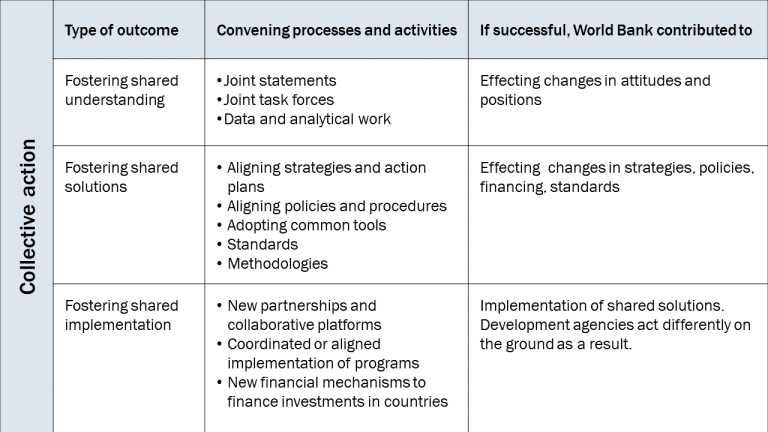
Convening is the art and science of fostering collective action. We define convening as “bringing together relevant actors to act collectively to address common challenges” (Figure 1).

Source: World Bank. 2020.

Source: World Bank. 2020.

Development leadership requires strong convening capabilities. Because of mandate and capacities, some organizations are more obvious conveners on certain topics. These organizations stand to gain in reputation and stature as leaders of development. The G-20 Eminent Persons Group recognized the World Bank’s convening role when it suggested the World Bank play a coordinating and facilitating role among multilateral development banks on global public goods, and help make the multilateral development banks work more as a “system” with harmonized practices and procedures.

While many organizations can organize events and conferences, fewer can do so in a way that leads to change. To convene successfully requires advanced organizational capabilities and deliberate efforts.

Much convening fails. The world would be a better place if collective action were easy. International organizations routinely organize events to discuss important social, environmental, or public health problems. Too many events, however, have loosely defined goals and accomplish little besides meeting fatigue and wasted time and travel costs.

In a recent evaluation, we found that the World Bank often makes strong and relevant convening contributions. We reviewed many examples of effective World Bank convening efforts, including on malnutrition, river blindness, financial inclusion, open data, poverty measurement and development microdata, and standards for banks and private sector investors.

The World Bank has expanded its convening efforts as the development agenda grew larger and more demanding, and in response to high demand. High demand for the World Bank’s convening was a consistent theme across the hundreds of interviews we conducted with leaders from governments, the private sector, multilaterals, and civil society.

For example, all the nine Financial Intermediary Funds (FIFs) the World Bank has established since 2013 originated in multilateral fora such as G-7/G-8, G-20, the United Nations Framework Convention on Climate Change, the World Economic Forum, and the United Nations General Assembly. External partners typically ask the World Bank to host FIFs to benefit from its convening power and to use its systems and support services, thereby forgoing the alternative of creating new organizations from scratch. The World Bank influences FIFs during the design and setup stages—leading on building consensus among the founding partners, mobilizing financing, establishing the fund, and so on. Once FIFs are established, the governing bodies of the FIF-financed partnerships assume control. The World Bank is a voting member in only 6 of 24 FIF governing bodies, giving it little influence over the strategic direction of most FIFs.

Looking across successful and less successful initiatives, we found that the World Bank tends to be more effective when the initiative has potential to add significant value in addressing an important problem, crisis, or urgent need; there is strong demand for the World Bank’s engagement; issues align with core goals and mandates; it has adequate resources, established expertise and experience, and data and knowledge work that can inform and persuade; it engages with clear objectives; senior champions are engaged; it embeds the topic in select country programs; and it sustains efforts over time.

The World Bank is frequently strong in these factors but not always. Where it did not achieve success, this was often because it was spread too thin. This is not surprising: Staff and managerial resources are finite, and country programs can absorb only so many global priorities at a time.

New issues and new demands arise often, and there is a large pool of prior commitments. Some examples from recent years include new engagements and priorities on debt relief, debt transparency, the Sustainable Development Goals (SDGs), disruptive technology, Mobilizing Finance for Development, financial inclusion, disability, forced displacement, ocean plastics, female entrepreneurship, road safety, and gender-based violence. In fact, it is hard to identify any single area of development in which the World Bank does not participate.

The multiplication of agendas strains internal capacity. The World Bank satisfies requests to convene on hundreds of relevant and ambitious initiatives but does not always adequately resource these initiatives or follow up on major convening events with action. In our interviews, leaders from some partner organizations expressed frustration with what they perceive at the World Bank’s drifting priorities because new priorities sometimes supersede ongoing initiatives in which these external partners have already invested. Yet, paradoxically, strong demand from partners for the World Bank’s engagements—backed up by trust funds which finance 64 percent of all global engagement budgets—is often why the World Bank finds it hard to be selective.

Therefore, the World Bank has helped launch many new initiatives. But to achieve impact at a scale commensurate with the problem, the World Bank needs to focus. The World Bank could be a more powerful agent for global change by engaging in stronger and more ambitious convening efforts on fewer priority issues and sustaining its engagements long enough to see results. Sustained engagement over many years is usually a necessary though insufficient condition to generate transformative results. Long-lived flagship programs build staff expertise and external networks and reputation over time.

Some parts of the World Bank use explicit criteria to decide on the entry, role, types of contributions, funding, and exit of major global convening efforts. Criteria may include relevance to corporate priorities, links to the organization’s operational work, whether the proposed role leverages the organization’s comparative strengths, and whether the convening effort is likely to lead to a clear public good or global collective action.

COVID-19 could be a game changer. It is the single largest development disaster in our lifetime. Amid the disruption and crises brought on by the pandemic, business as usual is clearly not effective. People grasp that we need to focus our minds on finding solutions to the most pressing development challenges, and that only by joining forces can we hope to be successful.

For example, the World Bank’s convening through analytics, financing, and policy dialogues helped place climate change at the center of the international development agenda. This was made possible by a long-term focus on climate change backed up by consistent leadership, sustained prioritization, internal incentives, resources equal to the challenge, and dedicated operational work at the country level.

The world needs better convening, not more convening. It is not the number of events that count. Rather, what counts is effectiveness in fostering collective action to deliver the shared understanding, solutions, and implementation needed to address key social, economic, and environmental issues.

The World Bank can strengthen its convening effectiveness by more deliberately scoping the initiatives it engages in, as well as its role and contributions; creating monitoring and management systems to make convening initiatives more results-oriented; and ensuring more consistent links between its global work and its country programs.

40 percent of Amazon could now exist as rainforest or savanna-like ecosystems

Stockholm Resilience Centre

A larger part of the Amazon rainforest is at risk of crossing a tipping point where it could become a savanna-type ecosystem than previously thought, according to new research. The research, based on computer models and data analysis, is published in the journal Nature Communications.

National Geographic Society

National Geographic Society

Rainforests are very sensitive to changes that affect rainfall for extended periods. If rainfall drops below a certain threshold, areas may shift into a savanna state.

"In around 40 percent of the Amazon, the rainfall is now at a level where the forest could exist in either state -- rainforest or savanna, according to our findings," says lead author Arie Staal, formerly a postdoctoral researcher at the Stockholm Resilience Centre and the Copernicus Institute of Utrecht University.

The conclusions are concerning because parts of the Amazon region are currently receiving less rain than previously and this trend is expected to worsen as the region warms due to rising greenhouse gas emissions.

Staal and colleagues focused on the stability of tropical rainforests in the Americas, Africa, Asia and Oceania. With their approach they were able to explore how rainforests respond to changing rainfall.

"By using the latest available atmospheric data and teleconnection models, we were able to simulate the downwind effects of disappearance of forests for all tropical forests. By integrating these analyses over the entire tropics, the picture of the systematic stability of tropical forests emerged," says Obbe Tuinenburg, former assistant professor at the Copernicus Institute of Utrecht University and visiting scientist at the Stockholm Resilience Centre.

The team explored the resilience of tropical rainforests by looking at two questions: what if all the forests in the tropics disappeared, where would they grow back? And its inverse: what happens if rainforests covered the entire tropical region of Earth?

Such extreme scenarios could inform scientists about the resilience and stability of real tropical forests. They can also help us understand how forests will respond to the changing rainfall patterns as greenhouse gases in the atmosphere rise.

The researchers ran the simulations starting with no forests in the tropics across Africa, the Americas, Asia and Australia. They watched forests emerge over time in the models. This allowed them to explore the minimum forest cover for all regions.

Staal said, "The dynamics of tropical forests is interesting. As forests grow and spread across a region this affects rainfall -- forests create their own rain because leaves give off water vapour and this falls as rain further downwind. Rainfall means fewer fires leading to even more forests. Our simulations capture this dynamic."

The team ran the models a second time, this time in a world where rainforests entirely covered the tropical regions of Earth. This is an unstable scenario because in many places there is not enough rainfall to sustain a rainforest. In many places the forests shrank back due to lack of moisture.

Staal says, "As forests shrink, we get less rainfall downwind and this causes drying leading to more fire and forest loss: a vicious cycle."

Finally the researchers explored what happens if emissions keep rising this century along a very high-emissions scenario used by the Intergovernmental Panel on Climate Change (IPCC).

Overall, the researchers found that as emissions grow, more parts of the Amazon lose their natural resilience, become unstable and more likely to dry out and switch to become a savanna-type ecosystem. They note that even the most resilient part of the rainforest shrinks in area. In other words, more of the rainforest is prone to crossing a tipping point as emissions of greenhouse gases reach very high levels.

"If we removed all the trees in the Amazon in a high-emissions scenario a much smaller area would grow back than would be the case in the current climate," says co-author Lan Wang-Erlandsson of the Stockholm Resilience Centre.

The researchers conclude that the smallest area that can sustain a rainforest in the Amazon contracts a substantial 66% in the high-emissions scenario.

In the Congo basin the team found that the forest remains at risk of changing state everywhere and will not grow back once gone, but that under a high emissions scenario part of the forest becomes less prone to crossing a tipping point. But Wang-Erlandsson adds 'This area where natural forest regrowth is possible remains relatively small."

"We understand now that rainforests on all continents are very sensitive to global change and can rapidly lose their ability to adapt," says Ingo Fetzer of the Stockholm Resilience Centre. "Once gone, their recovery will take many decades to return to their original state. And given that rainforests host the majority of all global species, all this will be forever lost."

The academics found that the minimal and maximal extents of the rainforests of Indonesia and Malaysia are relatively stable because their rainfall is more dependent on the ocean around them than on rainfall generated as a result of forest cover.

The study only explored the impacts of climate change on tropical forests. It did not assess the additional stress of deforestation in the tropics due to agricultural expansion and logging.

800 million children still exposed to lead

Norwegian University of Science and Technology

As many as 800 million children have dangerously high lead values in their blood. The neurotoxin can cause permanent brain damage.

image.jpg

The huge international numbers come from a new report from Pure Earth and UNICEF. Pure Earth works to solve pollution problems that can be harmful to humans.

"A child's earliest years of life are characterized by rapid growth and brain development. This makes children particularly vulnerable to harmful substances in the environment," says Kam Sripada, a postdoc at the Norwegian University of Science and Technology (NTNU) who has contributed to the report.

Sripada collaborates with international organizations to research social health inequalities, especially among children.

"Exposure to lead during pregnancy and early in life can lead to a child never reaching his or her potential," she says.

Sripada works at NTNU's Center for Global Health Inequalities Research (CHAIN) in collaboration with the Norwegian Institute of Public Health and UNICEF.

Lead is an element, but also a powerful neurotoxin that can cause damage at a level as low as five micrograms of lead per decilitre of blood. Lead poisoning can be acute, and can cause everything from stomach pain to brain damage, coma and death.

But lead poisoning can also come on slowly, because it accumulates in the body over a long period of time. The most common symptom is lethargy due to anaemia. High lead levels can attack blood and bone marrow, the nervous system and the kidneys.

Lead poisoning can also contribute to a lower IQ and behavioural problems that can last a lifetime.

"Lead is a health threat to children in every single country in the world. However, children in low- or middle-income countries are the most vulnerable, especially in South Asia and among marginalized groups in general. There are major social differences when it comes to lead exposure and other environmental toxins that we need to address," says Sripada.

A lot of the lead comes from lead-acid batteries that are not responsibly recycled. The number of motor vehicles has tripled in low- and middle-income countries in the last 20 years, which in turn has led to a sharp increase in lead-containing batteries. About half of the batteries are not properly recycled or recovered.

Water pipes, industry, paint and a number of household products such as canned foods, contaminated spices, make-up and toys also contribute. Lead that was previously used in gasoline is still found in the soil to this day.

Indirectly, countries can suffer enormous income losses as the children grow up with these sources of lead exposure. As adults, they often are not able to contribute optimally to the societal economy.

"This is a report with global significance," says NTNU Professor Terje Andreas Eikemo, who heads CHAIN.

Both the World Health Organization (WHO) and the Centers for Disease Control and Prevention in the United States believe that the situation requires international measures, such as more information and strengthening of the health care system in several countries.

"This report shines the spotlight on lead as an important global environmental and health problem that is especially tied to children's health and development," says Heidi Aase, who heads the NeuroTox study at the Norwegian Institute of Public Health.

The NeuroTox study examines relationships between environmental toxins in the mother's womb, including lead, and various measures of brain development. ADHD, autism and cognitive functions are considered in a large sample of Norwegian children. Environmental toxins found in the mother's body during pregnancy can affect the baby's development.

CHAIN will use the NeuroTox study to study relationships between socio-economic factors, such as income, education and living conditions, and levels of lead and other environmental toxins in pregnant women and their children.

"The UNICEF report and other studies show that poverty is associated with higher lead levels and an increased risk of harmful effects on health. We'll investigate whether this picture applies to pregnant women and children in Norway as well," says Aase.

The research results from NeuroTox and CHAIN can also be used in different ways internationally, such as to prevent social inequality in health including the harmful effects of environmental toxins.

The average blood levels of lead in children from low- and middle-income countries in the UNICEF report are far higher than in Norwegian children. Nevertheless, the report has calculated that many Norwegian children may have lead levels above the limit that we know has harmful effects on brain development.

"This is concerning," says NeuroTox researcher Gro Dehli Villanger.

Studies show that damage to the brain and nervous system can occur at far lower lead levels than the limit used in the report.

"As of today, no value limit has been established that is considered safe and therefore the number of children affected could be much higher both in Norway and in other countries," says Villanger.

THE GREEN ROOM (Episode 5): Clean Coal and Sustainable Development: Harnessing Clean Coal Technology to Mitigate Harmful Emission

GREEN ROOM: LIVE WEBINAR TRANSCRIPT

Tune in to the Green Room with your questions as we host Professor Byron E. Price. He currently works at Medgar Evers College of the City University of New Y...

Summary of the Discussion

The discussion kicked off with a brief introduction of our distinguished speaker, Professor Price by our amiable moderator Dr. Jason McSparren.


LISTEN TO PODCAST

ABOUT THE SPEAKER

Professor Byron Price works at Medgar Evers College of the City University of New York as a Professor of public policy and administration. He was the Director of the Barbara Jordan Institute of Policy Research. Prof. Price has visited over 40 countr…

Professor Byron Price works at Medgar Evers College of the City University of New York as a Professor of public policy and administration. He was the Director of the Barbara Jordan Institute of Policy Research. Prof. Price has visited over 40 countries.

Read full bio

ABOUT THE MODERATOR

Dr. Jason J. McSparren is an educator, researcher, and administrator with a PhD. in Global Governance and Human Security from Massachusetts Boston.He is also a Pre-Doctoral Fellow (2017-18) for the West African Research Association (WARA).

Dr. Jason J. McSparren is an educator, researcher, and administrator with a PhD. in Global Governance and Human Security from Massachusetts Boston.He is also a Pre-Doctoral Fellow (2017-18) for the West African Research Association (WARA).

read full bio

POWER POINT PRESENTATION


Q&A

Dr. McSparren: Public Policy and Administration program. Dr. Price focuses Research on Social Public Policy. His research interest and some of the themes that he's covered, he is an extensive empirical work regarding the United States justice system with an important contributions to Public Policy issues such as prison privatization, Social justice issues school-to-prison pipelines, additionally his work covers a governance and International Development as well. And that's one of the topics that we're going to be talking about here today. Dr. Price is also known for his student mentorship and also as a philanthropist recently, Dr. Price led a group of 14 Suny College of the City University of New York students to a trip to South Africa where they covered six cities as part of a global public administrations course. Professor Price, called that the study the study abroad trip for the office of International Education and not only did he lead the students, but he also spearheaded a fundraising and donate a portion of his own salary raising more than $12,000 for the students to join him on this fantastic experience trip abroad.

Today, Dr. Price is here to talk with us about Clean Coal Technology in a presentation he titles Clean Coal and Sustainable Development: Harnessing Clean Coal technology to mitigate harmful emissions. As you all know coals are hydrocarbon fuel therefore, emit greenhouse gases as a result there have been efforts to create Clean Coal Technologies through a number of different processes. Coal is widely used around the world, especially in terms of the developing world. It is going to take time to phase out coal-fired electric plants and there a different research projects out there looking for ways Carbon Dioxide Removal which is termed CDR strategies in some of these strategies are called ‘Carbon Capture and Storage’ very often CCS strategies and these are emerging and that's we're going to hear a little bit about today. Some of these CDR methods are direct air caption enhanced weathering in carbon sinks where the carbon is extracted from the air and then relocated to the ground. Dr. Price is here to tell us about a process that removes the toxins from coal, toxins such as Arsenic and sulfur and Mercury so that the coal Burns cleaner and is an interim strategy in the pursuit of negative greenhouse gas emissions, which is one of the sustainable development goals and goals of countries around the world. So ladies and gentlemen in the audience. Can we please warmly welcome Dr. Byron Price to the green room today? Dr. Price hello.

Prof. Price: Hello Dr. MacSparren. Thanks for having me and thanks for the kind introduction and I have to correct just real quick. I raise $20,000 on behalf of the students to South Africa.

Dr. McSparren: That's wonderful. Okay, it's okay.

Prof. Price: Thanks for this great opportunity.

Dr. McSparren: Certainly.

DOWNLOAD FULL Q & A

Favourite Quote

Hydrogen provides a huge opportunity to reach deep down in terms of some of the most carbon intensive Industries
— Professor Byron Price

Top Comments

Enjoyed the Program. Great job Dr. Byron Price!- J.D Rolle

"Glad to be here”-Emmanuel Majidadi


REGISTER FOR THE NEXT GREEN ROOM

School is the best place to teach biodiversity: Expert

Mariecar Jara-Puyod

The inter-connectivity of life must be taught at a young age so that biodiversity – the variety of flora and fauna – will flourish leading to sustainability and sustainable development, said an educationist in Dubai.

The learning is going to be achieved through a “re-framing” in such a way that young minds are not only going to understand but more importantly inculcate within them that they are intrinsic to the ecosystem through which life at least thrives, Brett Girven further said on Sunday.

The Arbor School (Dubai) principal explained eco-literacy, adding: “An eco-literate student (knows and understands) that all living things in an ecosystem are interconnected through a network of relationships that depend on the web of life to be sustainable.”

Saying “the school is the best place to teach biodiversity and sustainability, he cited how the school administration is approaching eco-literacy for their pupils and students between the ages of three and 18. For instance, in the school pond, toddler pupils are introduced to the reality that the fish, algae and turtles can live together in a common habitat: “We do not want us to be a zoo nor a botanical garden. But, we do have a pond where our youngest (pupil) at three years old will see that in there are fish, algae and turtles.”

Girven was among the guest speakers, alongside Al Ain Zoo-Environment, Health & Safety Department director Amna Al Otaiba, Al Ain Zoo-Conservation Programmes Unit head Hessa Alqahtani, and Dubai Desert Conservation Reserve-Conservation manager Greg Simkins, at the Emirates Environment Group (EEG)-organised “The UAE: A Biodiversity Haven.”

The panel discussion was held in line with the United Nations Sustainable Development Goals (UNSDGs) 13 to 15.

EEG chairperson Habiba Al Mar’ashi stated in her welcome address before the virtual audience: “Biodiversity is in crisis. There is an irreversible decline of genetic and species diversity and disintegration of ecosystems at global, regional, and local scales. According to an article from the World Economic Forum (WEF), anthropogenic activities have led to the loss of 83 per cent of all wild mammals and half of plants. Scientists are concerned that human activities are putting increased pressure and affecting biodiversity immensely.”

Mar’ashi mentioned the United Nations Environment Programme (UNEP) of which the EEG is an accredited non-government organisation: “UNEP states that we are losing species at 1,000 times greater than at any time in recorded human history and one million face extinction, we risk facing a sixth mass extinction in Earth history.”

Hence, the need for discussions to help raise awareness on the importance of biodiversity and the risks that face humanity.

UNSDG 13 is taking action against climate change. UNSDG 14 is “life under the sea” or the fast-depleting marine life because of overexploitation, climate change and environmental degradation, through which three billion people heavily rely on. UNSDG15 is “life on land” and protecting everything therein to at least slow down biodiversity loss.

Al Ain Zoo’s Al Otaiba and Alqahtani reported on the progress their team is attaining since the park was established in 1968 by UAE Father, the late Sheikh Zayed Bin Sultan Al Nahyan, as a pioneer and leader in the conservation of animal and plant life not only in the UAE and the region but across the globe.

Al Otaiba said: “COVID-19 has cleared the ozone. We hope that for years, we will benefit from this. Al Ain Zoo is home to local plants. We are in a desert environment wherein the most critical is water. The availability of water is a challenge. We are treating water to preserve plants.”

Alqahtani spoke on how the park management and personnel have been managing its ppp “collection of animals” which comprise 30 per cent of global endangered species not only across the seven emirates but throughout the Arabian Peninsula and the African Sahara-Sahel Ecosystem. They are guided by standards set forth by international bodies on zoos and wildlife preservation.

The park plays host to migratory birds such as the Pale Crag Martin (of the swallow family originally from Northern Africa, Southwestern Asia, and Pakistan) and the Crested Honey Buzzard (a relative of the eagle).

Food and climate change; the impact

The food production set-up has evolved in recent decades, increasing the availability of food. Experts say this can easily be underestimated by the enormous impact that food production has created to support human societies trying to reach today’s nutritional needs, as we deal with the world’s rapidly growing population.

However, they note that feeding the population generates environmental costs, such as loss of biodiversity, extensive land use, use of large amounts of freshwater, pollution of the air, waste and pollution by nitrogen and phosphorus in the soil.

Dr Christophe Ngendahayo, NCDs and climate health trainer with the World Organization of family doctors (WONCA), says climate change refers to the increase in average rates of temperatures over an extended period of time.

He says this is due to emitted air pollutants, also called greenhouse gases.

Farming methods and other human activities, he says, contribute to changing the earth’s climate, leading to increasing greenhouse gas concentrations in the atmosphere.

“Conversely, the changing climate, in return, presses excessive heat to plants and hampers crop production,” he says.

He further explains that climate extreme events and rise in temperature threatens food production.

Projected increases in temperatures, changes in precipitation patterns, changes in extreme weather events and reductions in water availability, may all result in reduced agricultural productivity, causing drought, malnutrition, and migration, Ngendahayo says.

Meanwhile, increasing evidence indicates that the rise in concentrations of carbon dioxide have adverse effects on the composition of the main cereal crops such as rice and wheat, including reduced protein levels, a variety of B complex micronutrients, and vitamins.

“Climate and other environmental factors change also reduce the overall yield of vegetables and legumes, which has important implications for the prevention of non-communicable diseases,” he says.

Effects on health

Experts say the global pollution, climate change, biodiversity loss, altered biogeochemical cycles, changes in land use and resource scarcity are decreasing the quality of the air we breathe, the water we drink, and the food we eat; exposing us to new diseases.

Ngendahayo says it also diminishes our access to freshwater and other resources; and increases incidence of natural disasters.

All of these results, he says, have negative consequences for our nutrition, mental health, and susceptibility to injury and illness today.

For instance, he says, air pollution kills more than malaria, tuberculosis and AIDS.

He points out that three great pandemics plague the modern world; obesity, malnutrition, and climate change due to their effects on human health and natural systems on which human beings depend.

Climate change and the global rise in temperature will result in an increased incidence of infectious diseases; for example, more floods will result in more waterborne diseases and increased temperature will favour the transmission of mosquito-borne pathogens.

The same substances in the atmosphere that are responsible for air pollution are also responsible for climate change. And climate change will have a negative impact on air pollution; for example, by increasing incidences of forest fires which also affect our health.

Way forward

Ngendahayo says public health, agriculture professionals, economists and other experts have great capacity to improve human nutrition as well as control of climate-sensitive infectious diseases.

He says that it is also ideal to prepare your own practice for possible disasters by assessing and planning for threats such as extreme heat, flooding, or storms.

In addition to this, the medic says use forms of transport that involve physical activity, such as cycling and walking, have the dual benefit of reducing emissions and protecting against multiple diseases.

Besides, switching to renewable energy sources and away from fossil fuels, such as coal, could greatly reduce the health and environmental impacts of fossil fuel-related air pollution.

Ngendahayo says reducing meat consumption, especially beef, and consuming fish, chicken, egg, and dairy products in moderation can help minimise livestock and conserve the environment. 

Avoid buying food with excess packaging, and when it is necessary to use packaging, opt for a reusable bag.

“Avoid burning agricultural wastes, avoid food wasting and practice full use of food to offset the impact of climate change on scarcity of food,” he adds.

Ngendahayo says it’s ideal to start planting vegetable gardens at home or in the neighbourhood, and that planting brings people closer to food; increases access to food and keeps the environment green.

“Be active in advocating for effective evidence-based health policies and engaging with media and stakeholders to raise awareness of planetary health,” he urges.

Northern Hemisphere summer was hottest on record, scientists say

 Denise Chow

The Northern Hemisphere just sweltered through its hottest summer on record, according to data released Monday by the National Oceanic and Atmospheric Administration.

The period from June through August was 2.11 degrees Fahrenheit warmer than average in the Northern Hemisphere, while globally, this August ranked as the second-hottest since record keeping began in 1880.

The worrying milestones come as historic wildfires and extreme weather events in the U.S. have sharpened focus on global warming and the catastrophic impacts of climate change.

August was particularly steamy for the planet. Average global land and ocean surface temperatures last month surpassed the 20th-century average of 60.1 degrees by 1.69 degrees. This makes it the second-warmest August on record, trailing only August 2016, according to scientists at NOAA’s National Centers for Environmental Information.

Some regions, however, felt the August heat more acutely. Last month ranked as the hottest August on record in North America, while it was the third hottest in Europe and the fourth hottest for South America and Oceania.
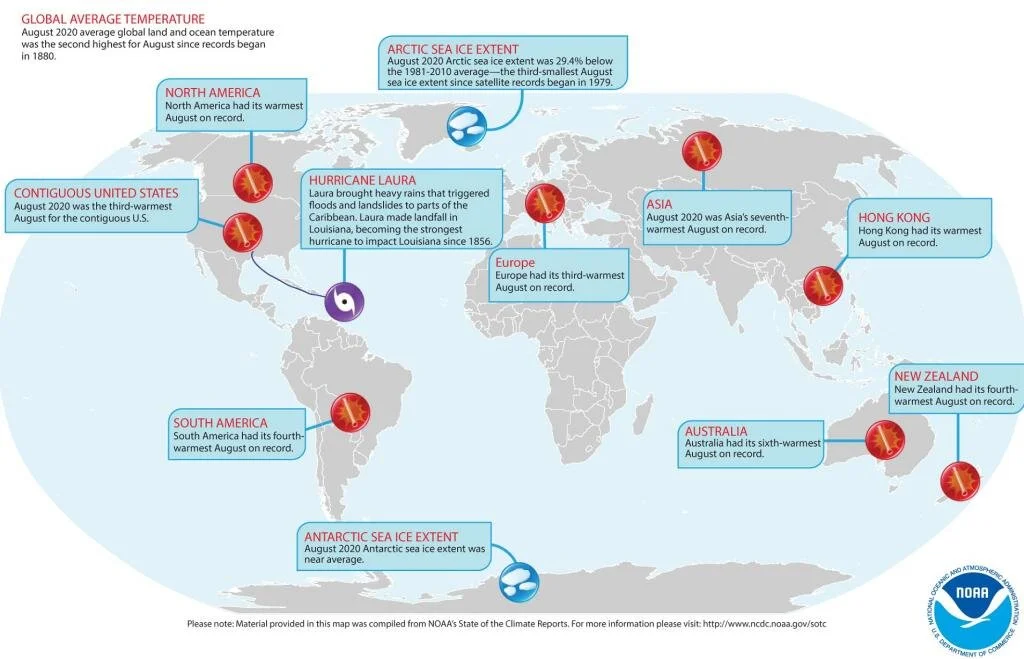
One-third of the U.S. faced at least a moderate level of drought conditions in August, and California suffered through a record-setting heat wave last month, after temperatures in Death Valley hit a sizzling 130 degrees.

Selected significant climate anomalies and events in August 2020 @NOAA

Selected significant climate anomalies and events in August 2020 @NOAA

Southeastern China, parts of northern Russia and western Australia also experienced above-average temperatures last month, NOAA scientists wrote in their latest assessment.

The new figures suggest that the planet is continuing to warm at an accelerated pace. Globally, the five warmest Augusts have all occurred since 2015, and the 10 warmest Augusts on record have occurred since 1998, according to NOAA.

The above-average temperatures also shrank Arctic sea ice to its third-lowest level for August, agency scientists said. Satellite observations revealed that Arctic sea ice last month covered an average of 1.96 million square miles, which was more than 29 percent below average.

Humans wiping out wildlife at an 'unprecedented' rate, WWF report finds

Luke Denne

Agriculture is one of the main causes of global biodiversity and habitat loss, according to a new WWF report.

 Amanda Perobelli / Reuters file

Amanda Perobelli / Reuters file

Humans are wiping out wildlife at a “unprecedented” rate with wildlife populations down by 68 percent on average since 1970, according to a new World Wildlife Fund report published on Thursday.

Unsustainable agriculture and deforestation are two of the main drivers, and urgent action is required to reverse the trend, the Living Planet Report 2020 said.

“Our planet is flashing red warning signs,” said Marco Lambertini, Director General of WWF International, an NGO that focuses on preserving nature.

“From the fish in our oceans and rivers to bees which play a crucial role in our agricultural production, the decline of wildlife affects directly nutrition, food security and the livelihoods of billions of people.”

The findings underline the fact that the planet faces twin crises in biodiversity and the climate and the two are intrinsically linked, according to the report. A warming climate puts up to a fifth of all species at risk of extinction in the next century with those in the biodiverse tropics most at risk.

The seriousness of the climate crisis was further underlined Wednesday as joint U.S. and U.K. studies, published in the Cryosphere Journal, identified how Antarctica’s massive Thwaites Glacier could be at risk from rapid melting after larger than expected warm ocean cavities — that could erode it from underneath — were identified.

The melting of Antarctica's Thwaites Glacier has increased rapidly over the last 30 years and now accounts for 4 percent of the rise in global sea levels. James Yungel/NASA file

The melting of Antarctica's Thwaites Glacier has increased rapidly over the last 30 years and now accounts for 4 percent of the rise in global sea levels. James Yungel/NASA file

The glacier has been dubbed the “doomsday glacier” due to its enormous size — as large as the state of Florida — and its ability to raise sea levels by over 25 inches alone if it were to suffer rapid collapse.

Historically low sea ice levels allowed the research teams to map the sea bed — from a ship and an airplane — leading them to identify the warm water channels reaching the underside of the glacier.


They found that the ocean is both deeper, and the warm water channels wider, than previously thought.

“For the first time we have a clear view of the pathways along which warm water can reach the underside of the glacier, causing it to melt and contribute to global sea-level rise,” said lead author Dr Kelly Hogan from the British Antarctic Survey.

Ice loss from Thwaites has increased rapidly in the last 30 years and now accounts for 4 percent of the rise in global sea levels.