Bill Gates says more than 50% of business travel will disappear in post-coronavirus world

Noah Higgins-Dunn

The coronavirus will fundamentally alter the way people travel for and conduct business, even after the pandemic is over, Microsoft co-founder Bill Gates said Tuesday.

“My prediction would be that over 50% of business travel and over 30% of days in the office will go away,” Gates told Andrew Ross Sorkin during the New York Times’ Dealbook conference.

Moving forward, Gates predicted that there will be a “very high threshold” for conducting business trips now that working from home is more feasible. However, some companies may be more extreme with their efforts to reduce in-person meetings than others, he said.

Source: CNN

Source: CNN

Gates, whose foundation has been working to deliver a coronavirus vaccine to people most in need, said during a new podcast, “Bill Gates and Rashida Jones Ask Big Questions,” that he’s had a “simpler schedule” due to the pandemic now that he doesn’t travel for business.

The philanthropist and tech executive, who appeared alongside Pfizer CEO Albert Bourla during the livestreamed conference on Tuesday, said he’s already held five virtual roundtables this year with pharma executives — a meeting that’s usually held in person in New York.

“We will go to the office somewhat, we’ll do some business travel, but dramatically less,” Gates said.

The pandemic has devastated air travel demand, particularly for lucrative business trips. Business travelers before the virus accounted for half of U.S. airlines’ revenue, but just 30% of the trips, according to Airlines for America, an industry group that represents most U.S. carriers.

However, Microsoft executives have predicted that business trips will make a rebound, even as the company moves to make air travel more sustainable.

“We believe that as we return to the skies, the travel routes we’ve had ... will resume at the level they had been before,” said Judson Althoff, executive vice president of Microsoft’s worldwide commercial business, said in October.

— CNBC’s Leslie Josephs contributed to this report.

An epidemic outbreak of Mesoamerican Nephropathy in Nicaragua linked to nickel toxicity


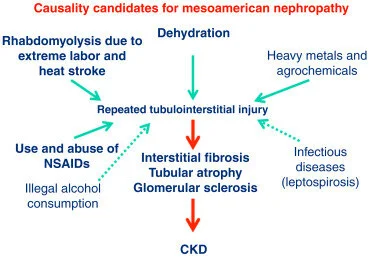
For more than 20 years, an epidemic of chronic kidney disease (CKD) of unknown origin has severely affected specific coastal communities along South America's Pacific coastline from Mexico to Panama leading to more than 50,000 deaths. The condition, known as Mesoamerican Nephropathy (MeN), has a perplexing clinical presentation. Unlike traditional forms of CKD, it affects healthy young working-age individuals who do not have other traditional risk factors for kidney disease, such as diabetes or hypertension. The underlying cause of this devastating public health crisis has remained a mystery.

Causality candidate for Mesoamerican Nephropathy  Source: sciencedirect.com

Causality candidate for Mesoamerican Nephropathy
Source: sciencedirect.com

A "CSI-style" scientific investigation led by Dr. Kristy Murray, professor of pediatrics, immunology and microbiology at Baylor College of Medicine and Texas Children's Hospital, revealed evidence for nickel toxicity as the underlying cause of this disease in a Nicaraguan "hotspot," which is among the worst-hit areas in the continent. The study provides new, compelling evidence that low-dose exposure to nickel can cause systemic inflammation, anemia and kidney injury -- hallmarks of acute MeN that progresses to chronic kidney disease in around 90% of the patients. The study appeared in PLoS ONE this week.

"A few years back, based on my reputation of investigating many new outbreaks and my laboratory's expertise in studying tropical medicine and infectious diseases among vulnerable populations, we were called to investigate the possible causes of this horrific epidemic that plagued vulnerable agricultural areas in the Pacific lowlands for decades," Murray, who is also the assistant Dean at the National School of Tropical Medicine Baylor College of Medicine and Vice Chair for Research in the Department of Pediatrics at Texas Children's, said. She initially received her outbreak experience twenty years ago at the CDC as part of the elite group of disease detectives known as the Epidemic Intelligence Service.

Although agricultural toxins were proposed as a possible factor, based on the prevalence of this disease only in specific coastal populations, the team ruled it out. Genetic mutations, as the sole cause, were also excluded because of the relatively recent emergence of this disease (in decades versus centuries, which is typical of inherited genetic disorders) and a sharp increase in cases in the region.

"Although it was thought to be a chronic condition, after we reviewed hundreds of clinical records and conducted surveillance for new cases, we were struck by the acute 'flu-like' presentation in the initial stages of this disease. At the onset, the disease looked remarkably like a classic hyper-inflammatory response to an infection. So, we screened for several pathogens but could not pin it down to any particular infectious agent," Murray said. "We then turned our attention to clinical and pathological tests that led us to the most important clues to crack this case. Majority of the affected individuals had recently developed anemia and their kidney biopsies showed extreme inflammation in the tubules and cortico-medullary junctions of the kidney, indicative of heavy metal or trace element toxicity. The pieces of the puzzle were finally coming together."

Dr. Rebecca Fischer, who was Dr. Murray's postdoctoral fellow at the time and now assistant professor of Epidemiology at Texas A&M University, worked to pull together these complex analyses, and nephrologists, Drs. Sreedhar Mandayam and Chandan Vangala at Baylor College, helped to guide the team in their clinical interpretation of acute cases.

The team then collaborated with Drs. Jason Unrine and Wayne Sanderson at the University of Kentucky who specialize in trace element toxicity. Since the easiest way to test the levels of heavy metals is through toenails, they collected toenail clippings of individuals about three months after they experienced an acute kidney injury event and analyzed them for 15 trace elements, including heavy metals. Most importantly, they compared these analyzes to controls they recruited from the same population who had no evidence of kidney disease. They found affected cases to have significantly increased levels of nickel. They also identified higher levels of aluminum and vanadium in affected cases than control subjects, but nickel was by far the strongest correlate, and biologically, it made sense with the clinical presentation.

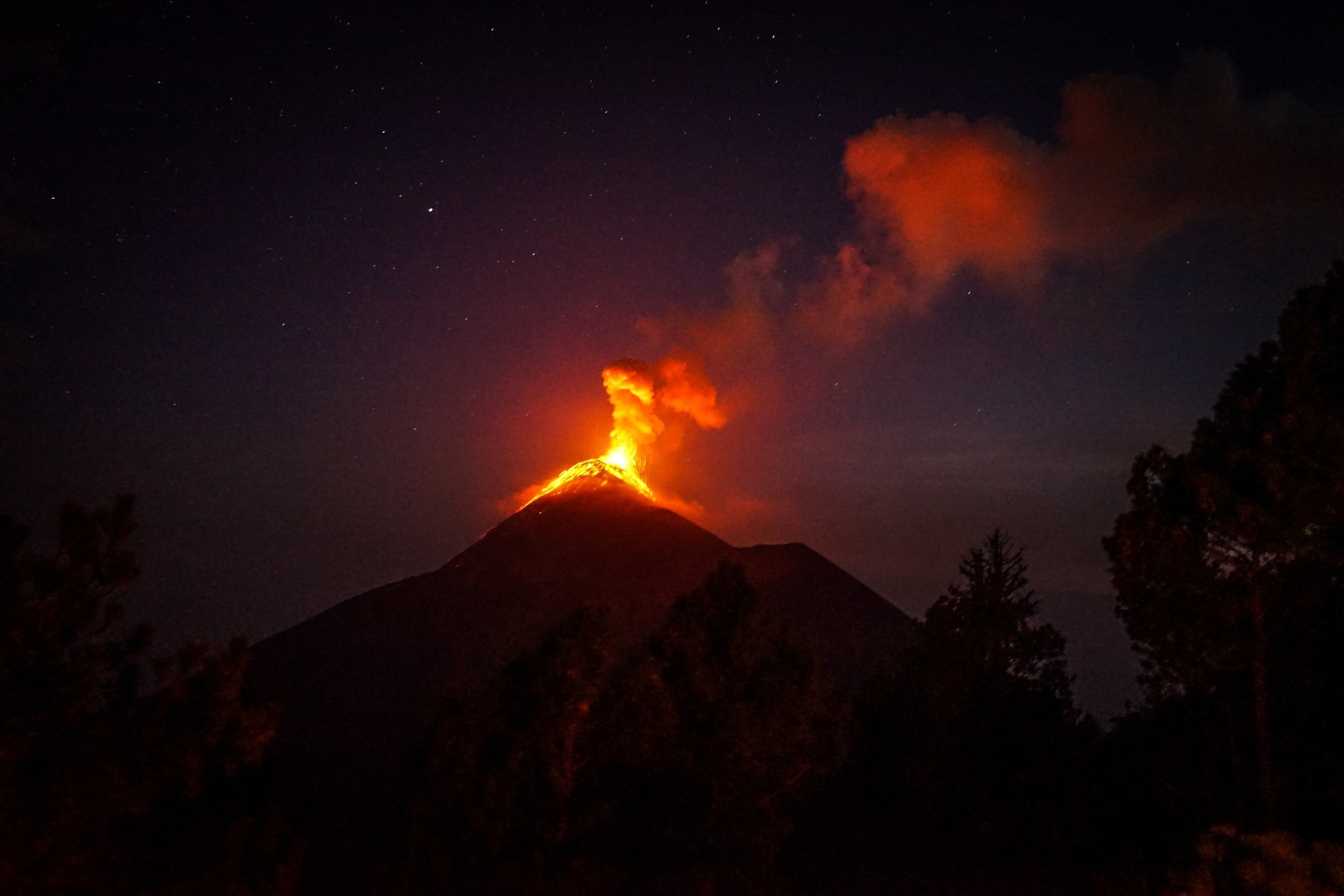
Nickel is an abundant, naturally occurring heavy metal and like iron, it is essential for the human body, but is needed only in very trace quantities. Excess recurrent exposure to nickel, by incidental ingestion through contaminated water, food or soil, can cause several toxic and carcinogenic effects. Since people who work a lot with soil such as agricultural field laborers, miners and brick-makers were found to have the highest risk of acquiring this disease, the researchers theorize their source of the nickel exposure was likely geologic in nature and possibly linked to a volcanic chain in the area that became active in the late 90s, after which incidence of this chronic kidney disease began to skyrocket in lowland areas downstream from the volcanoes in this chain.

"While we still need to validate these findings in other areas impacted by MeN, such as El Salvador or Guatemala, and to confirm the geologic source of nickel contamination, we are very excited to have found a strong lead in this challenging public health problem. Based on this study, several public health strategies were implemented, such as finding ways to protect drinking water sources from soil and runoff water contamination and educating community members about the need to frequently wash their hands after working with soil. It is gratifying to see our efforts are starting to pay off. After these measures were put in place, we noticed a dramatic reduction in the number of new cases, an indication that we are moving in the right direction. This is the first-ever downward trend in this outbreak since its emergence two decades ago. Considering the sobering death toll in the affected communities, I am relieved we can finally do something about it," Murray shared.

Scientists link record-breaking hurricane season to climate crisis

Jeff Ernst

Evidence is not so much in the number of tropical storms the Atlantic has seen, but in their strength, intensity and rainfall

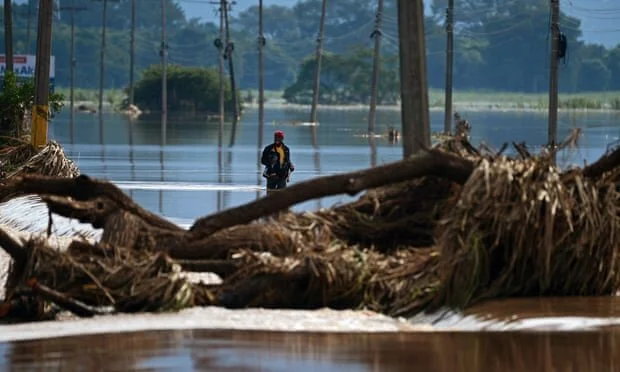
A man wades through rubbish and flood waters caused by Hurricane Eta in Honduras. Photograph: Orlando Sierra/AFP/Getty Images

A man wades through rubbish and flood waters caused by Hurricane Eta in Honduras. Photograph: Orlando Sierra/AFP/Getty Images

Paddling in a canoe through the flood waters left by Hurricane Eta in his rural village near the north coast of Honduras, Adán Herrera took stock of the damage.

“Compared with Hurricane Mitch, this caused more damage because the water rose so fast,” said Herrera, 33, a subsistence farmer who is living on top of a nearby levee with his wife and child while they wait for the water to recede. “We’re afraid we might not have anything to eat.”

Hurricane Mitch in 1998 was the most destructive storm to hit Central America. But hundreds of thousands of subsistence farmers across the region have lost everything in flooding caused by Eta, which made landfall in Nicaragua as a category 4 hurricane on 3 November. Now, with a second hurricane projected to make landfall on Monday near where Eta did, even more could find themselves in the same situation.

Climate scientists say that this year’s record-breaking hurricane season and the “unprecedented” double blow for Central America has a clear link to the climate crisis.

“In a 36-hour period [Eta] went from a depression to a very strong category 4,” said Bob Bunting, CEO of the non-profit Climate Adaptation Center. “That is just not normal. Probably it was the fastest spin up from a depression to a major hurricane in history.”

The evidence of the influence of the climate crisis is not so much in the record-breaking 30 tropical storms in the Atlantic so far this year, but the strength, rapid intensification and total rainfall of these weather systems.

“The warmer ocean waters that climate change brings are expected to make the stronger storms stronger and make them rapidly intensify more frequently and at a greater rate,” said Dr Jeff Masters, a meteorologist and contributor to Yale Climate Connections. “These things have already been observed, particularly in the Atlantic, and it’s going to be increasingly so in coming decades.”

Central America has been one of the regions most affected by the climate crisis to date, first with Hurricane Mitch, and in recent years with more extreme weather patterns, particularly in what’s known as the dry corridor, which extends from northern Costa Rica all the way to southern Mexico.

“Heat is energy,” said Masters. “Depending on the prevailing weather conditions you’re going to intensify those conditions.”

In the dry corridor, that has meant more frequent, prolonged and intense droughts as well as heavier rainfall when it does come, often causing flash flooding that washes away crops.

Subsistence farmers in the region have struggled to adapt to the new reality, and many in the region have simply given up and left. The climate crisis – and the hunger it brings – is increasingly being recognized as a major driver of emigration from the region.

“I don’t see a lot of options for Central America to deal with the global warming issue,” said Masters. “There are going to be a lot migrants and in fact, a lot of the migration that’s already happening in recent years is due to the drought that started affecting Central America back in 2015.”

Hondurans migrated to the US in significant numbers for the first time following Hurricane Mitch. In the year before the Covid-19 pandemic, more than 250,000 Hondurans were apprehended at the US south-west border, more than double any previous year and surpassed only by its neighbor to the north, Guatemala.

According to the Red Cross, at least 2.5 million people were affected by Hurricane Eta, including 1.7 million in Honduras. Many who have lost everything are already considering or making plans to migrate to the US and groups are beginning to organize caravans via social media.

Unable to fulfill the needs of their citizens before the pandemic, the economic downturn has stretched the finances of Central American governments to the brink. And unlike following previous natural disasters, the international community is dealing with pandemic-related problems of its own and is unlikely to step in to fill the gap.

Hurricane Iota could lead to even more widespread devastation across the region. Many areas still have high water levels from Eta, levees have been damaged or destroyed, dams are at or near capacity, and the saturated land could lead to more landslides like in Guatemala, where dozens are feared dead after part of a mountainside community was buried in mud.

The Atlantic hurricane season is expected to last until December this year, meaning that Iota might not be the last.

“When a season like 2020 keeps on cranking these things out, it’s going to keep on doing that,” said Masters.

The Green Digest: Ghana mourns Jerry John Rawlings; and other Global updates

AFRICA: As Ghana mourns the loss of Jerry John Rawlings, report has it that his political influence in Ghana is second to that of Kwame Nkrumah. He has been a major figure in Ghana’s political and economic transition from the colonial era. Unlike the contemporary dubious elections depicted in Burkina Faso and Kenya, Rawlings electoral success in 1992 and 1996 was an indication that Ghana was consolidating as a liberal democracy. These periods significantly illustrated Ghana’s movement from military to democratic rule. Ghanaian politics in the 1990s was greatly affected by the presence of a strong and effective opposition facilitated during Rawlings’ regime. Rawlings revolutionary rule from chaotic to authoritarian, and then to democratic left people wondering if he was hero or villain. Some people liked him. Others do not.

BIODIVERSITY: A recent report published by the Union for Ethical BioTrade (UEBT), 2020 UEBT Biodiversity Barometer reveals that a vast majority of consumers feel that companies are morally obligated to protect biodiversity. An increasing awareness of biodiversity by Generation Z and Millennials make them investigate if companies “walk the walk” through ethical sourcing. Consumers feel more confident to buy from companies that have been independently certified as eco-friendly, thereby increasing consumer trust and patronage. When asked about the informational details of product packaging that was a priority to them, respondents gave the order: the list of product ingredients; origins of ingredients; and the impact on biodiversity.

SUSTAINABLE DEVELOPMENT: With a shortfall of USD 700 billion in external financing to developing countries, achieving sustainable development hangs in the balance. However, a joint partnership of the Organization for Economic Cooperation and Development (OECD), and the United Nations Development Program (UNDP) is aimed at helping private and public sectors align their investments to the SDGs. The OECD-UNDP Framework for SDG Aligned Finance which was presented at the Paris Peace Forum proffers solutions on how to allocate the trillions of international dollars to sustainable and resilient investments in developing countries.

UNITED STATES: Pope Francis has sent his congratulatory message to president-elect Joe Biden as they discussed about climate change and other shared beliefs. In a spirit of camaraderie, Joe Biden also appreciated the efforts of his Holiness in “promoting peace, reconciliation, and the common bonds of humanity around the world.” Joe Biden would become the second catholic president of the United States after John F. Kennedy. He made known his agenda of tackling climate change, integrating immigrants and refugees into communities, and taking care of the poor and marginalized, as a shared belief of human dignity and equality.


The world's largest wetlands are on fire. That's a disaster for all of us

Ivana Kottasová, Henrik Pettersson and Krystina Shveda

The world watched as California and the Amazon went up in flames this year, but the largest tropical wetland on earth has been ablaze for months, largely unnoticed by the outside world.

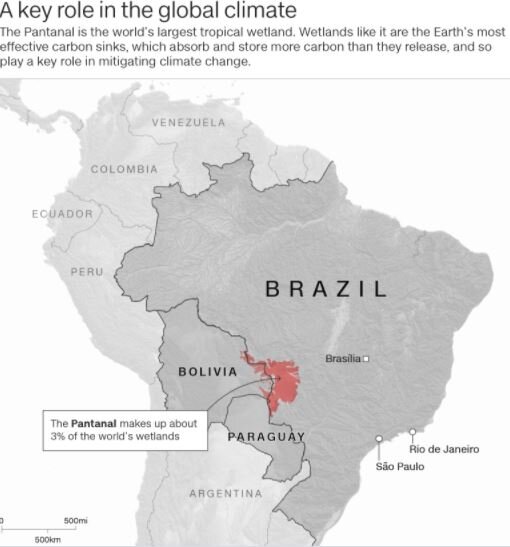
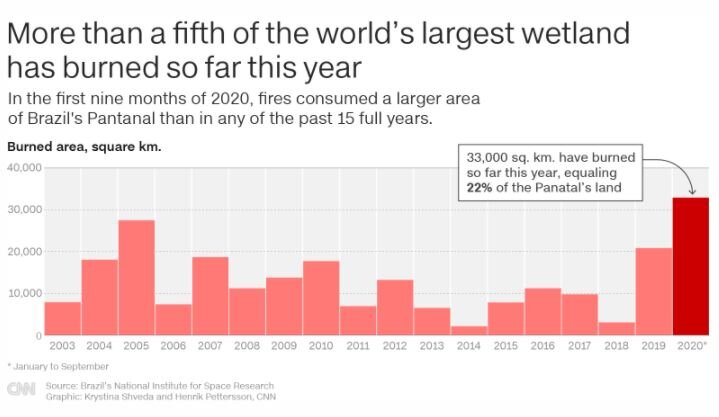
South America's Pantanal region has been hit by the worst wildfires in decades. The blazes have already consumed about 28% of the vast floodplain that stretches across parts of Brazil, Bolivia and Paraguay. They are still not completely under control.

The fires have destroyed unique habitats and wrecked the livelihoods of many of the Pantanal's diverse indigenous communities. But their damaging impact reaches far beyond the region.

Wetlands like the Pantanal are Earth's most effective carbon sinks -- ecosystems that absorb and store more carbon than they release, keeping it away from the atmosphere. At roughly 200,000 square kilometers, the Pantanal comprises about 3% of the globe's wetlands and plays a key role in the carbon cycle.

When these carbon-rich ecosystems burn, vast amounts of heat-trapping gases are released back into the atmosphere, contributing to the greenhouse effect.

"The Pantanal is very important for the planet, it has unique wild areas that are fundamental to life on Earth," said Andre Luiz Siqueira, the CEO of ECOA, an environmental NGO based in the Brazilian state of Mato Grosso do Sul. "It is vital that it [receives] as much attention as the Amazon."

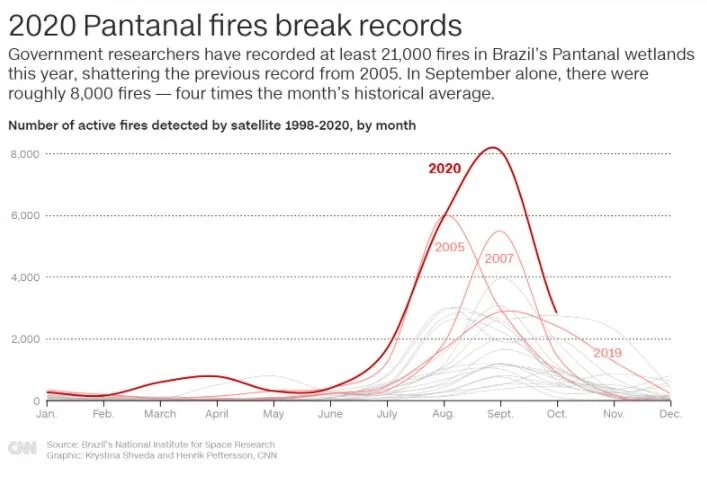
Brazil's National Institute of Space Research (INPE) has detected more than 21,200 fires in the Pantanal biome so far this year, a figure that is already 69% higher than the full-year record from 2005, when INPE recorded roughly 12,500 fires. There were 8,106 fires in September alone -- more than four times the historic average for the month.

news.JPG

Alberto Setzer, a senior scientist at INPE, said satellite data shows the fires are the worst since records began in 2002, both in terms of the number of individual blazes and the area burnt.

The Pantanal's distinctive habitats rely on what scientists call the "flood pulse." During the wet season between November and March, three quarters of the plain gets flooded, only for much of the water to drain away during the dry months, from April to September. This seasonal flooding makes the Pantanal a unique biome where large swaths of land regularly turn from terrestrial into aquatic habitats and back again.

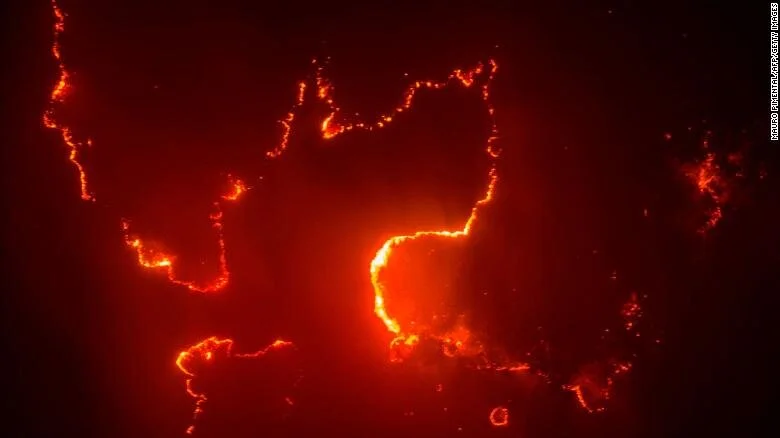
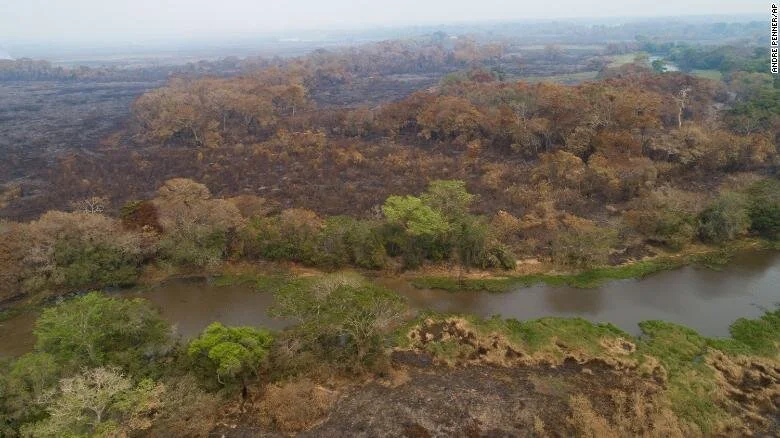
An aerial view of fires in the Pantanal, near the Transpantaneira park road which crosses the world's largest tropical wetland, on September 12, 2020.

An aerial view of fires in the Pantanal, near the Transpantaneira park road which crosses the world's largest tropical wetland, on September 12, 2020.

The area is home to thousands of endangered or unusual species, including jaguars, capybaras, black caimans, giant otters and hyacinth macaws. It's also an important stop on the routes of around 180 species of migratory birds.

According to the World Wide Fund for Nature (known as the World Wildlife Fund in the US and Canada), the Pantanal boasts the greatest concentration of wildlife in South America -- higher than that of its more famous northern neighbor, the Amazon.

But this year's dry season has been the most severe since the 1970s. "There has been a climate emergency situation, with a great drought, never seen before," Siqueira said.

Occasional wildfires are normal in the Pantanal, so much so that some plants in the region developed resistance to fires -- for example by growing thick bark or covering their seeds with hard shells. But the unusually dry conditions this year have seen the blazes spread further and faster because there were fewer natural water barriers. Even areas that normally stay wet have turned into tinderboxes.

It's all connected

A recently-burned area of the Encontro das Aguas park in the Pantanal wetlands, pictured on September 12, 2020.

A recently-burned area of the Encontro das Aguas park in the Pantanal wetlands, pictured on September 12, 2020.

The fires ripping through the Pantanal are an example of a natural disaster that is exacerbated by climate change while simultaneously making the problem worse.

Extreme weather events, such as drought and floods, are becoming more frequent and more severe around the world, and the Pantanal is no exception. There are indications that the region is getting drier and warmer as the global temperatures rise.

This year's record dry season can be traced back to 2019, when the Upper Paraguay Basin experienced unusually low rainfall.

Biologist Debora Calheiros, who has been researching ecosystems in the Pantanal for decades, said official data showed precipitation had been below the long-term average over the past decade, but in the past two years had dropped further to just 70% of the average.

The region's rain patterns are also changing. While the amount of overall precipitation might not be dramatically different, the rains are becoming more extreme and concentrated over shorter periods of time.

news3.JPG

Climate change is just one part of the problem. Large-scale deforestation in the Amazon rainforest to the north and the Cerrado savanna to the east are also having profound effects on the Pantanal.

Ecology and conservation expert Leticia Larcher said deforestation was shortening rainy seasons and making droughts more severe in central and southeastern Brazil. She explained that it was impacting the "flying rivers" phenomenon, a crucial process in which a stream of moisture arising from the forest travels to other areas such as the Pantanal, where the water-filled air becomes colder and turns into rain.

"As the forest decreases and loses its ecological functions, the environmental service it provides is also being lost," Larcher said.

Mostly man-made

While fires ignited by lightning sometimes occur naturally in the Pantanal, Larcher, who works for environmental NGO Instituto Homem Pantaneiro, said this year's fires have mostly been caused by people. This is despite the Brazilian government's ban on fires for 120 days in the Amazon and the Pantanal that was issued in July.

But Siqueira said the ban wasn't being enforced strictly enough. "There are extensive areas (where) livestock farmers have regularly used fire as a way to clear farm fields," said Siqueira. "This year, even with the governmental ban ... these producers set fire that ended up spreading for thousands of acres due to the great drought."

As the global demand for agricultural products rises, so commercial farmers clear more of the Pantanal's native vegetation for growing and grazing. Brazil is already the world's leading exporter of beef. As the demand for meat rises around the world, so does deforestation in the Amazon.

Sugarcane, cotton and soybeans are other lucrative options. When US President Donald Trump imposed punitive tariffs on Chinese exports in 2018, Beijing retaliated by placing a new 25% tariff on American soybeans, forcing Chinese buyers to look for alternative sources of the protein-rich commodity.

Brazil was ready to step in. The US Department of Agriculture expects the South American country to have record soybean production this year, and the land area used keeps growing. A soy moratorium, in place since 2006, banned deforestation for the crop in the Amazon -- but those protections don't apply in the Pantanal and Cerrado.

Siqueira and many others, including global environmental advocacy groups such as Greenpeace, Wetlands International and the WWF, blame the policies of Brazilian President Jair Bolsonaro and his Environment Minister Ricardo Salles for the devastation.

"It's a direct result of the dismantling of the Brazilian environmental agenda and its institutions under the current government," Siqueira said, pointing to deregulation and funding cuts for monitoring agencies.

news4.JPG
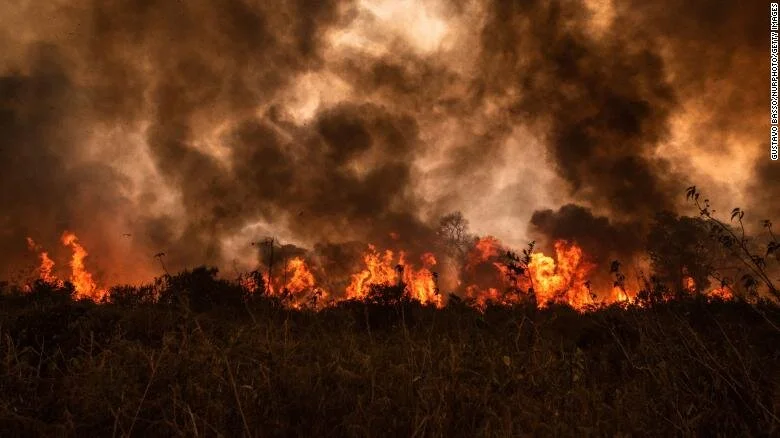
Out of control forest fire burns the area of the Brazilian Pantanal in rural Mato Grosso.

Out of control forest fire burns the area of the Brazilian Pantanal in rural Mato Grosso.

"[There are] less actions to prevent fires, dismantling of responsible federal institutions, and omission at federal and state levels," said biologist Debora Calheiros, who has been researching ecosystems in the Pantanal for decades. "Actually, it was the civil society that readily responded to rescue, save, feed and offer water to the surviving animals and help traditional riverine and indigenous people with food and mineral water," she added.

Addressing the United Nations General Assembly (UNGA) in September, Bolsonaro refused to accept any blame for the fires, claiming instead that they were an "inevitable consequence of high local temperature, coupled with the accumulation of decaying organic matter."

Out of control forest fire burns the area of the Brazilian Pantanal in rural Mato Grosso.

Bolsonaro, who has repeatedly rejected criticism of his government's stance on the environment and has accused foreign actors of a "brutal disinformation campaign" on the issue, told the UNGA that no other country protected as much wild territory as Brazil.

Speaking to CNN's affiliate CNN Brasil last month, Salles, the environmental minister, doubled down on Bolsonaro's message. He blamed the fires on the drought and said farmers had no interest in burning the land, because they rely on it economically.

The government eventually recognized the Pantanal fires as a federal emergency and sent funding into the area, but for many, this was too little, too late.

The government's policies, Siqueira says, send a "clear message of impunity of environmental crimes."

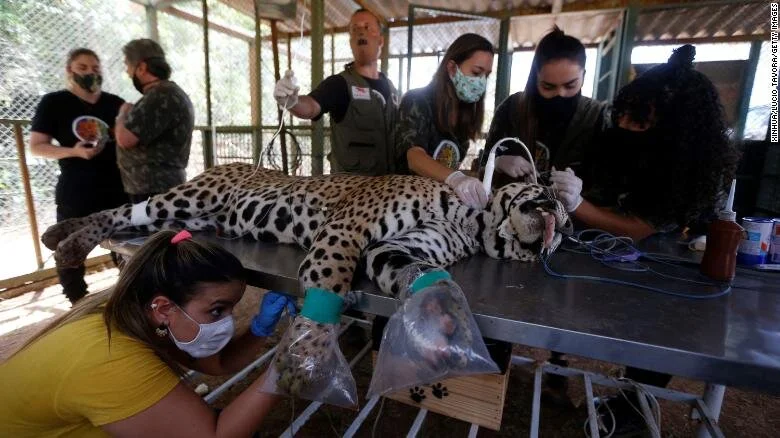
Staff members treat a wounded leopard at an animal protection center in Goias State, Brazil, on September 27, 2020.

Staff members treat a wounded leopard at an animal protection center in Goias State, Brazil, on September 27, 2020.

Parts of the Pantanal have been designated a biosphere conservation area and recognized as a UNESCO World Heritage site, but overall, less than 5% of the region is under formal protection, according to the WWF. More than 90% is privately owned by ranchers, farmers and conservation groups, with 80% of that private land used for cattle farming, according to Brazil's environment ministry.

The fires burned millions of acres of flowering plants, starving pollinators and leaving no food for other animals.

The blazes are hurting local people too. The Pantanal is home to a number of indigenous and traditional communities, which have settled on the banks of the rivers and make their living from fishing and small-scale agriculture. "Riverside communities, which traditionally survive on artisanal fishing, build their culture there strictly linked to the biome," Larcher said.

Fires are still raging in parts of the Pantanal, but recovery efforts are already underway.

The biome has gone through periods of harsh drought in the past. However, Calheiros said the ecosystems are much more fragile than they were just a few decades ago and their capacity to recover is uncertain. The environmental damage inflicted on the Pantanal is also much greater, she added.

Siqueira said it could take decades to restore what the blazes took. "This will only be possible if we have a normal rainfall from 2020 to 2021," he said. If there is more drought, he added, the recovery of the plants and animals living in the Pantanal will be much more difficult.

Governments urged to go beyond net zero climate targets

Matthew Taylor

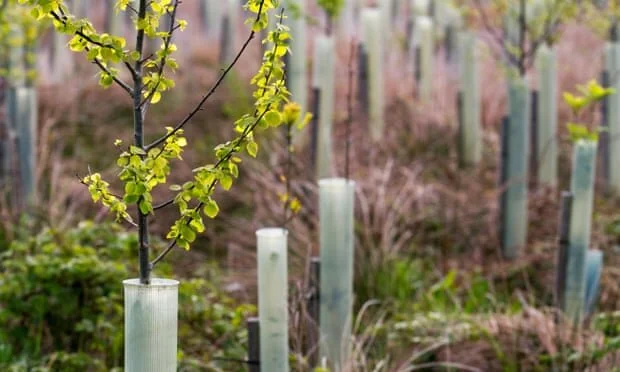
Spring leaf growth on young birch trees growing in a forestry plantation. Photograph: MediaWorldImages/Alamy

Spring leaf growth on young birch trees growing in a forestry plantation. Photograph: MediaWorldImages/Alamy

Leading scientists and campaigners say cutting emissions alone is not enough

Leading scientists, academics and campaigners have called on governments and businesses to go beyond “net zero” in their efforts to tackle the escalating climate and ecological crisis.

The former archbishop of Canterbury Rowan Williams and the leading climate scientist Michael Mann are among a group of prominent environmentalists calling for the “restoration of the climate” by removing “huge amounts of greenhouse gases from the atmosphere”.

Net zero targets have been a focus of governments, local authorities and campaigners in their attempts to address global heating. The authors of Friday’s letter, however, say that although stopping emissions is “a necessary prerequisite”, governments and businesses must be more ambitious and work to “restore the climate” to as safe a level as possible.

“The climate crisis is here now,” the letter states. “No matter how quickly we reach zero emissions, the terrible impacts of the climate crisis will not just go away … As such, no matter how quickly it is done, solely cutting emissions is not enough.”

The idea of removing emissions from the atmosphere – either directly from the air or by capturing it from power plants – has been a strongly debated subject among environmentalists and engineers for years.

Critics point out that it has proved difficult to replicate the technology at scale and that constructing the necessary machinery would itself be environmentally damaging.

Many fear that the idea of carbon capture is a “technological fix” used as an excuse by corporations which are opposed to the radical changes needed to move to a zero-carbon economy.

Pollution and pandemics: A dangerous mix

Washington University in St. Louis

Pollution may bear part of the blame for the rapid proliferation in the United States of SARS-CoV-2, the virus responsible for the spread of COVID-19, according to new research.

The United States may have set itself up for the spread of a pandemic without even knowing it.

According to new research from the McKelvey School of Engineering at Washington University in St. Louis, pollution may bear part of the blame for the rapid proliferation in the United States of SARS-CoV-2, the virus responsible for the spread of COVID-19.

The research, from the lab of Rajan Chakrabarty, associate professor in the Department of Energy, Environmental & Chemical Engineering, was published online ahead of print in the journal Science of The Total Environment.

When it comes to how ill someone gets after contracting COVID-19, medical professionals believe that a person's health -- having certain medical conditions, for example -- can play a vital role. When it comes to how fast the virus can spread through the community, it turns out the health of the environment is directly correlated to the basic reproduction ratio R0, which denotes the expected number of people each sick person can infect.

The reproduction ratio R0 of COVID-19 associates directly with the long-term ambient PM2.5 exposure levels. And the presence of secondary inorganic components in PM2.5 only makes things worse, according to Chakrabarty.

"We checked for more than 40 confounding factors," Chakrabarty said. Of all of those factors, "There was a strong, linear association between long-term PM2.5 exposure and R0."

PM2.5 refers to ambient particles with a diameter of 2.5 micrometers or less; at that size, they can enter a person's lungs and cause damage. For this reason, PM2.5 can be detrimental to respiratory health. But how this relates to the spread of COVID-19 through a population had yet to be explored.

Chakrabarty and his graduate student Payton Beeler, both aerosol researchers who have done previous coronavirus modeling, became interested in the relationship after two papers were published in quick succession. First, a July paper in the journal Science found that levels of susceptibility to COVID-19 is a driving factor for the pandemic; it is more important than temperature, which researchers initially thought might play an outsized role.

Then in August, research published in the Journal of Infection found that the highest number of cases of COVID-19 with severe illness were in places with higher pollution levels.

"I was thinking, why, in the majority of the U.S. states, have we had such a rapid spread of the virus?" Chakrabarty said. Particularly in the earlier stages of the pandemic. "We wanted to confine our study to the point in time when the shutdown was in place. For the most part, people did remain confined from early March until the end of April."

The team decided to look at places where R0 was greater than one -- that's the point at which one person can spread an illness to more than one person, and the illness takes off. In those places, they looked at 43 different factors -- including population density, age distribution, even time delays in states' stay-at-home orders.

Then, using pollution estimates across the U.S. between 2012 and 2017 published by Randall Martin, professor in the Department of Energy, Environmental & Chemical Engineering, the team looked for any relationships.

Modeling revealed an increase of almost 0.25 in R0 corresponding to a 10% increase in sulfate, nitrogen dioxide and ammonium, or SNA composition and an increase of 1 ?g/m3 in PM2.5 mass concentrations, respectively.

They found these linear correlations to be strongest in places where pollution levels were well below National Ambient Air Quality Standards (NAAQS), the levels of air pollutants that are considered safe for humans.

"Annual mean PM2.5 national standards are set at or below 12 micrograms per cubic meter, below that you are supposed to be safe," Chakrabarty said. "What we saw, the correlation we're seeing is well below that standard." In fact, they saw a rapid increase in R0 when PM2.5 exposure levels were below 6 micrograms per cubic meter.

Chakrabarty hypothesizes this initial increase in R0, which is followed by a plateau once levels hit 6 micrograms per cubic meter, is a result of initial changes in condition; when the air is free of PM2.5 , an individual is unaffected. The initial exposure is the catalyst for change in lung health resulting in a change from non-susceptibility to susceptibility, which is reflected in the increasing R0.

And although there was no direct correlation between black carbon -- a.k.a. soot -- and R0, researchers did find a connection.

"Our collaborators at Saint Louis University suggested a mediation/moderation statistical approach," a detailed analysis that looks at the way additional variables affect the outcome of the initial relationship. In this case, researchers looked at soot's effect on R0, considering SNA's effect.

"We found black carbon acts as a kind of catalyst. When there is soot present, PM2.5 has more of an acute effect on lung health, and therefore on R0."

The mediation/moderation study was not superfluous -- one of the common ways people are exposed to SNA is through pollution emitted from cars and coal-fired power plants. Both of which also emit soot.

"Although decades of strict air quality regulations in the U.S. have resulted in significant reductions of nitrogen dioxide levels," the authors wrote in the paper's conclusion, "recent reversal of environmental regulations which weaken limits on gaseous emissions from power plants and vehicles threaten the country's future air quality scenario."

"Instead of working to resolve this issue, these reversals may be setting us up for another pandemic," Chakrabarty said.

The Green Digest: COVID-19 cure; Building resilient cities; One Health approach-Indonesia; Green hydrogen.

AFRICA: African cities are encouraged to emulate Cape Town’s response strategy to climate change. Though the climate change strategy in Cape Town is not perfect, other African cities have a lot to learn. Africa’s economic malaise and vulnerability to heat, drought and floods make it the most likely continent to be impacted by climate change.  Despite its vulnerability and inadequacy in combating climate change, only 13 cities in Africa are committed to taking measurable changes against climate change while only five in South Africa have climate change strategies. Cape Town has become the latest city to redraft its climate change strategy which contains 35 goals, aimed towards adaptation and mitigation. However, a major drawback is the omission of nature’s role in their proposed climate action, making the strategy self-defeating.

ASIA: Environmental health scientists are calling for a One Health approach to climate and disease crises. Recent studies have shown that the outbreak of diseases is due to human encroachment of the natural habitats of wild animals. Jatna Supriatna, a conservation biologist in the University of Indonesia, speaking in support of the One Health approach said, “Integrated prevention and mitigation measures were vital to outbreaks resulting from zoonotic pathogens.” The primary causes of these outbreaks, according to Jatna were deforestation and forest conversion.  Deforestation has driven wild animals away from their natural habits to live in proximity with human established settlements. Also Sofia Mubarika of Yogkarta-based Gadjah Mada University suggested that Indonesia should reinforce the One Health approach in order to “address overlapping issues of ecological stability and public health

COVID-19: German Biotech Company, BioNTech and United States pharmaceuticals, Pfizer have announced a vaccine for SARS-CoV-2, the virus that causes COVID-19. However, these early results are known as “interim analysis” and we await the data to undergo “peer-review” through scientific publication. In an analysis carried out on 94 volunteers with COVID-19, the vaccine was suggested to have an efficacy of over 90%. This means that one out of ten people, prone to have COVID-19 will be infected with the disease when the vaccine is administered. The success rate of this vaccine is astounding because the US Food and Drug Administration have announced that they will only approve of a 50% efficacy rating. This latest development has encouraged more vaccines that work better in certain demography to be tested.

RENEWABLE ENERGY: Green hydrogen could be the latest innovation in the energy industry. Although hydrogen has been flaunted as a carbon-free fuel source, its traditional production process is not remotely zero carbon. In this process of production, fossil fuels are exposed to steam, and this is called gray hydrogen. If the CO2 is captured and sequestered, it is known as blue hydrogen. However, green hydrogen is an exception, produced from the process of electrolysis where hydrogen and oxygen are split without any by-product. Companies are currently working to produce electrolyzers that will produce green hydrogen as cheaply as blue and gray hydrogen.

Scientists unravel how and why Amazon trees die

University of Birmingham

The capacity of the Amazon forest to store carbon in a changing climate will ultimately be determined by how fast trees die -- and what kills them. Now, a huge new study has unraveled what factors control tree mortality rates in Amazon forests and helps to explain why tree mortality is increasing across the Amazon basin.

Source: popularmechanics.com

Source: popularmechanics.com

Source: the portugal news

Source: the portugal news

This large analysis found that the mean growth rate of the tree species is the main risk factor behind Amazon tree death, with faster-growing trees dying off at a younger age. These findings have important consequences for our understanding of the future of these forests. Climate change tends to select fast-growing species. If the forests selected by climate change are more likely die younger, they will also store less carbon.

The study, co-led by the Universities of Birmingham and Leeds in collaboration with more than 100 scientists, is the first large scale analysis of the causes of tree death in the Amazon and uses long-term records gathered by the international RAINFOR network.

The results published in Nature Communications, show that species-level growth rates are a key risk factor for tree mortality.

"Understanding the main drivers of tree death allows us to better predict and plan for future trends -- but this is a huge undertaking as there are more than 15,000 different tree species in the Amazon," said lead author Dr Adriane Esquivel-Muelbert, of the Birmingham Institute of Forest Research.

Dr David Galbraith, from the University of Leeds added "We found a strong tendency for faster-growing species to die more, meaning they have shorter life spans. While climate change has provided favourable conditions for these species, because they also die more quickly the carbon sequestration service provided by Amazon trees is declining."

Tree mortality is a rare event so to truly understand it requires huge amounts of data. The RAINFOR network has assembled more than 30 years of contributions from more than 100 scientists. It includes records from 189 one-hectare plots, each visited and monitored on average every 3 years. Each visit, researchers measure all trees above 10cm in diameter as well as the condition of every tree.

In total more than 124,000 living trees were followed, and 18,000 tree deaths recorded and analysed. When trees die, the researcher follows a fixed protocol to unravel the actual cause of death. "This involves detailed, forensic work and amounts to a massive 'CSI Amazon' effort conducted by skilled investigators from a dozen nations," noted Prof. Oliver Phillips, from the University of Leeds.

Dr Beatriz Marimon, from UNEMAT, who coordinates multiple plots in central Brazil added: "Now that we can see more clearly what is going on across the whole forest, there are clear opportunities for action. We find that drought is also driving tree death, but so far only in the South of the Amazon. What is happening here should serve as an early warning system as we need to prevent the same

Large volcanic eruption caused the largest mass extinction

Tohoku University

Researchers in Japan, the US and China say they have found more concrete evidence of the volcanic cause of the largest mass extinction of life. Their research looked at two discrete eruption events: one that was previously unknown to researchers, and the other that resulted in large swaths of terrestrial and marine life going extinct.

There have been five mass extinctions since the divergent evolution of early animals 450 -- 600 million years ago. The third was the largest one and is thought to have been triggered by the eruption of the Siberian Traps -- a large region of volcanic rock known as a large igneous province. But the correlation between the eruption and mass extinction has not yet been clarified.

Sedimentary mercury enrichments, proxies for massive volcanic events, have been detected in dozens of sedimentary rocks from the end of the Permian. These rocks have been found deposited inland, in shallow seas and central oceans, but uncertainty remains as to their interpretation. Mercury can be sourced from either direct atmospheric deposition from volcanic emissions and riverine inputs from terrestrial organic matter oxidation when land/plant devastation -- referred to as terrestrial ecological disturbance -- occurs.

The largest mass extinction occurred at the end of the Permian -- roughly 252 million years ago. This mass extinction was marked by the transition from the divergence of the Paleozoic reptiles and marine animals like brachiopods and trilobites to Mesozoic dinosaurs and marine animals such as mollusks. Approximately 90% of species disappeared at the end of the Permian.

Current professor emeritus at Tohoku University, Kunio Kaiho led a team that looked into possible triggers of the largest mass extinction. They took sedimentary rock samples from two places -- southern China and Italy -- and analyzed the organic molecules and mercury (Hg) in them. They found two discrete coronene-Hg enrichments coinciding with the first terrestrial ecological disturbance and the following mass extinction in both areas.

"We believe this to be the product of large volcanic eruptions because the coronene anomaly was formed by abnormally high temperature combustion," says professor Kaiho. "High temperature magma or asteroid/comet impacts can make such a coronene enrichment.

From the volcanic aspect, this could have occurred because of the higher temperature combustion of living and fossil organic matter from lava flows and horizontally intruded magma (sill) into the sedimentary coal and oil. The different magnitude of the two coronene-mercury enrichments shows that the terrestrial ecosystem was disrupted by smaller global environmental changes than the marine ecosystem. The duration between the two volcanic events is tens of thousands of years."

Huge volcanic eruptions can produce sulfuric acid aerosols in the stratosphere and carbon dioxide in the atmosphere, which causes global climate changes. This rapid climate change is believed to be behind the loss of land and marine creatures.

Coronene is a highly condensed six-ring polycyclic aromatic hydrocarbon, which requires significantly higher energy to form as compared to smaller PAHs. Therefore, high temperature volcanic combustion can cause the coronene enrichments. This means that high temperature combustion of hydrocarbons in the sedimentary rocks by lateral intrusion of magmas formed CO2 and CH4 causing high pressure and eruption to induce global warming and the mass extinction. The coronene-mercury concentration firstly evidenced that volcanic hydrocarbon combustion helped contribute to the extinction through global warming.

Kaiho's team is now studying other mass extinctions in the hopes of further understanding the cause and processes behind them.

Climate heroes: the countries pioneering a green future

Jonathan Watts

From Spain to South Korea, there are several global success stories in the drive to become carbon neutral

GREEN.jpg

While the world must wait to see whether US president-elect Joe Biden can fulfil his election promise of a $2tn Green New Deal, nations elsewhere in the world are setting carbon-neutral targets and pushing ahead with mega-programmes to cut emissions, create jobs and reduce energy prices. Here are some of the regional frontrunners.

GREEN1.jpg

Last week, the government was the latest to announce plans to go carbon neutral by 2050 and it is overseeing one of the fastest shifts away from coal the world has seen.

Over the coming three years, Spain has committed €27bn to green energy spending – a downpayment on the €750bn investment it forecasts will be needed to fund the move away from fossil fuels. By 2050, the decarbonisation strategy envisages a 90% reduction in emissions, the reforestation of 20,000 hectares and the recovery of 50,000 hectares of wetlands. Renewable power, meanwhile, will rise from 20% of the energy mix to 97%.

Action is already under way. In May, the cabinet approved a draft law on climate change, which outlined more ambitious goals than the EU at the time on renewables and energy efficiency. The bill would ban new coal, oil and gas extraction projects and end direct fossil fuel subsidies.

Spain is also shutting down 69% of its coal-fired power plants this year and next – a pace of decommissioning not seen anywhere else in the world. Last year, Spain installed more new onshore wind than any other country in Europe.

Far from being a drain on employment and economy, the Spanish government says its decarbonisation plan will increase the workforce by 1.6%. But the country will have to convince investors that its legal framework is more stable this time than during the “solar garden” bubble that followed subsidy promises in 2007. When those were abolished, confidence in the sector took at hit along with jobs.

The ecological transition minister, Teresa Ribera, predicts the country will go well beyond the 2030 targets set by the European commission and has promised to push for still more ambitious policies in Spain and elsewhere in Europe.

Advertisement

This is part of a broader trend. In Europe, renewables have generated more power than coal for the first time this year. The European commission president, Ursula von der Leyen, has said she wants Europe to be the world’s first carbon-neutral continent. Over the next 10 years, the commission forecasts investment of at least €1tn to achieve this goal, including a quarter of the EU budget. This month, the European parliament voted in favour of climate neutrality by 2050 and 60% cuts in emissions by 2030 (compared with 1990 levels). Further progress has been seen in individual countries, including Denmark, Germany, France and (outside the EU) Britain.

Asia: South Korea

GREEN2.jpg

Four years after being labelled the world’s biggest carbon villain, South Korea has bid to be one of the heroes this year with a $61bn Green New Deal and a commitment to go carbon neutral by 2050.

President Moon Jae-in has moved to end South Korea’s dependence on coal and create green jobs as his party promised in April’s successful election campaign for the national assembly.

By 2025, the Green New Deal would bring about 230,000 more energy-saving buildings, 1.13m electric and hydrogen-powered cars, and an increase in renewable energy capacity to 42.7 GW from 12.7 GW last year.

Money will also be made available to upgrade public rental housing and schools to make them zero-energy, and to expand green areas in cities. To improve energy efficiency, smart meters will be fitted in an additional 5 million apartments and communities will be given incentives to connect to micro-grids supplied with decentralised, low-carbon energy.

The plan aims to support Korean industrial conglomerates that have been hard hit by the pandemic. Hyundai, Kia, Samsung and EM Korea will be among the biggest beneficiaries of plans to build 45,000 new electric vehicle charging points and 450 hydrogen refuelling units.

Tempering the optimism is South Korea’s past record of high emissions and false hopes. The last time the country promised “green growth” – after the 2008-9 financial crisis – it led to an environmentally disastrous policy of more concrete riverbanks and higher emissions. Today, coal supplies about 40% of Korea’s electricity and seven new coal power plants are under construction. In 2016, activists labelled South Korea the world’s biggest carbon villain.

A new generation of campaigners believe South Korea has turned a new page. They want to see an early halt to overseas coal financing and a strong 2030 target to reduce domestic emissions.

They are encouraged by signs of a climate race-to-the-top in east Asia, where the opposite has long been true. China and Japan are also major users and funders of coal, but both countries have committed this year to carbon-neutral goals.

Latin America: Uruguay

GREEN3.jpg

Last year, Uruguay was ranked fourth in the world in the proportion of electricity it supplies from wind and solar. The International Energy Agency said the country’s 36% share was behind only Denmark (50%), Lithuania (41%) and Luxembourg (37%). If hydropower is added, Uruguay leaps ahead of them all with 97%.

This represents a spectacular transition. Twenty years ago, this South American country burned oil to produce almost a third of its electricity and had to import power from Argentina. The change came between 2008 and 2015 under former presidents Tabaré Vázquez and José Mujica, who wanted to reduce costs and make energy more affordable.

The secret was a proactive state rather than a big-spending one. Government encouraged investors by promising fixed feed-in tariffs and stable policies. More than US$7bn poured into the sector, helping Uruguay to reduce its emissions by 20%. Droughts have also been rarer because the grid is less dependent on hydropower.

Asad Rehman, the co-organiser of Global Green New Deal Campaign, said the success of Uruguay’s transition reflects an ideal balance of social and climate priorities. “It is not just about carbon, but also cutting energy prices and tackling energy poverty. Social justice is an imperative.”

The picture is mixed elsewhere in South and Central America. Costa Rica has won international kudos for generating almost all of its electricity with renewables, particularly geothermal and hydropower. The latter also provides most of the power for Brazil and Paraguay though it often has a devastating impact on ecosystems and wildlife.

Africa: Kenya

Renewables already provide more than 93% of Kenya’s electricity and the government plans to expand further so everyone in the country has access either to the grid or community solar power by 2022.

The carbon footprint of the population of 47 million is tiny compared with wealthy nations in the northern hemisphere so economic – rather than climate – considerations are the main drivers for an energy transition. Solar, wind, hydropower and geothermal energy is increasingly cheaper and more practical than fossil fuels. The main challenge is securing the initial investment.

The country has substantial renewable resources to tap, prompting many observers to say it has the potential to bypass fossil fuel-driven economic development. Last month, the African Development Bank announced the completion of the 105 MWe Menengai geothermal power plant in the Rift Valley, cementing Kenya’s leading role on the continent for geothermal electricity production, which has increased more than fourfold in the past six years.

Kenya is also home to east Africa’s biggest solar generation plant – the $128.5m China-funded Garissa Plant where more than 200,000 PV panels soak up the energy from the sunshine each day. In many remote areas, small villages that are far from the grid are able to generate electricity with just a few dozen rooftop panels.

These developments – along with expanded wind and hydropower – have pushed the proportion of the population with electricity from 63% in 2017 to 75% today.

Heymi Bahar, the lead author of the International Energy Agency’s Renewables market report, said Kenya along with other African nations, such as Rwanda and Nigeria, “have a chance to leapfrog” fossil fuel energy systems if they can draw in more private investment. That once meant expensive subsidies, but Bahar said this is no longer the case. Good regulations and policies are enough.

“Renewables are becoming cheaper and more accessible. In Africa, the potential is there, the willingness is there,” he said. “Renewables do not need subsidies any more. They just need long-term revenue streams. That is determined by clear policies.”

The Green Digest: Constitutional coup in Africa; Climate; Investment shortfalls; Educational reformation

AFRICA: Democracy in Africa is threatened by the rise of constitutional coup, resulting from Africa’s inadequacy to deal with abuses of power and human rights. Constitutional coup is a term used when leaders subvert their constitutions to remain in power for an extended period. Subservient legislators loyal to African dictators have been crucial to the annulment of the “two-term limit” accorded to politicians. Many of these dictators have capitalized on this annulment to stay in power indefinitely becoming tyrants in the process. Such presidents that have changed their constitution to extend their rule include but not limited to Presidents; Gnassingbe (Togo), Museveni (Uganda), Kagame (Rwanda) and the late Nkurunziza (Burundi).

CLIMATE CHANGE: The impact of the COVID-19 pandemic on climate discussions has led to the postponement of the meeting of Conference of the Parties (COP) to November 2021. For the first time ever, the world will go without climate talks since the formation of COP. However, the successes of these meetings held by COP are difficult to measure or hidden in national climate policies. An example of this hidden success is found in Chile’s ambitious plan to phase out coal-generated electricity. In trying to sign the Powering Past Coal Alliance (PPCA) agreement, the Chilean minister of environment, Marcelo Mena was opposed by Chile’s electricity generation companies. Their argument was that “Chile was not ready to take on such a bold commitment without further analysis”, and provided an alternative where Chile would phase out coal on its own terms. Moving forward, what does the future hold for climate discussions?

currency.jpg

SDGs: Standard Chartered research has uncovered an investment shortfall in the United Nations Sustainable Development Goals. According to a survey conducted between July and August 2020 amongst 300 of the world’s top investment firms, 20 percent are unaware of the UN’s SDGs. These firms are reported to have in their possession assets under management (AUM) of over USD 50 trillion, of which only 13 percent are attributed to the SDGs. Some 55 percent claim that the SDGs are not important to mainstream investment while 47 percent claim that the SDGs are too hard to measure. Finally, the report showed that two-thirds (64 percent) of investments are channeled into developed markets seeing a massive shortfall in emerging markets (10 percent) of Africa, Middle East and South America.

UNITED STATES: The current system of education in America has been referred to as the “horse and buggy” model of education dating back to the industrial revolution. Analysts argue that this system does not prepare children to thrive in the 21st century. According to their reports, the highest quality of education is reserved for the most affluent students, while their peers are considered “products” to a “factory model” of education that emerged in the early 20th century. However, various educational reforms such as the development of the Common Core State Standards (2009) which were adopted have proven insufficient.

Pfizer, BioNTech say Covid vaccine is more than 90% effective — ‘great day for science and humanity’

Pfizer and BioNTech announced Monday their coronavirus vaccine was more than 90% effective in preventing Covid-19 among those without evidence of prior infection, hailing the development as “a great day for science and humanity.”

“I think we can see light at the end of the tunnel,” Pfizer Chairman and CEO Dr. Albert Bourla told CNBC’s Meg Tirrell on “Squawk Box.” “I believe this is likely the most significant medical advance in the last 100 years, if you count the impact this will have in public health, global economy.”

The announcement comes as drugmakers and research centers scrambled to deliver a safe and effective vaccine to help bring an end to the coronavirus pandemic that has claimed over 1.2 million lives worldwide.

Scientists are hoping for a coronavirus vaccine that is at least 75% effective, while White House coronavirus advisor Dr. Anthony Fauci has said one that is 50% or 60% effective would be acceptable.

U.S. stock futures skyrocketed as investors cheered the news. Futures on the Dow Jones Industrial Average surged 1,646 points, implying an opening gain of more than 1,630 points. By late morning, the Dow was up more than 1,000 points, a rise of 3.7%.

Airline and cruise company stocks jumped in premarket trading — with some stocks rising by 20% and 30%. Both industries have been significantly affected by the global health crisis as travel restrictions and a resurgence in outbreaks continue to hurt demand. 

Vaccine.JPG

Pfizer’s results were based on the first interim efficacy analysis conducted by an external and independent Data Monitoring Committee from the phase three clinical study. The independent group of experts oversees U.S. clinical trials to ensure the safety of participants.

The analysis evaluated 94 confirmed Covid-19 infections among the trial’s 43,538 participants. Pfizer and the U.S. pharmaceutical giant’s German biotech partner said the case split between vaccinated individuals and those who received a placebo indicated a vaccine efficacy rate of above 90% at seven days after the second dose.

It means that protection from Covid-19 is achieved 28 days after the initial vaccination, which consists of a two-dose schedule. The final vaccine efficacy percentage may vary, however, as safety and additional data continue to be collected.

Dr. Scott Gottlieb, a former FDA commissioner and a member of Pfizer’s board, told CNBC the vaccine could be available in limited use as early as late December and widely available by the third quarter of 2021.

“The first set of results from our Phase 3 COVID-19 vaccine trial provides the initial evidence of our vaccine’s ability to prevent COVID-19,” Bourla said in a statement.

“We are reaching this critical milestone in our vaccine development program at a time when the world needs it most with infection rates setting new records, hospitals nearing over-capacity and economies struggling to reopen,” Bourla continued.

“With today’s news, we are a significant step closer to providing people around the world with a much-needed breakthrough to help bring an end to this global health crisis. We look forward to sharing additional efficacy and safety data generated from thousands of participants in the coming weeks.”

Distribution challenges

Roughly 42% of the trial’s global participants had racially and ethnically diverse backgrounds, Pfizer and BioNTech said, adding that there haven’t been any serious safety concerns reported yet.

The companies said they planned to submit for emergency use authorization to the U.S. Food and Drug Administration soon after they have two months of data, which is currently on track for the third week of November.

Based on current projections, Pfizer and BioNTech expect to produce up to 50 million vaccine doses in 2020, and up to 1.3 billion doses in 2021. The vaccine requires two doses per person. Though the companies didn’t take any money from the federal government for research and development for the drug, they reached a nearly $2 billion agreement in July to supply 100 million doses to the U.S. government as part of the Trump administration’s Operation Warp Speed. That money is helping with manufacturing and distribution.

vaccine 1.JPG

Plans to deliver hundreds of millions of coronavirus vaccines around the world raise questions about logistics and distribution in part because of the need to store and transport them in supercooled containers.

Pfizer’s vaccine requires a storage temperature of minus 94 degrees Fahrenheit. By comparison, Moderna has said its vaccine must be stored at minus 4 degrees Fahrenheit.

The company reportedly plans to load suitcase-sized boxes from distribution sites in Kalamazoo, Michigan, and Puurs, Belgium, onto as many as two dozen trucks per day, allowing for the daily transit of roughly 7.6 million doses to nearby airports.

The companies said they plan to submit data from the full phase three trial, which began on July 27, for scientific peer-review publication.

‘Let’s take a deep breath’

“The U.S. FDA set a threshold of 50% effectiveness for a Covid-19 vaccine to merit approval. A 90% effective vaccine would be extraordinary,” Dr. Peter Drobac, a global health physician and director of the Skoll Centre for Social Entrepreneurship at the University of Oxford, said via email.

“We’ll need to see the full results subjected to independent review. Let’s take a deep breath, but this is very promising news,” he added.

U.S. officials and scientists are hopeful a vaccine to prevent Covid-19 will be ready in the first half of 2021 — 12 to 18 months since Chinese scientists first identified the coronavirus and mapped its genetic sequence.

It’s a record-breaking time frame for a process that normally takes about a decade for an effective and safe vaccine. The fastest-ever vaccine development, mumps, took more than four years and was licensed in 1967.

A more than 90% effective coronavirus vaccine would be roughly on par with one dose of a measles vaccination, which is about 93% effective, according to the Centers for Disease Control and Prevention.

Comparatively, the CDC says a vaccine for influenza reduces the risk of flu illness by between 40% and 60% among the overall population.

— CNBC’s Berkeley Lovelace Jr. contributed to this report.

Revealed: Covid recovery plans threaten global climate hopes

Exclusive: analysis finds countries pouring money into fossil fuels to fight recession

green economy.jpg

The prospect of a global green recovery from the coronavirus pandemic is hanging in the balance, as countries pour money into the fossil fuel economy to stave off a devastating recession, an analysis for the Guardian reveals.

Meanwhile, promises of a low-carbon boost are failing to materialise. Only a handful of major countries are pumping rescue funds into low-carbon efforts such as renewable power, electric vehicles and energy efficiency.

A new Guardian ranking finds the EU is a frontrunner, devoting 30% of its €750bn (£677bn) Next Generation Recovery Fund to green ends. France and Germany have earmarked about €30bn and €50bn respectively of their own additional stimulus for environmental spending.

On the other end of the scale, China is faring the worst of the major economies, with only 0.3% of its package – about £1.1bn – slated for green projects. In the US, before the election, only about $26bn (£19.8bn), or just over 1%, of the announced spending was green.

How a Biden presidency plans to lead a global green recovery

Guardian graphic. Source: Vivid Economics

Guardian graphic. Source: Vivid Economics

In at least 18 of the world’s biggest economies, more than six months on from the first wave of lockdowns in the early spring, pandemic rescue packages are dominated by spending that has a harmful environmental impact, such as bailouts for oil or new high-carbon infrastructure, outweighing the positive climate benefits of any green spending, according to the analysis.

Only four countries – France, Spain, the UK and Germany – and the EU have packages that will produce a net environmental benefit.

“The natural environment and climate change have not been a core part of the thinking in the bulk of recovery plans,” said Jason Eis, chief executive of Vivid Economics, which compiled the index for the Guardian. “In the majority of countries we are not seeing a green recovery coming through at all.”

Even countries that have boasted of green recovery plans are frequently spending much more on activities that will maintain or increase greenhouse gas emissions. South Korea set out plans for a green new deal in July, worth about $135bn. But its continued spending on fossil fuels and carbon-intensive industries means it ranks only eighth in the world for the greenness of its stimulus.

Canada similarly is spending C$6bn (£3.5bn) of its infrastructure funding on home insulation, green transport and clean energy, but its total rescue package is worth more than $300bn and contains measures such as a massive road expansion and tax relief for fossil fuel companies. India is spending about $830m on its green economy, but plans to prop up coal have dragged down its performance.

But the election of Joe Biden as US president has the potential to transform the green recovery globally, the Vivid analysis shows. Although he may face a Republican majority in the Senate, if Biden’s plans for a $2tn green stimulus were implemented in full the US would overtake the EU as the biggest investor in a low-carbon future.

“That would be a transformative shift,” said Eis. “These are very bold plans from Biden, and it would be a huge signal to other countries. They would mean the US could start a race-to-the-top dynamic globally, especially with China, for a green recovery.”

Biden wants to boost renewable energy, powering the US entirely through clean energy by 2035 and reaching net zero emissions by 2050, investing $1.7tn over the next decade, with the expectation of private investment taking the total to $5tn. However, his plans must pass a hostile Republican Senate and will face opposition and possible legal challenges from sections of US business, and potentially some states.

Yet even if only a portion of Biden’s green plans survived intact, that could still have a powerful transformative effect, both on the US economy and around the world, said Eis. “You would expect there to be some compromise, but compared with where the US is now there would be a huge shift [in green spending] under a Biden presidency,” he said. “Many other countries are influenced by the perception of US leadership. Having the US at the G20 table pushing a green recovery would certainly help.”

Countries failing to initiate a green recovery were missing out on the potential to create millions of jobs, added Ed Barbier, professor of economics at Colorado State University, whose landmark study of the 2008 financial crisis pegged that recovery as about 16% green. “There is huge potential for boosting employment, particularly in construction,” he said, pointing to measures such as installing home insulation, solar panels and electric car charging infrastructure, which are labour-intensive and often “shovel-ready”.

While countries fail to muster a green recovery, they are also falling behind on their obligations under the Paris climate agreement. The International Energy Agency has calculated, exclusively for the Guardian, that countries are planning emissions cuts that amount to only 15% of the reductions needed to fulfil the Paris agreement. The IEA has also found that China’s emissions, which dipped sharply in the initial phases of the pandemic, have already rebounded to 2019 levels and are likely to exceed them.

Fatih Birol, executive director of the IEA, said: “China has not yet started on a green recovery. But they have not yet missed the opportunity for a Chinese reset, if China changes its next five-year plan [due to be settled next March]. Whatever China builds now should be green.”

Without China, a global green recovery looks impossible. “If China does not come up with green recovery packages, putting a new five-year plan in line with the target of net zero, then the world’s chances of reaching its climate targets will be close to zero,” Birol warned.

Climate Action Tracker, an independent scientific analysis, found that governments in many countries, far from prioritising low-carbon growth, were bolstering carbon-intensive industries and loosening environmental regulations. Niklas Höhne, of the NewClimate Institute, one of the partner organisations behind CAT, warned: “What we’re seeing more of is governments using the pandemic recovery to roll back climate legislation and bail out the fossil fuel industry, especially in the US, but also in Brazil, Mexico, Australia, South Africa, Indonesia, Russia, Saudi Arabia and other countries.”

However, Lord Nicholas Stern, the climate economist, said countries still had time to move into a new phase of recovery, where green spending could be prioritised. Most of the initial $12tn in rescue packages around the world has gone to increase liquidity, prop up wages and stop companies going bust, which offers little opportunity for greening.

When it comes to the next stage, in a few months’ time, countries must have green plans ready, said Stern. “The green recovery has been delayed because we are still dealing with the virus, except in countries such as China,” he said. “Had we done better at managing the virus in Europe, I would have said we should be doing better by now [at a green recovery]. But we are still in the lockdown and rescue phase. The recovery can’t kick in until we are doing better at managing the virus.”

The Green Digest: Army-Civilian clash in Nigeria; Global food system emissions; Race for EVs in Europe; USA

image.jpg

AFRICA: The dichotomy between Nigerian civilians and the military has emphasized the inefficiency of the military in handling civil unrest. The just concluded #EndSars protest, where the military was accused of the mass shooting at Lekki toll gate has brought to limelight the heated relationship between civilians and soldiers. In an interview with Wale Fatade, from The Conversation Africa, Kester Onor, a lecturer of the department of political science and international relations at covenant university, was of the opinion that “soldiers can be used to deal with civil protest.” He further went on to deny Nigeria’s democratic status, stating that Nigeria is practicing “pseudo-democracy” at best, and is yet to demilitarize its society. While differentiating the unique roles between the Nigerian police and army, he gave the suggestion of setting up a military unit that specializes in civilian protest similar to the National Guard of United States.

GLOBAL WARMING: Emissions from global food system threaten warming beyond 1.5oC. Current policies and interventions are usually geared towards fossil fuel emissions in other sectors, neglecting the impact of agriculture on climate change. According to a joint research by John Lynch, postdoctoral researcher in physics at the University of Oxford, if global food system continues as usual, it will warm the earth beyond 1.5oC rise in 2060. Howbeit, this outcome is not inevitable if improvements to “what we eat and how we farm” are pursued with urgency. The same intensity of effort applied to reduction of carbon emission in other sectors should be applied to agriculture. These efforts include but not limited to halting deforestation for new farmlands and switching energy sources used in farming operations from fossil fuels to renewables.

UNITED KINGDOM: As the word transitions to a net zero economy, the phasing out of petrol and diesel vehicles by 2030 is set to boost the United Kingdom’s economy when the right policies are implemented. Government’s intended plan to phase out polluting vehicles by 2040 has been pulled forward to 2035. However, debates and investigations are ongoing to bring forward the date to 2030.  According to a recent report published today by Greenpeace, the creation of 32,000 new jobs, and an increased GDP of 4.2 billion pounds are the rewards of an early adoption (in 2030) as opposed to the set date of 2040. Another importance of an early adoption by the UK is having a larger market share of electric vehicles (EVs) in both domestic and European markets. The report also argues that in addition to a ‘first-mover advantage’, the UK also has additional economic gains, especially through the development of a UK-based Gigafactory.

UNITED STATES: Joe Biden’s election to the white house could see a total transformation of policies parallel to the Trump administration. Prominent among these policies include racial justice, climate justice, policing and international relations. The American people are counting on Biden to make true his campaign words by restoring the “soul of America”. However, some of these policies would be hardly effected if he doesn’t win the opinion of the Senate.

Two new greater glider species discovered: 'Australia’s biodiversity just got a lot richer'

Graham Readfearn

One of the world’s biggest gliding mammals, Australia’s greater glider is actually three separate species, according to new research

Gliding.jpg

One of the world’s biggest gliding mammals, Australia’s once-common and unique greater glider, actually comprises three separate species, according to new genetic research.

Researchers said the findings should prompt urgent work to better understand the three species which are under pressure from rising temperatures, bushfires and land-clearing.

The study adds two new marsupials to Australia’s list of species and creates new challenges for protecting the three animals which are all unique to Australia.

Greater gliders were listed as vulnerable by the federal government even before last summer’s bushfire’s burned about one-third of their habitat.

The quiet marsupials are roughly the size of a cat, are nocturnal, have distinctively fluffy fur and eat only eucalyptus leaves. They launch themselves from trees and spread out a membrane attached to their elbows to glide as far as 100 metres – using their long tails like a rudder.

Ecologists knew that greater gliders were different sizes and colours in different places up and down the east coast of Australia, but disagreements over their classification – or taxonomy – had not been settled.

Researchers from The Australian National University, James Cook University, the University of Canberra and CSIRO came together to run genetic tests from tissue samples taken from gliders in parts of Queensland, Victoria and from museum specimens.

“We found they were profoundly different,” said Dr Kara Youngentob, a wildlife ecologist at ANU and co-author of the study published in the journal Scientific Reports.

The research suggests greater gliders, with the Latin name Petauroides volans, are three distinct species that now include Petauroides minor and Petauroides armillatus.

The findings mean that Petauroides volans, which was previously thought to have a range as far north as Townsville, was now much less widely-dispersed and concentrated more to the south.

The impacts of the 2019 and 2020 bushfires on that species should now be understood to be proportionately greater, Youngentob said.

“This also means that we know almost nothing about those two other species. If we don’t start working them out we could end up losing them,” she said.

Splitting the one species into three now means assumptions that the greater glider lives from Victoria to Townsville in northeastern Queensland will have to be rethought.

Gliding 2.JPG

Prof Andrew Krockenberger, of James Cook University and one of the researchers, said genetic analysis confirmed a long-held theory the greater glider could actually be multiple species.

“Australia’s biodiversity just got a lot richer. It’s not every day that new mammals are confirmed, let alone two new mammals,” he said.

PhD student at JCU, Denise McGregor, who led the study, said: “There has been speculation for a while that there was more than one species of greater glider but now we have proof from the DNA. It changes the whole way we think about them.”

An early assessment of the impact of Australia’s Black Summer bushfires of 2019 and 2020 suggested about 29% of greater glider habitat overlapped with the fires.

Greater gliders need older trees with hollows where they can hide during the day.

Youngentob said greater gliders were “an awesome animal” and resembled “a giant square of skin” as they glide.

“They are the sweetest-natured animals,” she said. “During mating season you will see them sitting together with their long fluffy tails intertwined.”

She said greater glider numbers had fallen sharply in recent decades as a result of tree clearing, bushfires and global heating that was raising night-time temperatures to levels difficult for the marsupials to tolerate.

Prof Brendan Wintle, a conservation ecologist at the University of Melbourne who was not involved in the research, said the results suggested that Petauroides minor was mostly restricted to Queensland with some habitat overlapping with areas of development.

He said Petauroides volans was known to be sharply declining in numbers and if the other two species were suffering a similar fate, “then we have a significant challenge to manage that.”

He told the Guardian: “It would be an absolute tragedy if we lost this animal and it would be up there with losing the Tasmanian tigers.

“They are so unique and it’s amazing that we could know so little about such a large attractive animal.

“They are quite secretive and even though they’re very large, they’ll often be in the bush at the back of people’s farms and people would never know they were there.

“When you do see them, they’re like a big fluffy animal that’s like a great big cat … but this one can fly. Fortunately, they’re vegetarians.”

The Green Digest: Emergence and Prevention of Zoonotic diseases; United States climate commitment

AFRICA: West and Central Africa are set to adopt the One Health approach following the recent zoonotic diseases in West Africa including; Ebola, anthrax, and the pathogenic avian influenza. The relationship between human, animal, and environmental health is pivotal to curbing the spread of diseases nationally, regionally, and globally. The advantages of this approach can be seen in countries like Liberia where there has been a reduction in the risk of new emerging pandemics. Also, to strengthen the One Health approach, participation and awareness campaigns in Senegal and Cote d’ Ivoire have been organized by stakeholders to make attitudinal changes, in order to address health challenges and threats at animal-human-ecosystem interface.

COVID-19: The impact of the COVID-19 pandemic on energy transition has been uncovered by Japanese researchers. One of the primary finding of the research is that the earth is a closed system, and this discovery is pivotal in tackling the global challenge of climate change. Although during the pandemic, the environment reaped commensurate gains in the reduction of greenhouse emission and improved air quality, the Sustainable Development Goals have been sabotaged by rising nationalism. More so, according to the research, the negative impact of the pandemic on the SDGs has been found to affect SDGs 10(reduced inequalities), 13(climate action) and 17(partnership for the goals).

DISEASES: Ecosystems are gradually becoming hotspots for emerging diseases. Experts have confirmed that the Hindu Kush Himalayas bestowed with a wide range of wildlife species brings higher risks of diseases. Human interference with the natural world has launched us into an “era of pandemics” which is caused by zoonoses (diseases that spread from animals to humans). According to experts convened by the United Nations Intergovernmental Science-Policy Platform on Biodiversity and Ecosystem Services, more than five diseases affect people each year and any one has the potential to become a pandemic.

image.jpg

UNITED STATES: The United States has finally withdrawn from the Paris Climate Agreement. The agreement was a consensual undertaking of countries to limit carbon emissions below 2oC. The withdrawal which was announced in June 2017 by President Donald Trump has taken effect on November 4 2020. According to BBC reports, America becomes the first country to do so. Andrew Light, a climate change official in the Obama administration has opposed Trump’s decision stating how it hurts the US reputation. However, Democratic nominee Joe Biden has promised that America will rejoin if he is elected president.

UK health professions call for climate tax on meat

Damian Carrington

Food with heavy environmental impact should be taxed by 2025 unless food industry acts voluntarily, says alliance

A powerful coalition of the UK’s health professions has called for a climate tax to be imposed on food with a heavy environmental impact by 2025, unless the industry takes voluntary action on the impact of their products.

The group says the climate crisis cannot be solved without action to cut the consumption of food that causes high emissions, such as red meat and dairy products. But it says that more sustainable diets are also healthier and would reduce illness.


The UK Health Alliance on Climate Change (UKHACC) includes 10 Royal Colleges of medicine and nursing, the British Medical Association and the Lancet, representing the doctors, nurses and other professionals entrusted with caring for the country’s health.

The alliance’s new report makes a series of recommendations including a swift end to buy-one-get-one-free offers for food that is bad for health and the environment, and for perishable foods that are often wasted.

It also calls for public information campaigns on diet to include climate messages, for labels on food to reveal its environmental impact, and for the £2bn spent every year on catering in schools, hospitals, care homes and prisons to meet minimum environmental standards.

A YouGov poll of healthcare professionals for UKHACC found two-thirds agreeing that environmentally friendly diets can also improve your health, while 40% had already changed their own eating habits due to environmental concerns.

Food production is responsible for a quarter of the world’s greenhouse gas emissions and a series of scientific studies have shown that red meat and dairy have far bigger impacts than plant-based food. People in rich nations already eat more meat than is healthy and in the UK only one in three eat the recommended five daily portions of fruit and vegetables.

“We can’t reach our goals without addressing our food system,” said Kristin Bash, who leads the Faculty of Public Health’s food group and was a co-author of the UKHACC report. “The climate crisis isn’t something we should see as far in the future. It’s time to take these issues seriously now.”
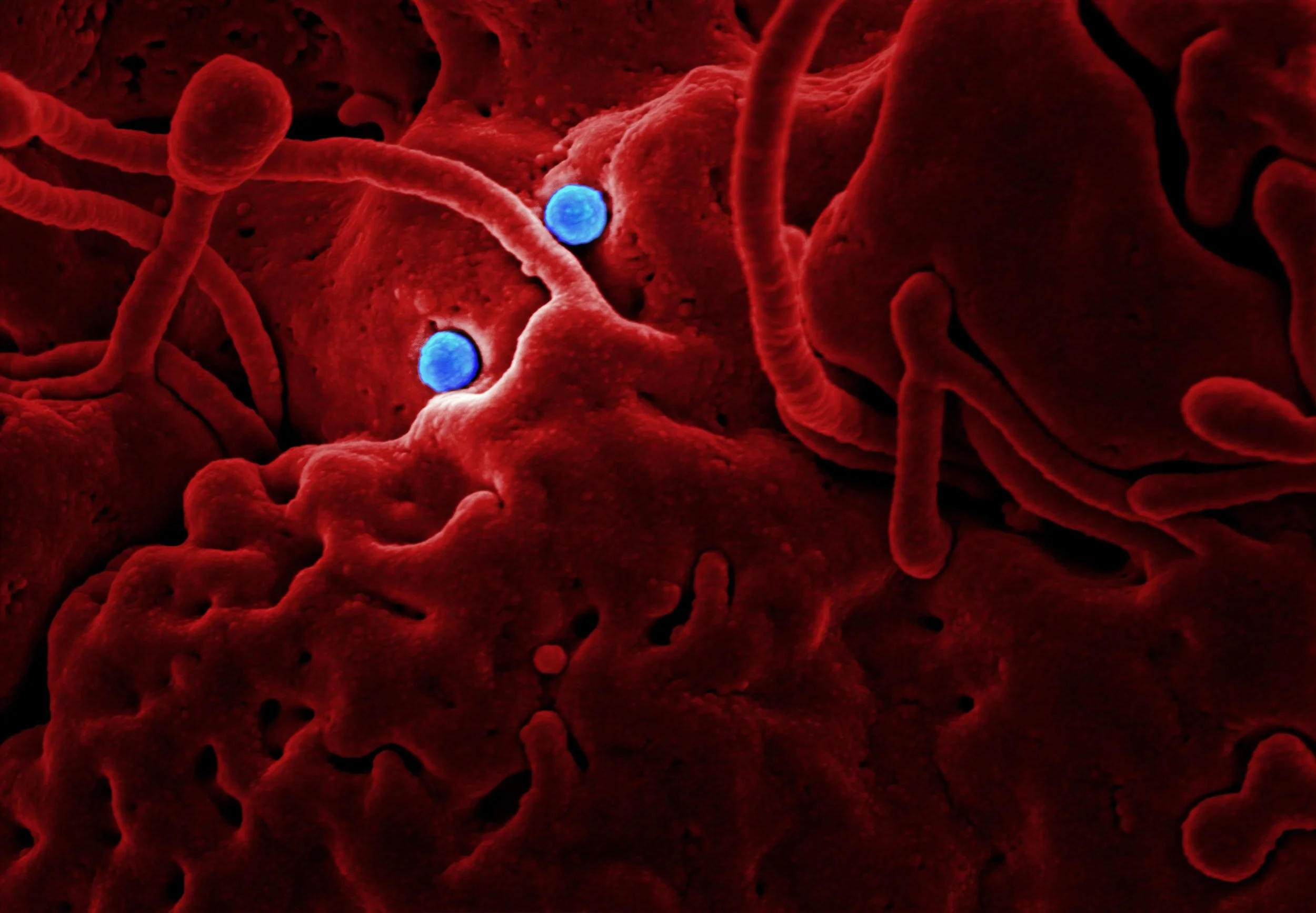
Bash said the report was not telling people to become vegans: “It’s just saying increase your consumption of plant protein. It’s a simple message and something that’s widely supported by health organisations around the world.”

Nicky Philpott, the director of UKHACC, said taxes on plastic bags and sugary soft drinks had shown such policies can reduce harmful activities. The report said the government should state an intention to levy a food carbon tax on all food producers if voluntary action on the full climate impact of food products is not taken by the industry by 2025.

Marco Springmann, at the University of Oxford and not involved in the report, said there was substantial scientific evidence on the close connection between public and planetary health: “The message is clear: without drastic reduction in the production and consumption of meat and dairy, there is little chance of avoiding dangerous levels of climate change.”

“UKHACC is right in stressing that dietary changes of the scale required will not happen without strong policy support,” he said.

Henry Dimbleby, who leads the independent group developing England’s National Food Strategy, said: “Covid-19, painful though it is, could pale into insignificance compared to the turbulence created by climate change and the collapse in biodiversity. Healthcare professionals have an important role in shaping our diets, and I am very pleased to see their recommendations cover not only our health, but that of our planet too.”

Some action is already happening in the UK to cut the environmental impact of food. In April, public sector caterers serving billions of meals a year pledged to reduce the amount of meat they serve by 20%, cutting 9m kg of meat a year.

In October, the NHS set a target of cutting its net carbon emissions to zero by 2040 and included food in its action plan: “Healthier, locally sourced food can improve wellbeing while cutting emissions.”

Joseph Poore, at the University of Oxford, said UKHACC’s recommendation of environmental labelling on food was important. “Today you can walk into a shop and buy something with an environmental impact many times higher than another food, and have no idea you have done so.” For example, Brazilian beef uses 200 times more land and causes 80 times more emissions than European tofu, he said.

Prof Andrew Goddard, the president of the Royal College of Physicians, said: “I am the first to admit that I enjoy a steak every now and then, but it’s clear that if we are to avoid dangerous global warming we must start to reconsider our attitudes to food. We each have a responsibility and an ability to make a difference as individuals.”

The Green Digest: United States presidential election; and other Global Issues

Source: usatoday.com

Source: usatoday.com

UNITED STATES: As the world awaits the next United States president, there are lots of implications not only to the American people but to the world at large. The United States is at a crossroad in determining who will lead the country amidst global challenges, and still maintain diplomatic relationships with countries and multilateral organizations. The “decade of action geared towards sustainable development is rapidly closing in as 2020 comes to an end. However, as Americans go to the polls today and elect their new president, the fate of the Sustainable Development Goals and multilateral cooperation hangs in the balance.

AFRICA:

The South African Human Rights Commission (SAHRC) has condemned the killing of coal mine activist Fikile Ntshangase. She has been vocal against one of South Africa’s largest open coal mines in Kwa-Zulu Natal coastal province before her death. She was gunned down on October 22 in her home with her 11-year-old grandson. Ntshangase was vice-chairperson of a sub-committee of the Mfolozi Community Environmental Justice Organization which had consistently challenged the expansion of the mine. Human rights activists and other joint groups are persuading the government to investigate her killing and tighten legislation against unsustainable mining activities.

BIODIVERSITY:

Banks of the world have been accused by portfolio.earth of sponsoring biodiversity loss. According to the analysis, in 2020 alone banks have financed over $2.6 trillion in loans and other credit facilities that drives biodiversity destruction. Examples of such banks include; Bank of America, Citigroup, JP Morgan Chase, Wells Fargo, HSBC, and Barclays. These banks went ahead to finance sectors previously identified by the United Nations’ Intergovernmental Science-Policy Platform on Biodiversity and Ecosystem Platform Services (IPBES) as primary drivers of the global extinction crises.

RENEWABLE ENERGY: Renewable energy predictions for 2021 are hinged towards tech giants like Facebook, Amazon, Apple, Google, and Microsoft. The reason behind this is that majority of renewable energy procurements were financed by these corporations. Also, mid-sized companies like Salesforce, which is the largest purchaser of electricity, have thrown in their weight to influence the dynamics of the industry. Probable milestones that these corporations would strive to reach include; social justice, 100% renewable at all times, reduction of scope 3 emissions, storage, and the need for speed.

2020: The year 2020 has been eventful in the history of humanity. What lessons can be learned from this year as it draws to a close? Two major humanity crises faced in the course of the year are the COVID-19 pandemic and raging forest fires across the world. We would agree that the causative agent of both occurrences is our interaction with biodiversity. Therefore the need to tackle climate change and unsustainable use of natural resources is paramount.

The Green Digest: Migration; Looming threat to humpback whales; Sustainable cities; South Africa’s xenophobic attacks.

AFRICA: The impacts of climate change, migration and urbanization in Sub-Saharan Africa have led to predictable patterns according to a meta-analysis on environmental migration carried out by Roman Hoffman, Post Doctoral Researcher, Potsdam Institute for Climate Impact Research. The reasons behind migration and the relationship between these decisions and climatic conditions depend on the economic and sociopolitical conditions in the respective regions of origin. Contrary to what European studies reveal about migrants, migration into Europe and the United States are primarily on an internal level and rarely over long distances. In Sub-Saharan Africa, analyses have shown that changing climatic conditions and ecological hazards are the major drivers of migration, which is usually towards urban centers.

CLIMATE CHANGE: The humpback whales are gradually adapting to warmer waters, however, the question remains: how much can they bear? The 10,000 years annual routine of whales coming and going in season is threatened by warmer oceans. The beginning of November marks the end of the whale season in the Southern Hemisphere which would see them swim further south to feed around the Antarctica. Research has shown that the decline in krill stocks, (the primary food source for whales) and a changing climate will threaten the existence and biological rhythm of whales.

SUSTAINABLE CITIES: Global development goals hinge on sustainable cities. The COVID-19 pandemic has impacted cities regardless of their developmental level. According to the United Nations Habitat, 95% of total cases were recorded in urban centers, while more than 1 billion people living in urban slums and informal settlements have a heightened risk of infection due to lack of safe drinking water and health services. More so, poorer and vulnerable cities have also suffered disproportionately from the pandemic. As the United Nations celebrated the World Cities Day on 31 October, the 2020 theme heralded was valuing our communities and cities. Cities are therefore at the core of global sustainability crises.

XENOPHOBIA: South-Africa has been known for xenophobic attacks against migrants. Harassment and discrimination have been directed towards foreigners by those with anti-migrant sentiments. The launching of the National Action Plan in March 2019 by the government was to combat racial discrimination, xenophobia and related intolerance as witnessed in the past decade alone. However, lack of quality data would sabotage government efforts in changing people’s attitudes towards foreigners. Also, statistics have shown that these sentiments against migrants were driven primarily by information, and attitudinal change can only occur with the right information from the media.