Small Medium Enterprises (SMEs) and the pillars of Sustainability

Chinomnso Onwunta

SMEs.PNG

SMEs - categorically defined as organizations with 1 to 250 employees - contribute in vast ways to the economic growth and development of several economies; but also face numerous social, economic, and environmental challenges. These three aspects are known as the pillars of sustainability. SMEs are usually for-profit entities, however one major challenge they usually face, especially in developing contexts, is that of financial constrain.

This challenge affects their ability to prioritize anything else except economic survival (Abisuga-Oyekunle, Patra & Muchie, 2019). Consequently, SMEs may consider the other aspects of sustainability as an additional burden that impact on resource usage. Nonetheless, SMEs provide a large number of goods/services and employ people tasked with doing the day-to-day activities necessary for this very economic survival. How are these employees developed and trained to thing beyond the economic pillar? In Sub-Saharan Africa, SMEs account for 95% of companies (Abisuga-Oyekunle et al., 2019), which means that effective development of SMEs contribute to the creation of national economic growth thereby enhancing the communities in which they operate (Auemsuvarn, 2019). Numerous studies have indicated the role of government in facilitating the development of SMEs and the implementation of sustainable development within these organizations but have primarily hinged on governmental policies and how they impact and affect the SMEs’ contribution to society. It is my belief that the onus is not only up to government, and a top-down approach should not necessarily be the approach for achieving balance sustainability (Ali, Hussain, Zhang, Nurunnabi, & Li, 2018).

Studies suggest that society and diverse stakeholders are increasingly putting pressure on organizations to consider their climate impact, and are willing to patronize organizations that adopt sustainable practices (Darus, Mohd & Yusoff, 2019). So then, it is of great importance that SMEs find new ways to add value to society, implement and operationalize sustainable development (Masocha & Fatoki, 2018a). The role of leadership is important to the extent of which these pillars are balanced within organizations (Bayle-Cordier, Mirvis & Moingeon, 2012); yet SMEs continue to report a lack of sustainability knowledge within the management level. Thus, increased educational initiatives are important to facilitate the effective balancing of the three major pillars of sustainability.

It is suggested that organizations are perhaps willing to work towards a balanced sustainable outcome but are more focused on the economic viability of the organization (Masocha & Fatoki, 2018b). The development of SMEs in certain parts of the world is vital to promote sustained, inclusive and sustainable economic growth, equitable and fair social cohesion, and the prioritization of the ecological environment. Yet, despite all the potential positive contributions of SMEs to economies, many of these organizations keep failing.

The failure of SMEs draws attention to the overall sustainability of SMEs. The puzzle is whether SMEs cater for the wrong needs, by mainly focusing on the financial and economic aspect of sustainability, as society is transitioning beyond focus on the economy. On the other hand, if these entities mainly focus on the environment and the social aspect, there might not be enough support from the government and/or other financial agencies to finance them. This in turn might mean that these organizations are viewed as a social innovation/entrepreneurship, which doesn't have the same outlook or traction as traditional business ventures in many countries.

Finally, SMEs (especially newly established) have the potential to fully integrate the three traditional pillars of sustainability in their operations. But for this to happen, there has to be an environment that encourages and fosters such efforts through incentives and rewards. More importantly, increased education and understanding of these concepts is fundamental!

REFERENCES

Abisuga-Oyekunle, O. A., Patra, S. K., & Muchie, M. (2019). SMEs in sustainable development: Their role in poverty reduction and employment generation in sub-Saharan Africa. African Journal of Science, Technology, Innovation and Development, 1–15. https://doi.org/10.1080/20421338.2019.1656428

Ali, S., Hussain, T., Zhang, G., Nurunnabi, M., & Li, B. (2018). The Implementation of Sustainable Development Goals in “BRICS” Countries. Sustainability, 10(7), 2513. https://doi.org/10.3390/su10072513 59–73. https://doi.org/10.1007/s13753-020-00247-0

Auemsuvarn, P. (2019). “How brand personality can assist in achieving the sustainable development goals (SDGs) for small and medium-sized enterprises (SMEs) in developing countries.” Journal of Business & Retail Management Research, 13(Special Edition).

Bayle-Cordier, J., Mirvis, P. H., & Moingeon, B. (2012). Leadership, Social Responsibility, and Projected Identity: The Ben & Jerry’s Story. Academy of Management Proceedings, 2012(1), 12029. https://doi.org/10.5465/AMBPP.2012.12029 https://doi.org/10.1016/j.exis.2019.05.017

Darus, F., Mohd Zuki, H. I., & Yusoff, H. (2019). The path to sustainability: Understanding organisations’ environmental initiatives and climate change in an emerging economy. European Journal of Management and Business Economics, 29(1), 84–96. https://doi.org/10.1108/EJMBE-06-2019-0099

Fatoki, O. (2018a). The Impact of Entrepreneurial Resilience on the Success of Small and Medium Enterprises in South Africa. Sustainability, 10(7), 2527. https://doi.org/10.3390/su10072527

Kasekende, L., Mlambo, K., Murinde, V., & Zhao, T. (2009). Restructuring for Competitiveness: The Financial Services Sector in Africa’s Four Largest Economies (pp. 49–81). World Economic Forum.

Masocha, R., & Fatoki, O. (2018a). The Role of Mimicry Isomorphism in Sustainable Development Operationalisation by SMEs in South Africa. Sustainability, 10(4), 1264. https://doi.org/10.3390/su10041264

Masocha, R., & Fatoki, O. (2018b). The Impact of Coercive Pressures on Sustainability Practices of Small Businesses in South Africa. Sustainability, 10(9), 3032. https://doi.org/10.3390/su10093032

Nieuwenhuizen, C. (2019). The effect of regulations and legislation on small, micro and medium enterprises in South Africa. Development Southern Africa, 36(5), 666–677.

Tesla exec leaves to join U.K. start-up trying to combat the world’s plastic crisis

Sam Shead

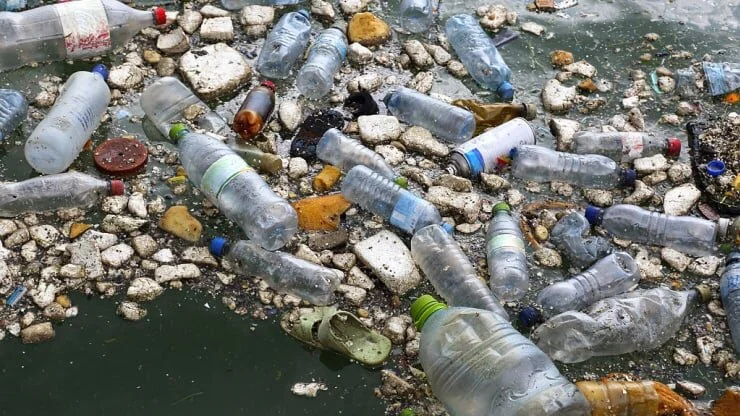
Rubbish floating in Naifaru Harbour, Maldives, Indian Ocean.Rosemary Calvert | Getty Images

Rubbish floating in Naifaru Harbour, Maldives, Indian Ocean.

Rosemary Calvert | Getty Images

LONDON — A Tesla executive has left the electric car company and joined a London start-up that’s aiming to address the world’s plastic problem with a new chemical additive.

Steven Altmann-Richer, who led public policy for U.K., Ireland and new markets at Tesla, joined London start-up Polymateria in the last few weeks as head of public affairs and regulatory strategy, after spending three-and-a-half years at the U.S. car company.

Polymateria, which has around 25 staff based out of an Imperial College innovation hub, has developed a “biotransformation technology” that breaks down plastic into a wax-like substance that then gets digested by microbes. It has also created a new British standard for biodegradable plastic.

“I want to help policymakers understand that this is a truly revolutionary solution which can improve the environment in their country and globally,” said Altmann-Richer, who holds a master’s degree in environmental policy from Oxford University, on a call with CNBC.

The EU currently defines biodegradable plastics as those that can be composted at an industrial site. It doesn’t, however, take into account plastics that degrade by themselves in the natural environment and Altmann-Richer hopes to change this.  

“Previous technologies that have claimed to be biodegradable in the natural environment haven’t been,” said Altmann-Richer. “They’ve left the sort of microplastic beads behind, and therefore there’s been a lot of skepticism of that technology.”

Polymateria is largely focused on the food packaging industry as it is one of the biggest consumers of plastic that ends up in the natural environment.

Manufactured in France, Polymateria’s additive adds roughly 10%-15% to the overall cost of packaging. It also adds around 1%-2% of volume.

The company, which raised a series A funding round of £15 million at a valuation of £110 million earlier this year, has signed deals with the likes of sportswear retailer Puma and plastics producer Clariant.

UK to become first country in Europe to ban live animal exports

Plans to ban the export of live animals for slaughter and fattening are to be unveiled by the UK’s environment secretary, George Eustice, on Thursday.

An estimated 6,400 animals were sent to Europe for slaughter in 2018. Photograph: Eyes on Animals L214

An estimated 6,400 animals were sent to Europe for slaughter in 2018. Photograph: Eyes on Animals L214

The Department for Environment, Food and Rural Affairs (Defra) said the plans were part of a renewed push to strengthen Britain’s position as a world leader on animal welfare.

An estimated 6,400 animals were sent to Europe for slaughter in 2018, according to Defra. Many of those left through the port of Ramsgate in Kent.

“Live animals commonly have to endure excessively long journeys during exports, causing distress and injury. Previously, EU rules prevented any changes to these journeys, but leaving the EU has enabled the UK government to pursue these plans,” Defra said.

The eventual ban would be considered a Brexit success, seeing Britain become the first country in Europe to end this practice.

The beginning of a joint eight-week consultation in England and Wales would mark “a major step forward in delivering on our manifesto commitment to end live exports for slaughter”, said Eustice. “Now that we have left the EU, we have an opportunity to end this unnecessary practice. We want to ensure that animals are spared stress prior to slaughter.”

It is understood from a UK government source that the joint consultation will be used as the basis for discussions with Scotland. Those discussions, and the consultation findings, will then be used to examine ways of harmonising the ban.

However, live exports look set to continue in Northern Ireland which “will continue to follow EU legislation on animal welfare in transport for as long as the Northern Ireland protocol is in place”, according to Defra.

Poultry exports also appear set to continue, Defra added: “The measure on live exports will not impact on poultry exports or exports for breeding purposes.” The UK exports tens of millions of chicks a year in an industry that was worth £139m in 2018.

Asked if the eventual ban might be an achievement that could be credited to the prime minister Boris Johnson’s partner, Carrie Symonds, the source would not comment. Symonds is a patron of the Conservative Animal Welfare Foundation (CAWF) which has long lobbied for an end to live exports.

“We are hoping this consultation will lead to an end to live exports for slaughter and fattening, which has caused such enormous suffering, by 2022 or even next year,” said CAWF’s founder, Lorraine Platt. The foundation sent its latest research report on ending live exports to the UK government several weeks ago.

Compassion in World Farming’s chief policy adviser, Peter Stevenson, said the organisation was “delighted that Defra plans to ban live exports for slaughter and fattening. We have campaigned for over 50 years against the massive suffering caused by this inhumane, archaic trade, so this unambiguous proposal is very welcome.”

The RSPCA’s CEO, Chris Sherwood, was equally welcoming and said he looked “forward to seeing this happen as the RSPCA has campaigned on this issue for more than 50 years”.

In other parts of Europe, news of a planned British ban on live exports was welcomed by animal welfare groups. “This is great news, it is far too stressful to export live animals for slaughter,” said Iris Baumgaertner from Germany’s Animal Welfare Foundation, who added that the news followed a recent decision by the authorities in one of Germany’s largest cattle exporting regions not to approve the logs for 132 breeding heifers due to be exported to Morocco for slaughter, meaning the journey could not proceed. An appeal by the exporter was denied by the courts because, according to Baumgaertner, the judge said “whether it was today or in the future, the slaughter would still be inhumane.”

In September, the Dutch had already suggested the EU should begin to limit live animal exports. At an informal Agriculture and Fishery Council meeting, Dutch minister of agriculture, nature and food quality, Carola Schouten, asked the council to adjust animal welfare regulations and limit the transport of livestock for slaughter.

A special EU committee on animal transport has kept live export discussions in the spotlight this year. The European parliamentary committee on the protection of animals during transport began its hearings in October. MEPs critical of live exports have repeatedly asked the committee to consider bans on exports outside the EU, and suggested limiting transport times within the EU. The committee is due to sit again Wednesday afternoon.


Giant Arecibo radio telescope collapses in Puerto Rico

Associated Press

  • Observatory had been set to close after damage in August

  • Scientists and Puerto Ricans mourn loss of historic facility

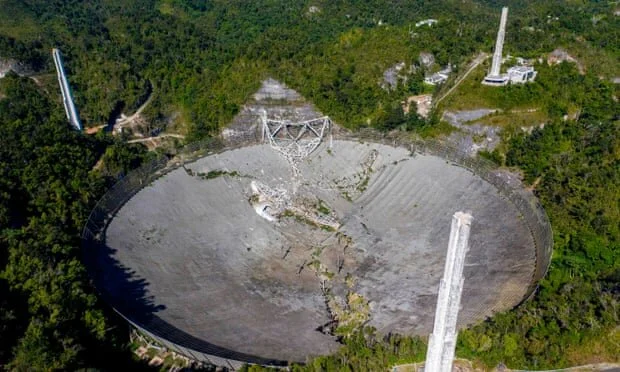
The ruined Arecibo radio telescope after cables supporting its suspended instrument platform broke, sending it crashing down into the disc. Photograph: Ricardo Arduengo/AFP/Getty Images

The ruined Arecibo radio telescope after cables supporting its suspended instrument platform broke, sending it crashing down into the disc. Photograph: Ricardo Arduengo/AFP/Getty Images

A huge radio telescope in Puerto Rico that has played a key role in astronomical discoveries for more than half a century collapsed on Tuesday, officials said.

The telescope’s 900-ton receiver platform fell onto the reflector dish more than 400 feet below.

The US National Science Foundation had earlier announced that the Arecibo Observatory would be closed. An auxiliary cable snapped in August, causing a 100ft gash on the 1,000ft-wide (305m) reflector dish and damaged the receiver platform that hung above it. Then a main cable broke in early November.

The collapse stunned many scientists who had relied on what was until recently the largest radio telescope in the world.

“It’s a huge loss,” said Carmen Pantoja, an astronomer and professor at the University of Puerto Rico who used the telescope for her doctorate. “It was a chapter of my life.”

Scientists worldwide had been petitioning US officials and others to reverse the NSF’s decision to close the observatory. The NSF said at the time that it intended to eventually reopen the visitor center and restore operations at the observatory’s remaining assets, including its two Lidar facilities used for upper atmospheric and ionospheric research, including analyzing cloud cover and precipitation data.

The telescope was built in the 1960s with money from the US defense department amid a push to develop anti-ballistic missile defenses. It had endured hurricanes, tropical humidity and a recent string of earthquakes in its 57 years of operation.

The telescope has been used to track asteroids on a path to Earth, conduct research that led to a Nobel prize and determine if a planet is potentially habitable. It also served as a training ground for graduate students and drew about 90,000 visitors a year.“

The space telescope in 2006, then as damage progressed in 2020. Photograph: Ricardo Arduengo/AFP/Getty Images

The space telescope in 2006, then as damage progressed in 2020. Photograph: Ricardo Arduengo/AFP/Getty Images

“I am one of those students who visited it when young and got inspired,” said Abel Mendez, a physics and astrobiology professor at the University of Puerto Rico at Arecibo who has used the telescope for research. “The world without the observatory loses, but Puerto Rico loses even more.”

He last used the telescope on 6 August, just days before a socket holding the auxiliary cable that snapped failed in what experts believe could be a manufacturing error. The National Science Foundation, which owns the observatory that is managed by the University of Central Florida, said crews who evaluated the structure after the first incident determined that the remaining cables could handle the additional weight.

But on 6 November another cable broke.

A spokesman for the observatory said there would be no immediate comment, and a spokeswoman for the University of Central Florida did not return requests for comment.

Scientists had used the telescope to study pulsars to detect gravitational waves as well as search for neutral hydrogen, which can reveal how certain cosmic structures are formed. About 250 scientists worldwide had been using the observatory when it closed in August, including Mendez, who was studying stars to detect habitable planets.

“I’m trying to recover,” he said. “I am still very much affected.”

No-kill, lab-grown meat to go on sale for first time

singapore.jpg

Cultured meat, produced in bioreactors without the slaughter of an animal, has been approved for sale by a regulatory authority for the first time. The development has been hailed as a landmark moment across the meat industry.

The “chicken bites”, produced by the US company Eat Just, have passed a safety review by the Singapore Food Agency and the approval could open the door to a future when all meat is produced without the killing of livestock, the company said.

Dozens of firms are developing cultivated chicken, beef and pork, with a view to slashing the impact of industrial livestock production on the climate and nature crises, as well as providing cleaner, drug-free and cruelty-free meat. Currently, about 130 million chickens are slaughtered every day for meat, and 4 million pigs. Of all the mammals on Earth, 60% are livestock, 36% are humans and only 4% are wild.

The cells for Eat Just’s product are grown in a 1,200-litre bioreactor and then combined with plant-based ingredients. Initial availability would be limited, the company said, and the bites would be sold in a restaurant in Singapore. The product would be significantly more expensive than conventional chicken until production was scaled up, but Eat Just said it would ultimately be cheaper.

The cells used to start the process came from a cell bank and did not require the slaughter of a chicken because cells can be taken from biopsies of live animals. The nutrients supplied to the growing cells were all from plants.

The growth medium for the Singapore production line includes foetal bovine serum, which is extracted from foetal blood, but this is largely removed before consumption. A plant-based serum would be used in the next production line, the company said, but was not available when the Singapore approval process began two years ago.

A series of scientific studies have shown that people in rich nations eat more meat than is healthy for them or the planet. Research shows cutting meat consumption is vital in tackling the climate crisis and some scientists say this is the best single environmental action a person can take.

The companies developing lab-grown meat believe this is the product most likely to wean committed meat-eaters off traditional sources. Vegan diets are viewed as unappealing by some, and plant-based meat replacements are not always regarded as replicating the texture and flavour of conventional meat. Meat cultivated in bioreactors also avoids the issues of bacterial contamination from animal waste and the overuse of antibiotics and hormones in animals.

The small scale of current cultured meat production requires a relatively high use of energy and therefore carbon emissions. But once scaled up its manufacturers say it will produce much lower emissions and use far less water and land than conventional meat.

Josh Tetrick, of Eat Just, said: “I think the approval is one of the most significant milestones in the food industry in the last handful of decades. It’s an open door and it’s up to us and other companies to take that opportunity. My hope is this leads to a world in the next handful of years where the majority of meat doesn’t require killing a single animal or tearing down a single tree.”

But he said major challenges remained, with the reaction of consumers to cultured meat perhaps being the most significant: “Is it different? For sure. Our hope is through transparent communication with consumers, what this is and how it compares to conventional meat, we’re able to win. But it’s not a guarantee.” He said the cultured chicken was nutritionally the same as conventional meat.

Other challenges included getting regulatory approval in other nations and increasing production. “If we want to serve the entire country of Singapore, and eventually bring it to elsewhere in the world, we need to move to 10,000-litre or 50,000-litre-plus bioreactors,” Tetrick said.

Eat Just already has experience in selling non-animal products, such as its plant-based egg and vegan mayonnaise, to consumers. Another company, Supermeat.com in Israel, has just begun free public tastings involving a “crispy cultured chicken”.

Industry experts said other companies, including Memphis Meats, Mosa Meat and Aleph Farms, might do well in future as they were working on textured products such as steaks and were able to produce significant amounts of lab-grown meat from the start. Tyson and

A recent report form the global consultancy AT Kearney predicted that most meat in 2040 would not come from dead animals. The firm’s Carsten Gerhardt said: “Approval in an innovation hotspot like Singapore already in 2020 could fast-forward market entry in other developed nations. In the long run we are convinced that cultured meat will address the health and environmental impact issues that traditional meat has when produced in a highly industrialised way.”

Gerhardt said he expected cultured meat would replace cuts of traditional meat, but that plant-based products, which were less expensive, were more likely to replace burgers and sausages.

“The [Eat Just approval] is a very big deal for the future of meat production globally,” said Bruce Friedrich, at the non-profit Good Food Institute in the US. “A new space race for the future of food is under way.” He said cultivated meat was unlikely to become mainstream for some years, until it matched the cost of conventional meat., two of the world’s biggest conventional meat companies, now have a stake in Memphis Meats.

Hsin Huang, the secretary general of the International Meat Secretariat, which represents the global meat and livestock industry, agreed the cultured meat approval was a significant moment.

“It seems certain that similar products from other companies will follow,” he said. “There has been so much hype on cell-cultured meat that the anticipated first steps to mass sales is a significant moment.”

“We believe the market potential for cultured meat is vast, as consumers in general continue to show great enthusiasm for the taste and nutritional benefits of animal products. Of course, our view is that real animal products will better meet these needs, but healthy competition is welcome.”

He added that livestock are currently essential to the livelihoods of an estimated one billion poor people globally. He said the IMS believed strongly in consumer choice, with appropriate labelling and regulation.

'Mock Cop26' activists vote on treaty ahead of 2021 climate summit

Young people from 140 countries presented policies to UK climate action champion

mock 1.jpg

Mitzi Jonelle Tan, 22, from Manila, Philippines, one of the student organisers of Mock Cop26. Composite: Jessica Murray/Guardian Design Team

Young people from 140 countries who attended an online “mock Cop26” climate summit have presented a treaty of 18 policies to Nigel Topping, the UK’s high level climate action champion.

After two weeks of negotiations, delegates from the international youth-led conference presented their formal treaty to Topping during the event’s closing ceremony on Tuesday, and called on world leaders to prioritise the policies during Cop26, which was postponed for a year because of the pandemic and is now due to be held in Glasgow in November 2021.

Their demands include climate education at every level of formal education, tougher ecocide laws, stronger regulation on air quality, banning the offshoring of emissions and a commitment to limiting global heating to below 1.5C above pre-industrial levels.

Suphane Dash-Alleyne, a delegate from Guyana, South America, said: “Mock Cop26 sends a strong message to world leaders that young people can coordinate global negotiations and we have the solutions. Now is the time for us to have a seat at the table.”

A legal team, including lawyers from the legal charity ClientEarth, worked with delegates to formalise the statement into a treaty, which countries could adopt into law.

James Thornton, chief executive and founder of ClientEarth, said: “The youth behind Mock Cop26 have created a powerful statement calling on governments to take action to protect future generations from the worst impacts of climate change. Decisions taken by governments now will affect the youngest generation for many years to come.”

Mock COP26 was organised at short notice to fill the void left by the postponed Cop26 conference.

The Mock Cop26 policies were voted on by 330 young people across the globe who attended the event, with priority given to countries most affected by the climate crisis – people from the global south made up 72% of delegates.

The student staff team who organised Mock Cop26 is made up of 18 students from Australia, Brazil, Burkina Faso, Canada, Ecuador, India, Japan, Kenya, Nigeria, Philippines, Solomon Islands and the UK. Photograph: Mock Cop26

The student staff team who organised Mock Cop26 is made up of 18 students from Australia, Brazil, Burkina Faso, Canada, Ecuador, India, Japan, Kenya, Nigeria, Philippines, Solomon Islands and the UK. Photograph: Mock Cop26

Sainey Gibba, a 23-year-old delegate from the Gambia, said: “My country is very vulnerable to the impact of climate change, particularly rising sea levels and coastal erosion, so I feel like Mock Cop26 has really helped us raise our concerns and speak for the voiceless.

“Cop26 should never have been postponed, they should have done it virtually like how we have done it. They should really learn from us because there is so much urgency.”

The Mock Cop26 organisers grouped delegates by time zones to ensure they could attend the two-week schedule of talks and discussions around their studies, and they hope the online conference could become a model to help future major conferences produce less carbon emissions.

“If we have been able to organise a conference online where we got more than 300 delegates from more than 140 countries to come together and make policies, I think our leaders could too,” said Sonali, a 21-year-old event organiser from Patna, India. “It reduces the carbon footprint massively when people don’t have to travel.”

The delegates and volunteers involved in Mock Cop26 now plan to spend the next 12 months urging politicians to implement their policies nationally to raise ambition on the run up to Cop26.

A historic Atlantic hurricane season is ending. Here’s a look at the records it shattered

An unforgiving hurricane season shattered records this year, producing the most named storms ever seen in the Atlantic and battering parts of Central America and the U.S. Gulf Coast.

The Atlantic season officially runs from June 1 to Nov. 30. But this year, storms formed weeks before the season began and stretched through November, when hurricane activity typically winds down.

Scientists warn of even worse hurricane seasons as climate change triggers more frequent and catastrophic storms.

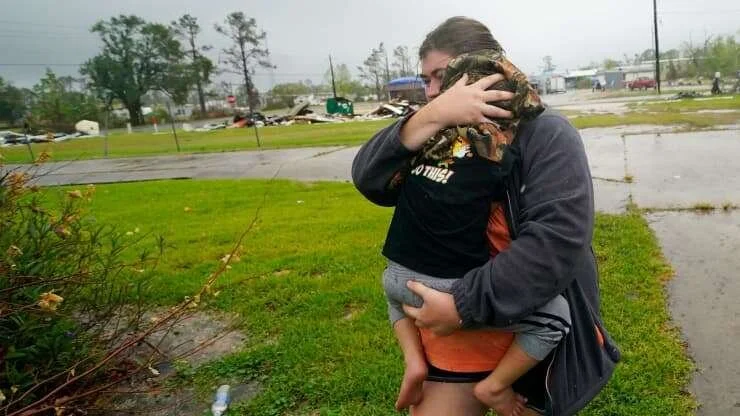
Danielle Fontenot runs to a relative’s home in the rain with her son Hunter ahead of Hurricane Delta, Friday, Oct. 9, 2020, in Lake Charles, La. Gerald Herbert | AP

Danielle Fontenot runs to a relative’s home in the rain with her son Hunter ahead of Hurricane Delta,
Friday, Oct. 9, 2020, in Lake Charles, La.
Gerald Herbert | AP

An unforgiving hurricane season shattered records this year, producing the most named storms ever seen in the Atlantic and battering parts of Central America and the U.S. Gulf Coast.

The Atlantic season officially runs from June 1 to Nov. 30. But this year, storms formed several weeks before the start of June and stretched on through November, when hurricane activity usually winds down. And there’s no clear end date as forecasters track possible developments in December.

But one thing is clear: No previous hurricane season in recorded history has had so many storms. The 2020 season saw 30 named storms, 13 of which were hurricanes. An average season has 12 named storms and six hurricanes, according to the National Oceanic and Atmospheric Administration.

Scientists initially predicted an extremely active season due to hotter-than-average temperatures in the tropical Atlantic Ocean and Caribbean Sea and an enhanced West African monsoon. NOAA, in one of its most active outlooks ever, predicted in August that this year would see up to 25 named storms, with up to 11 developing into hurricanes.

The 2020 season topped even those expectations and surpassed the second-highest number on record of 28 storms in 2005, the year Hurricane Katrina hit the Gulf Coast.

As the season comes to an end, scientists warn of even worse hurricane seasons as climate change triggers more frequent and catastrophic storms.

Six of the hurricanes this year were major storms, meaning they were Category 3 or higher and had winds of 110 miles per hour or higher.

The strongest hurricane was Hurricane Iota, which struck Central America and Colombia as the latest known Atlantic hurricane to become a Category 5. Iota devastated areas already recovering from Hurricane Eta just two weeks earlier. It killed more than 50 people in Guatemala and left thousands displaced in Central America.

The U.S. Gulf Coast was also battered this year. A record five storms made landfall in Louisiana, where displaced residents struggling to rebuild were hit with one storm after another. Hurricane Laura in September, one of the strongest storms ever to hit the state, was followed just six weeks later by Hurricane Delta.

Gerry Bell, NOAA’s lead hurricane forecaster, said that 18 of 26 hurricane seasons have been above normal and 10 have been extremely active since 1995. With this trend, Bell emphasized the importance of hurricane preparedness.

“Many millions of people along both the Gulf Coast and the Atlantic Coast were impacted by these storms,” Bell said. “There is no question that hurricane planning and preparedness were key in helping to minimize loss of life and hardship.”

How climate change has played a role

This year’s season has fueled questions on how climate change is impacting hurricanes in the Atlantic.

Research shows that climate change is making hurricanes stronger and more destructive and increasing the likelihood of more frequent major hurricanes.

Models indicate that global warming increases the chance of storms rapidly intensifying as tropical oceans heat up. Storms that undergo rapid intensification, defined as a 35 mph increase in wind speeds over 24 hours, are hard to predict and leave a short amount of time for people to evacuate.

″[Rapid intensification] is something we saw several times this year,” said Michael Mann, director of Penn State’s Earth System Science Center. “This phenomenon appears to be tied, once again, to unusually warm ocean water.”

For instance, Hurricane Laura in August was the fastest-intensifying hurricane ever in the Gulf of Mexico. The storm decimated entire homes, killed more than a dozen people in Louisiana and caused estimated damage of up to $12 billion.

The speed of tropical storms making landfall has also slowed during the last few decades, causing worse rainfall and flooding. Warming in the Arctic has weakened atmospheric circulation, likely slowing hurricane development by causing a slowing of the jet stream.

This hurricane season had record water levels in areas including the Gulf Coast, where the slow-moving Hurricane Sally stalled over the Gulf of Mexico in September and brought record water levels since Katrina in 2005, according to NOAA’s National Ocean Service stations.

“The impacts of climate change are no longer subtle. We’re seeing them play out right now in the form of unprecedented wildfires out West and an unprecedented hurricane season back East,” Mann said.

“Things will only get worse if we continue to burn fossil fuels and generate carbon pollution,” he added. “This current hurricane season lays bare the reasons we must act on climate now.”

America’s Political Crisis and the Way Forward

The world’s environmental, social, and security problems are now so complex and interconnected that only strong cooperation within and across regions will suffice to manage them. To achieve it, US President-elect Joe Biden’s success in healing a deeply divided America will be essential.

jeff.jpg

NEW YORK – Owing to America’s disproportionate military, financial, and technological power, the breakdown of rational politics in the United States is the most dangerous fact for the world today. And while President Donald Trump’s recent election defeat is a necessary step toward restoring sanity to American politics, it is only the first of many that will be required to stop the downward slide of the US and convince the rest of the world that the country no longer poses a threat to itself or others.

There are two urgent challenges facing America and the world in the wake of the US election. First, President-elect Joe Biden must take on the long uphill struggle to restore some measure of domestic political stability. Second, other regions of the world should forge their own paths of global cooperation, rather than waiting in vain for the US to return to global leadership.

AMERICA’S RATIONALITY CRISIS

The profound crisis of US politics has been starkly demonstrated in two ways this year. First, the federal government failed utterly to suppress the COVID-19 pandemic – or even to try. As 2020 draws to a close, the daily rate of new cases is approaching 200,000, far exceeding the previous peaks in April and July. During the week of November 15-21, the US had nearly 1.2 million newly confirmed cases, while China, America’s putative Great Power rival, had just 86 newly confirmed cases, despite having more than four times the US population.

Second, the US can no longer manage presidential elections according to basic democratic standards. While the voting itself was highly orderly, with a large turnout and a careful, transparent ballot-counting process, the election did not produce the needed consensus on the outcome. Trump falsely and notoriously claimed victory on election night, and then, as Biden took the lead as mail-in ballots were counted, Trump brazenly claimed massive electoral fraud without a shred of corroborating evidence. Yet Trump’s claims were backed by senior members of the Republican Party, leading commentators in the right-wing media ecosystem, a burgeoning number of Facebook groups, and a shockingly high 75% of Republicans.

One is tempted to blame the COVID-19 and election fiasco on Trump himself, and Trump’s personal role was no doubt both malign and essential. He is a sociopath and a demagogue, whose political repertoire has consisted of fueling division, evading responsibility, and promoting delusions.

But factors beyond Trump are also at play. This is the fourth US presidential election in a generation, after all, that has been followed by a crisis of legitimacy. The 2000 election was decided only by a contentious Supreme Court decision that stopped a recount in Florida, handing the state – and the presidency – to George W. Bush by 537 votes. Following Barack Obama’s victory in 2008, Trump concocted doubts about Obama’s birthplace and citizenship. So-called birtherism was as destructive of public trust as it was phony to the core. The 2016 election was heavily influenced by Russian meddling that Trump both welcomed and denied. Moreover, in both 2000 and 2016, the Republican candidate won in the Electoral College despite losing the national popular vote. And, despite Trump’s extraordinary personal flouting of norms, most GOP leaders, many media outlets, and millions of voters supported and facilitated his outlandish behavior. Trump is not only a mentally disordered individual, but also a symptom of a gravely damaged body politic.

A FAILED GREAT POWER?

The events of 2020 are the latest additions to a growing list of American political debacles, both foreign and domestic. Since 2000, US foreign policy has been erratic at best. The US-led or US-backed wars since 2000 have created political and humanitarian disasters in Afghanistan, Iraq, Syria, Libya, and Yemen. Obama’s two foreign-policy successes, joining the Paris climate agreement and negotiating a nuclear agreement with Iran in 2015, were both reversed by Trump, despite nearly global opposition.

At home, the US has failed to reinvest in its own dilapidated infrastructure, despite the rising frequency of massive losses from natural disasters such as wildfires in the West and flooding following devastating tropical storms. In addition to COVID-19, the US has suffered an epidemic of what Anne Case and Angus Deaton call, chillingly and accurately, “deaths of despair” (from suicide, drug overdose, and alcoholism) among working-class families, also without a meaningful policy response. And the US budget deficit is now chronically high at roughly 5% of GDP – even reaching an extraordinary 16% of GDP in 2020 due to COVID-19 – reflecting the lack of any semblance of political consensus about the federal government’s long-term funding and priorities.

The list goes on and on. Reflecting the breakdown of the legislative process, there has scarcely been a major domestic federal policy in the past 20 years that has been enacted by Congress rather than implemented by executive order of the President. The exceptions, such as the 2010 Affordable Care Act (Obamacare) and the 2017 tax cut, were approved by tiny margins with no support from the losing party.

There are many explanations for the derangement of US politics, and there are no doubt many intertwined processes at work. Surveying them makes clear that while Trump’s psychopathy has surely aggravated America’s political crisis, his presidency reflects the decline of US problem-solving and consensus-building over the course of more than four decades.

SOURCES OF SYSTEMIC STRAIN

Among the factors underlying decades of increasingly frequent national failures and bouts of malaise, observers have identified an array of economic, cultural, and political trends.

Rapid technological change. The US and some other high-income countries are in the grips of the “future shock” envisaged 50 years ago by the futurologist Alvin Toffler. The rapid shift to the digital age has deeply disrupted and divided US society. A huge and growing gulf has appeared between a professional class, comprising those with a bachelor’s degree or higher, most of whom have experienced rising incomes and living standards, and workers with less than a bachelor’s degree, who have tended to suffer falling earnings, home foreclosures, and the effects of automation on the labor market. Trump rode the ressentiment of disaffected white, working-class voters to power in 2016.

White backlash. The US is in a long-term transition from an overwhelmingly white, Protestant nation where de jure and de facto discrimination prevailed until the 1960s, to a majority non-white nation in which people of color are finally winning civil rights. Since the 1970s, this has led to often-furious white reaction. Obama represented the vanguard of the new multiracial society, and Trump an especially brutal backlash. (In the weeks after the election, Trump openly and brazenly urged Republican election board members not to certify the votes from mostly African-American Detroit.)

The end of social democratic politics. The US had a majoritarian social democratic ethos, led by the Democratic Party, from the New Deal of Franklin D. Roosevelt (1933-45) to the Great Society of Lyndon Johnson (1963-68). Government expanded to provide a widening range of social protection, in alliance with the growing organized labor movement. Yet this majority bloc collapsed after 1968, mainly because the Civil Rights era of the 1960s spurred an exodus of white working-class voters and southern “Dixiecrats” in Congress to the Republican Party. The Republicans became the party of white backlash and social conservatives who opposed “big government,” while the Democrats became the party of professionals, minorities, and social progressives calling for racial, gender, and sexual and reproductive rights. The prior consensus for social-democratic policies collapsed.

The evangelical awakening. The US experienced a surge of white Christian evangelical religiosity and activism from the 1950s till the early 2010s. Mainline Christians flocked to socially conservative evangelical mega-churches that preached a form of biblical literalism that was anti-science and fervently anti-government. Instead of funding social programs with their taxes, congregants were told by their preachers to oppose taxes and instead to give larger tithes to the churches in order to reap divine returns. White evangelicals have aggressively opposed the civil-rights and progressive social agenda, as well as government social protection. They were ardent supporters of the Cold War as a crusade against the godless Soviet Union, and more recently have supported wars against militant Islam and trade wars against atheistic China. In 2016 and 2020, they voted overwhelmingly for Trump.

Plutocracy. Policy gridlock has served the interests of the wealthiest Americans, who are benefiting from the greatest transfer of wealth from the poor and middle-class to the rich in human history, while also being assured that political paralysis will keep them free of new federal taxes. The plutocracy has been abetted by successive Supreme Court rulings that have permitted unlimited anonymous campaign contributions. It is estimated that $14 billion was spent in the 2020 elections, with each party backed by dozens of billionaires.

Antiquated political institutions. The longevity of political institutions is a double-edged sword. The core of the US constitutional system dates back to 1787. It included dysfunctional anomalies such as the Electoral College, first-past-the-post voting in single-member election districts, and an overly powerful president. These institutions are now baked into the US political system, even as they lead to over-weighting of votes from sparsely populated states, a two-party system that severely distorts the representation of public opinion, an autocratic executive, a near-moribund Congress, and a Supreme Court that has been weaponized by the main political parties.

Social media. Marshall McLuhan was right that fundamental changes in the media of communications reshape politics and culture. Radio broadcasting and mass-circulation newspapers led to the rise of public relations, mass advertising, and highly personalized politics through mass communication. The new social media have led to the disintegration of a single national discourse and the pervasive misrepresentation of reality. With as many “truths” as Facebook groups, agreement on basic facts, much less a consensus about what they mean, has collapsed.

(For a play-by-play account of the rise of many of these forces during the 1970s, see Rick Perlstein’s Reaganland).

THE BLEAK AMERICAN EXCEPTION

Each of these factors shines a light on one facet of today’s reality. Some of them are common to most high-income democracies. Western Europe, like the US, faces rising inequalities from technological change, a social media-driven breakdown of consensus, and deepening political divides caused by tensions accompanying its societies’ changing ethnic composition. In the US, ethnic change reflects the growing share of Hispanic and Asian populations, whereas in Europe it has been driven largely by four decades of immigration from the Middle East and Africa.

Yet many of the factors are specific to the US. Europe has not experienced a collapse of social democratic norms, which are deeply embedded in the European Union’s laws and institutions. Europe does not have America’s entrenched white supremacist politics, which the earth-shattering crimes of Nazism discredited and uprooted more thoroughly. Nor does Europe have the religious-based and politicized social conservatism seen among America’s white Evangelicals. And by virtue of Europe’s utterly tumultuous history, notably the wars and revolutions of the nineteenth and twentieth centuries, its parliamentary democracies are generally more up-to-date and better structured than America’s eighteenth-century presidential model.

There will be no quick fixes for the US. Only with good fortune and skilled leadership will the US pull itself out of the downward spiral of internal division and external war that has characterized the country for more than 40 years. Biden will aim to heal American divides, a task for which he is well suited. He is a centrist, a moderate, a rationalist, and a gentleman. He understands disaffected white America as well as any US political leader, and he knows that he needs to win the support of swing states and Republicans in Congress, not run over them. Nor does he bear grudges. He knows that sharp elbows are part of politics and wisely shrugs off the jabs, insults, and preposterous claims.

But these highly favorable personal traits will not be sufficient. When Trump’s predecessor, Obama, took office in 2009, the Democrats controlled both houses of Congress and immediately began to pass legislation on almost straight party-line votes over united Republican opposition. Such party-line voting was unusual for the US Congress and was a clear expression of political polarization. But since 2010, when the Democrats lost their majority in the House of Representatives, divided government has prevailed, with the exception of 2017-18, when Republicans controlled the White House and both houses of Congress. This has blocked nearly all legislative initiatives.
Parliamentary democracies can function routinely with straight party-line voting, because the government (almost by definition) has the majority or plurality of votes needed to enact legislation. In the US, by contrast, whenever the president and at least one house of Congress are controlled by different parties, or when there is an effective blocking coalition in the 100-member Senate due to the filibuster rule (which requires a 60-vote supermajority for some legislation), party-line voting means paralysis.

There is a slight chance that Biden will have a working majority in both houses of Congress, if the Democrats win the two Senate runoff elections in Georgia on January 5. A sweep for the Democrats would give each party 50 seats, with Vice President-elect Kamala Harris casting a tie-breaking vote.
It is more likely, however, that Biden will need Republican votes in the Senate, and often in the House as well (when a few Democrats vote against the president). This will pit the structural factors leading to division in the US against the legislative imperatives for action and change. Biden will then need to take his case to the people in an effort to win over some moderate Republicans to restart the gears of the federal government.

In the US system, a president can do much without legislation. Trump managed his entire foreign policy, including trade and sanctions, almost without any congressional input, and Biden, too, will no doubt govern by decree, at least in some areas. Yet this practice has several serious downsides. First, it is autocratic. Second, executive orders alone generally do not provide federal financing, only regulatory changes. Third, executive orders are easily overturned by the next president, and therefore do not bind future governments or promote the necessary long-term changes to business investments.

THE ACTIVE EXECUTIVE

In any event, Biden will have no choice but to rely on executive orders at the start of his administration. This will be necessary to re-establish the federal role in containing COVID-19, which will be enormously beneficial in overcoming the crisis. Likewise, Biden will not have to rely on Congress to return the US to United Nations treaties and agencies, including the Paris climate agreement and the World Health Organization. He will most likely return the US to the Iran nuclear deal and other UN agencies and processes as well, and rescind various unilateral tariff measures and sanctions imposed by Trump. And he will likely announce by executive order the US goal of reaching net-zero greenhouse-gas emissions (“climate neutrality”) by 2050, in line with the EU, Japan, Korea, and China (which has set 2060 as its target date).

Yet accomplishing more than this will require ending the logjam in Congress, which can be accomplished only if enough independent and Republican voters get on board. By dint of personality and pragmatic policy vision, Biden has the skills to win such backing. The question is whether today’s deeply divided Americans can revive a long-dormant capacity to reason together.

Biden will have to convince conservative white working-class voters that COVID-19 control, more accessible health care, higher taxes on the rich, and relief on crippling student debt are policies intended for them and their families, rather than being narrowly aimed at Democratic Party constituencies that these voters shun. To win cross-party support, Biden has to sell the inclusiveness of social democratic policies, rather than relying on identity-based appeals.

Biden must also convince more voters that a shift to renewable energy and away from fossil fuels will deliver a similar nationwide boon. Fortunately, most US states, both blue (Democratic) and red (Republican), have vast untapped wind and solar power potential. Moreover, the swing states of the industrial heartland (including Wisconsin, Michigan, and Ohio) and northern Appalachia (including Pennsylvania, Kentucky, and West Virginia) would play a huge role in building the solar panels, wind turbines, and electric vehicles that will form the heart of the low-carbon economy. Mayors of eight major cities in the industrial heartland recently called for precisely this kind of reindustrialization policy to build the new green economy.

THE WORLD AFTER AMERICA

Whatever happens in the US during the 2020s, important lessons for the rest of the world are already clear. Most important, the US will, at best, be a cooperating partner in the coming decade. It is far too wounded and divided – and often confused and misdirected – to provide global leadership. The Asian-Pacific region has vastly outpaced the US and Europe economically during the pandemic, and will continue to drive global growth in 2021.

Europe above all needs to look beyond its long-strained relations with the US to forge its own foreign policy, including security policy, and defense capability, as well as boost its competitiveness in the new digital technologies. The US under Biden will be a good partner, but there is no substitute for Europe achieving its goal of “strategic autonomy.” Moreover, Europe is the world’s leader in sustainable development policies, and should use its position to promote environmental sustainability and social inclusion around the world.

The EU needs to craft its own cooperative policies with China, rather than duck behind the US. And it needs to continue to lead on global governance issues such as digital taxation, digital security, and digital privacy, areas where Europe is well ahead of the US and will remain so for the coming decade.

Asia, for its part, has the opportunity to break free of a US cold-war mentality obsessed with “containing” China and isolating it from its neighbors – a preposterous idea that has nonetheless recently animated both US parties. Asia’s growing economic and technological strength will best be nurtured by strong regional institutions. The newly signed Regional Comprehensive Economic Partnership (RCEP), a free-trade area that includes the ten Association of Southeast Asian Nations countries, along with China, Japan, Korea, Australia, and New Zealand, is a promising harbinger of cooperation within Asia, and between Asia and the rest of the world.

In fact, the Biden administration should welcome a strong Europe and regional initiatives such as the RCEP, and aim to bring the US in as a supportive partner. We are past the era of hegemonic leadership, whether by the US or any other country. The world’s environmental, social, and security problems are now so complex and interconnected that only strong cooperation within and across regions will suffice to manage them. Biden’s success in healing a deeply divided America will be essential not only to restoring political rationality and problem-solving capacity at home, but also to enabling a constructive US contribution to the global cooperation we so urgently need.

Scottish homes to be first in world to use 100% green hydrogen

Jillian Ambrose

Some 300 homes in Fife to be fitted with free boilers, heaters and cooking appliances

The green hydrogen would replace natural gas in homes for heating and cooking. Photograph: ronstik/Alamy

The green hydrogen would replace natural gas in homes for heating and cooking. Photograph: ronstik/Alamy

Hundreds of homes in Scotland will soon become the first in the world to use 100% green hydrogen to heat their properties and cook their meals as part of a new trial that could help households across the country replace fossil fuel gas.

Some 300 homes in Fife will be fitted with free hydrogen boilers, heaters and cooking appliances to be used for more than four years in the largest test of whether zero carbon hydrogen, made using renewable energy and water, could help meet Britain’s climate goals.

They will begin to receive green gas from the end of 2022, at no extra charge, and up to 1,000 homes could be included if the first phase of the trial is completed successfully.

The trial has the backing of the energy regulator, Ofgem, which has awarded £18m to SGN to develop the pioneering project. The grant is part of a funding competition which supports innovation to help prepare Britain’s energy grids for a low-carbon future. The Scottish government will support the project with a grant of £6.9m.

Ofgem’s £56m funding pot will also support a £12.7m project from National Grid to carry out “offline” hydrogen trials, using old gas grid pipes, to test the safety of transporting hydrogen gas across the country.

Green hydrogen is a central part of the government’s plan to wean Britain off fossil fuels because it can be used in the same ways as fossil fuel gas but produces no carbon emissions. This is particularly important for central heating, which makes up almost a third of the UK’s greenhouse gas emissions because 85% of homes use a gas boiler.

Antony Green, the head of National Grid’s hydrogen project, said: “If we truly want to reach a net zero decarbonised future, we need to replace methane with green alternatives like hydrogen.

“Sectors such as heat are difficult to decarbonise, and the importance of the gas networks to the UK’s current energy supply means projects like this are crucial if we are to deliver low carbon energy, reliably and safely to all consumers.”

Ofgem’s remaining funds in its annual network innovation competition will be awarded to three pioneer projects which aim to use new technology to improve power substations, stabilise voltage control systems and strengthen electricity transmission towers.

Advertisement

Jonathan Brearley, the chief executive of Ofgem, said: “The winning projects were those which showed the most potential to make the game-changing leaps in technology we need to build a greener, fairer energy system at the lowest cost to consumers.”

Kwasi Kwarteng, the energy minister, said the UK “must continue driving forward” the new low-carbon technologies which will be needed to meet the government’s “bold ambition for a green industrial revolution”.

Climate change presents new challenges for the drinking water supply

Helmholtz Centre for Environmental Research - UFZ

The Rappbode Reservoir in the Harz region is Germany's largest drinking water reservoir, supplying around one million people with drinking water in areas including the Halle region and the southern part of the state of Saxony-Anhalt. Water temperatures in the reservoir now have the potential to increase significantly due to climate change. If average global warming reaches between 4 and 6 degrees by the year 2100, as the current trend suggests, temperature conditions in the Rappbode Reservoir will become comparable to those in Lake Garda and other lakes south of the Alps. In an article in Science of the Total Environment magazine, a team of researchers led by the Helmholtz Centre for Environmental Research (UFZ) writes that the reservoir's operators could partially offset the impacts this will have on the drinking water supply -- to do so, they would have to change the way the reservoir is managed.

The impacts of climate change can already be seen in the Rappbode Reservoir: Over the past 40 years, the water surface temperature in the reservoir has increased by around 4 degrees in the summer months. This trend could continue, as has now been demonstrated by a team of researchers led by Dr Karsten Rinke, who researches lakes at UFZ. Working on the basis of a lake model developed by US researchers, the team took into account potential reservoir management strategies to forecast the impacts climate change could have on water temperatures and on the lake's physical structure, which control the stratification and seasonal mixing of the body of water. Their research looked at three scenarios for future greenhouse gas emissions. The so-called "representative concentration pathways" (RCPs) describe whether greenhouse gas emissions will be halted (RCP 2.6), will continue to rise (RCP 6.0) or even continue to increase unabated (RCP 8.5) by 2100. According to the Intergovernmental Panel on Climate Change IPCC, the latter case would result in average global warming of more than 4 degrees by the end of this century.

For the RCP 2.6 and RCP 6.0 scenarios, the study's authors projected that the average temperature on the water surface of the Rappbode Reservoir is set to increase by 0.09 degrees or 0.32 degrees respectively every decade by the year 2100. This would correspond to a total increase of around 0.7 degrees (RCP 2.6) and around 2.6 degrees (RCP 6.0) by the end of this century. As expected, the increase in temperatures would be the highest under the RCP 8.5 scenario, which would see the water temperature increasing by 0.5 degrees every decade or approx. 4 degrees by 2100.

Source: SciTechDaily

Source: SciTechDaily

However, in terms of using drinking water, what happens in the deeper strata of the reservoir -- i.e., at depths of 50 metres and below -- is more serious, as this is where raw water is taken out before being treated to prepare it as drinking water. It is true that impacts by 2100 would be relatively minor under the RCP 2.6 and RCP 6.0 scenarios, as the water temperature would continue to be around 5 degrees year-round. However, water temperatures will increase significantly under the RCP 8.5 scenario -- by nearly 3 degrees by the end of the century. As a result, the water in the depths of the reservoir would warm to around 8 degrees. "This would turn a reservoir in Germany's northernmost highlands into a body of water comparable to Lake Maggiore or Lake Garda nowadays," says UFZ scientist Rinke. An increase of this magnitude would have consequences because it would significantly accelerate the speed of biological metabolic processes. "A temperature increase to 8 degrees nearly doubles oxygen demand, that is the amount of oxygen organisms consume during their respiration and degradation processes," says lead author Chenxi Mi, who is focusing on climate impacts on the Rappbode Reservoir in his doctorate at UFZ. Increased oxygen consumption will place an additional pressure on the water's oxygen budget, because the duration of summer stagnation -- the phase of stable temperature stratification in lakes in which the deep water is closed off to oxygen supply from the atmosphere -- is already extending due to climate change. Plus, warmer water is also unable to absorb as much oxygen. Potential consequences include intensified dissolution of nutrients and dissolved metals from the sediment, algae growth and an increase in blue-green algae.

In other words, the 8.5 scenario would have impacts on the drinking water supply if it were to occur. The reservoir's operators draw the raw water from the lowermost strata for good reason, as the water there is cold and contains only low levels of suspended substances, dissolved metals, algae, bacteria and potentially pathogenic microorganisms. If the oxygen content there decreases more rapidly due to the rising water temperature, the risk of contamination increases, for example due to substances released from the sediment and greater bacteria growth. Treating the water would therefore require a greater effort on the part of the operators, and they would have to deal with higher demands in terms of the treatment capacity they would need to reserve. "This means preventing the deep water from warming is also worthwhile from the perspective of the drinking water supply, and the ideal way to do this is ambitious climate policies that limit warming," says Rinke.

But the operators are not completely powerless against the warming of the deep water in the reservoir. The model simulations set up by Rinke's team show that a share of the heat can be exported by using a clever system to withdraw the water. This has to do with the water that is released to the downstream waters that is, the water that is withdrawn and drains into the water course below the reservoir in order to keep the discharge conditions there stable. This so-called downstream discharge would need to be withdrawn not from the lower strata as it has been thus far but rather from near the surface. "This approach would allow the additional heat caused by climate change to be released again," Rinke explains. However, he adds, it would be impossible to prevent the deep water from heating up if the air temperature increases beyond 6 degrees. "Even though operators have had to cope more with a shortage of water due to the very dry years we've had recently, it's just as important to think about the quality of the water. In terms of reservoir management, we definitely have options and can respond to new conditions caused by climate change. In this way, we can alleviate certain negative impacts through climate adaptation measures."

The operators of the Rappbode Reservoir at the Talsperrenbetrieb Sachsen-Anhalt company are aware of this. They have been working closely together with Karsten Rinke and his team of researchers at UFZ for many years to assess the impacts of climate change and discussed about potential options for adapting the Rappbode Reservoir. The Talsperrenbetrieb is already planning new infrastructures that will make it possible to implement the new management strategies.

The Green Digest: Small Scale Farmers Empowerment and Renewable Energy Generation In Asia and Africa

AFRICA: The center of global agricultural value chain has been attributed to small scale farmers. In Nigeria, they produce over 80% of domestic food supply, while in Ghana, they produce an estimated 20% of the world’s cocoa. Small scale farmers have been adversely affected by the impact of the pandemic, increasing their poverty levels to an all-time high. Usually designated as our unsung heroes, small scale farmers have been struggling to improve living standards even before the outbreak of the pandemic having limited access to credit facilities, labor and technology. The impact of the pandemic is reflected in the disruption of transportation and market activities for these farmers. To proffer a sustainable solution, these farmers should be granted credit facilities according to their farming situations.

COVID-19: The traditional thanksgiving gatherings have been marked by experts to have a high risk of spreading COVID-19. Doctors have stated that the reliance on a COVID-19 negative test result does not make you immune from contracting the disease or being contagious. In a statement by Dr. Seth Cohen, Medical Director of Infection Prevention at the University of Washington Medical Center, an infected individual could pass for negative when the virus is in the incubation period and the tests are not very sensitive. According to KomoNews, “In Washington, 1.8 percent of people with coronavirus ends up dying.”However, Dr. Ali Mokdad reminded everyone of the big picture when he spoke of the vaccine soon o be distributed.

ENERGY: A policy review by the International Energy Agency (IEA) has shown that the implementation of South Korea’s Green New Deal could position them as leaders in the renewable energy sector. South Korea has projected carbon neutrality by 2050, and the government is implementing measures such as; carbon phase out, increasing the share of renewable energy in electricity supply, and improving energy efficiency to hasten the process. IEA executive director Fatih Birol has shown his support for the government’s efforts towards carbon neutrality. Moreover, the country has been applauded for its “unparalleled openness” towards digitalization.

Africa has the potential to reduce its dependence on hydroelectricity and fossil fuels in energy generation. The duo has shown to be unsustainable models of energy generation due to frequent drought and fluctuations in oil price. The Eighth African Rift Geothermal Conference (ARGC) which was held in Kenya conveyed the potentials for geothermal energy generation and its sustainability. The conference was attended by over 500 experts, academia, government representatives from Africa and other parts of the world. East Africa energy sector aims to increase its geothermal energy capacity to 2,500MW of electricity by 2030.

THE GREEN ROOM (Episode 7): Jake Effoduh on Artificial Intelligence, Human Rights and Sustainable Development

GREEN ROOM: LIVE WEBINAR


Summary of the Discussion

The discussion kicked off with a brief introduction of our distinguished speaker, Jake Effoduh, a Vanier Scholar by our amiable moderator Dr. Jason McSparren.


LISTEN TO PODCAST

ABOUT THE SPEAKER

Jake Effoduh is a Human Right Lawyer and a Vanier Scholar at the Osgoode Hall Law School. He is also a Partner at Praxis & Gnosis Law Firm in Nigeria.

Jake Effoduh is a Human Right Lawyer and a Vanier Scholar at the Osgoode Hall Law School. He is also a Partner at Praxis & Gnosis Law Firm in Nigeria.

Read full bio

ABOUT THE MODERATOR

Dr. Jason J. McSparren is an educator, researcher, and administrator with a PhD. in Global Governance and Human Security from Massachusetts Boston.

Dr. Jason J. McSparren is an educator, researcher, and administrator with a PhD. in Global Governance and Human Security from Massachusetts Boston.

read full bio

Q&A

Dr McSparren: Good Afternoon Ladies and Gentlemen, Students, Practitioners. Welcome to The Green Room Episode 7. We're really pleased to have you with us today. We are going to have a great discussion. Our topic Today, we're going to be talking about 'Artificial Intelligence in Human Rights in Africa. We are looking at the Sustainable Development Impacts, our grant guest speaker Today is Jake Okechukwu Effoduh, and we like to welcome him to the Green Room Episode 7.
Jake is a human rights lawyer, with a demonstrated history of advocacy across domestic and international systems. He has worked within the Justice sector in Nigeria, the West African ECOWAS human rights system, the African Human Rights Commission and the United Nations Human Rights Council. Jake anchor two (2) nationwide radio programs in Nigeria for 12 years, which aired at over 150 stations across the country and earned him several international awards including winning the future Awards Africa for Community Action and the prestigious African broadcaster of the year award in 2016. Jake is a Vanier Scholar at the Osgoode Hall law school. He's conducted research on the legitimisation of artificial intelligence for human rights in Africa. Today Jake is going to present about his work on artificial intelligence and human rights in Africa. So, can we please welcome Jake? We can't hear your applause, but we should do hope that you are clapping. Please welcome Jake Okechukwu Effoduh. Thank you very much, everybody.

Jake Effoduh: Thank you. Thank you very much. Dr Jason McSparren. It is such an honour to be right here in The Green Room. Thank you for the great introduction and for the inspiration that you actually provide personally, professionally and on this platform as well. So I'm really happy to be here in The Green Room and to speak with you about things that I'm very passionate about human rights, artificial intelligence, sustainable development and you know and environmental justice. These are things that really matter to us right now, especially with what we're going through. So it's an honour to share my humble insights and to engage. I hope this would be a collaborative platform where you can ask questions. I can ask questions because you're doing pretty much similar work as I'm doing as well so we can both learn and have a relative discourse on this. So thank you so much.

Dr McSparren: Okay, Jake. If you wouldn't mind audience would like to hear a few of a little summary of your work, if you could give us a little bit of your background on artificial intelligence and how it relates to Human Rights and environmental justice on the African continent, please.

DOWNLOAD FULL TRANSCRIPTION

Favourite Quote

I think we cannot talk about human rights or AI without thinking about the environment. I think in this day and age with the kind of effects that we see in terms of climate change adaptation and mitigation, the environmental justice is something that needs to be at the forefront of every single thing that we do.
— Jake Effoduh

Top Comments

Thumbs up- Amadou Kodio

"Great Discussion”- Arijeniwa Foluke


REGISTER FOR THE NEXT GREEN ROOM

The Green Digest: The rise of renewable energy in Africa and European adopted of biofertilizers

AFRICA: Africa is set to realize consecutive growth rates of renewable energy in the next five years. Africa currently has a renewable energy capacity of 12.6 GW and it is projected to increase to 51.2 GW by 2025. South Africa is currently the leading country with combined wind and solar installed energy capacity of 5.9 GW while Egypt and Morocco are second and third with solar capacity of 1.6 GW and 0.8 GW respectively. According to Rystad Energy, nearly 40 out of 50 countries have installed, or plan to install solar and wind renewable energy. Egypt has been the quickest country since 2017 to install wind and solar energy, followed by Morocco. In the coming years, Ethiopia will also take a big leap in renewable energy installation. Summarily, due to rising demand in electricity, Africa will adopt renewable energy with solar becoming the most preferred in the next five years.

EUROPE: In Europe where majority of farming operations are done by chemical fertilizers, bio-based fertilizers are debated to be a potential move towards a circular economy. The principle of a circular economy has been founded on the recycle and reuse of raw materials and products. Therefore, the recovery of requisite nutrients like nitrogen and phosphorus from waste streams will substitute conventional fertilizers and serves as a revenue stream for upcycling and clean-tech companies.

FOOD: The world must rise to the challenge of feeding two billion people by 2050 in keeping with its vision for zero hunger and tackling malnutrition. According to reports by the United Nations Food and Agriculture Organization, the World is off track in achieving targets for zero hunger and malnutrition by 2030, and people suffering from hunger have been on the steady rise since 2014. For us to confront these challenges, agriculture would have to be “productive and greener” taking into consideration issues ranging from gender parity to skills acquisition and development.

UNITED STATES: John Kerry has been named special presidential envoy for climate by President-elect Joe Biden on Monday. According to a transition team statement, Kerry “will fight climate change full time” and sit in the council of National Security, thereby confirming Biden’s commitment to tackling climate change as an issue of national security.  Kerry is the co-founder of World War Zero, a bipartisan coalition of global leaders and celebrities, dedicated to halting carbon emission by 2050. His primary role will be to lead Biden’s $ 2trillion climate investment package and work to rejoin the US with the Paris Climate Agreement

Supersized wind turbines generate clean energy--and surprising physics

American Physical Society

Twenty years ago, wind energy was mostly a niche industry that contributed less than 1% to the total electricity demand in the United States. Wind has since emerged as a serious contender in the race to develop clean, renewable energy sources that can sustain the grid and meet the ever-rising global energy demand. Last year, wind energy supplied 7% of domestic electricity demand, and across the country -- both on and offshore -- energy companies have been installing giant turbines that reach higher and wider than ever before.

"Wind energy is going to be a really important component of power production," said engineer Jonathan Naughton at the University of Wyoming, in Laramie. He acknowledged that skeptics doubt the viability of renewable energy sources like wind and solar because they're weather dependent and variable in nature, and therefore hard to control and predict. "That's true," he said, "but there are ways to overcome that."

Naughton and Charles Meneveau at Johns Hopkins University in Baltimore, Maryland, organized a mini-symposium at the 73rd Annual Meeting of the American Physical Society's Division of Fluid Dynamics, where researchers described the promise and fluid dynamics challenges of wind energy.

In order for wind energy to be useful -- and accepted -- researchers need to design systems that are both efficient and inexpensive, Naughton said. That means gaining a better understanding of the physical phenomena that govern wind turbines, at all scales. Three years ago, the U.S. Department of Energy's National Renewable Energy Laboratory (NREL) brought together 70 experts from around the world to discuss the state of the science. In 2019, the group published grand scientific challenges that need to be addressed for wind energy to contribute up to half of the demand for power.

One of those challenges was to better understand the physics of the part of the atmosphere where the turbines operate. "Wind is really an atmospheric fluid mechanics problem," said Naughton. "But how the wind behaves at the levels where the turbines operate is still an area where we need more information."

Today's turbines have blades that can stretch 50 to 70 meters, said Paul Veers, Chief Engineer at NREL's National Wind Technology Center, who provided an overview of the challenges during the symposium. These towers tower 100 meters or more over their environs. "Offshore, they're getting even bigger," said Veers.

The advantage to building bigger turbines is that a wind power plant would need fewer machines to build and maintain and to access the powerful winds high above the ground. But giant power plants function at a scale that hasn't been well-studied, said Veers.

"We have a really good ability to understand and work with the atmosphere at really large scales," said Veers. "And scientists like Jonathan and Charles have done amazing jobs with fluid dynamics to understand small scales. But between these two, there's an area that has not been studied all that much."

Another challenge will be to study the structural and system dynamics of these giant rotating machines. The winds interact with the blades, which bend and twist. The spinning blades give rise to high Reynolds numbers, "and those are areas where we don't have a lot of information," said Naughton.

Powerful computational approaches can help reveal the physics, said Veers. "We're really pushing the computational methods as far as possible," he said. "It's taking us to the fastest and biggest computers that exist right now."

A third challenge, Naughton noted, is to study the behavior of groups of turbines. Every turbine produces a wake in the atmosphere, and as that wake propagates downstream it interacts with the wakes from other turbines. Wakes may combine; they may also interfere with other turbines. Or anything else in the area. "If there's farmland downwind, we don't know how the change in the atmospheric flow will affect it," said Naughton.

He called wind energy the "ultimate scale problem." Because it connects small-scale problems like the interactions of turbines with the air to giant-scale problems like atmospheric modeling, wind energy will require expertise and input from a variety of fields to address the challenges. "Wind is among the cheapest forms of energy," said Naughton. "But as the technology matures, the questions get harder."

Researchers overcome barriers for bio-inspired solar energy harvesting materials

City College of New York

Inspired by nature, researchers at The City College of New York (CCNY) can demonstrate a synthetic strategy to stabilize bio-inspired solar energy harvesting materials. Their findings, published in the latest issue of Nature Chemistry, could be a significant breakthrough in functionalizing molecular assemblies for future solar energy conversion technologies.

Inspired by nature, researchers at The City College of New York (CCNY) can demonstrate a synthetic strategy to stabilize bio-inspired solar energy harvesting materials. Their findings, published in the latest issue of Nature Chemistry, could be a significant breakthrough in functionalizing molecular assemblies for future solar energy conversion technologies.

image.jpg

In almost every corner of the world, despite extreme heat or cold temperature conditions, you will find photosynthetic organisms striving to capture solar energy. Uncovering nature's secrets on how to harvest light so efficiently and robustly could transform the landscape of sustainable solar energy technologies, especially in the wake of rising global temperatures.

In photosynthesis, the first step (that is, light-harvesting) involves the interaction between light and the light-harvesting antenna, which is composed of fragile materials known as supra-molecular assemblies. From leafy green plants to tiny bacteria, nature designed a two-component system: the supra-molecular assemblies are embedded within protein or lipid scaffolds. It is not yet clear what role this scaffold plays, but recent research suggests that nature may have evolved these sophisticated protein environments to stabilize their fragile supra-molecular assemblies.

"Although we can't replicate the complexity of the protein scaffolds found in photosynthetic organisms, we were able to adapt the basic concept of a protective scaffold to stabilize our artificial light-harvesting antenna," said Dr. Kara Ng. Her co-authors include Dorthe M. Eisele and Ilona Kretzschmar, both professors at CCNY, and Seogjoo Jang, professor at Queens College.

Thus far, translating nature's design principles to large-scale photovoltaic applications has been unsuccessful.

"The failure may lie in the design paradigm of current solar cell architectures," said Eisele. However, she and her research team, "do not aim to improve the solar cell designs that already exist. But we want to learn from nature's masterpieces to inspire entirely new solar energy harvesting architectures," she added.

Inspired by nature, the researchers demonstrate how small, cross-linking molecules can overcome barriers towards functionalization of supra-molecular assemblies. They found that silane molecules can self-assemble to form an interlocking, stabilizing scaffold around an artificial supra-molecular light-harvesting antenna.

"We have shown that these intrinsically unstable materials, can now survive in a device, even through multiple cycles of heating and cooling," said Ng. Their work provides proof-of-concept that a cage-like scaffold design stabilizes supra-molecular assemblies against environmental stressors, such as extreme temperature fluctuations, without disrupting their favorable light-harvesting properties.

The Green Digest: Achieving the 2030 Agenda and the Paris Climate Agreement in the Post-COVID world

AFRICA: Ethiopian Prime Minister Abiy Ahmed and the northern Ethiopian region of Tigray have escalated the ongoing conflict, extending it to the refugee crises in the region. The conflict exerts more pressure on the region that has had over a decade of refugee crises, causing tens of thousands of people to flee for safety.

ASIA: India’s Prime Minister Narendra Modi, speaking at the G20 Riyadh summit spoke of the need for a reformed multilateralism in a post-COVID world. During the second day of the summit which focused on building an inclusive, sustainable and resilient future, Modi stressed on the importance of Agenda 2030 and “leaving no one behind.” He made mention of the development strategy: Reform-Perform-Transform which India has adopted in order to become self-reliant and a major contributor to global economy and supply chains. Modi, during a side event at the summit, underscored the need for climate change to be fought in an “integrated, comprehensive and holistic way.” At the close of the summit, the issuance of a G20 leaders’ declaration called for “coordinated global action, solidarity, and multilateral cooperation to combat 21st century global challenges.

ENERGY: Scientists have proffered the establishment of space-based solar system as the solution to global energy crisis. According to their argument, since climate change is a prominent global disaster and energy is inevitable, we cannot continue to rely on fossil fuels for our energy supply. They supported the space-based solar system by highlighting the limitation of wind and solar energy systems on earth. Although much work still needs to be done, advances made by China is encouraging, as China plans to set up a space-based solar system by 2050 that will distribute 2 GW of power into earth’s grid at peak time. The scientific world hopes that this innovation will be pivotal in our fight against climate change.

SDGs: The sustainable development goals are helping to fight global poverty by solving the root causes of world crisis. Despite the progress being made, SDGs report of 2019 has stated emphatically that the goal of zero poverty by 2030 is unachievable. However, only 6% of the world will be in poverty by that time. One of the primary challenges is as a result of climate change which is accelerated through greenhouse gas emission. Also, gender inequality has left women vulnerable to the perils of poverty, extending developmental challenges and slowing down the actualization of “leaving no one behind.”

USA: Trump has bashed the Paris Climate Agreement at the G20 summit on Sunday, stating to global leaders that it was “draconian” and detrimental to the US economy. His statement read that his withdrawal was to protect the American workers from an Agreement which was one-sided and unfair. President Trump withdrew from the Agreement few months after his election into the white house in June 2017. However, President-elect Joe Biden has promised to rejoin the pact when he resumes the Oval office in January 2021.

Source:nrdc.org

Source:nrdc.org

Does air pollution increase women's risk of dementia?

American Academy of Neurology

Older women who live in locations with higher levels of air pollution may have more brain shrinkage, the kind seen in Alzheimer's disease, than women who live in locations with lower levels, according to a new study published in the November 18, 2020, online issue of Neurology®, the medical journal of the American Academy of Neurology. The study looked at fine particle pollution and found that breathing in high levels of this kind of air pollution was linked to shrinkage in the areas of the brain vulnerable to Alzheimer's disease.

Fine particle pollution consists of microscopic particles of chemicals, smoke, dust and other pollutants suspended in the air. They are no larger than 2.5 micrometers, 30 times smaller than the width of a human hair.

"Smaller brain volume is a known risk factor for dementia and Alzheimer's disease, but whether air pollution alters brain structure is still being researched," said study author Diana Younan, Ph.D., of the University of Southern California in Los Angeles. "Our study found that women in their 70s and 80s who were exposed to the higher levels of air pollution had an increased risk of brain changes linked to Alzheimer's disease over five years. Our research suggests these toxins may disrupt brain structure or connections in the brain's nerve cell network, contributing to the progression toward the disease."

The study involved 712 women with an average age of 78 who did not have dementia at the start of the study. Participants provided health histories as well as information on race/ethnicity, education, employment, alcohol use, smoking and physical activity. All women received MRI brain scans at the start of the study and five years later.

Researchers used the residential addresses of each participant to determine their average exposures to air pollution in the three years before the first MRI scan. They then divided participants into four equal groups. The lowest group was exposed to an average of 7 to 10 micrograms of fine particle pollution per cubic meter of air (μg/m3). The highest group was exposed to an average of 13 to 19 μg/m3. The U.S. Environmental Pollution Agency (EPA) considers average yearly exposures up to 12 μg/m3 to be safe.

Researchers used a machine learning tool to measure signs of Alzheimer's disease in the brain, a tool that had been trained to identify patterns of brain shrinkage specific to an increased risk of Alzheimer's disease by reading the brain scans of people with the disease.

Participants' MRI brain scans at the start of the study and five years later were assigned scores based on how similar they were to Alzheimer's disease patterns identified by the machine learning tool, specifically brain changes in regions found to be vulnerable to Alzheimer's disease. Scores ranged from zero to one, with higher scores showing more brain changes. Overall, the women's scores changed from 0.28 at the start of the study to 0.44 five years later.

For each 3 μg/m3 increase in air pollution exposure levels, researchers found a broader range of scores between the two scans and an average increase of 0.03, showing a greater extent of brain shrinkage over five years, which was equivalent to a 24% increased risk of Alzheimer's disease. The increases remained the same even after adjusting for age, education, employment, cardiovascular disease, high blood pressure, physical activity and other factors that could affect brain shrinkage.

"Our findings have important public health implications, because not only did we find brain shrinkage in women exposed to higher levels of air pollution, we also found it in women exposed to air pollution levels lower than those the EPA considers safe," said Younan. "While more research is needed, federal efforts to tighten air pollution exposure standards in the future may help reduce the risk of Alzheimer's disease in our older populations."

Limitations of the study include that it only looked at the brains of older women, so results may not be the same for men or younger women. It also examined only regional fine particle pollution, not other sources of pollution such as traffic emissions. Researchers were also not able to estimate participants' exposure to fine particle pollution in middle-age and young adulthood due to nationwide data not being available for those years.

The Green Digest: Impact of food production on climate change

AFRICA: In October, firefighters in Tanzania had to tackle a number of fires on Mount Kilimanjaro, Africa’s tallest mountain and the largest free-standing mountain in the world. The mountain and surrounding forests fall into Kilimanjaro National Park, named a UNESCO World Heritage site in 1987. According to studies done by Andreas Hemp and his colleagues, fires always played a role in shaping the vegetative belts of the mountain.

ENERGY: Renewable energy has increased its market share by displacing fossil fuels in power generation. Global leaders are gradually transitioning to the clean energy act as the brunt of the pandemic gradually lessens. According to Reuters, renewables accounted for 44 percent of power generation in the European Union in the second quarter, compared against 37.2 percent in the same period a year earlier

EUROPE: Europe has become a pacesetter towards achieving the sustainable development goals. Although specific gaps, such as gender equality (SDG 5), have widened, the region has nonetheless made progress in Peace, Justice, and Strong Institutions (SDG 16).

FOOD: Crop and grazing land for food production cover about one third of the global land area; our food system is responsible for up to a third of global greenhouse gas emissions. The study from Potsdam Institute for Climate Impact Research (PIK) projects that -- if current trends continue -- global food demand will increase by about 50% between 2010 and 2050, the demand for animal products like meat and milk will approximately double, a development that requires more and more land. According to their findings, by 2050, more than 4 billion people could be overweight, 1.5 billion of them obese, while 500 million people continue to be underweight.

SDGs: In the wake of the Great Reset Initiative, reconsideration about improving geospatial skills to accelerate the achievement of the SDGs has been adopted. Prior to this development, there has been little understanding of the imperative of geography as a crucial factor in underpinning the SDGs. Thankfully, Walker Kosmidou-Bradley, a geographer on the Afghanistan team in the World Bank’s Poverty and Equity Global Practice, has made it his mission to map every road across the country to ramp up sustainable development initiatives.

Megaprojects risk pushing forests past tipping point – report

Damian Carrington

Timber operations in Mindourou, Cameroon, run by Pallisco, a sustainable logging company. Photograph: Brent Stirton/Getty Images

Timber operations in Mindourou, Cameroon, run by Pallisco, a sustainable logging company. Photograph: Brent Stirton/Getty Images

Infrastructure megaprojects risk pushing the world’s remaining forests past a “dangerous tipping point” and making climate targets unachievable, a report says.

Tens of thousands of miles of roads and railways are planned alongside mines and dams, opening up the forests of South America, south-east Asia and central Africa to destruction, according to the report by a coalition of 25 research and conservation organisations called the New York Declaration on Forests Assessment Partners. Today, almost half of all large mines – more than 1,500 – are in forests.

In 2014, 50 countries and 50 of the world’s biggest companies backed the declaration, pledging to cut deforestation by 50% by 2020 and end the destruction of forests by 2030.

But the 2020 goal has been missed and deforestation is rising.

The report found that many countries and businesses had introduced regulations and plans but implementation remained poor. Only 10% of 225 companies that mine in forests responded to the report’s authors’ request for information about their biodiversity commitments.

“Forests are at a dangerous tipping point and these large-scale projects could push us over the edge,” said Erin Matson, a senior consultant at Climate Focus and co-author of the report. “There’s a very small – and closing – window of opportunity now to rethink these projects. Governments, companies and investors need to step up and act quickly to avoid further harm to people, wildlife, and nature.”

The new forest wars: 'This is something we didn't expect' – video

Franziska Haupt, the lead author of the report and also at Climate Focus, said: “Forests are absolutely essential. If we don’t stop deforestation, we won’t meet our climate targets. Infrastructure and mining are probably the biggest threat to forests, maybe even more important than farming, because they really open up forests for these other drivers and create access for global markets to these remote areas.”Robert Nasi, the head of the Center for International Forestry Research (Cifor), one of the NYDF assessment partners, said: “We are living in a dream world of pledges but a reality of little progress, lack of transparency, vested interests and short termism. Alas, reality will always catch us up.”

Aidan Davy, at the International Council on Mining and Metals, which has 27 mining company members, said: “We need mining companies across the industry to commit to higher standards of performance on biodiversity, and other environmental, social and governance areas which is the purpose of ICMM’s mining principles.”

The ICCM also called on governments to ban mines in forest areas of greatest conservation value and enforce stronger protective measures.

The report by the NYDF assessment partners, including the International Union for Conservation of Nature, Chatham House, and the World Wildlife Fund, found that megaprojects involving transport corridors were planned or under development in most of the critical tropical forest regions. “Even just planned projects already create an incentive for land speculators,” Haupt said.

The governments of five Amazon countries are investing $27bn (£20bn) over the next five years to build or upgrade more than 7,500 miles (12,000km) of roads, the report says, which would lead to deforestation of about 2.4m hectares.

In Indonesia, the 2,500-mile Trans-Papua highway will cut through Lorentz National Park, increasing access to more than 50,000 hectares of mining concessions inside the park, while a railway planned for Kalimantan would open areas for coalmining and palm oil production. In Papua New Guinea, two plans would double the length of the country’s road network by late 2022, the report says.

A burnt area of the Amazon rainforest in Rondônia state, Brazil. Vast tracts of rainforest on three continents went up in smoke in 2018, with an area roughly the size of Switzerland cut down or burned to make way for cattle and commercial crops, rep…

A burnt area of the Amazon rainforest in Rondônia state, Brazil. Vast tracts of rainforest on three continents went up in smoke in 2018, with an area roughly the size of Switzerland cut down or burned to make way for cattle and commercial crops, reports based on satellite data show. Photograph: Carl de Souza/AFP/Getty Images

An infrastructure boom in sub-Saharan Africa involves dozens of international development corridors to export minerals and energy, the report says. The corridors would cut across 400 protected areas and degrade an additional 1,800.

“People need improved access, but these are not highways designed to prioritise linking communities to health care or economic opportunities,” said Anthony Bebbington, a mining and expert and report author. “Their purpose is to make it easier and cheaper to extract natural capital in ways that benefit economic elites above all.”

The report said some governments had improved regulations, with the Democratic Republic of the Congo reforming land planning and Indonesia setting ambitious goals, though the latter have since been weakened.

Brazil’s government has opened indigenous territories to mining and the Trump administration in the US has ended the requirement of federal agencies to consider the indirect environmental impacts of new infrastructure.

The Carbon Disclosure Project (CDP), an NYDF assessment partner, invited 225 mining companies to report on their biodiversity efforts. Of the 23 that replied, and a further 22 that were analysed, few shared specific targets for action, said Morgan Gillespy, the global director of forests at CDP.

The report sets out steps to deliver forest protection. “We can do things differently,” Haupt said. “What we’re talking about is not pie in the sky.”

One step is ensuring the benefits of forests are included when assessing megaprojects. Matson said: “If the true value of forests was factored in – reducing climate change, protecting animal habitats and reducing the spread of zoonotic diseases [like the coronavirus], keeping water sources clean and a long list of other benefits without a price tag – then many of these projects would never get the green light,.”

Another step is considering alternative ways to develop poorer areas. Anne Larson, a team leader at Cifor, said: “There is still a fundamental disconnect between what governments and companies think development has to look like and the kind of actions needed for healthy livelihoods and a healthy planet.

“Securing rights and supporting sustainable livelihoods of indigenous people and other local communities would go a long way toward reducing deforestation.”

Reducing aerosol pollution without cutting carbon dioxide could make the planet hotter

University of California - Riverside

Solving one environmental problem could create another.

Aerosol pollution refers to particles in the air emitted by vehicles and factories that burn fossil fuels. This pollution contributes to asthma, bronchitis, and long-term irritation of the respiratory tract, which can lead to cancer.

"The conundrum," explained UC Riverside climate scientist and study co-author Robert Allen, "is that aerosols cause poor air quality and lead to premature deaths. However, these particles have a net cooling impact on the climate, so when you cut them that leads to a net warming effect."

Much research has examined aerosol impacts on air quality and land surface temperatures. Less explored is the way aerosols might impact the oceans, which is the focus of a UC Riverside study now published in the journal Science Advances.

The research team created detailed computer models to determine the impact on oceans under two different scenarios -- one in which there is only a reduction in aerosols, and another scenario in which greenhouse gases like carbon dioxide and methane are also reduced.

"The first scenario leads to the surprising result that fewer aerosols in the atmosphere could shift the region where most of the ocean is taking up heat, from the Southern Ocean toward the North Atlantic," Allen said.

In particular, the Atlantic meridional overturning circulation, or AMOC, would be disturbed as aerosols are removed from the atmosphere, the study found. The AMOC pulls warm water further north and pushes colder water south, ensuring the climate on land areas at higher latitudes, such as Europe, are relatively mild.

Roughly half the carbon dioxide humans put into the atmosphere -- mostly through fossil fuel combustion and deforestation -- stays there, and the remaining half is taken up by land and vegetation, as well as the ocean.

One of the ways the ocean takes up our carbon dioxide emissions is through AMOC circulation.

"A projected decline in humanmade aerosols potentially induces a weakening of the AMOC, which plays an important role in ocean heat uptake and storage in the North Atlantic," said Wei Liu, an assistant professor of climate change and sustainability at UCR.

In addition, the researchers said a rise in sea level would occur if the North Atlantic Ocean were to get warmer.

This current study focused on ocean heat uptake and circulation via the AMOC. However, Allen explained the study did not attempt to rigorously identify the mechanisms by which aerosol reductions weaken the AMOC. Those mechanisms will be the focus of future studies.

Ultimately, the researchers conclude that even without a more in-depth explanation of the weakening mechanisms, it is necessary to reduce greenhouse gases and aerosols in tandem.

The Intergovernmental Panel on Climate Change recommends making every attempt to prevent the planet from reaching 1.5 degrees Celsius above pre-industrial levels in order to mitigate the worst effects of global warming.

Humans have already increased carbon dioxide levels by almost 50% since the 1850s, and it continues to increase worldwide. Stabilizing carbon dioxide at current levels would require zero net emissions before the year 2070, which is ambitious, but critical.

"Assuming complete removal, aerosols at most will cause warming of about 1 K," said Allen. "However, aerosol-induced warming, as well as the associated ocean circulation changes, can be moderated by rigorous cuts in greenhouse gases including methane and carbon dioxide."