There's no proof the Oxford vaccine causes blood clots. So why are people worried?

David Spiegelhalter

It’s human nature to spot patterns in data. But we should be careful about finding causal links where none may exist

A health worker holds up the Oxford/AstraZeneca vaccine at a vaccination centre in Barry, Wales. Photograph: Matthew Horwood/Getty Images

A health worker holds up the Oxford/AstraZeneca vaccine at a vaccination centre in Barry, Wales. Photograph: Matthew Horwood/Getty Images

Stories about people getting blood clots soon after taking the Oxford/AstraZeneca vaccine have become a source of anxiety among European leaders. After a report on a death and three hospitalisations in Norway, which found serious blood clotting in adults who had received the vaccine, Ireland has temporarily suspended the jab. Some anxiety about a new vaccine is understandable, and any suspected reactions should be investigated. But in the current circumstances we need to think slow as well as fast, and resist drawing causal links between events where none may exist.

As Ireland’s deputy chief medical officer, Ronan Glynn, has stressed, there is no proof that this vaccine causes blood clots. It’s a common human tendency to attribute a causal effect between different events, even when there isn’t one present: we wash the car and the next day a bird relieves itself all over the bonnet. Typical. Or, more seriously, someone is diagnosed with autism after receiving the MMR vaccine, so people assume a causal connection – even when there isn’t one. And now, people get blood clots after having a vaccine, leading to concern over whether the vaccine is what caused the blood clots.

Call it luck, chance or fate – it’s difficult to incorporate this into our thinking. So when the European Medicines Agency says there have been 30 “thromboembolic events” after around 5m vaccinations, the crucial question to ask is: how many would be expected anyway, in the normal run of things?

We can try a quick back-of-the-envelope calculation. Deep vein thromboses (DVTs) happen to around one person per 1,000 each year, and probably more in the older population being vaccinated. Working on the basis of these figures, out of 5 million people getting vaccinated, we would expect significantly more than 5,000 DVTs a year, or at least 100 every week. So it is not at all surprising that there have been 30 reports.

It would be so much easier if we had a group of people exactly like those being vaccinated but who didn’t get jabbed. This would tell us how many serious events we could expect to happen to people that were the result of sheer bad luck. Fortunately, we do have such a group. In the trials that led to the vaccines being approved in the UK, volunteers were randomly allocated to receive either the active vaccine or a dummy injection. Everyone then reported any harms they experienced, but crucially nobody knew if they had received the real stuff or an inert injection. By comparing the numbers of reports from the two groups, we can see how many “reactions” were really owing to the active ingredients, and how many were linked to the vaccination process, or would have happened anyway.

Some kind of adverse events were reported by 38% of those receiving the real vaccine but, rather remarkably, 28% of those who received the dummy also reported a side-effect. This shows that the vaccination process itself causes about two-thirds of all the reported harm. Of more than 24,000 participants, fewer than 1% reported a serious adverse event, and of these 168 people, slightly more had received the dummy than the active vaccine. So there was no evidence of increased risk from taking the AstraZeneca vaccine. The Pfizer trials had similar results, with more mild or moderate adverse events in the vaccine group but almost identical numbers of serious events.

Trials are short and comparatively small, and tend to include healthy people, so we need to collect real-world data as the vaccines are rolled out. In the UK, adverse reactions are reported using the “yellow card” system, which dates back to the days when doctors filled in yellow cards to report side-effects. Up to 28 February, around 54,000 yellow cards have been reported for the Oxford/AstraZeneca vaccine, from around 10 million vaccinations given (the Pfizer vaccine has a slightly lower rate). So for both vaccines, the overall reporting rate is around three to six reports per 1,000 jabs. That means a far greater number of side-effects are reported in the trials than through the yellow card system (of course, one factor in this underreporting may be the yellow card website, which appears designed for medical professionals rather than patients experiencing side-effects).

The vast majority of the side-effects reported through the yellow card system and in randomised trials are reports of direct reactions to the jab, such as a sore arm, or subsequent general flu-like symptoms of headache, tiredness, fever and so on, which subside in a few days. The most serious problem is anaphylactic reactions, and the advice is not to inject anyone with a previous history of allergic reactions to either a prior dose of the vaccine or its ingredients.

So far, these vaccines have shown themselves to be extraordinarily safe. In fact, it’s perhaps surprising that we haven’t heard more stories of adverse effects. There could well be some extremely rare event that is triggered by Covid-19 vaccines, but there is no sign of this yet. We can just hope that this message gets through to those who are still hesitant because of the misinformation that has been spread about the supposed harm of vaccines, and the unhelpful comments made by some European politicians.

Will we ever be able to resist the urge to find causal relationships between different events? One way of doing this would be promoting the scientific method and ensuring everyone understands this basic principle. Testing a hypothesis helps us see which hunches or assumptions are correct and which aren’t. In this way, randomised trials have proved the effectiveness of some Covid treatments and saved vast numbers of lives, while also showing us that some overblown claims about treatments for Covid-19, such as hydroxychloroquine and convalescent plasma, were incorrect.

But I don’t think we can ever fully rationalise ourselves out of the basic and often creative urge to find patterns even where none exist. Perhaps we can just hope for some basic humility before claiming we know why something has happened.

Nurses fight conspiracy theories along with coronavirus

ALI SWENSON & DAVID KLEPPER

Charlie Riedel

Charlie Riedel

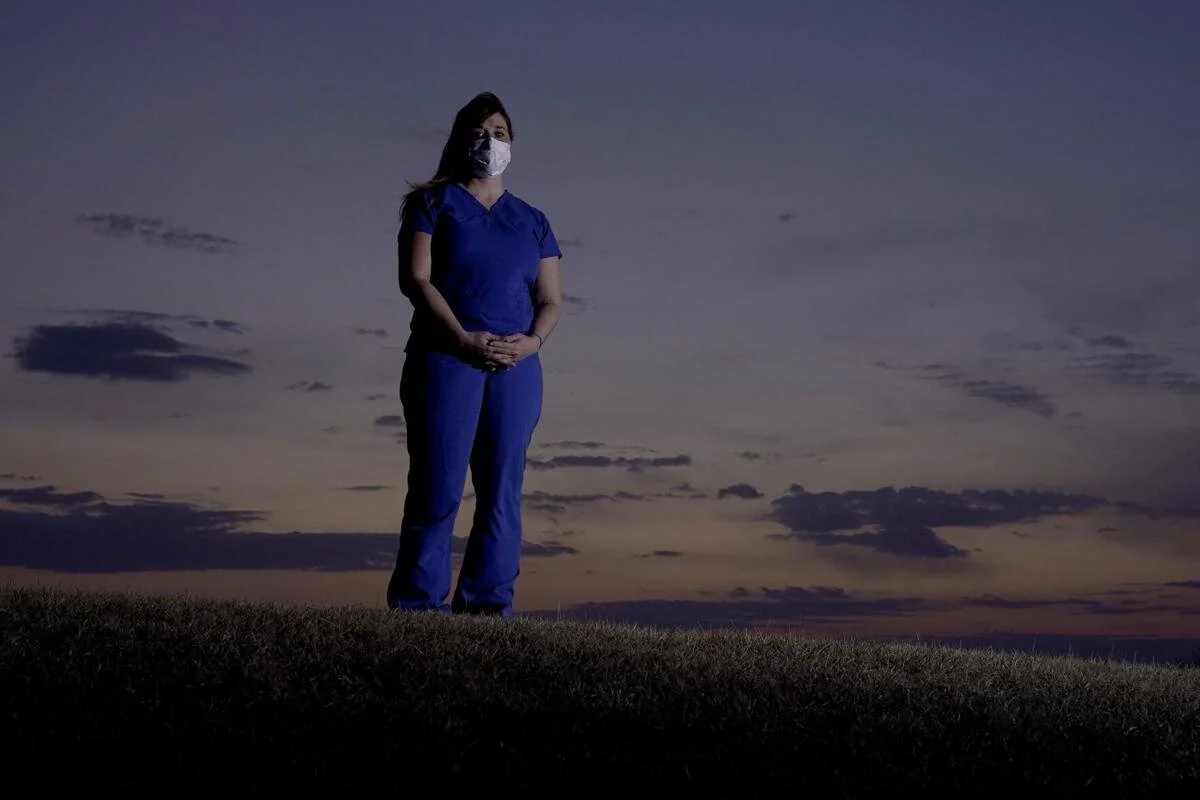
Los Angeles emergency room nurse Sandra Younan spent the last year juggling long hours as she watched many patients struggle with the coronavirus and some die.

Then there were the patients who claimed the virus was fake or coughed in her face, ignoring mask rules. One man stormed out of the hospital after a positive COVID-19 test, refusing to believe it was accurate.

“You have patients that are literally dying, and then you have patients that are denying the disease,” she said. “You try to educate and you try to educate, but then you just hit a wall.”

Bogus claims about the virus, masks and vaccines have exploded since COVID-19 was declared a global pandemic a year ago. Journalists, public health officials and tech companies have tried to push back against the falsehoods, but much of the job of correcting misinformation has fallen to the world’s front-line medical workers.

In Germany, a video clip showing a nurse using an empty syringe while practicing vaccinations traveled widely online as purported evidence that COVID-19 is fake. Doctors in Afghanistan reported patients telling them COVID-19 was created by the U.S. and China to reduce the world population. In Bolivia, medical workers had to care for five people who ingested a toxic bleaching agent falsely touted as a COVID-19 cure.

Younan, 27, says her friends used to describe her as the “chillest person ever,” but now she deals with crushing anxiety.

“My life is being a nurse, so I don’t care if you’re really sick, you throw up on me, whatever,” Younan said. “But when you know what you’re doing is wrong, and I’m asking you repeatedly to please wear your mask to protect me, and you’re still not doing it, it’s like you have no regard for anybody but yourself. And that’s why this virus is spreading. It just makes you lose hope.”

Emily Scott, 36, who is based at a Seattle hospital, has worked around the world on medical missions and helped care for the first U.S. COVID-19 patient last year. She was selected because of her experience working in Sierra Leone during the 2014-2016 Ebola outbreak.

While many Americans were terrified of Ebola — a disease that isn't nearly as contagious as the coronavirus and poses little threat in the U.S. — they aren't nearly afraid enough of COVID-19, she said.

Scott blames a few factors: Ebola’s frightening symptoms, racism against Africans and the politicization of COVID-19 by American elected officials.

“I felt so much safer in Sierra Leone during Ebola than I did at the beginning of this outbreak in the U.S.,” Scott said, because of how many people failed to heed social distancing and mask directives. “Things that are facts, and science, have become politicized.”

ER nurse L'Erin Ogle has heard a litany of false claims about the virus while working at a hospital in the suburbs of Kansas City, Missouri. They include: The virus isn’t any worse than the flu. It’s caused by 5G wireless towers. Masks won’t help and may hurt. Or, the most painful to her: The virus isn’t real, and doctors and nurses are engaged in a vast global conspiracy to hide the truth.

“It just feels so defeating, and it makes you question: Why am I doing this?” said Ogle, 40.

Nurses are often the health care providers with the most patient contact, and patients frequently view nurses as more approachable, according to professor Maria Brann, an expert on health communication at Indiana University-Purdue University Indianapolis. That means nurses are more likely to encounter patients spreading misinformation, which gives them a special opportunity to intervene.

“Nurses have always been patient advocates, but this pandemic has thrown so much more at them,” Brann said. “It can definitely take a toll. This isn’t necessarily what they signed up for.”

In some cases, it's nurses and other health care workers themselves spreading misinformation. And many nurses say they encounter falsehoods about the coronavirus vaccine in their own families.

For Brenda Olmos, 31, a nurse practitioner in Austin, Texas, who focuses on a geriatric and Hispanic patient population, it was a no-brainer to get the vaccine. But first she had to debate her parents, who had heard unsubstantiated claims that the shot would cause infertility and Bell’s palsy on Spanish-language TV shows.

Olmos eventually convinced her parents to get the vaccine, too, but she worries about vaccine hesitancy in her community.

When she recently encountered an elderly patient with cancerous tumors, Olmos knew the growths had taken years to develop. But the man’s adult children who had recently gotten him the vaccine insisted that the two were connected.

“To them, it just seemed too coincidental," Olmos said. "I just wanted them to not have that guilt.”

Olmos said the real problem with misinformation is not just bad actors spreading lies — it’s people believing false claims because they aren’t as comfortable navigating often complex medical findings.

“Low health literacy is the real pandemic,” she said. “As health care providers, we have a duty to serve the information in a way that’s palatable, and that’s easy to understand, so that people don’t consume misinformation because they can’t digest the real data.”

When Texas Gov. Greg Abbott lifted the state's mask mandate this month against the guidance of many scientists, nurse practitioner Guillermo Carnegie called the decision a “spit in the face.”

“I was disgusted,” said Carnegie, 34, of Temple, Texas. “This governor, and different people, they act like, ‘Oh, we’re proud of our front-line workers, we support them.’ But then they do something like that, and it taxes the medical field tremendously.”

Brian Southwell, who started a program at Duke University School of Medicine to train medical professionals how to talk to misinformed patients, said providers should view the patient confiding in them as an opportunity.

“That patient trusts you enough to raise that information with you," Southwell said. "And so that’s a good thing, even if you disagree with it.”

He said medical workers should resist going into “academic argumentation mode” and instead find out why patients hold certain beliefs — and whether they might be open to other ideas.

That act of listening is imperative to building trust, according to Dr. Seema Yasmin, a physician, journalist and Stanford University professor who studies medical misinformation.

Italy braces for widespread closures as Covid cases rise

Agence France

Schools, restaurants and shops expected to shut with hospitals under strain from new wave

A closed shop in the red zone town of Frosinone, Lazio. More than 100,000 people have died with Covid in Italy. Photograph: Yara Nardi/Reuters

A closed shop in the red zone town of Frosinone, Lazio. More than 100,000 people have died with Covid in Italy. Photograph: Yara Nardi/Reuters

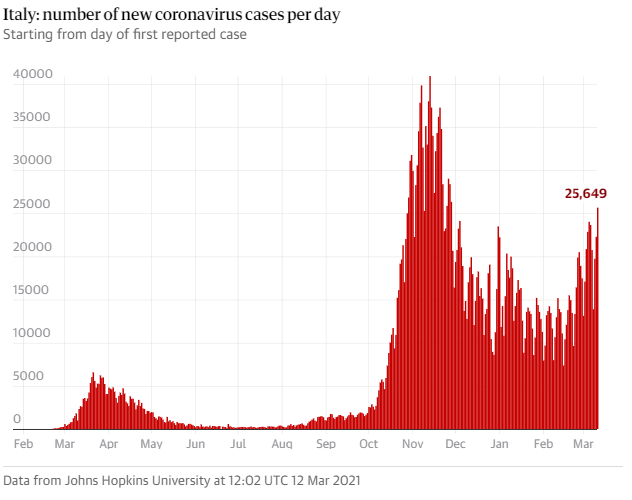
Italy’s government is expected to announce the closure of schools, restaurants and shops across most of the country as a new wave of coronavirus infections puts hospitals under strain.

The prime minister, Mario Draghi, will hold a mid-morning cabinet meeting on Friday to decide new restrictions for the eurozone’s third-largest economy, which on Thursday recorded almost 26,000 new Covid-19 cases and 373 deaths.

More than 100,000 people with coronavirus have died in Italy since the pandemic swept the country a year ago, sparking a months-long lockdown and the worst recession since the second world war.

With new, more contagious variants now widespread, Italy’s more populated northern regions such as Lombardy, which includes Milan, will reportedly join several others in being classified as the highest-risk “red zones” from Monday, as will Calabria in the south.

Caputure  2.PNG

Lazio, the region that includes Rome, could also join them, although the situation is uncertain.

Draghi’s new national unity government tightened restrictions for red zones earlier this month to include not just the closure of bars, restaurants, shops and high schools but also primary schools. Residents are told to stay home where possible.

Other regions including Tuscany and Liguria are expected to pass into the medium-risk orange zone, with all shops, museums, bars and restaurants closed.

That leaves only Sicily in the lower category of yellow, and Sardinia in the new category of white with hardly any restrictions at all.

Italy began its coronavirus vaccination campaign in late December but, as elsewhere in Europe, it has been dogged by delays in deliveries of the jabs.

Concerns over reported side-effects of the Oxford/AstraZeneca vaccine prompted Italy’s medicines regulator on Thursday to suspend a batch of doses, even while it warned there was no evidence of a link with blood clots.

‘Green’ burials are slowly gaining ground among environmentalists

Rachel Fritts

Awareness of eco-friendly death care is low even as the industry grows

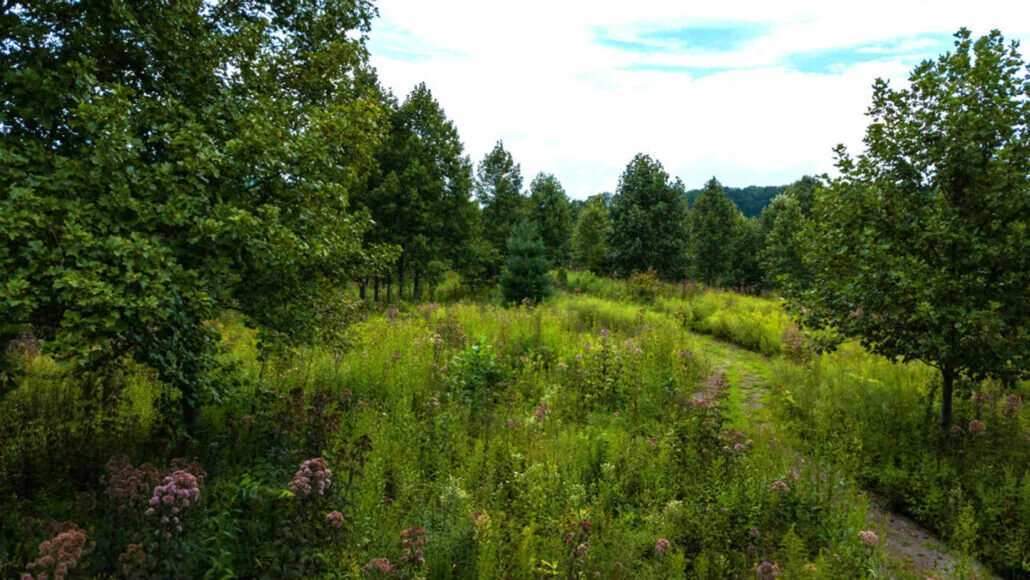
Conservation burial grounds like the Carolina Memorial Sanctuary (pictured) in North Carolina double as a cemetery and nature preserve. GREEN BURIAL COUNCIL

Conservation burial grounds like the Carolina Memorial Sanctuary (pictured) in North Carolina double as a cemetery and nature preserve.
GREEN BURIAL COUNCIL

Despite “green” burials becoming increasingly available in North America, some older eco-conscious adults remain unaware of the option when planning for their deaths, a small study hints.

Green burials do not use concrete vaults, embalm bodies or use pesticides or fertilizers at gravesites. Bodies are buried in a biodegradable container like a pinewood or wicker casket, or a cotton or silk shroud. Proponents of the small but growing trend argue it is more environmentally friendly and in line with how burials were done before the invention of the modern funeral home industry.

But when researchers asked 20 residents of Lawrence, Kan., over the age of 60 who identify as environmentalists if they had considered green burial, most hadn’t heard of the practice. That’s despite the fact that green burial had been available in Lawrence for nearly a decade at the time. More than half of the survey participants planned on cremation, because they viewed it as the eco-friendliest option, the team reported online January 26 in Mortality.

In 2008, Lawrence became the first U.S. city to allow green burials in a publicly owned cemetery. Several years later, at a meeting of an interfaith ecological community organization in the city, sociologist Paul Stock of the University of Kansas in Lawrence and his colleague Mary Kate Dennis noticed that most of the attendees were older adults. These people “live and breathe their environmentalism,” says Dennis, now a social work researcher at the University of Manitoba in Canada. “We were curious if it followed them all the way through to their burials.”

That the majority of participants in the new survey leaned towards cremation aligns with national trends. Cremation recently surpassed traditional burial as the most popular death care choice in the United States. In July 2020, the National Funeral Directors Association projected the cremation rate that year would be 56 percent compared to 38 percent for casket burials. By 2040, the cremation rate is projected to grow to about 78 percent while the burial rate is estimated to shrink to about 16 percent.

Cremation’s growing popularity can be traced to a number of factors, including affordability and concerns about traditional burial’s environmental impacts. But cremation comes with its own environmental cost, releasing hundreds of kilograms of carbon dioxide into the air per body.

The preference for green burial, meanwhile, is small but growing. The Green Burial Council was founded in 2005 to establish green burial standards by certifying green burial sites. Now 14 percent of Americans over age 40 say they would choose green burial, the NFDA reports, and around 62 percent are open to exploring it.

For those who go the green burial route, there now are a variety of commercially available choices. More adventurous options include a burial suit designed to sprout mushrooms as the body decomposes, an egg-shaped burial pod that eventually grows into a tree and human composting (SN: 2/16/20) — a one- to two-month process that turns the body into soil. In 2019, Washington became the first and only U.S. state to legalize human composting. 

Conservation burial cemeteries take the green burial concept a step further by doubling as protected nature preserves. To date, the Green Burial Council has certified over 200 green burial sites and eight conservation burial sites in North America.

Such initiatives showcase a growing awareness that death care choices can have a positive impact on ecosystems, says Lynne Carpenter-Boggs, a soil scientist at Washington State University in Pullman and a research advisor for the Seattle-based human composting company Recompose. But, she cautions, there is still little formal research comparing the environmental impacts of different death care choices.

Stock and Dennis think this lack of research, coupled with a general lack of awareness of green burial as an available choice, could be the reason why many of the environmentalists they spoke with weren’t yet considering it. But as the option becomes more widely available, Dennis says, “it will be interesting to see how that shifts.”

Covid fallout 'undermining nature conservation efforts'

Helen Briggs

GETTY IMAGESI Baby monkey poached in Indonesia

GETTY IMAGESI Baby monkey poached in Indonesia

Covid-19 is taking a "severe toll" on conservation efforts, with multiple environmental protections being rolled back, according to research.

Conservation efforts have been reduced in more than half of Africa's protected areas and a quarter of those in Asia, said the International Union for the Conservation of Nature (IUCN).

And 22 countries are rolling back protection of natural areas.

Protected areas encompass some of the world's most precious ecosystems.

They include pristine forests, wilderness areas and natural habitat that supports endangered species.

IUCN Director General Dr Bruno Oberle said the new research revealed "how severe a toll the Covid-19 pandemic has taken on conservation efforts and on communities dedicated to protecting nature".

He added: "Let us not forget that only by investing in healthy nature can we provide a solid basis for our recovery from the pandemic, and avoid future public health crises."

The research is published in a special edition of an IUCN journal dedicated to areas of the globe protected for nature.

In one paper, researchers looked at government policies on economic recovery put in place between January and October last year that had an impact on the funding and protection of areas for nature.

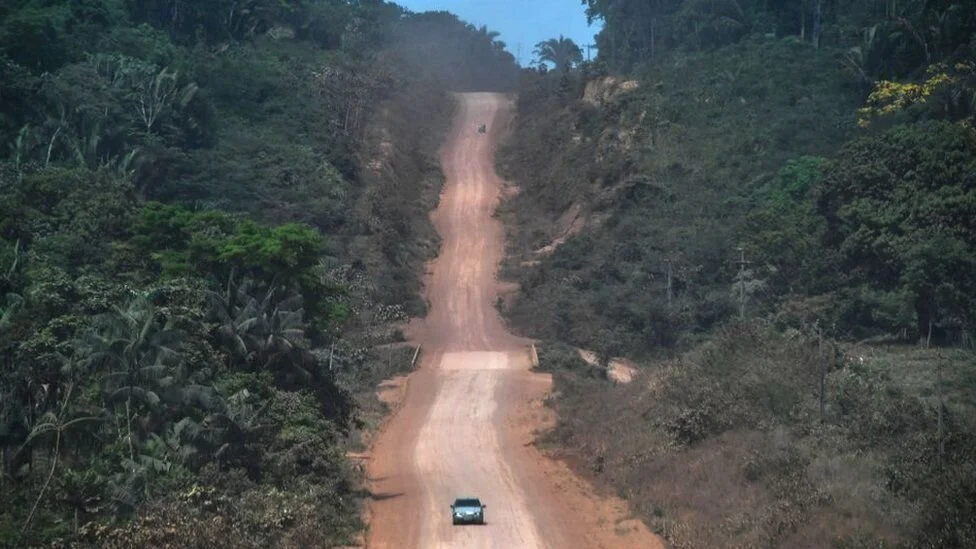
GETTY IMAGES I Road built through the rainforest

GETTY IMAGES I Road built through the rainforest

They identified some positive examples, with 17 countries, such as New Zealand, Pakistan and eight countries within the EU, maintaining or increasing their support for protected and conserved areas.

In contrast, 22 countries had rolled back protections in favour of unsustainable development including road construction or oil and gas extraction in areas designated for conservation.

Rachel Golden Kroner of Conservation International is a co-chair of the IUCN taskforce looking into the impact of Covid-19 on protected areas, and lead researcher on the study.

She told the BBC: "We found that more funding and more of the economic stimulus has gone towards activities that undermine nature rather than that support it, globally. So we're not yet on the whole moving in the right direction."

In other papers, researchers found:

  • Conservation efforts in Africa and Asia were most severely affected. More than half of protected areas in Africa reported that they were forced to halt or reduce field patrols and anti-poaching operations as well as conservation education and outreach. A quarter of protected areas in Asia also reported that conservation activities had been reduced.

  • The pandemic has affected the livelihoods of protected area rangers and their communities. A survey of rangers in more than 60 countries found that more than one in four rangers had seen their salary reduced or delayed, while 20% reported that they had lost their jobs due to budget cuts. Rangers from Central America and the Caribbean, South America, Africa and Asia were more severely affected than elsewhere.

A sand shortage? The world is running out of a crucial — but under-appreciated — commodity

  • Sand is the world’s most consumed raw material after water and an essential ingredient to our everyday lives.

  • Yet, the world is facing a shortage — and climate scientists say it constitutes one of the greatest sustainability challenges of the 21st century.

  • “Is it time for panicking? Well, that will certainly not help, but it is time to take a look and change our perception about sand,” said Pascal Peduzzi, a climate scientist with the United Nations Environment Programme.

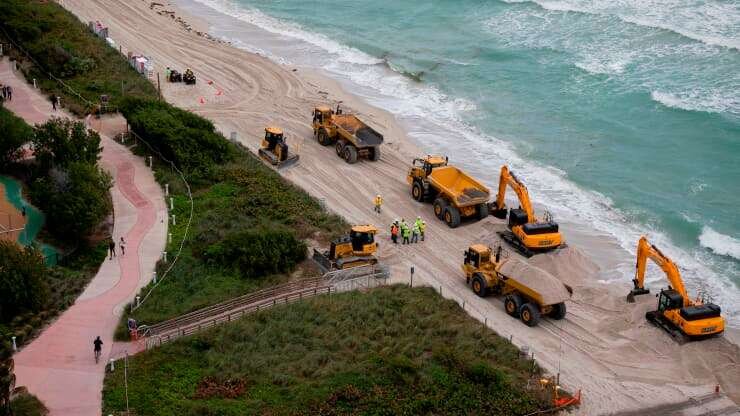
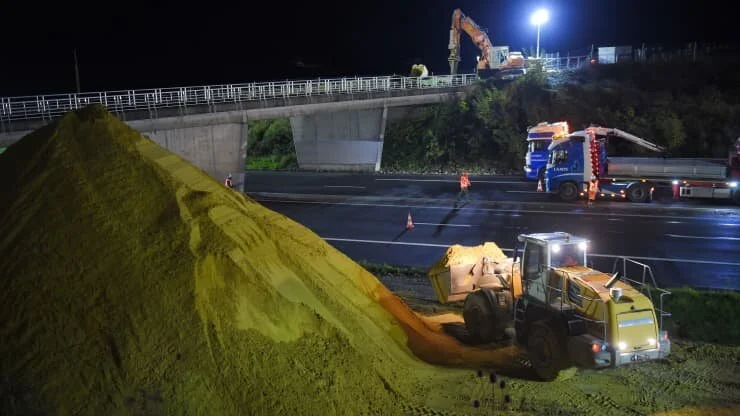
Dozens of trucks dump hundreds of thousands of tons of sand on Miami Beach as part of U.S. government measures to protect Florida’s tourist destinations against the effects of climate change.EVA MARIE UZCATEGUI | AFP | Getty Images

Dozens of trucks dump hundreds of thousands of tons of sand on Miami Beach as part of U.S. government measures to protect Florida’s tourist destinations against the effects of climate change.

EVA MARIE UZCATEGUI | AFP | Getty Images

LONDON — An insatiable global appetite for sand, one of the world’s most important but least appreciated commodities, is unlikely to let up anytime soon. The problem, however, is that this resource is slipping away.

Our entire society is built on sand. It is the world’s most consumed raw material after water and an essential ingredient to our everyday lives.

Sand is the primary substance used in the construction of roads, bridges, high-speed trains and even land regeneration projects. Sand, gravel and rock crushed together are melted down to make the glass used in every window, computer screen and smart phone. Even the production of silicon chips uses sand.

Yet, the world is facing a shortage — and climate scientists say it constitutes one of the greatest sustainability challenges of the 21st century.

“Is it time for panicking? Well, that will certainly not help, but it is time to take a look and change our perception about sand,” Pascal Peduzzi, a climate scientist with the United Nations Environment Programme, said during a webinar hosted by think tank Chatham House.


We never thought we would run out of sand, but it is starting in some places.
— Pascal Peduzzi DIRECTOR OF GRID-GENEVA

Peduzzi, who is the director of UNEP’s Global Resource Information Database in Geneva, Switzerland, described the global governance of sand resources as “the elephant in the room.”

“We just think that sand is everywhere. We never thought we would run out of sand, but it is starting in some places. It is about anticipating what can happen in the next decade or so because if we don’t look forward, if we don’t anticipate, we will have massive problems about sand supply but also about land planning,” he added.

A sand-fueled construction boom

Sand dunes in the Sahara desert.Getty Images

Sand dunes in the Sahara desert.

Getty Images

At present, it is not possible to accurately monitor global sand use. However, Peduzzi said it could be measured indirectly, citing a “very, very good” correlation between the use of sand and cement.

The UN estimates that 4.1 billion tons of cement is produced every year, driven primarily by China, which constitutes 58% of today’s sand-fueled construction boom.

The global use of sand and gravels has been found to be 10 times higher than that of cement. This means that, for construction alone, the world consumes roughly 40 to 50 billion tons of sand on an annual basis. That’s enough to build a wall of 27 meters high by 27 meters wide that wraps around the planet every year.

The global rate of sand use — which has tripled over the last two decades partially as a result of surging urbanization — far exceeds the natural rate at which sand is being replenished by the weathering of rocks by wind and water.

Sand can be found on almost every country on Earth, blanketing deserts and lining coastlines around the world. But that is not to say that all sand is useful. Desert sand grains, eroded by the wind rather than water, is too smooth and rounded to bind together for construction purposes.

The sand that is highly sought after is more angular and can lock together. It is typically sourced and extracted from seabeds, coastlines, quarries and rivers around the world.

‘A grain of change’

Construction cranes and vehicles cover the A10 highway between Paris and Bordeaux with sand on November 6, 2019 near Monts, central France.GUILLAUME SOUVANT | AFP | Getty Images

Construction cranes and vehicles cover the A10 highway between Paris and Bordeaux with sand on November 6, 2019 near Monts, central France.

GUILLAUME SOUVANT | AFP | Getty Images

Louise Gallagher, environmental governance lead at the UNEP/GRID-Geneva’s Global Sand Observatory Initiative, said the issues around sand had become a “diffuse” and “complex” problem to resolve.

For instance, she said the banning of river sand extraction would inevitably have a knock-on effect for the people and communities who rely on this practice to earn a living.

China and India top the list of areas where sand extraction impacts on rivers, lakes and on coastlines, largely as a result of soaring infrastructure and construction demand.

UNEP has previously warned of thriving “sand mafias,” with groups comprising of builders, dealers and businessmen known to be operating in countries such as Cambodia, Vietnam, Kenya and Sierra Leone. Activists working to shine a light on their activities, UNEP said, are being threatened and even killed.

Sand is “perceived as cheap, available and infinite and that is partly because the environmental and social costs are pretty much not priced in,” Gallagher said on Tuesday during the same webinar.

“It seems like we believe the highest use value for this material right now is to extract it from the natural environment rather than keeping it in the system for the other types of benefits we get from it like say, for example, climate resilience in coastal areas,” she continued.

“We need to think about putting a little order on the chaos of that crazy fragmented picture — and that’s happening. That’s the good news. We are not ignoring, I think, this problem any further. It is not as invisible as it used to be.”

Gallagher identified five priorities for sand resource governance over the next two years: cooperation on global standards across all sectors, cost-effective and viable alternatives to river and marine sand, updating environmental, social and corporate governance frameworks in the financial sector to include sand, bringing in ground-level voices and setting regional, national and global goals on sand use at the right scale.

‘No-one is even talking about this issue’

“I’d say a grain of sand can be a grain of change,” said Kiran Pereira, researcher and founder of SandStories.org.

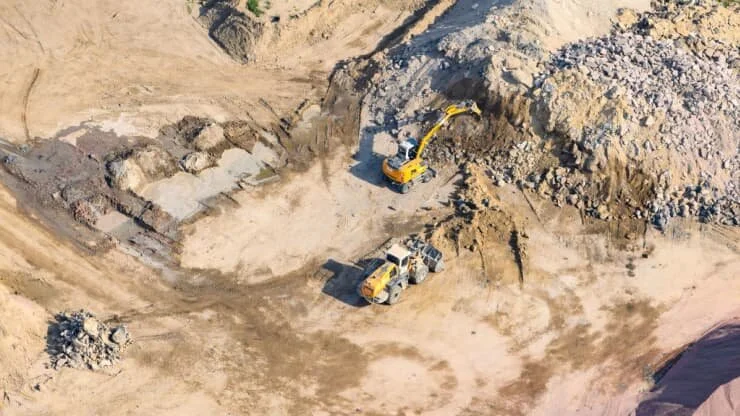
An excavator and a bulldozer are working on the grounds of the gravel plant and the concrete mixing plant of the Max Bögl group of companies.Soeren Stache | picture alliance | Getty Images

An excavator and a bulldozer are working on the grounds of the gravel plant and the concrete mixing plant of the Max Bögl group of companies.

Soeren Stache | picture alliance | Getty Images

“It is important to focus on good things that are happening. Zurich, for example, is building buildings with 98% recycled concrete. The city of Amsterdam has committed to becoming 100% circular by 2050 (and) they aim to halve their natural resource use by 2030. That is the way to go,” Pereira said.

The wake-up call on the global sand shortage, Peduzzi said, came in 2019 when governments recognized the environmental crisis for the first time and the issue was finally placed on the political agenda as a result of a UN resolution.

Unfortunately, Peduzzi told CNBC that the challenge has still not been adequately addressed on the global stage.

“It is still very much new. In many of the development policies, there is no-one even talking about this issue of sand, where it is coming from, the social impacts or the environmental impacts, so there is a lot of things to be done,” he continued.

“Yet, no big plans, no standard on how it should be extracted, no land planning on where you should extract and where you should not extract, no monitoring to where it is coming from in most of the places (and) no enforcement of laws because countries are pondering between development needs and the protection of the environment.”

Looking ahead, industrialization, population growth and urbanization are all trends likely to fuel explosive growth in the demand for sand.

“It’s time to wake up,” Peduzzi said.

Food waste: Amount thrown away totals 900 million tonnes

Victoria Gill

Getty Images

Getty Images

More than 900 million tonnes of food is thrown away every year, according to a global report.

The UN Environment Programme's Food Waste Index revealed that 17% of the food available to consumers - in shops, households and restaurants - goes directly into the bin.

Some 60% of that waste is in the home.

The lockdown appears to have had a surprising impact - at least in the UK - by reducing domestic food waste.

Sustainability charity Wrap, the UN's partner organisation on this report, says people have been planning their shopping and their meals more carefully.

And in an effort to build on that, well-known chefs have been enlisted to inspire less wasteful kitchen habits.

'23 million trucks of food'

Getty Images

Getty Images

The report has highlighted a global problem that is "much bigger than previously estimated," Richard Swannell from Wrap told BBC News.

"The 923 million tonnes of food being wasted each year would fill 23 million 40-tonne trucks. Bumper-to-bumper, enough to circle the Earth seven times."

It is an issue previously considered to be a problem almost exclusive to richer countries - with consumers simply buying more than they could eat - but this research found "substantial" food waste "everywhere it looked".

There are gaps in the findings that could reveal how the scale of the problem varies in low- and high-income countries. The report, for example, could not distinguish between "involuntary" and "voluntary" waste.

Victoria Grill: There is likely to be far less voluntary food waste in low-income countries

Victoria Grill: There is likely to be far less voluntary food waste in low-income countries

"We haven't looked deeper [at this issue] but in low-income countries, the cold chain is not fully assured because of lack of access to energy," Martina Otto from Unep told BBC News.

The data to distinguish between the waste of edible food and inedible parts - like bones and shells - was only available for high-income countries. Lower-income countries, Ms Otto pointed out, were likely to be wasting much less edible food.

But the end result, she said, was that the world was "just throwing away all the resources used to make that food".

Ahead of major global climate and biodiversity summits later this year, Unep executive director Inger Andersen is pushing for countries to commit to combatting waste - halving it by 2030.

"If we want to get serious about tackling climate change, nature and biodiversity loss, and pollution and waste, businesses, governments and citizens around the world have to do their part to reduce food waste," she said.

Richard Swannell pointed out: "Wasted food is responsible for 8-10% of greenhouse gas emissions, so if food waste was a country, it would be the third-biggest emitter of greenhouse gases on the planet."

Tips to reduce food waste:

  • Plan your portions and buy the right amount: a mug should hold the right amount of uncooked rice for four adults, and you can measure a single portion of spaghetti using a 1p or £1 coin;

  • Cool your fridge down: the average UK fridge temperature is almost 7°C. It should be lower than 5°C;

  • Understand date labels: a "use by" date is about food safety. If the use by date has passed, you should not eat or serve it, even if it looks and smells okay. If something is getting close to the use by date, you can freeze it. A "best before" date is about quality.

In the UK, the average household could save £700 per year, according to Wrap research, by buying only the food they ate.

The lockdown effect

Where food waste is voluntary, the Covid-19 lockdown appears to have had the surprising effect of revealing precisely how it can be remedied.

According to research by Wrap, planning, careful storage and batch-cooking during the lockdown reduced people's reported levels of food waste by 22% compared with 2019.

"Being confined to our homes has resulted in an increase in behaviours such as batch cooking and meal planning," the charity said. "But the latest insights suggest that food waste levels are likely to rise again as we emerge from lockdown."

In an effort to avoid that, well-known cooks and chefs have lent their names and social media profiles to the campaign against kitchen waste.

British TV cook Nadiya Hussain is working with Wrap and offering tips and leftovers recipes via Instagram. And Italian restaurateur Massimo Bottura, chef patron of Modena eatery Osteria Francescana, which has three Michelin stars, has been appointed Unep goodwill ambassador "in the fight against food waste and loss".

Throughout the lockdown in Italy, his family produced an online cooking show called Kitchen Quarantine, encouraging people to "see the invisible potential" in every ingredient.

Getty Images: Throwing away food can also mean that resources used to grow it have been wasted

Getty Images: Throwing away food can also mean that resources used to grow it have been wasted

While millions of tonnes of food was thrown away, an estimated 690 million people were affected by hunger in 2019. That number is expected to rise sharply in the wake of the pandemic.

Ms Andersen pointed out that tackling waste "would cut greenhouse gas emissions, slow the destruction of nature through land conversion and pollution, enhance the availability of food and thus reduce hunger and save money at a time of global recession".

More extreme short-duration thunderstorms likely in the future due to global warming

Newcastle University

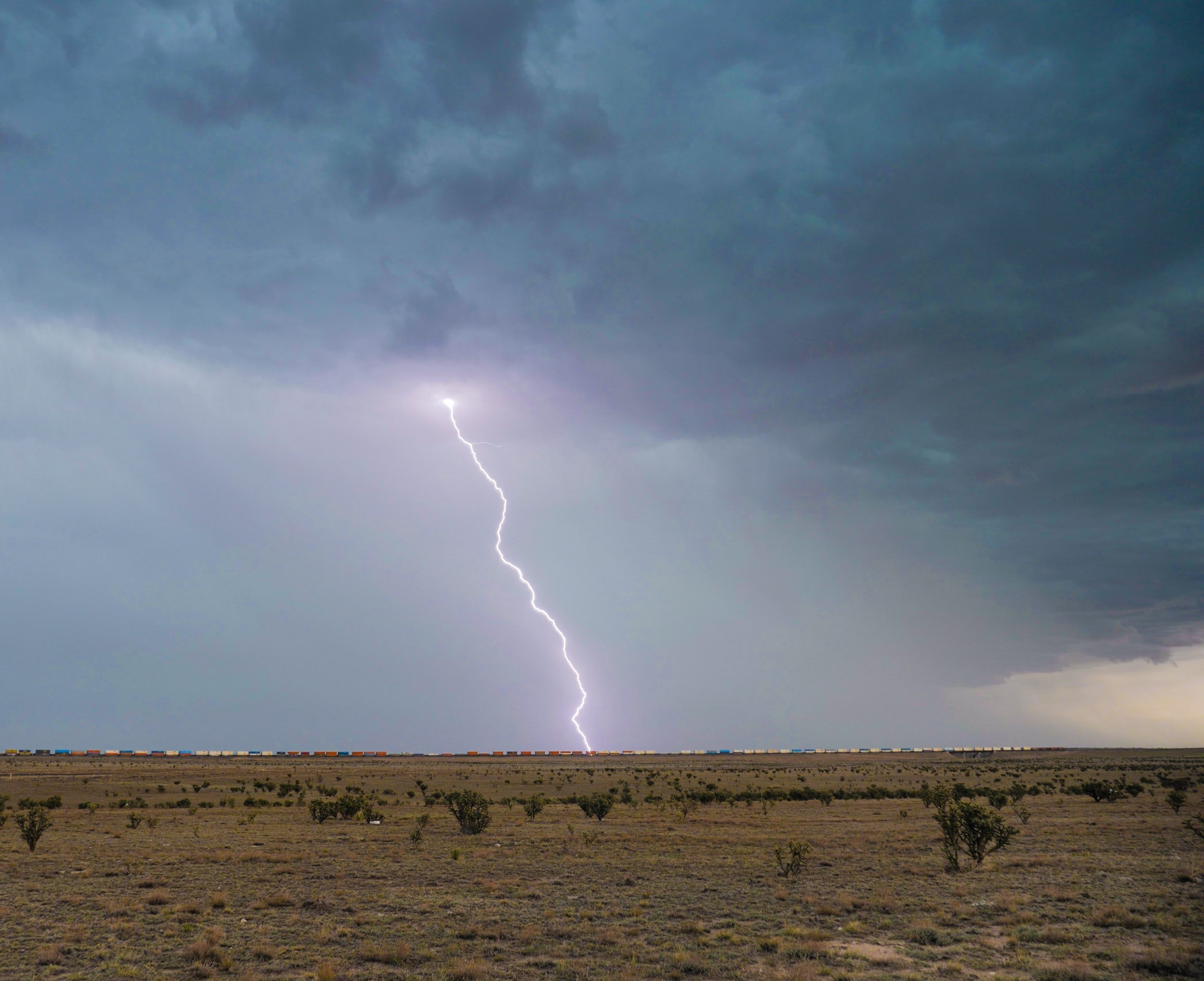
Climate experts have revealed that rising temperatures will intensify future rainfall extremes at a much greater rate than average rainfall, with largest increases to short thunderstorms.

New research by Newcastle University has shown that warming temperatures in some regions of the UK are the main drivers of increases in extreme short-duration rainfall intensities, which tend to occur in summer and cause dangerous flash flooding.

These intensities are increasing at significantly higher rates than for winter storms. A study, led by Professor Hayley Fowler, of Newcastle University's School of Engineering, highlights the urgent need for climate change adaptation measures as heavier short-term rainfall increases the risk of flash flooding and extreme rainfall globally.

Publishing their findings in the journal Nature Reviews Earth & Environment, the international team analysed data from observational, theoretical and modelling studies to examine the intensification of rainfall extremes, what drives these extremes and the impact on flash flooding.

The scientists found that rainfall extremes intensify with warming, generally at a rate consistent with increasing atmospheric moisture, which is what would be expected. However, the study has shown that temperature increases in some regions affect short-duration heavy rainfall extremes more than the increase in atmospheric moisture alone, with local feedbacks in convective cloud systems providing part of the answer to this puzzle.

Professor Fowler said: "We know that climate change is bringing us hotter, drier summers and warmer, wetter winters. But, in the past, we have struggled to capture the detail in extreme rainfall events as these can be highly localised and occur in a matter of hours or even minutes.

"Thanks to our new research, we now know more about how really heavy rainfall might be affected by climate change. Because warmer air holds more moisture, rainfall intensity increases as temperatures rise.

"This new work shows that the increase in intensity is even greater for short and heavy events, meaning localised flash flooding is likely to be a more prominent feature of our future climate."

The findings are also highlighted in a Philosophical Transactions A issue on "Intensification of short-duration rainfall extremes and implications for flash flood risks" by the Royal Society, which was published on 1 March.

It is unclear whether storm size will increase or decrease with warming. However, the researchers warn that increases in rainfall intensity and the footprint of a storm can compound to substantially increase the total rainfall during an event.

In recent years, short but significantly heavy rainfall events have caused much disruption across the UK. Recent examples include severe flooding and landslides in August 2020 and damage to the Toddbrook Reservoir, in the Peak District, in August 2019.

Information about current and future rainfall intensity is critical for the management of surface water flooding, as well as our guidance for surface water management on new developments and sewer design.

How Green Are Electric Vehicles?

Hiroko Tabuchi and Brad Plumer

In short: Very green. But plug-in cars still have environmental effects. Here’s a guide to the main issues and how they might be addressed.

Around the world, governments and automakers are promoting electric vehicles as a key technology to curb oil use and fight climate change. General Motors has said it aims to stop selling new gasoline-powered cars and light trucks by 2035 and will pivot to battery-powered models. This week, Volvo said it would move even faster and introduce an all-electric lineup by 2030.

But as electric cars and trucks go mainstream, they have faced a persistent question: Are they really as green as advertised?

While experts broadly agree that plug-in vehicles are a more climate-friendly option than traditional vehicles, they can still have their own environmental impacts, depending on how they’re charged up and manufactured. Here’s a guide to some of the biggest worries — and how they might be addressed.

It matters how the electricity is made

Broadly speaking, most electric cars sold today tend to produce significantly fewer planet-warming emissions than most cars fueled with gasoline. But a lot depends on how much coal is being burned to charge up those plug-in vehicles. And electric grids still need to get much, much cleaner before electric vehicles are truly emissions free.

One way to compare the climate impacts of different vehicle models is with this interactive online tool by researchers at the Massachusetts Institute of Technology, who tried to incorporate all the relevant factors: what it takes to manufacture the cars, how much gasoline conventional cars burn and where the electricity to charge electric vehicles comes from.

If you assume electric vehicles are drawing their power from the average grid in the United States, which typically includes a mix of fossil fuel and renewable power plants, then they’re almost always much greener than conventional cars. Even though electric vehicles are more emissions-intensive to make because of their batteries, their electric motors are more efficient than traditional internal combustion engines that burn fossil fuels.

An all-electric Chevrolet Bolt, for instance, can be expected to produce 189 grams of carbon dioxide for every mile driven over its lifetime, on average. By contrast, a new gasoline-fueled Toyota Camry is estimated to produce 385 grams of carbon dioxide per mile. A new Ford F-150 pickup truck, which is even less fuel-efficient, produces 636 grams of carbon dioxide per mile.

But that’s just an average. On the other hand, if the Bolt is charged up on a coal-heavy grid, such as those currently found in the Midwest, it can actually be a bit worse for the climate than a modern hybrid car like the Toyota Prius, which runs on gasoline but uses a battery to bolster its mileage. (The coal-powered Bolt would still beat the Camry and the F-150, however.)

“Coal tends to be the critical factor,” said Jeremy Michalek, a professor of engineering at Carnegie Mellon University. “If you’ve got electric cars in Pittsburgh that are being plugged in at night and leading nearby coal plants to burn more coal to charge them, then the climate benefits won’t be as great, and you can even get more air pollution.”

The good news for electric vehicles is that most countries are now pushing to clean up their electric grids. In the United States, utilities have retired hundreds of coal plants over the last decade and shifted to a mix of lower-emissions natural gas, wind and solar power. As a result, researchers have found, electric vehicles have generally gotten cleaner, too. And they are likely to get cleaner still.

“The reason electric vehicles look like an appealing climate solution is that if we can make our grids zero-carbon, then vehicle emissions drop way, way down,” said Jessika Trancik, an associate professor of energy studies at M.I.T. “Whereas even the best hybrids that burn gasoline will always have a baseline of emissions they can’t go below.”

Raw materials can be problematic

Like many other batteries, the lithium-ion cells that power most electric vehicles rely on raw materials — like cobalt, lithium and rare earth elements — that have been linked to grave environmental and human rights concerns. Cobalt has been especially problematic.

Mining cobalt produces hazardous tailings and slags that can leach into the environment, and studies have found high exposure in nearby communities, especially among children, to cobalt and other metals. Extracting the metals from their ores also requires a process called smelting, which can emit sulfur oxide and other harmful air pollution.

And as much as 70 percent of the world’s cobalt supply is mined in the Democratic Republic of Congo, a substantial proportion in unregulated “artisanal” mines where workers — including many children — dig the metal from the earth using only hand tools at great risk to their health and safety, human rights groups warn.

The world’s lithium is either mined in Australia or from salt flats in the Andean regions of Argentina, Bolivia and Chile, operations that use large amounts of groundwater to pump out the brines, drawing down the water available to Indigenous farmers and herders. The water required for producing batteries has meant that manufacturing electric vehicles is about 50 percent more water intensive than traditional internal combustion engines. Deposits of rare earths, concentrated in China, often contain radioactive substances that can emit radioactive water and dust.

Focusing first on cobalt, automakers and other manufacturers have committed to eliminating “artisanal” cobalt from their supply chains, and have also said they will develop batteries that decrease, or do away with, cobalt altogether. But that technology is still in development, and the prevalence of these mines means these commitments “aren’t realistic,” said Mickaël Daudin of Pact, a nonprofit organization that works with mining communities in Africa.

Instead, Mr. Daudin said, manufacturers need to work with these mines to lessen their environmental footprint and make sure miners are working in safe conditions. If companies acted responsibly, the rise of electric vehicles would be a great opportunity for countries like Congo, he said. But if they don’t, “they will put the environment, and many, many miners’ lives at risk.”

Recycling could be better

As earlier generations of electric vehicles start to reach the end of their lives, preventing a pileup of spent batteries looms as a challenge.

Most of today’s electric vehicles use lithium-ion batteries, which can store more energy in the same space than older, more commonly-used lead-acid battery technology. But while 99 percent of lead-acid batteries are recycled in the United States, estimated recycling rates for lithium-ion batteries are about 5 percent.

Experts point out that spent batteries contain valuable metals and other materials that can be recovered and reused. Depending on the process used, battery recycling can also use large amounts of water, or emit air pollutants.

“The percentage of lithium batteries being recycled is very low, but with time and innovation, that’s going to increase,” said Radenka Maric, a professor at the University of Connecticut’s Department of Chemical and Biomolecular Engineering.

A different, promising approach to tackling used electric vehicle batteries is finding them a second life in storage and other applications. “For cars, when the battery goes below say 80 percent of its capacity, the range is reduced,” said Amol Phadke, a senior scientist at the Goldman School of Public Policy at the University of California, Berkeley. “But that’s not a constraint for stationary storage.”

Various automakers, including Nissan and BMW, have piloted the use of old electric vehicle batteries for grid storage. General Motors has said it designed its battery packs with second-life use in mind. But there challenges: Reusing lithium-ion batteries requires extensive testing and upgrades to make sure they perform reliably.

If done properly, though, used car batteries could continue to be used for a decade or more as backup storage for solar power, researchers at the Massachusetts Institute of Technology found in a study last year.

Fossil fuel emissions in danger of surpassing pre-Covid levels

Jillian Ambrose

International Energy Agency data shows steady climb over second half of 2020

International Energy Agency data showed that by December 2020 carbon emissions were 2% higher than in the same month the year before. Photograph: Jeff Zehnder/Alamy

International Energy Agency data showed that by December 2020 carbon emissions were 2% higher than in the same month the year before. Photograph: Jeff Zehnder/Alamy

The world has only a few months to prevent the energy industry’s carbon emissions from surpassing pre-pandemic levels this year as economies begin to rebound from Covid-19 restrictions, according to the International Energy Agency.

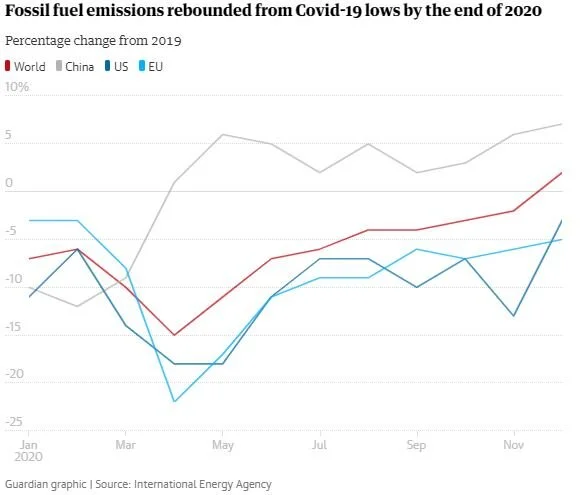
New figures from the global energy watchdog found that fossil fuel emissions climbed steadily over the second half of the year as major economies began to recover. By December 2020, carbon emissions were 2% higher than in the same month the year before.

The return of rising emissions began only months after Covid-19 triggered the deepest slump in carbon dioxide output since the end of the second world war, and threatens to dash hopes that the world’s emissions might have peaked in 2019.

Dr Fatih Birol, executive director of the IEA, said: “We are putting the historic opportunity to make 2019 the definitive peak of global emissions at risk. If in the next few months governments do not put the right clean energy policies in place, we may well be returning to our carbon-intensive business as usual. This is in stark contrast with the ambitious commitments made by several governments one after the other.”

The IEA was one of many influential groups to call on global governments to put in place plans to use green energy policies as an economic stimulus in the wake of the coronavirus crisis. However, a Guardian investigation revealed that only a small number of major countries began pumping rescue funds into low-carbon efforts such as renewable power, electric vehicles and energy efficiency last year.

The agency’s first ever report to record monthly carbon emissions by region found a strong correlation between countries that put in place economic stimulus packages with a net environmental benefit – such as France, Spain, the UK and Germany – and those that have kept a lid on the carbon emissions rebound.

Meanwhile, the countries that had made the smallest contributions to green economic stimulus measures, such as China, India, the United States and Brazil, recorded steep carbon rebounds in the second half of last year as their economies began to reopen.

Capture1.JPG

“This is a clear signal that governments did not put as many green energy policies in their economic recovery packages as they should have. We warned that if the policies were not put in place, we would go back to where we were before the crisis – which is what is happening today,” he said.

China was the first major economy to emerge from the pandemic and lift restrictions, and the only major economy to grow last year, causing its emissions in the last month of the year to climb 7% higher than the levels in December 2019. Its emissions fell 12% below 2019 levels in February last year, but for the year as a whole China’s carbon emissions were 0.8% above 2019.

In India and Brazil, the monthly carbon emissions recorded for December were both 3% higher than at the end of 2019, a stark increase from the depths of lockdown restrictions in April last year, when India’s emissions were 41% lower than in 2019 and Brazil’s 23% lower than the year before.

The EU also reached an emissions nadir last April of 22% below 2019 levels, and emissions remained 5% lower than the year before by December, in part due to ongoing restrictions on travel to help limit the spread of Covid-19 and its variants.

Birol said it was “not too late” for governments to prevent remissions from rebounding to higher levels than before the coronavirus pandemic, “but it is becoming a very daunting task”.

“Governments of all countries, and especially major economies such as the US, China, India, Europe and Japan, need to include clean energy policies in their economic recovery packages,” he said.

Court: Nigerian Farmers Can Sue Shell in UK Over Pollution

Britain’s Supreme Court has ruled that a group of Nigerian farmers and fishermen can sue Royal Dutch Shell PLC in the English courts over pollution in a region where the energy giant has a subsidiary

The Associated Press

The Associated Press

LONDON -- Britain’s Supreme Court ruled Thursday that a group of Nigerian farmers and fishermen can sue Royal Dutch Shell PLC in English courts over pollution in a region where the Anglo-Dutch energy giant has a subsidiary.

Five justices on the U.K.'s top court said Shell has a “duty of care” to the claimants over the actions of its Nigerian subsidiary. Shell had argued that it was not responsible.

Members of Nigeria’s Ogale and Bille communities took Shell to court in Britain in 2016, alleging that decades of oil spills have fouled the water, contaminated the soil and destroyed the lives of thousands of people in the Niger River Delta, where a Shell subsidiary has operated for decades.

They brought the lawsuit in London, Shell’s home base, because they said the Nigerian courts are too corrupt.

Shell argued that the U.K. courts had no jurisdiction to hear the case.

Britain’s High Court ruled in 2017 that the parent company was not legally responsible and the claim against its subsidiary, Shell Petroleum Development Co. of Nigeria, should therefore not be heard in the U.K. courts.

The Court of Appeal agreed and the claimants appealed to the U.K.’s top court for a final decision.

In its ruling Thursday, the Supreme Court said “the Court of Appeal materially erred in law” when it ruled against the Nigerian claimants.

It said the appellants’ case had “a real prospect of success.”

The long-running case has been closely watched for its implications about whether large corporations can be sued in London for activities of foreign subsidiaries.

Daniel Leader of London law firm Leigh Day, who represents the claimants, said the judgment “gives real hope to the people of Ogale and Bille who have been asking Shell to clean up their oil for years."

“But it also represents a watershed moment in the accountability of multinational companies," he said. "Increasingly impoverished communities are seeking to hold powerful corporate actors to account and this judgment will significantly increase their ability to do so.”

Shell discovered and started exploiting Nigeria’s vast oil reserves in the late 1950s and has faced heavy criticism from activists and local communities over spills and for the company’s close ties to government security forces.

The British ruling comes two weeks after a Dutch appeals court ordered Shell’s Nigerian subsidiary to compensate farmers in two villages for damage to their land caused by leaks in 2004 and 2005. That decision can be appealed to the Dutch Supreme Court.

China’s Emissions of Ozone-Harming Gas Are Declining, Studies Find

New research confirms that emissions from China of CFC-11, a banned gas that harms Earth’s ozone layer, have fallen sharply, reversing a dangerous spike.

 Chris Buckley and Henry Fountain

Emissions from China of a banned gas that harms Earth’s ozone layer have sharply declined after increasing for several years, two teams of scientists said Wednesday, a sign that the Beijing government had made good on vows to crack down on illegal production of the industrial chemical.

The findings ease concerns that increased emissions of the gas, CFC-11, would slow progress in the decades-long environmental struggle to repair the ozone layer, which filters ultraviolet radiation from the sun that can cause skin cancer and damage crops.

“We see a huge decline both in global emission rates and what’s coming from Eastern China,” said Stephen A. Montzka, a research chemist with the National Oceanic and Atmospheric Administration and the lead author of one of the studies. Work by Dr. Montzka and others three years ago first revealed the illegal emissions.

“It looks like there’s been a substantial response, potentially as a result of us raising a flag and saying, ‘Hey, something’s not happening as it should,’” Dr. Montzka said.

Matthew Rigby, an atmospheric chemist at the University of Bristol in England and an author of the second study, said that if emissions had not declined, “we could be seeing a delay in ozone recovery of years.” As of now, full recovery is still expected by the middle of the century.

Chinese government officials did not immediately respond to requests for comment.

Chemical traders in Shandong, a heavily industrialized province in Eastern China where CFC-11 was widely used for making insulating foams, said trade in the banned gas had largely dried up. “It hasn’t disappeared entirely, but it’s much scarcer than before,” Gao Shang, a chemical merchant in Shandong, said in a telephone interview.

CFC-11 was outlawed a decade ago under the Montreal Protocol, the treaty established in the 1980s, when research revealed its effects on atmospheric ozone, along with the effects of similar widely used chemicals.

The revelation in a 2018 study of rogue emissions from China that began five years before was a shock to scientists, policymakers, environmentalists and others who monitor the protocol, which is largely regarded as the most effective environmental treaty in history.

Meg Seki, acting executive secretary of the Ozone Secretariat, the United Nations body that administers the treaty, said the organization was pleased to see that emissions had dropped and that the effect on the ozone layer was likely to be limited. “It is important, however, to prevent such unexpected emissions in the future through continued, high-standard monitoring by the scientific community,” she said in a statement

The 2018 research did not pinpoint the source of most of the emissions beyond locating them as coming from East Asia. But investigations that year by the Environmental Investigation Agency, an independent advocacy group based in Washington, D.C., and by The New York Times found evidence that the gas was still being produced and used in Eastern China, particularly Shandong.

An atmospheric analysis led by Dr. Rigby in 2019 found that Shandong, as well as a neighboring province, Hebei, were major sources.

When first confronted with the evidence, Chinese environmental authorities hedged and raised doubts about the findings, suggesting that there could be other, unaccounted sources of the chemical or that manufacturers of insulating foam would not use so much CFC-11.

At the same time, China’s Ministry of Ecology and Environmental Protection vowed “zero tolerance” for businesses found illegally making or using CFC-11.

Policy announcements, industry reports and court judgments all indicate that the Chinese government cracked down on the illicit trade, even as it kept denying that there ever was a serious problem. Last year, the government publicized a conviction of a businessman, Qi Erming, as the first case in China of a criminal prosecution for illegally trading in ozone-damaging chemicals.

As well as prosecutions, the government tightened rules and monitoring of the chemical and foam production industries, and promised to create a comprehensive data system to trace the movement of chemicals that could be used to make CFC-11.

There are legal gases that can replace CFC-11 in foam production. Mr. Gao, the chemical merchant in Shandong, said his company specializes in one of them.

The availability of substitutes may have helped China’s efforts to reduce CFC-11 emissions. Zhu Xiuli, a sales manager at another company in Shandong that sells foaming agents, said that customers previously had asked whether they had CFC-11. But “in the past couple of years there have been fewer and fewer inquiries,” she said.

CFC-11 has also been used in refrigeration equipment. As the gear ages, and as foams containing CFC-11 degrade over time, the gas will slowly be released. Although the size of this “bank” of CFC-11 is not precisely known, it is accounted for by the protocol, and is one reason full ozone recovery will take decades.

The new papers, which were published in the journal Nature, also do not account for the entire global increase in CFC-11 emissions that had occurred since 2013. The gas may still be being produced or used in other countries or in other parts of China, but the researchers said there are not enough air-sampling stations worldwide to know for certain.

“This is a useful lesson that we really need to expand our monitoring capabilities,” Dr. Rigby said.

Avipsa Mahapatra, a climate campaign lead for the Environmental Investigation Agency, said of the new findings that it was “exciting to see atmospheric studies confirming that on-the-ground intelligence and subsequent enforcement have culminated in a spectacular climate win.” But she said her group had indications that enforcement may have been more successful in some parts of China than others. “This is not the time for complacency,” she said.

Susan Solomon, an atmospheric chemist at the Massachusetts Institute of Technology who was not involved in the research, said the work was “a real triumph for science.”

But the problem is not over, Dr. Solomon said, because in addition to CFC-11, there are other, similar chemicals being emitted. “There’s a whole zoo of molecules,” she said, and although the amounts are smaller, they add up.

They also are potent greenhouse gases, she said, although their contribution to warming is much less than the far more prevalent heat-trapping gases like carbon dioxide and methane. “The chemical industry worldwide is still not monitored closely enough for us to actually be confident in how much greenhouse gases they’re making and how much ozone-depleting gases they are making,” she said.

Tough air pollution targets needed to cut health inequalities, say MPs

Damian Carrington

Cross-party committee says deprived groups contribute least but suffer most from dirty air

In London almost half of disadvantaged communities suffer pollution levels above EU limits, the BMA says. Photograph: Dan Kitwood/Getty Images

In London almost half of disadvantaged communities suffer pollution levels above EU limits, the BMA says. Photograph: Dan Kitwood/Getty Images

The government must set tough new air pollution targets to reduce the stark health inequalities suffered by disadvantaged communities, a cross-party committee of MPs has said.

Dirty air causes up to 64,000 early deaths a year in the UK, according to their report, and disproportionately harms those living in deprived areas and those from minority ethnic communities. The fact that these groups contribute the least to air pollution “increases the moral case for action”, said the MPs.

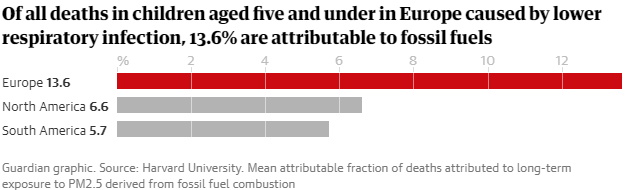
Air pollution and associated health problems have been linked to worse outcomes from Covid-19 but the MPs said there was already an overwhelming case for action. One in six of all deaths in Europe are linked to the burning of fossil fuels, according to research published on Monday.

The MPs’ report said ministers must put the World Health Organization (WHO) limit for particle pollution into law. The UK limit is two-and-a-half times higher. The delayed environment bill now being considered in parliament does not commit to a specific target.

The government’s own evidence shows that by far the most effective way to cut pollution is with clean-air zones (CAZs), where charges are levied to deter polluting vehicles from urban centres. But the MPs said ministers had put too much responsibility for these on local authorities and provided too little funding. Three-quarters of the UK’s 43 air-quality zones have illegal levels of nitrogen dioxide, mostly emitted by diesels, but to date only London has a CAZ.

The MPs also said people would need to be encouraged to use public transport again after the coronavirus pandemic subsideed and that “the government should match its rhetoric on active travel [such as walking and cycling] with sufficient funding”.

“Deaths linked to air pollution disproportionately affect disadvantaged communities,” said Neil Parish MP, chair of the environment food and rural affairs select committee. “In rebuilding after the pandemic, we have a moral duty to put improving air quality at its core.” In 2016, the committee described air pollution as “a national health emergency”.

The MPs’ report said the deaths caused by dirty air “were starkly highlighted” by a landmark coroner’s verdict in December that air pollution had been a cause of the death of nine-year-old Ella Kissi-Debrah in 2013. Her mother, Rosamund Kissi-Debrah, subsequently called for her legacy to be a new clean air act to force the government to clean up dirty air. The MPs said ministers should set a legal target of reaching the WHO limit for small particle pollution by 2030.

The MPs took evidence from a wide range of experts, and Prof Dame Parveen Kumar of the British Medical Association (BMA) said action should “focus on deprived communities because we would probably see the greatest changes there” while adding that “this is happening to everybody everywhere”.

The chief medical officer for England said in 2017 that deprived communities lived with higher air pollution and were more susceptible to its impact. The BMA said that in London almost half of disadvantaged communities suffered pollution levels above EU limits, compared with just 2% in the wealthiest communities. People in inner-city areas are least likely to own a car, Guy’s & St Thomas’ Charity said.

Delays in the implementation of some CAZs have come from local authorities and the government. Paul Swinney, from the Centre for Cities, told the MPs: “Literally, the people they are serving are dying because we are not dealing with those air quality issues.”

On walking and cycling, the BMA said current spending on active travel was just 2% of transport spending and estimated that delivering the government’s plans would require £1.2bn a year, not the £2bn over five years it had committed.

A government spokesperson said improving air quality was a top priority: “We have committed to setting at least two ambitious new air quality targets, with a primary focus on reducing public health impacts. As part of this we will be considering WHO guidelines for [small particles].”

Harriet Edwards, policy manager at Asthma UK and the British Lung Foundation (AUK-BLF), said: “Air pollution impacts everyone, but can have a devastating impact on the most vulnerable people in our society – children, older people and the millions of people with a lung condition.”

A new AUK-BLF report shows more than half of people in England aged over-65 live in areas with small particle pollution above WHO levels, and that more than a quarter of care homes and hospitals are in such areas.

'Invisible killer': fossil fuels caused 8.7m deaths globally in 2018, research finds

Oliver Milman

Pollution from power plants, vehicles and other sources accounted for one in five of all deaths that year, more detailed analysis reveals

 
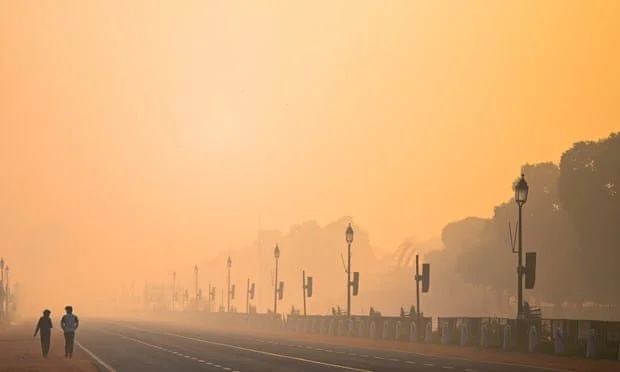
Two men walk along Rajpath amid smoggy conditions in New Delhi last month. Photograph: Jewel Samad/AFP/Getty Images

Two men walk along Rajpath amid smoggy conditions in New Delhi last month. Photograph: Jewel Samad/AFP/Getty Images


Air pollution caused by the burning of fossil fuels such as coal and oil was responsible for 8.7m deaths globally in 2018, a staggering one in five of all people who died that year, new research has found.

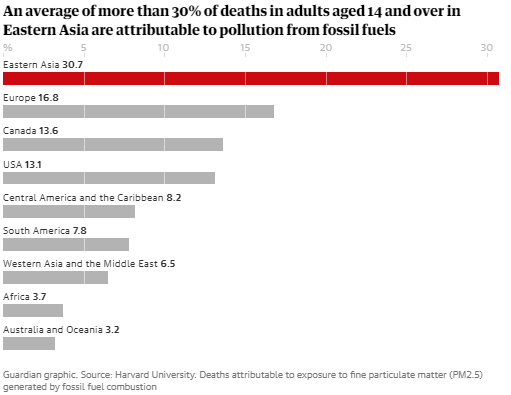
Countries with the most prodigious consumption of fossil fuels to power factories, homes and vehicles are suffering the highest death tolls, with the study finding more than one in 10 deaths in both the US and Europe were caused by the resulting pollution, along with nearly a third of deaths in eastern Asia, which includes China. Death rates in South America and Africa were significantly lower.

Pollution1.PNG

The enormous death toll is higher than previous estimates and surprised even the study’s researchers. “We were initially very hesitant when we obtained the results because they are astounding, but we are discovering more and more about the impact of this pollution,” said Eloise Marais, a geographer at University College London and a study co-author. “It’s pervasive. The more we look for impacts, the more we find.”

The 8.7m deaths in 2018 represent a “key contributor to the global burden of mortality and disease”, states the study, which is the result of collaboration between scientists at Harvard University, the University of Birmingham, the University of Leicester and University College London. The death toll exceeds the combined total of people who die globally each year from smoking tobacco plus those who die of malaria.

Scientists have established links between pervasive air pollution from burning fossil fuels and cases of heart disease, respiratory ailments and even the loss of eyesight. Without fossil fuel emissions, the average life expectancy of the world’s population would increase by more than a year, while global economic and health costs would fall by about $2.9tn.

The new estimate of deaths, published in the journal Environmental Research, is higher than other previous attempts to quantify the mortal cost of fossil fuels. A major report by the Lancet in 2019, for example, found 4.2m annual deaths from air pollution coming from dust and wildfire smoke, as well as fossil fuel combustion.

pollution 3.PNG

This new research deploys a more detailed analysis of the impact of sooty airborne particles thrown out by power plants, cars, trucks and other sources. This particulate matter is known as PM2.5 as the particles are less than 2.5 micrometers in diameter – or about 30 times smaller than the diameter of the average human hair. These tiny specks of pollution, once inhaled, lodge in the lungs and can cause a variety of health problems.

“We don’t appreciate that air pollution is an invisible killer,” said Neelu Tummala, an ear, nose and throat physician at George Washington University School of Medicine and Health Sciences. “The air we breathe impacts everyone’s health but particularly children, older individuals, those on low incomes and people of color. Usually people in urban areas have the worst impacts.”

Instead of solely relying upon averaged estimates from satellite and surface observations that account for PM2.5 from a range of sources, the researchers used a global 3D model of atmospheric chemistry overseen by Nasa that has a more detailed resolution and can distinguish between pollution sources. “Rather than rely on averages spread across large regions, we wanted to map where the pollution is and where people live, so we could know more exactly what people are breathing,” said Karn Vohra, a graduate student at University of Birmingham and study co-author.

The researchers then developed a new risk assessment based on a tranche of new research that has found a much higher mortality rate from fossil fuel emissions than previously thought, even in relatively low concentrations. Data was taken from 2012 and then also 2018 to account for rapid improvements in air quality in China. Deaths were counted for people aged 15 and older.

The results show a varied global picture. “China’s air quality is improving but its fine particle concentrations are still staggeringly high, the US is improving, although there are hotspots in the north-east, Europe is a mixed bag and India is definitely a hotspot,” said Marais.

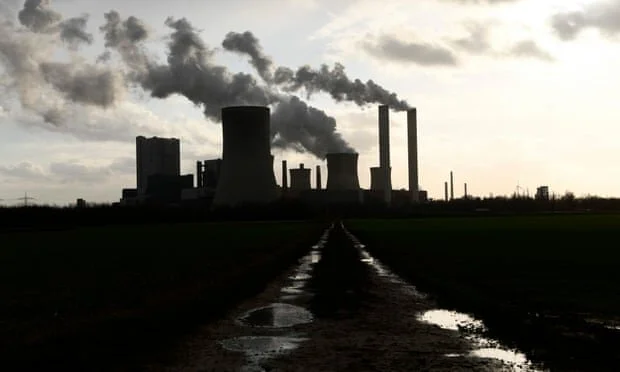
A coal power plant in Niederaussem, western Germany. Photograph: Ina Fassbender/AFP/Getty Images

A coal power plant in Niederaussem, western Germany. Photograph: Ina Fassbender/AFP/Getty Images

The death toll outlined in the study may even be an underestimate of the true picture, according to George Thurston, an expert in air pollution and health at the NYU school of medicine who was not involved in the research. “Overall, however, this new work makes clearer than ever that, when we talk about the human cost of air pollution or climate change, the major causes are one and the same – fossil fuel combustion,” he said.

Philip J Landrigan, director of the program for global public health and the common good at Boston College, said: “Recent research has been exploring the use of newer exposure-response functions, and several recent papers that use these newer functions have produced higher estimates of pollution-related mortality than the Global Burden of Disease analyses.” He added: “I consider it important that different risk assessment models are now being developed, because their development will force re-examination of the assumptions that underlie current models and will improve them.”

Ed Avol, chief of the environmental health division at the University of Southern California (USC), said: “The authors have applied improved methodologies to better quantify exposures and better document health outcomes in order to reach the unsettling (but not surprising) conclusion that fossil-fuels-combustion-related air pollution is more damaging to global human health than previously estimated. The remote satellite imagery exposure specialists and health epidemiologists on the research team are highly competent investigators and among the most talented scholars in this dynamic field.”

“Fossil fuels have a really large impact upon health, the climate and the environment and we need a more immediate response,” said Marais. “Some governments have carbon-neutral goals but maybe we need to move them forward given the huge damage to public health. We need much more urgency.”

Global heating to blame for threat of deadly flood in Peru, study finds

Dan Collyns

Research showing severe flood threat caused by global heating may set legal precedent in climate litigation

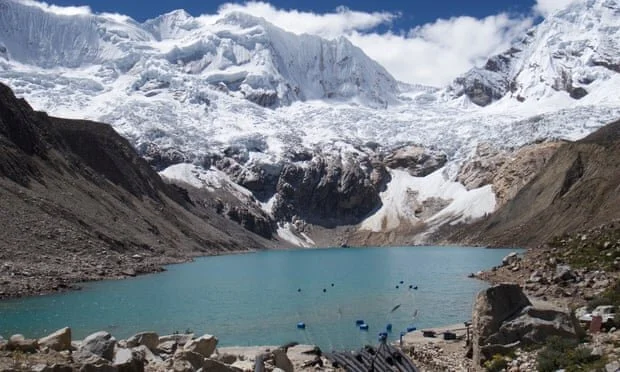
The study found human-induced heating had caused between 85% and 105% of the observed 1C temperature rise in the region since 1880. That had, in turn, caused the retreat of the Palcaraju glacier. Photograph: Dan Collyns/The Guardian

The study found human-induced heating had caused between 85% and 105% of the observed 1C temperature rise in the region since 1880. That had, in turn, caused the retreat of the Palcaraju glacier. Photograph: Dan Collyns/The Guardian

Human-caused global heating is directly responsible for the threat of a devastating flood in Peru that is the subject of a lawsuit against the German energy company RWE, according to groundbreaking new research.

The study establishes links from human-made greenhouse gas emissions to the substantial risk of a dangerous outburst flood from Lake Palcacocha, high in the Peruvian Andes. The resulting flood would trigger a deadly landslide inundating the city of Huaraz, and threatening about 120,000 people in its path.

Climate litigators say the research published in Nature Geoscience could be key to holding major polluters accountable for their contribution to climate change.

Rupert Stuart-Smith, the lead author of the study, says: “[It] shows that warming has caused the retreat of the Palcaraju glacier which, in turn, has increased the flood risk.

“Crucially, this establishes a direct link between emissions and the need to implement protective measures now, as well as any damages caused by flooding in future.”

In 2017, judges in Hamm, Germany, made legal history by accepting a case brought by farmer Saúl Luciano Lliuya against RWE, Germany’s largest electricity provider, asking for $20,000 (£14,660) for the costs of preventing damage from a potential outburst flood from the lake. The judges are currently examining the evidence.

Roda Verheyen, a Hamburg-based environmental lawyer representing Lliuya, said she expected the study “to provide evidence of cause and effect that can be used in court worldwide”.

“Given that the court in Germany has already approved that, legally, there is responsibility for major emitters, this would have a bearing everywhere,” she told the Guardian.

Noah Walker-Crawford, an anthropologist at Manchester University acting as an external adviser to Germanwatch on climate litigation, said the study “provides further support to the argument that RWE has contributed to the risk of glacial lake flooding in Peru and should be held financially liable”.

“A ruling in Saúl Luciano Lliuya’s favour would set a significant precedent for future claims against major emitters,” he added.

“While Luciano Lliuya’s case concerns a small sum of around $20,000, future claims could be in the billions.”

The study found that the human-induced temperature rises had caused between 85% and 105% of the observed 1C heating in the region since 1880. That had, in turn, caused the retreat of the Palcaraju glacier. Andean glaciers, of which about 70% are in Peru, are among the fastest retreating mountain ice caps and one of the most visible impacts of the climate crisis.

Prof Gerard Roe, study author and researcher at the University of Washington, said: “Outburst floods threaten communities in many mountainous regions, but this risk is particularly severe in Huaraz, as well as elsewhere in the Andes and in countries such as Nepal and Bhutan, where vulnerable populations live in the path of the potential flood waters.”

This is not the first time Lake Palcacocha has threatened Huaraz. In 1941 a chunk of ice broke away from the glacier in an earthquake, tumbling into the lake. The impact caused a flood, killing about 1,800 people. The study also found this flood to be influenced by human-induced climate change – making it one of the earliest fatal impacts of climate change to have been identified globally.

“A number of new lawsuits are attempting to hold high-emission companies responsible for the costs of climate change,” said Prof Thom Wetzer, the founding director of the Oxford Sustainable Law Programme.

“It is now up to litigators to translate the science into high-impact legal arguments. Whether or not this particular case proceeds, it shows there is huge potential to leverage the power of the law to hold private companies liable for climate change-related impacts.”

Wellbeing benefits of wetlands

Flinders University

Study measures high value of natural coastal assets

In one of the first studies of its kind in Australia, ahead of World Wetlands Day (2 February), Flinders University environment and marine ecology experts have conducted an Adelaide-based survey of how residents connect with and rate the attributes of Adelaide's northern metropolitan coastal wetlands.

The findings, just published in the journal Environmental Science and Policy, report strong appreciation of the natural features of these coastal places, with study participants rating them highly -- and identifying their importance for personal wellbeing which underpins a need for closer controls on further development or degradation of these important community spaces, researchers say.

"People who visited the study region for recreation and work identified a personal bond with the places like Adelaide's Dolphin Sanctuary, the International Bird Sanctuary and St Kilda Mangrove Trail and other coastal national parks and coastal features situated so close to the city -- added reasons to take good care of these precious resources," says lead author, Flinders University geographer Associate Professor Beverley Clarke.

The study used a 'cultural ecosystem services' framework to assess residents' perceptions about the benefits they gained from these wetlands.

"Translating the benefits people receive from coastal ecosystems in a way that is usable to policy-makers and environmental managers is important but challenging," says Associate Professor Clarke.

"Here we have been able to document health and wellbeing benefits expressed by the people who experience these places. As well as simply appreciating the natural landscape, it is through their activities that citizens developed an attachment to the coastline.

"People value these places as they become familiar with them," say Associate Professor Clarke, a life member of the Australian Coastal Society, who researches coastal planning and management with a current focus on strategies to support adaptation and resilience of coastal communities to the impacts of climate change.

Co-author marine biologist, Professor Sabine Dittmann, an expert in coastal ecosystem ecology and blue carbon at Flinders University's College of Science and Engineering, says this social values survey highlights the co-benefits of coastal restoration.

"Naturalness of coastal wetlands matters most to people and will be an important outcome from restoring tidal wetlands, in addition to carbon sequestration gains," she says.

Professor Dittmann is involved in carbon sequestration and saltmarsh restoration projects at Dry Creek north of Adelaide.

Irrespective of their socio-ecological and climatic importance, coastal wetlands around the world are among the most threatened of all environments, facing human-induced pressures of landscape modification for agriculture and urbanisation, and climate-induced sea level rises.

The researchers note that building awareness of the social benefits of restoring these sometimes under-appreciated wetlands may help generate support for protecting -- rather than developing -- these threatened landscapes.

Farming, seen as a cause and victim of climate change, is seeing radical new tech drive innovation

The co-CEO of multinational science firm DSM stressed the deep connection between climate change and food systems on Thursday, emphasizing the importance of moving fast and using technology to tackle the challenges they create.

Speaking to CNBC’s “Squawk Box Europe”, Geraldine Matchett said food systems were “one of the big causes of climate change, with about 25% of … greenhouse gases coming from the agricultural and food space.” They were also, she said, “one of the biggest victims.”

According to the Food and Agriculture Organization of the United Nations, “food systems” encompass everything from production and processing to distribution, consumption and disposal.

A key cog in this is agriculture, which is prone to being affected by climate change. Indeed, the FAO has described climate change as having “both direct and indirect effects on agricultural productivity including changing rainfall patterns, drought, flooding and the geographical redistribution of pests and diseases.”

Given the above, it’s no surprise many view the challenge of producing enough food whilst simultaneously adapting to climate change and mitigating the environmental footprint of agriculture as huge.

Later this year, these subjects will be addressed in detail at the COP26 conference on climate change and the UN Food Systems Summit, due to be held in the Scottish city of Glasgow and New York, respectively.

Looking ahead to these events, Matchett described herself as being “very optimistic.” She added: “When there’s (a) realization that there’s urgency, but there’s also a lot of innovation that is already here to fix this, we can get moving.” 

Matchett went on to explain how she thought a renewed focus would be placed on agriculture at COP26.

“I think one of the key actions that is going to be pushed … is for every country to embed in their targets the agricultural space,” she said.

There’s a “very understandable reason why this was very difficult at first: it’s because the food space is not a few big companies or corporations, it’s millions of farmers, it’s millions of families.”

Acknowledging the reach of this area was very broad, Matchett also touched upon how things could change for the better through carbon sequestration and other technologies connected to agriculture and livestock.

The United States Geological Survey describes carbon sequestration as “the process of capturing and storing atmospheric carbon dioxide.” Breaking things down a bit further, carbon capture can take place naturally — through forests, for example — or via artificially engineered systems developed by humans.

“There are many things where you can actually turn the farming community into the heroes of helping fix climate change, and at the same time, be better off,” she added. “So there’s a great opportunity, and that’s what’s nice in that space: it’s packed with opportunity.”

Perhaps one example of this is the Cauca Climate-Smart Village project in Colombia, an initiative which has focused on developing farming practices that it’s hoped will be both sustainable and resilient to future challenges.

Ana Maria Loboguerrero is head of global policy research at the CGIAR Research Program on Climate Change, Agriculture and Food Security.

In an interview with CNBC last year, Loboguerrero said the project in Cauca was co-generating evidence with farmers on “the practices, the technologies, that can help us to increase productivity and food security, that can help us to increase adaptation to climate change and variability and that can help us to reduce greenhouse gas emissions.”

During a panel discussion at the World Economic Forum on Wednesday moderated by CNBC’s Steve Sedgwick, the notion of using new tech and innovations in farming was reinforced by the CEO of PepsiCo, Ramon Laguarta.

“The concept of demonstration farms is proving to be very powerful,” he said.

“So, building demonstration farms where we have the new techniques and where … neighborhood farmers go and learn from their peers, that’s a huge concept (and) we have many demonstration farms across the world.” 

″(The) second concept that we’re working on, with the World Economic Forum and some other colleagues, is innovation hubs,” Laguarta said.

“There is a lot of money … a lot of ingenuity, going into fintechs going into … other fields – there’s not enough going into agritech,” he continued.

“And I think we can play a role — large companies with the public sector as well — to build innovation hubs, to bring technology and innovation closer to the farmer.”

Economics' failure over destruction of nature presents ‘extreme risks’

Larry Elliott and Damian Carrington

New measures of success needed to avoid catastrophic breakdown, landmark review finds

The Dasgupta review urges the world’s governments to come up with a different form of national accounting from GDP and use one that incorporates the depletion of natural resources. Photograph: Brasil2/Getty Images

The Dasgupta review urges the world’s governments to come up with a different form of national accounting from GDP and use one that incorporates the depletion of natural resources. Photograph: Brasil2/Getty Images

The world is being put at “extreme risk” by the failure of economics to take account of the rapid depletion of the natural world and needs to find new measures of success to avoid a catastrophic breakdown, a landmark review has concluded.

Prosperity was coming at a “devastating cost” to the ecosystems that provide humanity with food, water and clean air, said Prof Sir Partha Dasgupta, the Cambridge University economist who conducted the review. Radical global changes to production, consumption, finance and education were urgently needed, he said.

The 600-page review was commissioned by the UK Treasury, the first time a national finance ministry has authorised a full assessment of the economic importance of nature. A similar Treasury-sponsored review in 2006 by Nicholas Stern is credited with transforming economic understanding of the climate crisis.

The review said that two UN conferences this year – on biodiversity and climate change – provided opportunities for the international community to rethink an approach that has seen a 40% plunge in the stocks of natural capital per head between 1992 and 2014.

“Nature is our home. Good economics demands we manage it better,” said Dasgupta. “Truly sustainable economic growth and development means recognising that our long-term prosperity relies on rebalancing our demand of nature’s goods and services with its capacity to supply them. It also means accounting fully for the impact of our interactions with nature. Covid-19 has shown us what can happen when we don’t do this.”

 
David Attenborough

David Attenborough


Sir David Attenborough said the review was “immensely important”. In a foreword, he said: “If we continue this damage, whole ecosystems will collapse. That is now a real risk. The review at last puts biodiversity at the core [of economics]. It shows how we can help save the natural world at what may be the last minute, and in doing so, save ourselves.”

The British prime minister, Boris Johnson, who will host the UN climate summit in Glasgow in November, said: “This year is critical in determining whether we can stop and reverse the concerning trend of fast-declining biodiversity. I welcome the review, which makes clear that protecting and enhancing nature needs more than good intentions – it requires concerted, coordinated action.”

Humanity’s impact on the natural world is stark, with animal populations having dropped by an average of 68% since 1970 and forest destruction continuing at pace – some scientists think a sixth mass extinction of life is under way and accelerating. Today, just 4% of the world’s mammals are wild, hugely outweighed by humans and their livestock.

The Dasgupta review urged the world’s governments to come up with a different form of national accounting from GDP and use one that includes the depletion of natural resources. It would like to see an understanding of nature given as prominent a place in education as the “three Rs”, to end people’s distance from nature.

Dasgupta also called for new supranational institutions to protect global public goods such as the rainforests and oceans. Poorer countries should be paid to protect ecosystems, while charges for the use of non-territorial waters should be levied to prevent overfishing.

The report said almost all governments were exacerbating the biodiversity crisis by paying people more to exploit nature than to protect it. A conservative estimate of the global cost of subsidies that damage nature was about $4tn-$6tn (£2.9-£4.4tn) a year, it said. “Humanity faces an urgent choice. Continuing down our current path presents extreme risks and uncertainty for our economies.” the review said.

“The Dasgupta review shows we are running down our natural capital fast, and we will pay the price,” said Lord Stern, a professor at the London School of Economics. “Reversing these trends requires action now, and as the review stresses, to do so would be significantly less costly than delay. Crucially, it would [also] help us to reduce poverty.”

A comprehensive UN global assessment of biodiversity in 2019 concluded that human society is in jeopardy from the accelerating decline of the Earth’s natural life-support systems, with about half of wild places lost and a million species at risk of extinction.

Prof Bob Watson, who led the UN assessment, said: “The most important thing is that the Dasgupta review was commissioned by the UK Treasury ministry, not the environment department. Hopefully this will mean that finance ministries around the world will acknowledge that the loss of nature is an economic issue, not simply an environmental issue.”

Jennifer Morris, head of the Nature Conservancy, said: “In the same way the Stern review proved transformational in raising awareness of climate risk for business and financial markets, the Dasgupta review is likely to represent a watershed moment for how we value the contributions made by nature across nearly every aspect of our lives.”

COVID-19 lockdowns temporarily raised global temperatures, research shows

David Hosansky

National Center for Atmospheric Research/University Corporation for Atmospheric Research

The lockdowns and reduced societal activity related to the COVID-19 pandemic affected emissions of pollutants in ways that slightly warmed the planet for several months last year, according to new research led by the National Center for Atmospheric Research (NCAR).

The counterintuitive finding highlights the influence of airborne particles, or aerosols, that block incoming sunlight. When emissions of aerosols dropped last spring, more of the Sun's warmth reached the planet, especially in heavily industrialized nations, such as the United States and Russia, that normally pump high amounts of aerosols into the atmosphere.

"There was a big decline in emissions from the most polluting industries, and that had immediate, short-term effects on temperatures," said NCAR scientist Andrew Gettelman, the study's lead author. "Pollution cools the planet, so it makes sense that pollution reductions would warm the planet."

Temperatures over parts of Earth's land surface last spring were about 0.2-0.5 degrees Fahrenheit (0.1-0.3 degrees Celsius) warmer than would have been expected with prevailing weather conditions, the study found. The effect was most pronounced in regions that normally are associated with substantial emissions of aerosols, with the warming reaching about 0.7 degrees F (0.37 C) over much of the United States and Russia.

The new study highlights the complex and often conflicting influences of different types of emissions from power plants, motor vehicles, industrial facilities, and other sources. While aerosols tend to brighten clouds and reflect heat from the Sun back into space, carbon dioxide and other greenhouse gases have the opposite effect, trapping heat near the planet's surface and elevating temperatures.

Despite the short-term warming effects, Gettelman emphasized that the long-term impact of the pandemic may be to slightly slow climate change because of reduced emissions of carbon dioxide, which lingers in the atmosphere for decades and has a more gradual influence on climate. In contrast, aerosols -- the focus of the new study -- have a more immediate impact that fades away within a few years.

The study was published in Geophysical Research Letters. It was funded in part by the National Science Foundation, NCAR's sponsor. In addition to NCAR scientists, the study was co-authored by scientists at Oxford University, Imperial College, and the University of Leeds.

Teasing out the impacts

Although scientists have long been able to quantify the warming impacts of carbon dioxide, the climatic influence of various types of aerosols -- including sulfates, nitrates, black carbon, and dust -- has been more difficult to pin down. One of the major challenges for projecting the extent of future climate change is estimating the extent to which society will continue to emit aerosols in the future and the influence of the different types of aerosols on clouds and temperature.

To conduct the research, Gettelman and his co-authors used two of the world's leading climate models: the NCAR-based Community Earth System Model and a model known as ECHAM-HAMMOZ, which was developed by a consortium of European nations. They ran simulations on both models, adjusting emissions of aerosols and incorporating actual meteorological conditions in 2020, such as winds.

This approach enabled them to identify the impact of reduced emissions on temperature changes that were too small to tease out in actual observations, where they could be obscured by the variability in atmospheric conditions.

The results showed that the warming effect was strongest in the mid and upper latitudes of the Northern Hemisphere. The effect was mixed in the tropics and comparatively minor in much of the Southern Hemisphere, where aerosol emissions are not as pervasive.

Gettelman said the study will help scientists better understand the influence of various types of aerosols in different atmospheric conditions, helping to inform efforts to minimize climate change. Although the research illustrates how aerosols counter the warming influence of greenhouse gases, he emphasized that emitting more of them into the lower atmosphere is not a viable strategy for slowing climate change.

"Aerosol emissions have major health ramifications," he said. "Saying we should pollute is not practical."

Sea level rise could be worse than feared, warn researchers

Karen McVeigh

Danish team predict possible 1.35m rise by 2100 and highlight issues with previous modelling

A young girl and a woman walk through water at Kali Adem port, north of Jakarta, where the effects of rising sea levels are already being felt. Photograph: Willy Kurniawan/Reuters

A young girl and a woman walk through water at Kali Adem port, north of Jakarta, where the effects of rising sea levels are already being felt. Photograph: Willy Kurniawan/Reuters

The rise in the sea level is likely to be faster and greater than previously thought, according to researchers who say recent predictions are inconsistent with historical data.

In its most recent assessment, the Intergovernmental Panel on Climate Change said the sea level was unlikely to rise beyond 1.1 metre (3.6ft) by 2100.

But climate researchers from the University of Copenhagen’s Niels Bohr Institute believe levels could rise as much as 1.35 metres by 2100, under a worst-case warming scenario. When they used historical data on sea level rise to validate various models relied on by the IPCC to make its assessment, they found a discrepancy of about 25cm, they said in a paper published in the journal Ocean Science.

The researchers said the models used by the IPCC were not sensitive enough, based on what they described as a “reality check” test.

“It’s not great news that we believe the former predictions are too low,” said the climate change scientist Aslak Grinsted, a co-author and an associate professor at the Niels Bohr Institute.

“The models used to base predictions of sea level rise on presently are not sensitive enough,” he said. “To put it plainly, they don’t hit the mark when we compare them to the rate of sea level rise we see when comparing future scenarios with observations going back in time.”

However, he hoped their testing method could be used to constrain models, make them more credible and reduce uncertainty. He said the paper had been sent to the IPCC sea level scientists.

The rise predictions used by the IPCC are based on a “jigsaw puzzle” of models for ice sheets, glaciers and thermal expansion or warming of the sea. The more the temperature rises, the higher the sea level will get.

But, Grinsted said, only a limited amount of data was sometimes available for the models to be tested on. There was practically no data on the melt-off rate for Antarctica before satellite observations in the 1990s, he said. Grinsted found that while individual data, when tested backwards in time, from 1850 to 2017, reflected actual sea level rise, when the data was combined the predictions were too conservative.

“We have better historical data for the sea level rise in total, which, in principle, allows for a test of the combined puzzle of models,” said Grinsted.

The research team at the Niels Bohr Institute hopes their method for validating future scenarios by looking into the past can gain a foothold in how sea level rise will be analysed.

Jens Hesselbjerg Christensen, a professor at the institute’s ice, climate and geophysics section and a co-author on the paper, said: “We hope this new comparison metric will be adopted and can become a tool we can apply in comparing different models.”