Hydrogen is going to take 25% of all oil demand by 2050, Bank of America analyst says

 
Stephen Barnes | iStock | Getty Images

Stephen Barnes | iStock | Getty Images


Hydrogen is set to play a major role in the global energy markets over the coming decades, supplanting a large chunk of oil demand, according to Bank of America’s head of global thematic research.

Speaking to CNBC’s “Squawk Box Europe” on Friday morning, Haim Israel accepted that while oil and gas would still be needed going forward, it was nearing a peak in demand. “We think it’s peaking this decade, it’s soon — way sooner than what everybody thinks,” he said.  

Israel listed several factors which would affect oil and gas going forward, including cheaper renewable energy, regulation and the electrification of cars.

“We believe that hydrogen is going to take 25% of all oil demand by 2050,” he went on to state, adding that oil was “facing headwinds left and right. Yes, we’ll still need it, yes, it’s still going to be around, but the market share of oil is going to plummet.”

As noted by the U.S. Department of Energy, hydrogen “is an energy carrier, not an energy source,” meaning it’s a secondary energy source like electricity. The DOE adds that hydrogen “can deliver or store a tremendous amount of energy” and “can be used in fuel cells to generate electricity, or power and heat.”

Changing times?

In recent years, governments and companies around the world have announced goals to reduce their environmental footprint and move away from fossil fuels. Both the U.K. and European Union are, for example, targeting net zero greenhouse gas emissions by 2050. 

If these kinds of goals are to be met, the world’s energy mix will need to see a significant shift to renewable and low carbon sources, a mammoth undertaking. For his part, Bank of America’s Israel emphasized the importance of diversification for companies involved in fossil fuels.

“We … strongly believe that the ‘big oils’ need to think in different ways,” he said. “They need to think about not ‘big oil’ anymore but ‘big energy’ from here onwards, to go much more into renewable sources, to diversify their sources.”

In a sign of how things may be starting to change, a number of energy majors — who, it should be noted, remain big players in oil and gas — are now ramping up investment in renewables such as solar and wind. 

Last September, it was announced that BP had agreed to take 50% stakes in the Empire Wind and Beacon Wind projects from Norway’s Equinor. The $1.1 billion deal is due to close in the early part of 2021.

When fully up and running, Equinor says the Empire Wind and Beacon Wind projects, set to be located in waters off the East Coast of the United States, will each be able to power over 1 million homes.

Hopes for hydrogen

Hydrogen is another area starting to gain momentum. The EU has laid out plans to install 40 gigawatts of renewable hydrogen electrolyzers and produce as much as 10 million metric tons of renewable hydrogen by the year 2030.

Hydrogen can be produced in a number of ways. One includes using electrolysis, with an electric current splitting water into oxygen and hydrogen. If the electricity used in the process comes from a renewable source such as wind then it’s termed “green” or “renewable” hydrogen.

At the moment, the vast majority of hydrogen generation is based on fossil fuels. Nevertheless, recent years have seen major firms including Repsol, Siemens Energy and BP get involved in projects connected to “green hydrogen” production.

At the start of this week, it was announced that a subsidiary of German industrial giant Thyssenkrupp had been awarded an engineering contract to carry out the installation of an 88 megawatt water electrolysis plant for Hydro-Québec. The electricity for this project will come from hydropower.

A few days later, on Wednesday, Danish energy firm Orsted said it was pushing ahead with plans to develop a demonstration project which will harness offshore wind energy to produce green hydrogen.

The International Energy Agency says global dedicated hydrogen production amounts to roughly 70 million metric tons per year, and states that demand continues to grow, having increased “more than threefold” since 1975. According to the Paris-based organization, “less than 0.1% of global dedicated hydrogen production today comes from water electrolysis.”

The International Energy Agency says global dedicated hydrogen production amounts to roughly 70 million metric tons per year, and states that demand continues to grow, having increased “more than threefold” since 1975. According to the Paris-based organization, “less than 0.1% of global dedicated hydrogen production today comes from water electrolysis.”

UN warns most will live downstream of ageing large dams by 2050

Fiona Harvey

Global study calls on governments to step up maintenance efforts to prevent failures, overtopping or leaks

The Kaliyasot dam in India. Many of the world’s dams are located in a small number of countries, including China, India, Japan and South Korea. Photograph: Sanjeev Gupta/EPA

The Kaliyasot dam in India. Many of the world’s dams are located in a small number of countries, including China, India, Japan and South Korea. Photograph: Sanjeev Gupta/EPA

By 2050 most people will live downstream of a large dam built in the 20th century, many of which are approaching the limits of the useful lifetime they were designed for, according to global research.

To avoid the potential for dam failures, overtopping or leaks, the dams will require increasing maintenance, and some may have to be taken out of service. Many governments have not prepared for these needs, warn the authors of a study by the United Nations University.

The volume of water stored behind large dams is estimated to be 7,000 to 8,300 cubic km, or enough to cover 80% of Canada’s landmass in a metre of water. Good maintenance can ensure a well-designed dam can last for 100 years without problem, but many of today’s large dams were built long before the risks of the climate crisis became clear.

Changing rainfall patterns and more extreme weather events have been putting dams under strains that were not envisaged by their designers, said Vladimir Smakhtin, director of the UNU’s Institute for Water, Environment and Health in Canada, and co-author of the study. “The rising frequency and severity of flooding and other extreme environmental events can overwhelm a dam’s design limits and accelerate a dam’s ageing process,” he said.

Dam failure risks the lives of people living downstream, and ageing dams should be investigated to assess the threat, but large-scale failures were likely to remain rare, the authors of the paper told the Guardian. A more likely threat is that even without major accidents, countries dependent on large dams as reservoirs and for hydroelectricity may face problems if the dams are not adequately maintained to cope with climatic changes.

“This is an emerging risk,” said Smakhtin. “There is no immediate catastrophe at a global level, but there are 60,000 large dams spread around the world, and they all are not getting any younger.”

The climate crisis meant large dams across the world should be reassessed, said Duminda Perera, a senior researcher at the institute and lead author of the study. “Big floods and rainfall changes may be beyond the capacity of these structures, and may cause a higher risk of collapse,” he said.

One common issue is that more intense rainfall can cause upstream erosion of water courses, and floods increase the debris and silt flowing into dams, causing a buildup of sediment.

Most of the world’s large dams are concentrated in a small number of countries – nine out of 10 are located within 25 countries. China has the most, with nearly 24,000 large dams, while many more are found in India, Japan and South Korea. Nearly half of the world’s river volume is already affected by dams, and most existing large dams were built between 1930 and 1970, with an expected life expectancy of 50 to 100 years.

There are about 16,000 large dams aged between 50 and 100 years in North America and Asia, and 2,300 that are more than 100 years old. As of last year, more than 85% of large dams in the US were operating at or beyond their life expectancy. The estimated cost of refurbishing them is about $64bn (£47bn), according to the report.

Where decommissioning is necessary, governments will face complex problems. Few large dams have been decommissioned to date, so there are few examples to learn from. “It’s difficult to say how many may need to be decommissioned,” said Perera. “It is very context-specific, depending on the age and condition – different dams age at a different pace.”

Legal bid to stop UK building Europe's biggest gas power plant fails


Damian Carrington

Plan has been approved despite environmental objections and criticism over climate leadership

 
Sunset over Drax power station in North Yorkshire. The company says its new gas plant project is still not certain to go ahead. Photograph: Lee Smith/Reuters

Sunset over Drax power station in North Yorkshire. The company says its new gas plant project is still not certain to go ahead. Photograph: Lee Smith/Reuters


A legal challenge to the UK government’s approval of a new gas-fired power plant has failed in the court of appeal.

The challenge was brought after ministers overruled climate change objections from the planning authority. The plant is being developed by Drax in North Yorkshire and would be the biggest gas power station in Europe. It could account for 75% of the UK’s power sector emissions when fully operational, according to lawyers for ClientEarth, which brought the judicial review.

In 2019 the Planning Inspectorate recommended that ministers refuse permission for the 3.6GW gas plant on the grounds that it “would undermine the government’s commitment, as set out in the Climate Change Act 2008, to cut greenhouse emissions [by having] significant adverse effects.”

Andrea Leadsom, the secretary of state for business, energy and industrial strategy at the time of the planning application, rejected the advice and gave the project the go-ahead in October 2019. The high court rejected ClientEarth’s initial legal challenge last May.

The UK is under international scrutiny as it prepares to host a UN climate summit in November. The country has cut its carbon emissions by 41% since 1990 and in 2019 was the first major economy to put into law a commitment to reach net zero emissions by 2050. Boris Johnson produced a plan for a “green industrial revolution” in November.

But the government has been criticised for failing to stop a new coalmine in Cumbria, which it said was a local issue. This comment was derided by campaigners, and MPs warned it undermined the purpose of the Cop26 summit. Another, smaller gas plant is under construction by SSE in Lincolnshire.

The government has also been criticised for giving billions of pounds of financial support to fossil fuel projects overseas, including a gas project in Mozambique. Johnson said in December that this would end with “very limited exceptions”. A third runway at Heathrow, which campaigners say is incompatible with climate action, is still due to be built.

A Drax spokesperson said: “Drax power station plays a vital role in the UK’s energy system, generating reliable electricity for millions of homes and businesses.” He said the company aimed to be capturing more carbon dioxide than it emitted by 2030 by burning plants or wood in other power stations and burying the emissions.

He said the gas plant project was not certain to go ahead because it depended on Drax’s investment decisions and on securing a capacity market contract from the government.

“The climate and business case for large-scale gas power has only got worse since the Planning Inspectorate recommended Drax’s proposals be refused permission,” said ClientEarth’s lawyer Sam Hunter Jones. “The UK Climate Change Committee says that to get to net zero the UK needs a completely decarbonised power system by 2035 – that’s more than 15 years before the end of this project’s expected operating life.”

Hunter Jones said the ruling overturned the high court’s finding that major UK energy projects could not be rejected on climate grounds. “Decision-makers must now stop hiding behind planning policy to justify business-as-usual approvals of highly polluting projects,” he said. ClientEarth said it would not take the Drax case to the supreme court.

Doug Parr, the director of policy at Greenpeace UK, said: “This is yet another failure of climate leadership from the UK government ahead of a crucial UN climate summit. Ministers are behaving like someone trying to galvanise a pacifist rally by waving a machine gun.

“The government must U-turn and halt climate-wrecking projects, while the onus is also on Drax to do the right thing and take this project off the table.”

There have been a series of legal challenges in the last year against polluting infrastructure projects on climate grounds. The Good Law Project is pursuing legal action over decade-old energy policies it says the government was using to approve fossil fuel projects. A legal challenge by Transport Action Network aims to prevent billions of pounds of taxpayers’ money being spent on a huge road-building programme.

A spokesperson for the Department of Business, Enterprise and Industrial Strategy said: “We welcome the court of appeal’s ruling. As we transition to net zero emissions by 2050, our record levels of investment in renewables will meet a large part of the energy demand. However, natural gas will still provide a reliable source of energy while we develop and deploy low carbon alternatives.”

Biden returns US to Paris climate accord hours after becoming president

Oliver Milman

Biden administration rolls out a flurry of executive orders aimed at tackling climate crisis

 
Joe Biden kicks off his new administration with orders to restore the United States to the Paris climate accord. Photograph: Jim Watson/AFP/Getty Images

Joe Biden kicks off his new administration with orders to restore the United States to the Paris climate accord. Photograph: Jim Watson/AFP/Getty Images


Joe Biden has moved to reinstate the US to the Paris climate agreement just hours after being sworn in as president, as his administration rolls out a cavalcade of executive orders aimed at tackling the climate crisis.

Biden’s executive action, signed in the White House on Wednesday, will see the US rejoin the international effort curb the dangerous heating of the planet, following a 30-day notice period. The world’s second largest emitter of greenhouse gases was withdrawn from the Paris deal under Donald Trump.

Biden is also set to block the Keystone XL pipeline, a bitterly contested project that would bring huge quantities of oil from Canada to the US to be refined, and halt oil and gas drilling at Bears Ears and Grand Staircase-Escalante, two vast national monuments in Utah, and the Arctic national wildlife refuge wilderness. The Trump administration’s decision to shrink the protected areas of Bears Ears and Grand Staircase-Escalante will also be reviewed.

The flurry of first-day action on the climate crisis came after Biden, in his inauguration speech, said America needed to respond to a “climate in crisis”. The change in direction from the Trump era was profound and immediate – on the White House website, where all mentions of climate were scrubbed out in 2017, a new list of priorities now puts the climate crisis second only behind the Covid pandemic. Biden has previously warned that climate change poses the “greatest threat” to the country, which was battered by record climate-fueled wildfires, hurricanes and heat last year.

The re-entry to the Paris agreement ends a period where the US became a near-pariah on the international stage with Trump’s refusal to address the unfolding disaster of rising global temperatures. Countries are struggling to meet commitments, made in Paris in 2015, to limit the global temperature increase to 1.5C above the pre-industrial era, with 2020 setting another record for extreme heat.

“It’s just a huge day to get rid of this myopic, benighted administration and welcome in a new president who manifestly is committed to strong, meaningful action,” said Todd Stern, who was the lead US negotiator in Paris. “Rejoining Paris is just the first step, but it’s a big first step.”

Biden is expected to convene an international climate summit in the spring to help accelerate emissions cuts and will probably submit a new US emissions reduction goal to help it reach net zero emissions by 2050. “We can’t be afraid or diffident about exercising leadership again but we need a sense of humility in light of what has occurred over the past four years,” Stern said of America’s return to climate diplomacy. “The message is ‘we are back, let’s move hard.’ It will be deliberate, aggressive and strategic.”

Gina McCarthy, Biden’s top climate adviser, said Biden will in all reverse “more than 100” climate-related policies enacted by Trump.

The twice-impeached Republican repeatedly dismissed the science of climate change and spent his term as president weakening or overturning rules to limit pollution from cars, trucks and power plants. McCarthy said climate change poses an “existential threat” and the administration’s opening salvo “will begin to put the US back on the right footing, a footing we need to restore American leadership, helping to position our nation to be the global leader in clean energy and jobs”.

Biden will be able to unilaterally limit fossil fuel development on federal land and set tougher rules for fuel efficiency in cars and trucks but sweeping climate legislation to make deeper cuts in emissions will be more challenging to get through Congress.

While Democrats control the House, the Senate is split 50-50 and is unlikely to embrace anything styled like the Green New Deal, which has been championed by progressive representatives such as Alexandra Ocasio-Cortez. Instead, Biden’s hopes of providing huge financial support to boost clean energy such as solar and wind may rely upon funding being included in budgets and infrastructure bills.

“There is a serious backlog of needs in water systems, roads and bridges and other things and my colleagues understand that,” said Kathy Castor, a Florida Democrat who chairs the House’s select committee on the climate crisis. “We know we must go much further much faster. This is a race to the future.”

Scientists and climate campaigners have welcomed the urgency voiced by Biden given the ever-worsening impacts of the climate crisis across the world.

“Even if we can’t get new climate legislation, our executive branch already has many tools to act,” said Leah Stokes, an expert in environmental policy at the University of California. “The best time to cut emissions was decades ago; the second-best time is today.”

Canada is set to have one the world's biggest green hydrogen plants

  • Canada could eventually be home to a number of large-scale green hydrogen facilities.

  • At the moment, so-called “green hydrogen” is expensive to produce, with the majority of hydrogen production based on fossil fuels.

The logo of Thyssenkrupp displayed outside its offices in Essen, Germany. INA FASSBENDER | AFP | Getty Images

The logo of Thyssenkrupp displayed outside its offices in Essen, Germany.
INA FASSBENDER | AFP | Getty Images

A major green hydrogen project in Canada took another step forward with an engineering contract awarded to a subsidiary of German industrial giant Thyssenkrupp.

The agreement, announced on Monday, will see the green hydrogen product division of Thyssenkrupp Uhde Chlorine Engineers carry out the installation of an 88 megawatt water electrolysis plant for Hydro-Québec, an energy firm backed by the provincial government. 

Electrolysis splits water into oxygen and hydrogen, and if the electricity used in the process is from a renewable source — like wind — then it’s termed “green hydrogen.”

For the project in Canada, the electricity will come from hydropower. According to the Canadian government, hydro is responsible for 59.6% of electricity generation in the country.

Thyssenkrupp said the new facility will be constructed in Varennes, Québec, and will be able to generate 11,100 metric tons of green hydrogen per year.

The hydrogen and oxygen produced by the unit — the oxygen is a by-product of the process — is set to be used at a biofuel plant to generate biofuels for use in transportation. Commissioning of the green hydrogen facility is slated for the end of 2023.

Sami Pelkonen, who is CEO of Thyssenkrupp’s Chemical & Process Technologies business unit, described the Québec project as an “excellent illustration of how important the interaction of secure access to competitive renewable energy and the use of scaled technology for hydrogen production is.”

Canada could eventually be home to a number of green hydrogen facilities. Macquarie’s Green Investment Group, for example, is part of a consortium looking to develop another major plant that would be located in British Columbia, in the west of the country.

Big plans, big backers, big challenges

Over the last few years, major firms including Repsol, Siemens Energy, Orsted and BP have gotten involved in projects connected to green hydrogen production.

The EU has also laid out plans to install 40 gigawatts of renewable hydrogen electrolyzers and produce as much as 10 million metric tons of renewable hydrogen by the year 2030.

At the moment, however, the vast majority of hydrogen generation is based on fossil fuels, which in turn has an effect on the environment. The IEA has said that hydrogen production is responsible for roughly 830 million metric tons of carbon dioxide each year.

It’s within this context that the idea of green hydrogen is so attractive, although its role in the overall energy mix is small and accounts for just 0.1% of worldwide hydrogen production in 2020, according to Wood Mackenzie.

Green hydrogen is also expensive to produce, but an August 2020 report from Wood Mackenzie said costs could fall by as much as 64% by the year 2040.

Coal mine go-ahead 'undermines climate summit'

West Cumbria Mining Company

West Cumbria Mining Company

Britain's climate change leadership is being undercut by a government decision to allow a new coal mine in Cumbria, MPs have warned.

The UK is hosting a UN climate summit in November, where it will urge other nations to phase out fossil fuels.

The MPs say the government's decision to allow a new colliery at home will make it harder to secure a deal.

The Woodhouse mine was approved by Cumbria County Council because it will create jobs in an area of high unemployment.

The planning minister Robert Jenrick could have overruled it, but said the issue was best decided at a local level.

That verdict was derided by environmentalists, who pointed out that climate change from fossil fuel burning is a global problem.

Alok Sharma, who is leading the COP26 climate summit and who co-ordinates UK policies on climate change, was asked by the Commons business select committee whether the mine approval was "an embarrassment". He replied: "I take your point".

Business Secretary Kwasi Kwarteng told the committee there was a "slight tension" between approving the mine, near Whitehaven, and broader attempts to clean up the economy.

But he said ministers decided to allow the pit because it will produce coking coal for steel-making, which otherwise would have to be imported.

He said: "There's a slight tension between the decision to open this mine and our avowed intention to take coal off the grid… there was a debate in the government about what we could do about this, but this was a local planning decision.

"If we don't have sources of coking coal in the UK we would be importing those anyway".

This appears to run counter to advice from the Climate Change Committee which has said all coal - including coking coal - should be phased out by 2035. Doubts have been raised about investors in the mine being left with a "stranded asset" if the pit is forced to close on climate grounds.

'Laziness of thinking'

The mine approval is even more poignant because the UK founded the 'Powering Past Coal Alliance" - a global club to persuade nations to leave coal in the ground.

A source close to the Alliance secretariat told BBC News that staff were enraged by the decision. They believed the decision had been made to help secure so-called "Red Wall" votes in areas which previously voted Labour .

Mohamed Adow, from a pressure group, Powershift Africa, told BBC News: "It is quite bizarre that the UK government, in the year it hosts the biggest global climate talks since the signing of the Paris Agreement, has approved a new coal mine."

The young campaigner Greta Thunberg said the decision showed pledges to achieve net zero emissions targets by 2050 "basically mean nothing".

Darren Jones, chair of the business committee, told BBC News it would be hard for the UK to persuade countries like Poland to abandon coal whilst building a mine.

He argued that the government should have found another way to bring jobs to Cumbria. He said: "Carbon-intensive industries are looking to the government for leadership on the transition to a green future.

"Backing coal at home doesn't look in line with the recent Energy White Paper and certainly makes our efforts to secure international agreement on ambitious decarbonisation harder to achieve."

The Environmental Audit Committee Chairman, Philip Dunne, told BBC News: "If the UK is to achieve its ambition to be an environmental world leader, the government must offer clear guidance on how we can take every industry to net-zero, and offer a pipeline of investable projects.

"The steel sector needs to develop alternatives to importing coking coal. This could also support the next generation of green jobs - which are urgently needed."

The cross-bench peer Baroness Worthington told BBC News: "This decision is real laziness of thinking from the government. Just think of signal it sends to all those countries who want to cling on to coal.

"The government doesn't yet have a cohesive strategy that makes sense. It's crazy. Absolute madness."

Fighting climate crisis made harder by Covid-19 inequality, says WEF

Larry Elliott

Environmental issues are biggest danger in coming years, says international organisation

Flooding in Hyderabad, India. The WEF said extreme weather events were one of top risks caused by the climate emergency. Photograph: Mahesh Kumar A/AP

Flooding in Hyderabad, India. The WEF said extreme weather events were one of top risks caused by the climate emergency. Photograph: Mahesh Kumar A/AP

Tackling the existential risk posed by the climate crisis will be made harder by the growing gap between rich and poor triggered by the Covid-19 pandemic, the World Economic Forum has said.

The body that organises the annual gathering of the global elite in the Swiss town of Davos said warning signs of the threat posed by infectious disease had been ignored for the past 15 years, with disastrous results.

Despite the loss of almost 2 million lives to Covid-19, the WEF’s global risks report found that environmental issues were considered to pose the biggest danger in the coming years, both in terms of impact and likelihood.

Klaus Schwab, the executive chairman of the WEF, said: “In 2020, the risk of a global pandemic became reality. As governments, businesses and societies survey the damage inflicted over the last year, strengthening strategic foresight is now more important than ever.”

Schwab added: “Growing societal fragmentation – manifested through persistent and emerging risks to human health, rising unemployment, widening digital divides, and youth disillusionment – can have severe consequences in an era of compounded economic, environmental, geopolitical and technological risks.”

The WEF report said the Covid-19 pandemic had widened longstanding health, economic and digital disparities, making it harder to secure the international cooperation needed to combat challenges such as environmental degradation.

Extreme weather events were considered to be the top risk measured by the likelihood of them happening, followed by climate action failure, human environmental damage, infectious diseases and bio-diversity loss.

The top five risks in terms of impact were infectious diseases, climate action failure, weapons of mass destruction, biodiversity loss and natural resource crises.

For the first time, the report assessed risks according to when respondents thought they would pose a critical threat to the world. Short-term dangers – which could happen at any time in the next two years – revealed concern about infectious diseases, employment crises, digital inequality and youth disillusionment.

Over the medium term – three to five years – respondents believe the world will be threatened by knock-on economic and technological risks, which may take several years to materialise – such as asset bubble bursts, IT infrastructure breakdown, inflation and debt crises. Longer term concerns – five to 10 years – were dominated by existential threats, such as weapons of mass destruction, state collapse and biodiversity.

The WEF said it was hard for governments and businesses to address long-term risks but the pandemic had shown that ignoring the dangers did not make them less likely to happen.

The global risks survey is normally released a week before the annual meeting of the WEF but the pandemic has meant only a virtual event has been possible. A physical gathering is planned for Singapore in May.

Simple change to fishing gear saves thousands of birds in Namibia

Birds that became tangled in baited lines appear to be scared off by coloured pipes

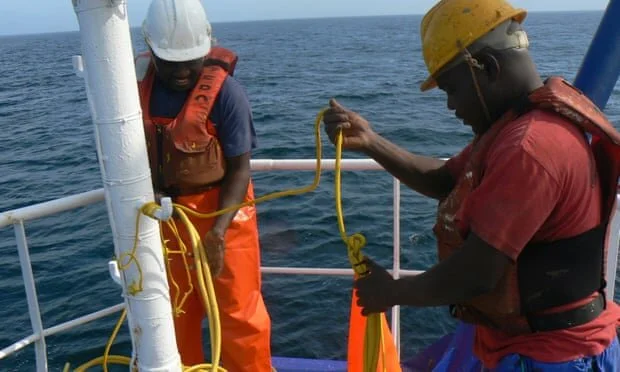
Crewmen attaching bird-scaring lines to an industrial trawler in Namibia. Photograph: RSPB

Crewmen attaching bird-scaring lines to an industrial trawler in Namibia. Photograph: RSPB

A cheap and simple change to the equipment used by Namibian fishing boats is saving tens of thousands of vulnerable seabirds annually, researchers have estimated.

Some industrial fleets often use long lines fitted with thousands of baited hooks, which attract seabirds. In attempting to snatch away the bait, the birds can become tangled in the lines and die.

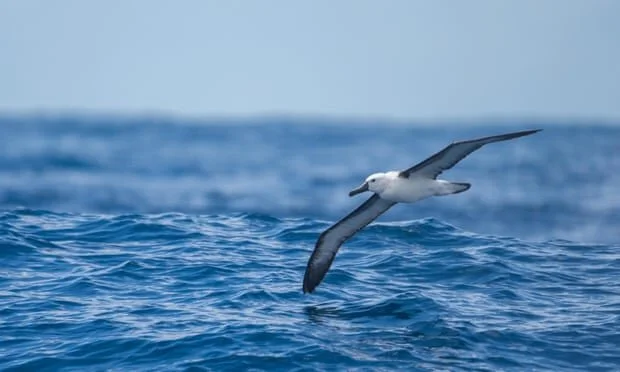
Atlantic yellow-nosed albatross Photograph: EduardoMSNeves/Alamy Stock Photo

Atlantic yellow-nosed albatross Photograph: EduardoMSNeves/Alamy Stock Photo

But by fitting pieces of red or yellow hosepipe, each a few metres long, to the lines towed behind boats, they have succeeded in scaring away the birds and preventing huge numbers of deaths, according to a study in the Biological Conservation journal.

More than 22,000 birds were estimated to have been accidentally killed by long-line fishing gear in 2009. But just 215 are thought to have died in 2018, despite boats using more hooks that year.

Among the many species to have benefited are white-chinned petrels, Atlantic yellow-nosed albatrosses and cape gannets, whose populations are all declining.

“In many other areas where I work where we lose threatened species, it would be unheard of to reduce mortality by 90% over a decade,” said co-author Steffen Oppel at the RSPB Centre for Conservation Science in Cambridge. He and his team used data from onboard surveys of Namibian shipping vessels to gauge the overall number of seabird deaths annually.

The waters off Namibia’s coast are rich in nutrients and support an abundance of marine life. For seabirds, it is a crucial feeding ground.

But, in the past, boats would sometimes collect boxes full of dead birds that had snagged themselves on fishing lines.

“The fact that we have done something about it … that gives me a great sense of joy and achievement,” said the report’s co-author, Titus Shaanika of BirdLife International’s Albatross Task Force in Namibia.

The use of bird-scaring devices on fishing lines became mandatory in Namibia in 2015.

Shaanika added that the local industry is generally supportive of methods to cut bird deaths, partly because of the relatively low cost. Installing hosepipe streamers on a long fishing line costs about N$4,000, or £200.

Besides the colourful hosepipe, which is prepared by a team of five women working at the port of Walvis Bay, conservationists have also promoted the use of weights attached to the baited hooks. These cause the hooks to sink to 10 metres or more below the surface – too deep for seabirds to reach when diving.

“I think it’s a real success story,” said Prof Ed Melvin at the University of Washington, who was not involved in the research but who has designed bird-scaring line systems.

Experiments going back decades show the effectiveness of such methods, he added, but it is rare to find a case study proving that they work on such a scale.

Because albatrosses do not begin to breed until later in life – and even then only sparingly – their populations are particularly sensitive to adult deaths, Melvin said. This was why efforts to protect them are so important.

Namibia’s trawler ships – which drag nets through the water to catch fish – have also switched to using streamers on their gear. The study found that the number of birds killed had fallen although the reduction was not as dramatic as for ships using long, baited lines.

The study authors suggest that this was likely down to the fact that some crews are reluctant to use bird-scaring lines in case they get tangled in their fishing gear.

Shaanika said his group was now working with trawlers to install equipment that would reduce the chance of this happening. “It just shows how much we can achieve if we work together and listen to each other,” he said.

THE GREEN ROOM (Episode 9): Ami Vitale on SUSTAINABLE PHOTOGRAPHY (When Pictures Tell Stories for Change)

GREEN ROOM: LIVE WEBINAR


Summary of the Discussion

The Moderator kicked off the discussion with the introduction of our guest Ami Vitale, an Award-winning Photojournalist with the National Geographic Magazine. Ami Vitale talked about her early career as a Journalist and the need to be determined in the face of despair.  She shared amazing stories of her project on Northern White Rhinos, a project that was first rejected but today has attracted attention from different parts of the world and the Save Giraffe Now project, both from Kenya.  Ami also advised upcoming creatives on the need to gain different skills that will help them achieve their unique vision. She also expatiates on the importance to be ethical and unbiased in journalism.


LISTEN TO PODCAST

ABOUT THE SPEAKER

Nikon Ambassador and National Geographic Magazine photographer Ami Vitale has traveled to more than 100 countries, bearing witness not only to violence and conflict, but also to surreal beauty and the enduring power of the human spirit.

Nikon Ambassador and National Geographic Magazine photographer Ami Vitale has traveled to more than 100 countries, bearing witness not only to violence and conflict, but also to surreal beauty and the enduring power of the human spirit.

Read full bio

ABOUT THE MODERATOR

Dr. Jason J. McSparren is an educator, researcher, and administrator with a PhD. in Global Governance and Human Security from Massachusetts Boston. He is also a Pre-Doctoral Fellow (2017-18) for the West African Research Association (WARA).

Dr. Jason J. McSparren is an educator, researcher, and administrator with a PhD. in Global Governance and Human Security from Massachusetts Boston. He is also a Pre-Doctoral Fellow (2017-18) for the West African Research Association (WARA).

read full bio

QUESTIONS AND ANSWER

Jason McSparren: Yes, please ask questions. We know that we've got a really interesting audience on this fantastic topic. Okay. So, let's see. We have a question here. Okay. This is actually a statement right here. We have a question from Paulina Ondarza. And she asks, this is she says this is so powerful and inspiring. Loved that you pointed out that often, the solutions or a second half of the story is left out. How do you interact? How do you turn a tragic story into one of hope doing it justice on both sides? So how would you approach that as a Storyteller as a Photojournalist?


Ami Vitale: Thank you. That's such a great question. I mean, I think that the immediate thing is to like feel the sense of despair when you, there are days I mean to be totally honest, there are days it's hard to get out of bed. Truly, you just look at the world like, oh my God, I don't even know, it's like one thing and the next thing and you just think it can't get any worse and then it does right? I literally sometimes just have to channel that despair into and I remember I mean, I have the privilege of meeting the people on the ground and I realized when you actually think about it, there is no other answer than having hope and then looking at the people the real heroes on the ground and I think you know there are answers and we have all the capacity to turn this around. If you think about the amount of money and things that we spend our money on and the things that we put our importance on. I mean if you channelled just a percentage of what we value in today's world and channelled it back into these causes and people in organizations and institutions, we got this and I think people are incredibly smart.

 It's really about what we choose to prioritize and I think as storytellers, it's up to us to not just get overwhelmed by the despair and give up. We have to actively seek out the solution and I see this happening all the time, where journalists and writers will write these beautiful stories, but then we don't give people, we don't point them in the right direction, and I know that there was always this question when I was growing up and studying journalism. It was like don't cross that ethical line like you're not an activist and I'm I agree, you know, my role is not to be the activist. I'm the Storyteller, but I also think that it's not enough to just point out the challenges and leave it there. What next, like you got to point people to the institutions, give the viewpoint from all sides, a multitude of viewpoints is very important, but then you know, definitely it's okay to point out who's doing this work and give you know, give the credit where the credit's due.

I think often journalists kind of insert themselves inside the story and that's okay. But remember to make it about the people that, you're writing about does that kind of answer it


Jason McSparren: I would think so and actually just want to say that the way that you approach that answer kind of touched on a question that I was going to ask earlier and I just want to ask the question at respectively and make a comment because on your website, which is a really interesting website to take a look at amivitale.com. In one of the stories toward the end, Ami mentions that she uses her photography to amplify the voices of others and I think you just explain that whole sentiment in that motivation in your previous comment, but I just think that it's really important that because I saw in the comment, somebody's asking what is your motivation? And I think that is an element of your motivation. It's really you as you said early like to be behind the camera out of the spotlight and really amplifying and elevate the actions and the motivations in the voices of other people doing really interesting and important work.


Ami Vitale: Yeah, I think you get to a certain point the motivations is I've been really blessed to see all these different things in life and you get to a certain point where you just start to see the connections between all of humanity, all of the natural world and that it isn't just about you know, there's a sense of humility that I think comes after a certain time where you just filled with gratitude and wanting to make the connections, realizing that we're a blip on this planet, we are a blip in time. What we do right now matters not just for us but truly like you just get the sense of the internal nests of this planet, and I know that sounds lofty, but it's really true and I think nature reminds us of that. I mean you get out in nature and it's humbling. It's deeply humbling

Download full transcript

Favourite Quote

All stories of humanity are always related to the stories of the natural world, our environment.
— Ami Vitale
The People, the indigenous people living with the wildlife...Honestly, they hold the key to saving what is left, they are the greatest protector of what is left.
— Ami Vitale
Almost every story has been told in a variety of different ways, but only you can bring back your unique vision and your unique way and bring frankly, your unique access.
— Ami Vitale

Top Comment

Thank you Ami for sharing your vision, passion and inspiration- Michelle

Hello from Atlanta and a former Seattleite for 30 years. As another female photographer for 32 years, I have seen you speak at a Nat Geo lectures as well as watched your career grow. I wanted to tell you how much I have admired your perseverance. I really appreciate the conservation angle you have taken along with your statements against social media. Thank you!- Dani Weiss

​Happy to be here and listen to Ami. Thanks Green Institute for this opportunity. Greetings from Ukraine! ❤- MissKKate

Hi, Ami from Munich! I admire your work so much.- Kristina Assenova

Nice content learnt some good things-Thomas James


REGISTER FOR THE NEXT GREEN ROOM

Indonesia earthquake: dozens dead after tremors and landslides hit Sulawesi

Rebecca Ratcliffe

Indonesia earthquake: rescue workers search rubble with dozens reported dead – video

At least 34 people have been killed and hundreds injured following a strong earthquake that shook Indonesia’s Sulawesi island early on Friday morning, prompting landslides and destroying houses.

Thousands of people fled their homes to seek safety when the 6.2-magnitude earthquake hit just after 1am local time on Friday morning. The epicentre was six kilometres north-east of Majene city in West Sulawesi.

Hundreds of buildings have been destroyed or damaged, including a hospital, which has collapsed with more than a dozen patients and staff remain trapped beneath it.

“The hospital is flattened,” said Arianto, who goes by one name, from the rescue agency in Mamuju city, near to Majene. Rescuers were also trying to reach a family of eight buried beneath the rubble of their destroyed home, he added.

The death toll includes 26 people in Mamuju city. “That number could grow but we hope it won’t,” said Ali Rahman, head of the local disaster mitigation agency. “Many of the dead are buried under rubble.”

In Majene, four fatalities were reported earlier, while 637 others were said to be injured.

indo1.JPG

The full extent of the damage caused by the quake, which was 10 kilometres deep, is still emerging. Accessing affected areas is a challenge: roads are blocked, bridges have fallen and the local airport in Mamuju has also been damaged. Electricity is cut and phone lines are down.

Videos shared on social media showed panicked residents rushing to safety, and collapsed homes brought down by the quake. In one video, a father could be heard asking people to help rescue his children buried under rubble.

“My children there ... they are trapped inside, please help,” he said.

Footage released by the National Disaster Mitigation Agency showed a girl trapped in the wreckage of a house crying out for help. Her mother was alive but unable to move out, she said. “Please help me, it hurts,” the girl told rescuers.

Rescuers search for survivors at the Mitra Manakarra hospital in Mamuju city Photograph: FIRDAUS/AFP/Getty Images

Rescuers search for survivors at the Mitra Manakarra hospital in Mamuju city Photograph: FIRDAUS/AFP/Getty Images

Busrah Basir Maras, a teacher, 36, was sleeping at home in Malunda, Majene, when the earthquake hit. His family awoke him and they fled immediately on motorbike.

“It took six hours for me to drive my motorcycle [away from] the epicentre. But it was hard because there were many landslides. I was crying and I am still crying,” he told the Guardian.

His family were safe but the head of his village was killed under a collapsed building. Many people have died, he added: “They were sleeping and then buried in the collapsed building.”

Survivors who were still stuck in rubble at the epicentre needed medicines and trauma healing, he said.

People look at the damaged office of governor of West Sulawesi following an earthquake in Mamuju. Photograph: Antara Foto/Reuters

People look at the damaged office of governor of West Sulawesi following an earthquake in Mamuju. Photograph: Antara Foto/Reuters

Friday’s inland quake was felt strongly for about seven seconds. It did not trigger a tsunami warning, but people along coastal areas fled to higher ground as a precaution.

The head of Indonesia’s Meteorology and Geophysics Agency (BMKG), Dwikorita Karnawati, told a news conference that strong aftershocks could follow, and that another powerful quake could still trigger a tsunami.

In 2018, the city of Palu in Sulawesi was struck by a devastating 6.2-magnitude quake and tsunami that killed thousands of people.

At least 26 aftershocks have been recorded in the area over the past day. The same district was hit by a 5.9 magnitude quake on Thursday afternoon, which damaged several homes.

Indonesia, a nation of high tectonic activity, is no stranger to earthquakes. It is often struck by earthquakes, volcanic eruptions, and tsunamis because of its location on the “Ring of Fire”, an arc of volcanoes and fault lines in the Pacific Basin.

The response to Friday’s quake is complicated further by the coronavirus, which Indonesia has struggled to contain. The number of daily cases topped 10,000 this week.

“One of our biggest fears is exactly what’s going on right now – what happens when there’s a major event during a pandemic? It’s a perfect storm,” Jan Gelfand, Indonesia head, International Federation of Red Cross and Red Crescent Societies.

“If you have people who are evacuated, the risk [of infection] for those people goes up tremendously,” said Gelfand. “You don’t want to put people in more danger than they are already in.”

Sirajuddin, the Majene district’s disaster agency chief, said 10,000 people were in temporary shelters.

Rescuers search for survivors among the ruin of a building damaged by an earthquake in Mamuju Photograph: Daus Thobelulu/AP

Rescuers search for survivors among the ruin of a building damaged by an earthquake in Mamuju Photograph: Daus Thobelulu/AP

UN urges nations to scale up climate change adaptation to avoid major economic loss

Emma Newburger

Governments across the world must significantly scale up climate adaptation measures to avoid major economic damage from global warming, according to a new UN report.

  • Nearly 75% of nations have adopted some form of climate adaption. But major gaps remain in financing for developing countries, which are most vulnerable to rising temperatures, the report said.

  • Under the Paris Climate Agreement, nations are attempting to keep global warming well below 2 degrees Celsius (3.6 degrees Fahrenheit) compared with preindustrial levels.

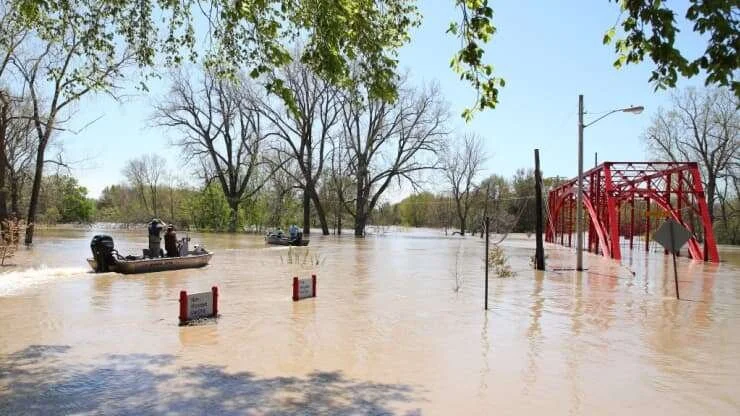
Residents in boats inspect the floodwaters flowing from the Tittabawassee River into the lower part of downtown on May 20, 2020 in Midland, Michigan.Gregory Shamus | Getty Images

Residents in boats inspect the floodwaters flowing from the Tittabawassee River into the lower part of downtown on May 20, 2020 in Midland, Michigan.

Gregory Shamus | Getty Images

Governments across the world must significantly scale up climate adaptation measures to avoid major economic damage from global warming, according to the fifth edition of the UN Environment Programme Adaptation Gap report.

Nations must put half of all global climate financing towards adaptation in the next year in order to avoid the worst impact of climate change, according to the report published on Thursday. In 2020, the hottest year on record, on par with 2016, the world experienced record-breaking hurricanes and wildfires that continue to intensify as temperatures rise.

Such a commitment would include investing in nature-based solutions to mitigate climate change, such as practices like replanting trees on degraded land, sequestering more carbon in soil through agricultural practices and protecting forests through changing logging practices.

Nearly 75% of nations have adopted some form of climate adaption. But major gaps remain in financing for developing countries, which are most vulnerable to rising temperatures, as well as projects that have notably reduced climate risk, the report said.

The UN estimated that yearly climate adaption costs could reach between $140 billion and $300 billion by the end of the decade and between $280 billion and $500 billion by 2050, and concluded that global action is lagging far behind.

And while climate adaption projects are on the rise, the ongoing surge in global carbon emissions is putting those projects in jeopardy.

Under the Paris Climate Agreement, the global pact forged five years ago among nearly 200 nations, governments are attempting to keep global warming well below 2 degrees Celsius, or 3.6 degrees Fahrenheit, compared with preindustrial levels.

The world is still on track for temperatures to rise over 3 degrees Celsius, or 5.4 degrees Fahrenheit, this century.

The report said that achieving the 2 degrees Celsius target could limit economic loss in annual growth of up to 1.6%, compared with 2.2% for warming of 3 degrees Celsius and urged nations to update their targets under the Paris accord to include new net-zero carbon goals.

“The hard truth is that climate change is upon us,” Inger Andersen, executive director of UNEP, said in a statement. “Its impacts will intensify and hit vulnerable countries and communities the hardest – even if we meet the Paris Agreement goals.”

The report also called for governments prioritize climate change in their Covid-19 economic recovery plans, including a shift away from fossil fuels and toward investing in green technologies and restoring ecosystems.

The world’s largest economies have committed more than $12 trillion in recovering economies, according to the International Monetary Fund.

Scientists decry death by 1,000 cuts for world’s insects

Associated Press

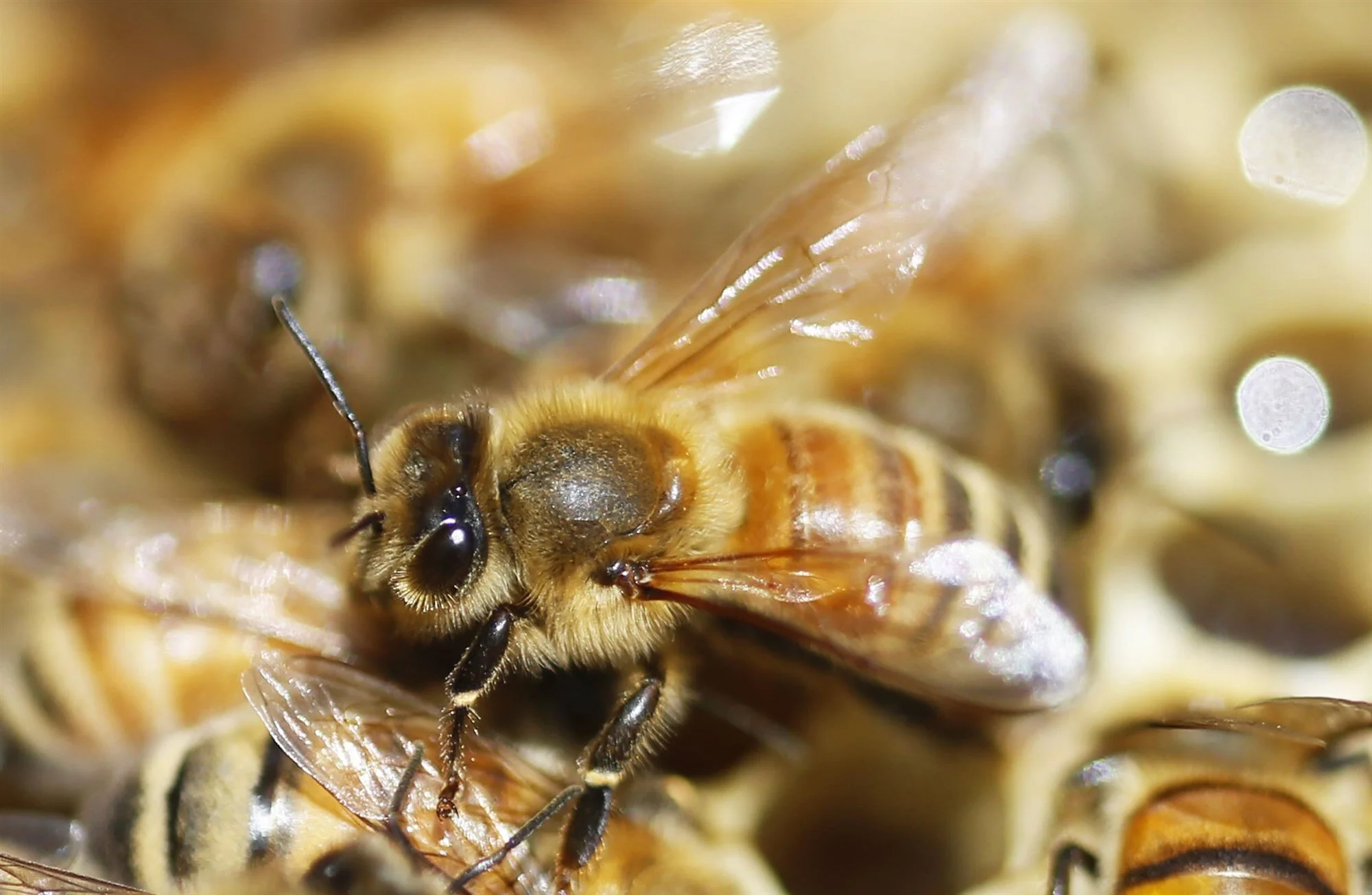
Honeybees at beekeeper Denise Hunsaker's apiary in Salt Lake City on May 20, 2019.Rick Bowmer / AP

Honeybees at beekeeper Denise Hunsaker's apiary in Salt Lake City on May 20, 2019.Rick Bowmer / AP

A package of 12 studies by 56 scientists around the globe lays out the threats to insects — and why it's bad news for Earth.

The world’s vital insect kingdom is undergoing “death by a thousand cuts,” the world’s top bug experts said.

Climate change, insecticides, herbicides, light pollution, invasive species and changes in agriculture and land use are causing Earth to lose probably 1 percent to 2 percent of its insects each year, said University of Connecticut entomologist David Wagner, lead author in the special package of 12 studies in Monday’s Proceedings of the National Academies of Sciences written by 56 scientists from around the globe.

The problem, sometimes called the insect apocalypse, is like a jigsaw puzzle. And scientists say they still don’t have all the pieces, so they have trouble grasping its enormity and complexity and getting the world to notice and do something.

Wagner said scientists need to figure out if the rate of the insect loss is bigger than with other species. “There is some reason to worry more,” he added, “because they are the target of attack” with insecticides, herbicides and light pollution.

Co-author and University of Illinois entomologist May Berenbaum, a National Medal of Science winner, said, “Insect decline is kind of comparable to climate change 30 years ago because the methods to assess the extent, the rate (of loss) were difficult.”

Making matters worse is that in many cases, people hate bugs, even though they pollinate the world’s foods, are crucial to the food chain and get rid of waste, she said.

Insects “are absolutely the fabric by which Mother Nature and the tree of life are built,” Wagner said.

Two well known ones — honeybees and Monarch butterflies — best illustrate insect problems and declines, he said. Honeybees have been in dramatic decline because of disease, parasites, insecticides, herbicides and lack of food.

Climate change-driven drier weather in the U.S. West means less milkweed for butterflies to eat, Wagner said. And changes in American agriculture remove weeds and flowers they need for nectar.

“We’re creating a giant biological desert except for soybeans and corn in a giant area of the Midwest,” he said.

Monday’s scientific papers don’t provide new data, yet show a big but incomplete picture of a problem starting to get attention. Scientists have identified 1 million insect species, while probably 4 million more are still to be discovered, Berenbaum said.

University of Delaware entomologist Doug Tallamy, who wasn’t part of the studies, said they highlight how the world has “spent the last 30 years spending billions of dollars finding new ways to kill insects and mere pennies working to preserve them.”

“The good news is, with the exception of climate change, individuals can do much to reverse insect declines,” Tallamy said in an email. “This is a global problem with a grassroots solution.”

Plan for the future now or Covid will last for years, UK scientists warn

Robin McKie

Ambulances at the Royal London Hospital on Saturday 9 January. Photograph: Simon Dawson/Reuters

Ambulances at the Royal London Hospital on Saturday 9 January. Photograph: Simon Dawson/Reuters

Senior British scientists have warned that a lack of long-term planning in the battle against Covid is leaving the nation vulnerable to major outbreaks of the disease for at least another year.

The rollout of vaccines currently under way would cut hospital admissions and deaths among the old and vulnerable, they said, but it would still leave many other people at risk of being infected and suffering from the long-term effects of the disease.

Even though millions of doses of vaccine are being administered, serious outbreaks of Covid-19 are likely to continue throughout the year and into next year. These issues should be the focus of careful planning now, the scientists warned.

“Having 20 million people vaccinated is likely to reduce numbers of cases but we must not forget that this is a highly transmissible virus and if we do not continue with social measures, it will soon whip round communities again and cause havoc,” said Liam Smeeth, professor of clinical epidemiology at the London School of Hygiene & Tropical Medicine.

“I can understand the short-term panic that is going on at present as hospital cases rise so quickly but I am amazed at the sheer lack of long-term strategy there has been for dealing with Covid,” he told the Observer. “I can see no signs of any thinking about it.”

This view was backed by Mark Woolhouse, professor of infectious disease epidemiology at Edinburgh University. “This epidemic would have unfolded very differently and in a much happier way if we had accepted, back in February, that we were in this for the long term,” he said. “However, the view that it was a short-term problem prevailed.

“It was thought we could completely suppress the virus, and that is why we are in the mess that we are in now.”

The idea that the virus could be eradicated was a costly mistake, said Martin Hibberd of the London School of Hygiene & Tropical Medicine. “We have to understand Covid-19 is going to become endemic. The virus will not disappear. We are not going to eradicate it. Even if every human on Earth was vaccinated, we would still be at risk of it coming back.”

Several other issues still have to be resolved, added Hibberd. These include concerns about how long vaccines provide protection and how new variants might evade vaccine protection. “We might be lucky and find the virus does not change very much and vaccine cover is not affected, causing the virus level to drop to low prevalence,” Hibberd said.

“However, the virus might turn out to be as good as influenza at changing its coat. In that case, we will end up having to make new vaccines and distribute them every year. We should be thinking about that problem now.”

The prospect of restrictions being enforced for many months was also raised by Anne Johnson, an epidemiologist at University College London. “In March, we are still going to be under restrictions which will have to be imposed for months after that. What happens in autumn will depend on our success in keeping the virus down over the summer,” she said.

“We will also need to analyse how much virus there is in the community and calculate what antibody levels have been triggered by natural infections and by vaccination. These are going to be very important in determining the spread of the virus next winter.”

Smeeth argued that social distancing measures could possibly have to continue until next winter and warned of the dangers of new virus mutations evading vaccine protection. “Sadly, I feel we are very far from being out of this epidemic,” he said. “It is possible the virus could mutate tomorrow to become harmless. That is not a totally naive hope.

“But having said that, so far all we have discovered are mutations that actually made it more infectious and that is something we should be preparing to deal with – though I don’t see much sign of that happening.”

Baby sharks emerge from egg cases earlier and weaker in oceans warmed by climate crisis

Graham Readfearn

A baby epaulette shark – an egg-laying shark that is unique to the Great Barrier Reef. New research found they spent up to 25 days less in their egg cases under higher ocean temperatures. Photograph: E Moothart

A baby epaulette shark – an egg-laying shark that is unique to the Great Barrier Reef. New research found they spent up to 25 days less in their egg cases under higher ocean temperatures. Photograph: E Moothart

Baby sharks will emerge from their egg cases earlier and weaker as water temperatures rise, according to a new study that examined the impact of warming oceans on embryos.

About 40% of all shark species lay eggs, and the researchers found that one species unique to the Great Barrier Reef spent up to 25 days less in their egg cases under temperatures expected by the end of the century.

A Shark @alexxsheyn

A Shark @alexxsheyn

The extra heat caused embryonic epaulette sharks to eat through their egg yolks faster and when they were born, the rising temperatures affected their fitness.

“This is a huge red flag for us,” said Dr Jodie Rummer, an associate professor at the ARC Centre of Excellence for Coral Reef Studies at James Cook University and a co-author on the study.

Weaker sharks were less efficient hunters, Rummer said, which could then have a knock-on effect across the coral reefs where they live, upsetting the balance of the ecosystem.

“Sharks are important as predators because they take out the weak and injured and keep the integrity of the population strong,” Rummer said. “Healthy coral reefs need healthy predators.”

Epaulette sharks grow to about one metre and live in the shallow waters of the Great Barrier Reef. Females lay leathery egg cases, known by some as a “mermaid’s purse”.

Researchers monitored 27 epaulette egg cases at the New England Aquarium in Boston. Some were reared in waters at 27C – a current average summer – and two other groups were reared at either 29C or 31C.

Because the egg cases are translucent, researchers can see the sharks developing and how quickly they are eating the egg yolk. Warmer temperatures saw them eat the yolk faster.

In normal temperatures, the sharks emerged from the egg cases after 125 days. But in 31C waters, they emerged after 100 days. The researchers also measured the fitness of the baby sharks, and found that it peaked at 29C but then fell sharply at 31C.

Lead author Carolyn Wheeler, also at James Cook University, said: “The hotter the conditions, the faster everything happened, which could be a problem for the sharks.”

She said the results of the study, published Tuesday in the journal Scientific Reports, presented a “worrying future” because many sharks were already under threat.

A study of tropical reef sharks released last year found they were likely to become functionally extinct on about 20% of reefs around the globe.

Rummer said: “This is just one species, but we have been studying them since 2012. They’re pretty tough because they have to endure fluctuating conditions on the reef flats that are really challenging already.”

She said studies looking at ocean acidification and falling oxygen levels found the epaulettes could withstand those conditions, “but temperature seems to be a big problem for them”.

“If they can’t hack it, then we have big problems. We have to emphasise the importance of curbing our reliance on fossil fuels because climate change is affecting even the toughest little sharks.”

Rummer said the study suggested there were three likely outcomes for egg-laying sharks as waters got warmer.

First, they could try and populate areas with cooler temperatures, but only if they could find the right habitat.

Second, they could adapt genetically to the warmer temperatures, but this was unlikely because sharks were slow to reproduce and slow to get to sexual maturity.

“There are not enough generations that could go by for that adaptation to take effect to keep up with the way we are changing the planet,” she said.

A third outcome, Rummer said, was “these species disappear off the planet”.

She said her team was now studying the impacts of warming oceans on pregnant female sharks to see how warmer waters affected them.

Nigeria cattle crisis: how drought and urbanisation led to deadly land grabs

Orji Sunday

A huge expansion of farming in Nigeria has cut access to grazing land for nomadic herders and fuelled violence. Photograph: Luis Tato/AFP/Getty

A huge expansion of farming in Nigeria has cut access to grazing land for nomadic herders and fuelled violence. Photograph: Luis Tato/AFP/Getty

The death toll of animals and humans is mounting as herders seeking dwindling reserves of pasture clash with farmers

In February last year, Sunday Ikenna’s fields were green and lush. Then, one evening, a herd of cattle led into the farm by roving pastoralists crushed, ate, and uprooted the crops.

“I lost everything. The situation was sorrowful, watching another human being destroy your farm,” says Ikenna, a father of 10 who farms in Ukpabi-Nimbo in Enugu state, southern Nigeria. “I farmed a smaller portion this year because I am still scared of another invasion.”

Ikenna’s experience is not an isolated event. In the past few years there have been a growing number of skirmishes between farmers and cattle herders searching for pasture and water.

For many years the clashes were problematic, but the two groups usually managed to reach a mutual accommodation. But in the past two decades, the climate crisis has contributed to altering that old order, and what used to be a friendly arrangement has become a crisis marked by looting, raids, cattle rustling and premeditated killings.

In 2016, Ukpabi-Nimbo, Ikenna’s community, was attacked, allegedly by cattle herders, resulting in the death of 46 people, according to one local media report. “Nimbo will never be the same after that morning,” Ikenna says of the attack.

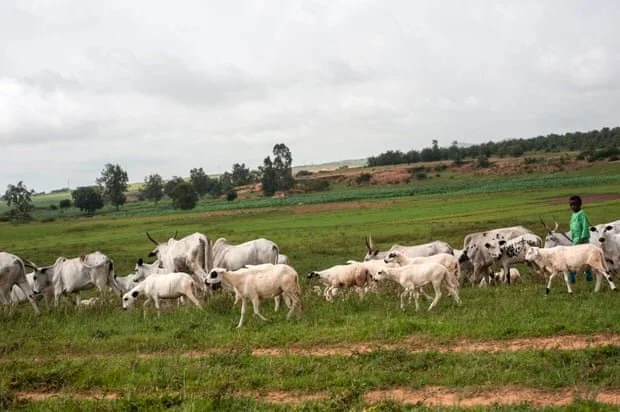
At the root of the crisis, according to experts, is Nigeria’s teeming cattle population, which has more than doubled from an estimated 9.2 million in 1981 to around 20 million, making it one of the world’s largest.

Nigeria’s cattle population has doubled since 1981, leading to a rise in clashes over water and grazing land. Photograph: Stefan Heunis/AFP/Getty

Nigeria’s cattle population has doubled since 1981, leading to a rise in clashes over water and grazing land. Photograph: Stefan Heunis/AFP/Getty

Nigeria’s human population has grown too, to about 200 million, the highest in Africa by far. This has led to cities sprawling ever larger and wider, in some cases into formerly designated cattle routes and reserves. Routes that dated back to the 1950s, in line with colonial arrangements, have either been overrun or dominated by new human settlements – pushing herders further into contested territories.

Grazing space that should accommodate only 10 cattle is now being grazed by 50 or more.
— Ifeanyi Ubah

In rural communities, smallholder farmers are claiming large swathes of grazing land. “It means that grazing space, for example, that should originally accommodate only 10 cattle is now being grazed by 50 or more,” says Ifeanyi Ubah, a cattle rancher based in eastern Nigeria.

Nigeria is, moreover, a crossroads for cattle from other countries: transhumance migrants from Cameroon, Niger, Burkina Faso and Chad routinely pass through in search of better climate, pasture and more plentiful water. Though there are fewer than 100 official border crossings into the country, Abba Moro, an ex-government official who headed the ministry of interior, was quoted as saying that there were more than 1,499 illegal entry routes into the country as of 2013.

Terrorist groups have become involved in the situation. Boko Haram has been accused of using money obtained from the sale of rustled cattle to fund its deadly operations. On one occasion, Boko Haram militants killed 19 herders as they attempted to steal their cattle. A rising number of attacks has led to the reported loss of two million cattle and the death of 600 herders, many of whom have been forced to vacate the fertile Lake Chad basin in search of new lands.

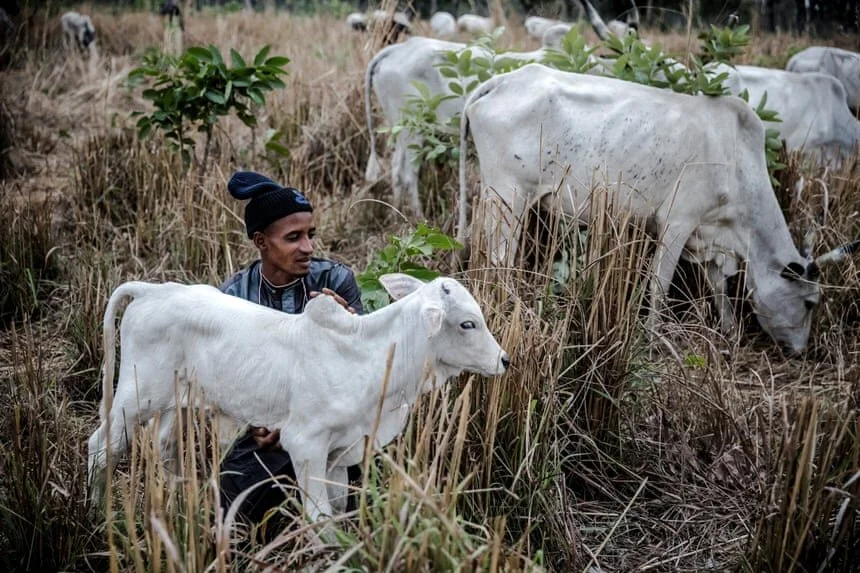
A Fulani herdsman tends a calf, Kaduna state. Such grazing reserves have been set aside for nomadic pastoralists to reduce conflict. Photograph: Luis Tato/AFP/Getty

A Fulani herdsman tends a calf, Kaduna state. Such grazing reserves have been set aside for nomadic pastoralists to reduce conflict. Photograph: Luis Tato/AFP/Getty

But the climate crisis is the biggest factor driving tensions. Most parts of northern Nigeria have suffered severe desertification and drought. Mean annual rainfall in this region has dropped below 600mm, compared with 3,500mm in the south coast area.

This change threatens the livelihoods of around 40 million people, especially livestock and smallholder farmers. Large numbers of cattle herders are being forced to move from traditional grazing areas to central and southern Nigeria when dry periods start – a situation that heightens competition and heralds more clashes.

“While growing up, I saw trees, forest, rivers and streams in most parts of northern Nigeria. The grasses grew and it was more than enough for the cattle,” says Bala Ardo, one of the leaders of cattle herders in south-east Nigeria. “But it’s no more. The situation has forced the average herder to seek pasture and water in places they never would have visited in the past, as he struggles to find drinkable water for himself and family and then his animals.”

The government, meanwhile, has only taken piecemeal action. In 2018, the federal government proposed colonies for cattle and funded grazing camps across various states in the country. But local leaders were resistant, and fears grew in the south in particular that ethnic groups such as the Muslim Fulani would use the scheme to grab land. Some researchers estimate that the members of the Fulani ethnic group own 90% of Nigeria’s livestock.

As the climate crisis continues, the government has set up the National Livestock Transformation Plan, which aims to modernise the livestock sector through a series of phased interventions from 2018 to 2027. Ranches for breeding and processing will be created, and several pilot projects have already been established. But this plan, too, is encountering difficulties. According to Khalid Salisu, a journalist in one of the pilot project regions, “It doesn’t serve the needs of cattle herders adequately. The herders in the ranches are struggling to find enough water and pastures to keep their herds alive during the dry season.”

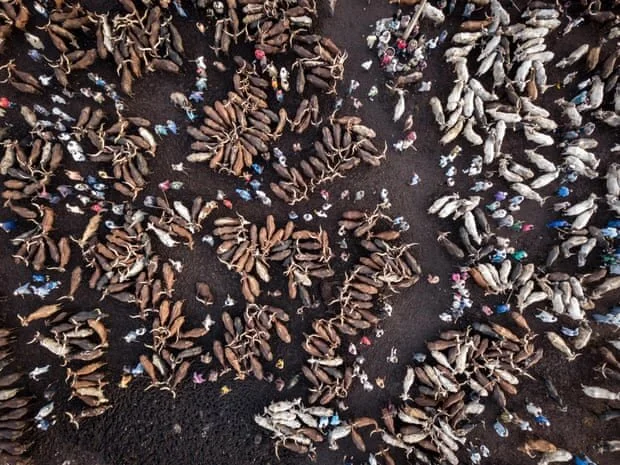
Kara cattle market in Lagos receives thousands of cows every week due to the huge consumption of meat in the Lagos area. Photograph: Florian Plaucheur/AFP/Getty

Kara cattle market in Lagos receives thousands of cows every week due to the huge consumption of meat in the Lagos area. Photograph: Florian Plaucheur/AFP/Getty

In the absence of effective solutions from the central government, states and communities are proposing various remedies. In Benue state, southern Nigeria, for example, legislation in 2017 banned open cattle grazing. The law required herders to rent or buy lands to host their ranches.

The heart of the problem is the need to persuade herders to give up treating land and water as a free resource. It will be difficult to persuade them to move to capital-intensive ranching, said Ubah.

The herdsmen, for whom the policies are meant, should be directly involved.
— Abubakar Sambo

Abubakar Sambo, the leader of the northern community in Enugu state, says the herders must be consulted before fresh initiatives are launched. “The policies received by cattle herders largely on radio and television cannot work. The herdsmen, for whom the policies are meant, should be directly involved.” He believes younger herders need to be educated and sent to study model ranching systems in other countries.

“What the herders have achieved [cattle population growth] despite all the challenges is remarkable. It shows the huge potential of the livestock sector,” says Ardo. “Imagine what the result could be if the government put the right structure and policies in place.”

Sign up for the Animals farmed monthly update to get a roundup of the best farming and food stories across the world and keep up with our investigations. You can send us your stories and thoughts at animalsfarmed@theguardian.com

Lessons from 2020: Reconnecting with nature, a force for good

Nick Clark

After the challenges of the last year, 2021 must be a year of climate action that helps us reshape and restore the planet and our place in it.

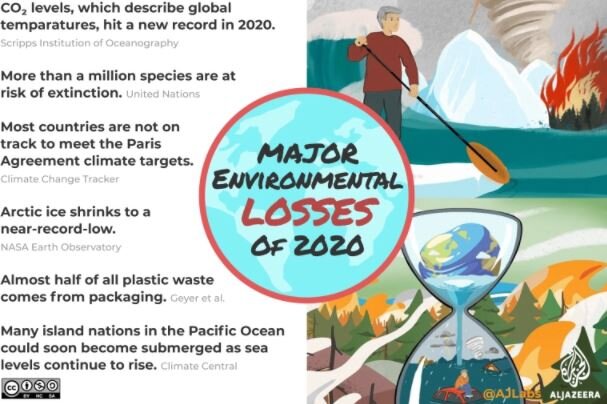
Muaz Kory/Al Jazeera]

Muaz Kory/Al Jazeera]

As we stumble into 2021, it was salutary to read of an inspiring wildlife encounter experienced by the famous naturalist and broadcaster, Sir David Attenborough.

Now 94 years old, he has witnessed the planet’s most extraordinary animals thriving in their natural habitats in all the far corners of the world. But this happened on his own London doorstep.

Like many others, the pandemic has led to long periods confined at home, which meant Attenborough finally properly experienced the birdsong in the garden of his own home.

From spring through to autumn he sat outside and made a determined effort to identify every species he could hear. Thrushes, jays, blue tits and blackbirds.

Of course, this has not just been an experience for the world’s most renowned observer of wildlife. In a dispiriting year, our enforced reconnection with nature at home has been boon for many across the planet.

“A lot of people have suddenly realised what deep, profound joy can come from witnessing the rest of the world – the natural world,” Attenborough said in September.


“We realised our dependency, emotionally and intellectually, on nature in a way we haven’t before,” he said this month.

green1.JPG

Seize the moment

That realisation is a powerful force to carry with us as we step into the opportunities of 2021. It reminds us that emerging from COVID-19, and all the attendant sadness, tragedy and confinement, can lead us to a better place. As Winston Churchill famously said: “If you’re going through hell, keep going.”

And hell it has been. As the pandemic raged, 2020 has also been the year of climate breakdown. Across the world heatwaves, hurricanes, floods and drought have been compounded by biblical plagues of locusts.

But the world’s attention has at last swivelled on to the problem of the climate emergency.

The year 2021 has to count, it has to be the year of action, to take us on the road to a sustainable and zero-carbon future.

Wildlife conservation

The lesson of our relationship with nature has brought into focus how its deterioration can lead to zoonotic diseases like COVID-19; and elsewhere it’s reminded us how we need to reshape the way we police and manage wildlife and its conservation – especially in Africa.

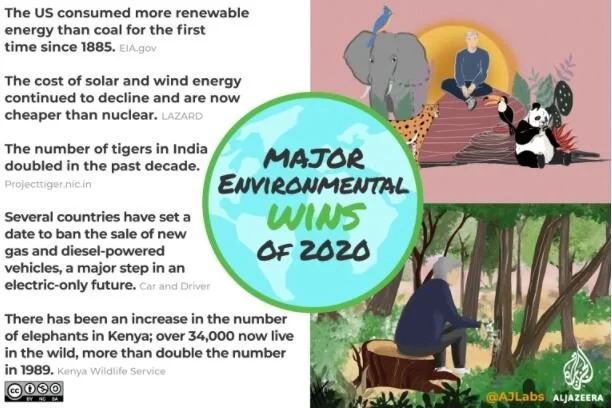
We know conservation works. Just this month, a small group of cheetahs were relocated to the Bangweulu Wetlands in Zambia, the first of their species to return to the unique community-owned wetland in almost a century.

And there has been an increase in the number of elephants in Kenya; over 34,000 now live there, more than double the number in 1989.

Plus, the Kenyan government estimates the number of lions living in the country has increased by 25 percent – from 2,000 in 2010 to 2,489 now.

green2.JPG

Reimagine the future

But as we re-strategise for post-COVID recovery, there is a growing realisation that safeguarding the environment must be at the heart of development plans.

For example wildlife tourism in Africa must not be just the domain of the rich westerner.

“We need to promote domestic and regional tourism within Africa,” said Kaddu Sebunya of the African Wildlife Foundation. “It is high time we market Africa to Africans at affordable and flexible budgets that will encourage them to embrace their heritage.”

A grim year it has been. But it’s also been a time for reflection, reconnection and re-imagining a very different future, that can reshape and restore us and the planet we live and rely on.

Your environment round-up

1. Hottest year on record?: Last month was the second hottest November ever recorded. If December temperatures show a similar trend, 2020 is on track to be the warmest year the world has ever seen.

2. Ski resorts in eye of climate storm: Developers in Austria are meeting local resistance to plans to demolish part of the Alps to build a ski resort. This while a warming climate endangers the snowy region and the local way of life.

3. All the answers on climate change: What is the Paris Agreement? How much trouble is the earth in? To demystify global warming, here is a helpful list of 17 climate questions with some straightforward answers.

4. Call the cavalry: Police horses rescue inner-city garden: In London, a community garden could not find livestock to help stamp in autumn seeds. But they got help from the next best thing: police horses.

The final word

We shall draw from the heart of suffering itself the means of inspiration and survival.
— WINSTON CHURCHILL

Coronavirus variants and mutations: The science explained

Helen Briggs

The rapid spread of coronavirus variants has put the world on alert and triggered a new lockdown in the UK. What are these variants and why are they causing concern?

All viruses naturally mutate over time, and Sars-CoV-2 is no exception.

Since the virus was first identified a year ago, thousands of mutations have arisen.

The vast majority of mutations are "passengers" and will have little impact, says Dr Lucy van Dorp, an expert in the evolution of pathogens at University College London.

"They don't change the behaviour of the virus, they are just carried along."

  • New coronavirus variant: What do we know?

  • Are mutations making coronavirus more infectious?

But every once in a while, a virus strikes lucky by mutating in a way that helps it survive and reproduce.

"Viruses carrying these mutations can then increase in frequency due to natural selection, given the right epidemiological settings," Dr van Dorp says.

This is what seems to be happening with the variant that has spread across the UK, known as 202012/01, and a similar, but different variant, recently identified in South Africa (501.V2).

Getty Image: Hundreds of thousands of viral genomes have been analysed across the world

Getty Image: Hundreds of thousands of viral genomes have been analysed across the world

There is no evidence so far that either causes more severe disease, but the worry is that health systems will be overwhelmed by a rapid rise in cases.

In a rapid risk assessment of these "variants of concern", the European Centre for Disease Prevention and Control said they place increased pressure on health systems.

"Although there is no information that infections with these strains are more severe, due to increased transmissibility, the impact of Covid-19 disease in terms of hospitalisations and deaths is assessed as high, particularly for those in older age groups or with co-morbidities," the EU agency said.

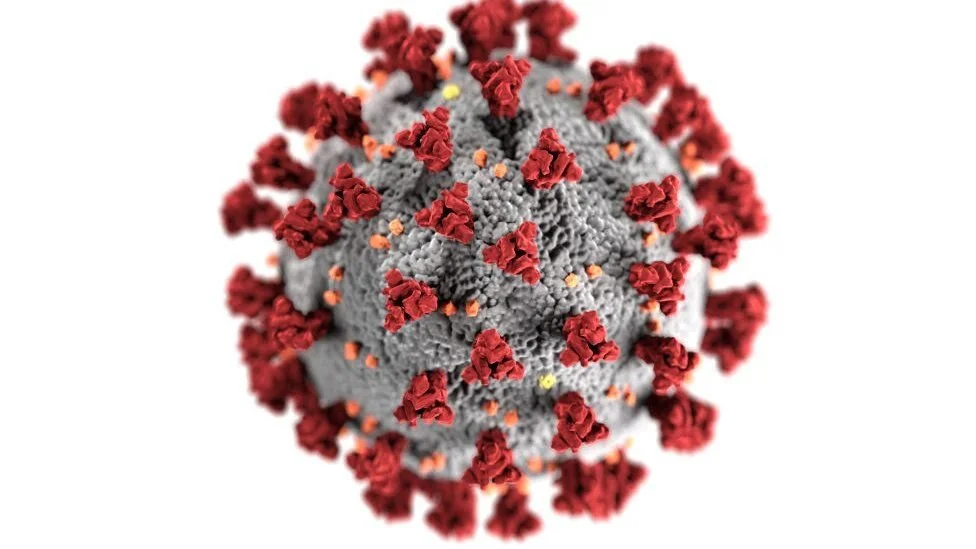
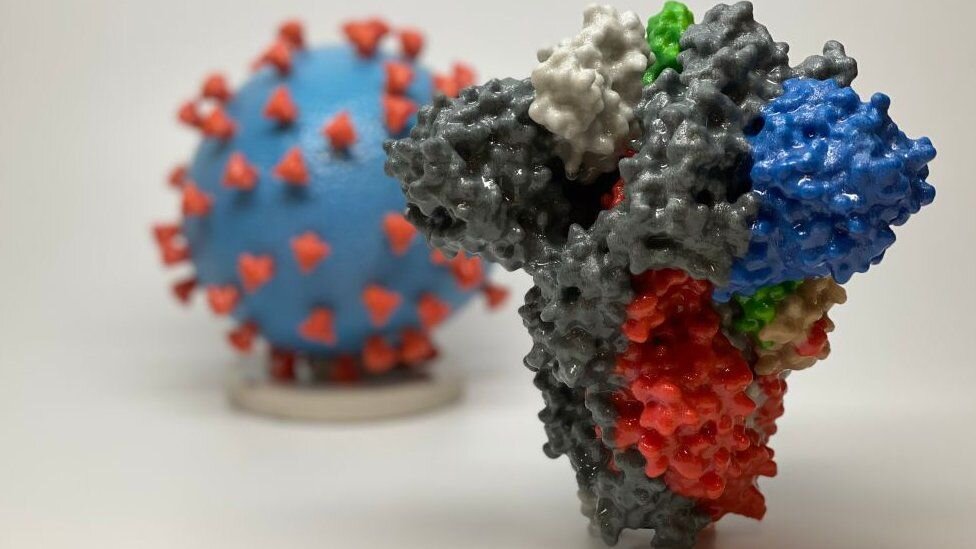
The variants have different origins but share a mutation in a gene that encodes the spike protein, which the virus uses to latch on to and enter human cells.

  • South Africa coronavirus variant: What's the risk?

  • UK has two cases of variant found in South Africa

Scientists think this could be why they appear more infectious.

"The UK and South African virus variants have changes in the spike gene consistent with the possibility that they are more infectious," says Prof Lawrence Young at the University of Warwick.

But as Dr Jeff Barrett, director of the Covid-19 genomics initiative at the Wellcome Sanger Institute in Hinxton, UK, points out, it's the combination of what the virus is doing and what we're doing that determines how fast it spreads.

"With the new variant, the situation changes more quickly as restrictions are relaxed and tightened, and there is less room for error in controlling the spread," he says.

"We don't have any evidence, however, that the new variant can fundamentally evade masks, social distancing, or the other interventions - we just need to apply them more strictly."

Getty Image I The spike protein (foreground) enables the virus to enter and infect human cells

Getty Image I The spike protein (foreground) enables the virus to enter and infect human cells

With vaccine roll-out underway, scientists are racing to understand the repercussions for vaccines, which are based on the spike protein sequence.

There is particular concern about the South Africa variant, which has several changes in the spike (S) protein.

Most experts think vaccines will still be effective, at least in the short term.

Dr Julian W Tang, a virologist at the University of Leicester, says vaccines can be modified to be "more close-fitting and effective against this variant in a few months".

"Meanwhile, most of us believe that the existing vaccines are likely to work to some extent to reduce infection/ transmission rates and severe disease against both the UK and South African variants - as the various mutations have not altered the S protein shape that the current vaccine-induced antibodies will not bind at all."


Scientists are carrying out laboratory studies to find out more about the variants. And they are tracking every move of the virus as it hopscotches around the world.

By taking a swab from an infected patient, the genetic code of the virus can be extracted and amplified before being "read" using a sequencer.

The string of letters, or nucleotides, allows genomes and mutations to be compared.

"It is thanks to these efforts, and UK testing laboratories, that the UK variant has been flagged so quickly as a potential cause of concern," Dr van Dorp says.

Prof Julian Hiscox, chair in infection and global health at the University of Liverpool, says that, through the efforts of scientists to sequence the virus, "we've got a really good handle on variants that emerge".

In the short-term, only the harshest of lockdowns will reduce case numbers, he says.

"What lockdown does is reduce the number of people with the virus and reduce the amount of virus out there and that's a good thing."

But in the long term, Prof Hiscox suspects, we may face a scenario like flu, where new vaccines are developed and administered every year.

"The problem is, the more variants we get, the greater the chance the virus will be able to escape part of the vaccine - and this may reduce [its] efficacy," he says.

Getty Image I Mink outbreaks are a "spillover" from the human pandemic

Getty Image I Mink outbreaks are a "spillover" from the human pandemic

Trump administration pollution rule strikes final blow against environment

The Environmental Protection Agency has completed one of its last major rollbacks under the Trump administration, changing how it considers evidence of harm from pollutants in a way that opponents say could cripple future public-health regulation.

Andrew Wheeler announced what he calls the ‘Strengthening Transparency in Regulatory Science’ rule to a conservative thinktank on Tuesday. Photograph: Alex Brandon/AP

Andrew Wheeler announced what he calls the
‘Strengthening Transparency in Regulatory Science’ rule to a conservative thinktank on Tuesday. Photograph: Alex Brandon/AP

The EPA administrator, Andrew Wheeler, formally announced the completion of what he calls the “Strengthening Transparency in Regulatory Science” rule in a Zoom appearance before Competitive Enterprise Institute, a conservative thinktank on Tuesday. The EPA completed the final rule last week.

The new rule would require the release of raw data from public-health studies whose findings the EPA uses in determining the danger of an air pollutant, toxic chemical or other threat. Big public-health studies that studied the anonymized results of countless people have been instrumental in setting limits on toxic substances, including in some of the nation’s most important clean-air protections.

Some industry and conservative groups have long pushed for what they called the transparency rule. Opponents say the aim was to handicap future regulation and public health interventions. In an opinion piece in the Wall Street Journal on Monday night, Wheeler said the change was in the interest of transparency

“If the American people are to be regulated by interpretation of these scientific studies, they deserve to scrutinize the data as part of the scientific process and American self-government,” Wheeler wrote.

But critics say the new rule could force disclosure of the identities and details of individuals in public-health studies, jeopardizing medical confidentiality and future studies. Academics, scientists, universities, public health and medical officials, environmental groups and others have spoken out at public hearings and written to oppose the change.

“This really seems to be an attempt by Wheeler to permanently let major polluters trample on public health,” said Benjamin Levitan, a senior attorney with the Environmental Defense Fund advocacy group. “It ties the hands of future administrations in how they can protect the public health.”

The change could limit not only future public health protections, but “force the agency to revoke decades of clean air protections”, Chris Zarba, former head of the EPA’s science advisory board, said in a statement.

Wheeler, in his Wall Street Journal piece, said the new limits would not compel the release of any personal data or “categorically” exclude any scientific work.
The EPA has been one of the most active agencies in carrying out Donald Trump’s mandate to roll back regulations that conservative groups have identified as being unnecessary and burdensome to industry.

Many of the changes face court challenges and can be reversed by executive action or by lengthier bureaucratic process. But undoing them would take time and effort by the incoming Biden administration, which also has ambitious goals to fight climate-damaging fossil fuel emissions and lessen the impact of pollutants on lower-income and minority communities.

Child labour, toxic leaks: the price we could pay for a greener future

Robin McKie

Digging for cobalt in the Democratic Republic of the Congo, where 60% of the world’s supply is found. Miners often breathe in cobalt-laden dust, which can prove fatal. Photograph: Sebastian Meyer/Corbis via Getty Images

Digging for cobalt in the Democratic Republic of the Congo, where 60% of the world’s supply is found. Miners often breathe in cobalt-laden dust, which can prove fatal. Photograph: Sebastian Meyer/Corbis via Getty Images

Our mission to create cleaner living using natural resources could itself cause widespread environmental harm, scientists now war

The battle to stave off Earth’s looming climate crisis is driving engineers to develop hosts of new green technologies. Wind and solar plants are set to replace coal and gas power stations, while electric cars oust petrol and diesel vehicles from our roads. Slowly our dependance on fossil fuels is set to diminish and so ease global heating.

But scientists warn there will be an environmental price to pay for this drive to create a world powered by green technology. Prospecting for the materials to construct these devices, then mining them, could have very serious ecological consequences and major impacts on biodiversity, they say.

“The move towards net zero carbon emissions is going to create new stresses on our planet, at least in the short term,” said Prof Richard Herrington, head of earth sciences at the Natural History Museum, London. “We are going to have to learn how to consider profit and loss with regard to ecosystems just as we do now when we are considering economic issues.”

Metals such as lithium and cobalt provide examples of the awkward issues that lie ahead, said Herrington. Both elements are needed to make lightweight rechargeable batteries for electric cars and for storing power from wind and solar plants. Their production is likely to increase significantly over the next decade – and that could cause serious ecological problems.

Miners in the DRC pull up a bag of cobalt – vital for the production of rechargeable batteries. Photograph: Sebastian Meyer/Corbis/Getty Images

Miners in the DRC pull up a bag of cobalt – vital for the production of rechargeable batteries. Photograph: Sebastian Meyer/Corbis/Getty Images

In the case of cobalt, 60% of the world’s supply comes from the Democratic Republic of the Congo where large numbers of unregulated mines use children as young as seven as miners. There they breathe in cobalt-laden dust that can cause fatal lung ailments while working tunnels that are liable to collapse.

“Men, women and children are working without even the most basic protective equipment such as gloves and face masks,” said Mark Dummett of Amnesty International, which has investigated the cobalt-mining crisis in DRC. “In one village we visited, people showed us how the water in the local stream that they drank was contaminated by the discharge of waste from a mineral processing plant.”

Then there is the issue of lithium mining. World production is set to soar over the next decade. Yet mining is linked to all sorts of environmental headaches. In the so-called Lithium Triangle of South America – made up of Chile, Argentina and Bolivia – vast quantities of water are pumped from underground sources to help extract lithium from ores, and this has been linked to the lowering of ground water levels and the spread of deserts. Similarly in Tibet, a toxic chemical leak from the Ganzizhou Rongda Lithium mine poisoned the local Lichu river in 2016 and triggered widespread protests in the region.

Nor will these ecological problems be confined to specialist metals, analysts have pointed out. They say that rising demands for traditional materials such as cement – for building hydro-electric dams – or for copper, to provide cables to link wind and solar farms to cities and to build electric cars, could also cause widespread environmental damage unless care is taken.

Our growing appetite for copper provides a striking illustration of the issues. Thousands of tonnes are needed to create wind or solar power devices while electric vehicles use two or three times more copper than those powered by a diesel or petrol engine. As a result, the world’s appetite for copper is likely to jump by more than 300% by 2050, according to one recent report.

A Volkswagen ID.3, part of the company’s efforts to break into the burgeoning electric car market. Photograph: Sean Gallup/Getty Images

A Volkswagen ID.3, part of the company’s efforts to break into the burgeoning electric car market. Photograph: Sean Gallup/Getty Images

“You need tens of kilograms more copper for an electric car compared with one with a petrol engine,” said Herrington. “That means, if you want to turn all the UK’s 31m cars into electric vehicles you would require about 12% of the world’s entire copper output – just for Britain. That is an unrealistic demand, given that we are hoping to be making electric cars only within a decade.”

Harrington said it was inevitable that there would an expansion in mining and in providing energy for refining ores which, combined, would have real environmental impacts. “We are going to have to do that in a way that creates profits but also serves people and the planet.”

In addition to these issues, the proposed expansion of nuclear power in the UK – to satisfy demand no longer met by coal or gas plants – is likely to lead to the creation of increased amounts of nuclear waste. However, the UK still has no method for safely storing nuclear waste underground and relies on keeping highly radioactive remnants from power plant operations above ground. These stores may have to be expanded significantly in future.

One solution put forward to these green technology problems would be to limit the exploitation of resources on land and turn instead to the sea to gather the materials we need. Several promising marine sources have been pinpointed, with the most attention focusing on metal nodules which litter some parts of the ocean floor. These potato-sized globs of mineral are rich in copper, cobalt, manganese and other metals. According to the International Seabed Authority, some deposits contain millions of tonnes of cobalt, copper and manganese.

As a result, several organisations are now surveying the most promising of these deposits, in particular the Clarion-Clipperton Zone in international waters in the Pacific Ocean. These could be hoovered up using robot submersibles that would criss-cross the 4.5m sq km that make up the zone.

However, recent research by marine scientists have also revealed that despite the Clarion-Clipperton Zone’s depth – it lies between 4,000 and 5,500 metres below the surface – the ocean floor there is also rich is sea-life. One survey, in 2017, found more than 30 species new to science living on the zone’s abyssal plain, most of them xenophyophores – considered the world’s largest living single-celled organisms.

Hoovering up the nodules could devastate these life forms, marine scientists have warned. “At present, we still don’t have enough data about the sea floor to be sure what the impact would be of mining there,” said Adrian Glover, a deep-sea ecology researcher at the Natural History Museum.

“However, when we do, it’s going to be a big question for society. If these are environments rich in biodiversity that could be easily damaged, will it be better or worse to exploit them compared with exploiting our rainforests on land? That could be a very difficult issue to resolve.”

Activist Greta Thunberg at 18: ‘I’m not telling anyone what to do’

Trevor Marshallsea

Environmental campaigner Greta Thunberg says she has stopped buying new clothes and holds no grudges against people who fly or decide to have children.

She said her ideal birthday present would be for people to do more to help the planet(AFP via Getty Images)

She said her ideal birthday present would be for people to do more to help the planet

(AFP via Getty Images)

In an interview to mark her 18th birthday, the often feisty Swedish activist offered a relaxed view when asked about celebrities who trumpet their environmental awareness yet contribute to carbon emissions by using passenger aircraft.

She did say, however, such figures could be accused of hypocrisy.

“I don't care,” Ms Thunberg, who usually travels overseas by boat, told The Sunday Times magazine.

“I'm not telling anyone else what to do, but there is a risk when you are vocal about these things and don't practise as you preach, then you will become criticised for that and what you are saying won't be taken seriously.”

Asked about campaigners who say having children is irresponsible at a time when the planet is under pressure, Ms Thunberg said she did not consider it selfish to have children, adding it was “not the people who are the problem, it is our behaviour”.

She said her ideal birthday present would be for people to do more to help the planet - though a physical gift of new headlights for her bicycle would also be welcomed.

But unlike many teenagers, the desire for new clothes is not on her list, due to the environmental impact of clothing production and demand.

“I don't need new clothes,” she says. “I know people who have clothes, so I would ask them if I could borrow them or if they have something they don't need any more. The worst-case scenario, I guess I'll buy second-hand.”

Ms Thunberg also admitted to guilt over the pressures brought on her family - including death threats - through her three years in the public eye. She did not care what people said about her online, but “when it impacts the people around you then it becomes something else”.