THE GREEN ROOM (Episode 15): Gerod Rody and Sophia Paul on Bridging Queer Identity and Sustainability Values

GREEN ROOM: LIVE WEBINAR


Summary of the Discussion

Gerod Rody is the founder of OUT for Sustainability, gave a brief history organization, its mission and challenges in the last 13 years. Also, during the session, Sophia Paul mentioned the achievements of the organization, post COVID-19 restructuring and the future engagement of the organization in helping the queer communities.


LISTEN TO PODCAST

ABOUT THE SPEAKER

Gerod Rody is the founder of OUT for Sustainability

Gerod Rody is the founder of OUT for Sustainability

Read full bio

ABOUT THE MODERATOR

Dr. Jason J. McSparren is an educator, researcher, and administrator with a PhD. in Global Governance and Human Security from Massachusetts Boston.

Dr. Jason J. McSparren is an educator, researcher, and administrator with a PhD. in Global Governance and Human Security from Massachusetts Boston.

read full bio

Q&A

Jason: Greetings to our audience, thank you very much for joining us on the green room today.

I'm Jason McSparren, I'm the moderator for the green room here at the green Institute. Today, our discussion is about sustainable inclusion bridging queer identity and sustainability values. And we have two guests with us today which is really nice. We've got Gerod Rody and Sophia Paul. Please give everybody your silent applause and welcome to Gerod and Sophia.

Let me Please introduce them. Gerod Rody is the founder and former president of OUT for sustainability. Gerod has followed his passion for connecting various vision with near in action. He's animated by identity intersectionality, and where he sees fresh opportunities and spaces between established business practices and shifting cultural norms, is where he operates best, he is an innovative strategy consultant, focused on business design. He has worked with some of the largest organizations around the country and around the world, he applies his entrepreneurial creativity to benefit clients across sectors. He's worked in retail, finance, beauty and energy. And when he has a few extra minutes, his hobbies include long walks with his dog and Brooklyn, sharing meals with friends and traveling the world. Thank you very much for being here with us today Jerry. Thank you.

And I'd also like to introduce Sophia Paul. Sophia is the chair of the board at OUT for sustainability. Sophia is passionate about OUT for sustainability mission of environmental justice in climate resilient programs, created for in by LGBTQIA plus communities. Sophia has professional experience and collective processes in promoting diversity, equity and inclusion in the environmental movement. A graduate of Environmental Studies in Oberlin College, Sophia worked as a volunteer coordinator at a social service organization that focused on community engagement and food justice. Following that, they pursued a Masters of Science at the School of environment and sustainability at the University of Michigan. They focus on the studies and environmental justice in collaborative natural resource management. Currently, Sophia coordinates research and Institutional Diversity in equity in the environmental movement and plans conferences for young people, focus on equity in the environmental movement, currently living in Ohio, Sophia is employed at the trust for Public Land. Sophia spends their free time gardening, baking and training for their first marathon. Good luck with that.

Sophia: Thank you.


Jason: You're welcome, and everything else you're doing.

Sophia: Thank you.

Jason: So thank you too very much for being here. We can start our conversation by talking about what was the genesis for your program OUT for sustainability. Gerod, can you talk to us about that, please.

Gerod: Yeah, absolutely. I've been involved with the queer community for a while, and then I decided, but I also had this deep passion for sustainability. So I went to business school, the famous Graduate Institute, and I found these amazing progressive people who are actively inclusive, but a completely invisible queer community within that. So it wasn't that there weren't queer people present but there was no connection there was, it felt like I was divorced from this other part of my identity. And so, notoriously I asked around and said, is there any kind of organization that exists, kind of along these lines, so I can give a date. But it really became much more than that very quickly. So we started doing stakeholder meetings and figure out like, does the world actually need this kind of organization or is it just me and maybe a few other people. So we built a board, we started doing some programming. And, you know, the thing I wanted to leave on this one is through all of the things we've done early on this try and learn model, it showed that even if you don't really like camping, like me, you can get involved with the environmental movement and the queer community and really bring these things together and get engaged, wherever you are.

Jason: I admired your entrepreneurial spirit. It really a good quality to have in, especially you know, the world needs leaders and it's really good to see. So tell us a little bit about, were there any challenges at the beginning that you had to overcome.

Gerod: A lot of it was just focus. What is the problem that we're solving. I got a lot of feedback of like this is nice. But, you know, is this do these two things have anything in common. And the, the original example I gave was, you know, there's get running groups there's queer foods contingents out there that are doing amazing work. Sustainability is so intrinsic to who we are as people and so essential to focus on is humanity that it was, it was a logic thing, we need to give everything we've got to surviving as a species and we can't survive if we ignore this incredibly essential and dynamic part of our human race. So in that respect, I think it was ended up being proving itself out that there is a value to this kind of organization. And thankfully there are a few others now, Doing this kind of work as well. Was 15 years later or something but I mean, the point is, it's been amazing to see how many points. Sustainability crosses with the career community like food, like health, like transportation, you know, anything sustainability is everywhere, it's every part of who we are and how we operate. So, Yeah, that would be my two cents.

Jason: I just got one quick question for you until you started to say about 15 years ago. Well, doing this work.

Gerod: Yeah, 2008.

Jason: Okay.

Gerod: Yeah.

Jason: And how large is your group nowadays in terms of membership

Gerod: Yeah so we've never been, you know, I stepped down from the board right before points only right before coven for a job that was going to have me traveling like three weeks, a month. But anyway, the point is, so I'm not totally up on the numbers, Sophia you may be able to step in but it's never been in a membership organization so we don't have, you know, kind of like a roster, but in terms of engagement, before that I think for 10 year and 2018, it was like 5000 people had been touched in some way by the organization like Atlanta, I'm sure it's grown since then, so

Jason: You know that's a significant amount of people because they have friends and contacts so that's really good. Yeah, I know that that's really good spread. Yes. Actually,

Gerod: Yea,

Jason: Thank you so much Gerod. Just give us one second, I'd like to bring Sophia in, but before we do that I just want to highlight one thing and share. After this the origin story. Yes, certainly. Okay. Yes, absolutely. I've got a question about to ask Sophia. I'm curious about how Out for sustainability is emerging. So perhaps you can talk about the mission, but prior to that I just want to again, just highlight our new guests today. We've got Gerod and Sophia from We're talking about bridging queer identity and sustainability, how they work for sustainability, you can find out for sustainability out4s.org. And then one thing I like to go to the green institute website is the website.greeninstituteng.com and you can get the latest book by Adenike Akinsemolu. Adenike is the director and founder of the group. And this is a fantastic book. You can read about the principles of green and sustainability science. The book is focused on the principles of green and sustainability science, using case studies across Africa, in the world. The book contributes to the literature about environmental science by expounding on the natural systems, and the scientific aspects of sustainability. Okay. So if we go back to our screen I don't want to share, and we'll go back to ask the question to Sophia. Sophia please Can you talk to us about how Out for sustainability is emerging

DOWNLOAD FULL TRANSCRIPT

Favourite Quote

...in a world of climate crisis and wherever these natural disasters, queer people have unique vulnerabilities
— Sophia Paul

Top Comments

Don't think us inattentive, I don't have anything to ask, but it's been really interesting and inspiring so far!-Shaun Bryan

Thank you for the knowledge passed across-Olisa Ononye


REGISTER FOR THE NEXT GREEN ROOM

Opec member urges oil producers to focus more on renewable energy

Fiona Harvey
Environment correspondent

Iraqi minister and International Energy Agency chief urge countries to move away from fossil fuel dependency

The finance minister of Iraq, one of the founding members of the global oil cartel Opec, has made an unprecedented call to fellow oil producers to move away from fossil fuel dependency and into renewable energy, ahead of a key Opec meeting.

Gas flares from an oil production platform are seen at the Soroush oil fields in the Persian Gulf. Photograph: Raheb Homavandi/Reuters

Gas flares from an oil production platform are seen at the Soroush oil fields in the Persian Gulf. Photograph: Raheb Homavandi/Reuters

Ali Allawi, who is also the deputy prime minister of Iraq, has written in the Guardian to urge oil producers to pursue “an economic renewal focused on environmentally sound policies and technologies” that would include solar power and potentially nuclear reactors, and reduce their dependency on fossil fuel exports.

Along with the executive director of the International Energy Agency, Fatih Birol, he wrote: “To stand a chance of limiting the worst effects of climate change, the world needs to fundamentally change the way it produces and consumes energy, burning less coal, oil and natural gas … If oil revenues start to decline before producer countries have successfully diversified their economies, livelihoods will be lost and poverty rates will increase.”

Ministers of the 13 Opec member states are scheduled to meet virtually on Wednesday to negotiate potential curbs to production, as oil prices waver. Opec had earlier agreed to boost production as economies recovered from the Covid-19 pandemic, but slowing markets have led some to suggest a halt to the increase.

The US president, Joe Biden, controversially called for Opec to increase oil production further last month, to keep oil prices from rising and assist with the US economic recovery. His plea was rejected.

The Guardian understands Wednesday’s Opec meeting may also discuss the climate crisis, in an unusual move for the fossil fuel producers, before vital UN climate talks called Cop26, scheduled for Glasgow in November.

Allawi and Birol suggested current oil price volatility, driven by the pandemic, was only the beginning of problems for producers. The climate crisis will not only require a move away from oil, but will strike the Middle East and north Africa particularly badly, where rising temperatures are already causing severe problems.

The International Energy Agency’s (IEA) recent global roadmap to net zero by 2050 found that global demand for oil was likely to plunge from more than 90m barrels per day to fewer than 25m by 2050, resulting in a potential 85% drop in revenues for oil-producing economies.

“In a region with one of the youngest and fastest-growing populations in the world, economic hardship and increasing unemployment risk creating broader unrest and instability,” Allawi and Birol wrote.

An alternative to remaining tied to increasingly volatile oil prices would be to invest in renewables, especially solar power. “The energy sector could play a role here by making use of the region’s vast potential for producing and supplying clean energy,” they wrote.

Iraq is a founder member of the cartel that includes many of the world’s biggest producers, including Saudi Arabia, Kuwait, United Arab Emirates, Venezuela, Nigeria and several other African oil-producing states. The Opec+ grouping also includes Russia and some smaller producers. Most have been hostile to calls for action on climate change, while some have been dismissive of climate science and Saudi Arabia, in particular, has frequently been obstructive to UN negotiations on global climate action.

The IEA warned in May that for the world to stay within 1.5C above pre-industrial levels, the lower limit set out in the Paris agreement – to which all Opec members are signatories – then all new oil exploration must cease from this year.

Asked about the findings, Prince Abdulaziz bin Salman, the energy minister of Saudi Arabia, told reporters after an Opec meeting in June: “I would have to express my view that I believe it is a sequel of [the] La La Land movie … Why should I take it seriously?”

In the past, Saudi ministers have flirted with climate action, for instance suggesting that the country could power itself with solar energy in future. But none have seriously suggested a policy to cease oil exports.

However, some oil producers have taken a more dovish stance. Oman, which is no longer an Opec member, is pursuing hydrogen as a potential low-carbon fuel for the future. UAE is also working on hydrogen, and boosting renewables, and recently inaugurated a new nuclear plant. Egypt, Morocco and Jordan are among other countries in the region with sizeable renewable energy programmes.

Birol, one of the world’s leading energy economists, told the Guardian: “More than at any point in history, fundamental changes to the economic model in resource-rich countries look unavoidable. Countries in the region have been making some efforts on the energy transition. There are promising initiatives [among oil producers], but as is the case for many other countries around the world, reaching net zero emissions will require much stronger actions and much greater international collaboration.”

He added: “The IEA has been warning for many years that countries that rely heavily on oil and gas revenues need to move quickly to diversify their economies away from fossil fuels to keep pace with the transition to clean energy. The impact of Covid on the oil market last year gave us a fleeting image of what the region’s economies could look like in the future in a world where demand for oil and gas is structurally weaker – and where countries do not take serious measures to diversify their economies and increase their resilience.”

On Wednesday oil prices fell slightly after analysts said they expected Opec to stick to its plan of gradually increasing oil production.

Secretary-General calls for bold action to end biodiversity crisis

UN NEWS
CLIMATE AND ENVIRONMENT

With one million species at risk of extinction, UN Secretary-General António Guterres on Monday called for greater leadership and political will to end the biodiversity crisis.

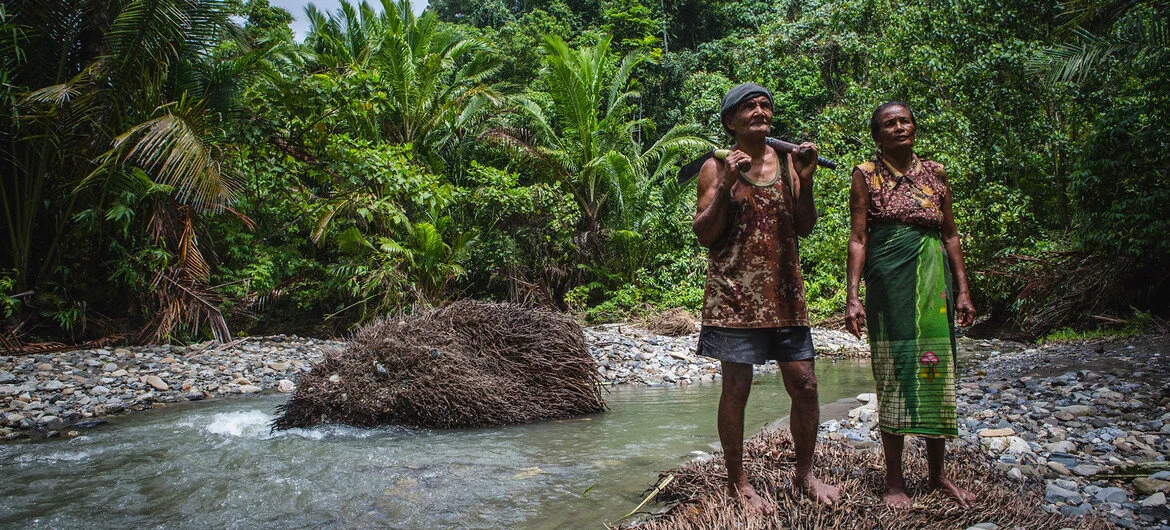
CIFOR/Ulet Ifansasti I In Indonesia many people rely on forest biodiversity for their livelihoods.

CIFOR/Ulet Ifansasti I In Indonesia many people rely on forest biodiversity for their livelihoods.

"Today, I call on all countries to make strong, credible commitments and to take ambitious action. The world needs you to demonstrate leadership and political will. "
— @antonioguterres addresses the #BiodiversityPreCOP2021.

🔴LIVE: https://t.co/1qwjO0B5oW#COP15 #ForNature pic.twitter.com/HxutoGKVMQ

— UN Biodiversity (@UNBiodiversity) August 30, 2021

In remarks to a high-level virtual meeting to develop a new global framework to address biodiversity loss, he underlined the need for commitment, ambition and credibility.

“The future of humanity depends on our collective efforts”, he said. “Let us work together to sustain all life on Earth so people and nature may benefit.”

A critical moment

The new framework will be adopted at the UN Biodiversity Conference, known as COP-15, to be held in Kunming, China, next year.

At the Pre-COP meeting on Monday, organized by Colombia, countries and other stakeholders shared actions and initiatives, as well as commitments, towards its implementation.

Participants included world leaders, ministers, heads of international organizations and multilateral banks, women, youth, and indigenous peoples.

The Secretary-General said they were meeting at a critical moment as “biodiversitynew framework  is collapsing – and we are the losers”, pointing to degraded ecosystems around the world.

“As people and livestock encroach further into wild habitats, we run the risk of unleashing terrifying new pandemics,” he warned.

Transform relationship with nature

Mr. Guterres said the world is counting on an ambitious new agreement that will transform humanity’s relationship with nature, and that fully reflects the value of biodiversity and healthy ecosystems, including to the global economy.

The new plan must support ecosystems that help humanity to adapt and build resilience to climate change.

Empower indigenous peoples

He urged Governments to “shift the perverse subsidies that destroy healthy soils, pollute our water and empty the oceans of fish to those that incentivize actions to sustain nature.”

They must also establish larger and better-managed conservation areas to safeguard species, functioning ecosystems and carbon stocks for current and future generations.
 
“And we need to safeguard and empower the leadership of indigenous peoples and local communities whose lands encompass much of the world’s remaining biodiversity.”

Above all, the world needs commitment, ambition and credibility, he said, emphasizing that everyone must act on the understanding that protecting nature will create a fairer, healthier and more sustainable world.

“I am optimistic this can happen, especially when I see the awareness and commitment of the world’s young people,” he said. “And I applaud the commitments already made.”

However, he stressed that only bold action on the ground will end the biodiversity crisis.

GREEN DIGEST: YOUTH INCLUSION, CONSERVATION AND CLIMATE-INDUCED DISASTERS

GREEN DIGEST

AFRICA

The International Support for African Development (ISNAD-Africa) with support from the WorldWide Fund for Nature (WWF) has come up with an EcoKnowledge derivative policy, thereby issuing the cardinal call of youth inclusion in the post-Covid-19 Global Biodiversity Framework (GBF) to address the prevailing challenges. The Executive Director of ISNAD-Africa, Adedoyin Adeleke stated that for the effective implementation of the biodiversity framework, merely creating awareness is not adequate but effective youth engagement is also required. Adeleke is concerned that with the current rate of destruction, over one million plants and animal species across the world would go extinct. According to various stakeholders, Nigeria and other African countries are losing as much as $3.8 billion to erosion, pollution and other environmental, as well as health issues. 

ISNAD-Africa strongly supports that for sustainable development the constructive implementation of the post-2020 Global Biodiversity Framework (GBF) and UN's 2030 Agenda for Sustainable Development is a necessity. The harmony of these two initiatives would result in a double effort progress towards green growth. According to Adeleke, the GBF would be a milestone in the global agreements for protecting biodiversity. For attaining the projected gains of the UN Convention for Biology Diversity, the contribution and focus on the youth in policy formulation and decision-making processes in countries like Nigeria is required. There was a loss of $4 trillion in the tourism sector in 2020-21 and over $125 billion was spent by the World Bank to combat the impact of COVID-19. These kinds of losses are undermining the increasing investments for sustainable development. 

According to ISNAD-Africa, more than 40 per cent of the African youth population does not have meaningful climate education, which disables and detaches them from effectively participating and contributing to policies and decision-making processes at the international, national and sub-national levels. This affects the rights of the youth to take action to protect themselves, their children and the health of the planet.

Adeleke also highlighted that the improvement in availability, accessibility and dissemination of information with special attention on youths at all levels is the key. He stated that the rate of biodiversity loss is alarming and this also adds to climate change. Therefore, the Post-2020 Global Biodiversity Framework should set the pace for mitigating as well as reversing biodiversity losses which is essential for realising a nature positive planet. 

CONSERVATION

Lee Gault, director of the Arizona Conservation Corps (AZCC) came to the Chamber of Commerce to present the benefits of the AZCC program. He contradicted the irony of the present times with the situation that pertained in the old times. He stated that presently children are information-rich and experience-poor, exactly the opposite of how it was hundreds of years ago. Teens today are too much reliant on the internet and cringe on solving problems without its assistance. Gault explained that AZCC uses hands-on learning through natural resource stewardship to provide experience to the youth (age: 16-25), encouraging personal growth and responsibility while stimulating their connection with the community. Simultaneously, another Corps program runs for the well-being of veterans too, up to the age of 35, in order to provide them smooth transition back to civilian life. The program runs in varied time duration- ranging from minimum six months to maximum two years. The program also ushersfixed financial aid for college.

Gault, who started his career in the Conservation Corps out of high school, explained that nature is the best teacher and working in the wild transforms a person. He gave a brilliant example as to how nature teaches things naturally, for instance- when there is a storm, one will get wet if one does not read signs and build a shelter.  Nature does not revolve around a kid's need and is like a wake-up call that makes him responsible.

The program intensively focuses on building leaders out of the youth by indulging them in running crew teams comprising up to 8 people and doing labour-intensive outdoor works involving the betterment of the natural resources, for example, thinning forests and building trails. The Corps teaches its members to adopt sustainable practices. The Conservation Corps help the Forest Service and Bureau of Land Management to conserve the nation's public land from the damage caused by weather and high visitation rates. Additionally, the Corps helped the Flagstaff community in sand-bagging and flood mitigation.

Corps field crew work on stream restoration, campsite maintenance, trail building etc. which often transitions into a job as a wildland firefighter. Other interns work in public and environmental education, GIS/GPS data management, surveying etc.

The AZCC also has“a sister program,” as Gault calls it, known as the ancestral lands for native youth.’ Under this program, various tribes from Arizona and New Mexico work together. The Corps is a way to engage a lot of people of colour. The Corps run over about 60 crews a year across Arizona and most of them are camping crews. Each crew is self-sufficient with a youth leader overseeing it. Full-time crew members work a nine-day, ten-hour per day schedule and then they have five days off in the town of home base office. Gault highlighted that Corps is also a national program and they perform hurricane and tornado response as well. The work in the Corps isn't easy and the members will be expected to work long days and adapt to various climatic conditions.

Other than the paid training, AZCC also provides a food stipend to its workers that ranges from $330 to $425 per week during camping, varying with the kind of program. They also provide a scholarship for higher education and an Employee Assistance Program. There is an ongoing opening for crew members interested in working from anywhere at any time at the Corps.

COVID-19

In the previous months of 2021, climate-induced disasters, like wildfires in Western North America and floods in China, had become recurring. As it is due to COVID-19 the relationship between mankind and nature was being re-examined already. Resultantly, the media focus on climate and environment gradually accentuated. In the light of these circumstances, Fred Nelson, the CEO of Maliasili, which is an organization working relentlessly to scale the impact of local conservation and natural resource organizations in Africa, identifies four key trends that are “significantly reshaping the conservation field”. The four keys are discussed herewith: 

1. Convergence of climate and biodiversity agendas–The emphasis on repudiating climate change and biodiversity loss has folded multitudinously in the past three decades. Recently, however, these agendas have seen a subtle convergence, which is mostly based on an impending, but worrisome reality. Globally, deforestation results in around a quarter of the global greenhouse (carbon) emissions, which implicitly means that the conservation and protection of grasslands, forests, and mangroves must be of the ultimate importance. This issue is supported by major climate policy initiatives under the heading of "Nature-Based Solutions". Investment in the measures to mitigate climate change, for example, ways that enhance carbon uptake in the forests, specifically in the vulnerable tropic regions could be a sustainable solution. Fred states that the conservation organizations can reasonably expect lump-sum investments to be made for the furtherance of the objective as the demand for regenerative agriculture grows. 

2Increased investment in climate and biodiversity solutions- The growing awareness of biodiversity loss is bothering people around the globe. It would be safe to anticipate the same from the recorded trend of increased investments from the public, commercial and charitable organizations in the environment-protection initiatives. The reason behind this change is the growing sense of urgency surrounding the climate and biodiversity crisis and the recognition that the public and private sectors need to increase investment in ecological health and "nature-based solutions" to address climate and biodiversity problems. Many private companies are collaborating with conservation organizations to invest in nature-based solutions for instance- Apple, Goldman Sachs and Conservation International launched a $200 million restoration fund. Jeff Bezos’ Earth Fund, launched in 2020, aims to spend roughly $1 billion annually over the next decade and issued its first series of major grants last year. A large amount of capital has also been invested in the long-term conservation financing mechanism. Such long-term and large-scale financing initiatives and collaborations are expected in the coming months and years. The active cooperation of international organizations, private foundations, and public institutions is remarkable and a promising trend for the conservation of climate and biodiversity. 

3. Growing mainstream support for indigenous and community-based conservation solutions

Another trend is the growing support for the locally-driven conservation approaches, and especially the role of indigenous people and local communities (IPLCs). All the major reports, (including UNFAO and WWF) and new initiatives favour supporting IPLCs for conservation efforts. As covered by Vox in its report with an apt title summarising the main issue ‘Indigenous peoples are the world’s biggest conservationists, but they rarely get credit for it’. The WWF report found that more than 90% of the land of indigenous peoples and local communities is in relatively good ecological condition. COVID-19 has highlighted the importance of local capacity and community-driven solutions in responding to such crises in adaptive and effective ways. 

4. Justice and Equity

Another trend changing the concept of conservation is the influence of new social movements and calls for racial justice, diversity, and equity in the United States and around the world. In Africa, this has lead to a greater focus on racial diversity, leadership, and power relations. As a result of these social movements, there is an additional effort towards conservation to support human rights, which in turn calls for social justice and equity. This has led to an increased focus on the importance of local organizations. A recent report by the Bridgespan Group and the African Philanthropy Forum documented the continuing obstacles local organizations face in obtaining funding. These issues will arise in prominence on the global conservation agenda, particularly as more funding pours into the field.

Organizational Implications

The conservation field will see far-reaching shifts and changes due to these four trends. The possible implications for any conservation organizations are:

  1. Think bigger- Conventional small scale and short term projects will become obsolete as there is an increase in the scale of conservation challenges. The conservation organizations will be required to work on a larger scale project which will have a long-term impact.

  2. Deepening partnerships- To work at a larger scale on long-term projects organizations will need to work in collaboration and form partnerships.

Invest locally- Growing support for indigenous and local leaders and institutions and increased support for social justice and fairness will prompt people to pay more attention to finding new and better ways to support local organizations and leaders. This will continue to extend far beyond traditional field projects or many NGO settings for conservation work to more creative social enterprises, social movements, and organizational structures.

REFERENCE:

https://www.vanguardngr.com/2021/08/stakeholders-seek-youth-inclusion-in-global-biodiversity-framework/

https://www.paysonroundup.com/news/local/conservation-corps-providing-kids-experience/article_41b2098b-0810-5abb-91d3-980bb7d12bf2.html

https://news.mongabay.com/2021/08/convergence-community-and-justice-key-emerging-conservation-trends-of-the-pandemic-era-commentary/

Rapid advance of Caldor fire forces more evacuations near Lake Tahoe

Associated Press in South Lake Tahoe, California

Official says: ‘Today’s been a rough day, no bones about it’
Over 15,200 firefighters battle a dozen large fires in California

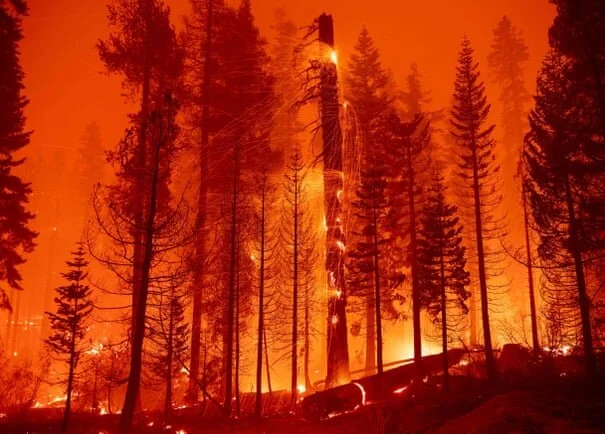
In this long exposure photograph, embers fly off a burning tree during the Caldor fire in Twin Bridges, California, on Sunday. Photograph: Josh Edelson/AFP/Getty Images

In this long exposure photograph, embers fly off a burning tree during the Caldor fire in Twin Bridges, California, on Sunday. Photograph: Josh Edelson/AFP/Getty Images

Fire officials ordered more evacuations around the Tahoe Basin as the two-week-old Caldor fire encroached on the threatened mountain towns surrounding Lake Tahoe.

By nightfall, all residents on the California side of the Lake Tahoe Basin were warned to evacuate, after fire officials stressed for days that protecting the area was their top firefighting priority.

More than a dozen large fires are being fought by more than 15,200 firefighters across California. Flames have destroyed about 2,000 structures and forced thousands to evacuate while blanketing large swaths of the west in unhealthy smoke.

The California fires are among nearly 90 large blazes in the US. Many are in the west, burning trees and brush desiccated by drought. Climate change has made the region warmer and drier in the past 30 years and will continue to make the weather more extreme and wildfires more destructive, according to scientists.

“Today’s been a rough day and there’s no bones about it,” Jeff Marsoleis, forest supervisor for El Dorado national forest, said on Sunday evening.

A few days ago, he said, he thought crews could halt the Caldor fire’s eastern progress, but “today it let loose”.

Flames churned through mountains just a few miles south-west of the Tahoe Basin, where thick smoke sent tourists packing.

“To put it in perspective, we’ve been seeing about a half-mile of movement on the fire’s perimeter each day for the last couple of weeks and today this has already moved at 2.5 miles on us, with no sign that it’s starting to slow down,” said Cal Fire division chief Erich Schwab.

Some areas of the northern California terrain are so rugged that crews had to carry fire hoses by hand from Highway 50 as they sought to douse spot fires caused by erratic winds.

Triple-digit temperatures were possible and the extreme heat was expected to last several days. A red flag warning for critical fire conditions was issued for Monday and Tuesday across the Northern Sierra.

The blaze that broke out on 14 August was 19% contained after burning nearly 245 square miles (635 sq km), an area larger than Chicago. More than 600 structures had been destroyed and at least 18,000 more were under threat.

The Caldor fire has proved so difficult to fight that fire managers pushed back the projected date for full containment from early this week to 8 September. Even that estimate was tenuous.

In southern California, a section of Interstate 15 was closed on Sunday afternoon after winds pushed a new blaze, the Railroad fire, across lanes in the Cajon Pass north-east of Los Angeles.

Further south, evacuation orders and warnings were in place for remote communities after a wildfire spread quickly through the Cleveland national forest on Saturday.

A firefighter received minor injuries and two structures were destroyed in the 2.3-sq mile Chaparral fire burning along the border of San Diego and Riverside counties, according to the California department of forestry and fire protection. It was 10% contained on Sunday.

The Dixie fire, the second-largest in state history at 1,193 sq miles, was 48% contained in the Sierra-Cascades region about 65 miles north of the Caldor fire. Nearly 700 homes were among almost 1,300 buildings destroyed since early July.

Containment increased to 22% on the 12-day-old French fire, which covered more than 38 sq miles in the southern Sierra Nevada. Crews protected forest homes on the west side of Lake Isabella, a popular recreation area north-east of Bakersfield.

The Department of Defense is sending 200 soldiers from Washington state and equipment including eight C-130 aircraft to help firefighters in northern California. The C-130s have been converted to air tankers that can dump thousands of gallons of water on the flames.

International talks aim for consensus on Taliban government

Patrick Wintour
Diplomatic editor

Western G7 powers are meeting Turkey, Qatar and Nato in Doha to discuss how Kabul airport could be reopened

Talks are due in Doha and New York to try to reach an international consensus on the conditions for recognising the Taliban government in Afghanistan. There are signs of tensions between superpowers after Russia called on the US to release Afghan central bank reserves that Washington blocked after the Taliban’s takeover of Kabul earlier this month.

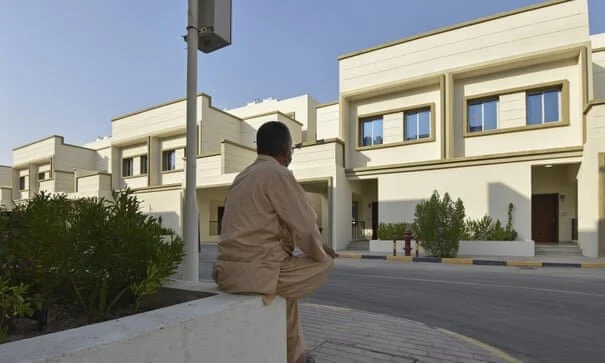
An Afghan man who was evacuated from Kabul sits on a wall at a temporary housing complex in Doha, Qatar. Photograph: AP

An Afghan man who was evacuated from Kabul sits on a wall at a temporary housing complex in Doha, Qatar. Photograph: AP

“If our western colleagues are actually worried about the fate of the Afghan people, then we must not create additional problems for them by freezing gold and foreign exchange reserves,” said the Kremlin’s envoy to Afghanistan, Zamir Kabulov.

He said the US must urgently unfreeze these assets, “to bolster the rate of the collapsing national currency”.

The leading western G7 powers are meeting Turkey, Qatar and Nato in Doha to discuss further details of how Kabul’s civilian airport could be reopened to allow those that want to leave Afghanistan with valid documents to do so. More than 100 nations signed a joint statement saying the Taliban has agreed to facilitate this. The US secretary of state, Antony Blinken, is chairing the meeting and due to announce its outcome later.

At the same the German foreign minister, Heiko Maas, started a four-day sweep through countries bordering Afghanistan to secure their agreement to house refugees temporarily, or to use the country as a transit point pending processing. So far Qatar has acted as the transit point for more than 40% of the 100,000-plus refugees airlifted out of the country. Maas is due to visit Uzbekistan, Tajikistan, Turkey and Pakistan.

In Turkey, his first stopover, Maas said he was grateful for the country’s offer. “We ask the Taliban to promise to provide security,” he said. “We have to negotiate with the Taliban. They want the airport to be operated. In this regard, we are ready to contribute both financially and technically.”

James Cleverly, the UK minister for the Middle East and North Africa, said he could not see how Kabul airport could be operated by foreign powers without boots on the ground, something that is not currently possible.

On Monday, António Guterres, the UN secretary general, will convene a meeting in New York of ambassadors from the five permanent members of the UN security council – Russia, China, the US, the UK, and France – to discuss a potential joint resolution on Afghanistan that could be passed later this week. The resolution has been under discussion over the weekend.

The UK has said its four international priorities are: preventing Afghanistan becoming a haven for terrorists; responding to the humanitarian plight; safeguarding regional stability; and holding the Taliban to account on human rights. The UK foreign secretary, Dominic Raab, has said it is necessary for the west to work pragmatically with Russia and China on the future of Afghanistan.

The Kremlin on Monday welcomed French president Emmanuel Macron’s proposal to create a “safe zone” in Kabul to protect humanitarian operations.

“This is certainly a proposal that must be discussed,” Kremlin spokesman Dmitry Peskov told reporters.

Climate change: curbing methane emissions will 'buy us time'

Leonardo Lima (GREEN INTERN)

An aggressive campaign to cut methane emissions could give the world more time to tackle climate change, experts say. One of the main conclusions of the recently released IPCC report is that methane emissions have contributed enormously to the current warming.

The study suggested that 30-50% of the current rise in temperatures is due to this powerful but short-lived gas. The main sources of methane include agriculture, spills from oil and gas production and landfills.

For decades, the focus of efforts to curb global warming has been increasing emissions of carbon dioxide (CO2) from human activities such as energy generation and forest clearing.

There are good scientific reasons for this, as CO2 is the biggest driver of temperatures, responsible for about 70% of the warming that has occurred since the industrial revolution.

Methane (CH4), however, did not have the same focus. That may be changing, as earlier this year a major UN study highlighted its environmental impact.

A recent IPCC report graphically points out that the influence of methane has been calculated as an addition of about 0.5°C to the warming the world is currently experiencing.

So where does all this methane come from?

About 40% of the gas comes from natural sources such as swamps – but most of it now comes from a range of human activities. Since 2008, there has been a huge increase in methane emissions, which researchers believe is related to the rise in gas hydraulic fracturing in parts of the United States.

In 2019, methane in the atmosphere reached record levels, about two and a half times higher than it was in the pre-industrial era. What worries scientists is that methane has real muscles when it comes to warming the planet. Over a 100-year period, it is 28-34 times hotter than CO2.

Over a 20-year period, it is about 84 times more powerful per unit mass than carbon dioxide.

However, an important positive point about CH4 is that it doesn't last as long in air as CO2.

"In two decades, there would be a quarter of a ton, so basically, if we could stop emitting methane today by the end of this century, emissions would drop to the natural levels that were around 1750."

In the short term, experts believe that if methane emissions were to be reduced by 40-45% over the next decade, you would reduce 0.3°C of global temperature rise by 2040.

In a world where every fraction of a degree count, that's a potentially huge difference for the hope of keeping the 1.5°C limit alive.

References: Brazil Environment, BBC News and Matt McGrath

AVIATION AND SUSTAINABILITY: A GLIMPSE OF THE PARADIGM SHIFT

(GREEN INTERN) NISHANT TIWARI

INTRODUCTION

unsplash-image-8KLLgqHMAv4.jpg

In 2018, the aviation industry alone caused 2.5% of the global carbon emissions. In comparison to 2013, the aviation sector’s contribution to carbon emission has increased by 32%. The demand for a more sustainable way of flying is pressurising. Faintly from the background, an environment activist can hear the accentuating pitches of “flygskam,” a Swedish term translated as “flying shame.” The movement of giving up flying unless it becomes friendlier has begun. In 2017, the Swedish singer Staffan Lindberg gave up flying because it destroyed the environment. In 2019 the climate activist Greta Thunberg crossed the Atlantic Ocean in a boat to attend the United Nations summit.

AIRCRAFT INNOVATIONS

‘Green aviation’ does not merely mean limiting carbon emission. It is rather a multidisciplinary angle that involves making the entire aviation sector more environment-friendly. Therefore, from reducing the noise to reducing the fuel usage, it covers everything under the umbrella. Realising the dearth of bringing breakthrough advancements, in the present day, the civil aviation sector spends resources worth $15 billion per year in researching better methods of inducing sustainability and technology development in the field.

Infrastructurally changes are sought to decrease the weight of the aircraft overall. Traditionally, Concord did it by altering the shape of its fleet. Airlines understand that more take-off weight means more fuel consumption, which means expensive rates of operation. To combat the same, there are many solutions that the experts came up with. Amongst them, one was as easy as keeping the aircraft paint light, for example, white and grey. The reason was that these are light shades, their wear-and-tear would not be immediately visible in comparison to dark colours such as blue or purple. This means that the airline can choose to get the fleet re-varnished in a decade without being tensed about tarnishing the brand image. Lesser coating of paint incidentally means a lesser overall weight of the aircraft, thereby helping the airlines to save costs on fuel. Some airlines opt to hire only female attendants to overall reduce the cumulative weight of travellers from their end, as male attendants are usually heavier owing to masculine body structure.

Similarly, to reduce noise pollution, Rolls Royce has worked to produce an engine for both Boeing and Airbus that significantly reduces the engine noise, thereby also resulting in optimisation of compressors, turbines, and fans.

AVIATION FUELS

Major manufacturers of aircraft (Airbus and Boeing) have long initiated their research in the field of searching for alternative fuels when it comes to aviation. In 2010, Airbus introduced A320neo which used nearly 16% lesser fuel than the normal aeroplanes. Following the suit, Boeing released the 787 Dreamliner which took a leap further and reduced fuel emissions by 20%. Since then, Boeing has also released its ecoDemonstrator, which is recyclable aircraft that resultantly overall reduced the weight of the aircraft, its drag, and inter alia, enhances its fuel usage.

‘Sustainable aviation fuels’ are soon to replace the traditional fuels, that too, by giving the same (if, not better) efficiency. In 2019, Etihad airlines empowered a Boeing 787 Dreamliner by making hybrid fuel- a mix of the traditional fuel and eco-sustainable fuel (made from Salicornia, a plant species that inhabitants the Abu Dhabi desert). Biofuel blends are rather coming into vogue with major airlines such as Qantas Airways, Virgin Atlantic, Alaska Airlines, and United Airlines picking up the idea. More than 170,000 flights using biofuel blends have already been made and more are in the pipeline. To facilitate the purpose, airports like Oslo Airport and Bergen Airport of Norway, Stockholm Arlanda Airport and Los Angeles International Airport are also making these alternative aviation fuels available to the airlines for operation.

A KEY TO SUSTAINABILITY: CHANGE IN PRACTICES

Green aviation is a step away from changing a few fundamental practices. Private players have been operating in the aviation sector for decades now. The entry of “no-frills” or ‘Low-Cost Carriers’ (LCC) in the sector has given it a huge boost, apart from making the availability and ensuring that flying does not remail an experience limited to only the creamy layer of the society. This has induced a lot of competition in the aviation market and it is seen as a gold mine for investment. But there still are many airspaces that have not been opened yet for the private players, or else, are monopolised or duopolised by only a few airlines either in the absence of competition or due to uncompetitive practices.

As an ethical general effort, the passengers (given the choice) have always resorted to travelling by planes that result in lesser environmental damage. Therefore, vehement competition in the market would gradually path mandatory path to innovation, and given that, the development of green aviation would be boosted.

Further, the airlines have been lately adopting the methods of leasing and financing in the aviation sector. It means that the aircraft fleet that they possess and operate, is not entirely owned by them. It is taken off ‘lease,’ or in layman’s terms, ‘rent,’ by the aircraft manufacturers such as Airbus or Boeing. This enables the airlines to equip the latest progressive advancements in the aeroplanes at a much cheaper cost than the airlines that believe in acquiring a 100% stake in the fleet. Leasing planes also allow the flexibility of disposing them easily back with the manufacturer without unfortunate hassles of bidding and making lumpsum losses for the degradation of fleet quality. Small steps such as this can take the aviation sector a long way in becoming sustainable and better.

CONCLUSION

Held on the 10th of February 2020, Singapore Air Show (Singapore Aerospace Technology Leadership Forum (SATLF)) saw the launch of the FRAeS reports on required changes in the field of aviation. Other than the increased use of artificial intelligence, the conference deliberated on the new designs, alternative sources of power and methods of operation for the airlines in a more eco-friendly fashion.

It was in 2009 that the IATA (International Air Transport Association) had decided to place strategic targets for the industry of aviation. In its ambit, it also included the ambition of inducing carbon-neutral growth from 2020- which focussed on surging the ideology that even with the increase in profits, the carbon emissions will not increase. As of July 2019, 77% of the international aviation community, which is almost equivalent to 81 nations became a part of the Carbon Offsetting and Reduction Scheme for International Aviation (CORSIA). Other efforts also focus on emphasising people to reduce their flying when it is possible to meet the objective virtually, but still, the major onus of bringing the sweeping change lies with the aviation industry. The collaborative effort to turn the aviation industry greener is mammoth-sized, and its significance grows every day. With the pandemic having shaken the sectors deep into their roots, it will be better to grow back, maybe slower, but in a more sustainable fashion. Greener aviation is not an “alternative” anymore, it is a need. An urgent need

'How is it sustainable if only 1% can afford your food?’: the man on a quest to change farming

Taylor Moore

Chris Newman, founder of Virginia-based Sylvanaqua Farms, on why feeding people needs to be at the heart of sustainable farming

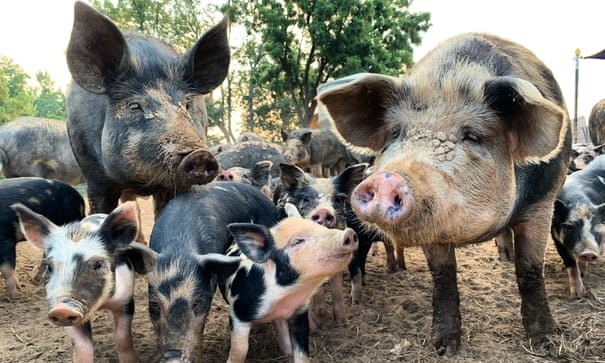
Sylvanaqua Farms pigs are raised outdoors in forests and pastures. Photograph: Chris and Annie Newman

Sylvanaqua Farms pigs are raised outdoors in forests and pastures. Photograph: Chris and Annie Newman

Chris Newman, 38, and his wife, Annie, 35, always planned to retire with a farm. But after a health scare in 2013, the couple left their jobs as a software engineer and art gallery director to found Sylvanaqua Farms, a 120-acre operation in northern Virginia that produces pasture-raised chicken, eggs and pork and grass-fed beef.

Newman has gained a sizable following online for his writing and advocacy, which focuses on producing food in ways that don’t exploit people or the environment.

Scaling up Sylvanaqua’s operations is more important than achieving perfection, said Newman. “Our goal on our farm is to responsibly produce as much food as we possibly can and just get it into as many mouths as possible, making sure that what we produce isn’t just accessible to the upper crust.

To meet that goal, Sylvanaqua has pledged to donate half its harvest to food aid organizations throughout the Chesapeake region, as part of a mutual aid program focused on people who ordinarily can’t afford high-quality meat and produce.

Newman, who is Black and an enrolled member of the Choptico Band of Piscataway Indians, spoke with the Guardian about racism in the farm-to-table movement, how indigenous practices influence the way he farms and why, ultimately, feeding people needs to be at the heart of sustainable farming.

What was the transition like when you and your wife left your jobs to start the farm?

It was awful. Basically, the transition to farming was us moving to Charlottesville, buying a bunch of chickens, buying a few pigs, and then getting this really rude awakening. There’s a lot of literature out there talking about how regular people can farm. It’s this shtick that if you work hard enough and you go direct-to-consumer and you’re creative, then you’ll be able to make it – but also they forget to tell you that they inherited a $5m estate. Everything that’s in the popular culture about these things is basically marketing.

What kind of farming practices has Sylvanaqua adopted?

If you were to come here, you would find a ranch that was overwhelmingly forest – some of it grass. You’d find us doing rotational grazing with our cattle. You’d see our pigs in the forest. You would find we have no chemical fertilizers because we range our poultry across the grass so that we don’t have to import any fertilizer

Our egg-laying chickens follow behind our cows in order to keep the fly populations down. Our hens will see a dried cowpat and they’ll scratch it open and eat larvae out of it before they’re able to hatch. That keeps our pinkeye issues down with our cattle. It keeps our costs down and keeps our animals happier without us having to resort to chemicals, medications, vets and things that traumatize animals.

And it’s not just about the ecology. When we talk about sustainability, people are almost always talking about the stuff like no till, no sprays, no GMO. It’s all technical stuff about what you do to the land, but somehow there’s no sustainability criteria in terms of people.

How is your farm really sustainable if only 1% of people can afford your food? We are actively trying to figure out how to connect the dots between what we do here and the people who’ve been left behind by the farm-to-table movement. Without that mass participation, then all we’re really doing is creating castles in the sky.

How does your Black and indigenous heritage factor into how you farm?

I’m not focused on owning land. I think that’s actually one of the big ways that my indigenous heritage expresses itself in the way we do business – I’m not looking to own or accumulate. I just want access to that land in order to feed people, because for us, that’s the point of landscape – to sustain people.

Sylvanaqua Farms sells pasture-raised eggs and chickens. Photograph: Chris and Annie Newman

The rest of it is probably a bunch of weird neuroses around farming and agriculture, because people of color, especially Black people, ran away from farms for a reason. We were chased away at gunpoint, basically. My maternal grandfather, who was the last farmer in my family, was determined that none of his kids would be farmers, even though he was very successful at it. He had people paint swastikas on his tractors.

Sylvanaqua Farms sells pasture-raised eggs and chickens. Photograph: Chris and Annie Newman

Sylvanaqua Farms sells pasture-raised eggs and chickens. Photograph: Chris and Annie Newman

With all the issues that permeate the sustainable food movement, how have you done things differently to not replicate those issues?

Going after scale has turned me into a kind of a black sheep for the movement because sustainable farming is supposed to be all about being small. It’s supposed to be about not integrating because there’s this idea that anything that JBS or Smithfield or Cargill does, we must not do.

We’ve been at this farm-to-table movement, “let’s revolutionize the way we do agriculture” thing for the better part of 50 years now and where are we?

If we’re about feeding everybody in this country and ultimately in this world – in a way that arrests climate change and fundamentally changes our economic and spiritual and physical relationship to food – we have to be a little tougher. We can’t be so self-congratulatory.

How should farmers think about climate resilience?

The deeply unsatisfying answer that I give people about this is that I don’t think there’s anything that an individual farm can really do to affect climate change. The problem with agriculture, as it relates to climate, is that we’re producing way more food than we need.

Farmers are being bankrolled by public money to grow stuff that nobody wants, especially corn. We grow lots of food, but we end up just throwing most of it away or funneling it through livestock that don’t really even need it to grow. We’re outrageously inefficient with it.

The ultimate thing that we do that creates a climate-friendly model is knowing why we’re producing food, who we’re producing it for, and making sure it gets to them. That’s what fundamentally matters – it’s not about technology, it’s not about techniques, it’s about people.

COVID, natural hazards and climate crisis in Asia and the Pacific expand ‘riskcape’

UN NEWS

The convergence of the COVID-19 pandemic with natural hazards, made worse by climate change, has reshaped and expanded the disaster “riskscape” in Asia and the Pacific, according to a new report published on Wednesday by the UN’s regional commission there.

© ADB I A boy drags possessions through the flooded streets of Manila in the aftermath of a typhoon. (file)

© ADB I A boy drags possessions through the flooded streets of Manila in the aftermath of a typhoon. (file)

In the Asia-Pacific Disaster Report 2021, the Economic and Social Commission for Asia and the Pacific (ESCAP) described how while dealing with the pandemic, countries in the region have also been hit by multiple biological and natural disasters, such as cyclones, landslides, heatwaves and volcanic eruptions.

At the same time, as climate change has continued to warm the world it is also exacerbating many of these disasters.

“The string of ‘record-breaking’ events show that we do not have the luxury of ‘waiting this out’: action must be taken now to address these risks”- Special Representative of the Secretary-General for Disaster Risk Reduction and @HeadUNDRR Mami Mizutori #DRWeek2021 pic.twitter.com/Lwpo34hqds
— United Nations ESCAP (@UNESCAP) August 25, 2021

The capacity of disaster management and public health systems to respond to this “expanded risk environment” will determine the recovery path for COVID-19 and beyond, the report argues. 

Countries must not ‘wait this out’

UN representatives serving throughout Asia and the Pacific met on Wednesday at the seventh session of the ESCAP Committee on Disaster Risk Reduction, where they were called on to intensify efforts to prepare for and tackle these complex, overlapping crises and increase the resilience of people as well as economies.

“The string of record-breaking weather events show that we do not have the luxury of ‘waiting this out’: Action must be taken now to address these risks”, said Mami Mizutori, UN Special Representative for Disaster Risk Reduction.

“This includes increasing international funding for disaster risk reduction and climate adaptation, especially for countries graduating from the least-developed category”, she added.

Despite progress made by many countries in devising more robust systems of early warning and responsive protection, which have led to far fewer people deaths resulting from natural disasters, ESCAP chief Armida Salsiah Alisjahbana said, “the COVID-19 pandemic has demonstrated that almost without exception, countries around the world are still ill-prepared to deal with multiple overlapping crises, which often cascade, with one triggering another”.

“Tropical cyclones, for example, can lead to floods, which lead to disease, which exacerbates poverty”, she elaborated.

Economic impact of ‘triple threat’ 

Significant economic losses have also resulted from the “triple threat” of disease, disaster and climate change, according to ESCAP.

The annual average of disaster-related losses currently stands at $780 billion, which could nearly double, to around $1.4 trillion, in a worst-case climate scenario.

At an annual cost of $270 billion, choosing a proactive strategy of adapting to natural and other biological hazards would be far more cost-effective.

‘Paradigm shift’ in disaster risk management 

The meeting – the first of a four-event series to exchange ideas and solutions to key challenges facing Asia and the Pacific – also highlighted the importance of climate change mitigation and the need for regional countries to advance digital transformations to tackle the dual challenges of climate-related disasters and Covid-19.

Accentuating the urgency of building universal resilience against the vulnerabilities that the pandemic has exposed and tackling rising levels of inequality and poverty, Ms. Alisjahbana called for a “paradigm shift” from managing disasters to investing in prevention and the building of resilience.

Climate crisis made deadly German floods ‘up to nine times more likely’

Damian Carrington
Environment editor

Study reinforces the hard evidence that carbon emissions are the main cause of worsening extreme weather

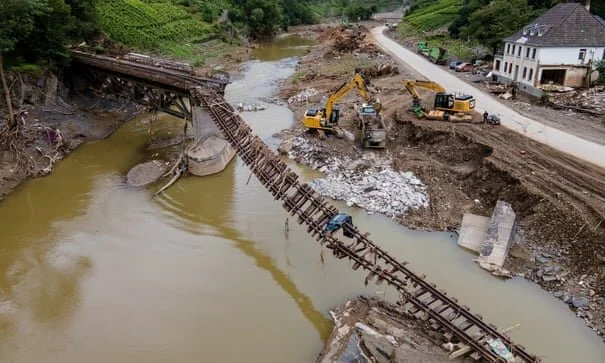
A damaged railway bridge five weeks after the flooding of the River Ahr in Rech in the Ahrweiler district of Germany on 19 August. Photograph: Friedemann Vogel/EPA

A damaged railway bridge five weeks after the flooding of the River Ahr in Rech in the Ahrweiler district of Germany on 19 August. Photograph: Friedemann Vogel/EPA

The record-shattering rainfall that caused deadly flooding across Germany and Belgium in July was made up to nine times more likely by the climate crisis, according to research.

The study also showed that human-caused global heating has made downpours in the region up to 20% heavier. The work reinforces the findings of the Intergovernmental Panel on Climate Change’s landmark report this month that there is “unequivocal” evidence that greenhouse gas emissions from human activities are the main cause of worsening extreme weather.

In recent months there has been devastating flooding in western Europe and China, extreme heatwaves in north-west America and forest fires in Russia, Greece, Turkey and the US.

The scientists from the World Weather Attribution group said that as temperatures rise further, western and central Europe will be exposed to increasing extreme rainfall and flooding. The group previously found that the recent “heat dome” in North America would have been almost impossible without climate change and that the heatwave in Siberia in 2020 and the 2019-20 Australian bushfires were also made more likely by global heating.

“The huge human and economic costs of these floods are a stark reminder that countries around the world need to prepare for more extreme weather events, and that we urgently need to reduce greenhouse gas emissions to avoid such risks from getting even further out of hand,” said Prof Maarten van Aalst at the University of Twente, in the Netherlands, who is also director of the Red Cross Red Crescent Climate Centre. The flooding in Germany and Belgium killed at least 222 people and caused huge damage.

The new study, conducted by Van Aalst and 38 other scientists, used meteorological measurements, high resolution computer models and peer-reviewed research methods. It compared the frequency of extreme rainfall like that behind the flooding in Germany, Belgium and the Netherlands in today’s heated climate with the frequency expected in a world where there had been no human-caused climate change.

It found the climate crisis has made the extreme rainfall between 1.2 and nine times more likely to happen and that such downpours in the region are now 3% to 19% more intense. The hotter air resulting from global heating is able to hold 7% more water vapour per 1C rise. The range in increased likelihood is owing to the variety of climate models used, but the scientists are confident global heating had an impact.

Residents clear debris after heavy flooding of the River Erft caused severe destruction in the village of Bad Münstereifel, Euskirchen district, Germany on 20 July. Photograph: Sascha Steinbach/EPA

Residents clear debris after heavy flooding of the River Erft caused severe destruction in the village of Bad Münstereifel, Euskirchen district, Germany on 20 July. Photograph: Sascha Steinbach/EPA

The study focused on the region around two areas that were particularly badly affected: the German districts by the Ahr and Erft rivers, where 93mm (3.66 inches) of rain fell in a day, and the Belgian Meuse region, where 106mm fell over two days. The scientists were unable to analyse river levels partly because some hydrological measurement stations were destroyed by the floods.

The peak volume of water on the Ahr was equivalent to the upper reaches of the Rhine, said Enno Nilson at the German Federal Institute of Hydrology: “We had a huge river rushing into a small valley.” The researchers estimated the probability of such extreme rainfall in one location as 0.25% in any one year. “It is a rare event, but a rare event we should increasingly be prepared for,” said Van Aalst.

“These floods have shown us that even developed countries are not safe from the severe impacts of extreme weather that we have seen and that are known to get worse with climate change,” said Friederike Otto at Oxford University. “This is an urgent global challenge and we need to step up to it. The science is clear and has been for years.”

Prof Hayley Fowler at Newcastle University said that, as well as cutting emissions, emergency warning systems and the resilience of infrastructure must be improved to reduce casualties and costs.

Other research in July found that catastrophic floods in Europe could become much more frequent as a result of global heating. It used high-resolution computer models to estimate for the first time that slow-moving storms could become 14 times more common over land by the end of the century in a worst-case scenario. The slower a storm moves, the more rain it dumps on a small area and the greater the risk of serious flooding.

Minorities are 'key partners' in saving planet's biodiversity – UN expert

UN NEWS

The global initiative to save the planet's biodiversity on land and water must not be allowed to threaten the world's most vulnerable people, a top human rights expert said on Thursday.

Under a UN-backed global biodiversity framework draft agreement, countries have agreed to protect 30 per cent of the planet and restore at least 20 per cent by 2030. 

While acknowledging that the plan is essential to conserving biodiversity, UN Special Rapporteur on human rights and environment, David Boyd, warned that it “must not be achieved at the expense of further human rights violations against indigenous peoples and other rural people”. 

He said that special attention must be paid to indigenous peoples, people of African descent, local communities, peasants, rural women and rural youth – none of whom is adequately prioritized in the current draft plan, despite recent improvements. 

Natural partners 

These individuals and groups “must be acknowledged as key partners in protecting and restoring nature”, Mr. Boyd said. “Their human, land and tenure rights, knowledge, and conservation contributions must be recognized, respected, and supported.” 

The independent rights expert, who was appointed by and reports to the Human Rights Council in Geneva, cautioned against what he called “fortress conservation” approaches that aim to restore “pristine wilderness” where no humans live. 

This approach has had devastating human rights impacts on communities in these targeted areas, the Special Rapporteur insisted, including on indigenous peoples and other rural dwellers.  

“Leaving human rights on the periphery is simply not an option, because rights-based conservation is the most effective, efficient, and equitable path forward to safeguarding the planet”, Mr. Boyd said, before urging Member States “to put human rights at the heart of the new Global Biodiversity Framework”. 

Biodiversity Framework 

The call came ahead of a UN biodiversity summit, known as COP15, which is to be held virtually in October and in-person next April in Kunming, China.  

At that time, representatives of 190 Governments will seek to finalize the UN Post-2020 Global Biodiversity Framework. 

The draft text released in July highlighted the need to address threats to biodiversity, human well-being and the future of life on Earth, while seeking to establish a “world living in harmony with nature” by 2050. 

Maintaining that the Framework agreement does not go far enough to preserve and protect nature and its essential services to people, Mr. Boyd urged States to make rights-based approaches obligatory to conserve, restore and share the benefits of biodiversity, including conservation financing. 

“It is also imperative that the Framework acknowledges that everyone, everywhere, has the right to live in a safe, clean, healthy and sustainable environment, a right which includes healthy ecosystems and biodiversity”, he said. 

Healthy biosphere  

Expanding on his report to the General Assembly last October, “Human Rights Depend on a Healthy Biosphere”, Mr. Boyd unveiled a policy brief calling for a more inclusive, just and sustainable approach to safeguarding and restoring biodiversity.  

The document outlined the human rights costs and limited efficacy of so-called exclusionary conservation, where local people are viewed as threats to natural ecosystems and kept away. 

Global Framework: Key targets

  • Protect 30 per cent of land and sea areas globally and place at least 20 per cent under restoration.

  • Prevent or reduce the rate of introduction and establishment of invasive alien species by 50 per cent.

  • Control or eradicate invasive alien species to eliminate or reduce their environmental impacts.

  • Reduce by at least half, nutrients lost to the environment.

  • Reduce pesticides by at least two-thirds.

  • Eliminate plastic waste.

  • Tackle climate change via ecosystem-based approaches while avoiding negative impacts on biodiversity.

  • Reduce incentives harmful for biodiversity by at least $500 billion per year.

  • Increase financial resources from all sources by at least $200 billion per year.

  • Increase international financial flows to developing countries by at least $10 billion per year.

Deforestation in Brazilian Amazon hits highest annual level in a decade

Flávia Milhorance

Rainforest lost 10,476 sq km between August 2020 and July 2021, report says, despite increasing global concern

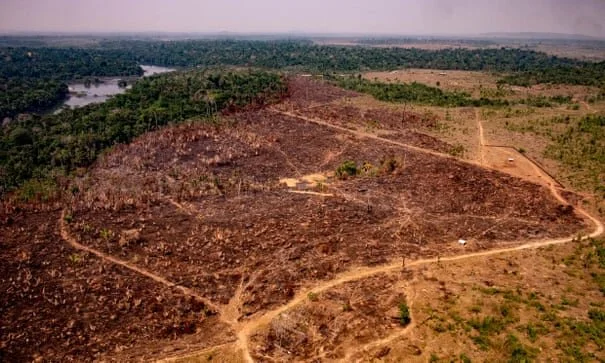
‘Deforestation is still out of control,’ Carlos Souza, a researcher at Imazon said. Photograph: Mayke Toscano/Mato Grosso State Communication/AFP/Getty Images

‘Deforestation is still out of control,’ Carlos Souza, a researcher at Imazon said. Photograph: Mayke Toscano/Mato Grosso State Communication/AFP/Getty Images

Deforestation in the Brazilian Amazon has hit the highest annual level in a decade, a new report has shown, despite increasing global concern over the accelerating devastation since President Jair Bolsonaro took office in 2019.

Between August 2020 and July 2021, the rainforest lost 10,476 square kilometers – an area nearly seven times bigger than greater London and 13 times the size of New York City, according to data released by Imazon, a Brazilian research institute that has been tracking the Amazon deforestation since 2008. The figure is 57% higher than in the previous year and is the worst since 2012.

“Deforestation is still out of control,” Carlos Souza, a researcher at Imazon said. “Brazil is going against the global climate agenda that is seeking to urgently reduce greenhouse gas emissions.”

Souza called for the urgent resumption of government actions to stop the destruction, including the enforcement of illegal agriculture-led deforestation in the region, which has been impaired by budget cuts for the environment ministry and environmental protection agencies.

Even as he faces accusations of systematically dismantling environmental protections, Bolsonaro has deployed thousands of soldiers to combat illegal deforestation and fires.

But the policy has proved ineffective, said Marcio Astrini, the executive-secretary of the organisation Climate Observatory.

“The data shows that it didn’t work,” said Astrini. “No army operation will be able to mask or reverse the attacks of the federal government against the forest.”

Astrini said that the deforestation rates in 2021 are expected to be almost 50% higher than in 2018, before Bolsonaro took office.

In June, then-environment minister Ricardo Salles resigned amid a criminal investigation over allegations that a police investigation into illegal Amazon logging was blocked.

But the ministry’s leadership “hasn’t shown any progress,” Astrini said.

“The measures that benefit the export of illegal timber – the reason why Salles had to leave office – are still in place,” he said.

The new figures were released as lawmakers held a public hearing to push for changes in Brazil’s environmental policies.

“We are going through a very tough moment in Brazilian history. There’s a lot of denialism, and many attempts to weaken our environmental policy,” senator Eliziane Gama told the hearing.

Rain falls on peak of Greenland ice cap for first time on record

Damian Carrington

Precipitation was so unexpected, scientists had no gauges to measure it, and is stark sign of climate crisis

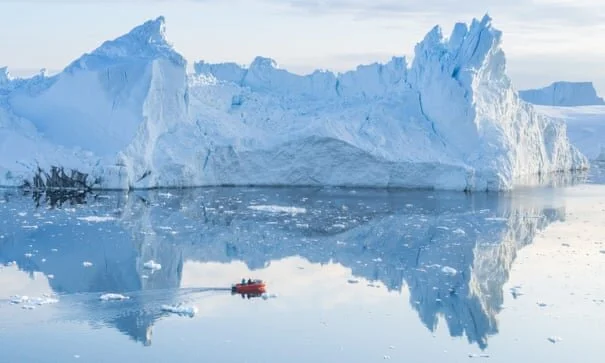
Icebergs near Ilulissat, Greenland. The climate crisis is having a profound impact on glaciers. Photograph: Ulrik Pedersen/NurPhoto/REX/Shutterstock

Icebergs near Ilulissat, Greenland. The climate crisis is having a profound impact on glaciers. Photograph: Ulrik Pedersen/NurPhoto/REX/Shutterstock

Rain has fallen on the summit of Greenland’s huge ice cap for the first time on record. Temperatures are normally well below freezing on the 3,216-metre (10,551ft) peak, and the precipitation is a stark sign of the climate crisis.

Scientists at the US National Science Foundation’s summit station saw rain falling throughout 14 August but had no gauges to measure the fall because the precipitation was so unexpected. Across Greenland, an estimated 7bn tonnes of water was released from the clouds.

The rain fell during an exceptionally hot three days in Greenland when temperatures were 18C higher than average in places. As a result, melting was seen in most of Greenland, across an area about four times the size of the UK.

The recent report from the Intergovernmental Panel on Climate Change concluded it was “unequivocal” that carbon emissions from human activities were heating the planet and causing impacts such as melting ice and rising sea level.

In May, researchers reported that a significant part of the Greenland ice sheet was nearing a tipping point, after which accelerated melting would become inevitable even if global heating was halted.

Ted Scambos, a scientist at the National Snow and Ice Data Center at the University of Colorado, which reported the summit rain, told CNN: “What is going on is not simply a warm decade or two in a wandering climate pattern. This is unprecedented. We are crossing thresholds not seen in millennia, and frankly this is not going to change until we adjust what we’re doing to the air.”

Greenland also had a large-scale melting episode in July, making 2021 one of just four years in the past century to see such widespread melting. The other years were 2019, 2012 and 1995. The rain and melt on 14-16 August came at the latest point in the year a major event has been recorded.

The cause of the July and August melting was the same – warm air being pushed up over Greenland and held there. These “blocking” events are not uncommon but seem to be becoming more severe, according to scientists.

Global sea level would rise by about 6 metres if all of Greenland’s ice melted, although this would take centuries or millennia to occur. But the trillions of tonnes lost from Greenland since 1994 is pushing up sea levels and endangering the world’s coastal cities.

Sea level has already risen by 20cm, and the IPCC said the likely range by the end of the century was a further 28-100cm, though it could be 200cm.

Greenland’s ice is melting faster than any time in the past 12,000 years, scientists have estimated, with the ice loss running at a rate of about 1m tonnes a minute in 2019.

Humans ‘pushing Earth close to tipping point’, say most in G20

Jonathan Watts

Global survey finds 74% also want climate crises and protecting nature prioritised over jobs and profit

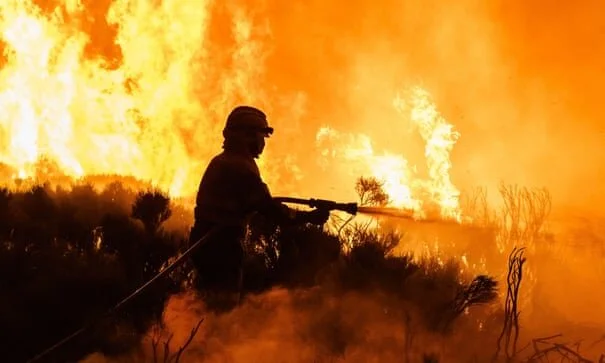
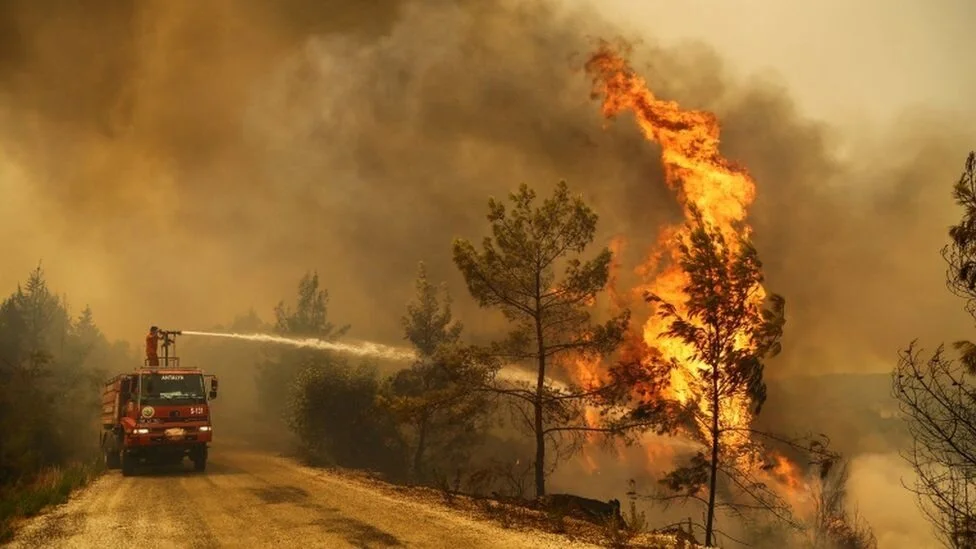
Hosing a wildfire in central Spain. Southern Europe has been in the grip of a record-breaking heatwave. Photograph: César Manso/AFP/Getty Images

Hosing a wildfire in central Spain. Southern Europe has been in the grip of a record-breaking heatwave. Photograph: César Manso/AFP/Getty Images

Three-quarters of people in the world’s wealthiest nations believe humanity is pushing the planet towards a dangerous tipping point and support a shift of priorities away from economic profit, according to a global survey.

The Ipsos Mori survey for the Global Commons Alliance (GCA) also found a majority (58%) were very concerned or extremely concerned about the state of the planet.

Four in five respondents said they were willing to step up and do more to regenerate the global commons.

The lead author of the report, Owen Gaffney of the GCA, said the results showed strong global support for urgent, decisive action on the climate and nature crises.

Advertisement

“The world is not sleepwalking towards catastrophe. People know we are taking colossal risks, they want to do more and they want their governments to do more,” he said.

“The findings should provide G20 leaders with the confidence to move faster to implement more ambitious policies to protect and regenerate our global commons.”

This snapshot of global public opinion was taken in April and May before the northern hemisphere summer of record-breaking heatwaves, floods and fires, and months before the Intergovernmental Panel on Climate Change report warned of “inevitable and irreversible” climate change owing to human activities.

Among G20 nations, 73% of people believed human activity had pushed the Earth close to tipping points. Awareness of these risks was markedly higher in the less wealthy countries – Indonesia (86%), Turkey (85%), Brazil (83%), Mexico (78%) and South Africa (76%) – than the richest countries – United States (60%), Japan (63%), Great Britain (65%) and Australia (66%).

Overall, more than half (59%) of respondents believed nature was already too damaged to continue meeting human needs in the long term.

People are beginning to feel that “nature is hitting back”, wrote the Kenyan environmentalist Elizabeth Wathuti in a foreword to the report.

“People in power seem to feel it is OK to fell old trees or destroy natural ecosystems for buildings or roads, or to dig up oil, so long as they then plant new trees. But this approach is not working, and the findings in this report show that many people no longer support such economic idiocy.”

The Global Commons survey comes in the run-up to a series of international meetings on the dire state of planetary life-support systems: the Cop26 climate summit in Glasgow, a Cop10 biodiversity conference in Kunming and next year’s “Stockholm+50” high-level meeting to mark the 50th anniversary of the first United Nations conference on the human environment​​.

As has been the case for most of the last half-century, moves to strengthen planetary ecosystems are likely to meet resistance by vested political and economic interests. The survey showed there was strong support among the global public to overcome those hurdles.

More than four-fifths (83%) of respondents from G20 nation wanted to do more to protect and restore nature, and more than two-thirds (69%) believed the benefits of action to protect the global commons outweighed the costs. This view was most prevalent in Brazil and least common in France (44%).

Overall, 74% of people agreed that countries should move beyond focussing on gross domestic product and profit, and instead focus more on the health and wellbeing of humans and nature.

This was consistently well-supported across G20 nations. Only 25% felt governments should prioritise jobs and profits even if this meant harming nature. Only in India was there 50% approval for putting the economy first.

Covid-19 has opened a door to change. In G20 countries, there was widespread agreement (75%) that the pandemic demonstrated how rapidly behaviour could change. A similar proportion (71%) accepted the recovery from the pandemic provided a unique opportunity to make societies more resilient.

However, in India 56% felt the need for economic recovery meant that nature was a lower priority. Across all nations, there were divided opinions about whether what was good for people was often bad for nature, though this had strong support in Russia (74%) and Brazil (65%).

Two-thirds of people (66%) supported global cooperation to tackle shared challenges, but fluctuated from country to country with China (81%) most enthusiastic and France (50%) least keen to collaborate.

Asked if the UN and other international organisations should be given more power to protect nature, there was similarly broad agreement with India (76%), China (75%) and Turkey (76%) most eager and the US (49%) least.

The report identified a group of “emerging planetary stewards” who were most aware of the risks and prepared to work for change. It said they were mostly young (under-45), female, well-educated, urban and likely to identify themselves as global citizens. “These are the people pushing for change. They are the warriors fighting hardest for our future,” it said.

By contrast, awareness and willingness to act tended to be lowest among men, older people, rural dwellers, nationalists and those in wealthy nations.

Awareness of the science of climate change is greater than awareness of its broader implications. Most people (62%) acknowledged there was a scientific consensus on the need for change, but only 8% knew there was also a consensus on the need for major economic and social transformation.

One barrier appears to be media coverage. Many people, especially the young and parents with children, felt news reports left them unclear about what they could do to help.

Only 43% of people said the media reported on nature and climate in a way that helped them understand the issues, while 46% believed stories on these subjects left them unclear about what they could do to help.

When people were asked what prevented them from making change, the most popular answer was lack of money (36%), followed by “I don’t know how to do this” (30%).

Bridget Williams, researchdirector at Ipsos Mori, said there was a clear demand for information about how to act.

“This survey clearly shows that people across the G20 want to play their part in protecting and restoring the global commons in the future - there is a desire for both local and global leadership,” she said.


Global water crisis will intensify with climate breakdown, says report

Fiona Harvey

Flooding, droughts and wildfires will worsen as global heating disrupts the planet’s water cycle

Soldiers arrive to clear the debris after the Ezine River broke its banks during flash floods in Bozkurt in the Black Sea region of Turkey. Photograph: AFP/Getty Images

Soldiers arrive to clear the debris after the Ezine River broke its banks during flash floods in Bozkurt in the Black Sea region of Turkey. Photograph: AFP/Getty Images

Water problems – drought, with its accompanying wildfires, and flooding – are likely to become much worse around the world as climate breakdown takes hold, according to the biggest assessment of climate science to date.

Global heating of at least 1.5C is likely to happen within the next two decades, according to the Intergovernmental Panel on Climate Change. Temperature rises will be accompanied by big changes in the planet’s water cycle, with areas that are already wet becoming much wetter, and already arid areas becoming prone to greater drought. Extreme rainfall intensifies by 7% for each additional 1C of global heating, the report found.

Prof Mike Meredith, science leader at the British Antarctic Survey and a lead author for the IPCC, said: “As the atmosphere continues to heat up because of global heating, it can hold and transport more moisture – so at the largest scale we expect to see an acceleration of the hydrological cycle: stronger evaporation in the tropics, and more intense rainfall in the high latitudes and some equatorial regions. This will lead to more frequent extreme rainfall events in already wet areas, and a greater incidence and severity of flooding.

“There is already strong evidence that we are seeing such changes. In some dry regions, droughts will become worse and longer lasting. Such risks are compounded by knock-on consequences, such as greater risk of wildfires, such as we are already seeing.”

Prof Ralf Toumi, co-director of the Grantham Institute on Climate Change at Imperial College London, said: “The principle of a warmer world is that more water will be evaporated, which will exacerbate droughts, and this enhanced water in the atmosphere will increase the amount of rain when it does rain.”

The effects will be felt across the globe, from the US, where drought is an increasing problem in the west and south, to India, where the monsoon may become more variable. Sub-Saharan Africa is also likely to experience increased drought in many areas, while flooding and drought will hit China and Europe.

Parts of the Var riverbed have dried up owing to low water levels and recent hot temperatures in Carros, southern France. Photograph: Sébastien Nogier/EPA

Parts of the Var riverbed have dried up owing to low water levels and recent hot temperatures in Carros, southern France. Photograph: Sébastien Nogier/EPA

Ilan Kelman, professor of disasters and health at University College London, said: “Climate change will make wet and dry regimes more extreme. Soil moisture will go down and dry spells will go up in already arid regions such as the Mediterranean and southern Africa. Seasonal rainfall variability is expected to increase, with fewer days of rainfall alongside increased intensity of downpours.”

Changes to the planet’s natural rainfall patterns are one of the biggest impacts of the climate crisis, and the landmark IPCC report, which was published last week, contains more than 200 pages on this issue alone. A fuller discussion of the expected impacts of the climate crisis on water will come next February, in the second part of thereport – the sixth from the world authority on climate science since 1988 – but the findings so far contain the starkest warnings yet of the problems the world faces.

The monsoon in south Asia – which is key to the lives and agriculture of more than one billion people – is a particular source of concern, as are glacier-fed areas, where first flooding and then water scarcity are likely to become increasingly common as glaciers shrink and some smaller glaciers disappear.

The IPCC was cautious on the potential impacts on monsoons, with some studies pointing to a potential weakening and some to a strengthening. Monsoons are likely to become more variable in future. “On the one hand we know that for a given monsoon wind pattern there will be more rain, but the monsoon wind pattern may weaken, so that net effect is uncertain,” said Toumi.

Residents wade through floodwater near the banks of the Ganges in Allahabad, India. Photograph: Sanjay Kanojia/AFP/Getty Images

Residents wade through floodwater near the banks of the Ganges in Allahabad, India. Photograph: Sanjay Kanojia/AFP/Getty Images

Dr Andy Turner, associate professor in monsoon systems at Reading University, and a lead author for the IPCC, said: “Particularly for the monsoons in south and south-east Asia, east Asia and the central Sahel [in Africa], monsoon precipitation is projected to increase by the end of the century. However, near-term monsoon changes will be dominated by the effects of internal variability. Each additional degree of warming will exacerbate the frequency and severity of extreme events in monsoon regions, such as periods of heavy rainfall, flooding and drought.”

Hundreds of millions of people also depend directly on glaciers for their water and agriculture, and these are also likely to be among the water systems worst affected. Roger Braithwaite, honorary senior research fellow at the University of Manchester, said: “Measurements show glaciers in many parts of the world currently have negative mass balances even with present global mean temperatures. Glaciers are therefore not ‘safe’ under the Paris agreement [which limits warming to 1.5C as an ambition, and 2C as an outer limit].”

Meredith added: “Glaciers worldwide have retreated since the 1990s; this is unprecedented in at least two millennia, and is a clear signal of the impacts of global heating. For many communities downstream, high-mountain glaciers are fundamental to their way of life, providing a reliable source of freshwater for drinking and irrigating crops. As these glaciers continue to retreat, initially the stronger melt will cause greater risk of floods, avalanches and landslides – direct hazards for those living downstream. In due course, the decrease in freshwater available will shift the risk to being that of drought. There are millions of people who live downstream of major mountain glacier systems such as the Himalayas; this is of extreme concern to their lives and livelihoods.”

These impacts on water systems are already bringing devastation to millions of people around the world, worsening poverty, disrupting societies and turning life into a daily struggle for some of the most vulnerable, said Jonathan Farr, senior policy analyst for climate change at the charity WaterAid.

He pointed to Malawi, where the second biggest lake, Lake Chilwa, is central to the lives of 1.5 million people. “While its levels have always fluctuated, it’s now happening more frequently and to greater extremes, affecting the local communities. Women, most often responsible for securing water for their families, can often queue at the borehole for many hours, sometimes through the night, waiting for the levels to refill to the point where they can draw water.”

Governments meeting for the UN Cop26 climate summit in Glasgow in November must take action not just on greenhouse gas emissions, but on providing funding for poor nations to adapt to the impacts of the climate crisis that are already being seen, he added.


Afghanistan: ‘Now is the time to stand as one’, UN chief tells Security Council

UN NEWS

As desperate Afghans were trying to escape the Taliban and board planes, during chaotic scenes at Kabul airport on Monday, UN Secretary-General António Guterres called for international unity on Afghanistan, in a briefing to an emergency session of the Security Council.

We cannot & must not abandon the people of Afghanistan.
It’s time for the international community to stand, work & act together:
We must speak with one voice to uphold human rights.
We must unite to make sure Afghanistan is never again used as a safe haven for terrorists. pic.twitter.com/IspFhPi9zM
— António Guterres — António Guterres (@antonioguterres) August 16, 2021

Mr. Guterres appealed for the Council to stand as one, and ensure that human rights are upheld, humanitarian aid continues, and that the country does not again become a platform for terrorism.

“The following days will be pivotal”, said the UN chief. “The world is watching. We cannot and must not abandon the people of Afghanistan”.

‘This grave hour’ 

The Secretary-General noted that the international community is following the developments in Afghanistan “with a heavy heart and deep disquiet about what lies ahead.” 

After seizing large swaths of territory in recent months, the Taliban on Sunday took control of the capital, Kabul, home to some six million people.   

President Ashraf Ghani has fled the country, according to media reports, and desperate residents have been scrambling to the airport to get flights out. 

“At this grave hour, I urge all parties, especially the Taliban, to exercise utmost restraint to protect lives and to ensure that humanitarian needs can be met,” said Mr. Guterres. 

Afghanistan’s UN ambassador, Ghulam M. Isaczai, spoke of the fear that has gripped Kabul; people displaced from other provinces had flocked to the capital, viewed as the last refuge in the country.   

“Kabul residents are reporting that Taliban have already started house to house searches in some neighborhoods in Kabul, registering names and looking for people in their target list”, said Mr. Isaczai. “There are already reports of target killings and looting in the city”. 

Concern for women and girls 

The Secretary-General highlighted the need to protect civilians and allow humanitarian access.  He urged nations to show willingness to receive Afghan refugees, and to halt any deportations. “Now is the time to stand as one,” he said. 

The UN chief called for the international community to “speak with one voice” to uphold human rights, and voiced particular concern over mounting violations against women and girls. “It is essential that the hard-won rights of Afghan women and girls are protected,” he stressed. 

“They are looking to the international community for support — the same international community that assured them that opportunities would be expanded, education would be guaranteed, freedoms would spread and rights would be secured.” 

Suppress terrorist threat 

International unity will also be critical to ensuring Afghanistan is never again used as a platform or safe haven for terrorist organizations, he continued. 

“I appeal to the Security Council — and the international community as a whole — to stand together, to work together and act together, and use all tools at its disposal to suppress the global terrorist threat in Afghanistan and to guarantee that basic human rights will be respected,” said Mr. Guterres.  

“Regardless of who holds power, these two fundamental principles — in which our world has such a deep and abiding interest — must be upheld.” 

The Secretary-General underlined the UN’s commitment to supporting Afghanistan. Staff and offices remain in areas that have come under Taliban control, and most personnel and premises have been respected, he reported. 

Staying the course 

As roughly half of all Afghans, or some 18 million people, depend on humanitarian aid, it is essential that basic services continue to be provided, he added. 

“In a statement issued yesterday, the Taliban said that they would work with existing institutions,” Mr. Guterres told ambassadors.  “It is crucial that civil servant salaries continue to be paid, infrastructure is maintained, airports are reopened, and health and education services continue.”    

While the UN will adapt to the security situation in Afghanistan, the Secretary-General stated that “we will stay and deliver in support of the Afghan people in their hour of need.” 

Security Council statement

Following the meeting, the Security Council issued a statement calling for a cessation of hostilities and the establishment, “through inclusive negotiations”, of a new government in Afghanistan which would be united, inclusive and representative, and with women participating.

Council members also appealed for an immediate end to the violence, and restoration of security and civil and constitutional order.

They emphasized the need for urgent talks to resolve the current crisis of authority, and to arrive at a peaceful settlement through a national reconciliation process that is both Afghan led and owned.

The 15 ambassadors expressed deep concern about the number of reported serious violations of international human rights law and human rights abuses, and stressed the “urgent and imperative need” to bring those responsible to justice.

Humanitarians underline commitment

Meanwhile, UN humanitarian affairs office, OCHA, reported that teams have been deployed around Kabul to evaluate needs.  Assessments were ongoing as of Sunday morning.

“Despite immense challenges, humanitarian organizations – both the UN and non-governmental organizations – in Afghanistan are committed to stay and deliver aid and services to millions of people in need while adhering to the humanitarian principles of humanity, neutrality, impartiality and independence,” OCHA said on Monday.

The UN agency and partners this year launched a $1.3 billion appeal for the country, which is currently less than 40 per cent funded.

Prevent ‘civilian slaughter’ 

Also on Monday: 

A group of UN-appointed human rights experts called for swift global action to prevent “civilian slaughter” in Afghanistan, while also warning that two decades of work on health, education, culture and social infrastructure are at risk. 

“We adamantly reiterate that it is unacceptable for States to stand on the sidelines when a United Nations Security Council-listed terrorist organization overruns the territory of Afghanistan and engages in acts that may amount to war crimes and crimes against humanity,” they said in a statement. 

The experts expressed outrage over “wanton attacks on civilians”, the targeting of independent journalists and media, and violence against women and girls.   

They said reports from 16 Afghan provinces show women are experiencing the same rights violations that occurred under Taliban rule 20 years ago, including being forced to wear a burka, forced marriage, and restrictions on freedom of movement. 

Invoke Chapter VII 

The experts further urged the Security Council “to take appropriate action under Chapter VII of the (UN) Charter to safeguard the human rights and humanitarian needs of the people of Afghanistan, including its most vulnerable, and to address the role of Member States to prevent acts of terrorism under international law.” 

Chapter VII concerns Council response to threats to peace, breaches of peace, or acts of aggression, and allows for non-military and military action. 

They also recommended that countries should apply international sanctions against terrorist organizations, and ensure civilians have access to humanitarian aid as needs increase. 

The 24 independent experts who signed the statement were appointed by the UN Human Rights Council to monitor specific country situations or thematic issues. They act in their individual capacity and are neither UN staff, nor do they receive a salary from the Organization.

Climate change: July world's hottest month ever recorded - US agency

Turkey is one of several Mediterranean countries to be affected by wildfires during high temperatures I REUTERS

Turkey is one of several Mediterranean countries to be affected by wildfires during high temperatures I REUTERS

July was the world's hottest month ever recorded, a US federal scientific and regulatory agency has reported.

The data shows that the combined land and ocean-surface temperature was 0.93C (1.68F) above the 20th Century average of 15.8C (60.4F).

It is the highest temperature since record-keeping began 142 years ago. The previous record, set in July 2016, was equalled in 2019 and 2020.

Experts believe this is due to the long-term impact of climate change.

In a statement, the National Oceanic and Atmospheric Administration (NOAA) said that July's "unenviable distinction" was a cause for concern.

"In this case, first place is the worst place to be," NOAA administrator Rick Spinrad said in a statement.

"This new record adds to the disturbing and disruptive path that climate change has set for the globe."

The combined land and ocean-surface temperature was 0.01C higher than the 2016 record.

Capturebbh.PNG

In the Northern Hemisphere, land-surface temperature reached an "unprecedented" 1.54C higher than average, surpassing a previous record set in 2012.

The data also showed that July was Asia's hottest month on record, as well as Europe's second hottest after July 2018.

The NOAA statement also included a map of significant climate "anomalies" in July, which noted that global tropical cyclone activity this year has been unusually high for the number of named storms.

Earlier this week, a report from the United Nations said that climate change is having an "unprecedented" impact on earth, with some changes likely to be "irreversible for centuries to millennia."

UN Secretary General António Guterres said that the findings were "a code red for humanity."

"If we combine forces now, we can avert climate catastrophe. But as today's report makes clear, there is no time for delay and no room for excuses," he said.

The authors of the report say that since 1970, global surface temperatures have risen faster than in any other 50-year period over the past 2,000 years.

Extreme heat in July 2021

  • Asia saw its hottest July ever

  • Europe had its second-warmest July on record, with several parts of southern Europe reaching temperatures of above 40C (104F). Since then, Italy may have registered the hottest temperature ever recorded in Europe, with 48.8C (119.8F) reported in Sicily - although the reading needs to be verified

  • North America had its sixth-hottest July on record. In late June, Canada recorded its highest-ever temperature, with Lytton in British Columbia reaching 49.6C (121.2F)

  • July was also Australia's fourth warmest on record and New Zealand's sixth warmest

  • Africa experienced its seventh-hottest July

  • South America recorded its 10th-warmest July

Climate crisis: what can I do from the UK to help save the planet?

Helena Horton


From joining local groups to pushing for change on a larger scale, there are ways for individuals in the UK to make an impact

Tree-planting in south Devon on behalf of the Woodland Trust. Photograph: Paul Glendell/Alamy

Tree-planting in south Devon on behalf of the Woodland Trust. Photograph: Paul Glendell/Alamy

It can feel a little futile to be rinsing plates and fiddling with metal straws while the world literally burns. Most of us are everyday citizens, rather than global decision-makers, and making small changes while governments continue to invest in fossil fuels and delay making policy changes that would reduce emissions can feel … not enough.

However, there are plenty of impactful things individuals can do to help tackle the crisis.

Write to your MP

This seems obvious, and sometimes futile depending on which constituency you are in, but MPs really do read their postbag and if they are inundated on a certain issue, they usually do something to assuage the concerns of their constituents.

There are some great template letters online from various campaign groups, or you could simply write to support local green schemes such as Low Traffic Neighbourhoods or find national policies or votes you wish them to support in parliament.

Here is a good template from the Soil Association, and another from Hope for The Future.

It’s always good to add a personal touch so the MP isn’t drowned with hundreds of identical letters. Get your neighbours to write, as well.

Community greening

While turning local verges into wildflower patches or digging one pond seems like a tiny effort in the grand scheme of things, every space for nature counts. Work with neighbours to make sure there are pollinator-friendly plants in your area, and lobby the council to mow verges less.

Some people have managed to club together to purchase little patches of land in their local authority, to grow orchards or dig ponds.

The Orchard Project is doing great work in urban areas, bringing back trees which are crucial for nature and wellbeing. The Million Ponds Project is another good place to start – they may be able to help you bring a pond to your community.

Ponds bring so much wildlife to a local area, I personally love going to see the bats diving to drink from my local pond at dusk.

Ask your boss

Some of us have more amenable bosses than others, but a huge amount of energy and resources is wasted in most offices.

The World Wildlife Foundation recommends lobbying your office to switch to a renewable energy firm for heating and electricity.

It is also a good idea to check who suppliers for the workplace are. Ethical Consumer Magazine rates companies on their “ethiscore” – an assessment of policies and actions towards people, politics, the environment and animals, looking at issues such as workers’ rights, fossil fuel investment and pollution. If businesses lose contracts because of their attitude to the climate crisis, they may start to rethink.

Some companies have switched to only vegetarian options in the canteen or at events, and others have tried to reduce packaging as much as possible.

The pandemic has helped many office spaces switch to a more flexible working culture – travelling to work often creates emissions so working from home a few days a week if the distance isn’t walkable or bikeable could make a difference. It may encourage colleagues to follow suit.

And how many of us have questioned employers about where our pensions are invested? Many pensions and other investments are supporting harmful industries such as fossil fuels and deforestation. Ask your pension provider or HR department where your money is going, and if it is supporting these industries, see if that can be changed.

Join local groups

Supporting your local green charities is a good place to start. Many areas have Plastic Free groups as well as nature organisations. The Wildlife Trusts have local branches all over the country and often look for volunteers to help preserve the important natural spaces they run, and advocates in the community to stop development next to these areas and help the wildlife.

Greenpeace and Friends of the Earth also run local volunteer groups.

… Or start one!

Nothing is stopping you from starting a local community action. It was a small group of locals in Ilkley, Yorkshire who managed to convince the government to designate their local river as bathing water in 2020, thus helping reduce sewage pollution.

Micro-groups across the country have planted pollinator-friendly plants in their communities and convinced local shops to switch to environmentally friendly materials and practices. They have picked up litter at weekly litter picks and lobbied the council and supermarkets to reduce waste. Small groups can make a real difference.

Donate and raise funds

There are countless organisations making a difference for the planet, from nature groups restoring lost animals to our countryside, to urban projects aiming to cool down our cities by planting more trees. Why not join some like-minded neighbours and friends together to raise money for these causes? Or set up a small direct debit every month, so you know you’ve put your money where your mouth is.

What are some other useful ways to contribute? Give us your thoughts in the comments below.


We’re on the brink of catastrophe, warns Tory climate chief

Fiona Harvey

Cop26 meeting is last chance, says Alok Sharma as he backs UK’s plan for new oil and gas fields

Alok Sharma believes ‘we’re getting dangerously close to when we might be out of time.’ Photograph: Leon Neal/PA

Alok Sharma believes ‘we’re getting dangerously close to when we might be out of time.’ Photograph: Leon Neal/PA

The world will soon face “catastrophe” from climate breakdown if urgent action is not taken, the British president of vital UN climate talks has warned.

Alok Sharma, the UK minister in charge of the Cop26 talks to be held in Glasgow this November, told the Observer that the consequences of failure would be “catastrophic”: “I don’t think there’s any other word for it. You’re seeing on a daily basis what is happening across the world. Last year was the hottest on record, the last decade the hottest decade on record.”

But Sharma also insisted the UK could carry on with fossil-fuel projects, in the face of mounting criticism of plans to license new oil and gas fields. He defended the government’s record on plans to reach net zero emissions by 2050, which have been heavily criticised by the UK’s independent Committee on Climate Change, and dismissed controversies over his travel schedule.

The Intergovernmental Panel on Climate Change (IPCC), the world’s leading authority on climate science, will publish a comprehensive report on Monday showing how close humanity is to the brink of potentially irreversible disaster caused by extreme weather.

“This is going to be the starkest warning yet that human behaviour is alarmingly accelerating global warming and this is why Cop26 has to be the moment we get this right. We can’t afford to wait two years, five years, 10 years – this is the moment,” Sharma warned, in his first major interview since taking charge of the climate talks.

“I don’t think we’re out of time but I think we’re getting dangerously close to when we might be out of time. We will see [from the IPCC] a very, very clear warning that unless we act now, we will unfortunately be out of time.”

A railway bridge near Dernau in Germany destroyed by floods this month. Photograph: Action Press/Rex/Shutterstock

A railway bridge near Dernau in Germany destroyed by floods this month. Photograph: Action Press/Rex/Shutterstock

The consequences of global heating were already evident, he said. “We’re seeing the impacts across the world – in the UK or the terrible flooding we’ve seen across Europe and China, or forest fires, the record temperatures that we’ve seen in North America. Every day you will see a new high being recorded in one way or another across the world.”

This was not about abstract science but people’s lives, he added. “Ultimately this comes down to the very real human impact this is having across the world. I’ve visited communities that as a result of climate change have literally had to flee their homes and move because of a combination of drought and flooding.”

Sharma spoke exclusively to the Observer on the eve of the IPCC report to urge governments, businesses and individuals around the world to take heed, and press for stronger action on greenhouse gas emissions at the Cop26 conference, which he said would be almost the last chance.

“This [IPCC report] is going to be a wake-up call for anyone who hasn’t yet understood why this next decade has to be absolutely decisive in terms of climate action. We will also get a pretty clear understanding that human activity is driving climate change at alarming rates,” he said.

Disaster was not yet inevitable, and actions now could save lives in the future, he added: “Every fraction of a degree rise [in temperature] makes a difference and that’s why countries have to act now.”

As president of Cop26, Sharma faces a formidable task: current national plans from many countries to cut emissions are inadequate, and would take the world far beyond the 1.5C of warming the IPCC will warn is the threshold of safety. He must persuade countries including China, India, Russia, Australia and Brazil to come up with credible commitments and policies to cut emissions, as well as extracting promises of cash from the US, the EU and other rich nations to meet a longstanding unmet pledge of £100bn a year in climate finance to the developing world.

Green campaigners have warned that the UK is losing credibility on the world stage at a vital time. Ministers are facing legal challenge over their support for the new Cambo oilfield, while other new North Sea exploration licences were opened up earlier this year and a potential new coal mine in Cumbria has not been ruled out.

These decisions come despite a warning from the International Energy Agency, the global energy watchdog, in May that all new fossil fuel exploration and development around the world must cease this year to have a chance of limiting warming to 1.5C.

The Bozhong 13-2 field in the Bohai Sea, where China is opening a new oil and gas field. Photograph: Xinhua/Rex/Shutterstock

The Bozhong 13-2 field in the Bohai Sea, where China is opening a new oil and gas field. Photograph: Xinhua/Rex/Shutterstock

“Future [fossil fuel] licences are going to have to adhere to the fact we have committed to go to net zero by 2050 in legislation,” said Sharma. “There will be a climate check on any licences.”

Rachel Kennerley, climate campaigner at Friends of the Earth, responded: “This is categorically the wrong approach, unnecessarily taking things down to the wire [in reaching net zero emissions by 2050]. Every year, every month, every day we delay makes the climate crisis more dangerous and expensive to resolve. How much better if the minister convinced everyone of the merits of investing instead in unpolluting jobs with a long-term future.”

Sharma has also faced criticism in recent days over his air travel to red-list countries, visiting at least 30 countries in the last seven months without quarantine on his return. He was exempted from isolation requirements, as are other many others workers under government rules. Seeing ministers in other countries in person had been essential, he said, to build trust and strike deals before Cop26, when he will face the task of bringing 197 countries together in a consensus to keep to the 1.5C target, with each required to set out detailed plans for doing so.

Sharma said he was “throwing the kitchen sink” at efforts to reach a deal. “I have every week a large number of virtual meetings, but I can tell you that having in-person meetings with individual ministers is incredibly vital and actually impactful,” he said. “It makes a vital difference, to build those personal relationships which are going to be incredibly important as we look to build consensus.”

Boris Johnson, the prime minister, was also deeply engaged, Sharma insisted, despite jibes from Labour leader Keir Starmer last week that Johnson was “missing in action”, having made no major intervention yet on Cop26, and was offering “a cabaret of soundbites” in place of policies. “The prime minister is very much at the frontline, I have regular dialogue with him,” said Sharma. “He is regularly talking to world leaders, making the case for more climate action.”

Several prominent Tories have also attacked the government’s green stance in recent weeks, rejecting moves to ban gas boilers and complaining of rising energy prices. Sharma used his first major interview as the clock ticks down to Cop26 to paint a picture of a healthier world within reach, if businesses and investors could be convinced to grasp the opportunities. “If we get this right, we can have a healthier planet, a cleaner planet, and we can have economic growth with high value-added jobs.”