Asia had hottest year on record in 2020 – UN

Agence France-Presse

Every part of the region affected with extreme temperatures displacing millions of people
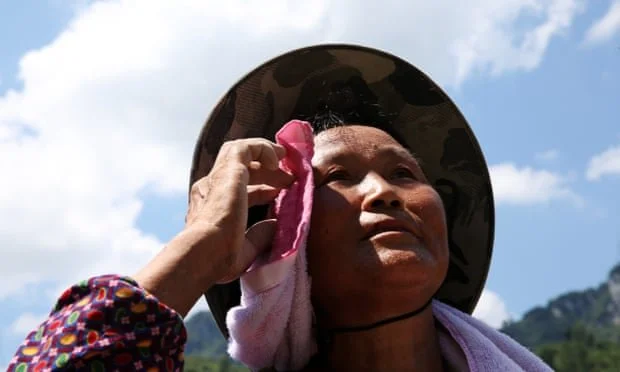
Extreme heat hit Chongqing in 2020 Photograph: Sipa Asia/REX/Shutterstock

Asia suffered its hottest year on record in 2020, the United Nations has said ahead of the CoP26 summit, with extreme weather taking a heavy toll on the continent’s development.

The mean temperature pushed 1.39C above the 1981-2010 average, according to a report by the UN’s World Meteorological Organization.

It said every part of the region had been affected with the 38C registered at Verkhoyansk in Russia recorded provisionally as the highest known temperature anywhere north of the Arctic Circle.

“Extreme weather and climate change impacts across Asia in 2020 caused the loss of life of thousands of people, displaced millions of others and cost hundreds of billions of dollars, while wreaking a heavy toll on infrastructure and ecosystems,” the WMO said in its State of the Climate in Asia report.

“Sustainable development is threatened, with food and water insecurity, health risks and environmental degradation on the rise.”

The report comes days before CoP26, the UN climate change conference being held in Glasgow from Sunday 31 October to November 12.

The report also laid bare the total annual average losses due to climate-related hazards.

China suffered an estimated $238bn, followed by India at $87bn, Japan with $83bn and South Korea on $24bn.

But when the size of the economy is considered, the average annual losses are expected to be as high as 7.9% of gross domestic product for Tajikistan, 5.9% for Cambodia and 5.8% for Laos.

Increased heat and humidity are forecast to lead to an effective loss of outdoor working hours across the continent, with a potential cost of many billions of dollars.

“Weather and climate hazards, especially floods, storms, and droughts, had significant impacts in many countries of the region,” said WMO chief Petteri Taalas.

“Combined, these impacts take a significant toll on long-term sustainable development.”

Many weather and climate-related displacements in Asia are prolonged, with people unable to return home or integrate locally, the report said.

In 2020 floods and storms affected approximately 50 million people in Asia, resulting in more than 5,000 fatalities.

This is below the annual average of the last two decades (158 million people affected and about 15,500 fatalities) “and is testimony to the success of early warning systems in many countries in Asia”, with around seven in 10 people covered.

In 2020, average sea surface temperatures reached record high values in the Indian, Pacific and Arctic Oceans.

Sea surface temperatures and ocean warming in and around Asia are increasing more than the global average.

They have been warming at more than triple the average in the Arabian sea, and parts of the Arctic Ocean.

Arctic sea ice minimum extent (after the summer melt) in 2020 was the second lowest on the satellite record since 1979.

There are approximately 100,000 square kilometres of glaciers on the Tibetan Plateau and in the Himalayas - the largest volumes of ice outside the polar regions and the source of 10 major Asian rivers.

“Glacier retreat is accelerating and it is projected that glacier mass will decrease by 20 percent to 40 percent by 2050, affecting the lives and livelihoods of about 750 million people in the region,” the report said.

“This has major ramifications for global sea level, regional water cycles and local hazards such as landslides and avalanches.”

A quarter of Asia’s mangroves are in Bangladesh. However, the tropical storm-exposed country’s mangroves decreased by 19 percent from 1992 to 2019, the report said.
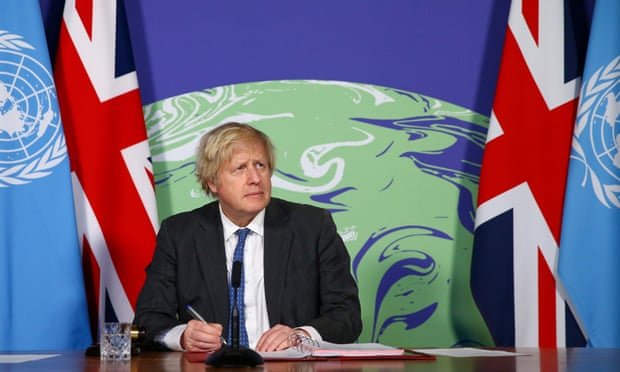
Boris Johnson says chances of Cop26 success are ‘touch and go’

Aubrey Allegretti

PM urges firms to reduce use of single-use plastics and dismisses recycling as ‘a red herring’

Boris Johnson said Cop26 would be ‘very, very tough … and I’m very worried because it might go wrong’. Photograph: Hollie Adams/EPA

It is “touch and go” whether Britain will broker deals adequate enough to curb irreversible climate change at Cop26, Boris Johnson has admitted, as he claimed that encouraging people to recycle more “isn’t the answer”.

The prime minister appeared to lower expectations about whether the global summit of leaders that begins this week would be a success, after the Russian president, Vladimir Putin, confirmed for the first time that he would not attend “in the light of the coronavirus situation”, according to Downing Street.

The move was expected by some UK government insiders, but it will still come as a blow to those who hoped the world leaders whose influence would be key to reducing emissions across the planet would gather around the negotiating table.

Ahead of Cop26 starting in Glasgow on Sunday, Johnson held a question-and-answer session with several dozen children at No 10 on Monday, where he dismissed the impact of encouraging individuals to recycle more.

“Recycling isn’t the answer, I’ve got to be honest with you,” he said. “You’re not going to like this. It doesn’t begin to address the problem. You can only recycle plastic a couple of times, really. What you’ve got to do is stop the production of plastic. Stop the first use of plastic. The recycling thing is a red herring … We’ve all got to cut down on our use of plastic.”

Johnson named and shamed Coca-Cola as being one of 12 corporations “producing the overwhelming bulk of the world’s plastics”. He said the production of the material for single-use items was a “massive problem” and that businesses should “find other ways of packaging and selling our stuff” such as using seaweed, banana leaves and coconuts as substitute materials.

The comment prompted shock from Simon Ellin, the chief executive of the Recycling Association, who told BBC Radio 4’s World at One programme it was “very disappointing” and that Johnson had “completely lost the plastic plot”. He said he agreed plastic production should be reduced, but that “we can’t get away” from needing it for containing and protecting food. Ellin said a strategy for tackling waste recently published by the government put recycling “right at the front of it”, so Johnson “seems to be completely contradicting his own government’s policy”.

Tanya Steele, the chief executive of WWF UK, who was fielding questions with Johnson at the event, appeared to take a different view. “We have to reduce, we have to reuse – I do think we need to do a little bit of recycling, PM, and have some system to do so,” she said.

Johnson interjected to say: “It doesn’t work. I don’t want to be doctrinaire about this, but if people think we can just recycle our way out of the problem, we’ll be making a huge mistake.”

He was also cautious about whether many breakthroughs will come when world leaders gather touch down in Scotland later this week. “I think it can be done,” Johnson said. “It’s going to be very, very tough, this summit, and I’m very worried because it might go wrong. We might not get the agreements that we need. It’s touch and go, it’s very, very difficult … It’s very far from clear that we’ll get the progress that we need.”

The prime minister said it was a “very fair criticism of the world” when challenged by a child on why political leaders were not treating the climate crisis as urgently as Covid. He added: “I share your alarm about where we need to be.”

As well as Putin’s refusal to attend, there are also concerns that China’s leader, Xi Jinping, who has not left his country since the Covid outbreak began, will also miss the event.

During the session, the prime minister also cracked a joke in response to Steele saying humans and domestic animals made up 97% of mammals on the planet, leaving limited resources for wild animals.

Johnson said that to rebalance nature, “we could feed some of the human beings to the animals”. He also joked that given that cows emit so much methane, “we have to encourage them to stop burping”.

When asked whether the government was deliberately trying to lower expectations, No 10 said Johnson’s downbeat comments on the summit meant he was “realistic about what a challenge this represents”.

His official spokesperson also attempted to downplay the comments on recycling, claiming that the prime minister had been “setting out that recycling alone is not enough”.

Asked for clarity on Johnson’s comments about people needing toconsume less, Downing Street would not say whether this meant eating less meat or buying fewer things, and refused to elaborate on the prime minister’s own environmental habits. His official spokesperson said: “There are practical steps people can take voluntarily, which we encourage.”

Madagascar: Severe drought could spur world’s first climate change famine

UN NEWS

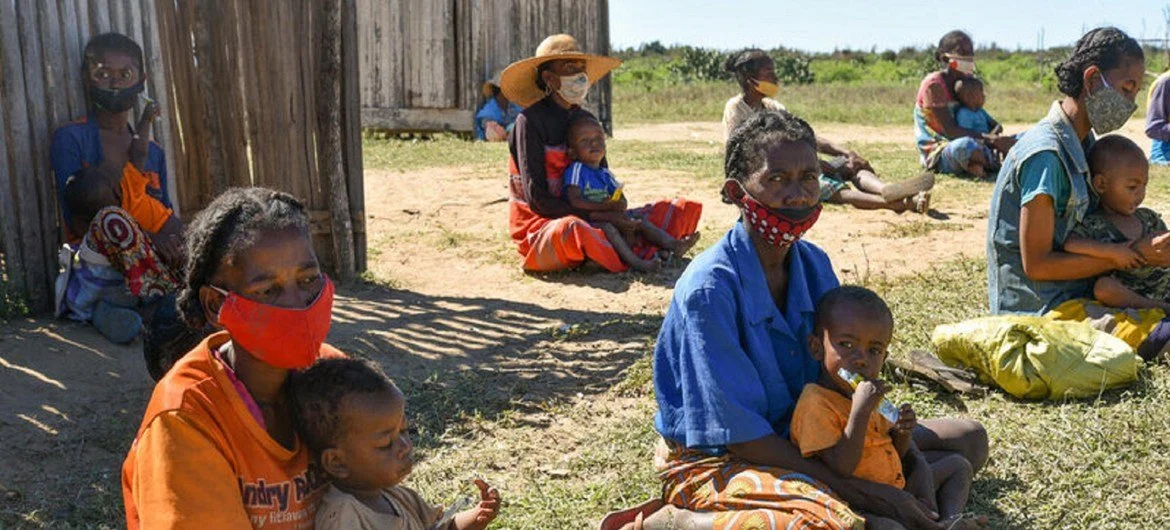
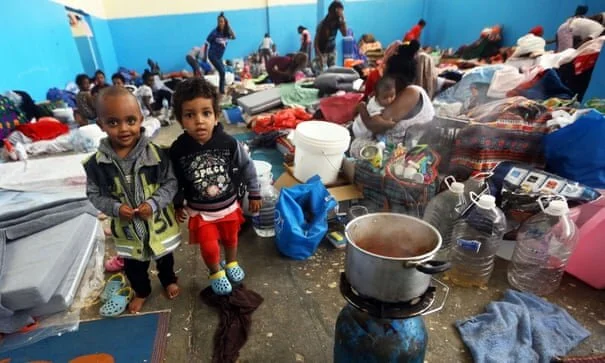
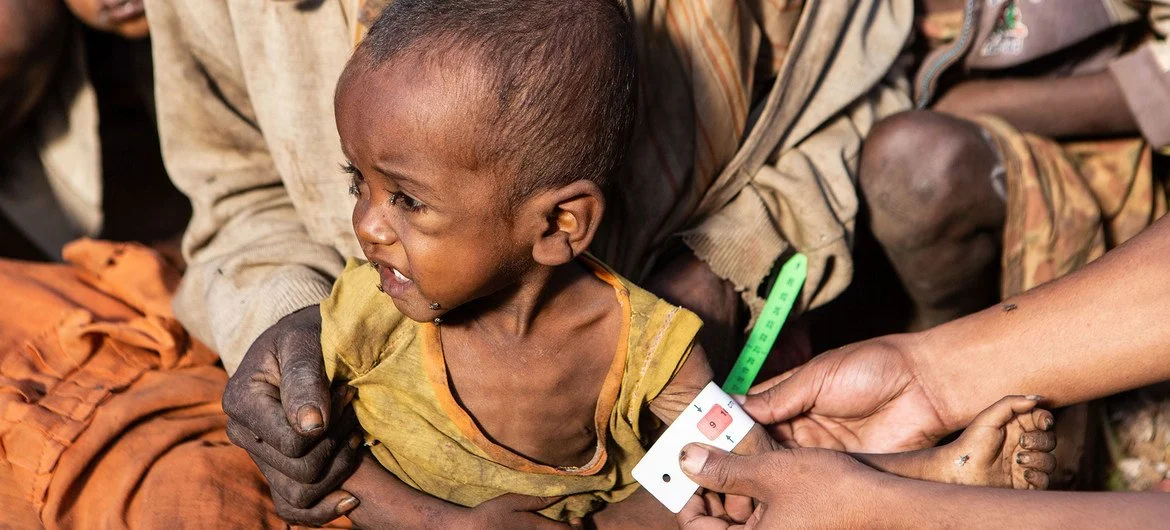
More than one million people in southern Madagascar are struggling to get enough to eat, due to what could become the first famine caused by climate change, according to the World Food Programme (WFP).

© WFP/Tsiory Andriantsoarana

Children under five are among the most affected by malnutrition in southern Madagascar.

The region has been hit hard by successive years of severe drought, forcing families in rural communities to resort to desperate measures just to survive. 

Madagascar, the fourth largest island in the world, has a unique ecosystem which includes animals and plants found nowhere else on the planet. The country experiences a dry season, usually from May to October, and a rainy season that starts in November.  

Daily life disrupted 

However, climate change has disrupted the cycle, affecting smallholder farmers and their neighbours, said Alice Rahmoun, WFP Communications Officer in the capital, Antananarivo, speaking to UN News on Thursday. 

“There is of course less rain, so when there is the first rain, they can maybe have hope and sow some seeds. But one little rain is not a proper rainy season,” she said.  

“So, what we can say is that the impacts of climate change are really stronger and stronger….so harvests fail constantly, so people don’t have anything to harvest and anything to renew their food stocks.” 

Varying impacts 

Ms. Rahmoun was recently in southern Madagascar, where WFP and partners are supporting hundreds of thousands of people through short and long-term assistance.   

The impact of the drought varies from place to place, she said. While some communities have not had a proper rainy season for three years, the situation might be even worse 100 kilometres away.  

She recalled seeing villages surrounded by dried-out fields, and tomato plants which were “completely yellow, or even brown”, from lack of water.  

Surviving on locusts 

“In some areas they are still able to plant something, but it's not easy at all, so they are trying to grow sweet potatoes.  But in some other areas, absolutely nothing is growing right now, so people are just surviving only eating locusts, eating fruits and cactus leaves,” said Ms. Rahmoun.   

“And, just as an example, cactus leaves are usually for cattle; it is not for human consumption.”   

The situation is even more dire because, she added, “even the cactus are dying from the drought, from the lack of rain and the lack of water, so it's really, really worrying”. 


Families barely coping  

© WFP/Krystyna Kovalenko I Every month, WFP provides food assistance to 750,000 people in Southern Madagascar

The plight of families is also deeply troubling. “People have already started to develop coping mechanisms to survive,” she said.  

“And that means that they are selling cattle, for example, to get money to be able to buy food, when before, they were able to get food and feed themselves from their own field production, so it's really changing the daily life for people.” 

Valuable assets such as fields, or even houses, are also put up for sale.  Some families have even pulled their children out of school. 

“It’s also a strategy right now to gather the family's forces on finding income-generating activities involving children, so this has obviously a direct impact on education,” Ms. Rahmoun said. 

Providing life-saving aid 

WFP is collaborating with humanitarian partners, and the Malagasy Government, to provide two types of response to the crisis.  Some 700,000 people are receiving life-saving food aid, including supplementary products to prevent malnutrition. 

“The second one is more long-term response to allow local communities to be able to prepare for, respond to and recover from climate shocks better,” said Ms. Rahmoun. “So, this includes resilience projects such as water projects.  We’re doing irrigation canals, reforestation and even microinsurance to help smallholder farmers to recover from a lost harvest, for example.” 

WFP ultimately aims to support up to one million people between now and April, and is seeking nearly $70 million to fund operations.  “But we are also involving more partners to find and fund climate change solutions for the community to adapt to the impacts of climate change in southern Madagascar.” 

COP26: Prioritize adaptation 

In just over a week, world leaders will gather in Glasgow, Scotland, for the COP26 UN climate change conference, which UN Secretary-General António Guterres has called the last chance to “literally turn the tide” on an ailing planet. 

Ms. Rahmoun said WFP wants to use the conference to shift the focus from crisis response, to risk management.  

Countries must be prepared for climate shocks, and they must act together to reduce severe impacts on the world’s most vulnerable people, which includes the villagers of southern Madagascar. 

“COP26 is also an opportunity for us to ask governments and donors to prioritize funding relating to climate adaptation programmes, to help countries to build a better risk management system, and even in Madagascar, because if nothing is done, hunger will increase exponentially in the coming years because of climate change,” she said, adding: “not only in Madagascar, but in other countries.”  


Guilt, grief and anxiety as young people fear for climate's future

Natalie Thomas
Barbara Lewis
Jonathan Shenfield

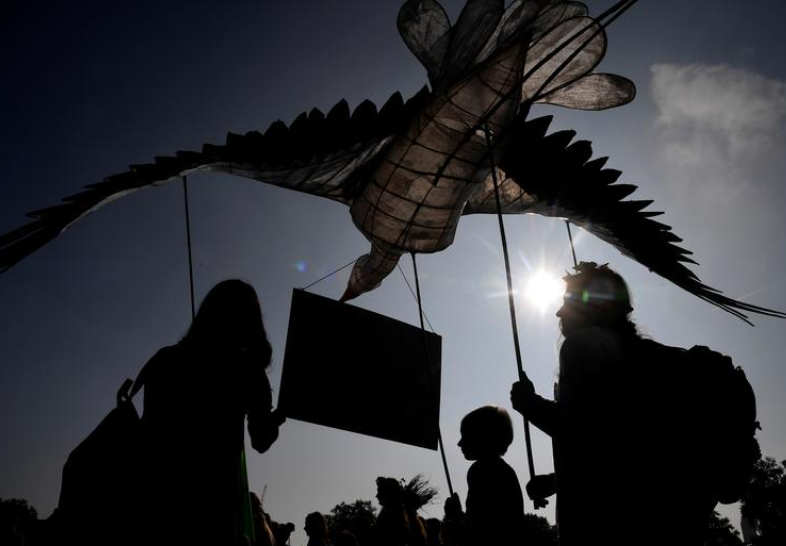
Environmental campaigners hold a stork puppet as they take part in a march and delivery of a petition to the Buckingham Palace, demanding that the British royal family rewild their land, ahead of the COP26 climate summit due to take place in November, in London, Britain, October 9, 2021. REUTERS/Toby Melville/File Photo

Broadly referred to as climate anxiety, research has stacked up to measure its prevalence ahead of the U.N. talks in Glasgow, which begin at the end of the month to thrash out how to put the 2015 Paris Agreement on curbing climate change into effect.

One of the biggest studies to date, funded by Avaaz, an online campaign network, and led by Britain’s University of Bath, surveyed 10,000 young people aged 16-25 years in 10 countries. It published its results in September.

It found around three quarters of those surveyed considered the future frightening, while a lack of action by governments and industry left 45% experiencing climate anxiety and distress that affected their daily lives and functioning.

Elouise Mayall, an ecology student at Britain’s University of East Anglia and member of the UK Youth Climate Coalition, told Reuters she had felt guilty and overwhelmed.

“What I’d be left with is maybe the sense of shame, like, ‘how dare you still want lovely things when the world is ending and you don’t even know if you’re going to have a safe world to grow old in’.”

She spoke of conflicting emotions.

“You might have sadness, there might be fear, there might be a kind of overwhelm,” she said. “And maybe even sometimes a quite like wild optimism.”

Caroline Hickman, a psychotherapist and lecturer at the University of Bath and one of the co-authors of the research published in September, is working to help young people manage climate-related emotions.

“They’re growing up with the grief and the fear and the anxiety about the future,” she told Reuters.

“SENSE OF MEANING”

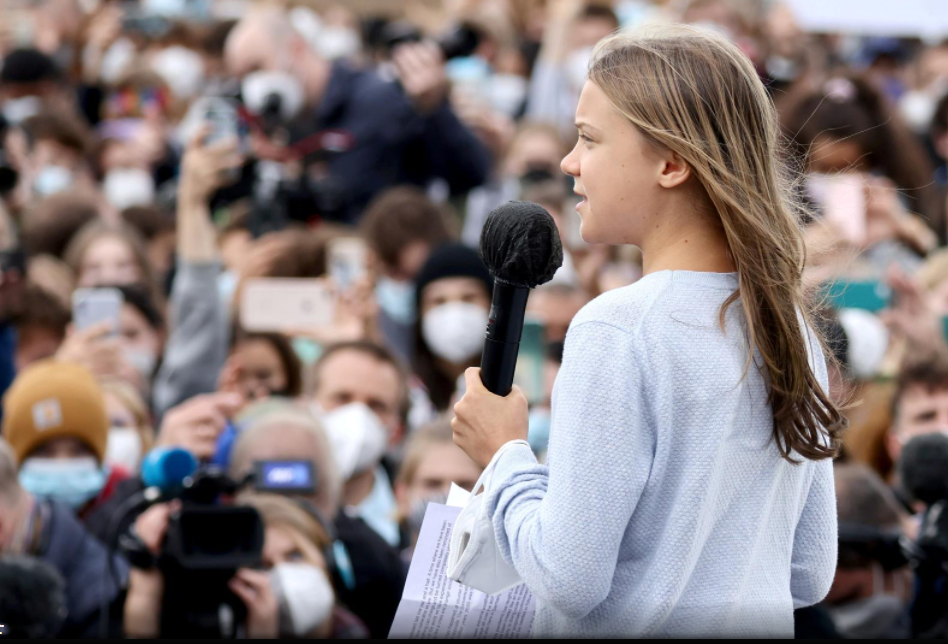
Swedish environmental activist Greta Thunberg speaks during the Global Climate Strike of the movement Fridays for Future in Berlin, Germany, September 24, 2021. REUTERS/Christian Mang/File Photo

Ice sculptures of children created by Sand in Your Eye to highlight the importance of COP26, the global climate conference, are seen at New Brighton Beach on the Wirral peninsular in New Brighton, Britain May 31, 2021. REUTERS/Jason Cairnduff/File Photo

London-based psychiatrist Alastair Santhouse sees climate change, as well as COVID-19, as potentially adding to the burden, especially for those pre-disposed to anxiety.

For now, climate anxiety alone does not normally require psychiatric help. Painful as it is, it can be positive, provided it does not get out of control.

“Some anxiety about climate change is motivating. It’s just a question of how much anxiety is motivating and how much is unacceptable,” said Santhouse, author of a book that tackles how health services struggle to cope with complex mental issues.

“The worry is that as climate change sets in, there will be a more clear cut mental health impact,” he added.

Among some of the world’s communities that are already the most vulnerable, extreme weather events can also cause problems such as post traumatic stress disorder.

Leading climate campaigner Greta Thunberg, 18, has experienced severe climate anxiety.

“It’s a quite natural response, because, as you see, as the world is today, that no one seems to care about what’s happening, I think it’s only human to feel that way,” she said.

For now, however, she is hopeful because she is doing everything she possibly can.

“When you take action, you also get a sense of meaning that something is happening. If you want to get rid of that anxiety, you can take action against it,” she said.

Your green credentials may be linked to your genes, scientists say

Sofia Quaglia

Identical twins have more similar views on environmental issues than non-identical ones, study finds

Some people are more environmentally conscious than others, and scientists say the reason could be in their genes.

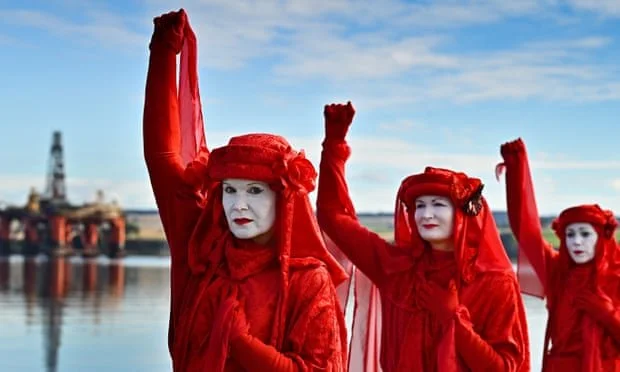
Extinction Rebellion protesters take part in a blockade of an oil rig maintenance facility in Scotland. Photograph: Jeff J Mitchell/Getty Images

A study has found that identical twins had more similar views on conservation and environmentalism than non-identical twins. The researchers say this suggests there could be a link between people’s genetic makeup and their support for green policies.

“The goal is to understand why people are different, and such differences come from the combination of genes and environments,” said Chia-chen Chang, a research fellow at the National University of Singapore and lead author on the paper published in the journal BioScience.

“Considering genetic components provides us with a more holistic answer to this question, but genetic results are just about probability, not determinism.”

The researchers used data for more than 1,000 twins from the TwinsUK registry, the country’s largest twin database. They examined responses from identical and non-identical twins to questions about their concern for nature, environmental activism and how environmentally friendly their own behaviour was.

The results suggest that identical twins consistently had more in common across all three categories. This, the scientists say, suggests a link between people’s genetics and their environmental behaviour, as well as suggesting that there is some heritability to environmentalist traits.

“I initially didn’t expect to detect moderate heritability of these traits,” said Chang, though she noted that the results were supported by previous research about evolution which showed heritability for some altruistic and cooperative behaviours.

But the social environment somebody grows up in and is surrounded by still explains more than 50% of individual concern for nature, environmental activism, and personal behaviour, the researchers say.

“Heritability suggests there are genetic components. But heritability estimates are influenced by both genetics and environments,” Chang said. “Our environmental behaviour is probably more complicated than we think.”

Felix Tropf, a professor in social science genetics at the Center for Research in Economics and Statistics, who was not involved in the study, said there was a long way to go to understand the role of heritability in people’s environmental attitudes.

“I don’t think such a study is extremely useful for the issue,” he said. “It might motivate further research that at some point might be very useful, but first it’s important to understand that all we basically observe is that genetically identical twins are more similar than non-genetically identical twins in their attitudes toward climate change.”

In fact, although there may be many genes associated with climate attitudes, they might all do different things in different ways. “There is no one gene that makes you closer to nature or anything like that at all,” said Tropf. He also suggested the researchers should have included information about whether the twins in the study were frequently exposed to nature, as that would be expected to have an impact on the results.

“It’s good to analyse the influences on individual behaviour towards environmentalism, but in the end, climate change is a structural problem, a systemic problem and a political problem,” he said.


Revealed: more than 120,000 US sites feared to handle harmful PFAS ‘forever’ chemicals

Carey Gillam and Alvin Chang

List of facilities makes it clear that virtually no part of the US appears free from the potential risk of air and water contamination with the chemicals

2513.jpg

The US Environmental Protection Agency (EPA) has identified more than 120,000 locations around the US where people may be exposed to a class of toxic “forever chemicals” associated with various cancers and other health problems that is a frightening tally four times larger than previously reported, according to data obtained by the Guardian.

The list of facilities makes it clear that virtually no part of America appears free from the potential risk of air and water contamination with the chemicals known as per- and polyfluoroalkyl substances (PFAS).

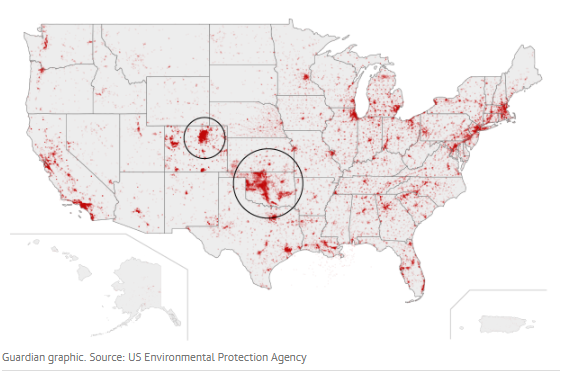
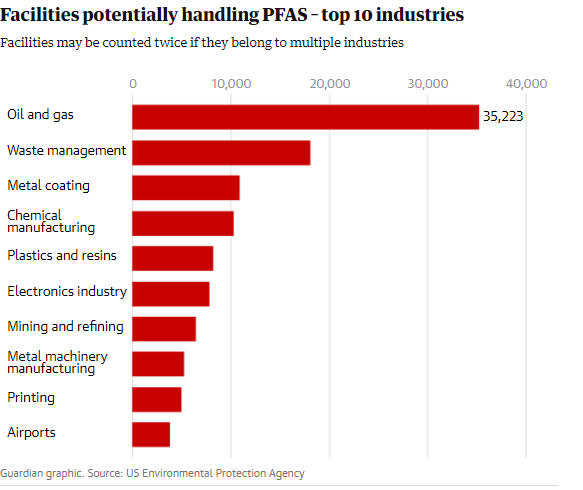
Colorado tops the EPA list with an estimated 21,400 facilities, followed by California’s 13,000 sites and Oklahoma with just under 12,000. The facilities on the list represent dozens of industrial sectors, including oil and gas work, mining, chemical manufacturing, plastics, waste management and landfill operations. Airports, fire training facilities and some military-related sites are also included.

The EPA describes its list as “facilities in industries that may be handling PFAS”. Most of the facilities are described as “active”, several thousand are listed as “inactive” and many others show no indication of such status. PFAS are often referred to as “forever chemicals” due to their longevity in the environment, thus even sites that are no longer actively discharging pollutants can still be a problem, according to the EPA.

The tally far exceeds a previous analysis that showed 29,900 industrial sites known or suspected of making or using the toxic chemicals.

The EPA identified more than 120,000 facilities that may expose people to PFAS

The biggest clusters of facilities are in Oklahoma and Colora

US EPA.PNG

People living near such facilities “are certain to be exposed, some at very high levels” to PFAS chemicals, said David Brown, a public health toxicologist and former director of environmental epidemiology at the Connecticut department of health.

Brown said he suspects there are far more sites than even those on the EPA list, posing long-term health risks for unsuspecting people who live near them.

“Once it’s in the environment it almost never breaks down,” Brown said of PFAS. “This is such a potent compound in terms of its toxicity and it tends to bioaccumulate … This is one of the compounds that persists forever.”

A Guardian analysis of the EPA data set shows that in Colorado, one county alone – Weld county – houses more than 8,000 potential PFAS handling sites, with 7,900 described as oil and gas operations. Oil and gas operations lead the list of industry sectors the EPA says may be handling PFAS chemicals, according to the Guardian analysis.

In July, a report by Physicians for Social Responsibility presented evidence that oil and gas companies have been using PFAS, or substances that can degrade into PFAS, in hydraulic fracturing (“fracking”), a technique used to extract natural gas or oil.

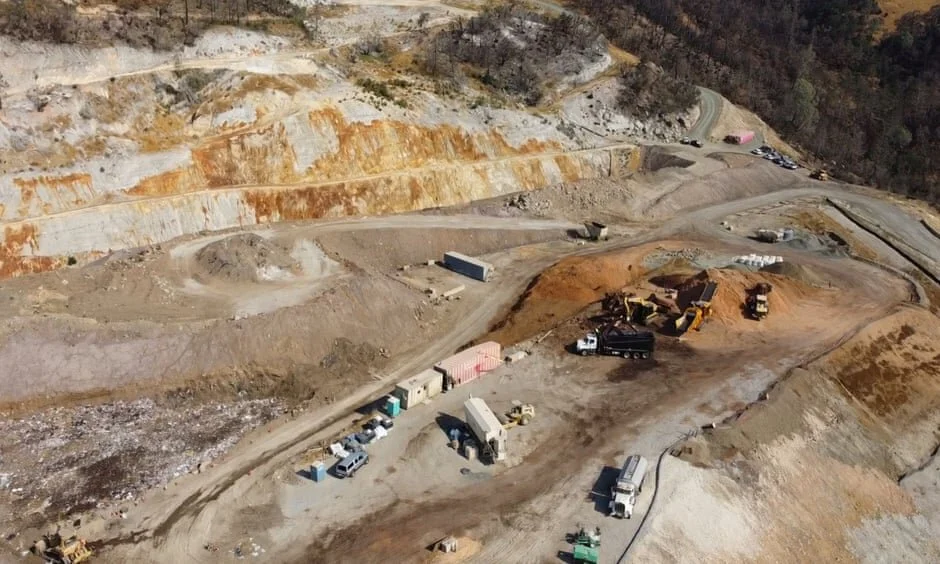
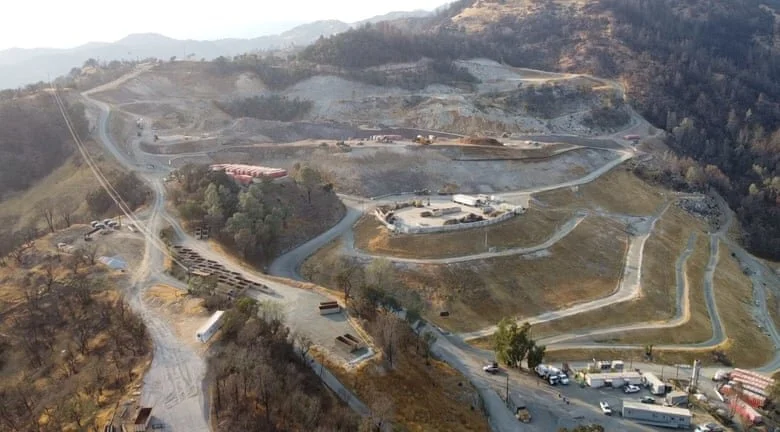
Water samples from Clover Flat landfill in Calistoga, California, have confirmed the presence of PFAS chemicals. Photograph: Courtesy of Brian Lilla

‘Permeating all industrial sectors’

The EPA said in 2019 that it was compiling data to create a map of “known or potential PFAS contamination sources” to help “assess environmental trends in PFAS concentrations” and aid local authorities in oversight. But no such map has yet been issued publicly.

Water samples from Clover Flat landfill in Calistoga, California, have confirmed the presence of PFAS chemicals. Photograph: Courtesy of Brian Lilla

Water samples from Clover Flat landfill in Calistoga, California, have confirmed the presence of PFAS chemicals. Photograph: Courtesy of Brian Lilla

The new data set shows a total count of 122,181 separate facilities after adjustments for duplications and errors in listed locations, and incorporation and analysis of additional EPA identifying information. The EPA facility list was provided to the Guardian by the non-profit Public Employees for Environmental Responsibility (Peer), which received it from the EPA through a Freedom of Information request. (Peer is currently representing four EPA scientists who have requested a federal inquiry into what they allege is an EPA practice of ignoring or covering up the risks of certain dangerous chemicals.)

“This shows how PFAS is permeating all industrial sectors,” said Peer’s executive director, Tim Whitehouse.

Capture_089.PNG

PFAS chemicals are a group of more than 5,000 man-made compounds used by a variety of industries since the 1940s for such things as electronics manufacturing, oil recovery, paints, fire-fighting foams, cleaning products and non-stick cookware. People can be exposed through contaminated drinking water, food and air, as well as contact with commercial products made with PFAS.

The EPA acknowledges there is “evidence that exposure to PFAS can cause adverse health outcomes in humans”. But the agency also says that there is only “very limited information” about human health risks for most of the chemicals within the group of PFAS chemicals.

EPA officials have started taking steps to get a grasp on the extent of PFAS use and existing and potential environmental contamination, as independent researchers say their own studies are finding reason for alarm. Last year, for instance, scientists at the non-profit Environmental Working Group issued a report finding that more than 200 million Americans could have PFAS in their drinking water at worrisome levels.

The EPA is expected to announce a broad new “action plan” addressing PFAS issues on Monday. The list of facilities handling PFAS is one part of the larger effort by the agency to “better understand and reduce the potential risks to human health and the environment caused by PFAS,” EPA deputy press secretary Tim Carroll told the Guardian.

“EPA has made addressing PFAS a top priority,” Carroll said. “Together we are identifying flexible and pragmatic approaches that will deliver critical public health protections.”

Linda Birnbaum, former director of the National Institute for Environmental Health Sciences and an expert on PFAS, said the EPA compilation of more than 120,000 facilities that may be handling PFAS and other recent moves shows the agency is taking the issue seriously, but more work is urgently needed.

“Unfortunately, where PFAS are used, there is often local contamination,” Birnbaum said. And while the EPA appears to be trying to get a handle on the extent of exposure concerns, progress “seems very slow”, she said.

The American Chemistry Council (ACC) asserts that PFAS concerns are overblown.

Major manufacturers have backed away from the PFOS and PFOA-related chemicals that research has shown to be hazardous, and other types of PFAS are not proven to be dangerous, according to the chemical industry organization. “PFAS are vital” to modern society, according to the ACC.

But public health and environmental groups, along with some members of Congress, say the risks posed to people by industrial use of PFAS substances are substantial.

Four US lawmakers led by Rosa DeLauro, chair of the House Committee on Appropriations, wrote to the EPA administrator, Michael Regan, on 6 October about their concerns regarding PFAS contamination of air and water from industrial facilities, saying: “For too many American families, this exposure is increasing their risk of cancer and other serious health problems.”

More than 150 advocacy groups also sent a letter to Regan calling for urgent action to address industrial discharges of PFAS chemicals, noting that many of the chemicals “have been linked at very low doses to serious health harms”.

Fears and foamy water

One of the sites on the EPA list is the Clover Flat landfill in Calistoga, California, a small community in the Napa Valley area that is popular for its vineyards and wineries. The landfill sits on the northern edge of the valley atop the edge of a rugged mountain range.

Clover Flat has taken in household garbage, as well as commercial and industrial waste since the 1960s, but over time the landfill has also become a disposal site for debris from forest fires.

Though the EPA list does not specifically confirm Clover Flat is handling PFAS, the community has no doubt about the presence of the toxic chemicals. A May 2020 water sampling report requested by regional water quality control officials showed that PFAS chemicals were present in every single sample taken from groundwater and from the leachate liquid materials around the landfill.

Close to 5,000 people live within a three-mile radius of the landfill, and many fear the PFAS and other toxins taken in by the landfill are making their way deep into the community.

Napa Valley resident Dennis Kelly lives downhill from the landfill and worries about contamination from the waste. Photograph: Courtesy of Brian Lilla

Napa Valley resident Dennis Kelly lives downhill from the landfill and worries about contamination from the waste. Photograph: Courtesy of Brian Lilla

Geoffrey Ellsworth, mayor of the small city of St Helena in Napa county, said multiple streams cross the landfill property, helping rains and erosion drive the chemical contaminants downhill into creeks and other water sources, including some used to irrigate farmland. He has been seeking regulatory intervention but has not been successful, he told the Guardian.

A small group of Napa Valley residents have been working on a documentary film about their concerns with the landfill, highlighting fears that exposures to PFAS and other contaminants are jeopardizing their health.

“The water is full of foam and looks soapy and smells funny,” said 69-year-old Dennis Kelly, who lives on a few acres downhill from Clover Flat. His dog Scarlett has become sick after wading through waters that drain from the landfill into a creek that runs through his property, Kelly said. And for the last few years he has suffered with colon and stomach cancer.

Kelly said he fears the water is toxic, and he has noticed the frogs and tadpoles that once populated the little creek are now nowhere to be found.

“Pollution is going to be what kills us all,” Kelly said.

From 'net zero' to 'mitigation,' here's how to sound smart on climate

Laura Smith-Spark
CNN

The whole world seems to be talking about the climate crisis, thanks to months of wild weather and new science showing that we need to act quicker than we previously thought to avoid the worst consequences.

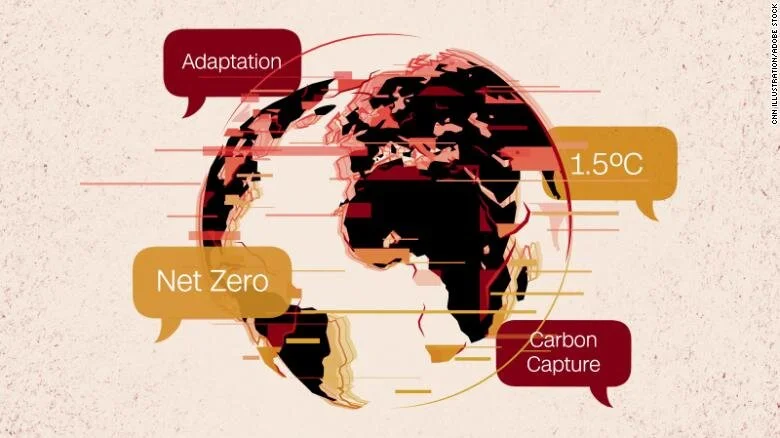
211014104718-20211013-climate-change-definitions-speech-bubbles-text-exlarge-169.jpg

As leaders prepare to meet in Glasgow, Scotland, next month for crunch talks, they'll be using a lot of technical lingo. The terminology isn't particularly communicative and can be daunting.

Even the name of the summit -- COP26 -- sounds more like a bad police drama than a climate event. (First pointer: COP is short for Conference of the Parties to the UN Convention on Climate Change. It convenes global leaders, scientists and negotiators on climate, and usually takes place annually. The "26" means Glasgow will be the 26th meeting.)

Here are other terms to know to keep up with the talks, understand what's at stake and, most importantly, sound smart around the dinner table.

Net zero emissions

Net zero emissions can be achieved by removing as much greenhouse gas from the atmosphere as what's emitted, so the net amount added is zero. To do this, countries and companies will need to rely on natural methods -- like planting trees or restoring grasslands -- to soak up carbon dioxide (CO2), the most abundant greenhouse gas we emit, or use technology to "capture" the gas and store it away where it won't escape into the atmosphere.

Dozens of countries have already pledged to achieve net zero by mid-century and there is huge pressure on countries that haven't yet to do so by COP26.

Negative emissions

To save the world from the worst effects of climate change, scientists say it's probably not enough to reach net zero. Net negative emissions is the situation where the amount of greenhouse gas removed from the atmosphere is actually more than the amount humans emit at a given period of time.

Carbon sinks

211014114835-climate-forest-tree-nursery-060921-file-restricted-exlarge-169.jpg

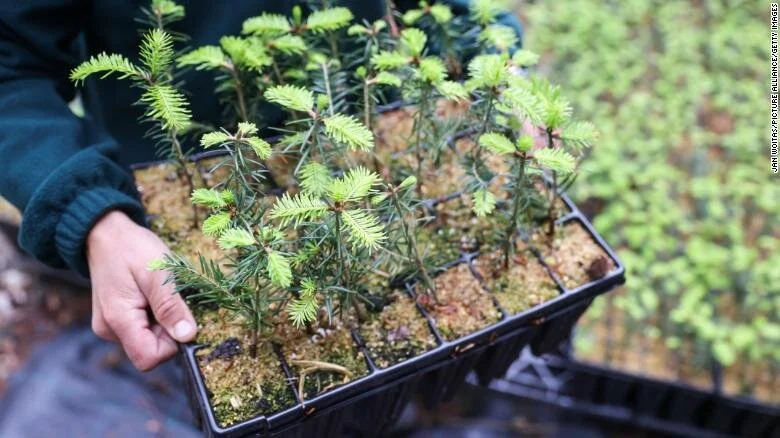
A container of young silver firs at a forest tree nursery in Pockau-Lengefeld, Germany.

This is a reservoir that absorbs carbon dioxide from the atmosphere and locks it away.

Natural sinks like trees and other vegetation remove CO2 from the atmosphere through photosynthesis -- plants use the carbon dioxide in the atmosphere to grow. The ocean is also a major carbon sink because of phytoplankton which, as a plant, also absorbs carbon dioxide.

Scientists say preservation and expansion of natural sinks such as forests are crucial to reducing emissions.

There are also artificial carbon sinks that can store carbon and keep it out of the atmosphere. More on that below.

Carbon capture and storage

Technology to remove and contain carbon dioxide from the atmosphere is known as carbon capture and storage. Carbon is usually captured at source -- directly from coal, oil or gas as it burns -- but new technology is being developed to literally suck carbon from the air.

In both cases, the carbon can be stored, usually buried in reservoirs underground or below the floor of the sea, in what are known as artificial carbon sinks. Some scientists warn that it could be risky to inject so much carbon underground, and this process isn't currently used on a large scale. The Global CCS Institute says just 27 commercial facilities are fully operating worldwide, while more than 100 others are in development. But other experts say CCS is necessary to put a real dent in our emissions.

There are many ways to capture and store carbon. Here are some of them:

  • Carbon dioxide capture and storage (CCS) is a process in which CO2 produced by heavy industry or power plants is collected directly at the point of emission, compressed and transported for storage in deep geological formations.

  • Carbon capture, utilization and storage (CCUS) refers to the collection of CO2 from industrial sources, which is then used to create products or services, such as manufacturing fertilizer or in the food and beverage industry. (Fun fact: This CO2 can be pumped into your beer to make it fizzy.)

  • Direct air capture and storage (DACS, DAC or DACC) is a chemical process which removes CO2 directly from the air for storage. There were 15 direct air capture plants operating worldwide, according to a June 2020 International Energy Agency (IEA) report.

NDCs

Nationally Determined Contributions -- or NDCs -- is a term used by the UN for each country's individual national plan to slash greenhouse gas emissions.

In the 2015 Paris Agreement, which nearly the whole world signed on to, countries were given the freedom to determine themselves how they would go about meeting the agreement's key targets to slow global warming.

NDCs are supposed to be updated every five years and submitted to the UN, the idea being that each country's ambition will grow over time. Dozens of countries have failed to submit their updates ahead of COP26.

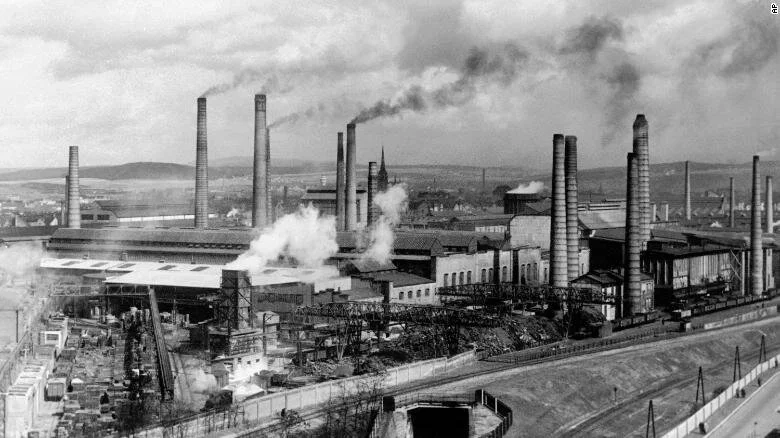
Smokestacks at Skoda's main foundry in Pilsen, then part of Czechoslovakia, on August 29, 1938.

Smokestacks at Skoda's main foundry in Pilsen, then part of Czechoslovakia, on August 29, 1938.

Pre-industrial levels

This usually refers to average concentration of carbon dioxide in the atmosphere before the Industrial Revolution, which started in the late 18th century. CO2 levels are estimated to have been around 280 parts per million at that time. By 2020, that concentration had risen to 412.5 parts per million, according to US government figures.

Scientists also talk about pre-industrial levels for average temperatures, using the period 1850-1900 to determine how hot or cold the Earth was before humans began emitting greenhouse gases at larger volumes, like those we see today.

1.5 degrees

A key goal of COP26 President Alok Sharma, a British MP, is "keeping 1.5 alive," which refers to a target to keep average global temperature rise to 1.5 degrees Celsius above pre-industrial levels. It's a target that some fossil fuel-producing countries have resisted, and scientists have warned of significantly worse impacts if this threshold is breached.

What is COP26? How the pivotal UN conference could avert global climate 'catastrophe'

The countries that signed the Paris Agreement in 2015 agreed to limit the increase in global temperatures to well below 2 degrees above pre-industrial levels, but preferably to 1.5 degrees. However, an analysis released last month by watchdog Climate Action Tracker (CAT) found that not a single major economy -- including the entire G20 -- had a climate plan that meets its obligations under Paris.

The United Nations' Intergovernmental Panel on Climate Change (IPCC) said in its latest state-of-the-science report that the world has already warmed by 1.1 degrees above than pre-industrial levels, and is now hurtling fast toward 1.5 degrees.

Climate finance

More than 10 years ago, at COP16 in Cancún, Mexico, the developed world agreed to transfer money to developing countries to help them limit or reduce their greenhouse gas emissions and adapt to the climate crisis. They set up the Green Climate Fund (GCF) to facilitate some of this transfer, but countries and donors can send money through any means they like.

The money was supposed to build up and reach $100 billion annually by 2020, and that commitment was reaffirmed in the Paris Agreement. This money is often referred to broadly as "climate finance."

But the 2020 target was missed, and filling the gap is high on the agenda for the talks in Glasgow.

Developing nations, particularly those in the Global South, which are most vulnerable to the effects of climate change, argue that industrialized nations are historically more responsible for climate change and must do more to fund changes to help developing nations adapt.

US President Joe Biden pledged to double the US' existing contribution plans, including money for the Green Climate Fund, in a speech at the UN General Assembly in September. Some critics say he should pledge more to make up for the Trump years, when no money was paid into the fund.

Adaptation

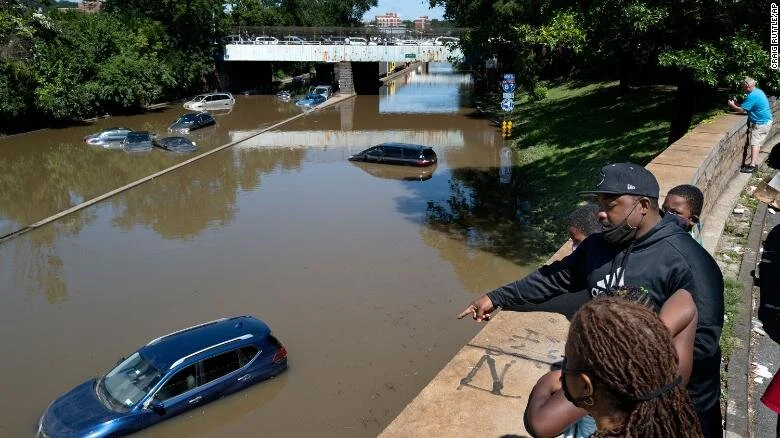
Vehicles stranded by high water in the Bronx borough of New York City after Hurricane Ida on September 2, 2021.

Vehicles stranded by high water in the Bronx borough of New York City after Hurricane Ida on September 2, 2021.

Adaptation refers to the way humans can change their lives to better cope with the impacts of climate change. These might include building early warning systems for floods or barriers to defend against rising sea levels, for example. In some places where rainfall is decreasing, planting drought-resistant varieties of crops can help ensure communities have enough food to eat.

Mitigation

Put simply, this refers to how humans can reduce greenhouse gas emissions, or remove them from the atmosphere, to ease the consequences of climate change.

Examples include using fossil fuels like coal, oil and gas more efficiently for industrial processes, switching from coal and gas to renewable energy sources such as wind or solar power for electricity, choosing public transport to commute over private vehicles that run on gasoline, and expanding forests and other means of absorbing carbon.

Unabated coal

You might hear leaders talking about the end of "unabated" coal. Unabated coal refers to coal burned in power stations where no action -- or "abatement" -- is taken to reduce the greenhouse gases emitted by its use. In short, this creates a loophole for some continued coal power in a net zero world, if the greenhouse gases it emits are captured.

Very few coal plants in the world, however, are using abatement technologies, and transitioning to renewables is often more economically feasible in the long term than employing them.

In its 2021 report "Net Zero by 2050," the International Energy Agency states that a "rapid shift" will be needed away from fossil fuels to achieve the goal, requiring steps such as "phasing out all unabated coal and oil power plants by 2040."

EVs

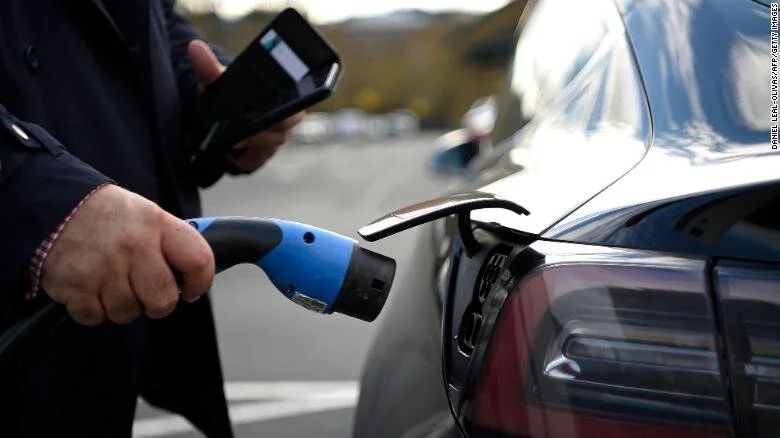
A customer prepares to charge a Tesla electric car at a supermarket in north London.

A customer prepares to charge a Tesla electric car at a supermarket in north London.

That's electric vehicles to you and me.

As electricity generated by renewables, like wind and solar, becomes more available, people are expected to start buying electric vehicles in greater numbers, especially as they become more affordable. That will mean fewer cars powered by oil on the roads, which is another topic on the agenda for COP26.

There may also be references to PHEVs -- those are plug-in hybrid electric vehicles, which are mostly powered by a battery charged from an electrical source but also have a hybrid internal combustion engine to allow travel over longer distances.

Just transition

This refers to the idea that the drastic changes needed to combat climate change should be fair to everyone.

As environmental campaign group Greenpeace says: "Put simply, a just transition is about moving to an environmentally sustainable economy (that's the 'transition' part) without leaving workers in polluting industries behind. It aims to support good quality jobs and decent livelihoods when polluting industries decline and others expand, creating a fairer and more equal society -- that's what makes it 'just.'"

Biodiversity

Biodiversity refers to all the Earth's living systems, on land and in the sea.

The UN's Global Biodiversity Outlook report published just over a year ago warned that the accelerating climate crisis was worsening the outlook for biodiversity -- that can mean all the trees, plants and animals in a forest, or all the fish and coral in a reef. "Biodiversity is declining at an unprecedented rate, and the pressures driving this decline are intensifying," it said.

Challenges include habitat loss and degradation, mass extinction of species, declining wetlands, and pollution by plastic and pesticides.

Earlier this year, the G7 countries -- the seven largest advanced economies -- agreed to conserve 30% of land and sea in their nations to protect biodiversity, a pledge they hope will be adopted by more countries at COP26.

The Paris Rulebook

At COP24 in 2018, world leaders agreed to come up with a set of rules meant to help curb global warming -- the so-called Paris Rulebook -- which is supposed to put into motion the Paris Agreement. But they did not resolve a critical but complicated issue involving how countries trade and account for certain types of pollution.

COP26 President Sharma has been showing more frustration recently that six years after Paris, the rulebook is still unfinished. "This must be resolved if we are to unleash the full power of the Paris Agreement," he said earlier in October.

COP26 organizers say the rulebook priorities are to: find a solution on carbon markets by creating a robust system of carbon credits; resolve issues around transparency, by putting in place a system that encourages all countries to keep their commitments; and to broker an agreement that drives ambition from governments to meet the 1.5-degree goal.

CNN's Ivana Kottasova contributed to this report.

Carbon emissions ‘will drop just 40% by 2050 with countries’ current pledges’

Rob Davies

International Energy Agency says $4tn investment needed over decade to reach net zero target

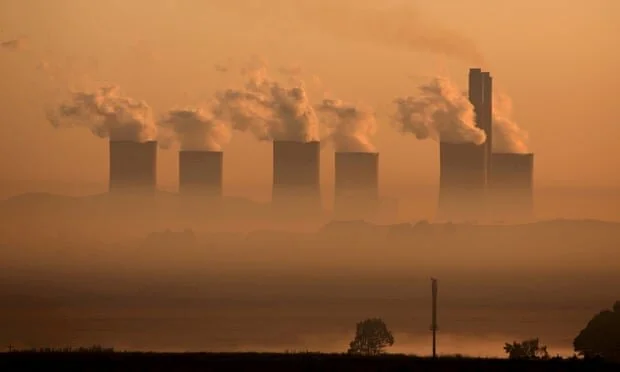
Steam rises from a coal-fired power station in South Africa. Sections of the report show coal use growing strongly, contributing to the second-largest increase in CO2 emissions in history. Photograph: Siphiwe Sibeko/Reuters

Steam rises from a coal-fired power station in South Africa. Sections of the report show coal use growing strongly, contributing to the second-largest increase in CO2 emissions in history. Photograph: Siphiwe Sibeko/Reuters

Current plans to cut global carbon emissions will fall 60% short of their 2050 net zero target, the International Energy Agency has said, as it urged leaders to use the upcoming Cop26 climate conference to send an “unmistakable signal” with concrete policy plans.

In its annual World Energy Outlook, redesigned this year as a “guidebook” for world leaders attending the summit in Glasgow, the IEA predicted that carbon emissions would decrease by just 40% by the middle of the century if countries stick to their climate pledges.

The organisation said the difference between current plans and the change necessary to reach the net zero target was “stark”, requiring up to $4tn (£2.94tn) in investment over the next decade alone to bridge the divide.

The IEA’s executive director Fatih Birol told the Guardian that major economies recovering from Covid-19 were already missing the opportunity to spur investment in clean energy.

“We are witnessing an unsustainable recovery from the pandemic,” he said, pointing to sections of the report that show coal use growing strongly, contributing to the second-largest increase in CO2 emissions in history.

Birol called for developing economies in particular to make tougher commitments to reducing carbon emissions. But he said this could not happen without leaders of wealthier nations attending Cop26 taking steps to unlock the flow of money into emerging economies, by applying pressure on private investors.

“I’d like to see world leaders … come together and give a political message to the world that we are determined to have a clean energy future.

“[They should say] we are determined, if you invest in old energy sources, dirty energy sources, you are risking to lose your money. If you invest in clean energy, you’ll make handsome profits.”

The IEA’s outlook estimates that 70% of the $4tn investment required to reach net zero must flow into emerging markets and developing economies.

Birol said the most powerful world leaders could make it a “mandatory task” for organisations such as the World Bank and International Monetary Fund to prioritise clean energy projects in those countries, acting as a catalyst for private capital.

The warning comes as the UK and Europe wrestle with sky-high gas prices that threaten to increase winter costs for consumers, shut down factories and disrupt under-pressure supply chains for food and retail.

The crisis has highlighted the danger of relying on fossil fuels subject to price volatility, but also the fact the region still relies heavily on gas, with renewables as yet unable to meet energy needs.

The IEA said the price crunch had given “advance warning” of the risk of moving too slowly towards renewables. Birol condemned as “inaccurate and misleading” recent claims that the energy price crisis had been partly caused by efforts to make the transition. “We will see that in a clean energy world, the shocks coming from doubling of oil and gas prices will be much less felt by consumers,” he said.

As heavy industry in the UK pleaded with the government for more support to survive high energy costs, Birol acknowledged that “temporary measures” may be needed to save struggling industries, as long as this was not at the expense of the clean energy transition.

Despite the IEA’s warnings about inadequate progress towards net zero, the organisation – set up by major economies in the wake of the 1973 oil crisis – said much of the extra investment required to reach the target could be done relatively easily.

More than 40% of the required reduction in emissions could come from measures that “pay for themselves”, the IEA said, such as improving efficiency, limiting gas leakage, or installing wind or solar in places where they are already cheap and efficient.

The IEA also pointed to the potential economic opportunities of net zero. It said existing pledges to reduce emissions would create 13m jobs but that stepping up the measures to meet the target would double that figure.

The required investment would create a market for wind turbines, solar panels, lithium-ion batteries, electrolysers and fuel cells of well over $1tn a year, comparable with the current oil market, it said.

Finance Ministers hold key to COP26 success: UN Secretary-General

UN NEWS
Climate and Environment

The COP26 climate change conference must be “a turning point” if countries are to limit global temperature rise in line with the Paris Agreement, UN Secretary-General António Guterres said on Tuesday. 

NOOR/Kadir van Lohuizen In Seychelles, efforts are undertaken to improve coastal protection from flooding caused by storms and a rise in sea level due to climate change.

NOOR/Kadir van Lohuizen
In Seychelles, efforts are undertaken to improve coastal protection from flooding caused by storms and a rise in sea level due to climate change.

Addressing members of the Coalition of Finance Ministers for Climate Action, he highlighted their critical role as the conference date fast approaches.  

The planet's resources still do not figure in countries’ calculations of wealth.

The current system is weighted towards destruction, not preservation.

The world must reconsider how GDP is calculated, reflecting nature's true value in all policies, plans and economic systems.

— António Guterres (@antonioguterres) October 12, 2021

“As Ministers of Finance, you hold the key to success for COP26 and beyond,” he said in a video message to their latest meeting, held from Washington, DC. 

“Your decisions and actions in the coming weeks will determine whether the global economic recovery will be low-carbon, resilient and inclusive or whether it will lock-in fossil fuel-intensive investments with high risks of stranded assets,” he added. 

Closing the gaps 

COP26 opens later this month in Glasgow, Scotland, and Mr. Guterres outlined three key areas where progress is needed. 

Countries must “swiftly close the emissions gap”, he said.  They also must be ready to update climate commitments to get the world back on track to keeping global temperature rise to 1.5 degrees Celsius above pre-industrial levels. 

Meanwhile, richer countries must also close “the finance gap” by providing, and exceeding, the $100 billion annually promised to support climate action in developing nations. 

“And this is just a starting point,” the UN chief said.  Public and private finance “must align with a net zero and resilient development pathway,” he added. 

“That is why I call on each of you as ministers of finance to take decisive steps to make climate risk disclosures mandatory in line with the recommendations of the Taskforce on Climate-Related Financial Disclosures.” 

Support for adaptation 

With climate change increasingly affecting lives and livelihoods each year, “Glasgow must deliver a breakthrough on adaptation”, the Secretary-General said. 

He urged the ministers to consider allocating half of all public climate finance in support of developing countries for adaptation. 

They were also encouraged to reconsider how Gross Domestic Product (GDP) is calculated, to reflect the true value of nature. 

“Nature’s resources still do not figure in countries’ calculations of wealth,” said Mr. Guterres.  “We need nature-based solutions for adaptation and mitigation.  The current system is weighted towards destruction, not preservation.” 

Measures to rebuild trust 

The Secretary-General underlined the critical role finance ministers have in the success of COP26 and beyond.  He said urgently improving access to climate and development finance will be key to rebuilding trust among countries at the conference. 

“Your representatives at the boards of multilateral development banks could request management to present as soon as possible a set of concrete measures, implementable by the end of next year at the latest, to address red tape issues and improve the speed and efficiency of systems and processes in all development finance institutions,” he added. 

As climate change and the ongoing COVID-19 pandemic pose new and unique challenges to low- and middle-income countries, the UN chief it was only logical to revise current thresholds for Official Development Assistance (ODA) to improve access to finance. 

He appealed for ministers to instruct their country representatives to the Organisation for Economic Co-operation and Development (OECD) to review the process for eligibility. 

The UN chief further called for ministers to support development of the Multidimensional Vulnerability Index, aimed at helping Small Island Developing States to access concessional financing. 

Halt destruction of nature or risk ‘dead planet’, leading businesses warn

Patrick Greenfield

Exclusive: executives demand meaningful action to protect ecosystems as UN biodiversity summit opens

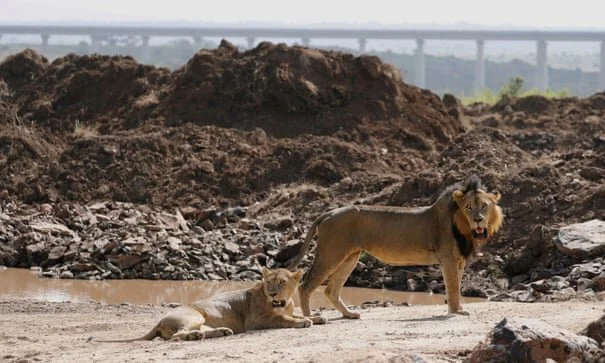
A lion and a lioness in Nairobi national park, Kenya. The current draft of the UN agreement for nature does not go far enough to stop loss of nature, say big businesses. Photograph: Baz Ratner/Reuters

A lion and a lioness in Nairobi national park, Kenya. The current draft of the UN agreement for nature does not go far enough to stop loss of nature, say big businesses. Photograph: Baz Ratner/Reuters

World leaders must do more to prevent the destruction of nature, business leaders have warned before a summit in China that aims to draw up a draft UN agreement for biodiversity.

In an open letter, the chief executives of Unilever, H&M and nine other companies have called on governments to take meaningful action on mass extinctions of wildlife and the collapse of ecosystems or risk “a dead planet”.

The warning comes as China prepares to assume the presidency of a major UN environment meeting for the first time by hosting the opening phase of the convention on biological diversity (CBD) Cop15 meeting in Kunming this week, with most delegates attending virtually.

In the second phase of talks next year, which have been delayed repeatedly because of the pandemic, governments will thrash out this decade’s targets for preventing biodiversity loss in person.

In the letter, the Business for Nature coalition said the current draft of a Paris-style UN agreement for nature, which includes targets to eliminate plastic pollution, reduce pesticide use by two-thirds and halve the rate of invasive species introduction by 2030, did not go far enough to halt the destruction of the natural world. Separately, more than 1,000 companies with $4.7tn (£3.5tn) in revenue have signed a call by the group for governments to adopt policies to reverse nature loss by 2030.

The Paris climate agreement, adopted in 2015, is a legally binding international treaty to tackle the climate crisis by pledging to hold global heating to below 2C, the scientifically advised limit of safety, with an aspiration not to breach 1.5C above pre-industrial levels.

“Nature is at a tipping point and time is against us. We must recognise nature loss for the crisis that it is,” said the letter to world leaders, shared exclusively with the Guardian. “We must understand that while it is critical for tackling climate change, nature represents more than simply a climate solution.

“The Cop15 biodiversity conference is our last and best chance of turning the tide of biodiversity loss. The draft Post-2020 Global Biodiversity Framework lacks the ambition and specificity required to drive the urgent action needed,” it said.

The executives urged world leaders to commit to an equivalent of the 1.5C climate target for nature around which businesses and civil society can unify, writing that current proposals were unclear. They also urged governments to eliminate and redirect all environmentally harmful subsidies and embed the economic value of nature in decision-making.

More than half of the world’s annual GDP – $42tn (£32tn) – depends on high-functioning biodiversity, according to a Swiss Re report last year, which also found a fifth of the world’s countries risk having their ecosystems collapse.

“We need to track our impact on the climate and nature with the same discipline we track our profit and loss,” said Roberto Marques, chief executive of Natura & Co, which owns the Body Shop and Aesop, who signed the letter. “We are calling on governments to eliminate and redirect all harmful subsidies. Governments still provide a lot of subsidies for industries and initiatives that are very harmful for nature.”

Marques said China’s presidency was an important moment as decisions made by the world’s largest greenhouse gas emitter would decide whether or not the world met environmental targets this century.

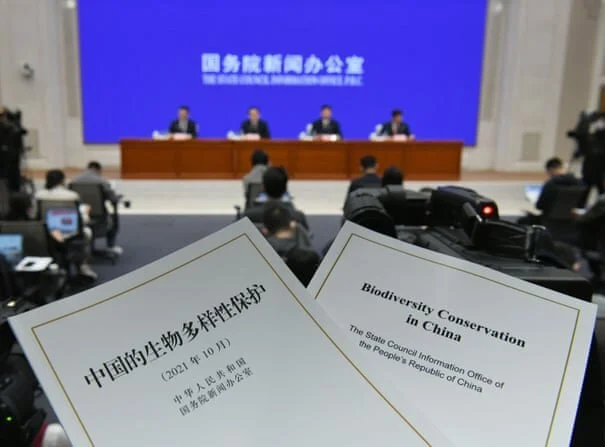
China, which is due to assume the presidency of Cop15, has set out its actions on biodiversity conservation in a white paper presented last week. Photograph: Xinhua/REX/Shutterstock

China, which is due to assume the presidency of Cop15, has set out its actions on biodiversity conservation in a white paper presented last week. Photograph: Xinhua/REX/Shutterstock

Eva Zabey, director of Business for Nature, said: “There’s a double drumbeat with Cop15 followed straight away by Cop26. We know that nature will be a key feature of Glasgow so this is our opportunity to really raise that policy ambition.

“What happened with the Paris agreement is that once you have political ambition, it gives companies that certainty to invest, innovate, shift their business models. By using the Earth’s limits as a framework, companies can make sure they are doing their fair share.”

China’s president, Xi Jinping, is expected to speak this week at the largely ceremonial first phase of Cop15. The Guardian understands that the second meeting, scheduled to be held in-person in Kunming from 25 April to 8 May 2022, may be moved from China due to pandemic border restrictions.

Elizabeth Maruma Mrema, the UN’s biodiversity chief, has had to spend three weeks in quarantine to attend the event in China, along with other CBD staff.

David Cooper, deputy executive secretary of the CBD, said that discussions were advancing well, despite the pandemic. “We look to political leaders to now mandate their negotiators to find consensus while ensuring the necessary ambition on biodiversity goals and the means to achieve them,” he said.

Filipina and Russian given 2021 award as organisers warn of threat to independent media worldwide

Journalists Maria Ressa and Dmitry Muratov win Nobel peace prize

Jon Henley, Pjotr Sauer in Moscow and Rebecca Ratcliffe, South-east Asia correspondent

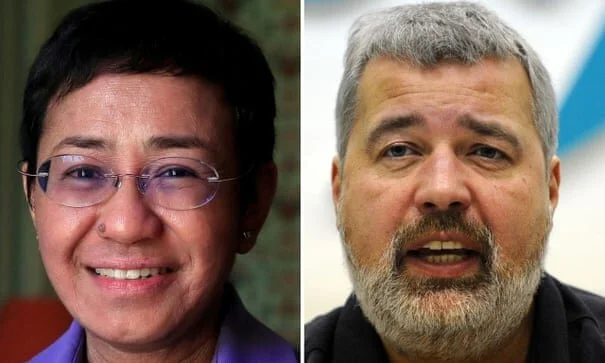
Maria Ressa (left), journalist and CEO of the Rapler news website, and Dmitry Muratov, editor-in-chief of Russia's main opposition newspaper Novaya Gazeta. Composite: Reuters; AFP

Maria Ressa (left), journalist and CEO of the Rapler news website, and Dmitry Muratov, editor-in-chief of Russia's main opposition newspaper Novaya Gazeta. Composite: Reuters; AFP

Campaigning journalists from the Philippines and Russia have won the 2021 Nobel peace prize as the Norwegian committee recognised the vital importance of an independent media to democracy and warned it was increasingly under assault.

Maria Ressa, the chief executive and co-founder of Rappler, and Dmitry Muratov, the editor-in-chief of Novaya Gazeta, were named as this year’s laureates by Berit Reiss-Andersen, the chair of the Norwegian Nobel Committee.


“Free, independent and fact-based journalism serves to protect against abuse of power, lies and war propaganda,” Reiss-Andersen said, praising the two journalists’ “courageous fight for freedom of expression, a precondition for democracy and lasting peace”.

A free press was essential to promoting “fraternity between nations, disarmament and a better world order”, she said, adding that the committee considered Ressa and Muratov to be “representatives of all journalists who stand up for this ideal in a world in which democracy and freedom of the press face increasingly adverse conditions”.

The press freedom NGO Reporters Without Borders (RSF), which says 24 journalists have been killed since the beginning of the year and 350 others imprisoned, called the award “a call for mobilisation to defend journalism” that had sparked a sense of both “joy and urgency”.

Ressa, 58, a former CNN bureau chief in the Philippines, and Rappler, the news site she founded in 2012, have faced multiple criminal charges and investigations after publishing stories critical of President Rodrigo Duterte and his bloody drugs war.

Nobel peace prize winner Maria Ressa: 'A world without facts means a world without truth' – video

In emotional comments aired on Rappler’s Facebook page, she said: “This is a recognition of how hard it is to be a journalist today. How hard it is to keep doing what we do … It’s a recognition of the difficulties, but also hopefully of how we’re going to win the battle for truth. The battle for facts. We hold the line.”

In a subsequent interview, Ressa, who is on bail pending an appeal against a conviction in a cyber libel case for which she faces up to six years in prison, said the award was for Rappler, and showed the Nobel peace prize committee had recognised that “a world without facts means a world without truth and without trust”.

When facts have become debatable, she said, and when “the world’s largest distributor of news prioritises the spread of lies laced with anger and hate – then journalism becomes activism … It’s about the facts, right?” She told Norwegian TV the reward gave her and Rappler “tremendous energy to continue the fight”.

Amal Clooney, a member of Ressa’s legal team, said: “I am so proud of my client and friend. She has sacrificed her own freedom for the rights of journalists all over the world. I hope the Philippine authorities will now stop persecuting her and other journalists, and that this prize helps to protect the press around the world.”

Muratov, 59, who was one of the founders of the independent newspaper Novaya Gazeta in 1993 and has been its editor-in-chief since 1995, told the Telegram news service Podyom: “We will continue to represent Russian journalism, which is now being suppressed. That’s all.”

He was later quoted by the Russian news agency Tass as saying the award “is for Novaya Gazeta, and also for those who died defending the right of people to freedom of speech. Now that they are no longer with us, [the Nobel committee] probably decided I should tell it to everyone.”

He then proceeded to list journalists murdered in Russia for their work: “It’s for Igor Domnikov, it’s for Yuri Shchekochikhin, it’s for Anna Stepanovna Politkovskaya, it’s for Nastya Baburova, it’s for Natasha Estemirova, for Stas Markelov. This is for them.”

Christophe Deloire, RSF’s secretary general, said there was “joy because this is an extraordinary tribute to journalism, an excellent tribute to two incredible figures, Maria and Dmitry”. But there was also a feeling of urgency, he said, because “journalism is in danger, journalism is weakened, journalism is threatened … all over the world”.

According to the RSF’s latest world rankings, the situation for press freedom is “difficult or very serious” in 73% of the 180 countries it evaluates, and “good or satisfactory” in only 27%. Attempts to stifle independent media – from physical violence through state censorship to targeted financial pressure – are multiplying around the world, the group says.

The Nobel committee said Rappler had focused “critical attention on the Duterte regime’s controversial, murderous anti-drug campaign” which had caused so many deaths that “it resembles a war waged against the country’s own population”.

Ressa and Rappler had also “documented how social media is being used to spread fake news, harass opponents and manipulate public discourse”, the committee said. It said of Muratov’s Novaya Gazeta that the newspaper was “the most independent newspaper in Russia today, with a fundamentally critical attitude towards power”.

The paper’s “fact-based journalism and professional integrity have made it an important source of information on censurable aspects of Russian society rarely mentioned by other media”, the committee said. Despite harassment, threats, violence and murder, Muratov had refused to abandon the newspaper’s independent policy.

“He has consistently defended the right of journalists to write anything they want about whatever they want, as long as they comply with the professional and ethical standards of journalism,” Reiss-Andersen said.

Pavel Kanygin, a veteran reporter at Novaya Gazeta, said: “This is great encouragement for us all; the last few months have been very difficult for Russian journalism. I hope this will help to protect us against attacks from the authorities. This is an award that is important not just for us, but the whole Russian independent journalist community.”

The Kremlin spokesperson, Dmitry Peskov, congratulated Muratov on winning the prize, hailing him as a “talented and brave” person.

The prestigious award is accompanied by a gold medal and 10m Swedish kronor (£840,000). The prize money comes from a bequest left by the prize’s creator, the Swedish inventor Alfred Nobel, who died in 1895.

This year’s nominees included the environmental activist Greta Thunberg, the Belarusian human rights activist and politician Sviatlana Tsikhanouskaya and the jailed Russian opposition figure Alexei Navalny.

Organisations nominated included Black Lives Matter, the World Health Organization, the Covax vaccine sharing body, and the press freedom groups RSF and the Committee to Protect Journalists.

Previous laureates include the Pakistani campaigner for female education Malala Yousafzai, anti-apartheid leader Nelson Mandela, US president Barack Obama, the Dalai Lama, Catholic missionary Mother Teresa, civil rights leader Martin Luther King, Chinese writer and activist Liu Xiaobo, and Soviet leader Mikhail Gorbachev.

Gorbachev, who helped fund the launch of Novaya Gazeta with the proceeds of his prize, said the decision was “good news” for the world’s press.

“This is good, very good news,” he said in a statement. “This award raises the importance of the press in the modern world to great heights.”

‘Eco-anxiety’: fear of environmental doom weighs on young people

Andrew Gregory

Although not a diagnosable condition, experts says climate anxiety is on the rise worldwide

3916.jpg

The climate crisis is taking a growing toll on the mental health of children and young people, experts have warned.

Increasing levels of “eco-anxiety” – the chronic fear of environmental doom – were likely to be underestimated and damaging to many in the long term, public health experts said.

Writing in the British Medical Journal, Mala Rao and Richard Powell, of Imperial College London’s Department of Primary Care and Public Health, said eco-anxiety “risks exacerbating health and social inequalities between those more or less vulnerable to these psychological impacts”.

Although not yet considered a diagnosable condition, recognition of eco-anxiety and its complex psychological effects was increasing, they said, as

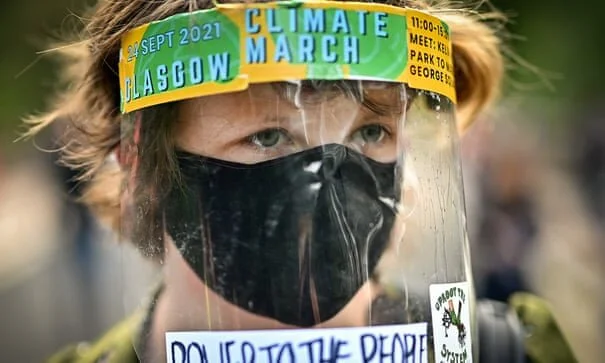
In September children and young people around the world, including Glasgow,
took part in protests against the climate crisis. Photograph: Jeff J Mitchell/Getty Images

was its “disproportionate” impact on children and young people.

In their article, they pointed to a 2020 survey of child psychiatrists in England showing that more than half (57%) are seeing children and young people distressed about the climate crisis and the state of the environment.

A recent international survey of climate anxiety in young people aged 16 to 25 showed that the psychological burdens of climate crisis were “profoundly affecting huge numbers of these young people around the world”, they added.

Rao and Powell called on global leaders to “recognise the challenges ahead, the need to act now, and the commitment necessary to create a path to a happier and healthier future, leaving no one behind”.

Research offered insights into how young people’s emotions were linked with their feelings of betrayal and abandonment by governments and adults, they said. Governments were seen as failing to respond adequately, leaving young people with “no future” and “humanity doomed”.

Their warning comes a week after Greta Thunberg excoriated global leaders, dismissing their promises to address the climate emergency as “blah, blah, blah”.

In April, she quoted Boris Johnson, who derisively used the phrase “bunny hugging” to describe climate activism. Thunberg said: “This is not some expensive, politically correct, green act of bunny hugging”.

By 2030 carbon emissions are expected to rise by 16%, according to the UN, rather than fall by half, which is the cut needed to keep global heating under the internationally agreed limit of 1.5C.

Rao and Powell said it was important to consider what could be done to alleviate the rising levels of climate anxiety.

Protest in a pandemic: voices of young climate activists – video

“The best chance of increasing optimism and hope in the eco-anxious young and old is to ensure they have access to the best and most reliable information on climate mitigation and adaptation,” they said. “Especially important is information on how they could connect more strongly with nature, contribute to greener choices at an individual level, and join forces with like-minded communities and groups.”

Separately, new research also published in the BMJ suggests changing unhealthy behaviour could be key to achieving net zero greenhouse gas emissions by 2050.

Theresa Marteau, of the University of Cambridge, said technological innovation alone would be insufficient.

Adopting a largely plant-based diet and taking most journeys using a combination of walking, cycling and public transport would substantially reduce greenhouse gas emissions and improve health, she said.

IMF cuts global economic forecast as pandemic ‘hobbles’ growth

Larry Elliott

Fund chief Kristalina Georgieva says most serious obstacle to full recovery remains Covid vaccine divide between rich and poor states

5000 (1).jpg

IMF boss Georgieva said: ‘We face a global recovery that remains “hobbled” by the pandemic and its impact … We are unable to walk forward properly – it is like walking with stones in our shoes!’ Photograph: AP

The head of the International Monetary Fund has warned the world economy remains “hobbled” by the Covid-19 pandemic as she revealed her organisation has revised down its forecast for global growth this year.

Kristalina Georgieva, the IMF’s managing director, said the most serious obstacle to a full recovery was the vaccine divide between rich and poor nations and warned the global economy could suffer a cumulative $5.3tn loss over the next five years unless it was closed.

Speaking ahead of the IMF’s annual meeting next week, Georgieva called on rich countries to make good immediately on their pledges to share stockpiles of vaccines with developing countries.

Kristalina Georgieva at a world economic outlook meeting in January 2020. Photograph: Fabrice Coffrini/AFP/Getty Images

“We face a global recovery that remains hobbled by the pandemic and its impact,” she said. “We are unable to walk forward properly – it is like walking with stones in our shoes!

“The most immediate obstacle is the ‘great vaccination divide’ – too many countries with too little access to vaccines, leaving too many people unprotected from Covid.”

In July, the IMF predicted 6% growth for the global economy in 2021, but Georgieva said this would be scaled back in new forecasts to be published in next week’s World Economic Outlook.

After a summer hit by supply-chain bottlenecks and rising inflationary pressures, the IMF chief said momentum in the US and China – the world’s two biggest economies – was slowing.

Although next week’s outlook will still predict a strong bounceback from the decline in global output seen in 2020, Georgieva said “the risks and obstacles to a balanced global recovery have become even more pronounced: the stones in our shoes have become more painful”.

Low-income nations were being hit by a combination of limited access to vaccines and a lack of the policy firepower deployed by rich nations to cope with the economic impact of the virus.

Georgieva said the divergence in economic fortunes was becoming “more persistent”, adding that while output in advanced economies was projected to return to pre-pandemic trends by 2022, it would take many more years for emerging and developing countries to recover.

“We can still reach the targets put forward by the IMF, with the World Bank, World Health Organization and World Trade Organization, to vaccinate at least 40% of people in every country by the end of this year, and 70% by the first half of 2022,” the IMF managing director said.

“But we need a bigger push. We must sharply increase delivery of doses to the developing world. Richer nations must deliver on their donation pledges immediately. And, together, we must boost vaccine production and distribution capabilities; and remove trade restrictions on medical materials.

“In addition to vaccines, we must also close a $20bn gap in grant financing for testing, tracing, and therapeutics. If we don’t, large parts of the world will remain unvaccinated, and the human tragedy will continue. That would hold the recovery back. We could see global GDP losses rise to $5.3tn over the next five years.”

With the COP26 conference in Glasgow, Scotland, a month away, Georgieva said fighting climate change was critical. She called for robust carbon pricing, much higher green investment and support for the most vulnerable.

A successful green transition could raise global GDP by 2% this decade and create 30m new jobs, she added.

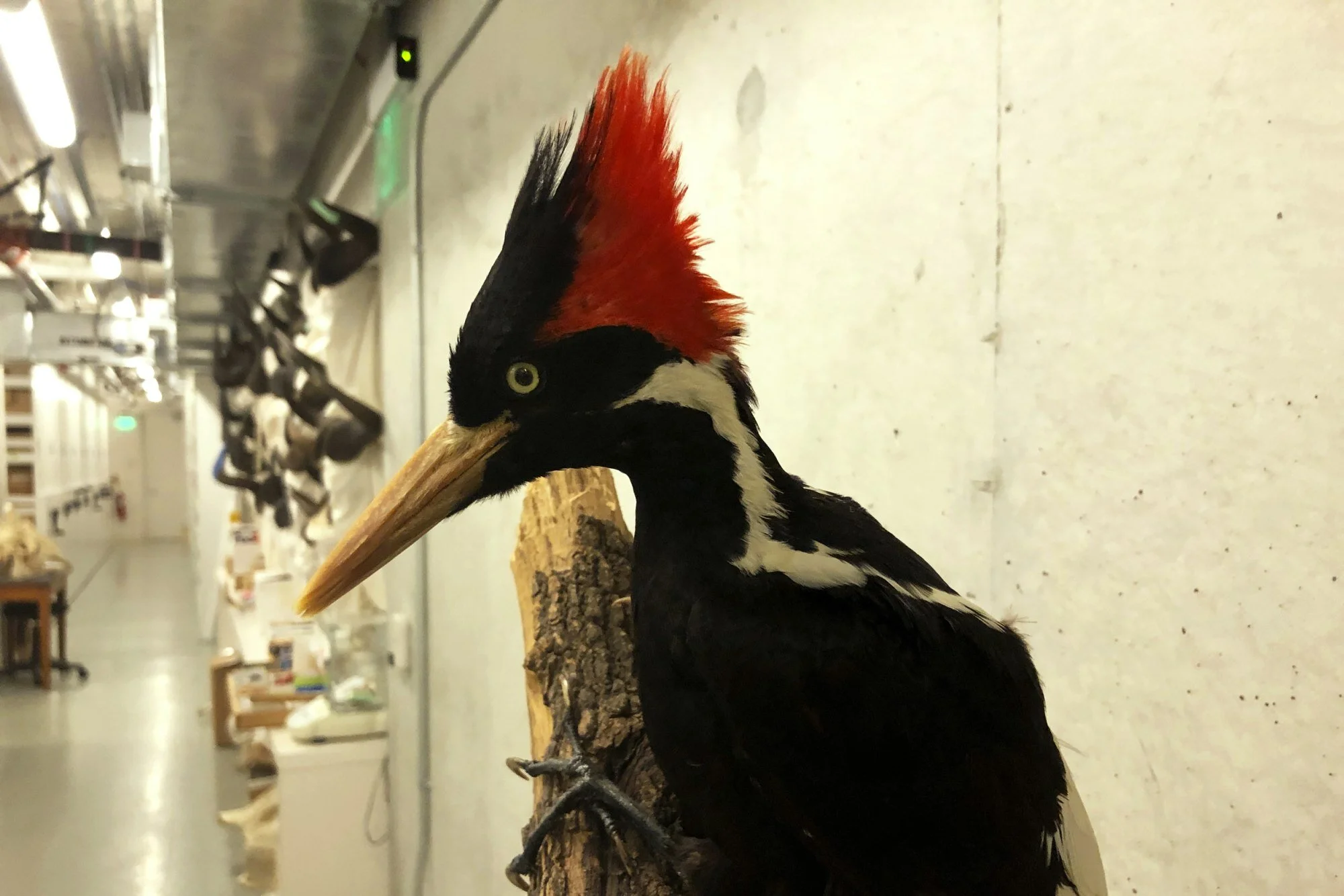
Ivory-billed woodpecker, more than 20 other species declared extinct by U.S. government

The Associated Press and Wilson Wong

210929-ivory-billed-woodpecker-al-0804.jpg

Climate change, habitat loss and other human-related factors contributed to the extinction of the 23 species, according to wildlife officials.

The U.S. government is ringing the death knell for 23 species of birds, fish and other wildlife, including the splendid ivory-billed woodpecker.

The U.S. Fish and Wildlife Service will officially declare the "Lord God Bird" extinct Wednesday after years of unconfirmed sightings and fruitless searches in the South.

The rare decision to remove more than 20 species from the endangered list forewarns the devastating impact climate change and habitat loss will have on global biodiversity, threatening many other animals and plants with extinction, federal officials said.

The factors behind the disappearances vary — too much development, water pollution, logging, competition from invasive species, birds killed for feathers and animals captured by private collectors. In each case, humans were the ultimate cause. Only 11 species have previously been removed because of extinction in the almost half-century since the Endangered Species Act was signed into law. Wednesday's announcement kicks off a three-month comment period before the species status changes become final.

Around the globe, 902 species have been documented as extinct. The actual number is thought to be much higher, because some are never formally identified, and many scientists warn that the Earth is in an "extinction crisis," with flora and fauna disappearing at 1,000 times the historical rate.

It's possible that one or more of the 23 species in Wednesday's announcement could reappear, several scientists said.

A leading figure in the hunt for the ivory-billed woodpecker said it was premature to call off the effort after millions of dollars have been spent on searches and habitat preservation efforts.

"Little is gained and much is lost" with an extinction declaration, said Cornell University bird biologist John Fitzpatrick, lead author of a 2005 study that claimed that the woodpecker had been rediscovered in eastern Arkansas.

"A bird this iconic and this representative of the major old-growth forests of the Southeast, keeping it on the list of endangered species keeps attention on it, keeps states thinking about managing habitat on the off chance it still exists," he said.

The International Union for Conservation of Nature, a Switzerland-based group that tracks extinctions globally, isn't putting the ivory-billed woodpecker into its extinction column because it's possible the birds still exist in Cuba, said Craig Hilton-Taylor, head of the organization's "red list unit."

Hilton-Taylor said there can be unintended but damaging consequences if extinction is declared prematurely. "Suddenly the [conservation] money is no longer there, and then suddenly you do drive it to extinction because you stop investing in it," he said.

Federal officials said the extinctions declaration was driven by a desire to clear a backlog of recommended status changes for species that hadn't been acted upon for years. They said it would free up resources for on-the-ground conservation efforts for species that still have a chance for recovery.

War crimes and crimes against humanity committed in Libya since 2016, says UN

Peter Beaumont

Fact-finding mission says migrants and detainees particularly exposed to violations since civil war


A detention centre in Zawiya, west of the Libyan capital, Tripoli. Photograph: Mahmud Turkia/AFP via Getty Images

A detention centre in Zawiya, west of the Libyan capital, Tripoli. Photograph: Mahmud Turkia/AFP via Getty Images

War crimes and crimes against humanity including murder, torture, enslavement, extrajudicial killings and rape have been committed in Libya since 2016, a United Nations investigation has found.

The independent fact-finding mission on Libya, commissioned by the UN Human Rights Council, said migrants and detainees were particularly exposed to violations that have occurred since the country was plunged into a state of instability and civil war.


Amid concerns about foreign mercenaries who have been operating in Libya, the experts said there were “reasonable grounds to believe” that personnel from a Russian private military company known as the Wagner Group “may have committed the crime of murder” in connection with evidence that they had fired gunshots directly at people not taking direct part in the hostilities.

The experts also cited reports indicating that the Libyan coastguard, which has been trained and equipped by the European Union as part of efforts to staunch the flow of migrants across the Mediterranean, had mistreated migrants and handed some over to detention centres where torture and sexual violence were “prevalent”.

The mission suggested that rights abuses that targeted minorities, women and other civilians were prevalent in the period they examined.

Oil-rich Libya has been torn by conflict since the 2011 toppling and killing of the dictator Muammar Gaddafi in a Nato-backed uprising, with rival administrations vying for power.

Since 2014 Libya has been split by warring administrations supported by Turkey in the west and Russian mercenaries in the east. As part of a UN-backed programme after the signing of a ceasefire last October, Libya is due to hold presidential and parliamentary elections at the end of 2021.

“The violence that has plagued Libya since 2011, and which has continued almost unabated since 2016, has enabled the commission of serious violations, abuses and crimes, including crimes against humanity and war crimes, against the most vulnerable,” the three members who led the mission said in their report.

“All parties to the conflicts, including third states, foreign fighters and mercenaries, have violated international humanitarian law, in particular the principles of proportionality and distinction, and some have also committed war crimes,” said Mohamed Auajjar, who chaired the mission.

He added: “Civilians paid a heavy price during the 2019-2020 hostilities in Tripoli, as well as during other armed confrontations in the country since 2016. Airstrikes have killed dozens of families.

“The destruction of health-related facilities has impacted access to health care and anti-personnel mines left by mercenaries in residential areas have killed and maimed civilians.”

Describing crimes committed against migrants, Chaloka Beyani, another mission member, said: “Migrants, asylum-seekers and refugees are subjected to a litany of abuses at sea, in detention centres and at the hands of traffickers.

“Our investigations indicate that violations against migrants are committed on a widespread scale by state and non-state actors, with a high level of organisation and with the encouragement of the state – all of which is suggestive of crimes against humanity.”

The unrest in the north African country has had a dramatic impact on Libyans’ economic, social and cultural rights, as borne out by attacks on hospitals and schools.

The mission said it had identified individuals and groups – both Libyan and foreign – who may bear responsibility for the violations, abuses and crimes. However, it said the list would remain confidential until it could be shared with appropriate accountability mechanisms.

Though the Libyan judicial authorities are investigating most of the cases documented in the report, the process “faces significant challenges”, the experts said.

In June 2020, the Human Rights Council – the UN’s top rights body – adopted a resolution calling for a fact-finding mission to be sent to Libya. The move had Tripoli’s support.

The experts, appointed in August last year, were charged with investigating alleged violations and abuses of international human rights law and international humanitarian law committed in Libya since 2016.

Auajjar was joined by fellow human rights experts Beyani and Tracy Robinson.

They gathered and reviewed hundreds of documents, interviewed more than 150 individuals and conducted investigations in Libya, Tunisia and Italy.

Their report documents the recruitment and direct participation of children in hostilities, plus the enforced disappearance and extrajudicial killings of prominent women.

The experts said anti-personnel mines left by mercenaries in residential areas had killed and maimed civilians.

Migrants seeking passage across the Mediterranean Sea to Europe were subjected to a litany of abuses in detention centres and at the hands of traffickers, said Beyani.

Violations are committed “on a widespread scale” by state and non-state actors, “with a high level of organisation and with the encouragement of the state – all of which is suggestive of crimes against humanity”, the Zambian expert said.

Agence France-Presse contributed to this report

7 climate action highlights to remember before COP26

1.     Billions planned for clean energy

IMF/Lisa Marie David I Workers clean solar panels at a solar farm in Manila, Philippines.

IMF/Lisa Marie David I Workers clean solar panels at a solar farm in Manila, Philippines.

More than $400 billion in new finance and investment was committed by governments and the private sector during the UN High-level Dialogue on Energy, the first leader-level meeting on energy under the auspices of the UN General Assembly in 40 years.

More than 35 countries, ranging from island states to major emerging and industrialized economies, made significant new energy commitments in the form of Energy Compacts.

For example, the No New Coal Compact includes Sri Lanka, Chile, Denmark, France, Germany, the UK, and Montenegro.

The countries involved in the coalition have committed to immediately stop issuing new permits for coal-fired power generation projects and cease new construction of coal-fired power generation, as of the end of 2021.

Several new partnership initiatives were announced during the event, aiming to provide and improve access to reliable electricity, to over a billion people.

You can find more about the important commitments here

2.     United States and China boosted climate action

The world’s two largest economies committed to more ambitious climate action during the high-level week of the General Assembly.

Unsplash/Kouji Tsuru I Air pollution from coal-fired power plants is linked to global warming and other damaging environmental and public health consequences.

Unsplash/Kouji Tsuru I Air pollution from coal-fired power plants is linked to global warming and other damaging environmental and public health consequences.

United States’ President Jose Biden announced that his country would significantly increase its international climate finance to approximately $11.4 billion a year.

Meanwhile, President Xi Jinping of China said that he would end all financing of coal-fired power plants abroad, and redirect support to green and low carbon energy generation.

While the announcements were most welcome, The UN Secretary-General flagged that there is still “a long way to go” to make UN climate conference (COP26) in Glasgow a success that ensures “a turning point in our collective efforts to address the climate crisis”.

3.     Africa Climate Week spurred regional action

UN Photo/Albert González Farran I Extreme weather like widespread drought is causing economic losses amongst farmers in Africa.

UN Photo/Albert González Farran I Extreme weather like widespread drought is causing economic losses amongst farmers in Africa.

People across Africa met virtually for several days to spotlight climate action, explore possibilities, and showcase ambitious solutions.

More than 1,600 participants actively joined in the virtual gathering, with the host Government of Uganda bringing together governments at all levels across the region, along with private sector leaders, academic experts, and other key stakeholders.

Janet Rogan, COP26 Regional Ambassador for Africa and the Middle East, said that the meeting enabled many stakeholders to build new partnerships and strengthen existing ones.

“Only by working together can we truly help to deliver on the ambition of the Paris Agreement while being conscious of the unique opportunities and challenges this presents in the region”, she said.

UN agencies were involved:

  • The World Bank examined economy-wide approaches for a sustainable, green recovery

  • The UN Development Programme (UNDP) explored how both climate risk and climate solutions are reshaping different sectors

  • The UN Environment Programme (UNEP) reimagined the future and looked at behaviors, technologies, and financing

  • The Food and Agriculture Organization (FAO) published its first ever stock take of Africa’s forests and landscapes revealing that up to 65 per cent of productive land is degraded, while desertification affects 45 per cent of Africa’s land area.

Africa has contributed little to climate change, generating only a small fraction of global emissions. However, it may be the most vulnerable region in the world already suffering of droughts, floods, and destructive locust invasions, among other impacts.

4.     COP hosts, the United Kingdom, asked countries to ‘secure the money’

UN Photo/Cia Pak I Prime Minister Boris Johnson of the United Kingdom of Great Britain and Northern Ireland addresses the general debate of the UN General Assembly’s 76th session.

UN Photo/Cia Pak I Prime Minister Boris Johnson of the United Kingdom of Great Britain and Northern Ireland addresses the general debate of the UN General Assembly’s 76th session.

Right at the beginning of the General Assembly, the UK Prime Minister Boris Johnson convened an emergency meeting to press for more action on climate finance and other measures ahead of UN COP26.

World leaders addressed the gaps that remain on the actions needed from national governments, especially the G20 industrialized powers, on mitigation, finance, and adaptation.

The UK Prime Minister warned that “history will judge” the world’s richest nations if they fail to deliver on their pledge to commit $100 billion in annual climate aid ahead of COP26. He placed the chances of securing the money before November at “six out of 10”.

Mr. Johnson also assured his country “will lead by example, keeping the environment on the global agenda and serving as a launchpad for a global green industrial revolution.” But warned: “No one country can turn the tide, it would be akin to bailing out a liner with a single bucket.”

5.     World leaders committed to reform Global Food Systems

© FAO/Sumy Sadurni I Food waste, pictured here at Lira market in Uganda, is a significant challenge for farmers and vendors alike.

© FAO/Sumy Sadurni I Food waste, pictured here at Lira market in Uganda, is a significant challenge for farmers and vendors alike.

Food systems cause as much as a third of greenhouse gas emissions, up to 80 per cent of biodiversity loss and use up to 70 per cent of freshwater reserves.

However, sustainable food production systems should be recognized as an essential solution to these existing challenges.

On 23 Sept, the first ever UN Food Systems Summit convened world leaders to spur national and regional action to transform the way we produce, consume and dispose of our food.

Following from the latest IPCC report, which raised a “code red” for human-driven global heating, the US administration, one of the world’s major agricultural producers, pledged $10 billion over five years to address climate change and help feed those most vulnerable without exhausting natural resources.

The Summit, called by the UN Secretary-General in 2019 to accelerate global progress by leveraging the interconnected importance of food systems, featured other commitments from more than 85 Heads of State around the world.

Many countries announced national initiatives to ensure their food systems met not only the nutritional needs of their populations but also goals around climate change, biodiversity, and decent livelihoods for all.  Business and civil society organizations also made important promises.  

Check out the 231 commitments made.

6.     No more ‘blah, blah, blah’

ICAN/Lucero Oyarzun I As part of the Fridays for Future school strikes, youth protest for climate action in Geneva in 2019. (file)

ICAN/Lucero Oyarzun I As part of the Fridays for Future school strikes, youth protest for climate action in Geneva in 2019. (file)

Almost 400 activists aged 15 to 29 from 186 countries met in Milan, Italy, a few days ago, to rev up the call for climate action. With weeks to go before COP26, they highlighted youth leadership and pushed for a far more climate conscious society.

Greta Thunberg, along with Ugandan environmentalist Vanessa Nakate was among the speakers at the Youth4Climate event, run by Italy and the World Bank Group.

“Build back better. Blah, blah, blah. Green economy. Blah blah blah. Net-zero by 2050. Blah, blah, blah. This is all we hear from our so-called leaders. Words that sound great but so far have not led to action. Our hopes and ambitions drown in their empty promises”, Thunberg said.
 “No more empty conferences, it’s time to show us the money”, added Nakate, 24, referring to the $100 billion in annual climate aid promised by the richest economists to help developing countries vulnerable to the impact of climate change.

"What do we want? We want climate justice now", highlighted Thunberg, known for inspiring a series of youth climate strikes around the world since 2018.

The three-day meeting finalized with a joint document to be presented at negotiation meetings during the preparation COP26 event, the Pre-COP, and then during the pivotal conference.

UN chief António Guterres thanked young people for contributing ideas and solutions in advance of the UN Climate Conference.

“Young people have been in the forefront of putting forward positive solutions, advocating for climate justice and holding leaders to account. We need young people everywhere to keep raising your voices,” he said in a video message.

7.     Next commitments to watch: the Pre-COP

Each UN Climate Conference (COP) is preceded by a preparatory meeting held about a month before, called Pre-COP. The meeting is the final formal, multilateral opportunity for ministers to shape the negotiations in detail ahead of the meeting in Glasgow in November.

UN Photo/Eskinder Debebe I UN Secretary-General António Guterres participates in a virtual briefing to update Member States on preparations for COP26 in Glasgow, UK.

UN Photo/Eskinder Debebe I UN Secretary-General António Guterres participates in a virtual briefing to update Member States on preparations for COP26 in Glasgow, UK.

The event, this year in Milan, brings together climate and energy ministers from a selected group of countries to discuss and exchange views on some key political aspects of the negotiations and delve into some of the key topics that will be addressed at COP26.

The meeting is taking place just weeks after a report by UN Climate Change found that nations must urgently redouble their climate efforts if they are to prevent global temperature increases beyond the Paris Agreement’s goal of 2C – ideally 1.5C – by the end of the century.

The issues under discussion in Milan include:

  • Reducing emissions to ensure that the 1.5C goal remains within reach

  • Provision of finance and support to developing countries to enable them to act on climate change

  • Improving approaches to averting, minimizing and addressing loss and damage from climate extremes

  • Establishing a global goal on adaptation to decrease vulnerability

  • Advancing the technicalities needed for countries to report on their climate actions and support needed or received

  • Advancing the detailed rules for the market and non-market mechanisms, through which countries can cooperate to meet their emission reduction targets

The Conference started on Sept 30th and closed on Oct 2nd.

Keep raising your voices, UN chief tells young climate leaders

With the climate crisis already devastating lives and incomes, young people will be critical to driving global action forward, UN Secretary-General António Guterres told participants attending the Pre-COP Youth Event in Milan, Italy, on Thursday.

ICAN/Lucero Oyarzun I As part of the Fridays for Future school strikes, youth protest for climate action in Geneva in 2019. (file)

ICAN/Lucero Oyarzun I As part of the Fridays for Future school strikes, youth protest for climate action in Geneva in 2019. (file)

Hundreds of delegates from across the world are taking part in the meeting, which is a precursor to the UN COP26 climate change conference in Glasgow, Scotland, in November.

‘Code red for humanity’

“Young people have been in the forefront of putting forward positive solutions, advocating for climate justice and holding leaders to account. We need young people everywhere to keep raising your voices,” he said in a video message.

The Secretary-General described the climate emergency as a “code red for humanity”, with the poorest and most vulnerable already hardest hit.

“The window of opportunity to prevent the worst impacts of the climate crisis is closing quickly. We know what needs to be done and we have the tools to do it,” he said.

Deliver on promises

Mr. Guterres urged the young climate leaders to keep speaking up “for a breakthrough in building resilience and ensuring that at least 50 per cent of climate support is for adaptation to protect lives and livelihoods.”

He outlined why their voices are needed now, including to get developed countries to finally deliver on their decade-old promise to provide $100 billion dollars annually in climate finance to developing nations.   

Meanwhile, Governments, businesses and investors still have yet to reduce their emissions in line with the 1.5-degree goal of the Paris Agreement, another area for youth advocacy.   

The target means countries must commit to achieving net-zero greenhouse gas emissions by the middle of the century, and clear plans to achieve them.

‘A powerful example’

The Secretary-General commended the Italian Government - which holds the co-presidency of COP26 with the United Kingdom - “for providing this global stage for young people to engage directly with policy-makers.”

He thanked young people for contributing ideas and solutions in advance of the UN climate conference.

“Your solidarity and demands for action set a powerful example,” he said. “We need national leaders to follow your example and ensure the ambition and results we need at COP26 and beyond.”

Cutting methane should be a key Cop26 aim, research suggests

Fiona Harvey

Oil and gas producers could reduce emissions at low cost or even at a profit by staunching leaks, says thinktank

Methane is about 80 times more potent than carbon dioxide in warming the planet. Photograph: CATF/Reuters

Methane is about 80 times more potent than carbon dioxide in warming the planet. Photograph: CATF/Reuters

Sharp cuts in methane from leaking gas drilling platforms and production sites could play a major role in the greenhouse gas emissions reductions necessary to fulfil the Paris climate agreement, and should be a key aim for the Cop26 UN climate talks, new research suggests.

Cutting global emissions of methane by 40% by 2030 is achievable, with most cuts possible at low cost or even at a profit for companies such as oil and gas producers. It would make up for much of the shortfall in emissions reductions plans from national governments, according to the Energy Transitions Commission thinktank.

Ahead of Cop26, senior UN and UK officials have privately conceded that the top aim of the conference – for all countries to formulate plans called nationally determined contributions (NDCs), that would add up to a global 45% cut in emissions by 2030 – will not be met.

However, the UK as hosts of the summit, to be held in Glasgow in November, still hope for enough progress to show that the world can still limit global heating to 1.5C, the aspiration of the 2015 Paris climate agreement.

Methane is a powerful greenhouse gas, about 80 times more potent than carbon dioxide in warming the planet. It is the biggest component of natural gas, used for fuel, and leaks can be caused by poorly constructed conventional drilling operations, shale gas wells, gas pipelines and other fossil fuel infrastructure. Methane is also flared from some oil production sites.

Advertisement

Staunching such leaks or capturing the methane instead can be done at a low cost, and can even be profitable for gas producers, especially now as the international gas price soars. Just a few key producers – Russia, the US, China and Canada – could make a massive impact.

Lord Adair Turner, chairman of the ETC, said: “It is clear that if you add up NDCs they are not big enough to keep us to 1.5C. There is a huge gap left. But there are some actions that you can imagine groups of countries taking that could close that gap.”

The US and the EU recently announced a partnership aiming at reducing methane emissions by 30% by 2030, but Turner said more could be achieved and this would help to compensate for the relatively unambitious NDCs that many countries have.

“We have not focused enough on methane, but it can be a really important lever, and cutting it has an impact [on global heating] sooner rather than later, which matters if there are feedback loops in the climate system,” he added.

Turner also pointed to other key actions that could be taken at Cop26 which he said would substantially help global efforts to tackle the climate crisis. For instance, helping developing countries to phase out their existing coal-fired power plants was one key way of reducing reliance on coal.

In India, for instance, new coal-fired power stations are now more expensive than renewable alternatives, yet the marginal cost of electricity generation from existing coal-fired power stations is still cheaper than wind or solar. That means companies have an incentive to keep old coal-fired power plants going, but if they could be paid to phase out the oldest, that would accelerate the country’s move away from coal.

“Developing countries need financial support to do this,” Turner said.

Steel should be another focus, according to Turner. Steel companies could move to “green” steel production, using hydrogen, far more easily than a few years ago, he said. A global agreement among steel producers at Cop26 could achieve that, and similar global agreements were possible among cement producers, the shipping industry and other high-carbon sectors.

Many countries, Turner added, were submitting NDCs that were too cautious or did not reflect how fast businesses were already cutting emissions and moving to green energy and clean technology. “NDCs have not caught up with what is possible and what is actually happening,” he said.

Food waste: a global problem that undermines healthy diets

UN NEWS

© FAO/Sumy Sadurni I Food waste, pictured here at Lira market in Uganda, is a significant challenge for farmers and vendors alike.

© FAO/Sumy Sadurni I Food waste, pictured here at Lira market in Uganda, is a significant challenge for farmers and vendors alike.

The call comes as the Food and Agriculture Organization (FAO) said that 17 per cent of all food available to consumers in 2019, ended up being thrown away.

When we don't waste food we aren't just saving it from the bin.

Reducing your #foodwaste has so many more benefits 👇#FLWDay pic.twitter.com/JncHzBzSI3

— FAO (@FAO) September 28, 2021

An additional 132 million people face food and nutrition insecurity today because of the COVID-19 pandemic, FAO said, ahead of the International Day of Awareness of Food Loss and Waste, on Wednesday 29 September.

Global problem

The problem of food waste is a global one and not limited to wealthy nations alone, said Nancy Aburto, Deputy Director of FAO’s Food and Nutrition Division Economic and Social Development Stream, speaking at a press conference in Geneva.

“Food insecurity, hunger and malnutrition are impacting every country in the world and no country is unaffected; 811 million people suffer hunger, two billion suffer micronutrient deficiencies – that’s vitamin and mineral deficiencies - and millions of children suffer stunting and wasting, deadly forms of under-nutrition.”

The FAO official warned that the high cost of “healthy” diets, meant that they were now “out of reach” of every region in the world, including Europe.

She also said that more countries needed to embrace innovation to reduce waste, such as new packaging that can prolong the shelf-life of many foods, while smartphone apps can bring consumers closer to producers, reducing the time between harvest and plate.

Repercussions of food waste

Reducing food loss and waste would improve agri-food systems and help towards achieving food security, food safety and food quality, all while delivering on nutritional outcomes.

According to FAO, it would also contribute “significantly to the reduction of greenhouse gas emissions, as well as pressure on land and water resources”.

With less than nine years left to reach Sustainable Development Goal (SDG) 12 on ensuring sustainable consumption, and target 12.3 to halve per capita global food waste at the retail and consumer levels, there is an urgent need to accelerate action, up to the 2030 deadline.

Takeaways for action:

  • Reducing food loss and waste, strengthens the sustainability of food systems and improves planetary health.

  • Increasing the efficiency of food systems and reducing food loss and waste, requires investment in innovation, technologies and infrastructure.

  • Composting food waste is better than sending it to a landfill, but preventing waste in the first place, lessens its impact on the environment.

  • Maximizing the positive impacts of reducing food loss and waste, requires good governance and human capital development.

However, this requires national and local authorities along with businesses and individuals to prioritize actions in this direction and contribute to restoring and improving agri-food systems.

Fruit and veg

And with just three months to go, during this International Year of Fruits and Vegetables, FAO has reminded that produce provides human nutrition and food security while working to achieve the SDGs.

“In the current health crisis we are facing around the world, promoting healthy diets to strengthen our immune systems is especially appropriate”, FAO chief QU Dongyu said, kicking off the year last December.

He also noted that food loss and waste in the fruits and vegetables sector remain a problem with considerable consequences, pointing out that “innovative technologies and approaches are of critical importance”, as they can help maintain safety and quality, “increasing the shelf life of fresh produce items and preserving their high nutritional value”

Smokers up to 80% more likely to be admitted to hospital with Covid, study says

Linda Geddes

Data also finds smokers more likely to die from disease compared with those who have never smoked

The findings contradict research published at the start of the Covid pandemic that suggested smoking could protect against the virus. Photograph: Jeff Chiu/AP

The findings contradict research published at the start of the Covid pandemic that suggested smoking could protect against the virus. Photograph: Jeff Chiu/AP

Smokers are 60%-80% more likely to be admitted to hospital with Covid-19 and also more likely to die from the disease, data suggests.

A study, which pooled observational and genetic data on smoking and Covid-19 to strengthen the evidence base, contradicts research published at the start of the pandemic suggesting that smoking might help to protect against the virus. This was later retracted after it was discovered that some of the paper’s authors had financial links to the tobacco industry.

Other studies on whether smoking is associated with a greater likelihood of more severe Covid-19 infection have produced inconsistent results.

One problem is that most of these studies have been observational, making it difficult to establish whether smoking is the cause of any increased risk, or whether something else is to blame, such as smokers being more likely to come from a lower socioeconomic background.

Dr Ashley Clift at the University of Oxford and colleagues drew on GP health records, Covid-19 test results, hospital admissions data and death certificates to identify associations between smoking and Covid-19 severity from January to August 2020 in 421,469 participants of the UK Biobank study – all of whom had also previously had their genetic makeup analysed.

Compared with those who had never smoked, current smokers were 80% more likely to be admitted to hospital and significantly more likely to die from Covid-19 if they became infected.

To investigate, Clift and his team used a technique called Mendelian randomisation, which uses genetic variants as proxies for a particular risk factor – in this case genetic variants that contribute to whether someone is more likely to smoke or to smoke heavily – to obtain further evidence for a causal relationship.

Even though the contribution of each of these variants is small and it is not necessarily understood why they increase a person’s chances of being a smoker, they avoid many of the limitations of observational studies and thereby help to give a clearer picture of whether there is a biological link between smoking and Covid-19.

“The study adds to our confidence that tobacco smoking does not protect against Covid-19, as their Mendelian randomisation analyses are less susceptible to confounding than previous observational studies,” wrote Dr Anthony Laverty and Prof Christopher Millett of Imperial College London in a linked editorial published in the journal Thorax.

The Mendelian randomisation analysis also supported the link between smoking and worse Covid-19 outcomes, finding that a genetic predisposition to smoking was associated with a 45% higher risk of infection and a 60% higher risk of hospital admission for Covid-19.

A genetic predisposition to heavy smoking was associated with a more than doubling in the risk of infection; a fivefold increase in the risk of hospital admission; and a tenfold increase in the risk of death from the virus, the team found.

Clift said: “Our results strongly suggest that smoking is related to your risk of getting severe Covid, and just as smoking affects your risk of heart disease, different cancers, and all those other conditions we know smoking is linked to, it appears that it’s the same for Covid. So now might be as good a time as any to quit cigarettes and quit smoking.”