REPOST: Adeyemi University of Education Awarded Two Distinguished Green Awards

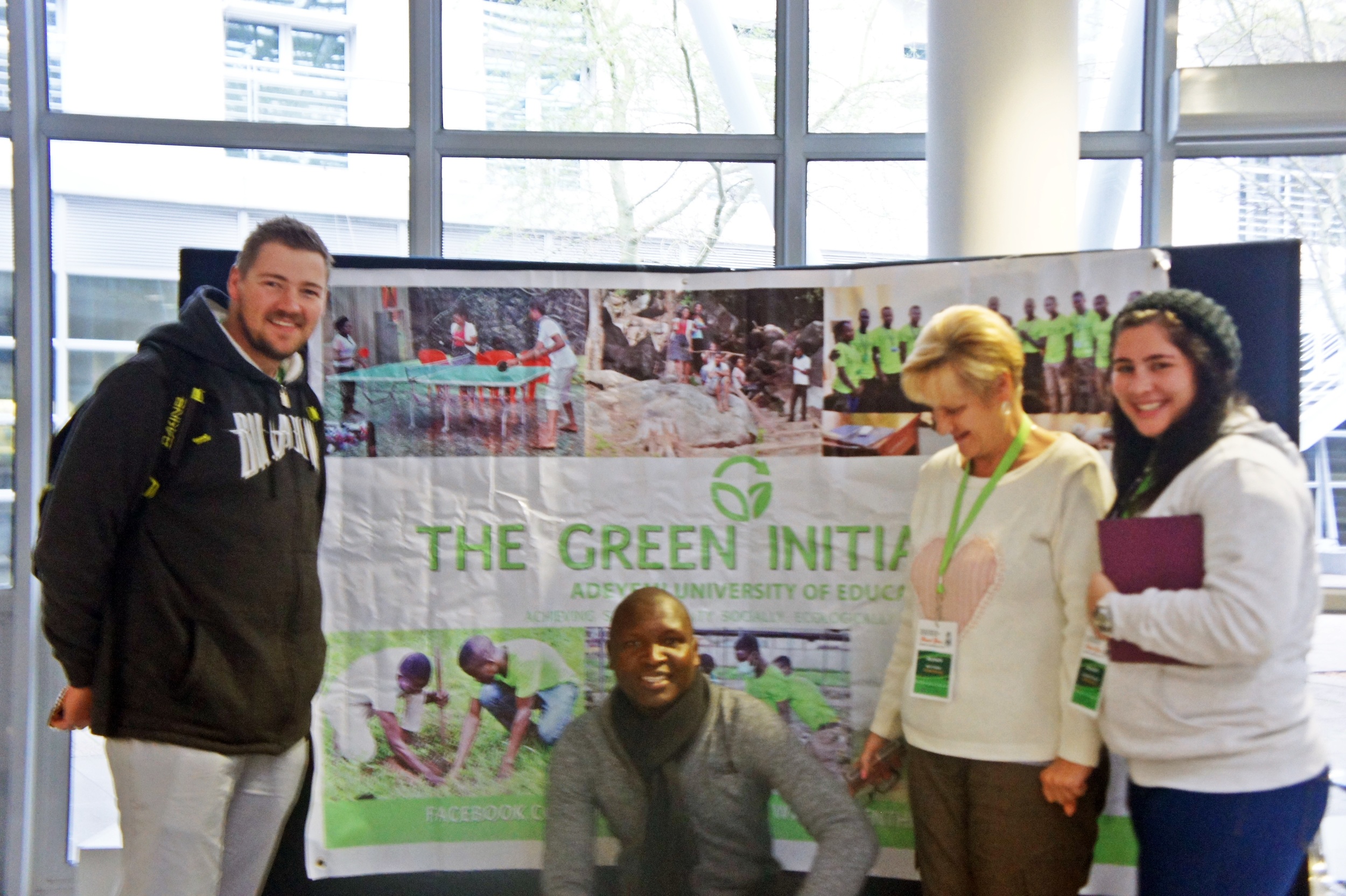
The Fourth Annual Green Campuses Conference 2015 was recently held at the University of Western Cape in South Africa from June 28-July 2nd 2015, and for innovators in the field of environmental sustainability, it was the place to be. The conference was organized by the Association of College and University Housing Officers – International (ACUHO-I) with the aim of promoting climate change interventions at colleges and university campuses. A major draw of the conference is the chance for participants to be informed about the National Framework for “Recreating the greener future” in South Africa through various platforms including curriculum design and assessment practices, material development, career development, and to effectively participate in the skills development opportunities within the Green Economy Sector.

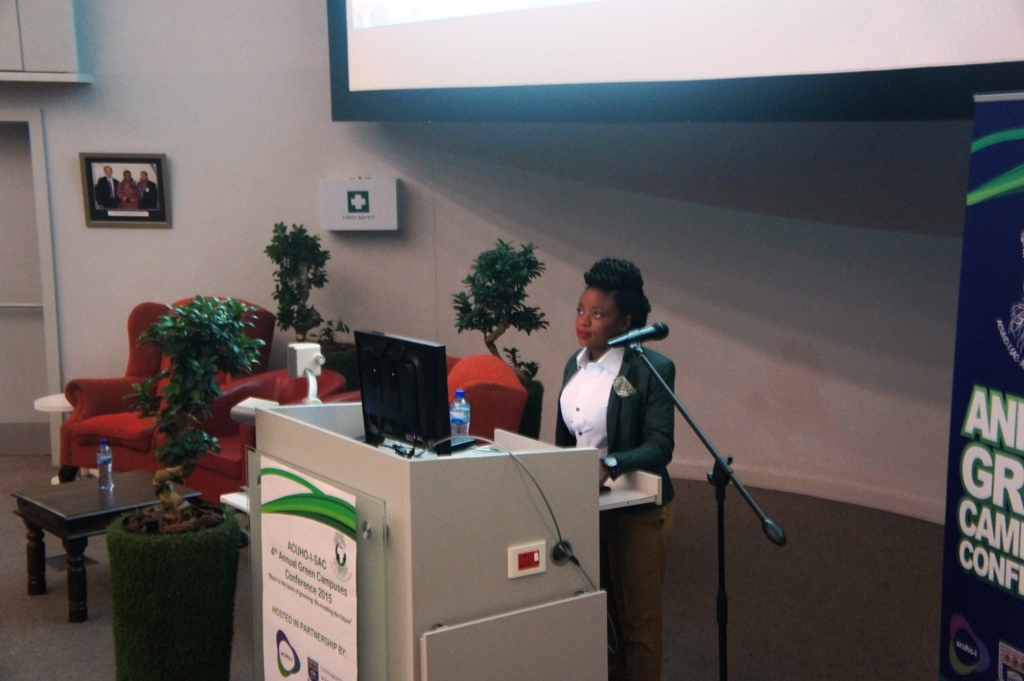
Adenike Akinsemolu, Initiator of the Green Campus Initiative at the  Adeyemi University of Education (AUE) delivered a speech titled “AUE’s Journey to Eco-sustainability” at the conference and her institution was awarded Distinguished Green Award (Silver Category) for Green Campus Activities & Programmes and Gold Category Award for the Best New Comer 2015 at the end of the conference. She shared the vision of the organisation which is creating a healthier, happier and more fertile community where staff and students are excited about their work and proud of their achievements. She also delivered her strategic plan for the organisation and explained that the goal of the Initiative include encouraging students and staff to think green, adopt green lifestyle, use bicycles and public transportation; reduce resource usage through recycling; raise Eco-conscious citizens by structuring curricular to focus more on sustainability; promote social entrepreneurship through the development of vocational skills, and create overall environmental awareness.

“The biggest obstacle in tackling climate change is the lack of knowledge about it. Even some who are aware of it, have the erroneous belief that it requires the effort of industrialized countries to curb it. We seek to change that mindset. To us, audience engagement equals powerful impact. We want to put environmental consciousness on the agenda. One of the major reasons for attending this conference is to foster a mutually beneficial collaboration between institutions in order to facilitate shared learning and public-private partnerships”, she said. She added that the Green Campus Initiative was well supported by the Provost of the institution, Professor Olukoya Ogen who is an ambassador of the initiative. The Green Initiative is in line with his vision for the university; therefore the school plans to commence the use of solar power as an alternative source of energy, to reduce the amount spent on diesel to power generators, come 2016.

For more information about the AUE’s Green Campus Initiative Click here or Like their Facebook Page.
Source: www.nigeriansinsouthafrica.com I Written by Adekunle Samuel Owolabi

REPOST: The 1st Annual AUE Green Series

It was undoubtedly an epoch-making event on the 3rd and 4th of June 2015 at the prestigious Adeyemi University of Education. The stage was set, lights glittered and everyone could testify at the caressing touch of the sun as they walked through the quadrangle to the historic Obasanjo Auditorium for the Green Series 101 (Day 1).

Soft music played as students and staffs waited patiently for the mystery behind ‘GREEN’ to be unraveled.  An initiative pioneered by the firm, laborious, studious, innovative and intelligent Lecturer from the integrated Science Department; Adenike Akinsemolu.

Like the final of the UEFA Champions league, the whistle blared and everyone stood up for the national anthem, which was led by some members of the Green Team. The program progressed with a spoken word video titled ‘Let’s Go Green’ by Olayinka Ojo, which featured a cameo appearance of the school provost in person of Prof. Olukoya Ogen and the evergreen school registrar, Mr. Felix Aderinboye.

Hands were continuously jamming as Ms. Adenike Akinsemolu gingerly walked to the stage to deliver her presentation. She succinctly and accurately presented her points ranging from waste management to conservation of energy, social entrepreneurship and advocacy. She stressed that corruption is responsible for the environmental hazard happening all around the world and that everyone should shun corruption. She closed the lofty presentation by asking everyone to say the Green pledge.

The excitement in the atmosphere was obvious and it was as though time stood still as the program continued with sessions of panelists ranging from lecturers, professionals, university and secondary school students who thoroughly discussed key issues. Dr. Mrs. Babajide (lecturer), Bankole Emmanuel (student) and Adebayo Boluwatife (HOMAJ student) were on the Energy panel. The waste management panel featured Mr. Sanni (lecturer), Akinbonmi Racheal (St. Louis student) and Foyin Adebayo (student). Omotola Akinsola (Social entrepreneur), Olayinka Ojo (student) and Rotimi Adetoyinbo (St. Joseph’s student) did justice to the aspect of social entrepreneur. Finally, the darling Mathematics Lecturer in person of Mr. Adenegan alongside Babajide Bright (Demonstration School student) and Aremu Bankole (student) was on the advocacy panel.

The program won’t be complete without the electrifying performance from Samuel Bliss (actress) and aerobic display from the Physical and Health Education Department. Gifts were given by the Founder of Homaj Schools and guess what? Prof. Olukoya Ogen (the provost) was named the fittest man on campus. Thanks to Engr. Adedeji who anchored the program.

The Day 1 of the program ended with remarks from the Dean of Science in person of Dr. F.O Balogun and the green cake received its judgment and the clicks of paparazzi blended into the night.

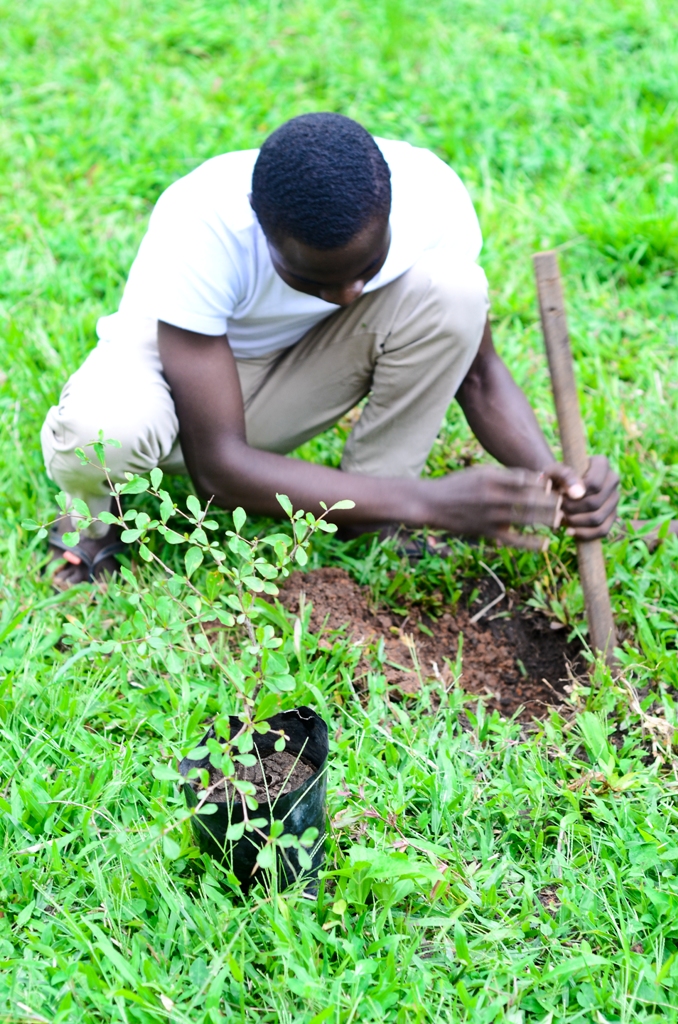
The 4th of June 2015 marks the day of action. Green members in their uniform led by Ms. Adenike Akinsemolu went around campus to plant flowers, clean the environment and remove unwanted posters responsible for visual pollution.

Creating a green and self-sustaining environment is the duty of all. Why don’t you join the green team to creating this daunting but rewarding task of greening Adeyemi University of Education.  Enjoy Pictures and Videos from our Launch of the Green Initiative below:

Source: www.aceondo.edu.ng

NATURE SERIES: Green Team visits the Magical Idanre Hills

The true definition of nature cannot be read but felt. The green team visited one of the worlds heritage site named by UNESCO; Idanre hill. The magical Idanre hill is located in Idanre town of Southwestern Nigeria, Ondo state. Time was not enough to explore the depth of beauty embodied in this beautiful hill and assemblage of natural architecture. From the natural landscapes to the cultural sites such as Owa’s Palace, Old Court, Thunder water (Omi Apaara) and so many others. After the 660 giant energy sapping steps we took to get to the of top the hill, words went into hiding to express  the massive light of beauty that beamed into our faces, we were in practical awe at the audacious beauty of nature. Trust us, cameras started clicking as we take different selfie poses with nature. A big thanks to our tour guard who reminded us of the time because we already lost consciousness of our wrist watches. Nature speaks, only a green ear can hear. Visit a beautiful place someday and you will love the experience.

10 Ways to Go Green

  1. Switch off all electrical appliances when you are not utilizing them.
  2. Don’t waste water; every drop counts
  3. Switch to compact fluorescent white bulb, it consumes less energy
  4. Patronize organic and local foods
  5. Exercise: ride a bicycle, take a walk etc.
  6. Recycle your waste
  7. Keep your electronics out of the trash
  8. Plant flowers and trees
  9. Give it away, don’t throw it away
  10. Use rechargeable batteries
  11. BONUS ITEM: Share what you’ve learned   

VIDEO: Let's Go Green

Enjoy the poetic side of going green in this spoken word video about achieving sustainability ecologically, economically and socially by Adeyemi College of Education's Green Team. It was performed by Olayinka Ojo, shot by Vincent Akinbinu and directed by Adenike Akinsemolu.

"A spoken word video about achieving sustainability ecologically, economically and socially by Adeyemi College of Education's Green Team. It was performed by Olayinka Ojo and edited by Adenike Akinsemolu."

15 Reason to Eat Organic Food

1-yo.jpg

Organic food was the only option for thousands of years. Now, with pesticides, herbicides, fungicides and genetically-modified foods, organic is still the best option. Here are 15 reasons to eat organic food:

1. In study after study, research from independent organizations consistently shows organic food is higher in nutrients than traditional foods. Research shows that organic produce is higher in vitamin C, antioxidants, and the minerals calcium, iron, chromium, and magnesium.

2. They’re free of neurotoxins–toxins that are damaging to brain and nerve cells. A commonly-used class of pesticides called organophosphates was originally developed as a toxic nerve agent during World War I. When there was no longer a need for them in warfare, industry adapted them to kill pests on foods. Many pesticides are still considered neurotoxins.

3. They’re supportive of growing children’s brains and bodies. Children’s growing brains and bodies are far more susceptible to toxins than adults. Choosing organic helps feed their bodies without the exposure to pesticides and genetically-modified organisms, both of which have a relatively short history of use (and therefore safety).                                                        

4. They are real food, not pesticide factories. Eighteen percent of all genetically-modified seeds (and therefore foods that grow from them) are engineered to produce their own pesticides. Research shows that these seeds may continue producing pesticides inside your body once you’ve eaten the food grown from them! Foods that are actually pesticide factories…no thanks.

5. The US Environmental Protection Agency (EPA) estimates that pesticides pollute the primary drinking source for half the American population. Organic farming is the best solution to the problem. Buying organic helps reduce pollution in our drinking water.

6. Organic food is earth-supportive (when big business keeps their hands out of it). Organic food production has been around for thousands of years and is the sustainable choice for the future. Compare that to modern agricultural practices that are destructive of the environment through widespread use of herbicides, pesticides, fungicides, and fertilizers and have resulted in drastic environmental damage in many parts of the world.

7. Organic food choices grown on small-scale organic farms help ensure independent family farmers can create a livelihood. Consider it the domestic version of fair trade.

8. Most organic food simply tastes better than the pesticide-grown counterparts.

9. Organic food is not exposed to gas-ripening like some non-organic fruits and vegetables (like bananas).

10. Organic farms are safer for farm workers. Research at the Harvard School of Public Health found a 70 percent increase in Parkinson’s disease among people exposed to pesticides. Choosing organic foods means that more people will be able to work on farms without incurring the higher potential health risk of Parkinson’s or other illnesses.

11. Organic food supports wildlife habitats. Even with commonly used amounts of pesticides, wildlife is being harmed by exposure to pesticides.

12. Eating organic may reduce your cancer risk. The US Environmental Protection Agency (EPA) considers 60% of herbicides, 90% of fungicides, and 30 percent of insecticides potentially cancer-causing. It is reasonable to think that the rapidly increasing rates of cancer are at least partly linked to the use of these carcinogenic pesticides.

13. Choosing organic meat lessens your exposure to antibiotics, synthetic hormones, and drugs that find their way into the animals and ultimately into you.

14. Organic food is tried and tested. By some estimates genetically-modified food makes up 80% of the average person’s food consumption. Genetic modification of food is still experimental. Avoid being part of this wide scale and uncontrolled experiment.

15. Organic food supports greater biodiversity. Diversity is fundamental to life on this planet. Genetically-modified and non-organic food is focused on high yield monoculture and is destroying biodiversity.


Author: 
Michelle Schoffro Cook : Michelle Schoffro Cook, MSc, RNCP, ROHP, DNM, PhD is an international best-selling and 17-time book author and board-certified doctor of natural medicine, whose works include: 60 Seconds to SlimWeekend Wonder DetoxHealing Recipes, The Vitality Diet, Allergy-Proof, Arthritis-Proof, Total Body DetoxThe Life Force Diet, The Ultimate pH Solution, The 4-Week Ultimate Body Detox Plan, and her new book The Probiotic Promise. Subscribe to her free e-magazine World's Healthiest News at WorldsHealthiestDiet.com to receive monthly health news, tips, recipes and more. Follow her on Twitter @mschoffrocook and Facebook.

Read more: http://www.care2.com/greenliving/15-reasons-to-eat-organic-food.html#ixzz3iOt4YjNG

Green Jobs in Adeyemi College

In pursuit of achieving a self-sustaining environment, the Green Institute has launched a new program called ‘green collar’ jobs. Green collar jobs are targeted towards achieving sustainable development, environmental safety, and proactive response towards global development. This program is set to critically consider ecological and environmental factors before starting up a business. Job ideas that could be harmful to the environment irrespective of the monetary profitability are discouraged even before conception. Examples of green collar jobs spans from a fitness gym to a bicycle hire shop, photography, grocery shop etc. Synchronizing our business with the interest of the planet at heart is a laudable initiative that the earth will forever be grateful for.

Green Series Scheduled for July 2-3 2015

The First Annual Green Series is scheduled to holds July 2, 2015 at Obasanjo Auditorium, Adeyemi University of Education. The topics to be covered include energy, waste management, environmental advocacy and social entrepreneurship. The event will be followed by a cocktail and on July 3rd, students will engage on environmental sanitation across campus.  You are invited.

Students bonded with the Provost through Bike Riding

In Nigeria, there is a mindset towards anyone riding a bicycle. It is either they are poor or they are young set of people playing around. This is absolutely a wrong perception as cycling has major benefit towards improving our health. On April 24, the entire members of the Green Institute bonded with the Provost of the college, Professor Olukoya Ogen with a bicycle trip round the Provost Lodge. It was a scintillating experience.  You should try it too. Enjoy the pictures below: 

Organic Farming at Adeyemi College

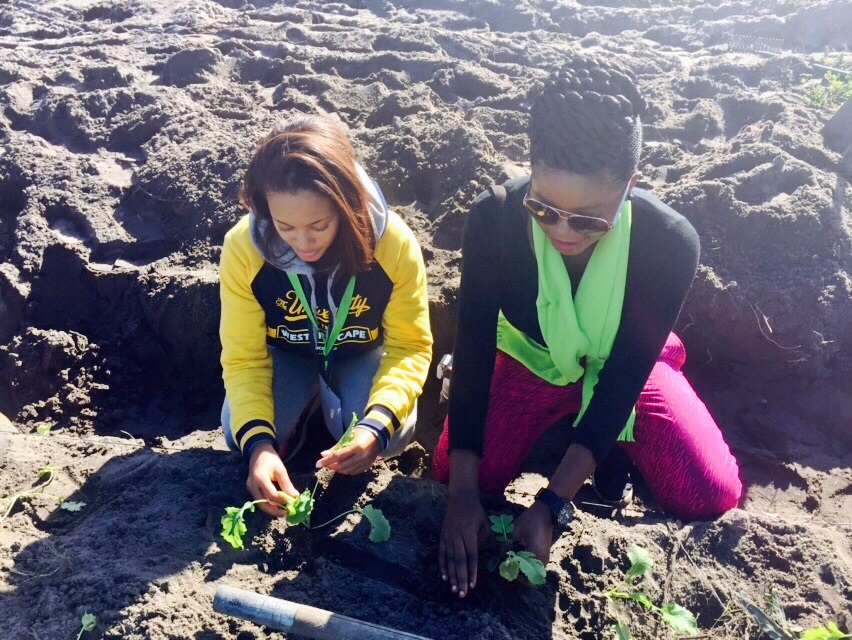
The Green Institute is partnering with the Department of Agriculture, Adeyemi College of Education to improve agricultural and livestock production. The Agricultural farm produces about 10,000 litres of palm oil and 4 tonnes of palm kernel annually. The piggery and poultry units also produce meat and foundation stock for members of the community. The university recently applied for a World Bank Grant to increase production organically. Check out pictures below: