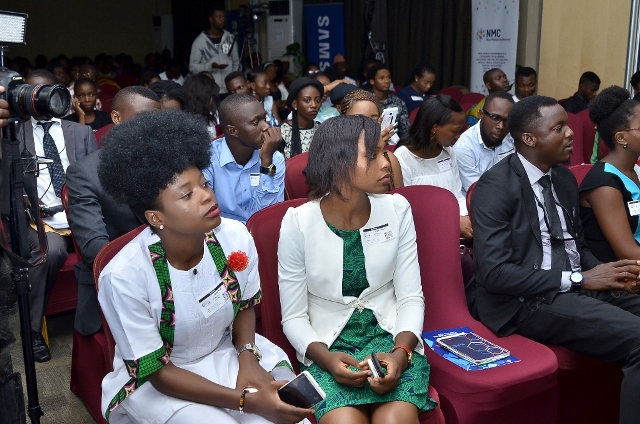
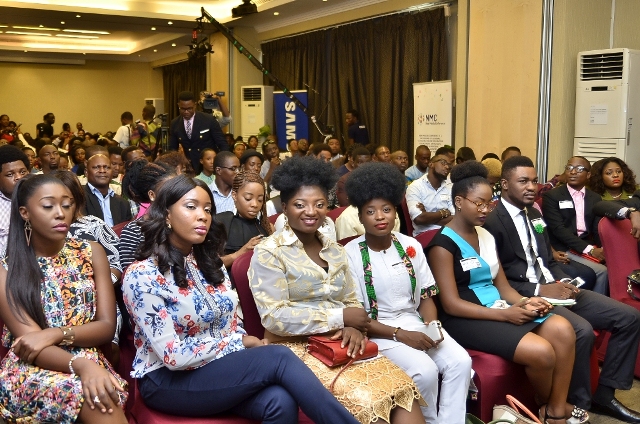
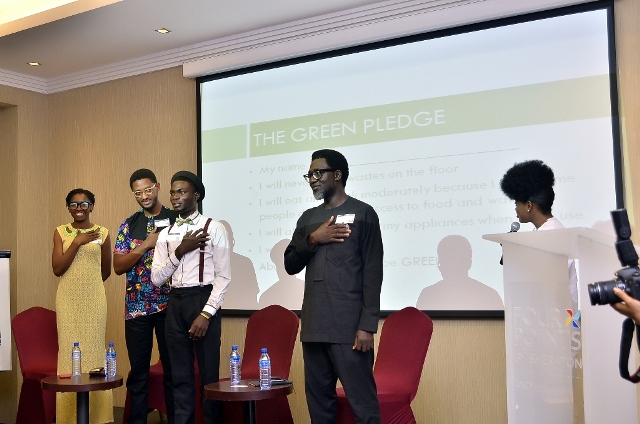
The Disruptors 2018: Green Ambassadors’ Training and Campus Rep Induction.

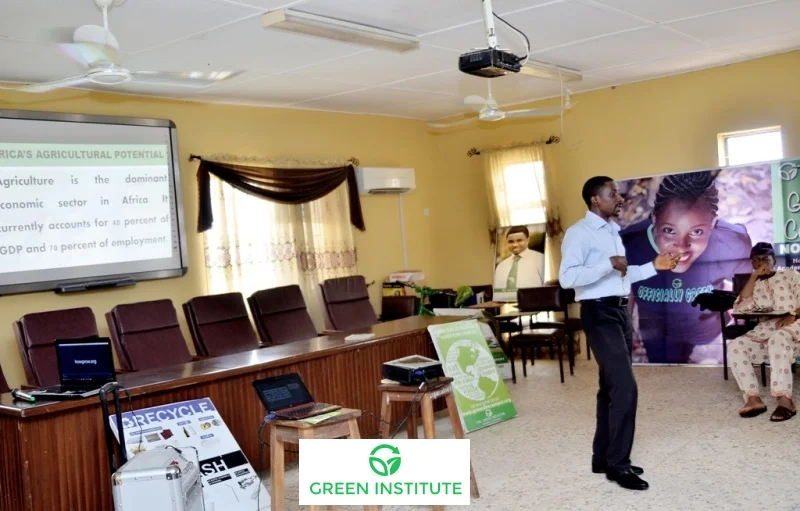
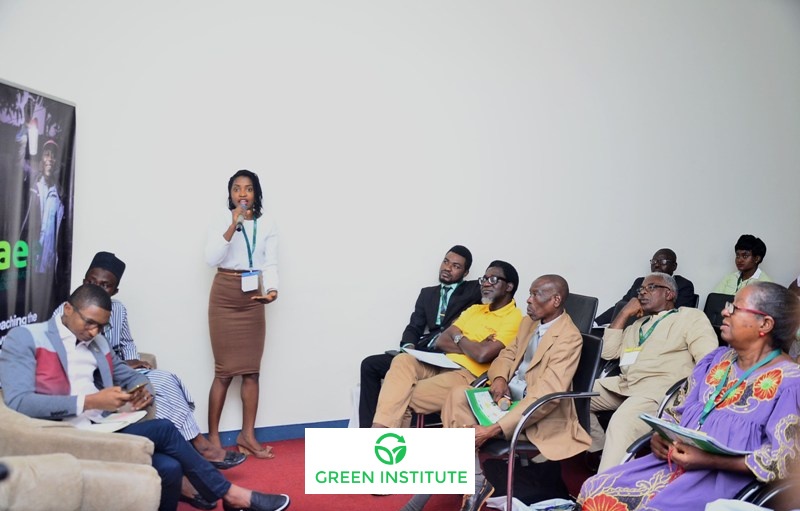
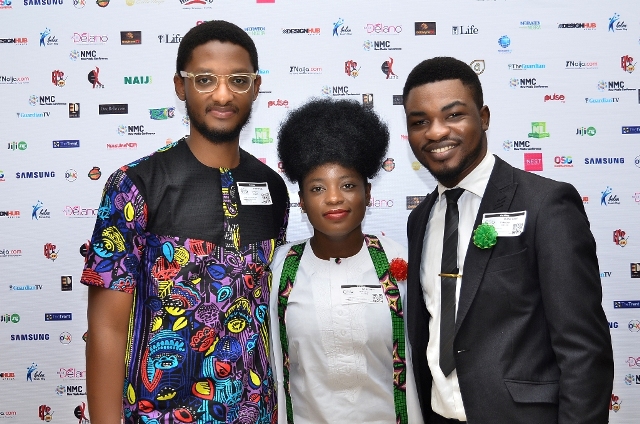
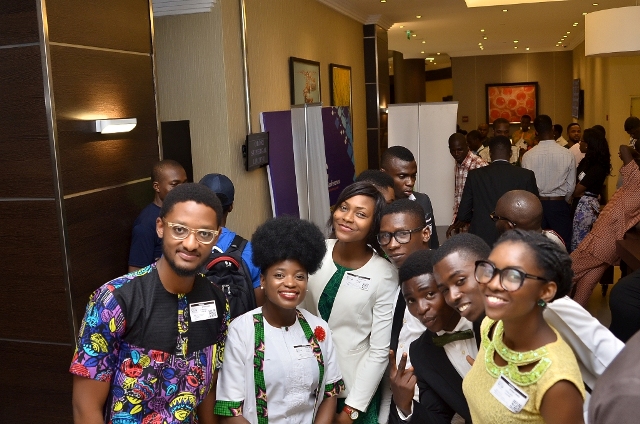
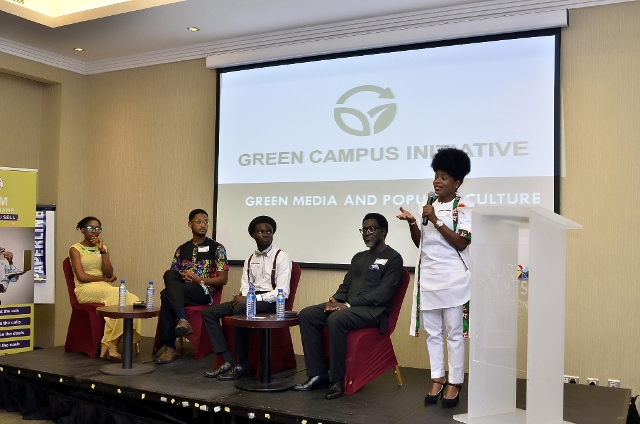
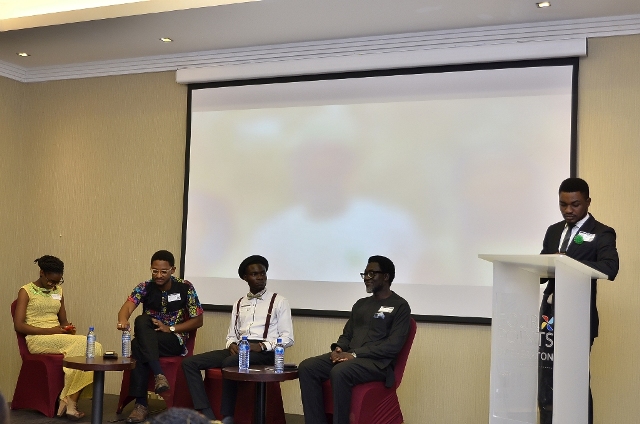
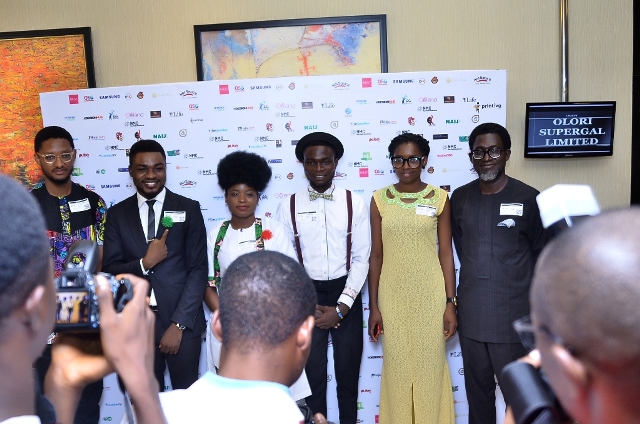
This year started on a grand note at the Green Institute. The Institute hosted its annual ambassador training on 25th of January, 2018. This year’s edition was tagged “Disruptive Innovation for Social and Environment Impact”.  Speaking at the event was Glory Oguegbu, Executive Director of Climate Smart; Joel Ogunsola, Founder of Tech4Dev and Jennifer Uchendu, Founder of SustyVibes. The event was hosted by Odunayo Aliu, and anchored by Psalm David.

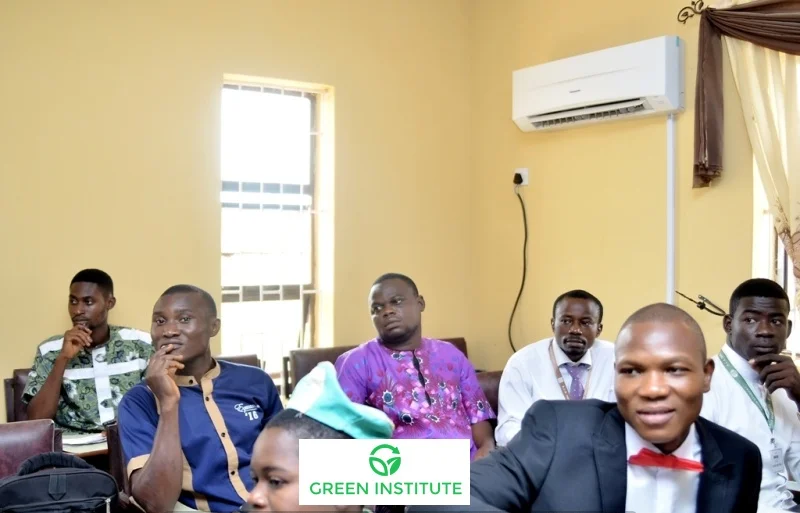
Ambassadors representing ten higher institutions were present at the event and six of them were inducted as the campus representative of their school. Topics such as Technology for Social and Environment Impact, Advocating for Sustainability and Opportunities in Environmental Sustainability were discussed.


There was also a team building activity during event which helped participants to identify their area of strengths and weaknesses and also practical ways of handling each.

As a major highlight of the event, the Trash for Education program of the Institute was launched by the Founder.

At the end of the picture and networking session, interested ambassadors went hiking at the Green Mountain.                                                      


7 things we learned at the Green Speaker Series II

Remi Duyile

The Green Speaker Series II with Dr Remi Duyile was held on August 10, 2017, at the Green Auditorium with about 32 participants in attendance. Dr Remi Duyile, a former Vice President of Bank of America, is an international speaker with certifications from The John Maxwell Group, Jim Rohn and Les Brown. She is the Founder of Premier Mortgage Solutions, an international consulting firm, as well as the Legacy Premier Foundation, a non-profit providing mentorship and financial literacy for women and girls.

Dr Remi came up to the podium after the Founder of the Green Institute, Adenike Akinsemolu read her biography. Dr Remi simplified the topic “Transformational Leadership” to the hearings of young folks by summing up all it entails to be a leader in “The 6C’s”:

  1. Communication is an effective tool for transformational leadership in enabling proper flow with your audience. Leaders must be clear and concise when communicating with their team members.
  2. Competence is an impeccable quality of a transformation leader. This position the leader to effectively influence the lives of his audience and followers.
  3. Confidence is one key characteristic of a transformational leader. Confidence gives us the strength to support other people’s vision while achieving our personal goals. It also helps in asking questions about things we do not know. A transformational leader is bold and sometimes often mistaken as arrogant. There is absolutely nothing wrong in self-love, courage and discipline.
  4. Contentment is another attribute that is being given birth to by confidence. Knowing how to be efficient with several skilful things is a bonus that makes one contented. It is also helpful for the development of private things without involving external factors.
  5. Compassion. A Transformational Leader must be compassionate. He or She must understand what is important to his or her audience. Leadership is meant to be fun not to be at logger's heads with ourselves. Compassion strengthens the relationship between a leader and his followers.
  6. Commitment is essential in transforming our community or in following our dreams. Commitment in this scenario is synonymous with credibility and excellence. Meeting deadlines, fulfilling promises, being punctual are all qualities of a transformational leader. This is important in maintaining good impressions with your followers and team members. Integrity matters and being committed to a cause will allow a sense of purpose.

The Green Speaker Series with Dr Duyile ended with questions and comments from the audience. One of the participants, Bankole Emmanuel suggested that “Consistency” should be added to the “6Cs”.  If a leader develops a reputation for being consistent in either their words or actions, employees will gain confidence in their ability to lead effectively. Dr Duyile also stressed that you do not have to hold a position such as CEO or founder to be a leader. In our everyday lives, we should strive to be a transformational leader. She urges young people to take charge and be the positive change they want to see in their various communities.

Photo Op at the Green Institute

So, here you have it folks, the 6Cs, I meant the 7Cs of a transformational leader:
Communication, Competence, Confidence, Contentment, Compassion, Commitment and Consistency.

WATCH THE RECAP BELOW

HERE ARE SOME PICTURES

WATCH AN INTERVIEW WITH DR REMI DUYILE

Government Should Tap Into Renewable Energy Potential

Harvard and Oxford-trained scholar, Damilola Sunday Olawuyi, is a globally recognised professor of Energy and Environmental Law and director of the leading research think tank, the Institute for Oil, Gas, Energy, Environment and Sustainable Development (OGEES Institute) at Afe Babalola University, Ado Ekiti. He is Vice President of the Nigerian branch of the International Law Association; member of the World Commission on International Environmental Law; and expert member of the International Law Association Committee on Sustainable Natural Resource Development where he represents Nigeria. He served as visiting professor at Columbia University, Oxford University and the China University of Political Science and Law. He has several publications in leading international law journals on the subject of renewable energy, agriculture, climate change and sustainable development. In this interview with the Yetunde Ayobami Ojo, he says government should urgently develop the country’s enormous renewable energy potential.

Nigeria, like many oil producing countries, is still reeling from the impact of the drop in the prices of oil. Will the oil and gas sector ever fully recover?
Unlike many that have written and published the obituary of the oil and gas industry, we professionals in the field know that the future of the sector remains exceedingly bright. The industry has been through, and survived, similar periodic downturns in the past, ranging from the 1973 oil crisis (first oil shock) in which the price of oil increased 400 per cent, leading to scarcity in some countries; then the 1979 oil shock when prices increased 100 per cent and the third oil crisis in 1990s, which contributed to global economic recession of the early 1990s and the most recent one.

This recent downturn has hit all of us hard due to failure to government’s properly utilise proceeds of the glorious years, when oil sold over $100 per barrel, to develop our infrastructure and to vitalise other key sectors. I have worked in the oil and gas countries in the Middle East such as, Qatar, Oman and Kuwait, and they are, for example, not in recession as we speak, due to years of proper utilisation of oil proceeds. For an oil and gas giant like Nigeria to ever be in recession is a great shame.

The US shale boom is another potential game changer, which has, and will continue to alter the demand for our oil and nudge us to an uncertain future outlook. The International Energy Agency (IEA) has for example predicted that the United States would overtake Saudi Arabia to become the world’s leading oil producer by 2020 and, together with Canada, would become a net exporter of oil around 2030. These are tough predictions for Nigeria, as our main oil customer will itself become a leading supplier. This is why this is the time for Nigeria to start diversifying its economic base to shift to mining, manufacturing, agriculture and tourism. This is what Qatar and a number of the Middle East giants are investing time and resources on, in order to stay ahead in the face of a changing energy outlook.

As we speak, I am currently leading a funded research project for the government of Qatar on this issue of low carbon energy transition. These are smart oil and gas producing countries that have accelerated their paths to energy and economic diversification. Wide scale economic diversification is the key for Nigeria to remain strong and competitive in the league of frontier energy jurisdictions.

What do you think is the most important step in diversifying the Nigerian economy at this challenging time?
Nigeria is very rich in energy. We only tend to focus excessively on oil and gas. Nigeria has strong comparative strengths in renewable energy, an area that the Nigerian Government has yet to fully develop.

Over the last five years, renewable energy has gained global prominence as the new oil and gas. Last year alone, worldwide investments in renewable energy amounted to more than US$214 billion with countries such as, Canada, China and the United States heavily investing in wind, hydro, solar and biofuel infrastructure projects. Apart from private sector investments, the United Nations, World Bank, International Renewable Energy Agency (IRENA), and other development agencies have established special Clean Funds through which governments at federal and state levels can access funds to develop renewable energy projects ranging from conversion of biomass or waste to energy; biofuels from agriculture; geothermal, mini-hydro, solar and wind energy projects. Renewable energy projects funded under this platform focus on ways to reduce energy poverty; generate clean jobs; and produce sustainable and renewable energy in developing countries. They can also be the key to solving Nigeria’s electricity challenges.

Nigeria’s potentials as a significant source of renewable energy have never been in doubt. From the water intensity of the Osun River in my home state, Osun; to the expanse hectares of arable land in many parts of Nigeria; and the sunshine intensity in the North, have led to several scientific conclusions that Nigeria could be one of the richest countries on earth in terms of solar, wind and hydro energy. Unlike oil and gas, these are clean, cheap, inexhaustible sources of electricity, meaning they never end. They also come with less environmental problems such as pollution or spillage.

Nigeria has infinite potentials to be the leader in renewable energy sources in Africa. Renewable energy can directly contribute to poverty alleviation programs by attracting international development funds for renewable energy projects; boosting internally generated revenue by attracting global and public private partnership investments in renewable energy projects; creating new energy jobs for youths; providing alternative energy supply for businesses; and deploying clean cooking stoves and household stand- alone solar solutions in rural communities.

Given these enormous economic advantages of renewable and alternative energy, how can government move this forward?
One key problem we have in this area is lack of sustained policy action by successive governments. On May 05, 2015, the Federal Government of Nigeria officially adopted the National Policy on Renewable Energy and Energy Efficiency, which aims to increase renewable energy investments to generate electricity and to address climate change problems. The policy also aimed to establish a federal agency on renewable energy like many other countries in the world have done. However, this program was launched in the last few weeks of former President Goodluck Jonathan administration. Since 2015, not much has been heard about the renewable energy programme. I have personally been leading scholarly agenda aimed at getting the current government to revisit this lofty energy diversification and electricity generation program.

In 2015, the Executive Governor of Osun State, Ogbeni Rauf Aregbesola, invited me to help develop a policy programme that could help Osun State attain leadership in implementing a robust renewable energy and energy efficiency program over the next decade. However, this unfortunately coincided with the time our State had problems with protesting workers so we had to halt this plan. I do hope to revisit this ambitious plan in the future at State and Federal levels. For example, if well developed, we could generate electricity from solar, hydro and wind sources, making it possible for each state to be self sufficient in terms of generating adequate amount of electricity for domestic and industrial use.

How serious do you think Nigeria is in addressing the issue of Climate change?
Nigeria will need to move from bureaucratic rhetoric to more concrete and holistic action to address climate change. In the Paris Agreement, Nigeria pledged to reduce its GHG emissions by 20 per cent by 2020 and 45 per cent by 2030. These are ambitious targets, which on the ground, we have done little in terms of laws, institutions and policies to actualise.

As of today, we have no climate change law, no climate change federal agency and no national action plan on GHG reduction. I was personally excited when the current government appointed the immediate past Minister of Environment, Amina Mohammed, as Minister for Environment. However, she had to leave to become the United Nations Deputy Secretary General.

We need to revisit some of the lofty blue prints she developed on climate change mitigation and adaptation in Nigeria. The environment is too serious an issue to be left at the periphery of decision-making. Climate change should not be viewed as a threat alone, it is also a great economic opportunity for Nigeria to develop a green economy that encourages new jobs in recycling, waste management, green buildings and clean transportation. We can get there. We only need to start first.

How can you assess Nigeria’s readiness to achieve the SDGs?
As you rightly noted, on September 25, 2015, countries, including Nigeria, adopted a set of targets and goals to end poverty, protect the planet, and ensure prosperity for all, over the next 15 years. In other words, by the year 2030, the plan is that our world will be on the path of comparable and holistic social, economic and environmental development.

For these ambitious goals to be reached, we must ask, how can we avoid the same pitfalls and mistakes that made it impossible for us to attain the MDGs that expired in 2015. Everyone needs to do their part: governments, the private sector, civil society and people like you and I, to avoid the same false start. As of today, Nigeria has not done much to correct the same pitfalls, which centre on lack of sustained governmental action to pursue the sustainable development agenda.

By attaining the rank of full professor of law in 2015 at the age of 32, you became one of the youngest law professors in Nigeria, what are the challenges you faced in achieving that feat?
Well, I am humbled and honoured to follow the remarkable path of Nigeria’s current Vice President, Professor Yemi Osibanjo. SAN who I understand also attained full professorship at the age of 33. I am very fortunate to have tapped into the visions of the President and Founder of Afe Babalola University, Ado Ekiti (ABUAD), Aare Afe Babalola, SAN, OFR, LL.D, CON, who is well known to be one of the most successful lawyers in Nigeria’s history and a leading advocate for university reform. Working closely with him challenged me to be the best in my teaching and research. Babalola’s accomplishments, from very humble beginnings, is enough motivation for every one associated with ABUAD to push for the greatest heights, break existing records and set new ones. The university and college of law provided the right atmosphere and resources for me to achieve this feat. Without the support and best wishes of everyone, ranging from the president and founder of the university, to the senior management of the university, the DVC and provost of the College of Law, Professor Smaranda Olarinde, to my head of department, and my students, this attainment would have been highly impossible. I faced no barrier; all I saw was motivation, encouragements and opportunities.

You are an alumnus of the Harvard and Oxford University, how did you achieve these?
I owe these achievements to the divine grace of God. How else could a young lad from Igbajo, Osun State, end up at these famous institutions? After achieving first class honours from the university, and another first class from the Nigerian Law School, I was double charged to follow the paths of the likes of ILA President, Professor Fidelis Oditah, QC, SAN who after making first class degrees from UNILAG and the Law School, also got scholarships to study at Oxford. Luckily, I was still at the Law School when I received a full scholarship from the Government of Canada to pursue LL.M in energy law at the University of Calgary in Canada.

Given these enormous economic advantages of renewable and alternative energy, how can government move this forward?
One key problem we have in this area is lack of sustained policy action by successive governments. On May 05, 2015, the Federal Government of Nigeria officially adopted the National Policy on Renewable Energy and Energy Efficiency, which aims to increase renewable energy investments to generate electricity and to address climate change problems. The policy also aimed to establish a federal agency on renewable energy like many other countries in the world have done. However, this program was launched in the last few weeks of former President Goodluck Jonathan administration. Since 2015, not much has been heard about the renewable energy programme. I have personally been leading scholarly agenda aimed at getting the current government to revisit this lofty energy diversification and electricity generation program.

In 2015, the Executive Governor of Osun State, Ogbeni Rauf Aregbesola, invited me to help develop a policy programme that could help Osun State attain leadership in implementing a robust renewable energy and energy efficiency program over the next decade. However, this unfortunately coincided with the time our State had problems with protesting workers so we had to halt this plan. I do hope to revisit this ambitious plan in the future at State and Federal levels. For example, if well developed, we could generate electricity from solar, hydro and wind sources, making it possible for each state to be self sufficient in terms of generating adequate amount of electricity for domestic and industrial use.

How serious do you think Nigeria is in addressing the issue of Climate change?
Nigeria will need to move from bureaucratic rhetoric to more concrete and holistic action to address climate change. In the Paris Agreement, Nigeria pledged to reduce its GHG emissions by 20 per cent by 2020 and 45 per cent by 2030. These are ambitious targets, which on the ground, we have done little in terms of laws, institutions and policies to actualise.

As of today, we have no climate change law, no climate change federal agency and no national action plan on GHG reduction. I was personally excited when the current government appointed the immediate past Minister of Environment, Amina Mohammed, as Minister for Environment. However, she had to leave to become the United Nations Deputy Secretary General.

We need to revisit some of the lofty blue prints she developed on climate change mitigation and adaptation in Nigeria. The environment is too serious an issue to be left at the periphery of decision-making. Climate change should not be viewed as a threat alone, it is also a great economic opportunity for Nigeria to develop a green economy that encourages new jobs in recycling, waste management, green buildings and clean transportation. We can get there. We only need to start first.

How can you assess Nigeria’s readiness to achieve the SDGs?
As you rightly noted, on September 25, 2015, countries, including Nigeria, adopted a set of targets and goals to end poverty, protect the planet, and ensure prosperity for all, over the next 15 years. In other words, by the year 2030, the plan is that our world will be on the path of comparable and holistic social, economic and environmental development.

For these ambitious goals to be reached, we must ask, how can we avoid the same pitfalls and mistakes that made it impossible for us to attain the MDGs that expired in 2015. Everyone needs to do their part: governments, the private sector, civil society and people like you and I, to avoid the same false start. As of today, Nigeria has not done much to correct the same pitfalls, which centre on lack of sustained governmental action to pursue the sustainable development agenda.

By attaining the rank of full professor of law in 2015 at the age of 32, you became one of the youngest law professors in Nigeria, what are the challenges you faced in achieving that feat?
Well, I am humbled and honoured to follow the remarkable path of Nigeria’s current Vice President, Professor Yemi Osibanjo. SAN who I understand also attained full professorship at the age of 33. I am very fortunate to have tapped into the visions of the President and Founder of Afe Babalola University, Ado Ekiti (ABUAD), Aare Afe Babalola, SAN, OFR, LL.D, CON, who is well known to be one of the most successful lawyers in Nigeria’s history and a leading advocate for university reform. Working closely with him challenged me to be the best in my teaching and research. Babalola’s accomplishments, from very humble beginnings, is enough motivation for every one associated with ABUAD to push for the greatest heights, break existing records and set new ones. The university and college of law provided the right atmosphere and resources for me to achieve this feat. Without the support and best wishes of everyone, ranging from the president and founder of the university, to the senior management of the university, the DVC and provost of the College of Law, Professor Smaranda Olarinde, to my head of department, and my students, this attainment would have been highly impossible. I faced no barrier; all I saw was motivation, encouragements and opportunities.

You are an alumnus of the Harvard and Oxford University, how did you achieve these?
I owe these achievements to the divine grace of God. How else could a young lad from Igbajo, Osun State, end up at these famous institutions? After achieving first class honours from the university, and another first class from the Nigerian Law School, I was double charged to follow the paths of the likes of ILA President, Professor Fidelis Oditah, QC, SAN who after making first class degrees from UNILAG and the Law School, also got scholarships to study at Oxford. Luckily, I was still at the Law School when I received a full scholarship from the Government of Canada to pursue LL.M in energy law at the University of Calgary in Canada.

From Calgary, I received another full scholarship to go to Harvard University for another LL.M, and while still at Harvard, I received the prestigious Clarendon Scholarship and the Queen’s Overseas Research Scholarship to study for a PhD at Oxford University. After this, I was called to the bar in Canada and then practiced energy law at Norton Rose Fulbright Canada for a while. This is a remarkable story of divine grace from God. Having received so much support and mentoring from institutions abroad, what I have done with my career so far is to utilise these knowledge to serve my nation and to motivate young and upcoming lawyers.

You have been recently shortlisted for by the Legal Practitioners Privileges Committee (LPPC) for the prestigious rank of Senior Advocate of Nigeria under the academic category. Do you intend to set up a law practice soon to mentor young lawyers?
I am very humbled and honoured to have been shortlisted for the SAN award. It is also a positive reinforcement for young academics and scholars that with hard work and diligence, recognition will come some day. But as you know, the SAN award is a privilege, not a right. While I have earnest hope for a successful final outcome, I would not like to think just too far yet about next steps. I like to take it one step at a time. To have been shortlisted is a great attestation to the integrity and transparency of the process, let us wait and see what follows.

What is your advice for students?
As I tell my students, a great lawyer knows a little about everything. My advice for them is that they should take the opportunities of being students to learn more about everything: politics, sports, music, current affairs, society, language, religion and of course law. Push the boundaries by reading more from books, newspapers, law reports, and every other available material on the subject in the library. Such mental curiosity and desire to know more is the secret of success in this profession, whether as a practicing lawyer, legal academic, university administrator or even politician. As Thomas Huxley once remarked, a good student “Tries to learn something about everything and everything about something.”

Source : Yetunde Ayobami via The Guardian

Toyin Falola International Conference on Africa and the African Diaspora

The Seventh edition of TOFAC (Toyin Falola International Conference on Africa and the African Diaspora) was held at Adeyemi College of Education, Ondo, Ondo State in Olusegun Obasanjo Auditorium on  July 3-5 2017. The theme of the conference was “Education and Africa’s Transformation.”

The event kicked off with an opening ceremony and the arrival of dignitaries and participants from around the world. After that, Prof. Toyin Falola made introductory remarks.

Highlights from the Event

  • Prof. Jermaine Abidogun from Missouri State University, USA talked on “Reclaiming African Education: A Call for Synergetic Education.”
  • Prof C.O.O. Kolawole from the University of Ibadan, Nigeria focused on the Sustainable Development Goal 4  
  • Prof. Fallou Ngom from the Boston University, Massachusetts, USA spoke about the African Diaspora in the Educational System with reference to Nelson Mandela’s quote “Education is the most powerful weapon that can be used to change the world.”
  • In the midst of the Keynote Addresses, there was a cultural interlude called the Obitun Dance.
  • His Royal Majesty, Alayeluwa Adedokun Omoniyi Abolarin, The Royal Count of Orangun Ajagunla; Oke-Ila Orangun made an emotional speech about the value of Education and the African Culture. He also talked about his free education program that supports kids from the poor socioeconomic background.
  • Green Institute represented by Akinsemolu Adenike, Kamundala Janvier, Onyeche Kehinde, Abdelhay Mahmoud featured in Panel D session titled “Science and Innovative Systems.”
  • Participants from Green Institute presented a paper titled “Green Cooking and Market in the Sub Sahara Africa: A Holistic Review of Current State and Future Demands.
  • The event ended with a dinner reception and awards at Oba Adesanoye Civic Center Ondo.
  • Participants also enjoyed themselves with a visit to the historic Idanre Hills.


Four things I learned at The Green Institute's Speaker Series.

The Opposite of Sense. This was the unusual theme for the inaugural Green Speaker Series and Karaoke Night, hosted by The Green Institute- the foremost hybrid institute for training and education in Nigeria, with core in environmental sustainability.

On the afternoon of June 23, under a darkened sky and fitful downpour, I journeyed to Ode Ondo – the native home of widely respected late social critic, Gani Fawehinmi, SAN; and pioneer of world music, the influential King Sunny Adé – for the event. I expected to have fun and participate in radical intellectual conversations shaped by both Psalm Oluwaseyi David of CreatvColony and Enwongo Christopher Cleopas, the keynote speaker who, though a Barrister and Solicitor at Nigeria's Supreme Court, surprisingly has growing interests in nature photography and African arts.

En route, and throughout the Green Speaker Series, I was resolved to hear about new discoveries and innovations I normally would not have wanted to. As I experienced the energy and interest of the roughly 50 diverse participants, I expected a fun and engaging event.

So what did I learn, even after staying an extra night in Ode Ondo, southwestern Nigeria?

1. Location is everything. Personally, the venue surpassed the mental image I had. First, the bold banners and green-inspired exterior wall designs were impossible to miss as other participants and I entered Ode Ondo (or Ondo City) from both of the two road points. The Institute had a wide working space with bicycles, art pieces and drawings of African heroes hanging from the wall; tie-dyed curtains; handcrafted chairs from tyres and wood; and the light casing made from plastic spoons, gave me an intense feeling of creativity and openness. The expansive view of an unexplored mountain from the venue added to this feeling too. Enwongo posted on Facebook, "I noticed something about the clouds in Ondo. They are really close to Earth (closer than any other place I've seen), and I kept having these thoughts that I could actually touch it if I stretched my hands out."

Something else I internalized was the message on the white wall that read, "In this house, we are a family, love and respect one another."

2. Live deliberately. Talk and inaction are cheap. Enwogo, a writer and feminist, maintains a social media presence where she attracts a critical followership among millennials. During the speaker's session, she shared a heart wrenching story of how she escaped death, as it was a defining moment for her. She remarked:

"I realised that I own nothing on earth and that everything I do or have is entrusted into my care and custody. It changed the way I approached everything."

Since then, she has acted as a custodian and caretaker, especially of our shared environment, and put her gifts, ideas, and time to positive action. She now lives intentionally. "And that’s nothing but sense,” Enwogo concluded.

To me, the message was simple: Once you identify what you want to do, start doing it. Take action and commit to the future.

3. Green is still the new black. And young people are jumping on it. The unifying factor in the room was sustainability and social good. The diverse attendees included engineers, lawyers, high school students, serial entrepreneurs with startups, lecturers, undergraduates, artists, fashion designers, photographers; and each saw a need to use themes of sustainability, radical innovation, creativity, business models with purposes more than profit. The shared commitment; to solve environmental challenges and enable economic growth.

The UN estimates that the market for “green trade” will grow to $2.2 trillion by 2020. Millennials need to take advantage of this development to effect a cleaner and brighter tomorrow.

4. Identity defines you. Just before Enwongo began her dialogue, we were showed the TED video talk of green entrepreneur Achenyo Idachaba, where she shared her journey of turning water hyacinths, threatening socioeconomic life in parts of Nigeria into woven wonders. I was struck by the strong cultural and historical references residents in different regions attached to this invasive weed species. I was also struck when two interns of the Institute, Janvier Kamundala and Mahmoud Mohamed, sang during the Karaoke. Janvier from the Democratic Republic of Congo performed a popular Rumba Lingala that had a theme of relationships between people, while Mahmoud, from Egypt, thrilled participants with a powerful Arabic song that has become a source of strength to Egyptians. In his greatest and most influential novel, The History Man, writer and academic critic Sir Malcolm Bradbury wrote, "Culture is a way of coping with the world by defining it in detail." Green events only get better with enough colourful tapestry.

Well, need I say more?


About the Author: Oghenechovwen, Oghenekevwe Christopher previously interned at The Green Institute. Now, he is an undergraduate of Meteorology and Climate Science at the Federal University of Technology Akure. Kevwe tweets @c_chovwen, and loves both board games and group travels.

BellaNaija Feature: Our World is Going Mad

I have fought all temptation to write an article about Donald Trump or our remote president, Buhari. Well, until now!

Mr Trump announced a few days to World Environment Day (WED) that the US is exiting the Paris Agreement. For someone who wants to make the US great again, I am not sure he is putting the people first. What Nation can be great without its people? Ironically, this year’s WED’s theme is connecting people to Nature.

Climate change is a moral issue. It is not just science. The World Bank estimated that climate change could drive more than 100 million people into extreme poverty by 2030. The United States is currently the world’s second-largest carbon polluter, and it is estimated that its withdrawal from the Paris Agreement Accord would add up to 3 billion tones of extra carbon dioxide to the atmosphere. By the end of the century, this would have raised global temperature by 0.1 – 0.3oC. How about making our planet great again?

Now, let’s address this even more locally. President Buhari did sign the Paris Agreement in March of this year, committing to reducing greenhouse gas emissions unconditionally by 20 per cent and conditionally by 45 per cent.

Of course, this sounds good on paper or when you hear it in the news. The practicality of it, however, is what we need to examine.

I was at the United Nations General Assembly meeting in September 2016, and I attended a side event on Lake Chad. Truth be told, there was a lack of interest from both the president and the Nigerian delegates (or is it entourage) present. This lack of will or comprehension makes it all the more difficult to have a sustained and viable national policy on the environment. The president soon left the meeting and pitifully, all other delegates followed him and exited the hall, while the meeting was still in full swing. No meaningful contributions came from Nigeria. It was embarrassing. For these delegates, it was merely a photo-op to show that they were with Mr President. What I saw was a group of entitled, lazy sycophants whose last thoughts were the Nigerian people. But, it is expected from our government- they show face but their consciousness was absent.
Most people will tell you they need lots of funding before they can take action on climate change. These so-called Environment organisations that have even received funding, what have they done with it? They push for policies with no strategy and when they get grants from international bodies, they are never adequately utilised. It is the new “green” business.

We should care the most about the environment. That’s what the green on our flag symbolizes. But, Nigeria is an archetypical oil nation. According to Energy Information Agency, we are the 10th largest producer of oil in the world, but we lack strong regulatory infrastructure on environmental protection. Currently, Nigeria ranks 6th on the list of vulnerable countries in the world. What is more; by 2030, the country would ranks among the countries which will experience environmental disaster induced poverty

We are the 6th most vulnerable country in the world. Worst, by the year 2030, Nigeria would be one country out of 10 in the world that will have disaster induced poverty.

I have done extensive research in the oil producing regions of Ondo State. In the past 30 years, over 400, 000 tonnes of oil has spilt into creeks, sediments and soil. The core occupation of residents in this area is subsistence fishing and farming. And these oil spills occurs every year, causing major harm to the environment, obliterating livelihoods and placing human health at serious risk.

The human rights consequences are thus, severe. In such vein, Heinrich Boll Stiftung (a Germany based organization) conducted a research in 2015 and highlighted the challenges in Nigeria’s in the following order; Climate change and its impacts, extremism and the pursuance of ethnic interests, rising inequality and persistent poverty in the midst of increasing wealth, social unrest and insecurity, food insecurity, corruption and governance through political clienteles, weak regional integration, lack of energy access and a shift in global energy needs, poor education, population trends, such as the growing body of young Nigerians.

Of all the challenges listed above, I think the lack of energy is the most overriding because it is interrelated to the other challenges. Energy is an essential need. Yet in Nigeria, we do not have stable electricity. Businesses are failing; people are getting sick from kerosene fumes and generator exhausts, education is getting weaker due to lack of access to information technology and reliable light source to research and innovate.

Even relationships are affected because everything is just ridiculously harsh.

Our world is going mad. President Trump may think climate change is a hoax, while Buhari may sign a document he doesn’t fully comprehend. However, that should not stop us from doing our part. This planet is ours. When it thrives, we do the same.

How can we stay sane in a world that feels fully intent on caving in on itself?

For me, it involves connecting more with nature. Going outside and stepping into nature. Experiencing its beauty and its importance. It is only when we appreciate alluring essence of Mother Nature, then, together, we would have the urge to make our planet great again.

This, however, is not a difficult endeavor. You can simply connect with nature by:

  • Taking off your shoes and kissing the earth with your feet
  • Planting vegetables somewhere in your yard
  • Jumping into that beautiful lake
  • Looking up to the sky, appreciating the shape of the clouds and the sounds of the birds
  • Taking a hike
  • Picking up those plastic bottles on the road while walking or jogging
  • Supporting the Trash for Education Scheme by donating valuable wastes such as old clothes, plastic bottles, used tires, etc. to provide education to people who cannot afford them.

It is already hard being a Nigerian. Do not let the hardships take away your basic rights.

Nature is closer than you think.

Credit: Adenike Akinsemolu for BellaNaija

HAPPY HOLIDAYS: 2017 is a Green Year

We share a common belief- that we can take action in combating climate change, improve health and well-being, and empower young people to create nature-inspired solutions to global challenges for a greener planet.

In 2016, we made significant progress on our green journey. This was only possible as a result of the invaluable support of our numerous friends, advisors, and associates. YOU are one of them.

As the journey begins into our 2nd year, we wish you and your family a happy holiday season and a great year ahead.

Together we are working to build a much better world for future generations, leaving behind for our children and grandchildren a far better planet than we met.

2017 will be greater.

With Love,

The Green Team

The 2016 Green Ambassadors’ Training

The Annual Green Ambassadors’ training was held on the 7th of November at The Green Center in Adeyemi College of Education, Ondo. This year’s training was focused on Agriculture with the theme ‘GET YOUR HANDS DIRTY!’ Lawrence Afere, the founder of the Spring Board Farms and a Washington Mandela Fellow, was invited as the guest speaker to speak on the topic of discussion. Various Schools were also invited along with their agricultural science teachers to participate in the program. The schools included; Homaj Secondary School, St. Monica Grammar School, St. Louis Grammar School, Awosika College, and Ekinmogun Grammar School. 

The Student and Ambassadors were given a platform to ask questions and also contribute more to the topic of discussion. A Solar lantern and two Green T-shirts were given to three Students, one from St. Monica Grammar School and two from Awosika College as a result of the correct answers given from the questions thrown in by the Green Associate, Owoeye Abolade. The Dean of School of Science, Dr. F.O Balogun and the Head of Chemistry Department, Dr. Babajide were also present at the program. Dr. Babajide J.O spoke on ‘biofuel.'

Green Ambassadors and Ministers shared different ideas, opinions, and suggestions as to how agriculture can be incorporated into the school’s system. Sipasi Olalekan coordinator of the L’Afrika Integrated Farms at Ibadan sent a representative on his behalf to speak to the ambassadors on Agriculture as the only way out of the situation in Nigeria. As a take home package, seeds of the teak tree was given to every individual present to plant in their environment.

The Green Campus Initiative Features in the Nigeria Alternative Energy Expo 2016

Since 2010, the Nigeria Alternative Energy Expo (#NAEE2016) has provided a platform with a view of sharing experiences on decentralized renewable and alternative energy systems, finding and implementing solutions to energy access challenges in Nigeria, and increasing opportunities for both formal and informal dialogue among government representatives, pan-African organizations, policy makers, MDA’s, researchers, academia, manufacturers, investors, civil societies, and consumers. This year’s edition (the 6th edition) which was held at the Shehu Musa Yar’adua Conference Centre, Abuja, from the 14th – 16th October was co-hosted by the Nigerian Federal Ministry of Power, Sustainable Energy Practitioners Associations of Nigeria (SEPAN), and the African SustainableEnergy Association (ASEA).

Themed, “Embracing renewable energy to tackle Nigeria’s economic challenges”, #NAEE2016 attracted speakers, panelists, and facilitators who all had professional and personal experiences and interests that provided them with unique credentials to be listened to.  Take for example, the French Ambassador to Nigeria; HE Denys Gauer, who called for effective collaboration between sectors, the Finland Ambassador to Nigeria; HE Pirjo Suomela-Chowdhury, who harped on moral attitude for sustainability, the CEO of DARE; Professor Yahaya Ahmed, who walked participants through the UNFCC and the Save 80 cooking system that does not contribute to Indoor Air Pollution (IAP), and the Head, Africa-EU Energy Partnership; Engr. Ina-de-Visser who highlighted the need to support market development for mesoscale renewable energy technologies in Nigeria and Africa. With over twenty-two manufacturers in renewable energy sector exhibiting their products and services, the Expo also focused on the achievement of the Sustainable Developmental Goals, SDGs.

Engaging University Students for a Sustainable and Better Future

Strong advocates and recommendations by relevant climate and environmental groups have continuously raised the need for real capacity building for universities, especially those in Africa. #NAEE2016 responded to this for the first time and took a step further to engage and empower Nigerian undergraduate students, so as to enhance their contribution to sustainable development and social transformation. This was done in partnership with The Green Campus Initiative, GCI – Nigeria’s leading and first campus-based environmental advocacy organization with a presence in thirty-eight (38) universities across the country. This step was guided by the realities facing students in environmental and social sciences, and those that have sufficient reason for interest in the renewable energy sector, and anchored in the belief that students are forces of equality and good governance, catalysts for global consensus building; and essential resources for sustainable development and poverty eradication.

Adenike Akinsemolu; Founder of GCI and Board member of SEPAN, led GCI Universities Ambassadors and Associates to the expo, where they had a session on the second day that comprised of a plenary and an oral presentation. Tagged, “The World is Going Green, Are You?”, and moderated by Owoeye Abolade; a Public Health expert and Environmental Biologist with the Federal University of Technology Akure, those on the plenary were Dr. Segun Adaju; CEO of Consistent Energy and Global Advisor to GCI, Dr. Amina Batagarawa; an Architecture Lecturer with Ahmadu Bello University Zaria and Global Advisor to GCI, Hamzat Lawal of Connected Development, CODE, and Ibrahim Majidadi; a Law Student of ABU Zaria. The epoch-making plenary and oral presentation which was done by Odunayo Ayodeji; a Mathematics Student of Adeyemi College of Education, focused on discussions about the SDGs in Nigeria, effective participation of youths and students, meaningful equity of policies, engagement at all levels of decision-making, and the works ofThe Green Campus Initiative across Nigerian universities.

The highpoint of GCI’s session was the recitation of the Green Pledge where all participants promised to live more sustainable and teach others on how to. The organizers and delegates present affirmed they learned a lot during their feedback comments. Also, they shared the thoughts of the outcomes of the plenary that real actions need to be done to make sure young people and student advocates are supported with finance, mentorship, and resources as 80% of students that completed the event registration online could not attend due to inadequate funds for travel and accommodation. Notwithstanding, #NAEE2016 engagement is a good indicator that the Nigerian society is preparing students to become competent innovators and leaders that would shape the renewable energy, environmental and power sector.

After the session, students were led on an excursion to the Green Estate in Garki, Abuja. The estate, a first of its kind in Nigeria, is reputed to have been running on solar and wind energy sources for the past 18 months, and is completely off the national power grid! The laudable project sets a standard for the feasibility of alternative energy in Nigeria and the promises of delivering on the climate action mandate in support of a sustainable world.


OGHENECHOVWEN, Oghenekevwe Christopher is an Ambassador of GCI and a third year BTech Student of Meteorology and Climate Science (FUTA). For more information, please contact greenthecampus@gmail.com or tweet to @c_chovwen

GCI Green Personality of the Month; Sipasi Olalekan Ayodele

It’s the little things citizens do. That’s what will make the difference. My little thing is planting trees.
— Wangari Maathai (Environmental Conservationist and Nobel Peace Prize Laureate)

It is exhilarating to interact with young people who believe that trees are planted for the future. Ayodele Sipasi Olalekan - an innovative farmer and environmental activist - is one of such people. Sipasi is the founder of L'Afrika Integrated Farms. One of his innovations; the Mobile Kitchen Garden, earned him the 2015 Hidden Eco-Hero Award of Eco-Tunza Generation and Samsung Engineering. Recently, he was listed among the Top 10 Go Green in the City Ambassador of Schneider Electric. Also, he is a Global Shaper of the World Economic Forum, focusing on Global Goal 13; 'Climate Action'.

Having B.Tech and M.Sc degrees relating to best agriculture practices, and being a speaker of eight indigenous and international languages, including Kiswahili and French, makes him stand out. Sipasi has impacted the growing environmental space in Nigeria, especially through his works in rural areas.

For this month; September 2016 (which is also his birth month), Sipasi is GCI's Green Personality, and Oghenechovwen C. Oghenekevwe reached out to him to ask few, interesting questions.

What aspects of your job do you particularly enjoy?

I enjoy engaging rural areas: training farmers and young people on environmentally friendly living, and sustainable best agricultural practices. Running these trainings using only Local Content Initiative (solving problems with available resources), makes it particularly enjoyable for me. Use of these local resources allows rural dwellers relate to the main issues.

In a lead up to the 2016 World Environmental Day, WED, you trained a total of 3,115 youths on environmental responsibility and sourced for 12,000 Khaya Senegalensis seeds for tree planting. What challenges did you face doing these?

Majority of the people in communities I trained did not have a knowledge of environmental issues and climate change. Because of this, it was difficult making them understand that climate change and its effects were real. Also, some parents were reluctant to allow their wards participate, as they were of the opinion that it distracted them from academic work, other people did not show up once they realized monetary gains were not available, and some participants did not want to get down on the dirty soil to plant. Most challenging was the inadequacy of volunteers.

In the report of your contributions to the WED celebrations, you raised a new perspective about how the struggle for survival and economic surge causes Nigerians to neglect nature. Is this neglect only peculiar amongst young people? Please throw more light on this.

Protecting our environment for the benefit of the present and future generations is an all-important and collective responsibility. What we have today is different: environmental neglect exists and it cuts across all ages. The economy and the environment are linked. If Nigeria is to have a comfortable, stable, economy, all activities, or inputs, which would lead to this steady state must be done in our own environment. For example, setting up large-scale industries would only be beneficial to the economy if it does not pollute the environment –air, lands, and water. To me, this is where most Nigerians miss it. In their bid to balance their standard of living, they ignore the ‘environmental side-effects’.

What do you regard as the most pressing problem the environmental sector in Nigeria needs to address?

Waste dumping should be dealt with across Nigeria. It does not make for cleaner and sustainable environments. We should focus on waste management and waste-to-wealth empowerment.


Profile:

Oghenekevwe, an ambassador at the Green Campus Initiative, currently serves on the World Oceans Day Youth Advisory Council. He loves writing and connecting with people, and he prefers his Garri with chilled water. Engage him via email: chrischovwen@gmail.com  Facebook: /kevwe.chovwen  or Twitter: @c_chovwen


Green Campus Initiative partners with UN Sustainable Development Solutions Network (SDSN)

We are happy to be in partnership with the UN Sustainable Development Solutions Network (SDSN).The Sustainable Development Solutions Network goals include; no poverty, zero hunger, good health, quality education, gender equality, clean water and sanitation, affordable and clean energy, responsible consumption and production, decent work and economic growth. Below is the letter of partnership sent from SDSN.

UN Partnership Letter

It is with great pleasure that I write to inform you that the Executive Committee of the cc has enthusiastically approved the Green Institute, Adeyemi College of Education for membership. We are very happy to have you join the Network and look forward to working together in support of sustainable development.

In the coming months, we look forward to finding further means of collaboration on research, Solutions Initiatives, and policy work.

In the meantime, please let us know if you have suggestions for joint initiatives or requests for how the SDSN might be able to support your work. Please also feel free to contact Lauren or me at any time if you have questions regarding your membership in the SDSN.

With best wishes,

Eve de la Mothe Karoubi

Manager
Sustainable Development Solutions Network

www.unsdsn.org


Minister of Education Educate Green Kids on Environmental Sustainability

Children are the future leaders, train up a child in the right way, and he/she will not depart from it. Ambassadors and Ministers of the Green Campus Initiative (GCI) are making sure the foundation in sustaining the environment is made solid for the next generation. The Honourable Minister of Education and Advocacy Odunayo Ayodeji Aliu addressed the Homaj School Green Kids Club on Environmental Sustainability. She also presented waste bins to the cleanest classrooms in the school. The kids are taught on how to; recycle waste, make the environment clean and also plant trees in their school compounds. The GKC has extended its tentacles to various schools in Ondo city.

od3.jpg

The club aims at creating awareness and teaching the younger generation ways of preserving and conserving our natural resources. In GKC, elections are conducted by members to elect the Prime Minister and Green Police to ensure the proper activities of the members and check improper waste disposal and management amongst students and pupils of the school. Green Kids Club, making the world a better place to live in.

Win up to $8000 in Film4Climate Video Competition!

We are excited to inform you that our partner, Connect4Climate just launched a Film Competition to promote sustainability in the creative industries through active engagement with young people in finding solutions to climate change.

The Film4Climate Global Video Competition invites aspiring filmmakers from around the world to express their vision for a sustainable future by creating a short film or video about climate action. The competition calls on filmmakers to explore Climate Action, the 13th goal under the UN Sustainable Development Goals, emphasizing what individuals and communities around the world are doing to promote action, offer solutions and inspire positive change to combat climate change and its impacts. Filmmakers are encouraged to deploy personal narratives that explore fundamental questions such as: What does climate change mean to me? What actions am I taking to mitigate the advance of global warming? What is my Climate Action message to the world?

Videos must be submitted as Public Service Announcements that are less than one minute, or as a Short Film, between one and five minutes.

Bernardo Bertolucci (The Conformist, Last Tango in Paris) will serve as the jury president of the competition. Bertolucci is joined on the jury by Oscar-winning Directors and Producers as well as luminaries of cinema, communications and the environment, including Mohamed Nasheed, climate champion and former president of the Maldives, producer Lawrence Bender (An Inconvenient Truth, Pulp Fiction), director Sharmeen Obaid-Chinoy (Saving Face, A Girl in the River), director Louie Psihoyos (The Cove, Racing Extinction), director Fernando Meirelles (City of God, The Constant Gardener), director Robert Stone (Radio Bikini, Pandora’s Promise), director Mika Kaurismaki (Zombie and the Ghost Train), director Pablo Trapero (Carancho, El Clan), producer Martin Katz (Hotel Rwanda), Ann Hornaday, Chief Film Critic of The Washington Post, Sheila Redzepi, Vice President for External and Corporate Relations, World Bank Group, Moroccan director Farida Benlyazid (Frontieras, Keïd Ensa),  Carole Tomko, General Manager and Creative Director of Microsoft co-founder Paul G. Allen’s Vulcan Productions, Maria Wilhelm, Executive Director of the Avatar Alliance Foundation, Pat Mitchell, President and CEO of the Paley Center for Media, Rose Kuo, CEO and Artistic Director of the Qingdao International Film Festival, and Mark Lynas, author and environmentalist (The God Species, Six Degrees).

The competition is open to filmmakers between 14 and 35 years old. Submissions will be open through September 15, 2016. For full competition rules and eligibility requirements, please visit: film4climate.net or connect4climate.org.

Connect4Climate Knowledge Partners with the Green Campus Initiative

The Green Campus Initiative would like to make an official announcement of her partnership with an organization called Connect4Climate. This organization was launched by World Bank and the Italian Ministry of Environment, and the GEF in collaboration with more than 140 global partners in September 2011. Connect4Climate (C4C) is a campaign, a coalition, and a global community that takes on climate change promotes solutions and empowers action.

Since its launch, Connect4Climate has built an aggregate online community of a million fans and a coalition of about 400 partners committed to climate change communication and action. Connect4Climate partners include UN agencies, climate programs in leading academic institutions, private sector organizations, media, NGOs, and CSOs.

Connect4Climate's knowledge partnership program focuses on sharing and cross-promoting activities and creating new connections in creative ways that will amplify each other’s initiatives and projects through social media, web platforms, speaking opportunities or joint events, depending on our partners’ engagement and focus on common areas. 

The Green Campus Initiative is very pleased to accept this partnership and look forward to a mutually beneficial and long lasting relationship.


Green Personality of the Month: Psalm Oluwaseyi David

The Green Personality of this month is Mr. Psalm Oluwaseyi David. He is a 400level student of the Federal University of Technology, Akure. David is a multi-talented young man who loves not just to get his hands busy but also to impact and improve his immediate environment. He started a movement in his school with some network of co bright minds called My Navigator, an errand service within and outside the campus. His team also has a brand called CreatvColony.

They hosted a program in FUTA last year tagged ‘evolve’ and a 2,500 capacity hall was fully packed. David is also into reusing and recycling waste plastics. He was at the Green Centre in Adeyemi College of Education last month to teach some ambassadors

Inspired by his works, the Green Team is pleased to present to you, Psalm Oluwaseyi David of CreatvColony, as the Green Personality of the month of June.

Here are the highlights of our interview with him

CAN WE MEET YOU PLEASE?

I am Psalm Oluwaseyi David, creatively known as PsalmDavid and corporately as Oluwaseyi David, an indigene of Ijan Ekiti in Ekiti State, born and bred in the cold city of Jos, Plateau State. I am presently an undergraduate student of the Department of Estate Management of the Federal University of Technology, Akure, Ondo State.

WHAT DO YOU DO AND WHY DO YOU DO IT?

I am a Serial Entrepreneur, managing businesses in lines of creative and performing art, service provider and also a business coach/consultant.

I became engaged in all these when I discovered that God has given me the ability to handle more. (Remember the parable of the talents? “to some he gave one, some two, and to some he gave five’’)

WHAT CHALLENGES HAVE YOU ENCOUNTERED SO FAR?

My greatest challenges so far have been the challenge of finding the right, like-minded, self-motivated, passionate people to work with and who fit into the structure of my laid down corporate organizations, and also the challenge of gaining capital resources needed to run my many enterprises.

HOW HAVE YOU BEEN ABLE TO OVERCOME THEM?

I have been able to overcome these challenges by patiently and carefully searching for young creative minds, and not compromising the standards of what is required for the efficient performance of the laid down structure. Secondly, by networking and leveraging on the available capital and intellectual resources of similar initiatives of others who are ahead of me in my field of endeavors.

WHAT INSPIRED THE NAME OF YOUR BRAND?

The brand PsalmDavid (creative and performing art), was inspired by my abilities to create and recreate things in a unique form, outdoing myself all and only by myself, just like a Diamond, (only a diamond is said to break a diamond), only David could have written Psalm. And also the ability to do diverse things well, just like David, which coincidentally happens to be my name. David was a man of many talents, breaking his records all by himself.

The brand Creatvcolony was inspired by the quest to find other creative individuals around, to form a colony where innovative ideas are generated for the benefit of our immediate community.

WHAT DO YOU HAVE TO SAY ABOUT TEAM WORK?

Teamwork has mostly been the force behind the lasting successes of most big companies, organizations, and endeavors today. Teamwork, when properly managed builds a great momentum for the effective and efficient execution of any project. Every individual has a unique way of accomplishing the same set of tasks but with different efficiency. However, in a team, when all these different ideas are listed, the most effective and efficient technique is generated and brought to light, thereby eliminating any weakness and threats of a set task, by the workability of every team members areas of strength, bringing about a lasting and successful impact. Most importantly, teamwork broadens individual knowledge, ideas and abilities.

HOW HAVE YOU BEEN ABLE TO IMPACT YOUR IMMEDIATE COMMUNITY?

I believe that impacting my immediate community starts with impacting the people who live in that community, and this can only take effect after one has positively impacted one’s self. It begins with me.

I have been able to position my mindset for a positive impact, and this has built into my subconscious and has in the long run influenced my every action to be positively impactful, reflecting an admirable lifestyle to others who become inspired and ignites their passion for leading a better life. I have been able to build a sense of valuable responsibilities in everyone that I have come in contact with, both from actions and interactions with them. By so doing, building a circle of individuals who are driven by the passion for leading a responsible and meaningful life that greatly speaks for the communit

WHAT DO YOU HAVE TO SAY TO YOUTHS ABOUT THE ENVIRONMENT?

Hmm, well this is what I have to say to everyone about the environment, our environment. From the deepest thoughtful part of my heart:

There is NO SECOND EARTH, where we may choose to run or relocate to when we finally destroy this earth where we are living in now. To alarm this more, irrespective of your location around the world, WE ALL SHARE EVERYTHING nature has to offer. We share the same air, same soil, same lights, same sky, same water, and the same ozone layer. We all share the same MOTHER EARTH. Therefore, if your thoughts are that; what you do or what your neighbor does that negatively affects your immediate environment will not get to you, because you will migrate to another part of this world when the consequences arise, I will suggest you have a deeper rethink. Because we all in the long run share in both the benefits and in the disasters that may arise as a result of our actions or inactions, it is not ours to choose. We all share Mother Earth. So why not be conscious of this TRUTH now, why not tell someone about this TODAY, why not CARE for Mother Earth, why not SAVE MOTHER EARTH. How???...... BE OFFICIALLY GREEN.

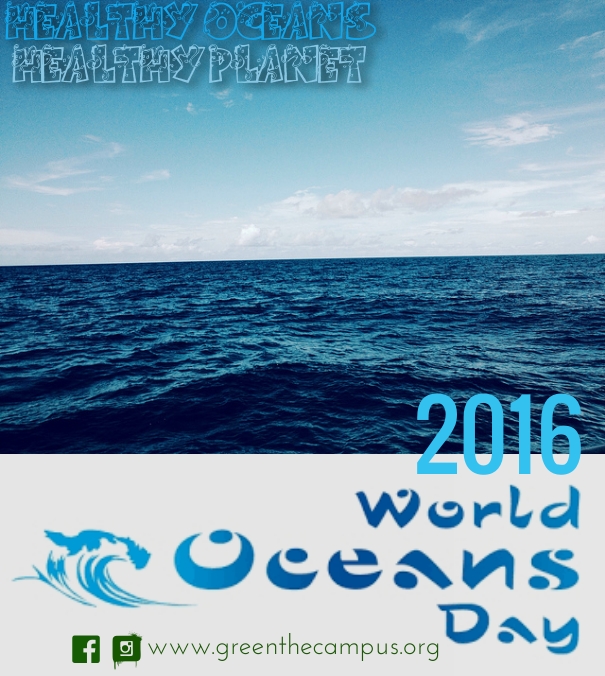
Today is World Oceans Day!!!

The World Oceans Day is celebrated on the 8th of June, annually. It was made so in 2008 by the United Nations General Assembly (resolution 63/111, paragraph 171). Oceans are like the heart of our planet. Like your heart pumping blood to every part of your body, the ocean connects people across the Earth, no matter where we live. The ocean regulates the climate, feeds millions of people every year, produces oxygen, is the home to an incredible array of wildlife, provides us with important medicines, and so much more! In order to ensure the health and safety of our communities and future generations, it’s imperative that we take the responsibility to care for the ocean as it cares for us.

This year, the theme is Healthy oceans, healthy planet, and its major focus is on plastic pollution and how to stop it.

World Environment Day 2016: Be an Agent of Change!

The World Environment Day (WED) is the United Nations’ most important day for encouraging worldwide awareness and action for the protection of our environment. Since it began in 1974, it has grown to become a global platform for public outreach that is celebrated widely in over 100 countries. It serves as a ‘people’s day’ for doing something to care for the earth or become an agent of change. Actions can be taken by individuals or a group of people, locally, nationally, or globally and through decades, WED has generated incredibly positive impacts on the planet.

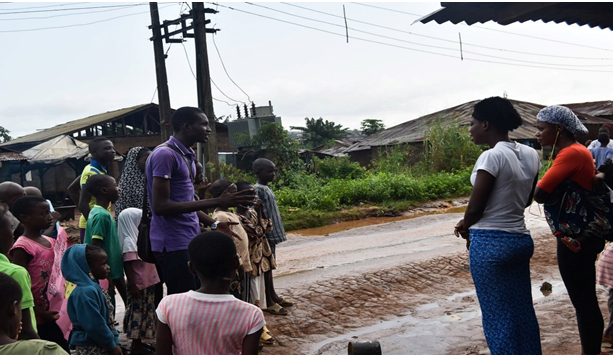
Annually, WED is celebrated on the 5th of June and it is usually organised around a theme and has different host countries. This year, it is themed on the illegal trade in wildlife under the slogan ‘Go Wild for Life’ and the host country is Angola. The Green Campus Initiative decided to be a part of this year’s WED celebration and create positive impacts locally. The first step was to go in search of a dilapidated primary school in a rural area of Ondo town to renovate and Orimolade Community Primary School in ‘Litaye Community’ fit just perfectly into the picture. As soon as the proper authorities were informed about our intentions, the publicity began and the set day for the event was 3rd June. E-fliers were made and posted on our online platforms and volunteers were implored to join in the movement.

Green_Campus_World_Environmental_Day

As the day gradually approached, several volunteers, ambassadors, and even lecturers began showing their interest. Letters were sent out to solicit for financial support as it is a capital intensive project and on the 3rd to 5th of June, about 60 volunteers including some students from the Green Kids Club moved into Litaye Community with cutlasses, hoes, flowers, paints, brushes and other materials needed for the task ahead. Work began immediately and a short while later, everyone went to pay a respect visit to the ‘Baale’ that is, community ruler. He gave words of advice and blessing. Work resumed; clearing unkempt grasses, planting flowers, painting classrooms and exterior walls.

Lots of the community children came around to help out, some older ones also checked in to show their pleasure and give encouragements. The volunteers had a lot fun while working. They understood better the effectiveness of teamwork, some even newly learnt how to paint. Some others visited the close by palm oil making site in the community to see and learn how its production processes. There was also an exceptional and very attractive mural painting, artistically created by one of our talented ambassadors.

The volunteers also learnt and played local games with the community kids, some others played football with them and it was very exciting. The last batch of volunteers left the community at about 5:30 pm with the intention of fixing another date to put finishing touches on the almost completed renovation.

It is also very interesting to know that about twenty (20) Green Ambassadors at Ahmadu Bello University enthusiastically celebrated WED in Zaria on the 5th of June. They visited Barewa College, a college that is very important in the history of Nigeria as it has produced five (5) Nigerian Presidents. They cleared the environment, planted trees, and organised a lecture on Climate Change given by Jafar Abdulahi from Kaduna State University.

Indeed, we are change agents doing it locally, one impact at a time till a ripple effect spread all through the nation and beyond. WE ARE OFFICIALLY GREEN!

Kaduna State University Goes Green

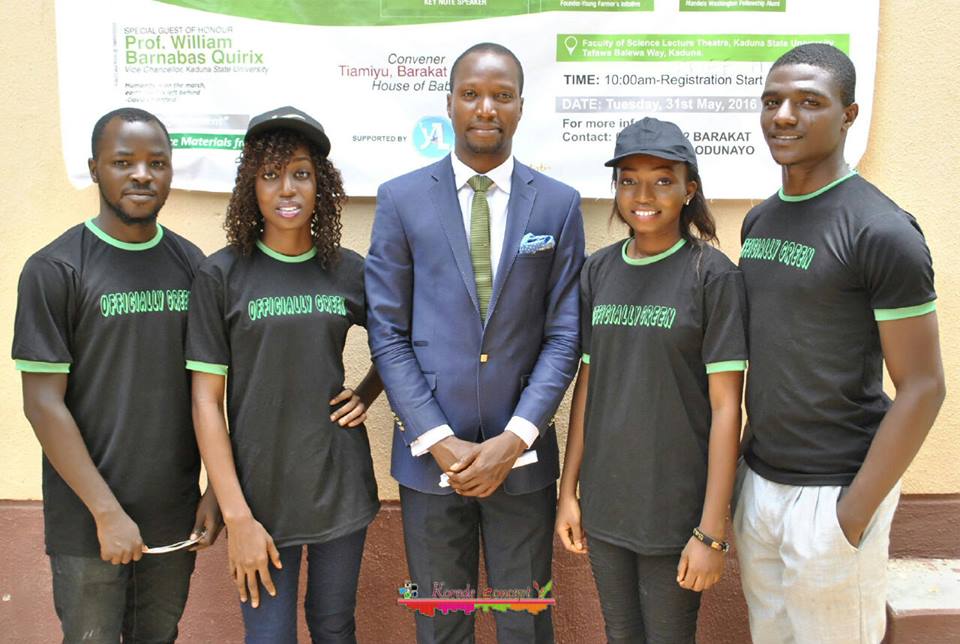
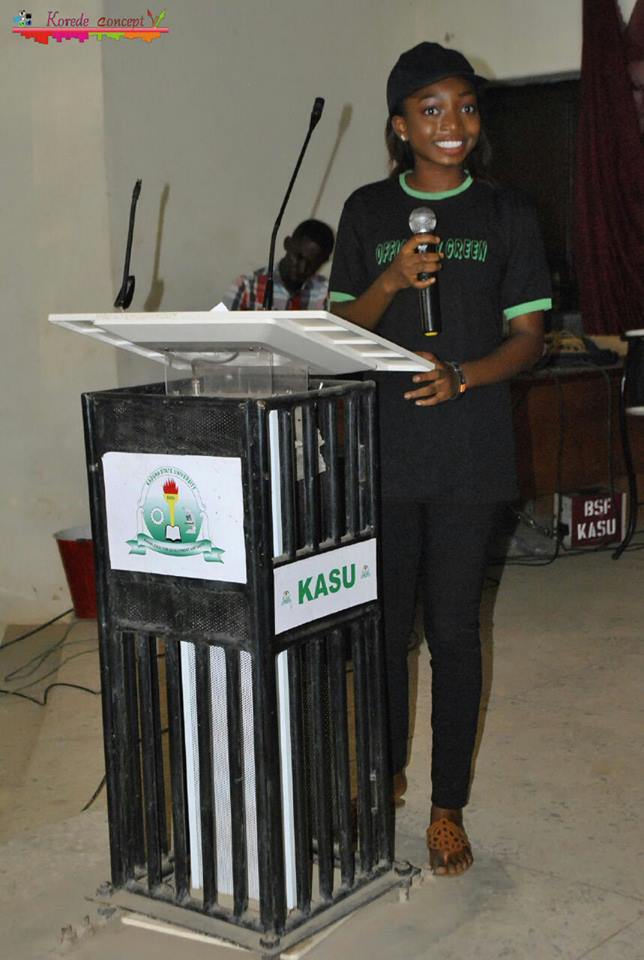
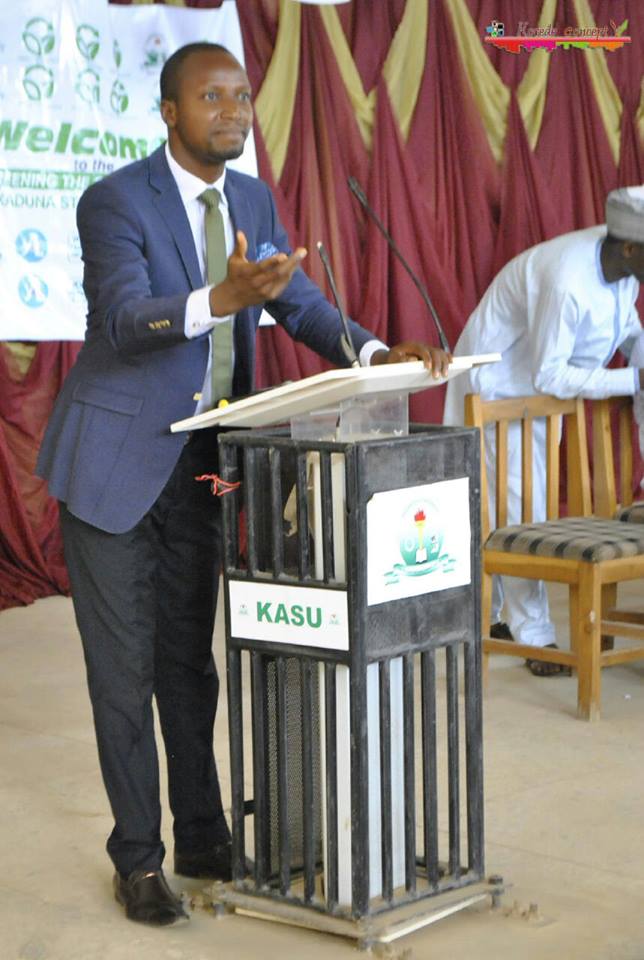
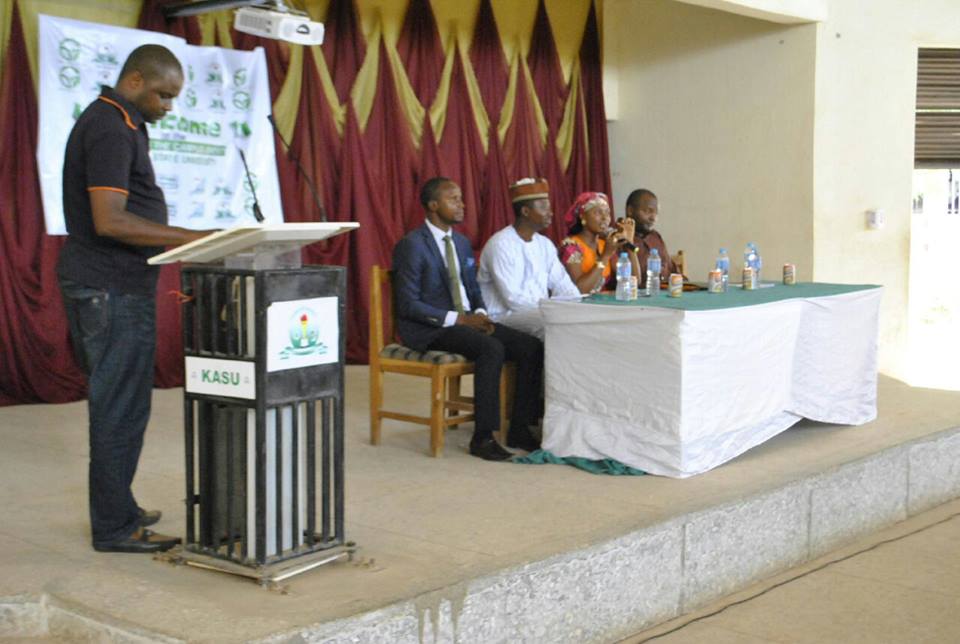
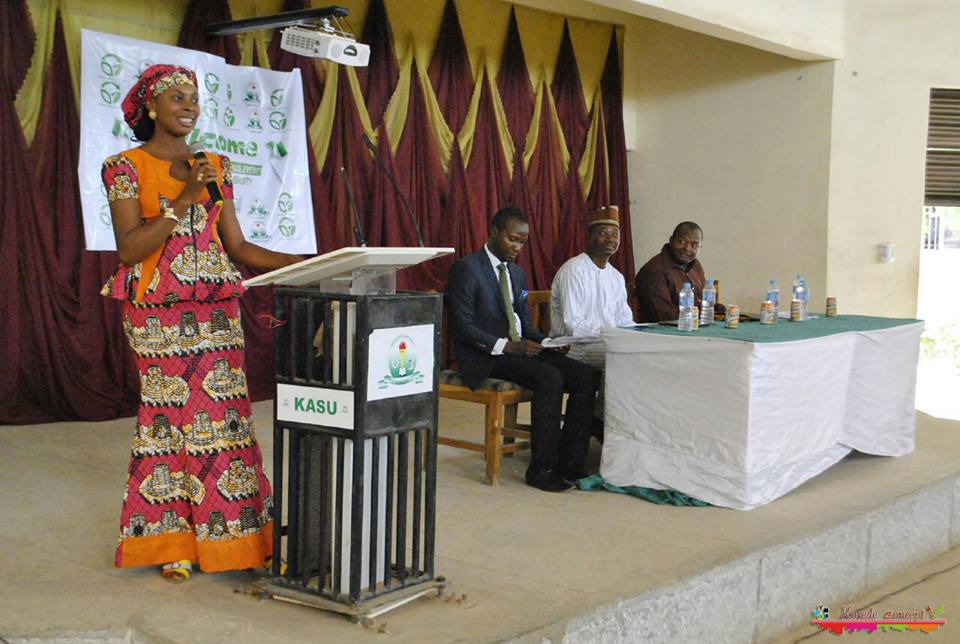
Greening the Campus” is the first campus seminar of the Green Campus Initiative at Kaduna State University, which introduces eco-sustainability, instigate sustainable actions among students in Kaduna State University. Barakat Tiamiyu; a Green Campus Ambassador, convenes the events, involving the different stakeholders that graced the occasion.

Green Ambassadors at Kaduna State University

Green Ambassadors at Kaduna State University

The event was held at the Faculty of Science Lecture Theatre, Kaduna State University on the 31st May 2016. Two hundred and fifty (250) students from various departments in the University were in attendance. Several staff also graced the event. Mr Yusuf Sokfa Kanhu (a youth ambassador) was the anchor for the event. The theme “GREENING THE CAMPUS” event is aimed to create awareness about the importance of 'Going Green', to form a green family of volunteers working together to build a positive and sustainable future.

Miss Barakat Tiamiyu (Green Ambassador and Convener)  

Miss Barakat Tiamiyu (Green Ambassador and Convener)  

Moderator - Yusuf Kanhu

Moderator - Yusuf Kanhu


The event kick started by recognising the presence of distinguished guests; Prof. Bala Dogo - Dean of Postgraduate Studies, KASU, Madam Ketura Aku– Administrator of Hamdala Hostel, Dr Yusuf Saleh (Lecturer, Geography Department)– Representing (Dean, Faculty of Science- Prof. J. G. Laah). Speakers: Arc Gbolade Ogundele -Representing the Green Team,  Alpha Nathaniel Hayab – Young Farmer’s Initiative, and Dr Salamatu Sukai Akor – Mandela Washington Alumni.


Miss Barakat Tiamiyu introduced the Green Campus Initiative (GCI). She remarkably took the students round the journey on how she became a GCI ambassador. She talked about the exciting part of working to promote students participation in environmental actions, and how seeing different passions has kept pushing her to forge ahead. She also spoke about what GCI is doing to tackle climate change and environmental sustainability and how students can get involved. A more elaborate explanation was given by Arc Gbolade Ogundele, as he talked about what Going Green further entails, citing some visual example in Kaduna environs, and explaining the steps of achieving environmental sustainability as students. The audience then watched a video presentation that summarised the different GCI activities so far.

Alpha Nathanial Hayab- Founder (Young Farmer's Initiative)

Alpha Nathanial Hayab- Founder (Young Farmer's Initiative)

Arc. Gbolade Ogundele- Representing GCI

Arc. Gbolade Ogundele- Representing GCI

Alpha Nathaniel Hayab, spoke on “Farmer’s and Climate Change”. Using the YALI climate change video to explain the component behind climate change and how it affects farmers, the people, and the economy. He said, ”young people need to be enticed to venture into the business of agriculture for the purpose of profit-making, to reduce unemployment and poverty”. Dr Salamatu Sukai Akor, also spoke on Human health and climate change- talking about its adverse effect on people, and how our activities gradually affect us. She mentioned that bottled water are expensive in the US, and it was a deliberate action to force people to carry their watering can which they could refill at different terminals. They also charge high fees in parking lots; this also is to encourage the use of public transport. 

The event ended with a key remark from the representative of Prof. J. G. Laah (Dean, Faculty of Science). It was indeed an interesting and impactful event, as the speakers and students showed great enthusiasm and now Kaduna State University is Officially Green.  There was a huge turnout of students who waited behind to inquire how they can be actively involved in the movement in Kaduna State University.

Green Campus Initiative featured on the 2016 New Media Conference

The Green Campus Initiative was a part of this year’s New Media Conference; a leading conference in Nigeria that gives you a unique opportunity to learn from, and network with senior leaders from the biggest brands in Nigeria. It held on the 27th of May, 2016 at Four Points by Sheraton Hotel, Victoria Island, Lagos. A team of ten (10) representatives from the Initiative attended the conference among which were ambassadors, associates, and an advisor.

The founder of the Initiative, Adenike Akinsemolu gave a brilliant 20 minutes summary of the challenge that birthed the Initiative and how New Media had helped promote and publicise the Initiative. She also made everyone take the Green Pledge.

Green_Campus_NMC

After that, a panel session titled "Green Media and Popular Culture: Using Green Media for Sustainable Green Initiatives in Nigeria" commenced moderated by Owoeye Abolade (Teaching Assistant at FUTA), consisting of four (5) seasoned panellists who are:

Segun Adaju, C.E.O. Blue Ocean Nigeria,

Kayikunmi Stefan, Specialist in Energy Economics,

Mr. Bankole Temitayo, Prime Minister, Green Campus Initiative, and,

Odunayo Ayodeji, Minister of Education and Advocacy, Green Campus Initiative.

The topic, Green Media, and Popular Culture: using New Media for Sustainable Green Initiatives in Nigeria, was discussed extensively. Then a session of question and answer followed. It was indeed a fun and educative experience as many had wondered how the Green Initiative was to fit into the conference. The attention and participation of the audience showed that they were carried along and properly educated and now fully understood the role of New Media in the sustainability of Green Initiatives in Nigeria.


Green Campus Initiative is an Official Partner of Green Kids Club, Inc.

We are pleased to announce our partnership officially with the Green Kids Club, Inc. Their president Sylvia Medina recently contacted us after reading our article posted by Ynaija.com on the launch of our own Green Kids Club. Her mail sparked up interest and excitement in us as this is indeed a great start for our club. Here is a brief summary of what Green Kids Club, Inc is all about.

The Green Kids Club kicked off in 2011. It is a unique, innovative and educative program based on younger children. It is particularly designed to teach younger children on how to be good stewards of the environment. They have an official Green Kids Club on their website where children from all around the world get the opportunity to join their club. As described on their Facebook page, “The series was developed as a utility to teach children the importance of protecting habitats to sustain ecosystems, animal life, and ultimately human life.


Victor and Maya Green are the leaders of the Green Kids Club. Their adventures take them all over the world, exploring new cultures and learning about protecting and preserving the environment and the animals that depend on them. Green kids focus on environmental sustainability, mitigation, and preservation to protect animals and their habitats.” These children are made to do environmental challenges and contests and are awarded books or toys or other items based on winning the highest amount of green points.

The Green Kids Club produce several children books (they have a book based on Botswana, dealing with poaching issues and elephants and another based in Rwanda and the mountain gorilla.), plush toys, and DVDs. This award winning club has extensions and collaborations in USA, India, Botswana, Belize, China, Uganda and even partnered with an orphanage in Tanzania, and a host of others. Now, their collaboration has extended to Nigeria as they will be sending books and prizes to our kids, and we in turn help publicize and populate their club. We look forward to a rewarding and long-lasting partnership with Green Kids Club, Inc. and “Together we make a difference in helping children Learn to Grow up Green!”

Contact Information for Green Kids Club:  www.greenkidsclub.com