Jane Goodall: 'Change is happening. There are many ways to start moving in the right way'

Jonathan Watts

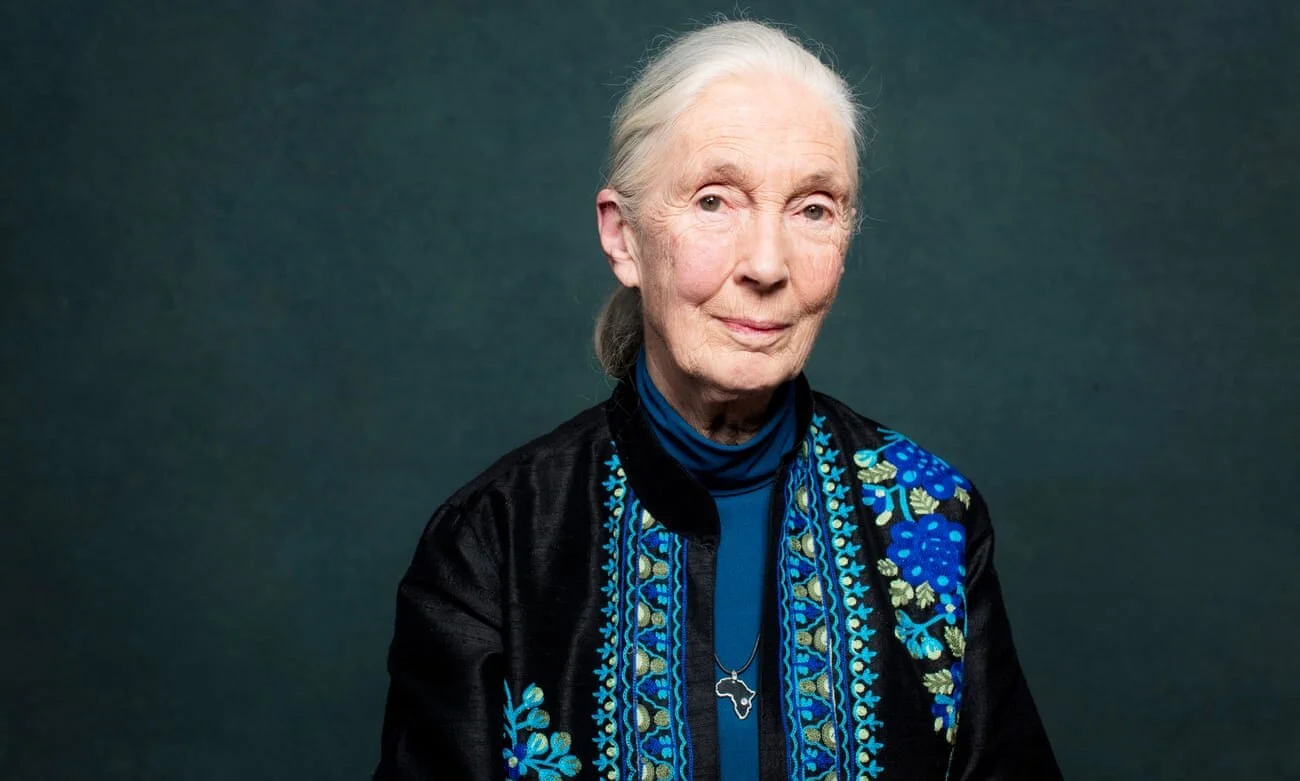
Jane Goodall: ‘Our disrespect for animals creates conditions for the emergence of zoonotic diseases.’ Photograph: David Levene/The Guardian

Jane Goodall: ‘Our disrespect for animals creates conditions for the emergence of zoonotic diseases.’ Photograph: David Levene/The Guardian

The primatologist and ecological activist on why population isn’t the cause of climate change, and why she’s encouraging optimism

Jane Goodall is a primatologist who is regarded as one of the world’s leading authorities on chimpanzees. She has spent 60 years studying the chimps that live in the Gombe Stream national park and she is a prominent advocate, via several foundations, of protecting the great apes and their habitats. She has been presented with awards by the UN and various governments for her conservation and environmental work. She appears in the Netflix documentary The Beginning of Life 2.

You warned last June that humanity will be finished if we don’t make drastic changes in response to the coronavirus pandemic and the climate crisis. Have you seen any indication of that drastic change?
The window is closing. Business as usual – using up natural resources faster and faster – can’t carry on. In some cases, we are already using resources faster than they can be replenished. And we can see the consequences. Look at climate change. It is not something that might happen in the future; we are already seeing terrible hurricanes and floods and fires. It is building up into an inferno. When you think globally like that, it is very, very depressing.

Do you feel that the pandemic has shifted perceptions, or created more of a sense of urgency?
Maybe Covid has given a push that will make a difference. The most important lesson from this pandemic is that we need a new relationship with nature and animals. Our disrespect for animals creates conditions for the emergence of zoonotic diseases. You can see that same disrespect in factory farms, bushmeat and wildlife markets and the illegal wildlife trade. About 75% of all newly emerged diseases in humans are zoonotic.

What more needs to be done?
We need to move to a more sustainable relationship with the natural world. We need a greener economy. If countries move away from fossil fuels and subsidise clean, green energy that will create a lot of jobs. If you plant trees in a city it has enormous benefits – it cools the temperature, cleans the air, stabilises the soil against flooding and improves psychological and physical health, to mention only a few. We also need to cut down on waste. I grew up in the war, when food was rationed and you did not throw anything out. We need to value food more – as aboriginal people do.

Jane Goodall and inquisitive friend, Gombe Stream Research Centre, Tanzania, January 1972. Photograph: Corbis

Jane Goodall and inquisitive friend, Gombe Stream Research Centre, Tanzania, January 1972. Photograph: Corbis

Do you think politicians and the public are focused enough on this challenge?
As damage is coming to a peak, awareness is coming to a peak. But it does not help to focus exclusively on the problems. Yes, the media must point out the harm we are inflicting. But they should give more space to all the amazing restoration programmes happening around the world – that gives people hope and they are more likely to do their bit. If you lose hope, why bother?

Where do you find cause for hope?
Change is happening. Millions are switching to wind and solar energy, clearing upstreams or picking up rubbish. Consumers are influencing the way business does its work. I am always meeting amazing people doing great projects to allow biodiversity to creep back. A lot of it in China. There are many different ways to start moving in the right way.

How about at the national and international level? The Global Biodiversity Outlook 5 report found the international community did not fully achieve any of the 20 Aichi biodiversity targets agreed in Japan in 2010 to slow the loss of the natural world. Can we expect anything better at the next big UN biodiversity meeting in Kunming, China, next year?
All I have seen, to be honest, is more decision makers talking about change and making plans, but not doing enough to make it happen. At these big meetings, there is so much talk and so little follow-up action. But now we are seeing more action among the youth. Children are standing up and influencing their parents, business leaders and politicians. Voting, in democracies, can make a big difference.

You and David Attenborough both appear to be more active than ever. But has your approach changed? You have tended to focus on individual responsibility in the past. Is it now time for something more radical, for system change?
I think we need many different approaches. There are instances when violent tactics are necessary to make people aware - like the anti-slavery movement. But violence can be counterproductive. I think people must change from within. If children point at dominant males and say “you are bad and we demand that you change”, the response may well be “I won’t be lectured by a young person”. My way is to tell stories, trying to reach the heart. Too often people give lip service to change but carry on with business as usual.

Our organisation, Roots & Shoots, works at the grassroots level with youth. The movement is growing very fast - all over North and South America, Africa, Europe and Asia, including over 1,000 groups in China. There are also new groups in the Middle East. Turkey and Israel, and I want to spread it further. We are linking youth from different countries together and finding partner organisations. It is really important to grow as the programme is giving young people hope. This is needed badly as we have caused so much environmental damage since we began in 1991. And without hope youth falls into apathy and does nothing. Many of the early Roots & Shoots members are now in leadership positions.

We’re seeing the consequences of the idea that there can be unlimited economic development with finite natural resources.

But this is not just a matter of changing individual behaviour. Aren’t there are deeper causes in the way the global economy is organised?
We are seeing the consequences of the crazy idea that there can be unlimited economic development on a planet with finite natural resources and a growing population. Decisions are made for short-term gain at the expense of protecting the environment for the future. Now, the world’s population is estimated at over 7 billion people and it is expected to be closer to 10 billion by 2050. If we carry on with business as usual what is going to happen? To be clear, the main problem is not population growth. I have never said that, although George Monbiot claims that I did, which is disappointing because I have always admired him. It is one of three main problems – the other two are our greedy lifestyle, our reckless burning of fossil fuels, the demand for meat, poverty – and, of course, we must also tackle corruption.

Advertisement

To what extent do you feel that traditional conservation needs to change?
We have to eliminate poverty. Because if people are really poor, they will destroy the environment because they have to feed themselves and their families. In 1990, I flew over Gombe national park [in Tanzania] and I was shocked to see the change. During the 1960s, it had been part of a vast equatorial forest. By 1990, Gombe was just a little island of trees, surrounded by land that had been stripped bare. It was then that I realised unless we could help people make a living without destroying their environment we couldn’t save chimps or forests. So we helped in many ways including providing scholarships for girls and offering microcredit opportunities, especially to women. It’s worked. If you fly over Gombe today, you don’t see those bare hills; the forest has come back. As women’s education improves, family sizes tend to drop. Women want to educate children. They don’t want to be birth machines.

In the Netflix documentary The Beginning of Life 2, you and many other biologists, conservationists and psychologists stress the mental health and social benefits that can come from a close connection to the natural world, and warn of the dangers that this is being lost among a younger, more urban generation.
When I was growing up, we did not even have television, so we immersed ourselves in books and nature. Children today have less time for that because they are fascinated by iPhones, laptops and video games. Also many more children grow up in cities, surrounded by concrete. The important thing is to get them into nature – the younger the better. In the documentary, you see the expression of wonder on a child’s face – a three-year-old boy watching a snail glide along. He suddenly picked it up, ran and put it on a window pane to watch it from the other side. This kind of experience is very, very important. It is only when you care for nature that you protect it. The film is very inspiring.

How has lockdown affected people’s relationship with nature?
In some cases, it has meant closer contact, but that depends on whether people have a garden or live near parks or green areas where they can walk. So many poor people were confined to the concrete jungle.

And how has it affected you?
I miss the contact with people, my friends. But I have adapted. I used to be travelling 300 days a year and meeting people face to face. Since I have been in lockdown, I do everything virtually and have reached millions more people in many more countries. So there is a silver lining. I try to find the silver lining in everything. We mustn’t lose hope.

Anything you would like to add?
You remind me of my favourite chimp, David Greybeard.

Reasons to be hopeful in 2021

Patrick Barkham, Richard Godwin, Amelia Tait & Jamie Waters

2020 has been a difficult year, but there are some glints of light in the gloom. From nature-friendly farms to anti-ageing worms and even a way of conjuring vodka out of thin air, here are a few nuggets of good cheer to look forward to in 2021

‘2020 has forced a recalibration of ambitions and expectations on a personal level’: Professor Peter Frankopan says this year will, largely, be good for us. Photograph: Jan Von Holleben/Trunk Archive

‘2020 has forced a recalibration of ambitions and expectations on a personal level’: Professor Peter Frankopan says this year will, largely, be good for us. Photograph: Jan Von Holleben/Trunk Archive

A vaccine for HIV: ‘This is an incredibly exciting result’

The Covid-19 vaccinations captured the world’s attention in November yet, around the same time, researchers behind a trial known as HPTN 084 also published spectacular results. The trial, which took place across seven countries in sub-Saharan Africa, found that an eight-weekly injection with a drug called cabotegravir was more effective than daily medication in an oral pill form in preventing HIV in women.

An estimated 38 million people in the world are currently living with HIV – two thirds of these people live in Africa. In South Africa, more than 62% of the 7.5 million adults living with HIV are women. While a pre-exposure prophylactic pill is currently available for people at risk, the HPTN 084 trial – undertaken by the HIV Prevention Trials Network (HPTN) and partly funded by the Bill and Melinda Gates Foundation – found cabotegravir to be 89% more effective.

“The injection overcame many of the challenges that women in the region experience with taking a daily pill,” trial chair Dr Sinéad Delany-Moretlwe says, explaining that stigma often prevents people taking their pill consistently. “Partners may feel insecure because they think it means their partners are going to be unfaithful and just generally women experience judgments about being sexually active,” she explains.

Delany-Moretlwe, who works at the University of the Witwatersrand in Johannesburg, says that the injection is “discreet and convenient and not visible” and therefore “overcomes barriers” for many women in African countries.

The HPTN 084 trial involved 3,223 cisgender women ranging in age from 18 to 45. Only four women who received the injection acquired HIV compared to 34 women who took the pill.

“I don’t think I’ve ever seen a result like this for HIV prevention in women,” says Delany-Moretlwe. “This is a product that can be used by men and women, when it’s licensed, potentially, so I think that’s what’s exciting.”

“I’ve worked in HIV prevention for a long time and I know we’ve had more disappointments than successes,” Delany-Moretlwe says, but “it’s an incredibly exciting result. With introduction and use of the injection, we can hopefully begin to see the reduction and possibly elimination of HIV acquisition in young women in our region.” Amelia Tait

Bristol: the people behind Britain’s greenest big city

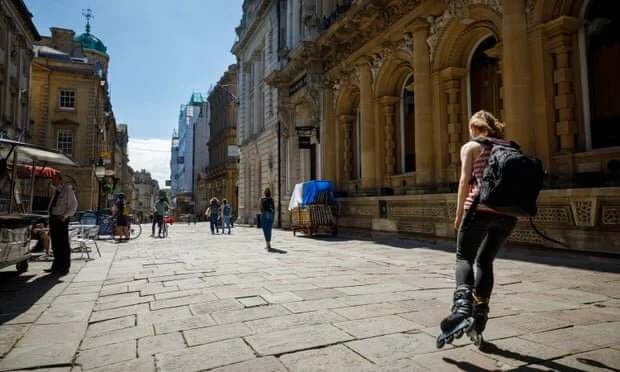
Clean and serene: Corn Street in the heart of Bristol. Photograph: Sam Frost/The Guardian

Clean and serene: Corn Street in the heart of Bristol. Photograph: Sam Frost/The Guardian

Imagine a city where power is generated from turbines and waterways. Where cycle paths, green space, allotments, veg boxes and vegan restaurants are plentiful, buses are powered by human waste and streets are closed so kids can play. It’s not a fantasy. It’s happening today in Bristol, a city increasingly feted for pioneering environmentally friendly urban life.

The first city in the world to declare a climate emergency and Britain’s first European Green Capital, it is consistently top of various green matrices. This year it was judged the most environmentally friendly big British city based on high recycling rates (47.4%), generous green space (29 hectares), council seats held by the Green party (11) and carbon emissions and gas consumption.

A green virtuous circle appears to be whirling in the West Country, as environmentally conscious citizens urge their leaders to make more ambitious climate commitments. In 2014, Britain’s first “poo bus” was launched, its journeys between Bristol and Bath entirely powered by human and food waste.

Bristol’s leaders have looked further ahead than most. Back in 2007, the city began powering its 34,000 street lights with green electricity and, by 2014/15, it had reduced its emissions by 38% compared with 2005. The Bristol Energy Co-operative’s most exciting new scheme proposes using the water flowing through Netham weir in the city to generate electricity.

A community team working at the Lawrence Weston housing estate gained planning permission for the tallest turbine of its kind in England, which will power all 3,500 homes in the area. Other schemes include a phone app using thermal imaging to help 70% of residents who struggle to pay their electricity bills identify the energy efficiency of their homes. Traders then fix problems for an affordable fee. Mark Pepper, project development manager of Ambition Lawrence Weston, says “from being seen as a middle-class problem” paying attention to the climate crisis is now seen as a way of investing in the future.

As well as being a middle-class concern, environmental issues have typically been championed by people who are overwhelmingly white. This, too, is changing in Bristol, the first major city in Europe to elect a black mayor, Marvin Rees.

“Someone said, ‘I hear the voice, I hear what the voice says but I don’t hear my voice’,” says Carlton Romaine, coordinator of the Black and Green Ambassadors project in Bristol, which aims to create a new generation of environmental leaders from black, Asian and minority ethnic communities. “We want to empower the BAME community because we’re always at the bottom and we’re usually add-ons,” says Romaine. “We want to be leading green projects or at least a partner, not just somebody that is asked to do something.” Patrick Barkham

Vodka made out of thin air: toasting the planet’s good health

The Air Company, based in New York, makes vodka from two ingredients: carbon dioxide and water. Each bottle that’s produced takes carbon dioxide out of the air. It has been chosen as one of the finalists in the $20m NRG COSIA Carbon XPRIZE, which aims to incentivise innovation in the field of carbon capture, utilisation and storage.

The company’s chief technology officer, Stafford Sheehan, hit upon the idea while trying to create artificial photosynthesis as a chemistry PhD student at Yale. Photosynthesis, you may remember from chemistry at school, is the process by which plants use sunlight to convert CO2 into energy. For 2bn years, plants were equal to the task of balancing the carbon in the atmosphere – but now we are emitting it at a rate beyond what nature can restore with photosynthesis. Hence the interest in carbon capture. “Our aim is to take CO2 that would otherwise be emitted into the atmosphere and transform it into things that are better for the planet,” says Sheehan

A nice cold martini is undoubtedly better for the planet than global warming. Unfortunately, however, it would require 11 quadrillion Air Vodka Martinis to make any kind of significant impact. But Sheehan hopes to make alcohol for a variety of different applications. “Ethanol, methanol and propanol are three of the most-produced chemicals in the world, all alcohols,” he says. “Plastics, resins, fragrances, cleaners, sanitisers, bio-jet fuel… almost all start from alcohol. If we can make the base alcohol for all of those from carbon that would otherwise be emitted, that would make a major impact.”

Air Company currently captures its CO2 from old-fashioned alcohol production: concentrated CO2 rising from a standard fuel-alcohol fermentation stack is transformed into vodka. That’s a fairly boutique product. However, power stations are much more plentiful sources. “You can burn natural gas, then capture the CO2 you’re emitting, and that feeds you the carbon dioxide,” says Sheehan. “That’s what we’d like to do and that’s where you can do it at scale.” Richard Godwin

Boyan Slat, founder of Ocean Cleanup, wears sunglasses made from reclaimed plastic waste

Boyan Slat, founder of Ocean Cleanup, wears sunglasses made from reclaimed plastic waste

Cleaning up the ocean: ‘Things that seem insoluble can be solved’

The Pacific Trash Vortex is the largest accumulation of rubbish in the world. Ocean currents mean the Eastern Garbage Patch near Japan is locked in a perpetual exchange of tyres, toothbrushes, discarded Minion toys, etc, with the Western Garbage Patch, between California and Hawaii. It spans more than 1m sq miles. Most of it is plastic: an estimated 87,000 metric tonnes broken down into 1.8tn tiny pieces.

In 2012, a Dutch teenager named Boyan Slat gave a Ted Talk that had grown out of a school project. He revealed a plan to install a series of floating platforms that would harness those ocean currents and concentrate the rubbish in tighter areas, making it easier to remove. He founded the company Ocean Cleanup in 2013 and raised over $40m in funding.

“There isn’t an instruction manual for doing this,” says Slat when I connect with him over video link – no longer a wide-eyed kid but a shaggy haired 25-year-old.

After much research and trial and error, the company is now concentrating most of its efforts on rivers, stopping at source most of the plastic before it can get into the oceans. However, Ocean Cleanup achieved a significant milestone last year by extracting plastic from the ocean and turning it into something useful: sunglasses, yours for $199.

The frames only represent a drop in the ocean in terms of plastic extracted, but Slat hopes they will create a virtuous circle. Each pair will fund the clean-up of up to 24 football fields of plastic from the Garbage Patch. “It would be quite poetic if we could fund the clean-up by recycling the plastic we take out.”

Slat sees 2021 as an inflection point – the moment to deliver on its promises. “We have the tools to do it now. We have applied the lessons we’ve learned. Now it comes to actually doing it at scale.”

What gives him hope? “The willingness of the world to address the issue. When we started, I thought the main difficulty would be people not caring – and the technology would be relatively easy. Actually it’s the opposite. But that makes me hopeful that when all the tools are there, it will actually happen. It is possible, even in this time when everything seems so polarised, to tackle problems through all the things humans are good at: entrepreneurship, ingenuity, creativity. It can bring people together. Things that seem insoluble can be solved.” Richard Godwin

Saved from extinction: the rare species back from the brink

A good year for kakapos: Sinbad, a male kakapo, curiously peering from the bushes during the day. Photograph: Nature Picture Library/Alamy Stock Photo

A good year for kakapos: Sinbad, a male kakapo, curiously peering from the bushes during the day. Photograph: Nature Picture Library/Alamy Stock Photo

Antarctic blue whales Blue whales were abundant off South Georgia before industrial whaling arrived in 1904. By the 1970s they had vanished from the surrounding seas. Between 1998 and 2018 there was only a single sighting. This year, that changed: there have been 58 blue whale sightings.

Kakapo The kakapo is the world’s heaviest, longest-lived parrot – a flightless, nocturnal creature which, like New Zealand’s other flightless birds, was imperilled by the mammalian predators introduced by humans. Years of conservation efforts had saved it from extinction, but then the species was struck down by the respiratory disease aspergillosis. Stricken birds were helicoptered to Auckland and treated in a human hospital with a paediatric nebuliser. The virus was contained and the population now stands at 213.

Beavers It seemed like 2020 was the year every grand estate obtained a licence to release beavers into large, fenced enclosures. The beaver is increasingly valued as a natural flood-defence engineer, with its dams storing water upstream and slowing the flow of flood water, protecting towns downstream. Its ponds and channels have also been shown to benefit fish, amphibians, insects and birds. This year, the government in England allowed beavers unofficially released in the River Otter in Devon to stay, paving the way for its return as a natural native species, 400 years after being hunted to extinction.

Great fox spider The critically endangered spider was feared to be extinct in Britain. But the nocturnal 5cm arachnid, known for its speed, agility and ambush hunting, has been rediscovered on a Ministry of Defence site in Surrey. Mike Waite from Surrey Wildlife Trust rediscovered the spider after being allowed in to survey the area over a two-year period. MoD sites are often wildlife havens with land undisturbed by the general public.

Hen harrier A fine spring and summer across the UK meant that voles bred prolifically in the wild, in turn helping birds of prey enjoy successful breeding years. The endangered hen harrier enjoyed its best breeding year for nearly two decades. Nineteen nests produced 60 chicks. Patrick Barkham

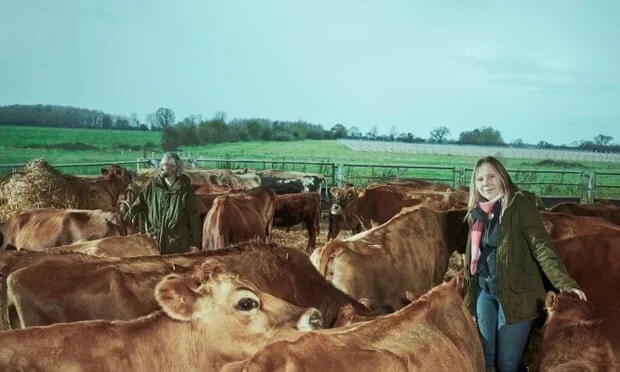
The future of farming? The Mayhew’s dairy farm. Photograph: Phil Fisk/The Observer

The future of farming? The Mayhew’s dairy farm. Photograph: Phil Fisk/The Observer

Regenerative farming: a return to nature-friendly agriculture

Four years ago, Rebecca Mayhew lost her job, then the pigs on the farm she owned with her husband Stuart were plagued by health problems due to the way they were intensively farmed. The couple became uneasy about the animals’ welfare and the health of their conventionally farmed land, so they sold their pigs and took a holiday in Scotland, where Rebecca fell in love with a friend’s Jersey cows.

Four years on, their once-conventional arable and pig farm is a very different beast. The Mayhews have embraced regenerative farming, a way of working that aims to fix the food production system by restoring degraded soils and reducing and ultimately eliminating artificial fertilisers and pesticides.

The revolution at the Mayhews’ 500-acre South Norfolk farm began with a small herd of Jersey cows. Unlike a traditional dairy, where calves are removed from their mothers after a few hours and fed formula, they chose to produce milk naturally, allowing calves to feed from their mothers, who are milked just once a day. “Looking into what’s good for the cows, and what’s good for us led us into looking at what’s good for the land,” says Rebecca.

The Mayhews have jettisoned the farming orthodoxies of the past half-century. Ploughing is sacrilege: it erodes fertile top-soil. Decades of relentless scaling-up is turned on its head: big fields are turned into smaller fields – hedges replanted to stop erosion and provide shade and fodder for the cattle. Grazing fields that would normally be sown with a monoculture of rye-grass are instead seeded with up to 20 species to provide healthier food for the cattle (which, in turn, need fewer expensive veterinary drugs). Arable fields are planted with “cover crops”: so clovers are planted alongside barley or oats. Clovers are “nitrogen-fixing” plants that take nitrogen from the atmosphere and add it to soil, so it can be used by other plants – a free fertiliser and soil-improver.

“Modern conventional farming is a constant war with nature. It’s about killing everything so one plant can grow,” says Mayhew. “We need to mimic nature and work with it.”

The Mayhews’ new way of farming is nature-friendly so they’ve been able to take advantage of government subsidies for wildlife-enhancing farming. British farmers know that generous EU farm subsidies are coming to an end and farm payments in the future are likely to be more dependent on farms providing environmental “goods” such as healthy soils and clean water. Patrick Barkham

A new way of seeing: live video signals are sent to the brain’s visual cortex. Photograph: Science Photo Library/Alamy Stock Photo

A new way of seeing: live video signals are sent to the brain’s visual cortex. Photograph: Science Photo Library/Alamy Stock Photo

Bringing sight to the blind: developing a new artificial eye

Between the ages of 42 and 57, Bernardeta Gómez from Spain couldn’t see a thing. But then scientists embedded a port into her skull and after 16 years of blindness, Gómez was able to see again. It was all thanks to the innovations of Eduardo Fernandez, director of neuroengineering at the University of Miguel Hernández in Elche, Spain.

Fernandez is working on a unique cure for blindness – instead of developing an artificial retina, he has created a device that restores sight by feeding signals directly to the brain. As the majority of blind people have damage to the nerve system connecting the retina and the brain, Fernandez’s work could help more people than developing an artificial eye.

Fernandez has compared his prosthesis to a pacemaker or cochlear implants, both of which are pieces of electronic equipment that have been widely implanted into humans for more than 60 years. His system is made of a small camera attached to a pair of slightly outsized black glasses. This relays live video to a computer, which translates the footage into electronic signals. These signals are sent through a cable to a 100-electrode implant in the brain’s visual cortex (hence the port in the back of Gómez’s head), which deliver currents directly to the brain, producing sight.

Among the many novel terms that have entered our lives lately – “lockdown,” “herd immunity,” “flatten the curve” – one is decidedly more glamorous. In November it was suggested that “Dollying” should become shorthand for referencing an occasion when a celebrity does something that makes you love them even more.

This was in response to the revelation that Dolly Parton had contributed $1m towards the Moderna Covid vaccine, news which was met with euphoria as we collectively – and only slightly melodramatically – exclaimed that Dolly had “saved the world”.

Yet before we add “Dollying” to the dictionary, let’s consider the competition. How about “Doing a Rashford”, in reference to Man Utd’s striker Marcus Rashford forcing the UK government to confront child poverty and reinstate free meals for underprivileged schoolchildren?

Gómez was able to see a low-resolution representation of objects rendered by white-yellow dots and shapes. She could see lights, letters and shapes at 10 pixels by 10 pixels. Although she couldn’t make out human faces, she was able to play a simple computer game “piped directly into her brain”. Unfortunately, the implant had to be removed after a year. “The body’s immune system starts to break down the electrodes and surround them with scar tissue,” explains Fernandez, “which eventually weakens the signal.”

He hopes to continue testing his bionic eye while figuring out ways to stop the implant degrading. Ultimately, the prosthesis will be wireless. Amelia Tait

Doing a Rashford: a new shorthand for celebrity philanthropy, in light of the footballer’s campaigning against child poverty. Photograph: Ash Donelon/Getty Images

Doing a Rashford: a new shorthand for celebrity philanthropy, in light of the footballer’s campaigning against child poverty. Photograph: Ash Donelon/Getty Images

Celebrity philanthropy: when the great are also really good

“Riri-ing” could also work, following Rihanna’s donation of $2m to charities supporting domestic-violence victims during lockdown. And then there’s “Pitting” (I sense this cute word game has now run its course), after Brad Pitt was spotted delivering groceries to disadvantaged LA households. The internet squealed with delight.

These acts stand out in a year in which celebrities have been stripped of red carpets and live concerts and rendered impotent, left to spout platitudes over social media.

Philanthropy has become common ever since Bob Geldof’s Live Aid concerts for famine-stricken Ethiopia in the 1980s, and is now so widespread it’s “almost part of the job description of an A-list star,” says Jo Littler, sociology professor at London’s City University. It is, she adds, “a form of brand promotion”.

This means we have an ingrained scepticism when we see a celebrity doing a good thing: is it genuine or a PR play? Evan Ross Katz, a fashion writer and podcast host, says acts resonate when, instead of “affixing themselves to something because it’s trendy,” the celeb has a personal connection to the cause. Such was the case with Rashford, who subsisted on free school meals growing up, or ASAP Rocky, who last month delivered meals to the homeless shelter in New York where he and his mum sought refuge when he was young.

Gestures needn’t be grand. Ryan Reynolds recently sent 300 parkas to a school in the remote Inuit community of Arctic Bay after the town’s mayor tweeted that they were desperate for winter gear. Justin Timberlake bought a wheelchair-friendly van for a teenager with cerebral palsy. And Taylor Swift’s longstanding custom of helping out regular folks continued when she paid for an 18-year-old to study maths at a UK university.

We don’t need our celebs to be decent people but when they are – and in a way that isn’t overly forced and holier-than-thou – it provides a much-needed boost to our battered morale. Jamie Waters

Anti-ageing: the worms that may help us live longer, healthier lives

greenest5.jpg

At first glance, Jarod Rollins’s work looks like magic. In a cove on an island off the coast of Maine, Rollins spends his days examining transparent worms in the hopes of extending human life. Of course, it’s not really magic, it’s science: Rollins works at the MDI Biological Laboratory, a non-profit research institution, and is motivated by a desire to “help people age more gracefully or even turn back the ageing process”. In July 2019, Rollins and 10 other researchers from across the globe made a monumental breakthrough: they increased the lifespan of some Caenorhabditis elegans worms by 500%.

The reason these unassuming roundworms are frequently used in ageing research is because they share many of their genes with humans. An ordinary C elegans worm will live for three to four weeks – Rollins and his team kept them alive for months.

“If we do make a discovery in C elegans and find a gene that helps regulate the rate at which they age, there is a good chance that that research is going to apply directly or indirectly to humans,” he explains. “I’m not in the business of making worms live longer,” he laughs, “I want to make people live longer and healthier, and worms are just one step on the way.”

The worms in the experiment lived longer because his colleagues in China altered two signalling pathways in their cells. These pathways were previously both linked to ageing – in the past, experiments altering one of the pathways had doubled C elegans’s life expectancy, while experiments with the other increased the worms’ lifespan by 30%. The team expected that altering both pathways simultaneously would see worms living 130% longer. Instead, they lived five times longer.

Mutating the two pathways sends signals to cells telling them to use dietary nutrients to go into “maintenance mode” instead of “growth mode” – fixing the damage caused by age. But what are the immediate repercussions? Rollins explains that scientists used to look for one “silver bullet” in anti-ageing research, but the therapies that “are going to have the most effect are probably going to stimulate multiple different genetic pathways at once… This is really going to change how people look at the ageing process.” Amelia Tait

Why 2020 will make us better

Troubled eras have always inspired positive human progress – and 2020 will be no different, says Peter Frankopan, professor of global history at Oxford University

This year has been a terrible and chastening experience. But rather than allow doom and despair to sweep us away, we should be optimistic about the future – and in the long run, we might just owe 2020 a debt of thanks, rather than mutter its name with spite.

The experiences of this year will – and must – teach important lessons about being better prepared for future epidemics. It will lead to greater understanding of how to plan and execute large-scale emergency responses more quickly and more efficiently and with better outcomes. And it will make us think about the risks and threats in the world around us with greater clarity and depth.

The fact that Covid-19 vaccines have been developed with astonishing speed might encourage those who fear the worst about other big problems. Climate change is the most obvious mega-threat: in the long run, our pandemic experiences must help with that.

While Covid hit the economy, one outcome may be smarter policy that looks to keep people in jobs, ensures towns and city centres remain vibrant and encourages small businesses to flourish and grow – rather than enabling virtual monopolies to impose strangleholds over the economy which heighten social inequalities.

And 2020 has forced a recalibration of ambitions and expectations on a personal level. At the start of the year, our aims might have included a promotion or a higher salary. Today, those hopes have been replaced by something rather more modest and, indeed, better for us: to see friends, visit the pub, watch live sports, go to the theatre or visit somewhere new.

Outside the pandemic, the murder of George Floyd in May proved a catalyst in raising voices who demand a fairer, more equitable and kinder society. It forced global public attention to focus on the realities of discrimination and racism, to recognise that there might be better alternatives to having statutes of rich slave-owners towering over town squares and that cultural imperialism did not end when the age of empire did.

Beyond 2020? We would do well to remember that, in the past 30 years, more people have been lifted out of poverty than ever before; more children and mothers have survived childbirth; more people are able to read and write than at any point in human history.

For all the horrors of the year, hope is still present – as the historian Agathias wrote in the sixth century, times of disaster throw up prophets who talk about doom and gloom and predict how much worse things will get with great certainty. Much better, then, to be positive and optimistic.

THE GREEN ROOM (Episode 8): Climate Change and the Voiceless

GREEN ROOM: LIVE WEBINAR

Randall S. Abate is the inaugural Rechnitz Family and Urban Coast Institute Endowed Chair in Marine and Environmental Law and Policy, and a Professor in the ...

Summary of the Discussion

The discussion kicked off with a brief introduction of our guest, Prof Randall S. Abate, Professor in the Department of Political Science and Sociology, at Monmouth University in West Long Branch, New Jersey. by our amiable moderator Dr. Duygu Sever Mehmetoğlu


LISTEN TO PODCAST

ABOUT THE SPEAKER

Randall S. Abate is the inaugural Rechnitz Family and Urban Coast Institute Endowed Chair in Marine and Environmental Law and Policy, and a Professor in the Department of Political Science and Sociology, at Monmouth University.

Randall S. Abate is the inaugural Rechnitz Family and Urban Coast Institute Endowed Chair in Marine and Environmental Law and Policy, and a Professor in the Department of Political Science and Sociology, at Monmouth University.

Read full bio

ABOUT THE MODERATOR

S. Duygu Sever is a passionate researcher who works on the intertwined relationship between energy politics, sustainability and human security. She holds a PhD in Political Science and International Relations at Koç University, Turkey.

S. Duygu Sever is a passionate researcher who works on the intertwined relationship between energy politics, sustainability and human security. She holds a PhD in Political Science and International Relations at Koç University, Turkey.

read full bio

QUESTIONS AND ANSWERS

Moderator: So Professor, let's start with the basics. You are using a very interesting, striking, and important term The Voiceless while talking about climate change and the efforts to mitigate its impact. What does the term Voiceless stand for?

Prof. Randall: Well, I used this term deliberately in the book to represent those that are not able to represent their own interests under the law. So, the three categories that I've identified in the book share that common vulnerability when we talk about future generations of humans such as youth that are not yet able to vote and the unborn, and wildlife and natural resources. They share a common vulnerability of not being able to represent their interest in the legal system and therefore they need human guardians and advocates to step in to protect their interest, to account for their concerns because they're not able to participate on their own behalf. And so the term of the voiceless does have other meanings outside of this book project and I certainly respect those references as well. For instance, sometimes voiceless can refer to other marginalized communities of humans who aren't adequately protected under the law but for purposes of this book project, it's those three categories only.

Sabika: Thank you for having me on your show. Thank you. My name is Sabika and I'm calling in from Qatar and I suppose I'd like to just briefly tap into your expertise at law. And as we all know that climate change is just not a simple issue, It is not only an environmental issue, It is an issue that is a social issue and economic issue, a racial one, a gender, ableism, a moral issue, just so many layers but when it comes to law, which is a mechanism to kind of figure this all out, in your opinion has the field of law involved enough to allow representation from these, you know vulnerable groups if you will and even in the field of law and law schools and what have you, has environmental law developed enough to be powerful? Do you see a specialist out there?

Prof. Randall: Thank you very much for that question Sabika. I am encouraged by the developments in the US, I can certainly speak too much directly just in the past decade that environmental justice as a field has really become much more recognized and respected as a way of seeking to promote change on these issues and just with the Biden administration some very progressive thinking people on the notion of environmental justice and how that fits into climate change and sustainability have been appointed. So I have some hope there, but more importantly at what I am most encouraged by is that there are a lot of efforts creative efforts in the courts with climate change litigation over the past decade and it wasn't so much about which cases won or lost in the court. But what was encouraging to me about it was that it really transformed climate Justice into a movement into a social movement and I've seen that very much reflected in the youth in American society now that climate justice is very much a rallying cry like black lives matter and like me too. It's a galvanizing of this demand for social justice and how we move forward and so environmental justice is a very important piece of those when used to be different social issues. And now we're seeing those come together in today's youth in the US and that is also informing who that generation is voting for who's ultimately getting into state and federal political offices to be able to reflect the will of the public and set agendas on these issues.

Sabika: Thank you so much and do I have an opportunity to ask one more question then

Moderator: Sure, please do.

Sabika: Okay, perfect. So, I mean I understand that capitalism has been the driving force of economies worldwide and you also touched upon this in your earlier discussion, but I guess the alarming fact is that it's also the driving force behind the developing economies that are almost myopically kind of going on this narrow path of rapid development and it tends to kind of emphasize individual prosperity over the more global kind of thinking. So I suppose the question is that is there a space within capitalism that is being practiced in developing countries to look at actions towards climate change as a win-win situation as opposed to a zero-sum game. Are there any ways to make it, you know, the defects of climate change less conceptually distant because at the moment there seems to be very limited pressure to have these sustainable mechanisms in place, especially in this new kind of economies?

Prof. Randall: That's a great question. So I think that kind of reflects back on this notion of climate in the climate change negotiations, the notion of common but differentiated responsibilities in how we need to move forward as a global community to address climate change, and what that really means is that the developed countries have a higher responsibility to lead these transitions away from our bad habits whether it be capitalism or fossil fuels or factory farming and essentially the developing world is entitled to financial and technical assistance from the developed world to help them make that transition in a slower way because they lack the means and in fact, they're entitled to their engagement of those capitalism mechanisms to advance their economics because the developed world had that opportunity and exploited it and it shouldn't be well now there's no room for the developing world to engage in that more short-term capitalistic frame. But the reality is that we're all more informed about what it means to be sustainable. So even with that slower transition in the developing world away from capitalism, there needs to be more sustainable minded thinking and how those capitalistic efforts can move forward. There's no right to exploit the environment. There is a right to develop in a way that's going to sustain the economies of those developing countries without being unduly burdensome on the environment. And so I think that's where there really is this moral and political and economic responsibility in the developed world to support that transition and that hasn't gone as well as hoped. If there's anything that has come out of the past three decades of climate negotiations, It's that the developed world especially countries like the US have not embraced that moral responsibility and the developing world is just pushing back and saying it shouldn't land in our shoulders and as has been very frustrated by that reality.
Sabika: Thank you. Dr. Randall. Thank you so much.

Prof. Randall: Thank you for the questions.

DOWNLOAD FULL Transcript

Favourite Quote

The Voiceless represents those that are not able to represent their own interests under the law.
— Prof. Randall S. Abate
What Sustainability really means is that it really requires us to adopt more of an ecocentric way of looking and moving forward as inhabitants of this planet.
— Prof. Randall S. Abate

Top Comment

Prof. Abate is an inspiration, his work in social equity, climate justice and clarifications on sustainable development is indeed profound, relevant and needed.- Chris Chinapoo


REGISTER FOR THE NEXT GREEN ROOM

Rethinking stimulus: How Covid economic recovery can help battle climate change

Emma Newburger

  • Scientists warn that global carbon emissions will rebound next year and continue to surge unless governments prioritize climate change in their Covid economic recovery plans.

  • A green pandemic recovery includes shifting away from fossil fuels and toward investing in zero-emissions technologies and infrastructure, ending coal plant production and restoring the planet.

  • “The science is clear. Time is running out,” said Inger Andersen, executive director of the U.N. Environment Programme.

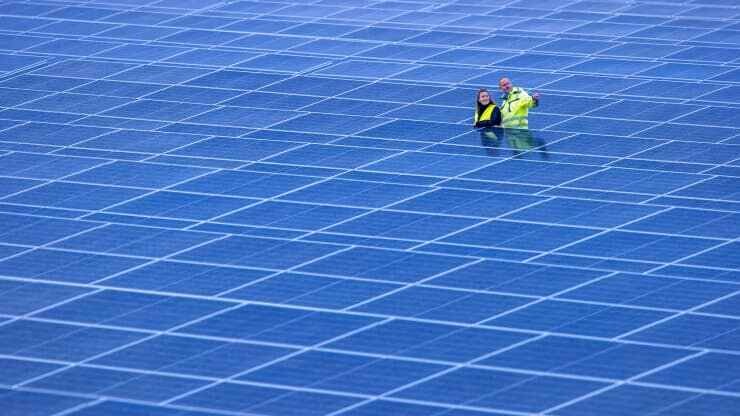
Employees of the company Goldbecksolar are testing a module in a solar park under construction in a former gravel opencast mine.Jens Buttner | picture alliance | Getty Images

Employees of the company Goldbecksolar are testing a module in a solar park under construction in a former gravel opencast mine.

Jens Buttner | picture alliance | Getty Images

During the coronavirus pandemic, the worst public health crisis in a century, some people pointed to what appears to be a tiny silver lining for the planet: Global lockdown measures reduced climate-changing carbon dioxide emissions.

Global greenhouse gas emissions plunged by roughly 7% from 2019 as a result of businesses closing and people traveling less by car and plane to mitigate the spread of the virus. The dip translates to a roughly 0.01 degree Celsius reduction of global warming by 2050 — a negligible impact, according to scientists.

But as 2020 ends and an initial vaccine rollout triggers hope that the pandemic will soon end, scientists warn that emissions will rebound next year and continue to surge unless governments prioritize climate change in their Covid-19 economic recovery plans.

Investing in a green recovery

In response to the pandemic’s economic damage, the world’s biggest economies have already committed more than $12 trillion in restarting economies, according to the International Monetary Fund.

It’s an unprecedented global effort that scientists and researchers argue must incorporate climate-resilient projects like increasing green public transportation, renewable energy and smart electricity grids.

“These stimulus packages are a once-in-a-generation opportunity to kickstart a green recovery, one that locks us into an equitable and sustainable future,” said Inger Andersen, executive director of the U.N. Environment Programme.

“The science is clear. Time is running out,” Andersen said. “We have one decade to transform our economies and avoid climate catastrophe.”

A so-called green recovery after the pandemic includes shifting away from investing in and providing subsidies for fossil fuels and toward investing in zero-emissions technologies and infrastructure, ending coal plant production and restoring and conserving the planet.

“There’s a bar for effective and lasting emissions reductions,” said Kim Cobb, a climate scientist at Georgia Tech. “The pandemic fails on all counts.”

“Coming out of the pandemic, governments of the world are going to be investing trillions of dollars in efforts to jumpstart economies and mitigate suffering,” Cobb said. “They should make these stimulus packages emissions friendly and equitable.”

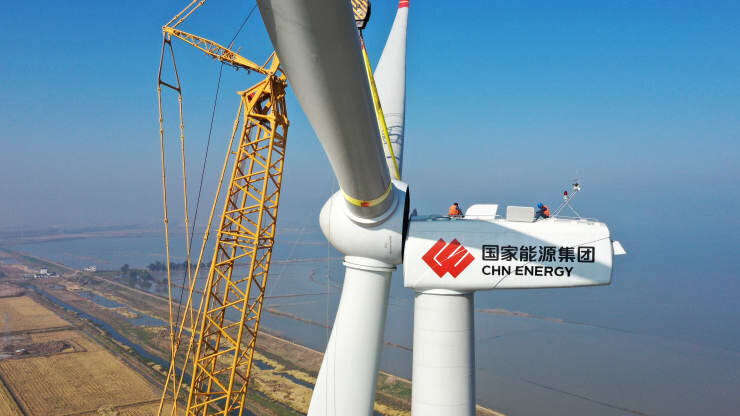
Workers install wind turbines at a wind farm on November 16, 2020 in Anqing, Anhui Province of China.Li Long | Visual China Group | Getty Images

Workers install wind turbines at a wind farm on November 16, 2020 in Anqing, Anhui Province of China.

Li Long | Visual China Group | Getty Images

The world is still heading for a temperature rise in excess of 3-degrees Celsius this century, far above the goals set by the global Paris climate accord. The temperature increases are linked to more frequent and destructive climate disasters like hurricanes and wildfires, rapid ice melt and exacerbated sea-level rise.

A green pandemic recovery could cut anticipated emissions in 2030 by up to 25% and increase the chances of keeping the world below a 2-degree Celsius scenario by up to 66%, according to a U.N. report published this month.

Huge missed opportunity

Jennifer Layke, global director at research group World Resources Institute, emphasized that the window of opportunity for governments to invest in climate-resilient technology and infrastructure is critical.

For instance, leaders of countries including Germany, Britain and Japan have urged nations to invest in technology like solar power and electric vehicles as part of their pandemic recovery plans.

In the U.S., Congress on Monday passed a $900 billion stimulus package that has several provisions to fight climate change, including significant investment in renewable energy technology like solar, wind and energy storage. Congress also agreed to cut the use of hydrofluorocarbons, a planet-warming chemical found in refrigerators and air-conditioning.

But many countries building out stimulus recovery plans have failed to prioritize clean energy investment, and policymakers and energy system participants are resorting to what they’ve done in the past.

Only about one-quarter of G-20 leaders have dedicated shares of their spending, up to 3% of GDP, to low-carbon measures, according to the U.N.

Ambition alone is not going to help us reduce emissions.
— Inger Andersen U.N. ENVIRONMENT PROGRAMME

“We have not seen the level of investment in green stimulus that would allow to us to transition out of fossil fuels into cleaner technologies,” Layke said. “It’s a huge missed opportunity.”

The global response to the pandemic is reminiscent of the financial crisis 10 years ago, Layke said, when carbon emissions rebounded higher than ever after governments around the world invested more in fossil fuels to recover from the recession.

“The economy is a big tanker heading in the wrong direction globally,” she said. “This is the moment where we need these leaders to take action. If their Covid-19 recovery investments made to date are an indictor, we are off course.”

More net-zero emission targets

What also matters is whether governments around the world update and solidify more ambitious climate targets at the next round of U.N. talks, set to take place in Glasgow, Scotland, in November.

While emissions trends aren’t looking good, there is a global shift underway. The U.N. report showed that 126 countries comprising 51% of global greenhouse gas emissions have adopted or are considering net-zero emissions targets by mid-century.

China, the world’s largest polluter, has vowed to reduce its emissions to net-zero before 2060. Britain has vowed to cut emissions by 68% by 2030. And Korea and Japan have announced net-zero targets.

In the U.S., President-elect Joe Biden has promised to reenter the Paris agreement and bring emissions to net-zero by 2050, though it’s unclear how ambitious his emissions reductions target will be.

Despite a wide range of countries committing to reductions targets, experts criticized their global pandemic stimulus effort for failing to prioritize investments in energy efficiency.

“Ambition alone is not going to help us reduce emissions. It is absolutely critical that countries translate these ambitions and commitments into the nationally determined contributions and get moving with implementation plans,” Andersen said.

“I also urge governments to use the next wave of Covid-19 fiscal interventions to move us in this direction, because at the end of the day, we simply cannot put a price on the future we stand to lose.”

Global food industry on course to drive rapid habitat loss – research

World faces huge wildlife losses by 2050 unless what and how food is produced changes

Global food.jpg

The global food system is on course to drive rapid and widespread ecological damage with almost 90% of land animals likely to lose some of their habitat by 2050, research has found.

A study published in the journal Nature Sustainability shows that unless the food industry is rapidly transformed, changing what people eat and how it is produced, the world faces widespread biodiversity loss in the coming decades.

The study’s lead author, David Williams from Leeds University, said without fundamental changes, millions of square kilometres of natural habitats could be lost by 2050.

He said: “Ultimately, we need to change what we eat and how it is produced if we are going to save wildlife on a global scale.”

The international research team was led by academics from the University of Leeds and the University of Oxford. The study estimated how evolving food systems would affect biodiversity and found that the losses were likely to be particularly severe in sub-Saharan Africa and in parts of Central and South America.

Michael Clark, another lead author from University of Oxford, said while conventional conservation tactics such as establishing new protected areas or introducing legislation to save specific species were necessary, the research underscored the importance of “reducing the ultimate stresses to biodiversity – such as agricultural expansion”.

The study examined the potential impact of making ambitious changes in specific regions or countries, from eating less meat to reductions in food loss and waste; increases in crop yields to international land-use planning.

The authors say this varied approach enables policymakers to identify which changes will have the largest benefit in their country or region, pointing out, for example, that raising agricultural yields would probably bring huge benefits to biodiversity in sub-Saharan Africa, but do very little in North America where yields are already high.

In contrast, shifting to healthier diets would have big benefits in North America, but it is less likely to have a large benefit in regions where meat consumption is low and food insecurity is high.

Clark said: “Importantly, we need to do all of these things. No one approach is sufficient on its own. But with global coordination and rapid action, it should be possible to provide healthy diets for the global population in 2050 without major habitat losses.”

31 species now extinct, according to ICUN's Red List of threatened species

Julia Jacobo

At least 35,765 species are threatened with extinction.

An update to the International Union for Conservation of Nature's Red List of Threatened Species has declared 31 animal and plant species extinct.

That total includes the lost shark, listed as critically endangered or possibly extinct, as it was last recorded in 1934, the ICUN announced on Thursday. The lost shark's habitat in the South China Sea, one of the world's most exploited marine regions, has been extensively fished for more than a century.

It's unlikely the lost shark's population could have persisted under current conditions, so it's probably already extinct, according to the ICUN.

Out of 17 freshwater fish species in Lake Lanao and its outlet in the Philippines, 15 are now extinct and two are critically endangered or possibly extinct, the ICUN announced. The extinctions were caused by predatory introduced species as well as overharvesting and destructive fishing methods.

today2.jpg

In Central America, three frog species have now been declared extinct. Another 22 frog species across Central and South America are listed as critically endangered or possibly extinct -- with the driver of the declines identified as chytridiomycosis disease, an infectious disease caused by a fungus that affects amphibians worldwide.

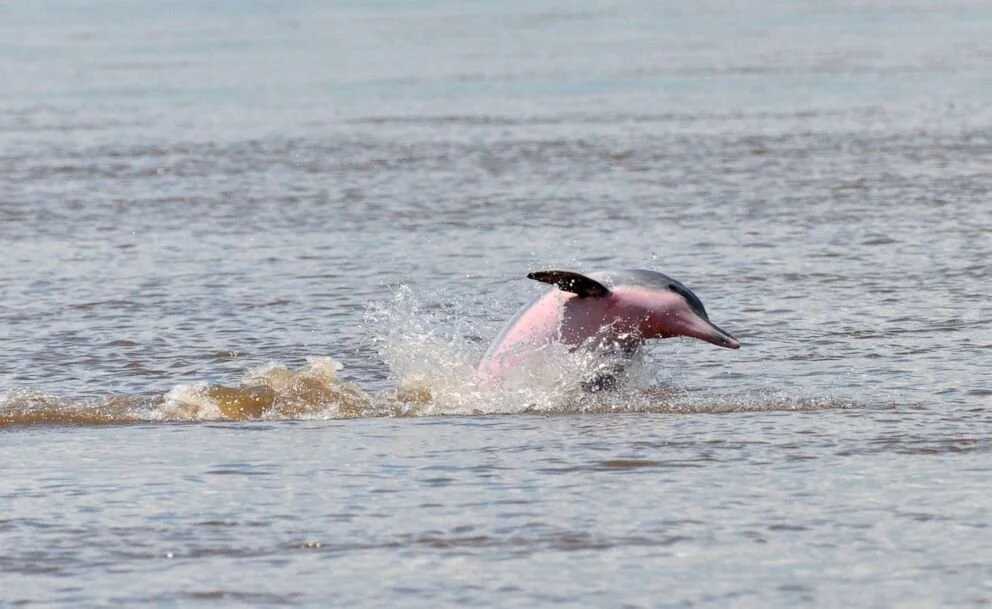
In addition, all of the species of freshwater dolphin in the world are now threatened with extinction, with the addition of the tucuxi, a freshwater dolphin species found in the Amazon river system, to the list, according to the ICUN. The tucuxi population has been "severely depleted" by deaths linked to fishing gear, damming rivers and pollution. The priority actions to recover the species include eliminating the use of gillnets -- curtains of fishing net that hang in the water, reducing the number of dams in its habitat and enforcing the ban on deliberately killing them.

today1.jpg

In the plant world, the ICUN has found that nearly a third of oak trees around the world are threatened with extinction, with the highest numbers in China and Mexico, followed by Vietnam, the U.S. and Malaysia. Land clearance for logging and agriculture are the most common threats, as well as invasive alien species and diseases, and climate change.

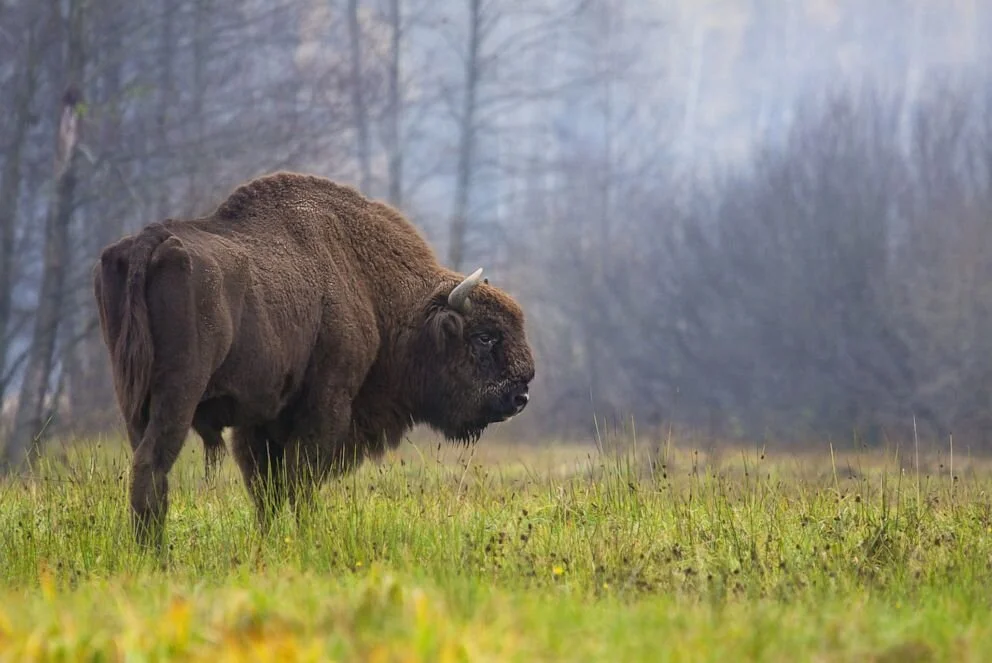
Species that have recovered include the European bison, the largest land mammal in Europe, which has progressed from vulnerable to near-threatened. The population has grown from about 1,800 in 2003 to more than 6,200 in 2019 after surviving only in captivity in the early 20th century. It was reintroduced to the wild in the 1950s, and the largest subpopulations are found in Poland, Belarus and Russia.

today.jpg

Currently, there are 47 free-ranging European bison herds, but they're largely isolated from one another and confined to suboptimal forest habitats, according to the ICUN. Only eight of the herds are large enough to be genetically viable in the long term, so the species will remain dependent on conservation efforts, such as moving them to more optimal, open habitats, and reducing conflicts with humans.

The outlook for 25 other species has also improved, which demonstrates "the power of conservation," IUCN Director General Dr. Bruno Oberle said in a statement. The growing list of extinct species is a "stark reminder that conservation efforts must urgently expand" and that conservation needs to become incorporated in all sectors of the economy to tackle global threats, such as unsustainable fisheries, land clearing for agriculture and invasive species.

"The conservation successes in today's Red List update provide living proof that the world can set, and meet, ambitious biodiversity targets," Dr. Jane Smart, global director of IUCN's Biodiversity Conservation Group, said in a statement. "They further highlight the need for real, measurable commitments as we formulate and implement the post-2020 global biodiversity framework."

A memorable year: readers reveal their silver linings

Mark Rice-Oxley

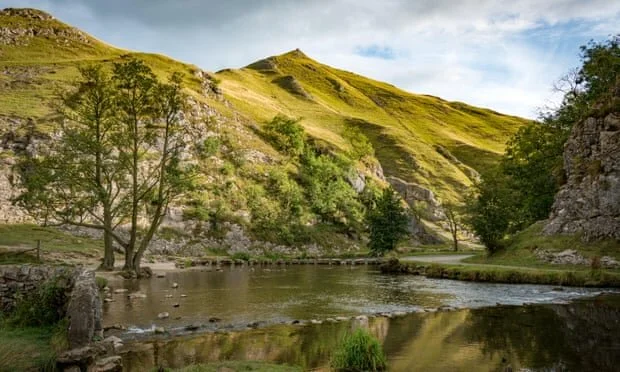
The stepping stones at Dovedale national nature reserve in the Peak District, Derbyshire. Photograph: dianajarvisphotography.co.uk/Alamy

The stepping stones at Dovedale national nature reserve in the Peak District, Derbyshire. Photograph: dianajarvisphotography.co.uk/Alamy

A memorable year: readers reveal their silver linings

It was a year to forget, but one we will always remember. But though so much was lost, 2020 was the year when we discovered new things about ourselves, our collective kindness, resilience, compassion, invention and humour, as Guardian readers make clear in their reflections on the silver linings of the year.

In British Columbia, Canada, Leanne Harrison relished new digital opportunities

At age 75, one thing I hope carries forward as a result of pandemic is the large array of Zoom presentations I was able to access this year. International events I would not have been able to attend were at my iPad fingertips, newspaper journalists interviewed at length people I would not have seen, online exercise gurus led me through interesting routines, courses and lectures came to my living room: such a bonanza of intellectual richness

In the English Peak District, Vivienne Hitchings feels fitter at 73 than she did at 72

I have been walking longer distances in the Peak District and discovered its beauty, sharing it with like-minded people who are also escaping the confines of a house. It is so varied, with green meadows, rivers roaring over boulders surrounded by colourful trees, and steep cliffs across the landscape that give stunning views.

The bonus is that at age 73 I also feel so much fitter and healthier than I did at 72. Although at present I can’t interact much with my grandchildren, hopefully because of my improved fitness I’ll be around a lot longer and will make up for this loss with lots of future hugs!

In Toronto, Ren Tashiro sought spiritual renewal

I’m a mother of a teen who has struggled with an anxiety disorder for several years. For me this year, it was learning and applying DBT (dialectical behavioral therapy) skills, mainly acceptance, non-judgment, a core of mindfulness, that has allowed me to stay centred and calm. To this I add daily gratitude thoughts, and I am slowly learning meditation. In spite of the many challenges, I can truly say that there are so many things to celebrate.

I jog every day, and am looking very much forward to skating outdoors at our local park every day this winter! I play women’s hockey, and while that will probably be banned, skating outside is such a gift. Our mayor has done an incredible job, making spaces for Torontonians to exercise outside this year. We are luckier than many.

In Florida, Thomas Olsen took the time to appreciate what he has

The best of this bad year is having been forced off the world’s merry-go-round. It has given me a chance to appreciate my surroundings – the young squirrels chasing each other in play on a large oak; the appreciation of a sunset and moonrise; the return of direct and unhurried dialogue with my mate; the trend to phone calls rather than texting, and an opportunity to plumb my spiritual depths. I am thankful.

In Edinburgh, Susan Marr got dressed up

I have a cousin whose daughter lives in New Zealand. She decided that one way to keep her children happy was to have a daily theme and dress up accordingly. This was tremendous fun. I’ve been Cilla Black, worn stripes, or yellow, or any manner of colours, been a fortune teller in a circus, worn back-to-front outfits.

All this first thing in the morning to catch their day on WhatsApp in NZ. I was so grateful for these challenges on the bleak days when I was upset about being unable to see my children and grandchildren in Edinburgh, my mother in Manchester, and when a close friend died.

In Washington DC, Stephanie Soper had the best car crash she’s ever had

On top of everything else that went horribly askew this year (including developing an autoimmune blood disorder that required immune-suppressant medication just as the pandemic took off), my car was rear-ended in August. Amazingly, other than the accident itself, the whole experience was just lovely.

The man whose car unavoidably hit me was patient, calm, and kind. He offered me a bottle of water and one of his spare masks – I’d been so rattled, I forgot to take mine when I left my car. Police from three jurisdictions came, and every single one was polite, good-humoured, and helpful. The tow truck driver, same. A dear friend lived nearby and rescued me. She took me home to drop off the groceries I’d been out to buy, then took me to dinner.

The place where the accident happened is gorgeous – lush green, by a river at a marina. Truly scenic. The weather was moderate – I wasn’t stuck standing by the scene in steamy heat or pouring rain, just pleasant late-afternoon sunshine. Neither the other driver nor I was injured.

In the aftermath, I wrote to Subaru to compliment them on how well the car had withstood the collision – a carton of eggs in back of car (a hatchback, so, pretty vulnerable in a rear-end crash), had just one slightly cracked egg. That led to a delightful email conversation with a company rep, who sent me a gift. My insurance company, the rental car company, and the collision repair centre all went over and above what they had to do and were just wonderful to work with.

All in all, a bad experience led to a series of truly happy conditions. In a funny way, the car accident was the highlight of 2020.

In Johannesburg, Felix C felt his community show resilience and compassion

Even though South Africa – in deep trouble politically, socially, and economically prior to the pandemic knocking on our door – has been severely impacted by the pandemic on all levels, resulting in staggering unemployment, looming debt defaults, a frail health infrastructure, and the deaths of many of its citizens, it is once again its peoples who have shown their resilience in coming together to face the threat and challenges.

For me the (painful) lessons learned from this global crisis:

• Our global and local society is unjust and broken and must be fixed
• Each one of us has a (small) part to play to help heal our nations
• People do really care and want to share and support each other
• Greed is wasteful and over-consumption is ugly – less is definitely more
• Truthful leadership is in short supply and much of political power is misplaced
• The media feeds diversity and confrontation through fake noise created
• Being “isolated” calms and rewards
• Family and friends are what truly matters
• This is an excellent time to reset oneself

Rachel Batty learned much after being forced to leave her husband in Kuwait and return to England to be with her teenage children

We got through the many upheavals and uncertainties of that time by telling ourselves that with each day that passed, we were one day closer to all being together again. That day has yet to come, but it is now at least in sight.

Coming out is never easy or pain free. Coming out as trans involves a narrative alien to so many ears that it is like trying to make yourself understood in the Tower of Babel. Yet the shroud of lockdown meant that our daughter was able to become herself quietly, discreetly, step by step.

Protected by the Zoom screen and safe space of Microsoft Teams, delighted, emboldened and validated by her new on-screen name, she blossomed in time with the unfolding spring outside. The monochrome landscape of a frozen winter that had trapped her in discomfort for 17 years thawed. She put down the weighty burden of confusion and dysphoria to reveal her true self, finding a language to express it both eloquently and patiently.

I am grateful for the incredible support from her school, the time, space and home delivery services that enabled her transformation from awkward and inwardly angry teenage boy to the calm, composed and caring young lady preparing herself for adulthood in a brave new world.

I am grateful for the time I had with her away from the gaze of others to work through my fear, lack of understanding, desire to fix and mend, to gradually reach the point of loving acceptance and letting go. I mourned the loss of our son and the future I had built for him in my mind. I feared for the safety, happiness and prosperity of our trans daughter.

When we shared the news from our different corners of the world, I thirstily drank the words of wisdom, hope and celebration that poured through the grainy screens of mobile phones and scratchy internet connections. Family and friends presented a united front: solid in their support, steadfast in their love. Distance was diminished in those moments.

There is only so much that can be communicated from afar, however, and the job and joy of family is hands-on: it resides firmly in the flesh and blood.

In February my husband hugged goodbye to his son, Tom, and in five days’ time he will fold his daughter, Clara, in his arms for the very first time. That will be the high point of the year for our family. The silver lining is the strong family fabric of strength and togetherness we wove from the disparate threads of exclusion and separation.

In London, Amber Badger watched her son and his girlfriend get in shape

My son and his girlfriend were locked in with us from March. Relocating here from a seven-year successful stint in Dubai, they were on the brink of finding jobs in London and then renting a flat there. Then lockdown hit. Yikes, they thought they would go stir crazy!

Neither of them were particularly physically fit so they decided to join the ever-present Joe Wicks programme. That included building up to a 5K run (neither had ever run before). Yoga was also added to their regime, again a first, and every day they added 10,000 steps to their exercise regime. They are both foodies but decided to join us in our 5/2 fasting and they cut down to two meals a day.

The upshot of this was that they were busy and happy. My son lost 25kg (4st) and his girlfriend 12.5kg. So yes, the lockdown has been transformative for them. They both have jobs in London now and are living in a rented flat. Running and staying fit is a new way of life for them that they would never have discovered had they not been terrified of going stir crazy stuck at home with parents/parents-in-law. We are so proud of them.

In Oxfordshire, Claire Lynch welcomed the simple things in life

I’ve learned how important touch is; eye contact is so important, but we need touch almost as much.

I loved the simplicity and the quiet (empty roads), the freedom (strange when we were actually restricted). Loved the slowing pace and the fact that nature was allowed space, too.

My husband believes he has learned to be more patient!

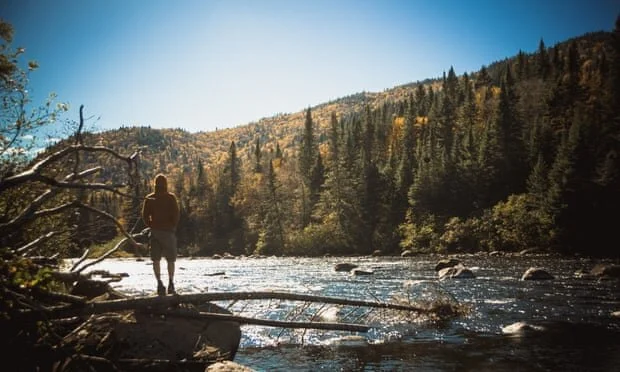
Jacques-Cartier national park, Quebec. Volunteers with Mission 100 tonnes collect rubbish to clear river banks and waterways. Photograph: Eduardo Arraes/Getty Images

Jacques-Cartier national park, Quebec. Volunteers with Mission 100 tonnes collect rubbish to clear river banks and waterways. Photograph: Eduardo Arraes/Getty Images

In Quebec, Francine Gendron watched a community group redouble its efforts

For two years I have been part of a Quebec group called Mission 100 tonnes, which aims to collect that amount of rubbish from the riversides as well as in the water with the help of divers. They formed groups throughout the province.

This year, because of Covid the organisation has suspended organising the groups, but people carried on the work and groups have created themselves and continued the work.

In Sheffield, Graham Cole went walking

Graham Cole at large in the Peak District. Photograph: Graham Cole

Graham Cole at large in the Peak District. Photograph: Graham Cole

My optimism this year is based mainly on two factors that will have a huge impact on the consumption-pollution problem. 2020 must be the best year for bringing a downward trend in consumption, including travel. I could not previously believe there were enough trendsetters who opted to usefully limit their spending to what they needed most.

With all the restrictions, we have collectively been forced to reduce spending. As a result there has been plenty of heartsearching and sharing of good ideas. For example, in the Derbyshire Peak District we see far more visitors cycling, walking and running for exercise. People go out to revel in their natural surroundings, the clean air and open skies.

I am rejoicing that politics has this year been elevated to the importance it deserves, especially among young people. Trump was beaten with a record number of votes cast and his chaotic spiteful endgame will be remembered for decades all round the world.

Our own PM [Boris] Johnson will avoid being a Trump lookalike with offhand treatment of Covid troubles and telling lies as if it doesn’t matter as long as it brings popularity. Democracy won a narrow reprieve in the US and both racism and corruption have been in the spotlight enough to foster more effective resistance to both.

Combining more awareness of politics and discovering that consumption can be lowered while having a very good lifestyle are going to help us in future. 2020 has been an unusually good year for learning what matters.

In Somerset, Kate Macdonald’s business had its best year yet

Lockdown meant that the bookshops all closed, and the hidden parts of the book trade – the distributors, the wholesalers, the delivery drivers, the printers – had to seriously consider how they could survive. One of the two main UK wholesalers, Bertrams, collapsed, owing hundreds of thousands of pounds to publishers of all sizes, including us. That was very bad news, because small publishers like us operate hand to mouth, and having to write off a four-figure sum in debt is no laughing matter.

But we kept going, because our website sales quadrupled over lockdown. The reading public, thank heavens, felt a massive need to support independent bookshops and publishers, and their orders flowed in, daily. Every working day during the first lockdown, I packed my bike panniers, cycled on gloriously empty roads to the post office, and posted books all over the world. Our distributor kept going, under social distancing rules, dispatching books to the bookshops that were receiving orders for customers to collect.

Our sales rose and rose. We published two titles in the first lockdown, and one has become one of our top four bestsellers, due to a couple of fiercely haggled-over ads and a lot of word-of-mouth delight. Our November sales figures were our highest yet.

It feels terrible to say it, because 2020 has been a terrible year. But it’s been our best year for business yet.

Air pollution verdict shines political light on UK's invisible killer

Air pollution is the invisible killer, unseen but also unacknowledged on the death certificates of the 40,000 people it sends to an early grave in the UK every year. But on Wednesday, for the first time, the lethal impact of toxic air was given a name and a face – Ella Kissi-Debrah, a nine-year-old girl from south London.

Politicians have been told for many years that dirty air kills but have ducked the decisions needed amid the noisy honking of the motoring lobby. The coroner’s conclusion that air pollution was a cause of Ella’s death means those politicians can no longer pretend that illegal levels of pollution are a victimless crime.

The immediate impact will pile pressure on the government for an “Ella’s law” to lower the UK’s legal pollution limits to those recommended by the World Health Organization. The proposal is not only backed by Ella’s family, but by groups ranging from the Royal College of Paediatrics and Child Health to the Mumsnet website.

Many see it as a scandal that serious action to cut toxic air has not been taken already. Most urban areas of the UK have had illegal levels of diesel-driven nitrogen dioxide since 2010 and ministers have had their plan declared illegal three times. Small particle pollution is above WHO limits in many cities and towns.

A cross-party committee of MPs declared air pollution a “public health emergency” in 2016, while the WHO calls it “the new tobacco”. Over 90% of the world’s people breathe unclean air, and at least 7 million die early each year, with many more suffering damage to their health.

While air quality is improving in some parts of the world, scientific understanding of the insidious health impacts is expanding fast. Air pollution may be damaging every organ in the body, according to a comprehensive global review, with effects including heart and lung disease, diabetes, dementia, reduced intelligence and increased depression. Children and the unborn may suffer the most.

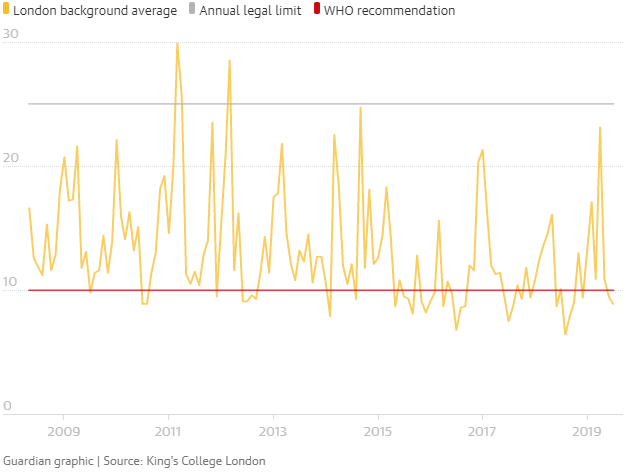
Current UK limits for particulate matter are two and a half times higher than the WHO recommendsPM2.5 in micrograms per cubic metre of air

Current UK limits for particulate matter are two and a half times higher than the WHO recommends

PM2.5 in micrograms per cubic metre of air

In the UK, the government’s own analysis in 2017 identified by far the most effective action – clean air zones in urban centres where polluting vehicles are deterred, usually by charges. But ministers pushed the responsibility for introducing these on to local authorities, who are now delaying or abandoning their introduction, citing the temporary pollution cuts during coronavirus lockdowns. However, in many parts of the UK pollution has already returned to levels at or above pre-lockdown levels.

Experts said the coroner Philip Barlow’s verdict on Ella’s death was unlikely to have immediate legal consequences for the government or councils. “This was a decision about the cause of Ella’s death, rather than determining who was at fault, so it doesn’t provide a direct precedent others can rely on,” said Katie Nield, a lawyer at the environmental law charity ClientEarth.

However, the coroner explicitly cited the “levels of [air pollution] in excess of WHO guidelines” to which Ella was exposed before her death. Despite a previous commitment to putting WHO limits into UK law by the then environment minister, Michael Gove, Conservative MPs voted down the proposal in March, with the minister Rebecca Pow questioning its “economic viability”.

The coroner’s groundbreaking finding on Ella’s death makes this backsliding look politically untenable and a powerful coalition has formed behind the WHO target, including ClientEarth, which inflicted three court defeats against the government’s plans, the all-party parliamentary group on air pollution, led by Geraint Davies, and the British Safety Council.

The mayor of London, Sadiq Khan, who has overseen significant cuts in the capital’s air pollution, also wants greater national-level action. “Ministers and the previous mayor [Boris Johnson] acted too slowly in the past,” he has said. Further pressure may come next year when the coroner produces an official report to prevent future deaths based on Ella’s case.

Greg Archer, the UK director of the Transport and Environment campaign group and who gave expert evidence to the inquest, said: “Ella’s tragic death could have been avoided if irresponsible governments had not put the needs of the car industry and diesel car drivers before vulnerable children.”

“In the seven years since Ella died, nearly 250,000 other UK families have suffered tragedy as a result of vulnerable loved ones breathing toxic air – four times more than those killed by Covid this year,” Archer said. “In modern Britain, this is inexcusable and preventable.”

Paul Swinney, director of policy and research at the Centre for Cities, contrasted the climate emergencies declared by government and local authorities with their action on dirty air: “When it comes to local air pollution, something they have very clear control over, they don’t do anything [mainly] because the motorist lobby is very strong. But if we keep on ducking these things, we are going to see people continuing to die.”

Error correction means California's future wetter winters may never come

DOE/Pacific Northwest National Laboratory

carlifonia.jpg

California and other areas of the U.S. Southwest may see less future winter precipitation than previously projected by climate models. After probing a persistent error in widely used models, researchers at the Department of Energy's Pacific Northwest National Laboratory estimate that California will likely experience drier winters in the future than projected by some climate models, meaning residents may see less spring runoff, higher spring temperatures, and an increased risk of wildfire in coming years.

Earth scientist Lu Dong, who led the study alongside atmospheric scientist Ruby Leung, presented her findings at the American Geophysical Union's fall meeting on Tuesday, Dec. 1, and will answer questions virtually on Wednesday, Dec. 16.

As imperfect simulations of vastly complex systems, today's climate models have biases and errors. When new model generations are refined and grow increasingly accurate, some biases are reduced while others linger. One such long-lived bias in many models is the misrepresentation of an important circulation feature called the intertropical convergence zone, commonly known as the ITCZ.

The ITCZ marks an area just north of the Earth's equator where northeast trade winds from the northern hemisphere clash with southeast trade winds from the southern hemisphere. Strong sunlight and warm water heat the air here, energizing it along with the moisture it holds to move upward.

As the air rises, it expands and cools. Condensing moisture provides more energy to produce thunderstorms with intense rainfall. From space, one can even see a thick band of clouds, unbroken for hundreds of miles as they move about the region.

"The ITCZ produces the strongest, long line of persistent convection in the world," said Dong. "It can influence the global water cycle and climate over much of the Earth," including, she added, California's climate.

Doubling down on climate model bias

Many climate models mistakenly depict a double ITCZ: two bands appearing in both hemispheres instead of one, which imbues uncertainty in model projections. Scientists refer to this as the double-ITCZ bias. Variations in the wind and pressure systems that influence the ITCZ add to that uncertainty.

"There's a lot of uncertainty in California's future precipitation," said Dong, who described climate models that project a range of winter wetness in the state averaged over multiple years, from high increases to small decreases. "We want to know where this uncertainty comes from so we can better project future changes in precipitation."

To peer through the effect of the double-ITCZ bias and create more accurate projections, Dong and atmospheric scientist Ruby Leung analyzed data from nearly 40 climate models, uncovering statistical and mechanistic links between the bias and the models' outputs. The lion's share of the models they analyzed projected a sharpening of California's seasonal precipitation cycle, bringing wetter winters and drier fall and spring seasons.

Soft, white snow rests on either side of a California waterway. Winter precipitation includes more than just rain, encompassing snowpack in mountainous areas and other factors that influence climate processes throughout the year.

Less water, more fire

Those uncovered relationships, Dong said, now cast doubt on estimations from CMIP5 models that projected wetter winters in the future. Models saddled with a larger double-ITCZ bias, it turns out, tend to exaggerate the U.S. Southwest's wetter winters. They also understate the drier winters in the Mediterranean Basin, which also features pronounced wet winters and dry summers similar to California, under warming climate scenarios.

Correcting for the bias reduces winter precipitation projections to a level that's roughly equal to California's current winters, amounting to little change and no future wetter winters. In the Mediterranean Basin, said Dong, the correction means winter drying will be intensified by 32 percent.

"An important implication of this work," said Dong, "is that a reduction in estimated winter precipitation will likely mean a reduction in spring runoff and an increase in spring temperature, and both increase the likelihood of wildfire risk in California."

Learning from climate models

Though the study's focus was restricted solely to winter precipitation, said Leung, its implications reach to all seasons.

"The implications aren't just about how wet things will or won't be," said Leung. "When people think about precipitation, they tend to think about how much rain they'll get. But precipitation has a lot of implications, like snowpack in mountainous areas, for example, and that means whatever changes we see in winter precipitation will have subsequent implications for springtime or even summertime. The impacts don't just affect winter; they'll be felt throughout the year."

The findings do not bode well for agricultural production, as over one third of the country's vegetables are grown in California soil, and two thirds of its fruits and nuts are grown on California farms, according to the California Department of Food and Agriculture. Almonds and grapes, two especially water-hungry crops, were among the state's top producing commodities, bringing in a combined $11.5 billion in 2019.

california 1.jpg

Over 4 million acres and nearly 10,500 structures burned in the state's 2020 wildfire season. The fire season has grown longer, according to Cal Fire, which cites warmer spring temperatures as one of the reasons forests are now more susceptible to wildfire.

Dong and her research partners hope the findings will better inform resource management groups as they prepare for coming wildfire seasons and plan for drier-than-expected winters.

The double-ITCZ bias is prominent in all CMIP5 climate models, said Leung, as well as CMIP6 models, the most recent generation, though the latter were not considered in this work. "If you look at the whole ensemble of models," said Leung, "you see quite similar biases."

This research was funded by the Department of Energy Office of Science Biological and Environmental Research as part of the Regional and Global Modeling and Analysis program area.

People, planet on ‘collision course’, warns UN Development Programme

UN News

Countries must redesign their development pathways to reduce pressures exerted on the environment and the natural world, or risk stalling humanity’s progress, the United Nations Development Programme (UNDP) has cautioned.

While the coronavirus pandemic is the latest crisis facing the world, but unless humans “release their grip on nature”, it won’t be the last, the agency said in its latest edition of the Human Development Report, entitled The Next Frontier, released on Tuesday.

“Humans wield more power over the planet than ever before. In the wake of COVID-19, record-breaking temperatures and spiraling inequality, it is time to use that power to redefine what we mean by progress, where our carbon and consumption footprints are no longer hidden,” said Achim Steiner, UNDP Administrator. 

“As this report shows, no country in the world has yet achieved very high human development without putting immense strain on the planet. But we could be the first generation to right this wrong. That is the next frontier for human development.” 

‘Experimental’ index  

The 30th anniversary edition of UNDP’s Human Development Report, The Next Frontier: Human Development and the Anthropocene, includes a new experimental index on human progress that takes into account countries’ carbon dioxide emissions and material footprint. Anthropocene is an unofficial unit of geological time; it describes an era in which humans are a dominant force shaping the future of planet Earth. 

By adjusting its annual Human Development Index – the measure of a nation’s health, education, and standards of living – to include two more elements: a country’s carbon dioxide emissions and its material footprint, the new index shows how the global development landscape would change if both the wellbeing of people and also the planet were central to defining humanity’s progress. 

With the resulting Planetary-Pressures Adjusted HDI – or PHDI - a new global picture emerges, painting a less rosy but clearer assessment of human progress.  

Working with nature 

Progress in human development, UNDP says, “will require working with and not against nature, while transforming social norms, values, and government and financial incentives.” 

For instance, estimates suggest that by 2100 the poorest countries in the world could experience up to 100 more days of extreme weather due to climate change each year – a number that could be cut in half if the Paris Agreement on climate change is fully implemented. 

Similarly, reforestation and taking better care of woodlands could alone account for roughly a quarter of the pre-2030 actions needed to stop global warming from reaching 2 degrees Celsius above preindustrial levels, the report notes. 

WMO/Boris PalmaSun rises over the mountains in the province of Carchi, northern Ecuador.

WMO/Boris Palma

Sun rises over the mountains in the province of Carchi, northern Ecuador.

EU leaders agree on 55% emissions reduction target, but activist groups warn it is not enough

Anmar Frangoul

European Union leaders have agreed on a goal to cut greenhouse gas emissions by at least 55% by the year 2030 compared with 1990 levels. The previous target had been a reduction of at least 40% by 2030.

The European Council’s President, Charles Michel, confirmed the news via Twitter on Friday morning, describing Europe as “the leader in the fight against climate change.” The new target was reached at a summit taking place in Brussels, Belgium.

Ursula von der Leyen, who is president of the European Commission, the EU’s executive arm, said the target “puts us on a clear path towards climate neutrality in 2050.”

The EU’s adoption of the 55% target comes ahead of a Climate Ambition Summit this weekend which will be co-hosted by the United Nations, the U.K. and France, in partnership with Italy and Chile.

Last week the U.K. government said it would target an emissions cut of at least 68% by the year 2030 compared with 1990 levels. The U.K. left the EU in January 2020.

The EU’s revised 2030 goal now requires a green light from the European Parliament, a directly elected law-making body that has called for a 60% emissions cut by the end of this decade. 

Work to be done?

Among those reacting to the news was Jytte Guteland, an MEP and the European Parliament’s rapporteur on the European Climate Law.

“It is important not to be fooled into thinking that a net target of 55 percent is sufficient,” Guteland said via Twitter on Friday. “I have a strong mandate from the elected representatives in the European Parliament to push for more climate ambition. I intend to do that when we meet and negotiate.”

Elsewhere, the European unit of Greenpeace said the deal exposed “a reluctance by governments to follow the science and tackle the root causes of the climate emergency.”

Sebastian Mang, Greenpeace EU climate policy adviser, said the evidence showed that the deal was “only a small improvement on the emission cuts the EU is already expected to achieve.”

“It shows that political convenience takes precedence over climate science, and that most politicians are still afraid to take on big polluters,” he added.

Colin Roche, climate justice coordinator at Friends of the Earth Europe, said the new goal was “still a far cry from the victory the climate needs.”

This week marks the fifth anniversary of the Paris Agreement on climate change, a landmark deal which aims to keep global warming “well below” 2 degrees Celsius (35.6 degrees Fahrenheit) above pre-industrial levels, and “pursue efforts” to limit the temperature rise to 1.5 degrees Celsius.

“Our leaders must go further to deliver Europe’s fair share of global action to cut carbon and live up to the agreement they made in Paris five years ago,” Friends of the Earth Europe’s Roche said.

“Meanwhile if this new target is to be meaningful, planned new EU infrastructure spending must cut out all fossil fuels now.”

US to hold world climate summit early next year and seek to rejoin Paris accord

Fiona Harvey

Action points for first 100 days of Joe Biden presidency seen as boost to international action currently falling behind

Joe Biden said he would immediately start working with counterparts on climate change mitigation. Photograph: Susan Walsh/AP

Joe Biden said he would immediately start working with counterparts on climate change mitigation. Photograph: Susan Walsh/AP

The US will hold a climate summit of the world’s major economies early next year, within 100 days of Joe Biden taking office, and seek to rejoin the Paris agreement on the first day of his presidency, in a boost to international climate action.

Leaders from 75 countries met without the US in a virtual Climate Ambition Summit co-hosted by the UN, the UK and France at the weekend, marking the fifth anniversary of the Paris accord. The absence of the US underlined the need for more countries, including other major economies such as Brazil, Russia and Indonesia, to make fresh commitments on tackling the climate crisis.

Biden said in a statement: “I’ll immediately start working with my counterparts around the world to do all that we possibly can, including by convening the leaders of major economies for a climate summit within my first 100 days in office … We’ll elevate the incredible work cities, states and businesses have been doing to help reduce emissions and build a cleaner future. We’ll listen to and engage closely with the activists, including young people, who have continued to sound the alarm and demand change from those in power.”

He reiterated his pledge to put the US on a path to net zero carbon emissions by 2050, and said the move would be good for the US economy and workers. “We’ll do all of this knowing that we have before us an enormous economic opportunity to create jobs and prosperity at home and export clean American-made products around the world.”

António Guterres, the UN secretary general, said: “It is a very important signal. We look forward to a very active US leadership in climate action from now on as US leadership is absolutely essential. The US is the largest economy in the world, it’s absolutely essential for our goals to be reached.”

Donald Trump, whose withdrawal of the US from the Paris agreement took effect on the day after the US election in November, shunned the Climate Ambition Summit. Countries including Russia, Saudi Arabia and Mexico were excluded as they had failed to commit to climate targets in line with the Paris accord. Australia’s prime minister, Scott Morrison, had sought to join the summit but his commitments were judged inadequate, and an announcement from Brazil’s president, Jair Bolsonaro, of a net zero target just before the summit was derided as lacking credibility.

The Climate Ambition Summit failed to produce a major breakthrough, but more than 70 countries gave further details of plans to reduce greenhouse gas emissions in line with the Paris agreement goal of limiting temperature rises to well below 2C above pre-industrial levels, with an aspirational 1.5C limit.

Many observers had hoped India might set a net zero emissions target, but its prime minister, Narendra Modi, promised only to “exceed expectations” by the centenary of India’s independence in 2047. China gave some details to its plan to cause emissions to peak before the end of this decade but stopped short of agreeing to curb its planned expansion of coal-fired power.

The UK pledged to stop funding fossil fuel development overseas, and the EU set out its plan to reduce emissions by 55% by 2030, compared with 1990 levels.

Alok Sharma, the UK’s business secretary, who will preside over UN climate talks called Cop26 next year, said much more action was needed. “[People] will ask: have we done enough to put the world on track to limit warming to 1.5C and protect people and nature from the effects of climate change? We must be honest with ourselves – the answer to that is currently no,” he said.

When Biden’s pledge to bring the US to net zero emissions by 2050 is included, countries accounting for more than two-thirds of global emissions are subject to net zero targets around mid-century, including the EU, the UK, Japan and South Korea. China has pledged to meet net zero by 2060, and a large number of smaller developing countries have also embraced the goal.

The task for the next year, before the Cop26 conference in Glasgow next November, will be to encourage all the world’s remaining countries – including oil-dependent economies such as Russia and Saudi Arabia – to sign up to long-term net zero targets, and to ensure that all countries also have detailed plans for cutting emissions within the next decade.

Those detailed national plans, called nationally determined contributions (NDCs), are the bedrock of the Paris agreement, setting out emissions curbs by 2030. Current NDCs, submitted in 2015, would lead to more than 3C of warming, so all countries must submit fresh plans in line with a long-term goal of net zero emissions. The US will be closely watched for its plans.

Nathaniel Keohane, a senior vice-president at the Environmental Defense Fund, said: “The [Climate Ambition] Summit captured and reflected the momentum of recent months, but didn’t push much beyond it. The world is waiting for Biden to bring the US back into the Paris agreement,The task for the next year, before the Cop26 conference in Glasgow next November, will be to encourage all the world’s remaining countries – including oil-dependent economies such as Russia and Saudi Arabia – to sign up to long-term net zero targets, and to ensure that all countries also have detailed plans for cutting emissions within the next decade.

Those detailed national plans, called nationally determined contributions (NDCs), are the bedrock of the Paris agreement, setting out emissions curbs by 2030. Current NDCs, submitted in 2015, would lead to more than 3C of warming, so all countries must submit fresh plans in line with a long-term goal of net zero emissions. The US will be closely watched for its plans.

Nathaniel Keohane, a senior vice-president at the Environmental Defense Fund, said: “The [Climate Ambition] Summit captured and reflected the momentum of recent months, but didn’t push much beyond it. The world is waiting for Biden to bring the US back into the Paris agreement, and will be looking for how ambitious the US is willing to be in its NDC.”


Paris climate agreement: 54 cities on track to meet targets

Mayor of Paris praises ‘important milestone’ on fifth anniversary of the landmark agreement

PA.jpg

More than 50 of the world’s leading cities are on track to help keep global heating below 1.5C and tackle the worst impacts of the climate crisis, according to a new report.

From mass tree-planting in Buenos Aires to new public transport networks in Mexico City, 54 of the world’s leading cities are now rolling out plans that will cut their greenhouse gas emissions in line with the Paris agreement, according to a new study by the C40 cities network.

The findings will be presented to Anne Hidalgo, mayor of Paris, on Friday at an event in the French capital to mark the fifth anniversary of the landmark climate agreement.

“I was chair of C40 cities when Deadline 2020 was set, challenging global cities to set their own climate action plan that will protect residents, create green jobs, address inequality and build the future we want,” Hidalgo said ahead of the event.

“Now, five years on I am proud to see so many cities from all over the world launch their plans to keep global temperature rises below 1.5°C. This marks an important milestone in our efforts to accelerate climate action and demonstrates the incredible leadership from cities on this issue.”

The C40 report calculates that taken together the cities’ plans will prevent at least 1.9 gigatonnes of greenhouse gas emissions being released into the atmosphere between 2020 and 2030, equivalent to five times the UK’s annual emissions.

Michael Doust, programme director at C40, said it was a key moment when cities could demonstrate what was possible ahead of tomorrow’s climate ambition summit and next year’s COP26 conference in Glasgow.

Doust said the plans were a challenge to national governments to scale up their efforts and “collaborate with city leaders to tackle the escalating climate emergency”.

But he added that this was not just about climate action, it was also an effort to build a better future following the pandemic, from improved housing and secure green jobs to affordable, clean public transport and tackling inequality.

He said: “Climate change is the catalyst but these plans are about a lot more, about how we can create cleaner, more inclusive, more equal cities with better housing and better jobs.”

Among the cities assessed to be on course to hit their emissions reductions targets are:

• Houston, Texas, a city known as a centre for the US oil and gas industries, which is aiming to build 500 miles (800km) of new cycle lanes and establish 50 green energy companies by 2025, as well as plant 4.6m trees in the next 10 years. It also has a large-scale flood protection programme following devastating hurricanes, which includes turning a golf course into a series of ponds and flood basins.

• Rio de Janeiro is doubling tree cover in the city’s streets, squares and parks, rehousing residents that live in high flood risk areas, and has pledged to be carbon neutral by 2050. It is also recommending the use of low-carbon concrete for future building projects and is planning a network of new bike lanes connecting residential areas to the centre.

• Milan has transformed large swathes of the city that are now dedicated to walking and cycling. It is also planting 220,000 new trees, halving food waste, and says it will be carbon neutral by 2050. Giuseppe Sala, the mayor of Milan, said the effort to rebuild the city after the pandemic was inseparable from its ongoing efforts to address the climate crisis.

“To deliver on the goals of the Paris agreement, we must deliver a green and just recovery from the Covid-19 pandemic that creates a fair economy, cuts emissions and creates jobs,” he said.

UNEP Emissions Gap Report 2020

For over a decade, the UNEP Emissions Gap Report has provided a yearly review of the difference between where greenhouse emissions are predicted to be in 2030 and where they should be to avoid the worst impacts of climate change.

What’s new in this year’s report

The report finds that, despite a brief dip in carbon dioxide emissions caused by the COVID-19 pandemic, the world is still heading for a temperature rise in excess of 3°C this century – far beyond the Paris Agreement goals of limiting global warming to well below 2°C and pursuing 1.5°C.

However, a low-carbon pandemic recovery could cut 25 per cent off the greenhouse emissions expected in 2030, based on policies in place before COVID-19. Such a recovery would far outstrip savings foreseen with the implementation of unconditional Nationally Determined Contributions under the Paris Agreement, and put the world close to the 2°C pathway.

The report also analyses low-carbon recovery measures so far, summarizes the scale of new net-zero emissions pledges by nations and looks at the potential of the lifestyle, aviation and shipping sectors to bridge the gap.

DOWNLOAD FULL REPORT

Climate Action: It’s time to make peace with nature, UN chief urges

UN News

The UN Secretary-General, António Guterres, has described the fight against the climate crisis as the top priority for the 21st Century, in a passionate, uncompromising speech delivered on Wednesday at Columbia University in New York.

The landmark address marks the beginning of a month of UN-led climate action, which includes the release of major reports on the global climate and fossil fuel production, culminating in a climate summit on 12 December, the fifth anniversary of the 2015 Paris Climate Agreement.

Nature always strikes back

Mr. Guterres began with a litany of the many ways in which nature is reacting, with “growing force and fury”, to humanity’s mishandling of the environment, which has seen a collapse in biodiversity, spreading deserts, and oceans reaching record temperatures.

The link between COVID-19 and man-made climate change was also made plain by the UN chief, who noted that the continued encroachment of people and livestock into animal habitats, risks exposing us to more deadly diseases.

And, whilst the economic slowdown resulting from the pandemic has temporarily slowed emissions of harmful greenhouse gases, levels of carbon dioxide, nitrous oxide and methane are still rising, with the amount of CO2 in the atmosphere at a record high. Despite this worrying trend, fossil fuel production – responsible for a significant proportion of greenhouse gases – is predicted to continue on an upward path.


UN Photo/Eskinder Debebe | Secretary-General António Guterres (left) discusses the State of the Planet with Professor Maureen Raymo at Columbia University in New York City.

UN Photo/Eskinder Debebe | Secretary-General António Guterres (left) discusses the State of the Planet with Professor Maureen Raymo at Columbia University in New York City.

‘Time to flick the green switch’

The appropriate global response, said the Secretary-General, is a transformation of the world economy, flicking the “green switch” and building a sustainable system driven by renewable energy, green jobs and a resilient future.

One way to achieve this vision, is by achieving net zero emissions (read our feature story on net zero for a full explanation, and why it is so important). There are encouraging signs on this front, with several developed countries, including the UK, Japan and China, committing to the goal over the next few decades.

Mr. Guterres called on all countries, cities and businesses to target 2050 as the date by which they achieve carbon neutrality – to at least halt national increases in emissions - and for all individuals to do their part.

With the cost of renewable energy continuing to fall, this transition makes economic sense, and will lead to a net creation of 18 million jobs over the next 10 years. Nevertheless, the UN chief pointed out, the G20, the world’s largest economies, are planning to spend 50 per cent more on sectors linked to fossil fuel production and consumption, than on low-carbon energy.

Put a price on carbon

© UNICEF/Samir Jung Thapa | Food and drinking supplies are delivered by raft to a village in Banke District, Nepal, when the village road was cut off due to heavy rainfall.

© UNICEF/Samir Jung Thapa | Food and drinking supplies are delivered by raft to a village in Banke District, Nepal, when the village road was cut off due to heavy rainfall.

For years, many climate experts and activists have called for the cost of carbon-based pollution to be factored into the price of fossil fuels, a step that Mr. Guterres said would provide certainty and confidence for the private and financial sectors.

Companies, he declared, need to adjust their business models, ensuring that finance is directed to the green economy, and pension funds, which manage some $32 trillion in assets, need to step and invest in carbon-free portfolios.

UNOCHA/Ivo Brandau | Lake Chad has lost up to ninety per cent of its surface in the last fifty years.

UNOCHA/Ivo Brandau | Lake Chad has lost up to ninety per cent of its surface in the last fifty years.

Far more money, continued the Secretary-General, needs to be invested in adapting to the changing climate, which is hindering the UN’s work on disaster risk reduction. The international community, he said, has “both a moral imperative and a clear economic case, for supporting developing countries to adapt and build resilience to current and future climate impacts”.

Everything is interlinked

The COVID-19 pandemic put paid to many plans, including the UN’s ambitious plan to make 2020 the “super year” for buttressing the natural world. That ambition has now been shifted to 2021, and will involve a number of major climate-related international commitments.

These include the development of a plan to halt the biodiversity crisis; an Oceans Conference to protect marine environments; a global sustainable transport conference; and the first Food Systems Summit, aimed at transforming global food production and consumption.

Mr. Guterres ended his speech on a note of hope, amid the prospect of a new, more sustainable world in which mindsets are shifting, to take into account the importance of reducing each individual’s carbon footprint.

Far from looking to return to “normal”, a world of inequality, injustice and “heedless dominion over the Earth”, the next step, said the Secretary-General, should be towards a safer, more sustainable and equitable path, and for mankind to rethink our relationship with the natural world – and with each other.

You can read the full speech here.

(E)-biking as a solution for mobility challenges in African cities

Chinomnso Onwunta

BIKE.jpeg

Imagine a future where one can easily cycle (from Ikeja to Yaba — 14km) in Lagos or (from Wuse to Asokoro — 7km) in Abuja! Imagine cycling around Accra, Nairobi or Luanda! Imagine cycling through the cites of Addis-Ababa, Maputo or Johannesburg. A future where access to bike stations is easy, and where owning a bike is something to be proud of instead of frowned upon! Imagine…

I know that cities in the African continent are taking steps to incorporate cycling infrastructure but for anyone who has been to the mega-city of Lagos, Nigeria, this vision might seem unthinkable and implausible due to several reasons. Some reasons are the bad roads, hardly any traffic lights, inconsiderate drivers, the unforgiving heat, the lack of stable electricity, the lack of biking culture, the unfavourable image of bicycles, the need for convenience in commuting…and the list of challenges go on and on!

But what if the conversation changes and the mobility within the city reimagined?

As a solution-oriented person with a drive for sustainable outcomes, I envision possibilities and benefits. Of course, the realisation of this vision will take time but what better time to imagine this future than now when the world is digging itself out of this unprecedented crisis. Most African economies are going through a massive economic depression and the methods that worked in the past will not be the same ideas and actions that take us to the future.

Reasons to imagine this future?!

Car traffic is reduced if more bikes and fewer cars occupy the roads.

Environmentally, it is more sustainable to utilise this method of mobility as the carbon footprint and emissions are reduced as traffic from fossil-fuelled vehicles is reduced. The air pollution is minimised as the health of the ecological system and humans increases.

Health-wise the citizens stand to benefit as this transition creates a more active culture of exercise, which reduces health risks to individuals. The health benefits are mostly possible if other methods of transportation transition to sustainable forms.

Investment in infrastructure that has been out of date for the past 30 years creating an opportunity to move towards the mobility infrastructure of the future.

Local jobs are created in the building of the necessary cycling infrastructure within the city. There will be employment from building the roads, the manufacturing of bikes, biking training schools, repair shops etc. The idea can start small — one region at a time — and iterate to the larger city context, thus testing the success of the idea and evaluating the capital requirements.

Solar energy and other forms of renewable energy will be the main source of powering and charging the bikes and stations. Of course, locals do not need to possess an e-bike, however, the mere idea of transporting oneself with a bicycle is a big step in the right direction.

Yes! I know this idea might seem unimaginable; however, I believe that there is an opportunity and potential to imagine the future of mobility in African cities — because it all seems impossible till it happens.

Imagine…

COVID-19 could push the number of people living in extreme poverty to over 1 billion by 2030, says UNDP study

Focused SDG investments over the next decade could prevent the rise of extreme poverty and even exceed the development trajectory the world was on before the pandemic

UNDP.jpeg

New York – Severe long-term effects of the COVID-19 pandemic could push an additional 207 million people into extreme poverty on top of the current pandemic trajectory, bringing the total to over 1 billion by 2030, according to findings released today by the United Nations Development Programme (UNDP). This is not a foregone conclusion: with a focused set of investments towards achieving the Sustainable Development Goals (SDGs), an additional 146 million people could be lifted out of extreme poverty compared to current COVID-19 trends.

The study, part of a long-standing partnership between UNDP and the Pardee Center for International Futures at the University of Denver, assesses the impact of different COVID-19 recovery scenarios on the SDGs, evaluating the multidimensional effects of the pandemic over the next decade.

The ‘Baseline COVID’ scenario, based on current mortality rates and the most recent growth projections by the International Monetary Fund (IMF), would result in 44 million more people living in extreme poverty by 2030 compared to the development trajectory the world was on before the pandemic.

Under a ‘High Damage’ scenario, where the recovery is protracted, COVID-19 is likely to push an additional 207 million people into extreme poverty by 2030, and increase the female poverty headcount by an additional 102 million compared to that baseline, says the report. The High Damage scenario anticipates that 80 percent of the COVID-induced economic crisis would persist in 10 years’ time due to loss in productivity, preventing a full recovery to the growth trajectory seen before the pandemic.

However, the study also finds that a focused set of SDG investments over the next decade in social protection/welfare programmes, governance, digitalization, and a green economy could not only prevent the rise of extreme poverty, but actually exceed the development trajectory the world was on before the pandemic.

This ambitious, yet feasible ‘SDG Push’ scenario would lift an additional 146 million people out of extreme poverty, narrow the gender poverty gap, and reduce the female poverty headcount by 74 million, even taking into account the current impacts of the COVID-19 pandemic.

“As this new poverty research highlights, the COVID-19 pandemic is a tipping point, and the choices leaders take now could take the world in very different directions. We have an opportunity to invest in a decade of action that not only helps people to recover from COVID-19, but that re-sets the development path of people and planet towards a more fair, resilient and green future,” said UNDP Administrator Achim Steiner.

The concerted SDG interventions suggested by the study combine behavioral changes through nudges for both governments and citizens, such as improved effectiveness and efficiency in governance and changes in consumption patterns of food, energy and water. The proposed interventions also focus on global collaboration on climate change, additional investments in COVID-19 recovery, and the need for improved broadband access and technology innovation.

The study also concludes that ‘SDG Push’ investments hold significant potential to boost human development in fragile and conflict-affected states, given that the majority of the additional 146 million people who would be lifted from poverty live in such settings, including 40 million women and girls.

This publication is the first installation of a UNDP flagship report on the impact of COVID-19 on the SDGs. It focuses on the implications of the pandemic on poverty, education, health, nutrition and gender equality – also referred to as the ‘People’ Goals in the 2030 Agenda. In early 2021, subsequent publications will share new insights about impacts on other dimensions of the 2030 Agenda – with a focus on prosperity, peace and planet.

Read the study and visualizations here: https://sdgintegration.undp.org/accelerating-development-progressduring-covid-19

Snow may not settle in most of UK by end of century, study suggests

PA Media

Climate crisis likely to cause warmer, wetter winters and hotter, drier summers, says Met Office

Children off from school due to the weather in Belfast, Northern Ireland, in 2017. Detailed projections suggest traditional winter activities such as building snowmen could disappear if global greenhouse gas emissions are not reduced. Photograph: Ch…

Children off from school due to the weather in Belfast, Northern Ireland, in 2017. Detailed projections suggest traditional winter activities such as building snowmen could disappear if global greenhouse gas emissions are not reduced. Photograph: Charles McQuillan/Getty Images

Snowball fights and sledging could be at risk because by the end of the century snow will not settle on the ground in much of the UK due to the climate crisis, Met Office analysis has suggested.

Detailed projections suggest traditional winter activities such as building snowmen could disappear if global greenhouse gas emissions are not reduced.

The research, which will feature on the BBC’s Panorama on Monday, suggested that most of the south of England may not experience days with temperatures of freezing or below by the 2040s, due to the climate emergency.

If this trend continues only very high ground and parts of northern Scotland will experience freezing temperatures by 2080.

The Met Office stressed there is year-on-year variability with temperature and some years will be colder or warmer than the trend.

The findings are based on projections that assume global emissions will continue to increase.

The Met Office said that while this scenario may not be the most likely outcome, it was credible.

If global emissions are reduced, the UK can avoid larger temperature rises, but average temperatures are still likely to increase.

Hotter, drier summers are also more likely if emissions continue to accelerate, the Met Office said, highlighting there will be regional variations in the effects.

Senior Met Office scientist Dr Lizzie Kendon told BBC Panorama: “We’re saying by the end of the century much of the lying snow will have disappeared entirely except over the highest ground.

“The overarching picture is warmer, wetter winters; hotter, drier summers.

“But within that, we get this shift towards more extreme events, so more frequent and intense extremes, so heavier rainfall when it occurs.

“It’s a big change ... in the course of our lifetime. It’s just a wake-up call really as to what we’re talking about here.”

Dr Kendon said temperatures exceeding 30C (86F) for two days in a row will be 16 times more frequent by the end of the century, compared with the average between 1981 and 2000.

According to the new Met Office analysis, increasing emissions could mean the average hottest day in Hayes, west London, may reach 40C (104F) by around 2017.

The Met Office analysis also suggests winter rain could increase by up to a third on average without steps to reduce global emissions, but this is less certain and rainfall could decrease instead.

Coca-Cola, Pepsi and Nestlé named top plastic polluters for third year in a row

Coca-Cola, PepsiCo and Nestlé have been accused of “zero progress” on reducing plastic waste, after being named the world’s top plastic polluters for the third year in a row.

Coca-Cola was ranked the world’s No 1 plastic polluter by Break Free From Plastic in its annual audit, after its beverage bottles were the most frequently found discarded on beaches, rivers, parks and other litter sites in 51 of 55 nations surveyed. Last year it was the most frequently littered bottle in 37 countries, out of 51 surveyed.

It was found to be worse than PepsiCo and Nestlé combined: Coca-Cola branding was found on 13,834 pieces of plastic, with PepsiCo branding on 5,155 and Nestlé branding on 8,633.

The annual audit, undertaken by 15,000 volunteers around the world, identifies the largest number of plastic products from global brands found in the highest number of countries. This year they collected 346,494 pieces of plastic waste, 63% of which was marked clearly with a consumer brand.

Coca-Cola came under fire from environmental campaigners earlier this year when it announced it would not abandon plastic bottles, saying they were popular with customers. In March, Coca-Cola, PepsiCo, Nestlé and Unilever were found to be responsible for half a million tonnes of plastic pollution in six developing countries each year, in a survey by NGO Tearfund.

“The world’s top polluting corporations claim to be working hard to solve plastic pollution, but instead they are continuing to pump out harmful single-use plastic packaging,” said Emma Priestland, Break Free From Plastic’s global campaign coordinator.

Priestland said the only way to halt the growing global tide of plastic litter was to stop production, phase out single use and implement reuse systems.

“Coca-Cola, PepsiCo, and Nestlé should be leading the way in finding real solutions to reinvent how they deliver their products,” she said.

Up to 91% of all the plastic waste ever generated has not been recycled and ended up being incinerated, in landfill or in the natural environment, according to a 2017 study.

This year’s global audit of branded plastic waste revealed that single-use sachets, which are used to sell small volumes of products such as ketchup, coffee and shampoo, were the most commonly found type of item, followed by cigarette butts, then plastic bottles.

Simon Mbata, national coordinator of the South African Waste Pickers Association, said: “The majority of plastic we come across cannot be recycled. We find it everywhere, in our waste stream, on our land. When it is buried, it contaminates our soil. Whatever cannot be recycled must not be produced.”

Coca-Cola said it was working to address packaging waste, in partnership with others, and disputed the claim that it was making no progress.

“Globally, we have a commitment to get every bottle back by 2030, so that none of it ends up as litter or in the oceans, and the plastic can be recycled into new bottles,” a spokesperson said. “Bottles with 100% recycled plastic are now available in 18 markets around the world, and this is continually growing.”

63% of plastic waste collected by volunteers in an annual audit was marked clearly with a consumer brand. Photograph: Noel Guevara/Greenpeace

63% of plastic waste collected by volunteers in an annual audit was marked clearly with a consumer brand. Photograph: Noel Guevara/Greenpeace

The spokesperson said Coca-Cola had also reduced plastic use in secondary packaging, and that globally “more than 20% of our portfolio comes in refillable or fountain packaging”.

A spokesperson for PepsiCo said the company was taking action to tackle packaging through “partnership, innovation and investments”. They said it has set plastic reduction goals “including decreasing virgin plastic in our beverage business by 35% by 2025”, and was also “growing refill and reuse through businesses like SodaStream and SodaStream Professional, which we expect will avoid 67bn single-use plastic bottles through 2025”.

They added that the company was investing in partnerships to increase recycling infrastructure and collection, pledging more than $65m (£48m) since 2018.

A statement from Nestlé said the company was making “meaningful progress” in sustainable packaging, although it recognised more was needed: “We are intensifying our actions to make 100% of our packaging recyclable or reusable by 2025 and to reduce our use of virgin plastics by one-third in the same period. So far, 87% of our total packaging and 66% of our plastic packaging is recyclable or reusable.”

The Paris agreement five years on: is it strong enough to avert climate catastrophe?

Fiona Harvey

With Trump no longer a threat, there is a sense of optimism around what the accord could achieve – but only if countries meet their targets

No one who was in the hall that winter evening in a gloomy conference centre on the outskirts of the French capital will ever forget it. Tension had been building throughout the afternoon, as after two weeks of fraught talks the expected resolution was delayed and then delayed yet again. Rumours swirled – had the French got it wrong? Was another climate failure approaching, the latest botched attempt at solving the world’s global heating crisis?

Finally, as the mood in the hall was growing twitchy, the UN security guards cleared the platform and the top officials of the landmark Paris climate talks took to the podium. For two weeks, 196 countries had huddled in countless meetings, wrangling over dense pages of text, scrutinising every semicolon. And they had finally reached agreement. Laurent Fabius, the French foreign minister in charge of the gruelling talks, looking exhausted but delighted, reached for his gavel and brought it down with a resounding crack. The Paris agreement was approved at last.

Nicholas Stern, the climate economist, found himself hugging Xia Zhenhua, the normally reserved Chinese minister, while whoops and shouts echoed round the hall. “I felt that the Paris agreement was the moment when the world decided it really had to manage climate change in a serious way,” he said. “We were all in it together, that’s what people realised.”

Paris Agreement 1.jpg

French Special Representative for the 2015 Paris Climate Conference. Photograph: Christophe Petit Tesson/EPA

At Paris, for the first time rich and poor countries joined together in a legally binding treaty pledging to hold global heating to heating well below 2C, the scientifically-advised limit of safety, with an aspiration not to breach 1.5C above pre-industrial levels. Those two weeks of tense talks in the French capital were the climax of 25 years of tortuous negotiations on the climate, since governments were warned of the dangers of climate chaos in 1990. The failure, discord and recriminations of those decades were left behind as delegates from 196 countries hugged, wept and cheered in Paris.

Todd Stern, climate envoy to President Barack Obama, recalls: “My team and I had been working toward this for seven years … and the story of climate negotiations had so often been one of disappointment. And yet here we were and we knew that we had – all together – done a really big thing. A very special moment. An unforgettable one.”

The accord itself has proved remarkably resilient. Bringing together 196 nations in 2015 was not easy – even as Fabius brought down the gavel on the agreement, there was a little chicanery as Nicaragua had planned to object to the required consensus, but was ignored. Yet that consensus has remained robust. When the US – the world’s biggest economy and second biggest emitter – began the process of withdrawal from Paris, under President Donald Trump in 2017, a disaster might have been expected. The Kyoto 1997 protocol fell apart after the US signed but failed to ratify the agreement, leaving climate negotiations in limbo for a decade.

If Trump was hoping to wreck Paris, he was disappointed: the rest of the world shrugged and carried on. There was no exodus of other countries, although some did pursue more aggressive tactics at the annual UN talks. The key axis of China and the EU remained intact, deliberately underlined by China’s President Xi Jinping when he chose to surprise the world with a net zero emissions target at the UN general assembly in September, just as the UN election race was hotting up.

Remy Rioux, one of the French government team who led the talks, now chief executive of the French Development Agency, said: “The Paris agreement has proven to be inclusive and at scale, with the participation of countries representing 97% of global emissions, as well as that of non-state actors such as businesses, local government and financial institutions – and very resilient, precisely because it is inclusive. The Paris agreement is a powerful signal of hope in the face of the climate emergency.”

On some measures, Paris could be judged a failure. Emissions in 2015 were about 50 bn tonnes. By 2019, they had risen to about 55bn tonnes, according to the UN Environment Programme (Unep). Carbon output fell dramatically, by about 17% overall and far more in some regions, in this spring’s coronavirus lockdowns, but the plunge also revealed an uncomfortable truth: even when transport, industry and commerce grind to a halt, the majority of emissions remain intact. Far greater systemic change is needed, particularly in energy generation around the world, to meet the Paris goals.

Ban Ki-moon, former UN secretary-general, told the Guardian: “We have lost a lot of time. Five years after the agreement in Paris was adopted with huge expectations and commitment by world leaders, we have not done enough.”

What’s more, we are still digging up and burning fossil fuels at a frantic rate. Unep reported last week that production of fossil fuels is planned to increase by 2% a year. Meanwhile, we continue to destroy the world’s carbon sinks, by cutting down forests – the world is still losing an area of forest the size of the UK each year, despite commitments to stop deforestation – as well as drying out peatlands and wetlands, and reducing the ocean’s capacity to absorb carbon from the air.

Illustration: Guardian Design

Illustration: Guardian Design

Global temperatures have already risen by more than 1C above pre-industrial levels, and the results in extreme weather are evident around the world. Wildfires raged across Australia and the US this year, more than 30 hurricanes struck, heatwaves blasted Siberia, and the Arctic ice is melting faster.

António Guterres, secretary-general of the UN, put it in stark terms: “Humanity is waging war on nature. This is suicidal. Nature always strikes back – and it is already doing so with growing force and fury. Biodiversity is collapsing. One million species are at risk of extinction. Ecosystems are disappearing before our eyes.”

But to judge Paris solely by these portents of disaster would be to lose sight of the remarkable progress that has been made on climate change since. This year, renewable energy will make up about 90% of the new energy generation capacity installed around the world, according to the International Energy Agency, and by 2025 will be the biggest source of power, displacing coal. That massive increase reflects rapid falls in the price of wind turbines and solar panels, which are now competitive or cheaper than fossil fuel generation in many countries, even without subsidy.

“We never expected to see prices come down so fast,” said Adair Turner, chair of the Energy Transitions Commission and former chief of the UK’s committee on climate change. “We have done better than the most optimistic forecasts.”

Oil prices plunged this spring as coronavirus lockdowns grounded planes and swept cities free of cars, and some analysts predict that the oil business will never recover its old hegemony. Some oil companies, including BP and Shell, now plan to become carbon-neutral.

Electric vehicles have also improved much faster than expected, reflected in the stunning share price rise of Tesla. The rise of low-carbon technology has meant that when the Covid-19 crisis struck, leading figures quickly called for a green recovery, and set out plans for ensuring the world “builds back better”.

Most importantly, the world has coalesced around a new target, based on the Paris goals but not explicit in the accord: net zero emissions. In the last two years, first a trickle and now a flood of countries have come forward with long-term goals to reduce their greenhouse gas emissions to a fraction of their current amount, to the point where they are equal to or outweighed by carbon sinks, such as forests.

The UK, EU member states, Norway, Chile and a host of developing nations led the way in adopting net zero targets. In September, China’s president surprised the world by announcing his country would achieve net zero emissions in 2060. Japan and South Korea quickly followed suit. US president-elect Joe Biden has also pledged to adopt a target of net zero emissions by 2050. That puts more than two thirds of the global economy under pledges to reach net zero carbon around mid-century.

If all of these countries meet their targets, the world will be almost on track to meet the upper limit of the Paris agreement. Climate Action Tracker, which analyses carbon data, has calculated that the current pledges would lead to a temperature rise of 2.1C, bringing the world within “striking distance” of fulfilling the 2015 promise.

Niklas Hohne of NewClimate Institute, one of the partner organisations behind Climate Action Tracker, said: “Five years on, it’s clear the Paris agreement is driving climate action. Now we’re seeing a wave of countries signing up [to net zero emissions]. Can anyone really afford to miss catching this wave?”

The key issue, though, is whether countries will meet these long-term targets. Making promises for 2050 is one thing, but major policy changes are needed now to shift national economies on to a low-carbon footing. “None of these [net zero] targets will be meaningful without very aggressive action in this decade of the 2020s,” said Todd Stern. “I think there is growing, but not yet broad enough, understanding of that reality.”

Renewing the shorter term commitments in the Paris agreement will be key. As well as the overarching and legally binding limit of 1.5C or 2C, governments submitted non-binding national plans at Paris to reduce their emissions, or to curb the projected rise in their emissions, in the case of smaller developing countries. The first round of those national plans – called nationally determined contributions – in 2015 were inadequate, however, and would lead to a disastrous 3C of heating.

US president-elect Joe Biden has appointed John Kerry as his special presidential envoy for climate. Illustration: Guardian Design

US president-elect Joe Biden has appointed John Kerry as his special presidential envoy for climate. Illustration: Guardian Design

The accord also contained a ratchet mechanism, by which countries must submit new national plans every five years, to bring them in line with the long-term goal, and the first deadline is now looming on 31 December. UN climate talks were supposed to take place this November in Glasgow, but had to be postponed because of the pandemic. The UK will host the Cop26 summit next November instead, and that will be the crucial meeting.

The signs for that decisive moment are good, according to Laurent Fabius. The election of Biden in the US means it will be aligned with the EU and China in pushing for net zero emissions to be fully implemented. “We shall have the conjunction of the planets which made possible the Paris agreement,” Fabius told the Guardian. “Civil society, politics, business all came together for the Paris agreement. We are looking at the same conjunction of the planets now with the US, the EU, China, Japan – if the big ones are going in the right direction, there will be a very strong incentive for all countries to go in the right direction.”

As host of the Cop26 talks, the UK is redoubling its diplomatic efforts towards next year’s conference. The French government brought all of its diplomatic might to bear on Paris, instructing its ambassadors in every country to make climate change their top priority, and sending out ministers around the globe to drum up support.

Laurence Tubiana, France’s top diplomat at the talks, said another key innovation was what she termed “360 degree diplomacy”. That means not just working through the standard government channels, with ministerial meetings and chats among officials, but reaching out far beyond, making businesses, local government and city mayors, civil society, academics and citizens part of the talks.

“That was a very important part of [the success] of Paris,” she said. The UK has taken up a similar stance, with a civil society forum to ensure people’s voices are heard, and a specially convened council of young people advising the UN secretary-general. The UK’s high-level champion, Nigel Topping, is also coordinating a “race to zero” by which companies, and non-state actors such as cities, states and sub-national governments are also committing to reach net zero emissions.

One massive issue outstanding ahead of Cop26 is finance. Bringing developing countries, which have suffered the brunt of a problem that they did little to cause, into the Paris agreement was essential. Key to that, said Fabius, was the pledge of financial assistance The French government had to reassure poorer nations at the talks that $100bn a year in financial assistance, for poor countries to cut their emissions and cope with the impacts of the climate crisis, would be forthcoming. “Money, money, money,” Fabius insisted, was at the heart of the talks. “If you don’t have that $100bn [the talks will fail].”

For the UK as hosts of Cop26, the question of money presents more of a problem since the chancellor, Rishi Sunak, swung his axe at the overseas aid budget in the recent spending review. Although the £11bn designated for climate aid will be ringfenced, persuading other developed countries to part with cash – and showing developing countries that the UK is on their side – has suddenly become more difficult. Amber Rudd, the former UK energy and climate minister who represented the UK at the Paris talks, said: “A country that understood the seriousness of Cop26 would not be cutting international aid right now.”

Alok Sharma, president of Cop26 and the UK’s business secretary, will draw on his experience as the UK’s former international development minister in dealing with developing countries’ expectations. He said: “I completely recognise making sure we have the finance for climate change action is very important. That’s why we have protected international climate finance. I think people understand we are in a difficult economic situation. We have said when the economy recovers we would look to restore [overseas aid as 0.7% of GDP]. I do think when it comes to climate change we are putting our best foot forward.”

Illustration: Guardian Design

Illustration: Guardian Design

Boris Johnson will be hoping to smooth over these tricky issues when he, alongside the French government and the UN, presides over a virtual meeting of world leaders this weekend, on 12 December, the fifth anniversary of the Paris accord. At least 70 world leaders are expected to attend, and they will be pushed to bring forward new NDCs and other policy commitments, as a staging post toward the Cop26 summit.

Johnson kicked off preparations for the meeting last Friday by announcing the UK’s own NDC, setting out a 68% cut in emissions compared with 1990 levels, by 2030. That would put the UK ahead of other developed economies, cutting emissions further and faster than any G20 country has yet committed to do.

Critics pointed out, however, that the UK is not on track to meet its own current climate targets, for 2023. Far more detailed policy measures are likely to be required, some of them involving major changes and economic losers as well as winners, before the path to net zero is clear.

The world is facing the task of a global economic reboot after the ravages of the coronavirus pandemic. The green recovery from that crisis is itself in need of rescue, Guardian analysis has shown, as countries are still pouring money into fossil fuel bailouts. But with so many countries now committed to net zero emissions, and an increasing number coming forward with short term targets for 2030 to set us on that path, there are still grounds for optimism. This week’s climate ambition summit will be an important milestone, but the Cop26 summit next year will be the key test. The Paris agreement five years on still provides the best hope of avoiding the worst ravages of climate breakdown: the question is whether countries are prepared to back it up with action, rather than more hot air.