

THE GREEN INSTITUTE
On 4–5 November 2025, researchers, policymakers, sustainability practitioners, business leaders and change-makers came together virtually for the World Sustainability Conference 2025 (WSC 2025), organised by the Green Institute in collaboration with HeTa Research Institute and the University of Birmingham.
Under the theme “Sustainability 360°: Integrating People, Planet, and Policy,” the conference advanced a simple but increasingly urgent proposition: sustainability cannot be solved in fragments.
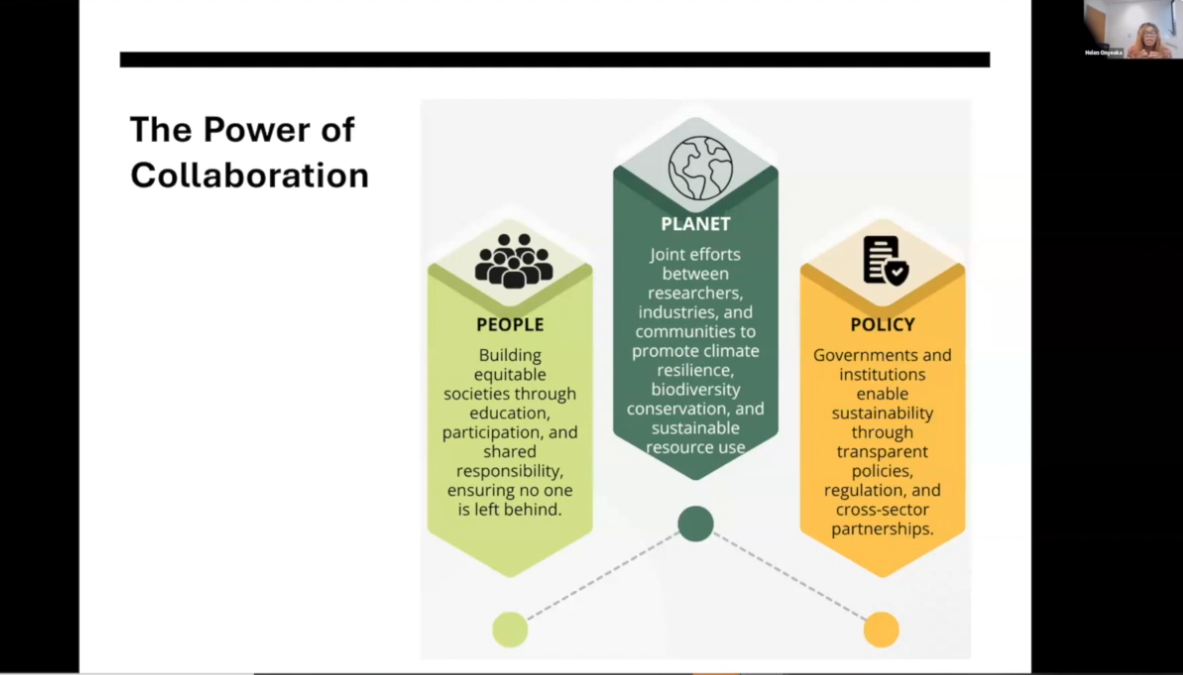
Climate change is not solely an environmental problem. Pollution is not only a scientific problem. Green finance is not simply about capital. Technology is not automatically sustainable because it is innovative. And policies cannot succeed if the people they are intended to serve cannot participate in, afford or trust them.
Opening the conference, Dr Helen Onyeaka captured this ambition succinctly: the gathering was designed to explore how society can turn “big sustainability ambitions into practical results” by aligning people, planet and policy.
That idea became the connecting thread across a remarkably interdisciplinary programme.
From climate pledges to practical delivery
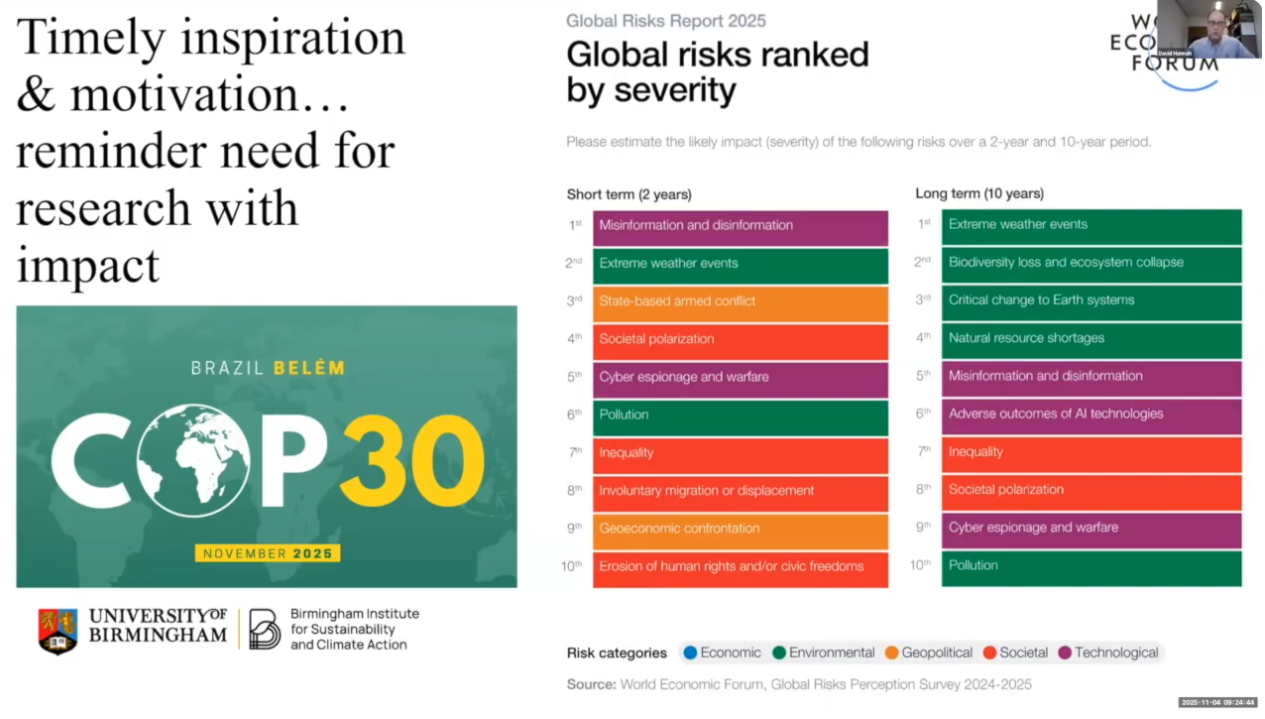
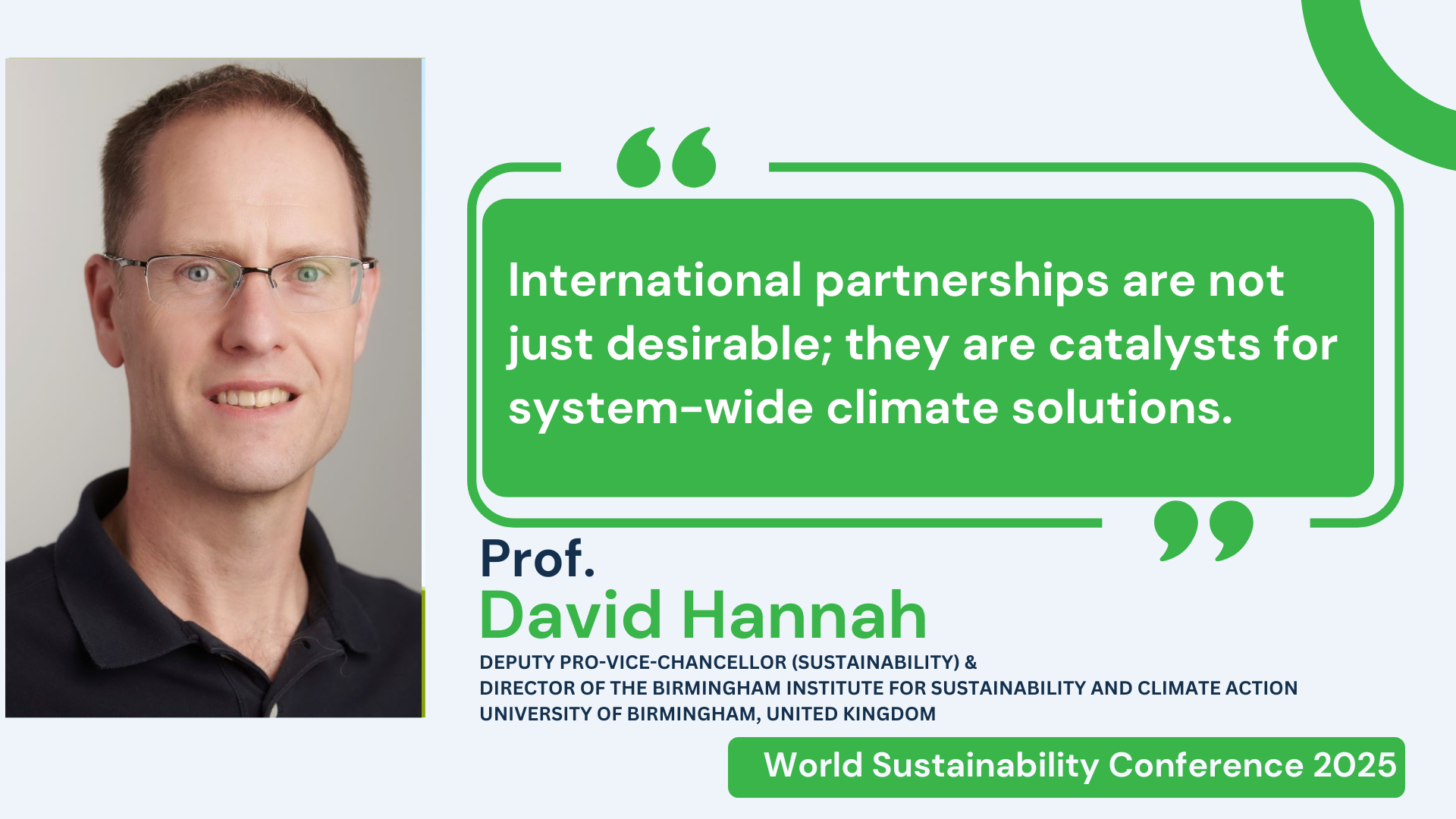
Conference Chair Professor David Hannah, Deputy Pro-Vice-Chancellor for Sustainability at the University of Birmingham, set the tone by emphasising the urgency of moving beyond climate commitments towards implementation.
Speaking ahead of COP30, he highlighted the need to shift from pledges to delivery, arguing that mitigation, adaptation and resilience must increasingly translate into practical action.
The challenge is not simply to produce more sustainability knowledge. It is to ensure that knowledge reaches policymakers, practitioners and communities and is ultimately used to create measurable change. Professor Hannah stressed this connection between research and real-world impact during his address.
This perspective reflects the wider philosophy behind Sustainability 360°. Solutions are strongest when scientific understanding, social realities and public policy work together rather than in isolation.
Making the invisible visible: science, art and air pollution
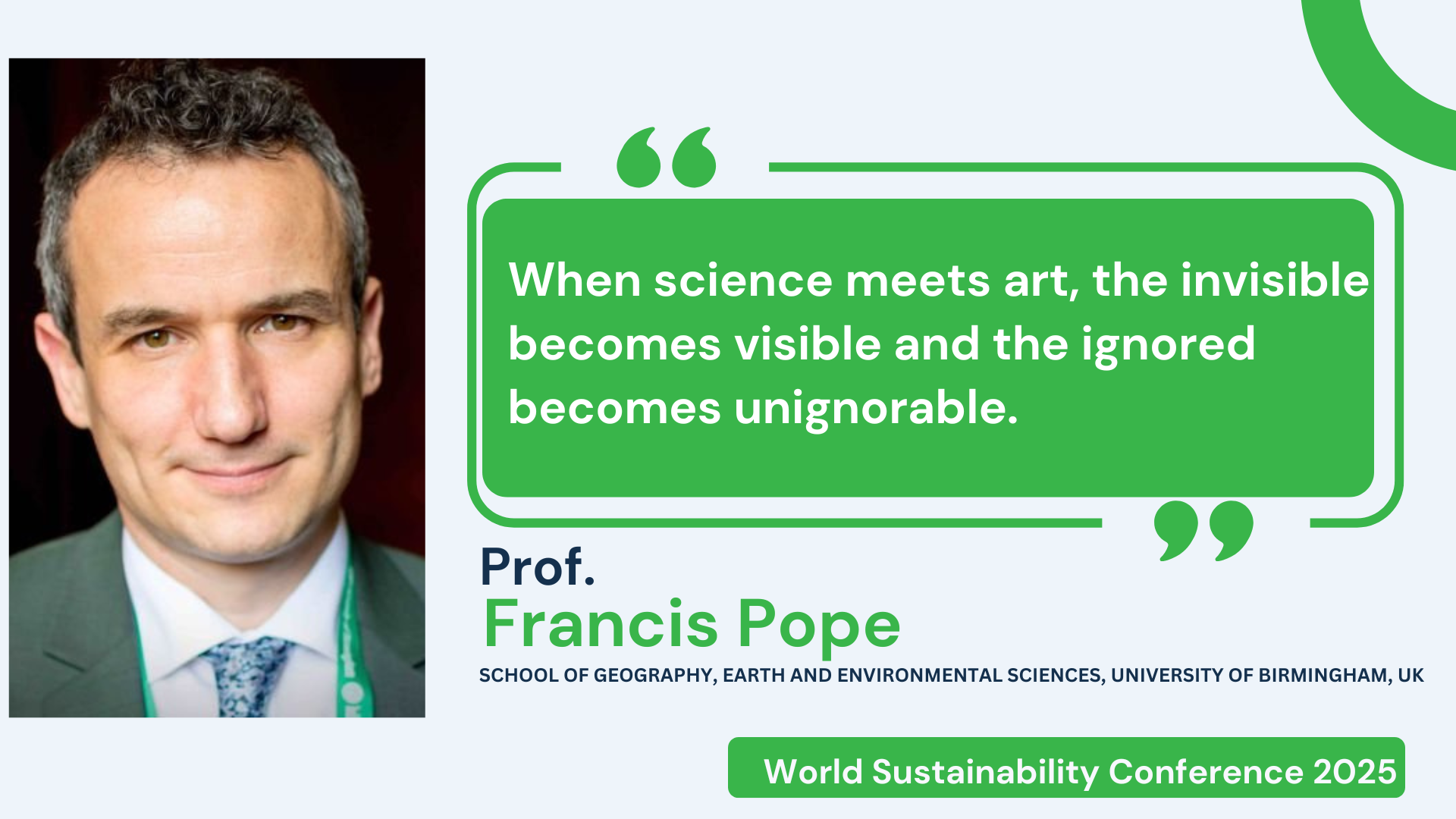
One of the conference’s most compelling examples of interdisciplinary sustainability came from Professor Francis Pope, Professor of Atmospheric Science at the University of Birmingham.
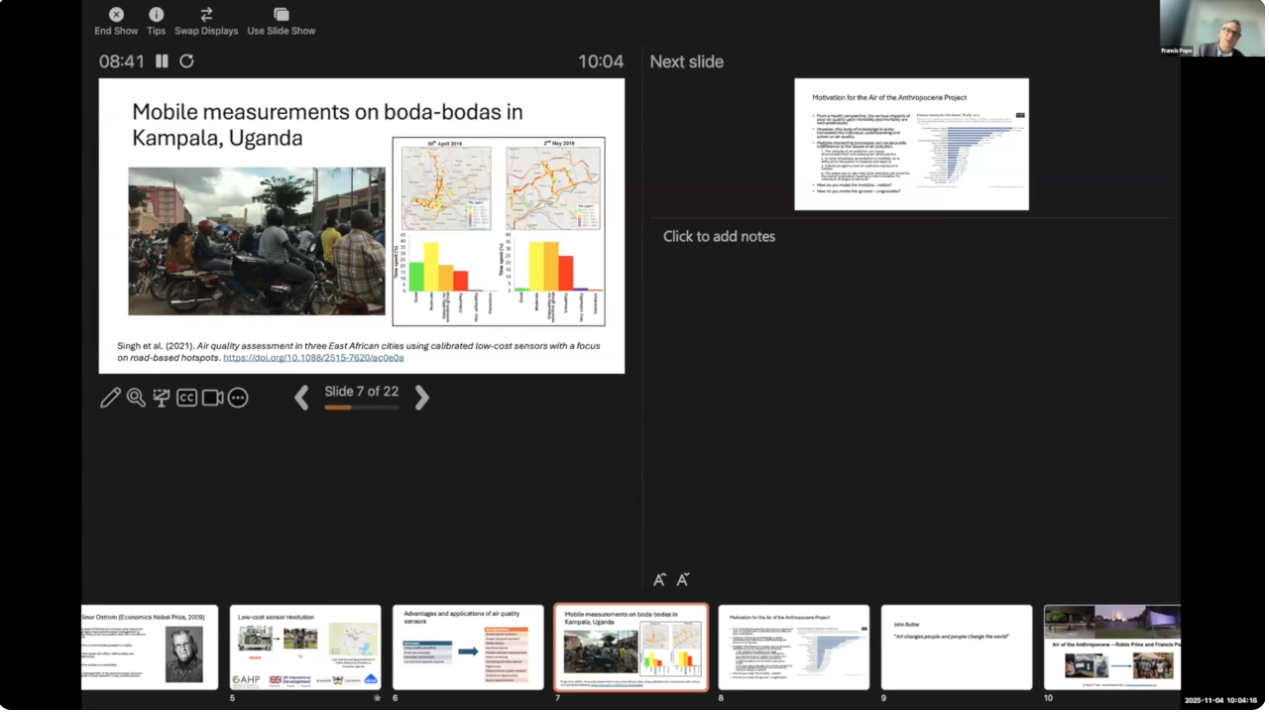
His presentation explored the role of art–science collaboration in communicating air pollution.
Air pollution is particularly challenging because much of it is invisible. People may understand intellectually that polluted air is dangerous without being able to see the pollutants surrounding them.
Professor Pope demonstrated how low-cost air-quality sensors are changing this relationship. These technologies can provide greater spatial and temporal resolution, enable mobile monitoring, support citizen science and extend environmental measurement into communities.
But the innovation went beyond sensors.
Through the Air of the Anthropocene project, pollution measurements were transformed into visual light paintings, making invisible environmental data visible and emotionally comprehensible. The work brought together scientists, artists, schools, communities and policymakers, illustrating how data can become a vehicle for public engagement rather than remaining confined to academic publications.
It was an important reminder that solving sustainability challenges also requires solving a communication challenge: people are more likely to engage with environmental problems when they can see, understand and connect with them.
Digital transformation: solution, risk or both?
Technology occupied another important part of the conference agenda.
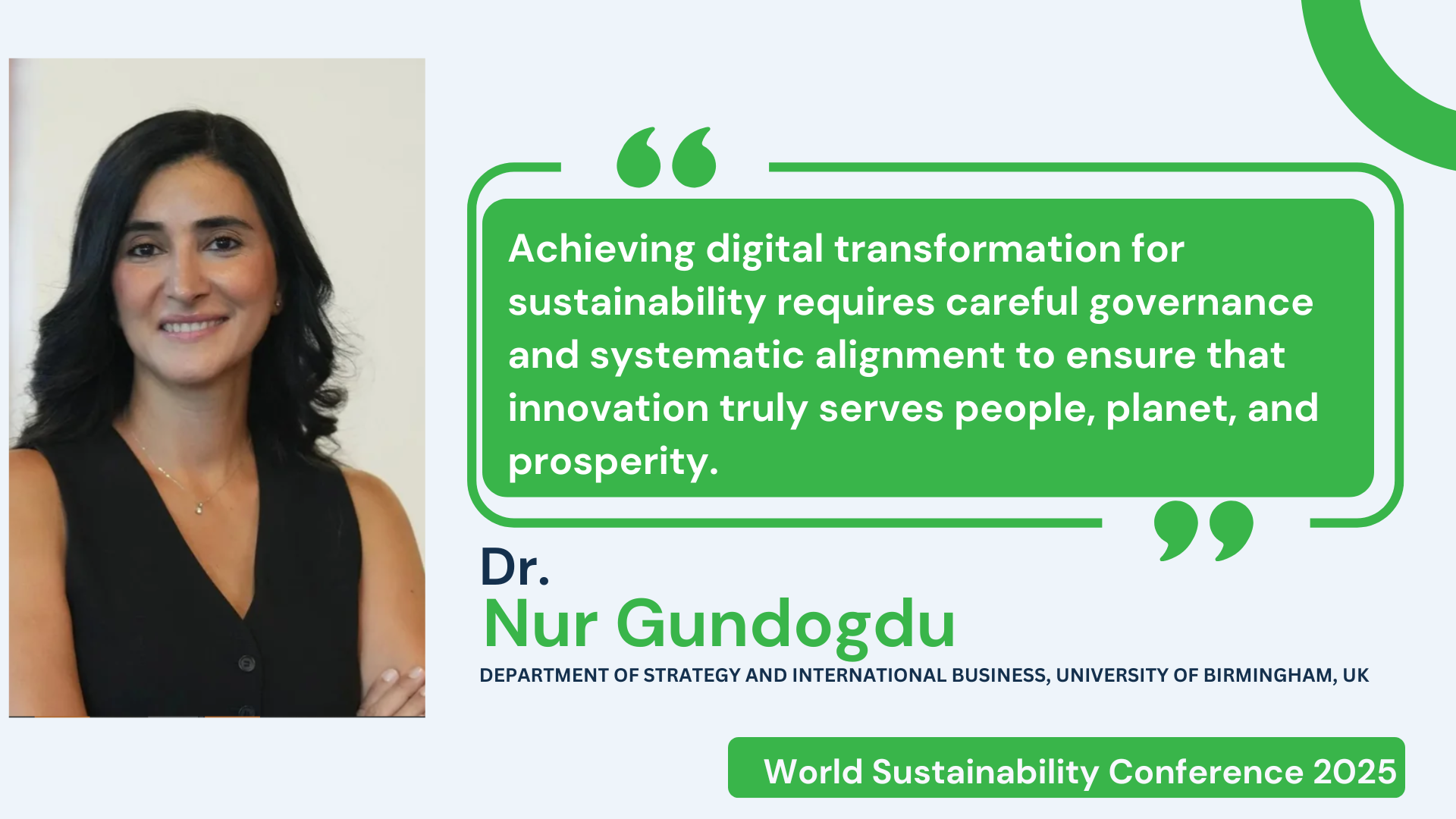
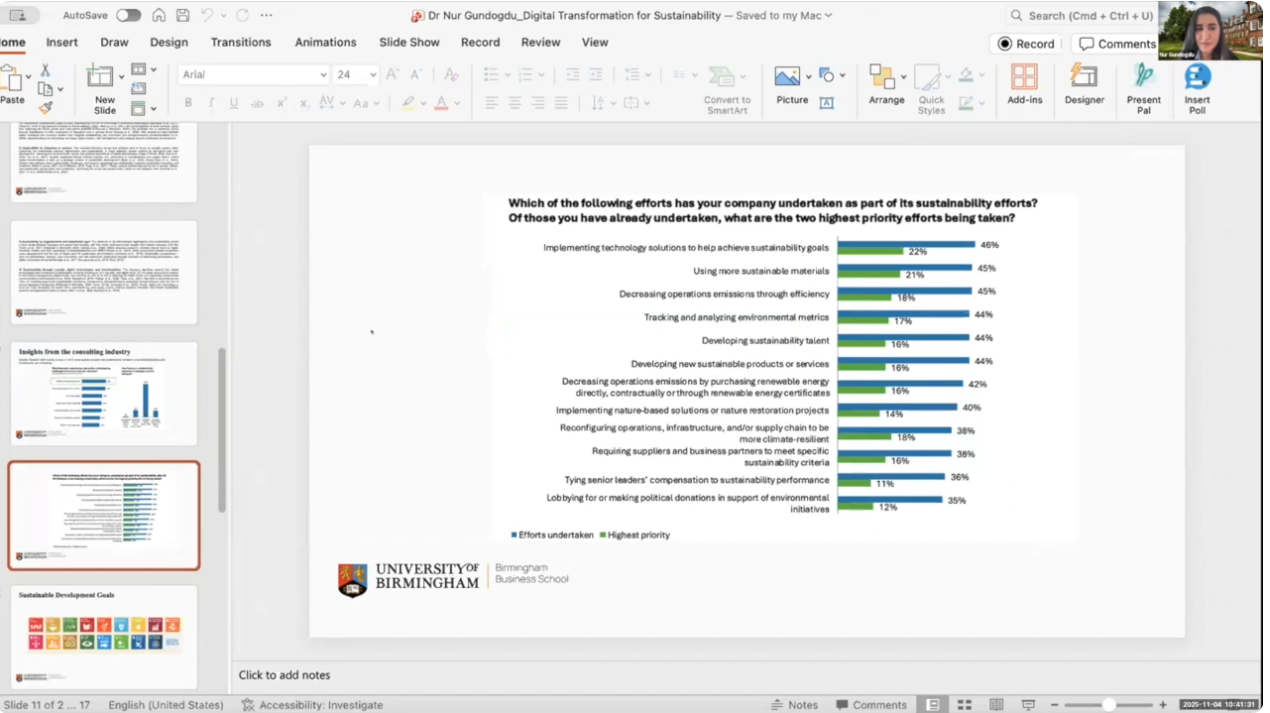
Dr Nur Gundogdu, Assistant Professor of Strategy and Sustainability at the University of Birmingham, examined digital transformation for sustainability.
Digital technologies offer enormous possibilities. Internet of Things systems, big data, digital twins and information and communication technologies can improve resource efficiency, transparency, monitoring and decision-making.
But the conference resisted a simplistic “technology equals sustainability” narrative.
Dr Gundogdu emphasised that digitalisation may also generate unintended consequences, including additional energy demand, inequality and rebound effects that can offset environmental improvements. Achieving genuinely sustainable digital transformation therefore requires governance and systemic alignment so that technological progress supports ecological integrity and social well-being rather than creating new forms of exclusion.
“What should technology do, for whom, and at what environmental and social cost?”
Rethinking sustainable transport beyond the electric vehicle
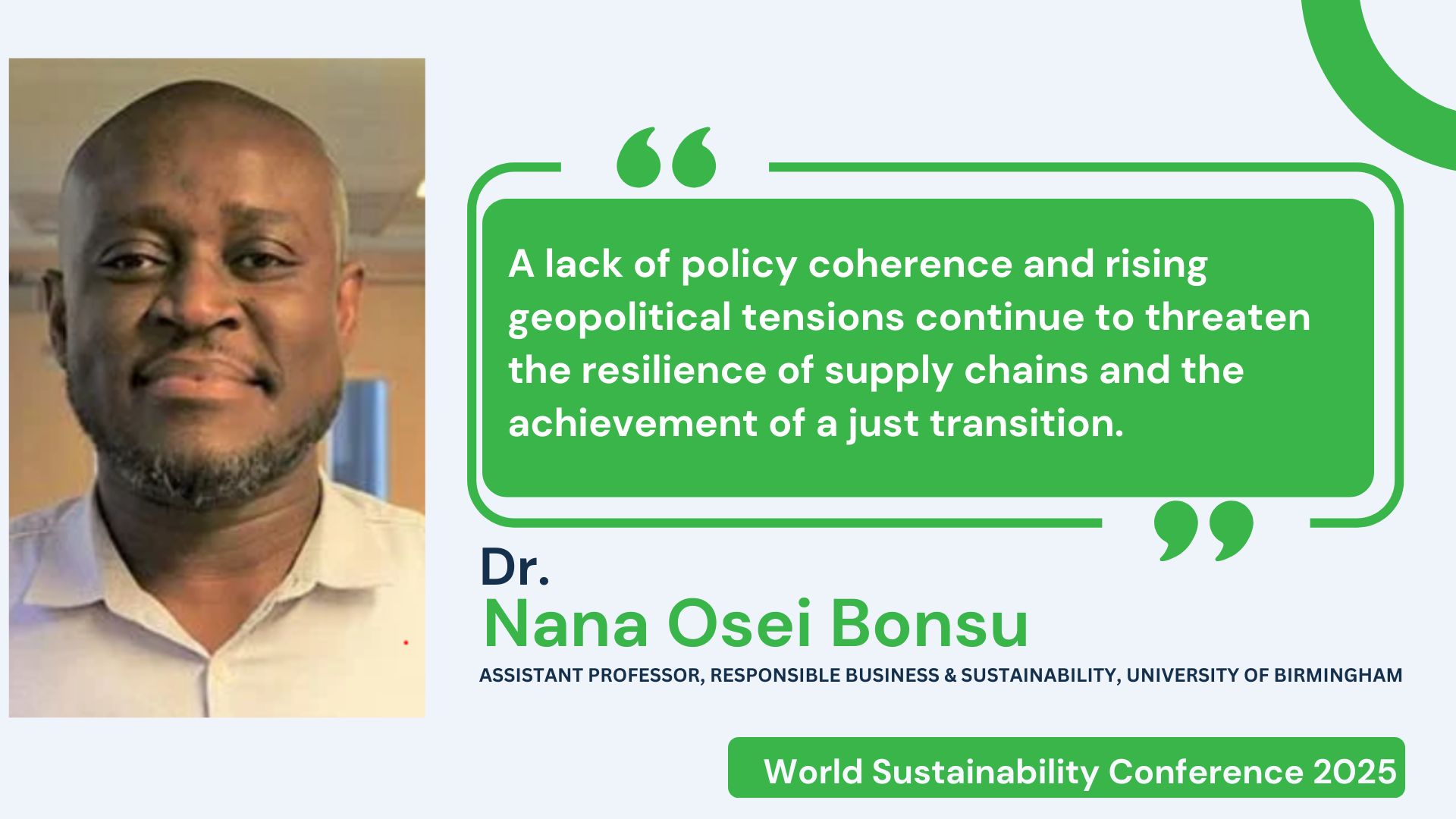
The complexity of sustainable transitions was also evident in Dr Nana Osei Bonsu’s presentation on decarbonising global transport value chains.
Electric vehicles are central to many national net-zero strategies, but focusing exclusively on tailpipe emissions risks overlooking what happens before a vehicle reaches the road.
Mining. Battery production. Manufacturing. Energy generation. International supply chains. Recycling.
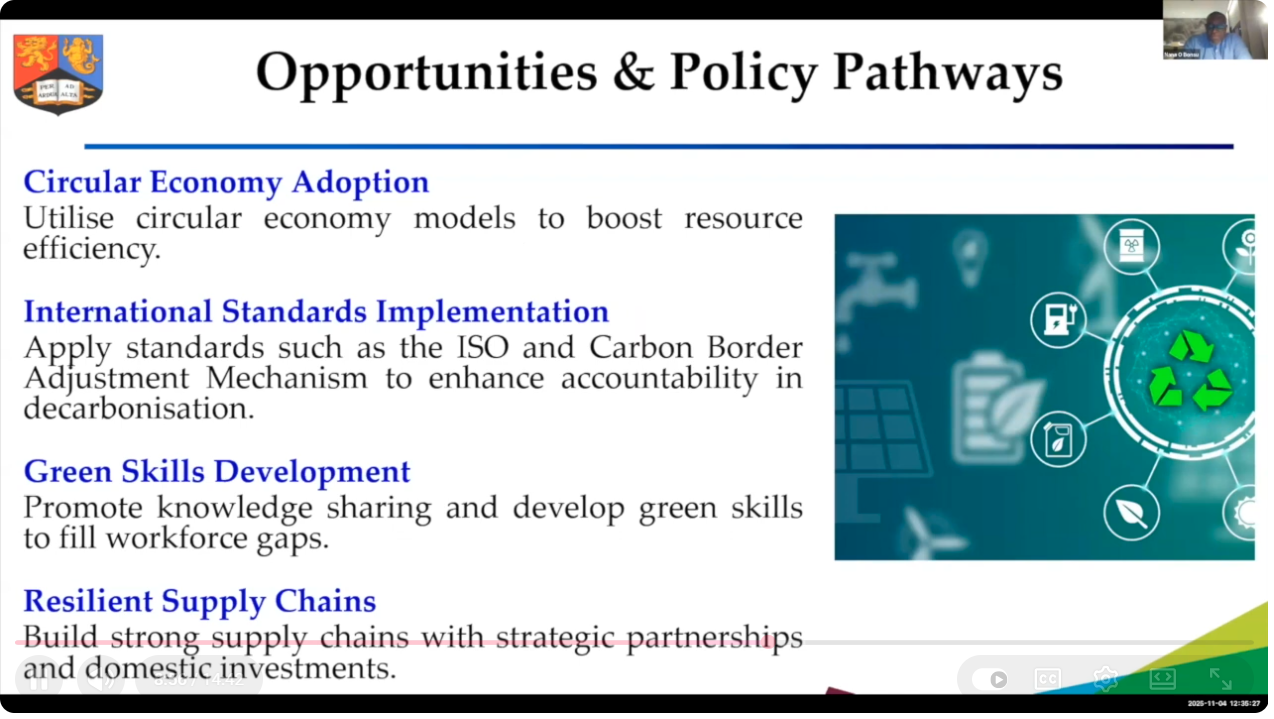
Dr Bonsu’s analysis highlighted environmental and social risks associated with critical-mineral extraction, embedded emissions from manufacturing and fragmented international governance.
His presentation therefore called for sustainability to be embedded throughout the entire global value chain, including low-carbon infrastructure investment, transboundary sustainability assessments, policy alignment with the Sustainable Development Goals and ESG criteria, and regenerative approaches to resource use.
Perhaps the most significant lesson is that decarbonisation cannot simply relocate environmental damage.
A transition can be low-carbon in one country while producing environmental degradation or social injustice somewhere else. Sustainability requires looking at the complete system.
Can finance become a force for climate justice?
Money is another critical part of that system.
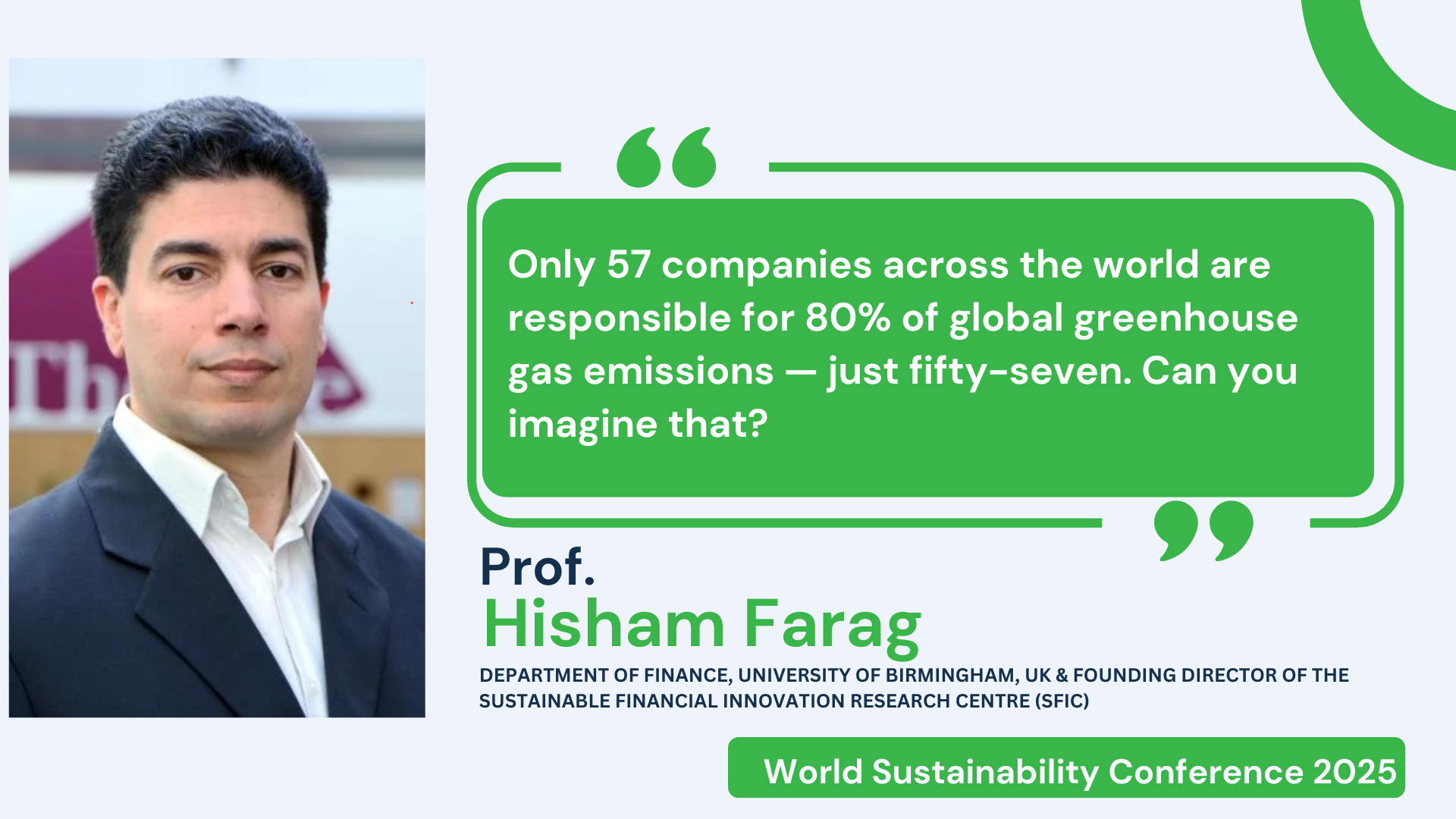
Professor Hisham Farag, Professor of Finance at the University of Birmingham, examined the responsibilities of institutional investors and the rapidly evolving field of sustainable finance.
Climate finance is often discussed in terms of investment volumes, but Professor Farag pushed the conversation further.
In his conclusion, he argued that climate finance is also fundamentally about fairness and justice, requiring political will, appropriate regulation and financial innovation.
His presentation also raised challenging questions about institutional investors. Evidence discussed during the session suggests that investor behaviour can influence the development of green finance markets. In research examining green bonds, for example, some types of short-term institutional investors were associated with constraints on green bond issuance, while shareholder activism could mitigate this effect.
The broader message was clear: finance is not neutral. Where money flows, under what conditions, and with what accountability can accelerate — or obstruct — sustainability transitions.
From global SDGs to organisational reality
The Sustainable Development Goals have become one of the world’s most recognisable sustainability frameworks.
Yet there remains a difficult question: What happens after an organisation says it supports the SDGs?
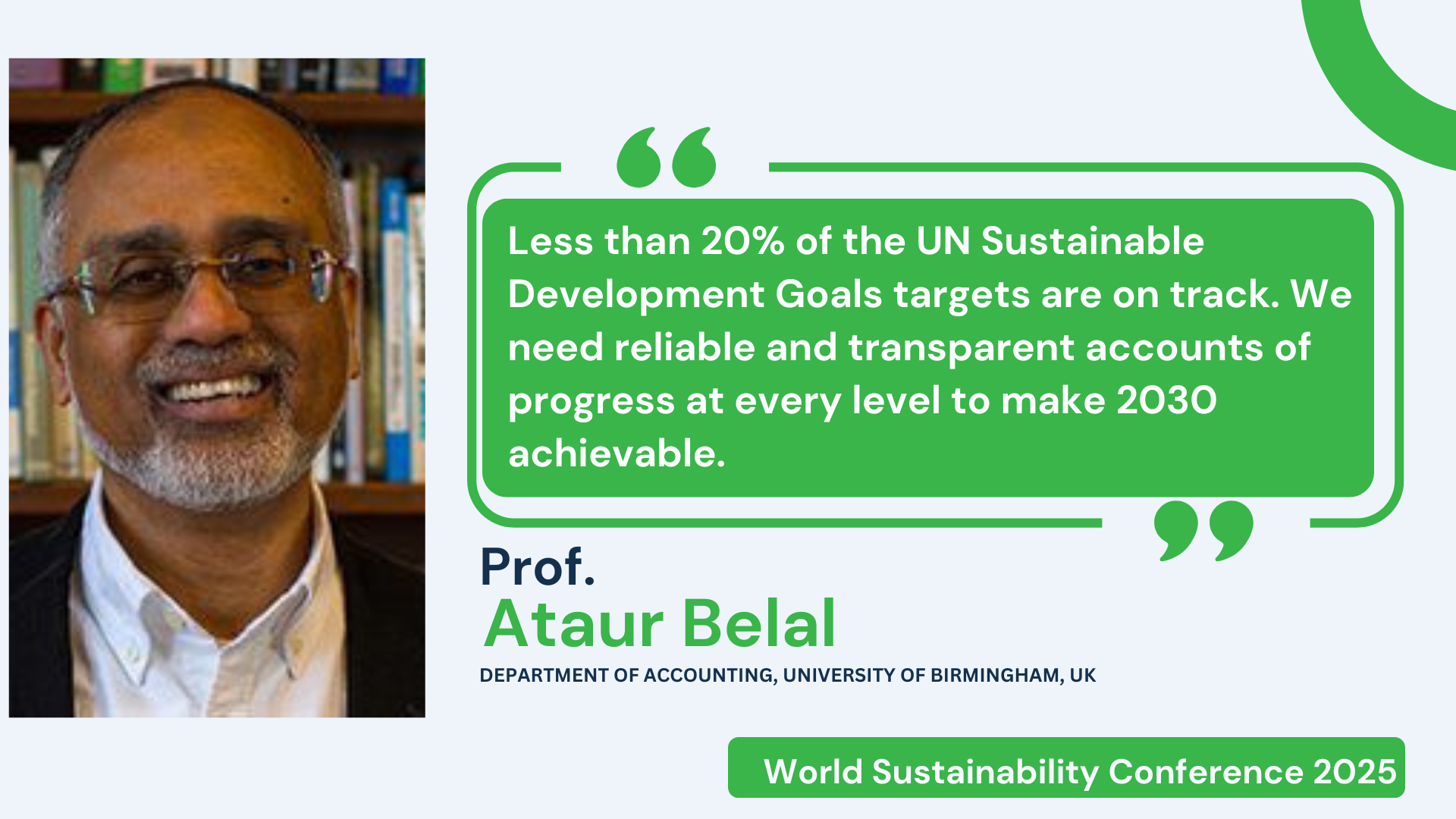
Professor Ataur Belal, Professor of Accounting and Sustainability at the University of Birmingham, explored the translation of global SDG ambitions into organisational practices.
His research shows that this translation can be uneven. Across different national and organisational contexts, companies and institutions may adopt SDG reporting, establish sustainability structures or modify policies. But significant gaps can remain between formal alignment and systematic implementation.
Examples presented at the conference highlighted challenges including limited Scope 3 emissions disclosure, weak organisational translation processes, inadequate sustainability data, lack of awareness and insufficient organisational capacity.
The lesson is important for governments, companies and journalists alike: displaying an SDG logo is not the same as delivering an SDG outcome. Real progress requires measurement, institutional change and accountability.
Sustainability through the courts
Environmental progress also depends upon law.
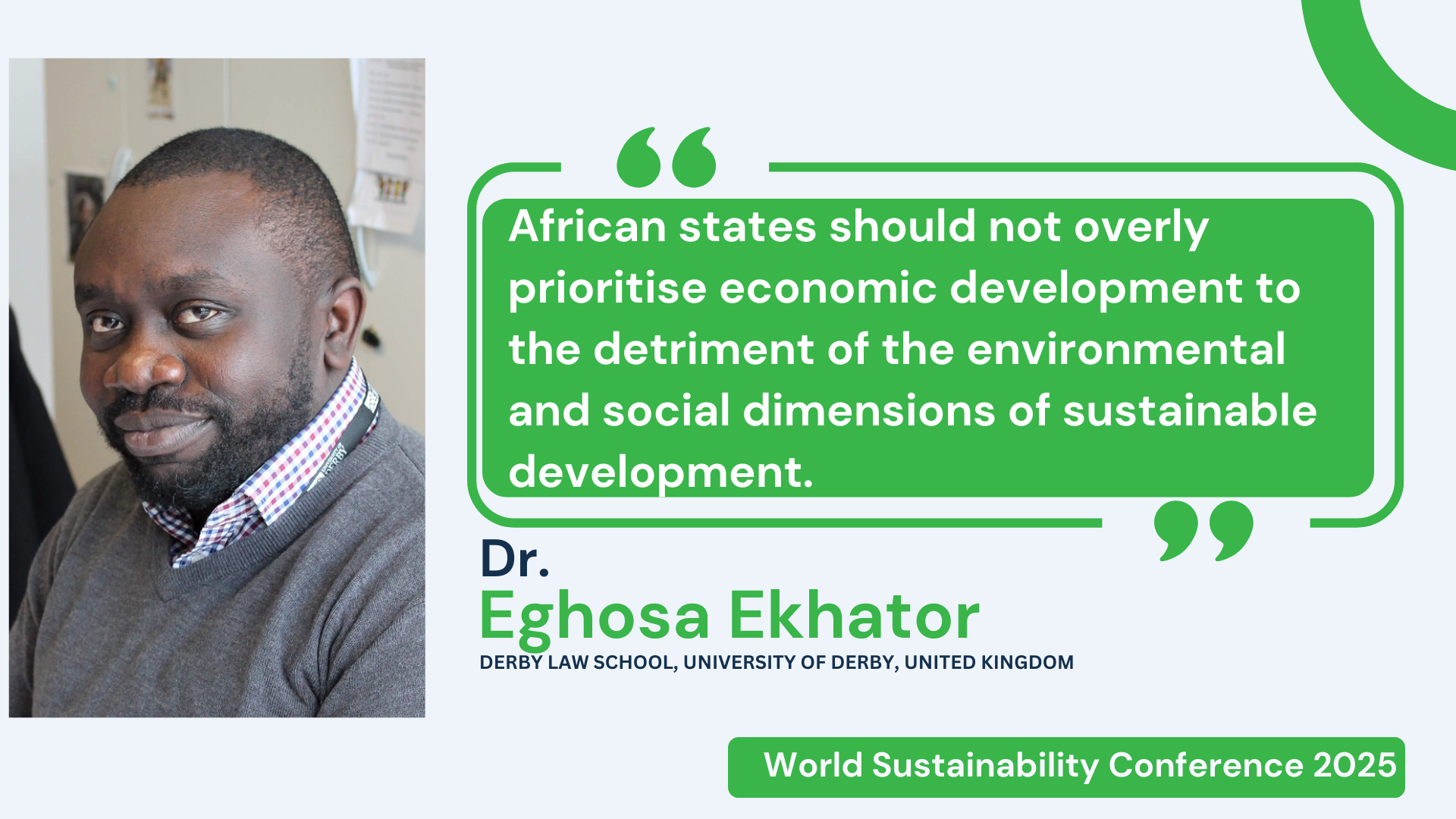
Dr Eghosa Ekhator, Associate Professor of International Environmental Law at the University of Derby, examined the evolving relationship between sustainable development and African courts.
His presentation explored how African domestic, sub-regional and regional institutions have dealt with environmental rights and sustainable development, including litigation involving communities affected by environmental degradation in the Niger Delta.
Importantly, the presentation placed sustainability within a broader framework of rights, development and justice.
Dr Ekhator argued that African courts should interpret sustainable development in light of contemporary challenges such as climate change while also recognising the potential contribution of indigenous principles and ethics to sustainability thinking.
This reinforces another core theme of WSC 2025: environmental sustainability cannot be separated from questions of rights, institutions and access to justice.
Nature itself as environmental technology
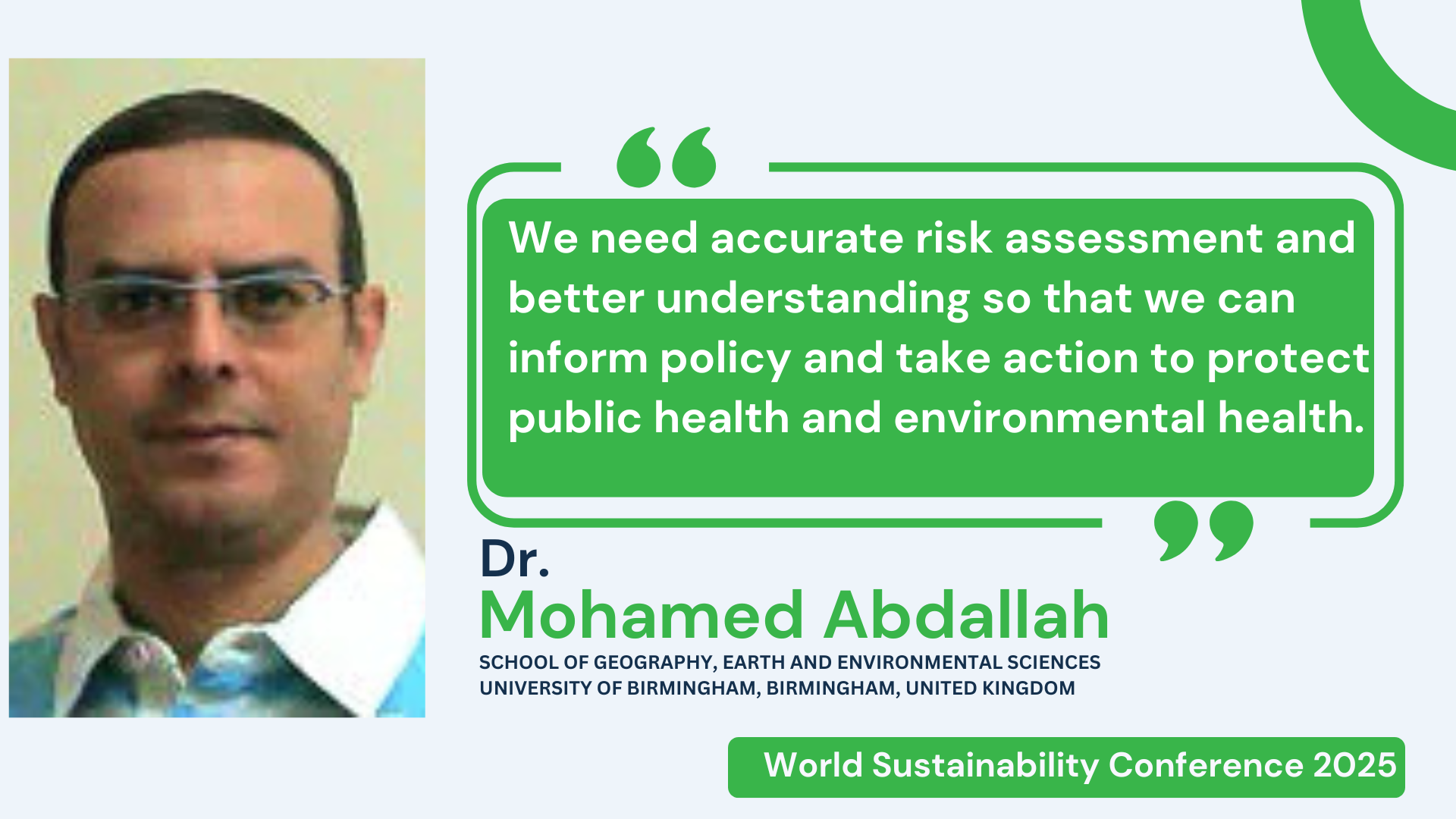
Another striking example of innovation came from Dr Mohamed Abdallah and collaborators at the University of Birmingham, who presented research into an innovative biological approach for removing emerging pollutants from wastewater.
The work uses Daphnia, tiny aquatic filter feeders sometimes referred to as water fleas, as part of a potential tertiary wastewater-treatment system.
Controlled prototype results presented at the conference showed encouraging removal efficiencies for several contaminants, including diclofenac, arsenic, atrazine and PFOS.
Crucially, however, the researchers also examined the wider environmental footprint through lifecycle assessment and identified the need for further optimisation under real-world conditions.
It is precisely this combination of innovation and critical evaluation that Sustainability 360° seeks to encourage. A technology is not sustainable merely because its objective is environmental. Its materials, manufacturing, energy demand, scalability and complete lifecycle must also be considered.
Sustainability is ultimately about connection
Across finance, law, technology, pollution, transport, water, business and the Sustainable Development Goals, WSC 2025 repeatedly returned to the same conclusion.
The greatest sustainability challenges are interconnected. So must be the solutions.
• People cannot be separated from planetary systems.
• Environmental ambitions cannot be separated from economic realities.
• Innovation cannot be separated from governance.
• Climate finance cannot be separated from justice.
• Global goals cannot be separated from local implementation.
• Research cannot remain separated from the communities, policymakers and organisations capable of putting it into practice.
As Professor Hannah explained during the opening session, Sustainability 360° brings together policymakers, researchers, industry innovators and community advocates because true sustainability requires the well-being of people, the health of the planet and the strength of policy to be considered together.
That may ultimately be the most important message from the World Sustainability Conference 2025.
“The world does not lack sustainability ambition. The challenge now is integration, implementation and accountability.”