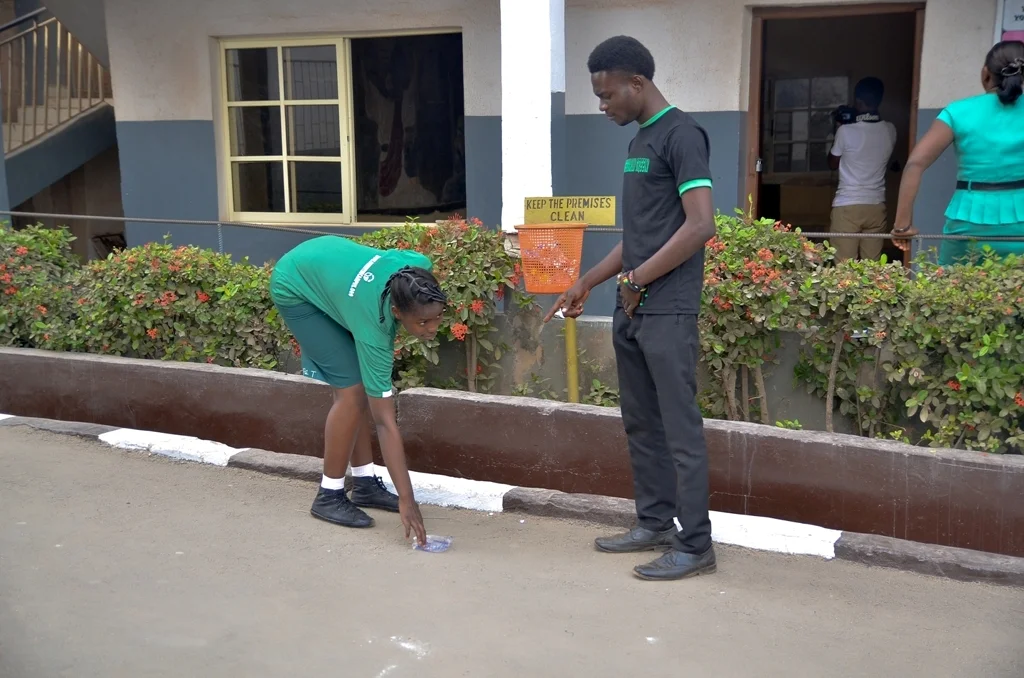
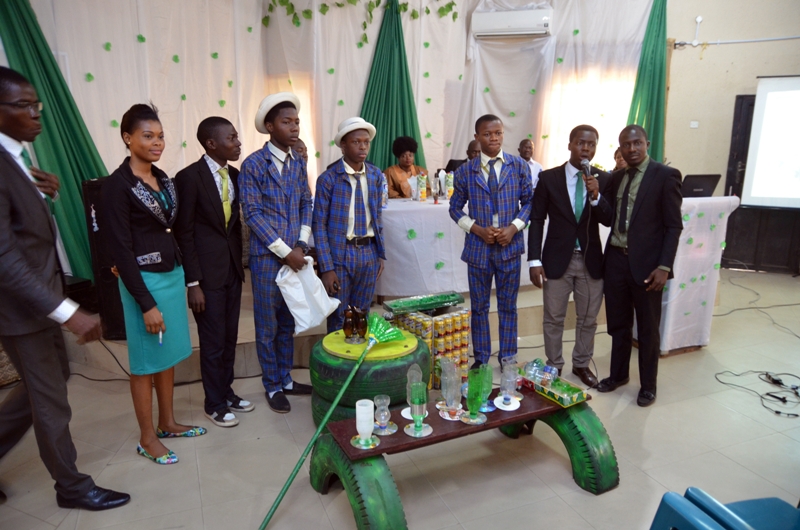
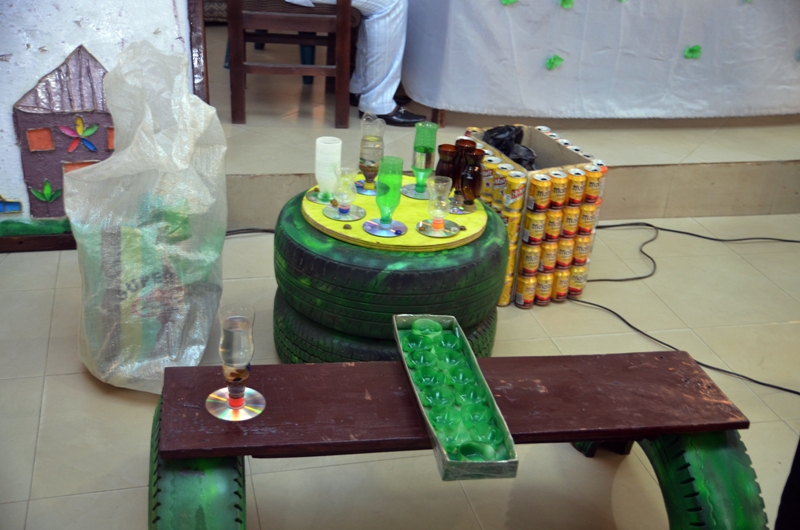
The Green Campus Initiative (GCI) is not relenting in her mission to tackle the challenges of climate change and environment sustainability through innovative academic research, and translating that into actions on campuses and beyond. Indeed, we have gone beyond campuses into secondary schools and have launched a very innovative and exciting club called “The Green Kids Club” (GKC). What a beautiful legacy to pass on to the younger generation! Can you imagine what positive impact it would have made if we were all taught how to care for and preserve our environment and how some of our actions/in-actions cause adverse effects on the environment from our secondary school days? Maybe we would not have so much pollution problems as we do today. GKC trains her club members to keep themselves and their surroundings clean, eat organic foods, ensure that their wastes are properly disposed, and are even taught how to recycle or reuse some of the materials regarded as waste. They also get to teach others and correct them when due. A couple of schools have actually opened up to us namely: Homaj Schools and St. Stephens in Ondo town. GKC seeks for an average of 15 members in as many schools as possible. From the students, a Prime Minister (Coordinator) would be unanimously elected, and 2 Green Police (responsible for correction and discipline) would be selected. The list of proposed programs for each term includes Seminars, Community development services, Green Party, Green Ball, and a host of other exciting activities. We also hope to launch a Comic Book. This is simply amazing! Spread the news! GKC has begun for real.
Green Personality of the Month: Barakat Tiamiyu Bidemi
The Green Personality of the Month is a new idea of the Green Campus Initiative that aims to recognize and celebrate positive, dynamic, and motivated young individuals. Their great passion for the environment and society cause them to take positive actions which do not only improve the environment but also influences others to go green and live sustainably.
Inspired by her works, the Green Team is pleased to announce Barakat Tiamiyu Bidemi of House of Babiti, as the pioneer Green Personality of the Month.
Meet Barakat Tiamiyu Bidemi, a 19-year-old undergraduate student of Urban and Regional Planning, at Obafemi Awolowo University, Ife, Nigeria. After founding the House of Babiti - a group of individuals dedicated to promoting youth engagement in active leadership and influencing them to become change drivers - in November 2015, she has successfully hosted 120 students of the Obafemi Awolowo University and network members of the Young African Leaders Initiative, YALI, for a #YALIGoesGreen inspired event. This event sparked undergraduate's interests in taking part in sustainable environmental actions. Bidemi's hobbies include bead making, travelling, and event planning.
We caught up with Bidemi to ask her a few questions:
You, House of Babiti and your friends made news recently with your work and eco-inspired event at Obafemi Awolowo University. What are some of the most important things you learnt during that process?
Yes, we had the event in January, the 23rd, this year. It was our maiden edition. The journey through was like an adventure; having to do new and different things. Some thought it was close to impossible for me to organize that event because I was in my first year at the University. They kept asking, “How are you going to pull things together?” But I believed, and still do, that we should not wait for all conditions to set right, somewhat, before doing the things we believe in: little things make big things. During all of this, I got to understand the essence of surrounding oneself with people that will inspire and gear your ambitions; with these, one will always want to do more.
Why do you believe that environmental sustainability and climate action is so important?
Climate change effects are not gender, ethnic, religious, or racial biased. Climate change affects everyone and every economy. We all need to take action, actions that will mitigate the alarming environmental risks in our communities. Future generations are posed to risks, due to fossil fuel dependence. The environmental sustainability measures and climate actions we take now will help save our world and the future.
What are some of the environmental challenges facing communities and people in Nigeria?
There is desertification in northern Nigeria, increased rise of water levels in oceans and rivers, in the south resulting in flooding, erosion, and land loss. Deforestation and oil spill are present challenges of the Niger Delta region. Also, it is instructive to note that many people still do not understand the phenomenon that results to what they feel or see happening around them.
In a recent article House of Babiti did, we saw interesting discussions about best techniques that can be used to ignite pro-environmental attitude in different people, especially youths. Why do you think in different societal settings we still have a situation where fewer youths than adults are adopting greener and more sustainable lifestyles? How do we change that?
Just has explained in my recent write-up, many of us, youths, live our lives unconsciously, there are no distinctions, we do things because that is how we perceive the society to be, we follow the 'mother sheep.' Adults in the society on the other hand, still retain distinctions between right and wrong environmental practices, even without any literal understanding of climate actions. Most of our youths grow up in a setting where less interest is shown in sustaining the environment.
These can be reduced through proper sensitization both on social media and physical means. Also, introducing or illustrating sustainable actions to young people, while presenting incentives will go a long way in igniting their passion. Collective efforts should be made in organising events and enlightening youths on the need to have a better and healthy environment.
What do world leaders – in government and business – need to do to make environmental sustainability a reality for all communities?
World leaders in government need to adopt sustainable environmental practises in their diverse economies, take full considerations of the environment risks attached to the development of frameworks before endorsing them, create policies that will check industrial carbon emission, and invest and improve the renewable energy sector. World leaders in business should contribute to the green economy, innovate products of renewable material and help relate to the public on how green practices improve their businesses.
Every time you have an idea; you have a place on your mind. Tell us, what event are you planning to organize soon and where?
Yes, there is always an idea and a place, the place comes first before the idea. I am dedicated to making an impact everywhere I go. Presently, I am in Kaduna State planning a green event designed for undergraduate students of Kaduna State University. Since the Green Campus Initiative has proven to be a catalyst for students participation in environmental happenings, I am happy as a GCI Ambassador to introduce eco-sustainability to Kaduna State University. The event is coming up on the 2nd of June, 2016, and tagged "Greening the Campus". It is going to be positive and exhilarating. I want to thank the respective stakeholders who have been contributing in different ways and the Department of Geography of the University for their support so far.
Bidemi has the planet and people in the heart. Say hi to her via +2347050541172 or barakatbidemi96@gmail.com
Ahmadu Bello University Students Goes Green
One needs continuously to absorb the rich, purposeful, contents of the Mission Statement of the Green Campus Initiative: "To tackle the challenges of climate change and environment sustainability through innovative academic research, [and] translating that into actions on campus[es] and beyond".
GCI is not slowing down in creating positive eco-awareness and influencing sustainable actions on Nigerian campuses. Much kudos to Ahmadu Bello University (ABU) Green Ambassadors and students: they have translated these into action - a great step indeed - by holding their first physical meetup.
Held at the University's Department of Architecture and co-anchored by Dr. Amina Batagarawa; the GCI ABU Staff Adviser and Ibrahim Majidad; GCI ABU Campus Representative, the meetup was attended by GCI's ambassadors and many other interested students from the various campuses of the University. Themed, 'Why Green?', the meetup was a platform for healthy discussions, networking, brainstorming of ideas, and introducing to the new ambassadors and other students the workings and structures of the GCI Ambassadorship Programme.
In other to break the ice, personal Introductions were done by all in attendance. This was skillfully led by Ibrahim Yusuf Chafe; the President of Society of Architectural Students. After that, Dr. Amina Batagarawa did a very insightful presentation with slides and multimedia. The presentation was on the history, vision, achievement, portfolios and organizational structure of the GCI. It also covered the key values, roles, and duties of a Green Ambassador and other relevant information. Interesting questions covering key issues were raised after the presentation: Chinedu Ohambele, a 400 level architecture student, beautifully and sufficiently answered all of them.
It is interesting and pleasing to note that Ahmadu Bello University is not a newbie to the scene of sustainability processes and eco-friendly designs and structures. The University boasts of a mosque built with plastic materials, located in the Department of Business Administration, and their fight in tackling, head-on, improper waste disposal in major areas of Samaru Zaria community: this effort is led by Simon Gusah, an Australian researcher at Centre for Spatial Information Science (CSIS) under the Department of Urban and Regional Planning of ABU.
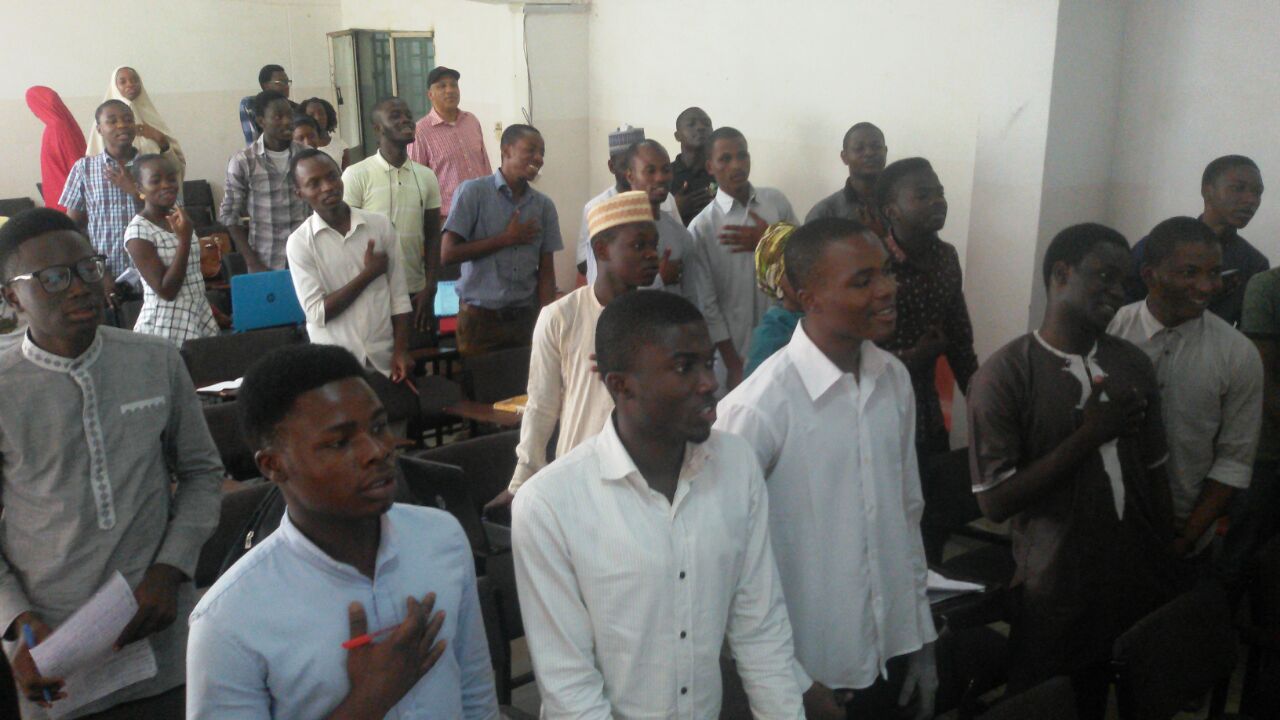
The meetup came to an end with photo sessions, after everyone in attendance took the Green Pledge and decided to pursue the purpose and goals of GCI in the little way they could so as to ensure environmental sustainability and a better, healthier, tomorrow.
Indeed, this meetup was effective as students got to network with much passion. The positive outcome of this meetup is already felt in the Zaria community. Congratulations GCI Ahmadu Bello University!
The Pale Blue Dot: Our Inheritance, Our Legacy
Look closely at the picture, observe that brown band to the right. The bluish-white speck you see is the EARTH you and I live on. The picture is named the PALE BLUE DOT; a photograph of Earth taken on February 14, 1990, by the Voyager 1 Space Probe. from about 6 billion kilometres away.
In the photograph, Earth's apparent size is less than a pixel; the planet appears as a tiny dot against the vastness of space, among bands of sunlight scattered by the camera's optics.
To think this is our world, our history, our inheritance and our legacy. A place where we dream to be and become. A place where we plan to conquer and dominate. A place where we want to be known, crave significance and win the approval of the people therein.
We love the earth so much that we are constantly on the search for that elixir that will keep us forever in it. Yet what are we doing with the opportunity afforded us on this green platform?
We have plundered mother nature; cutting the trees without replanting. We have littered the land surfaces and oceans, depositing toxic chemicals and contaminants through our selfish activities. We keep flaring gases, contributing to the greenhouse gases emission through our vehicles and other utilities we can do without.
We treat the Earth carelessly to preserve our lives forgetting that it is the only platform we have to live. If the Earth dies, we die with it! So, why not choose to be the one to care for the environment.
We think the earth is so big and our little activity at one corner won't hurt anyone...try placing a finger on that Pale blue dot and check if you can see it anymore. Of course, you can't! The Earth is so small that what you do affects every part of it. And guess what, it's a boomerang!
What you do to Earth it gives back to you. You give it excess Carbon gases, it gives you acid rain and global warming. You give it trees and less dirt, it gives you oxygen and freshness.
Take a stand to care for Earth, pledge to live simply and moderately. Reduce your waste, dispose of your waste properly, recycle materials that you can, do not buy what you don't need, engage in various activities that will reduce pollution, plant trees and become an ambassador for a clean Earth.
Let us care for our Pale Blue Dot else it might just be lost in the vastness of space -- along with us, and everything we have and will ever hold dear.
It's #EARTHDAY2016 reaffirm your stance for the environmental protection.
ABOUT THE WRITER
Owoeye Josiah Abolade is an environmental biologist and public health expert in the Federal University of Technology Akure, Ondo State, Nigeria. He is an advocate for green Nigeria as a volunteer for Green Campus Initiative.
The State of Nature
Now that it’s been almost seven years, I can sufficiently say, I didn’t like Avatar much. To give a bit of context, I’m a film buff and looking back, I was probably more caught up in the experience of it all rather than in the movie itself. Avatar was Meh! It’s the kind of movie you look back at and say, yeah, I saw that. But, it is funny how certain parts and not the whole of things leave an imprint; like the memories of loved ones, where we only remember the good. I’m not going to outright say that Avatar got me interested in conservation, but, it sort of did. There’s this scene right before the big battle where Jake goes to pray to the N’aavi ancestors for guidance and assistance. In it, he makes a strange, but poignant comment. He says “They (humans) destroyed their green.” The ancestors end up providing assistance, and a whole lot of bloodshed commences, but that’s beside the point, this article isn’t about Pocahontas 2, sorry, Avatar. Cameron implies in the film that the world is seemingly headed to state of no nature and from a philosophical point that is mightily interesting to me.
I have read a multitude of classical philosophical works and I frequently ponder the friction between the past and the future. If, for example, the past was dictated by a state of nature, wouldn’t the future, being the polar opposite, be one without it. The State of Nature, as a philosophical thought, presents a world without society. I tend to take it further to mean, a world without the modern man. As the name suggests, nature rules in this environment and there is unparalleled equality among man. Man, without the technological advances of the modern era, only takes what he needs from nature. Nature would also rely on man to foster the photosynthesis loop; and being a largely agrarian society, also for the care and nurture of nature. In a sense, there is equality between man and nature as well. Thomas Hobbes, the British philosopher known for his social contract theory, postulates that in this state of nature, man is preoccupied with doing everything to preserve their life. He contends that life is solitary, poor, nasty, brutish and short. The state of nature is essentially a world of man versus man. Hence, the need for contracts to negotiate a way out of this compromise- and the subsequent creation of functioning states and governments. Hobbes sees the creation of government as the end of the state of nature. Governance is in itself a form of modernity. As such, I feel there exists a disconnection between the modern man and the state of nature. Evolution postulates the survival of the fittest, and as we gravitated towards a more unequal and unjust society, certain beneficial aspects of the state of nature have been abandoned.
I am not advocating the dissolution of government. If anything, I have constantly argued for the need of government to give conservation more precedence in the global arena. But the key word is preservation. The Hobbesian view is that governments form to ensure preservation of man. It likewise suggests that it is the fear of death that propels man to peace. As such, shouldn’t nature then be entitled to the same rights of preservation, given our equality? Recent estimates suggest that at least 10,000 species go extinct every year. At this rate, in another millennia, the planet would be a desolate place. Man is particularly responsible for this trend. 2015 was the warmest recorded year in history, the second warmest was 2014. Preservation of the environment has been relegated to the back-bench. This is where I feel government should play more of an active role. Hobbes stresses that the role of the sovereign is to ensure common peace and safety. Climate change is the greatest silent threat to the world. To ensure the safety of the future generation, we need to do more to avert the unthinkable.
Man’s greed has been echoed for generations now. It is the predominant assumption in economics. Industrialization and globalization are key to understanding rampant pollution. While I think competition on an international stage is healthy in terms of development, there should also be a rationale motivated by self-interest. Climate change is responsible for extreme weather patterns the world over. Droughts, extreme heats, glaciers melting and rising sea levels have an adverse effect on people’s livelihoods as well as the environment. Add to that the negative health outcomes these changes in the environment brings and you’ll perfectly understand the rising costs of these changes to man. I frequently refer to this discord between the global north and south when it comes to conservation. Less advanced nations bear the brunt of environmental degradation because they are ill-equipped to handle them. There seems to be an information asymmetry with regards to dealing with climate change. Not only do advanced nations have better technologies to deal with them, but information is not delivered in the appropriate channel to developing nations. This is the particular area where I feel government should play more of active role. It is not enough to rely on civil society to spread awareness on this all important issue. Competition should drive our need to preserve the environment- the need to better ourselves, to evolve, to survive.
The art of survival is engulfed in an endless state of conflict. The environment, more than anything charts a timeline similar to the literary conflict narrative. Man against man; where the need to secure resources generates conflicts. Nature is at the nucleus of this stage, albeit, not overly consumed to necessitate a disastrous erosion of the earth. The current stage is that of man against nature. Make no mistake, we are winning this battle but it is one we should not necessarily be partaking in. In most narratives, nature fights back aggravatingly. The stage that follows will be one of man against self. To wage war against nature is to ultimately wage war against ourselves as we stand to lose the most from an eroded earth.
Hobbes Leviathan (last reference, I swear) speaks on the Kingdom of Darkness. It’s not as mythical as it sounds however. Hobbes is talking about ignorance; similar to Plato’s Cave. I feel ignorance is the single most important factor derailing the environmental movement in the modern epoch. The onus, as in the cave, is for an individual to venture out, to seek knowledge, to seek the light. There are so many resources in this day and age to supplement the little you might know about climate change and environmental degradation. But we need sustained interest in the field, be it though organizing symposiums or going the extra mile to include it as a major in universities. Very few universities have programs in environmental protection, and fewer students actually take the bolder step to major in them.
In Avatar, man has taken the giant step into the unknown. After exhausting the resources on Earth, they venture to another planet. Barring any outrageous technological advancement, that seems highly unlikely in the near future. Already, we are seeing nature fighting back. Scientist are predicting more frequent changes in weather patterns around the world. Frequent micro earthquakes have been linked to fracking and extreme heat and cold are becoming more common. Just this past week, there have been several emergencies in India regarding heat strokes. The state of no nature isn’t a prediction, it’s already begun and we ultimately have no one but ourselves to blame.

ABOUT THE AUTHOR
Olaoluwa holds a Masters in Public and International Affairs from the University of Pittsburgh and a Bachelors from Lincoln University. He writes for the Green Campus Initiative. His core interests include poverty alleviation, environmental sustainability and youth empowerment. In his spare time, he enjoys reading, writing and watching sports. In the future, he hopes to obtain a doctorate degree where he aims to study exclusionary policies that limit youth participation in politics.
Breaking Free from Fossil Fuels, Nigeria's Best Friend
“The argument is over. Anyone that doesn’t believe that climate change is happening doesn’t believe in science.”
Solemnly, global warming, a cause of climate change, is one of the most important issues facing all of humanity today. Many environmentalists and climate scientists are of the opinion that the rise and proliferation of large scale industries in First World countries blew up the issue of global warming. Today, the significant effects of this industrialization on climate systems and patterns have swayed more towards less developed countries: changing weather patterns, rising sea level, more extreme weather events, and disruption of national economies and lives! Nigeria comes into this global problem at this point - a truth that can not be disputed. Hence, there is a dire need for the Republic of Nigeria to take sustainable actions, to move to a low carbon economy amongst other things.
The Nigerian society has been in an age long, paradoxical relationship with fossil fuels: this energy resources the nation while the ecosystem is damaged. Still, they remain best friends. Fossil fuels are non-renewable energy sources occurring in three (3), major forms; coal, oil or petroleum, and natural gas. On the history of energy sources in Nigeria, Olayinka explains:
Imported coal was first used in 1896, but it was not discovered in Nigeria until 1909 and was first produced in 1916. Although oil exploration started in 1901, it was first discovered in commercial quantity in 1956 and produced in 1958. Oil thereafter took over the energy scene from coal until 1969, when hydro energy was first produced.[1]
It would not be right if I completely paint Nigeria in a bad light with regards to environmental sustainability. Interestingly, 16% of the total energy in Nigeria comes from fossil fuel, and another 1% of it is generated from hydropower. The rest comes from waste and biomass.[2]
This is a good indicator, somewhat; it shows that dependency on fossil fuels have reduced - a step in the process of finally breaking free from them. However, the use of alternative and most importantly, renewable energy sources, is still deficient. As Oliver Twist asks for more, I am asking that more be done, that the Nigerian energy sector completely break free from fossil fuels, and prioritize generating solar and hydro energy. This would be a leapfrog to a cleaner, more resilient economy. I do this with the planet and people in mind.
Some individuals suggest that since fossils fuels are easily available and sourced, the nation should continue harnessing energy from them. I do not stand with this opinion. They must be reminded of the exponential increase in population which has increased the consumption of energy: the stock of fossil fuels has become limited, fast approaching its end. Others might raise issues of low cost and simplicity of harnessing energy from these fuels. Considering the serious health hazards and risk of air pollution – in the short and long term - associated with the combustion of fossil fuels, would it be humane and justifiable to put financial objectives before securing human life?'.
The US solar industry now employs three times more workers than coal mining or oil extraction.[3] Wow! Job creation is also a proof renewable energy generation. The Federal budget should support renewable energy instead of subsidizing the oil industry. Nigeria can completely break free from fossil fuels!
Sources:
1. Ogunsola O.I. (1990, 2007). History of Energy Sources and their Utilization in Nigeria, Energy Sources, 12 (2), p. 181.
2. "Nigeria: Overview". U.S. Energy Information Administration. Retrieved 8 April 2016
ABOUT THE AUTHOR
Christopher Oghenekevwe Oghenechovwen , a B.Tech student of Meteorology and Climate Science (FUTA), is a decolonized African, environmentalist and ready volunteer. He is 2013 Citizenship and Leadership Certified by CLTC, Nigerian Federal Ministry of Youth Development, a 2015 UNESCO & Athabasca University student on Media and Information Literacy and Intercultural Dialogue, 2015 Senior Category Gold Winner of The Queen's Commonwealth Essay Competition, and youth correspondent at yourcommonwealth.org . His growing passions lie within the circle of Climate Action, Media and Information, IT, Youth Education and Leadership. Apart from volunteering with Earthplus, The Green Campus Initiative, and doing creative writing, Oghenekevwe loves to connect with people. Invite him for a healthy conversation via chrischovwen@gmail.com
A Healthy Stand: Junk or Organic Food?
Image Credit: Robin Stickel
I had to struggle with myself before finally writing on this topic because I consumed - often happily and frequently - a lot of junks food ranging from sugary liquids to fried and fatty solids. To me, writing this piece was synonymous to the metaphor of a person with a log in his own eye criticizing someone for a speck of sawdust in their own eye. However, the 'self-struggle' ended when I considerably reduced my junk food intake - it is a gradual process, after all!
Many scholarly and scientific definitions of junk or junk food exist, but more simply, it is a disapproving term used for food that has high concentrations of calories, salt, and fat, with inadequate nutrients. Over the years, unfortunately, children have been known to consume junk food at higher rates than adults, usually because of how appealing junk food looks to young undiscerning minds.
Some examples of junk food include salted snack foods, gum, candy, sweet dessert, fried fast food, sugary carbonated beverages, fruit-flavoured liquids, sport drinks, margarine, white flour, and sugary breakfast cereals. Though this food does not pose any immediate health threat when taken alone or with a well-balanced diet, after an extended period of excessive intake, adverse health effects occur such as chronic diseases.
These adverse health effects include obesity, diabetes, depression, nutrient deficiencies, and increased sodium levels in the body. Slowly but ultimately, these choices of food harm the human health and body. Hence considerably cutting down consumption of junk food is beneficial.
On the other side of the divide are organic foods that are grown in line with accepted organic methods of farming. The methods have been known to promote ecological balance, resource cycling, and conserve biodiversity. Organic produce is free from artificial or chemical pesticides and herbicides. Exposure to chemical pesticides has presented some levels of health risks such as the possibility of leukemia, breast, and prostate cancer. In pregnant women and children, the effects range from behavioural disorders, immune system harm, autism to developmental delays.
Organic food is usually fresher because they do not contain preservatives that make them last longer. This means that consumers do no get to eat chemical residues that remain on (and in) the food, as a result of the non-usage of chemical pesticides when growing the food. Organic foods also have very high nutritional values, they make the body stronger, tastes better, and of course, very affordable.
Making a commitment to healthy eating is a great start towards a healthier life.
ABOUT THE AUTHOR
Christopher Oghenekevwe Oghenechovwen , a B.Tech student of Meteorology and Climate Science (FUTA), is a decolonized African, environmentalist and ready volunteer. He is 2013 Citizenship and Leadership Certified by CLTC, Nigerian Federal Ministry of Youth Development, a 2015 UNESCO & Athabasca University student on Media and Information Literacy and Intercultural Dialogue, 2015 Senior Category Gold Winner of The Queen's Commonwealth Essay Competition, and youth correspondent at yourcommonwealth.org . His growing passions lie within the circle of Climate Action, Media and Information, IT, Youth Education and Leadership. Apart from volunteering with Earthplus, The Green Campus Initiative, and doing creative writing, Oghenekevwe loves to connect with people. Invite him for a healthy conversation via chrischovwen@gmail.com
You Might Want to Try Having a Green Easter Holiday this Year
Hello friends!
Sure, I agree that the idea of a green Easter holiday is somewhat new, but not to worry, the Green Team and I would be jumping in with you. Honestly, I can't wait to start my holiday, and guess what! For the first time, I would be catching some breath and fun whilst enjoying the freshness of nature with family and friends.
Aside being environmentally-friendly and healthy at the same time, having a green Easter holiday can also save you good sums of money and develop your creativity. Don’t get me wrong here! Having a green holiday doesn’t mean you have to cut back on the fun or other good times. Not at all, you can still enjoy the events and activities of your holiday. It only gets better.
Here are some ways to make your holiday greener, enjoy:
First, get everybody, family and friends, to know that you plan to be eco-friendly during the holiday and ask for their support. There are high chances that you could just influence a large number of them, if not all, to be part of your plans. Who doesn’t want to be healthy and strong, I mean? Instead of sending out your plans, and hangout, reunion, or other event invitations to them with cards or paper letters, you could rather send an email, a text, or give them a call. Online ways of informing family and friends are really acceptable. Go ahead, tell them your plans and be digital!
If you’ve been thinking of taking a trip to a smoky factory, or hosting a hangout in that noisy centre, it’s time to let that though go. You should consider a venue or location that would be relaxing - a perfect one. Take a trip instead to that Conservation Park or reserve, walk through their quiet paths, feel the trees, hear the chirping and melody of birds, and be close to nature. Have that reunion or hangout outdoors, see the therapeutic skies above your head, watch the sun set, be in that little gush of moist wind, and again be close to nature. You would save electrical energy by doing these because you don’t get to power on the light bulbs. Also, the happiness, adventure and new experience you get by doing these would be satisfying and fulfilling.
Providing bins that are well labeled are also something you should do at your events. Recycle bins, compost bins, and garbage bins for throwaways. Guests would dispose properly on seeing these bins.
Finally, you might want to try some new type of food. Fast foods and excess sweets are not the best; little nutrients are gotten from them. You could try organic food this holiday; its richness is what our bodies need for better health. Clean water, fresh fruits, organic food and organic wine all makes for sustainable dining.
Having a green holiday is not only a fun way to enlighten family and friends, but it is also a great way of attracting others.
Diverse Opinions: Is Nigeria Really Green?
Before finally putting the threads of this article together, I wondered for a while on how the Nigerian public might respond if they were asked ‘is Nigeria really green’?
Since, I cannot conduct a poll to answer this question, let us look at some narratives on Nigeria's eco sustainability as it relates to air, land, and water
First, is the issue of gas flaring. Gas, a major cause of human and environmental health issues in the Niger Delta, has been flared in Nigeria since the 1950's.
When crude oil is extracted from onshore and offshore oil wells, it brings with it raw natural gas (eg CO2) to the surface. In Nigeria, a vast amount of this is burned directly into the atmosphere, resulting in the acidification of waterways and rainfall. This in turn damages vegetation, insect and animal life. Its effects are also associated with cancer, neurological defects, deformities in children, lung damage and skin problems.
Many oil and gas companies argue that as transportation, pipelines and infrastructure are lacking, flaring gas as a waste product is the cheapest option. I see this argument as both uncivil and inhumane! What possible justification can be given for directly or indirectly causing life-threatening hazards? Financial implications?
The best the federal government and Minister of Petroleum Resources have been doing since 1984 is to grant written permission to these companies to slowly kill our air, and penalize with a fine, other companies that destroy our waterways, without giving them prior notice. Financial implications again! Over the years, they have forgotten that alternative options exist, for example, using this so called waste products as materials for the synthesis and production of plastics.
To be considered also are the present plights of the people of Oloibiri (Bayelsa State) and Ogoni Kingdom (Rivers State) - I do remember them most solemnly. These are areas that have undergone devastating environmental degradation: presence of oil blowouts, spillages, oil slicks, and general pollution. Once rich rivers have become empty; fish, if any remain, die in their waters. Same is the case on the already infertile lands; rabbits now hide in their burrows. Yet many cry, 'there is black gold, oil enriches'. How sad! Is it the oil that cannot be used by the Ogonis to anoint their foreheads, or the oil that the people of Oloibiri cannot use to fry their stew?
Do not get me wrong at this stage, I am not out for the oil companies, or negatively inclined. I just think that the above narratives have a voice- and this matters.
Of course, Nigeria and her federal government had taken some quite remarkable steps in promoting Climate Action and environmental sustainability, over the last few years. Key examples are the Great Green Wall Project, Nigeria Erosion Watershed Management Project (NEWMAP), Climate Change Department, and the proposed Global Climate Change Commission.
At the end, the answer to the question lies with us.
Is Nigeria really green?
ABOUT THE AUTHOR
Christopher Oghenekevwe Oghenechovwen , a B.Tech student of Meteorology and Climate Science (FUTA), is a decolonized African, environmentalist and ready volunteer. He is 2013 Citizenship and Leadership Certified by CLTC, Nigerian Federal Ministry of Youth Development, a 2015 UNESCO & Athabasca University student on Media and Information Literacy and Intercultural Dialogue, 2015 Senior Category Gold Winner of The Queen's Commonwealth Essay Competition, and youth correspondent at yourcommonwealth.org . His growing passions lie within the circle of Climate Action, Media and Information, IT, Youth Education and Leadership. Apart from volunteering with Earthplus, The Green Campus Initiative, and doing creative writing, Oghenekevwe loves to connect with people. Invite him for a healthy conversation via chrischovwen@gmail.com
IEES and ECOMSA Awards Founder of The Green Campus Initiative
It is generally acknowledged that environment plays a crucial role in the evolution and development of societies. Indeed experience all over the world has shown that human societies every where must face ecological problems which are peculiar to their own setting. The Institute of Ecology and Environmental Studies (IEES), of Obafemi Awolowo University, Ile-Ife was established in July 1982, as an autonomous multidisciplinary institute to tackle ecological problems of development.
IEES and ECOMSA during her week long program presented a merit award to Adenike Akinsemolu, the Founder of Green Campus Initiative, GCI. The ADVOCATE OF GREEN ENVIRONMENT Merit Award was presented to the Adenike Akinsemolu in recognition of her immense contribution to the promotion of environmental health and environmental sustainability in Nigeria through her renowned Initiative, the Green Campus Initiative.
ADENIKE AKINSEMOLU RECEIVING THE ADVOCATE OF GREEN ENVIRONMENT MERIT AWARD
Held annually, the ECOMSA week entails series of events and activities that highlights environmental health, celebrates the environment, and discusses issues bordering around sustainable development. The Merit Award was presented to GCI's Founder, on February the 25th, 2016, at the Progressive Hall, OAU.
The theme of the event, The Modern Environmentalism, a Platform for Enviro-Preneurship, was rightly selected, with the aim of introducing traditional but yet key ideas and topics.
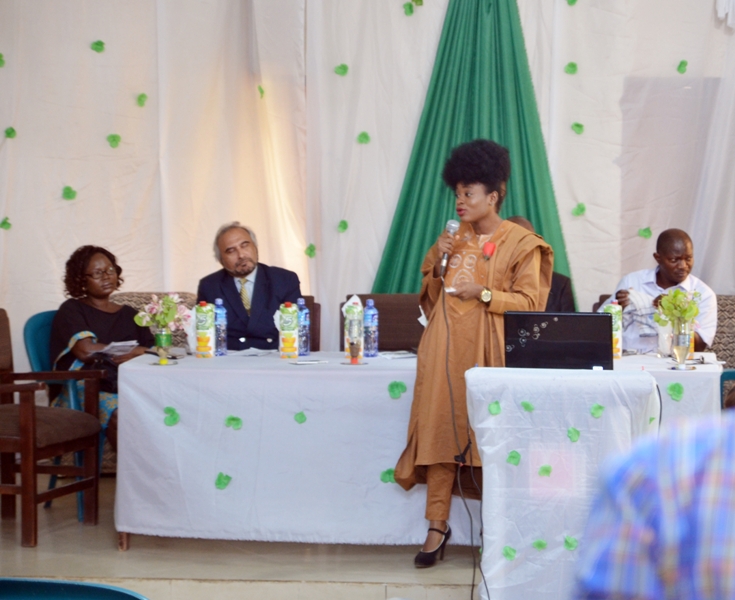
Adenike Akinsémolu, also a speaker at the the event discussed 'People, Planet, and Profit' : the idea of going green with emphasis on social entrepreneurship.
ADENIKE AKINSEMOLU DISCUSSING 'PEOPLE, PLANET AND PROFIT', THE IDEA OF GOING GREEN
The Green Campus Initiative is influencing Nigerian Universities to take on ways that would ensure environmental sustainability. The outcome of these activities by GCI is remarkable and visible.
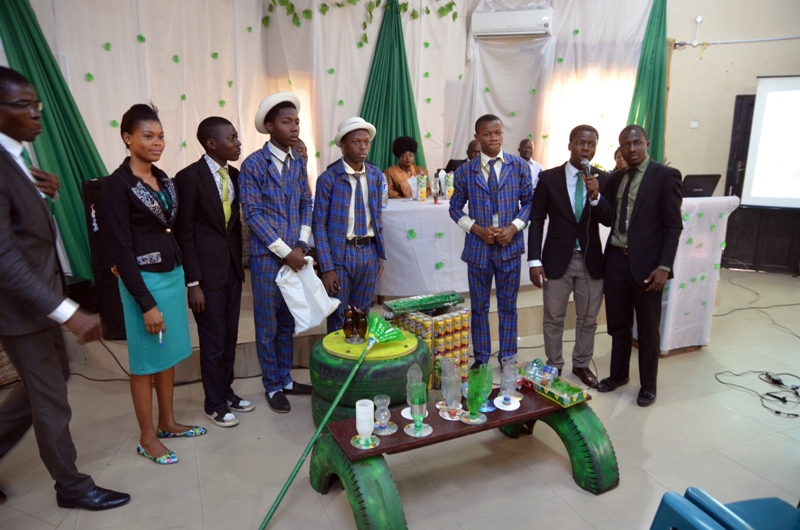
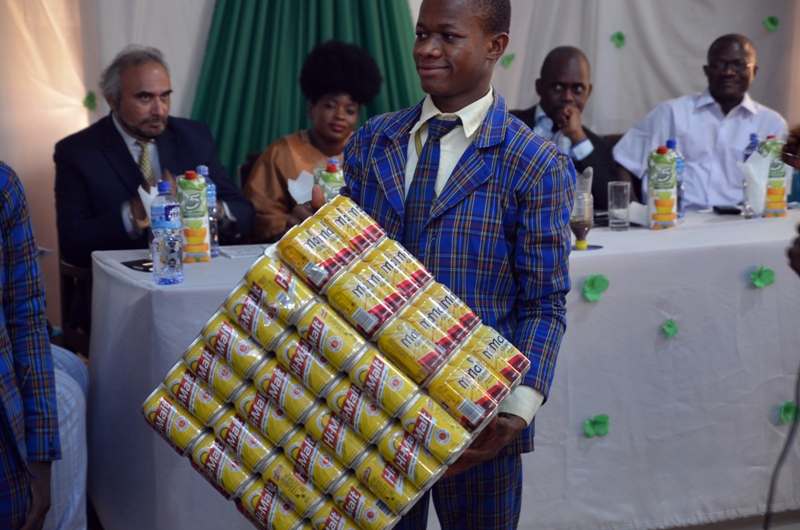
SECONDARY SCHOOL STUDENTS EXHIBITING WHAT THEY RECYCLED
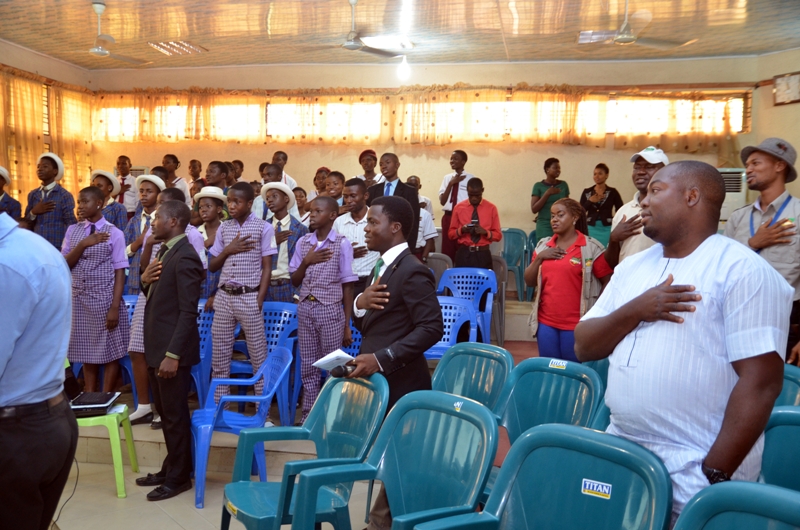
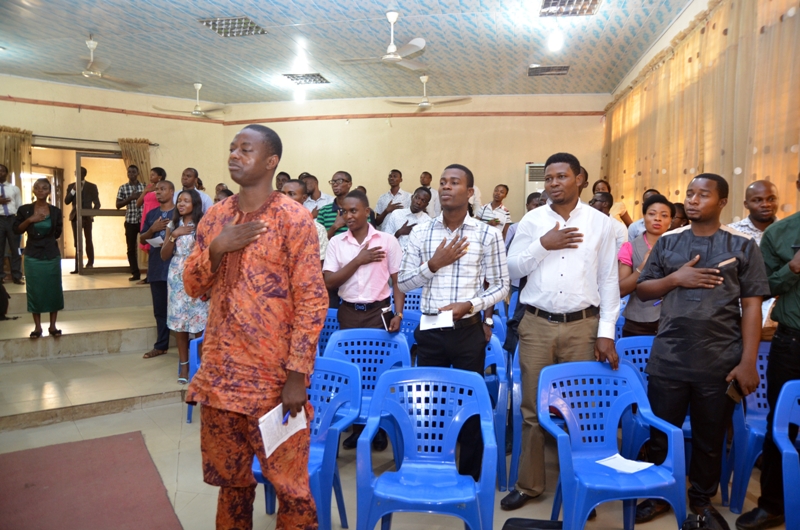
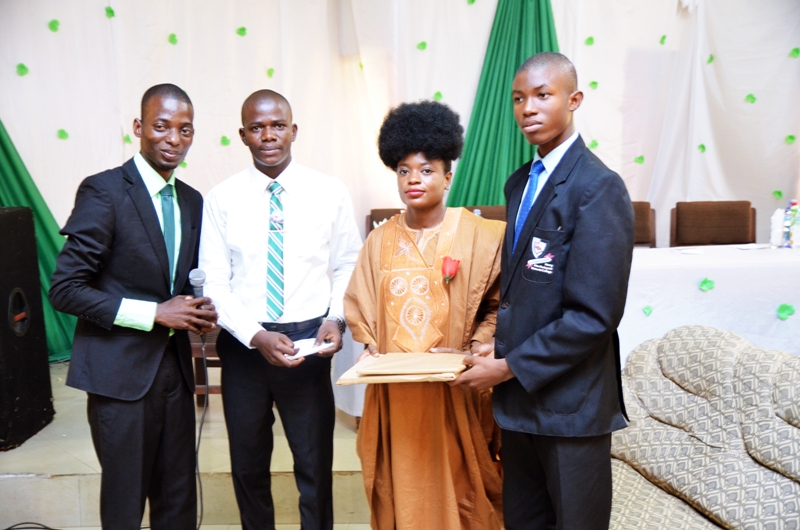
SPECIAL GUESTS TAKING THE GREEN PLEDGE
Congratulations Adenike Akinsémolu! Thank you IEES and ECOMSA.
ABOUT THE AUTHOR
Christopher Oghenekevwe Oghenechovwen , a B.Tech student of Meteorology and Climate Science (FUTA), is a decolonized African, environmentalist and ready volunteer. He is 2013 Citizenship and Leadership Certified by CLTC, Nigerian Federal Ministry of Youth Development, a 2015 UNESCO & Athabasca University student on Media and Information Literacy and Intercultural Dialogue, 2015 Senior Category Gold Winner of The Queen's Commonwealth Essay Competition, and youth correspondent at yourcommonwealth.org . His growing passions lie within the circle of Climate Action, Media and Information, IT, Youth Education and Leadership. Apart from volunteering with Earthplus, The Green Campus Initiative, and doing creative writing, Oghenekevwe loves to connect with people. Invite him for a healthy conversation via chrischovwen@gmail.com
The Green Campus Initiative V-Day: Romance With The Environment
Yes! You saw it right, R O M A N C E With The Environment. Some might be confused about the event, especially on Valentine’s Day but but let's go through this idea together. Over the years, planet earth, our home environment has not been treated kindly by the people it houses. From improper dumping to tree felling, oil spillages to bush burning, gas flarings, noise pollution, water mismanagement, and many other problems. Indeed, the environment, our home, has been abused. We have all contributed to this abuse both our large scale and small scale activities. To some, the majority of these activities are done for the economical benefit of man and hence, can not be done without. Although I agree that many of these environmentally damaging activities have benefited the economy, I do believe that there are less environmentally damaging alternatives.
In the spirit of love and Valentine’s Day, The Green Campus Initiative Team, her members and other members of society, felt it sincere and right to spend their time with, and 'romance' with the environment on February the 14th, 2016. This was done to show our love for the environment and somewhat compensate the environment for the damages caused by anthropogenic activities, in their own little way.
The day started with the Green Team and ambassadors carrying out a community service activity, during which they cleaned up their immediate environment at Adeyemi College of Education. The group was able to restore cleanliness and a bit of health. I can only guess that the environment was beaming with smiles
That was not the only part of the February 14th, Valentines Day event. Partnering with Kingdom Life International Ministry (KLIM) led by Rev. Ken Igbinedion, the ambassadors and other members of society were hosted to an evening picnic at the Adeyemi College of Education Guest House, Ondo , tagged, 'Love Affair'. With spoken word performances by Olayinka Ojo; UN Spoken Word Contest, solo drama performance by Samuel Bliss, choreography by The Chosen Choreographers, and the Green Anthem performance by the Green Ministers, the evening picnic was rich, relaxing and fun.
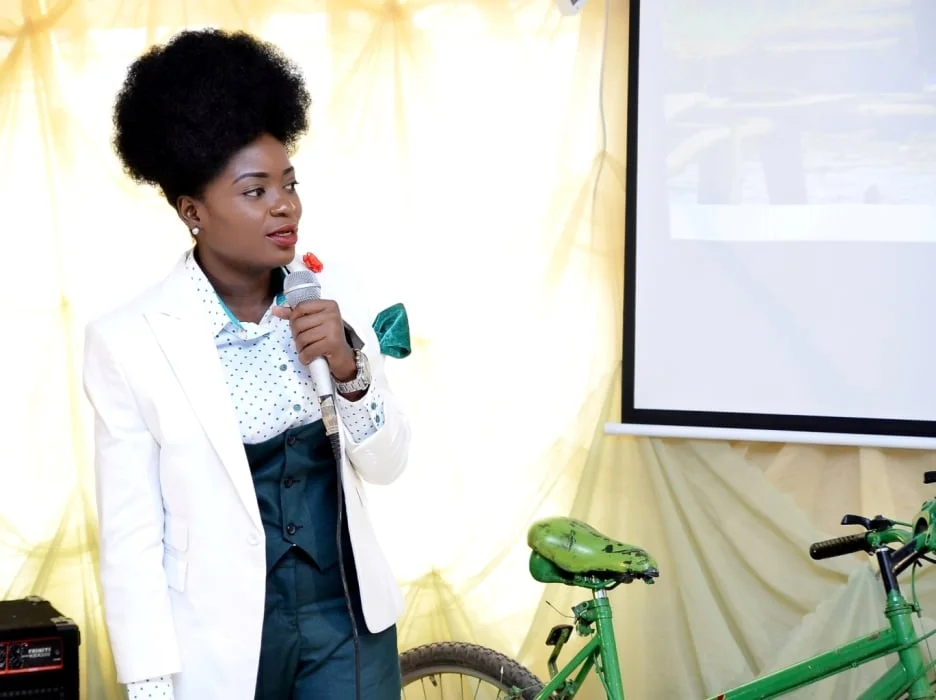
To crown the activities of the day, the Founder of the Green Campus Initiative, Adenike Akinsémolu gave a short talk, as it was not a day for monologues, about the love for environment and the love of self. A lot of important knowledge was gained from the talk including the importance of seeing every day as environment's day, conserving resources, exercising and practicing self care.
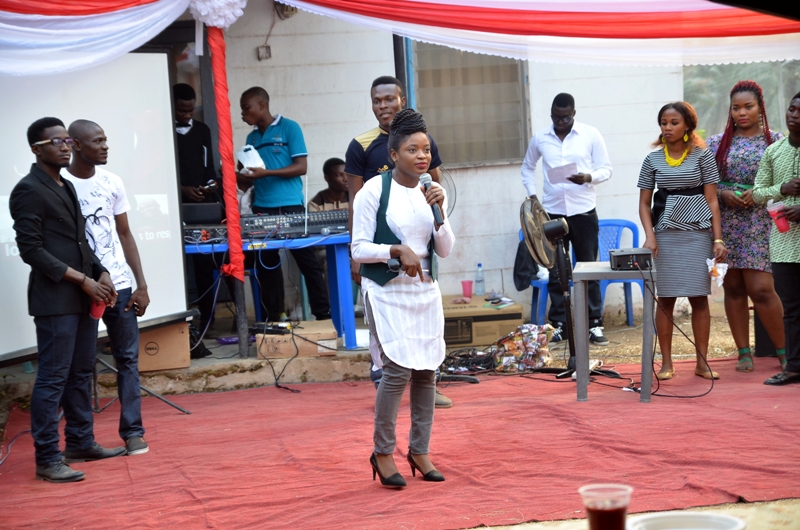
FOUNDER ADENIKE AKINSEMOLU TALKING ABOUT THE GREEN CAMPUS INITIATIVE
As usual, Green Campus Initiative events are not complete without the smiles of participants during photography sessions. Kudos GCI!
ABOUT THE AUTHOR
Christopher Oghenekevwe Oghenechovwen , a B.Tech student of Meteorology and Climate Science (FUTA), is a decolonized African, environmentalist and ready volunteer. He is 2013 Citizenship and Leadership Certified by CLTC, Nigerian Federal Ministry of Youth Development, a 2015 UNESCO & Athabasca University student on Media and Information Literacy and Intercultural Dialogue, 2015 Senior Category Gold Winner of The Queen's Commonwealth Essay Competition, and youth correspondent at yourcommonwealth.org . His growing passions lie within the circle of Climate Action, Media and Information, IT, Youth Education and Leadership. Apart from volunteering with Earthplus, The Green Campus Initiative, and doing creative writing, Oghenekevwe loves to connect with people. Invite him for a healthy conversation via chrischovwen@gmail.com
Littering and Improper Waste Disposal: To allow to continue or not?
“We have to do what we have to do, so we can do what we want to do ”
Today, I do not pen down my thoughts alone. These thoughts are joined with those of that little boy, in Ajegunle, with skin infections, that has to tread on tons of decomposing garbage on his way to school and back. My thoughts are shared with those of families in Aba living amongst massive refuse dump sites, who keep on experiencing malaria epidemic.
Truth be told, we all, you and I, should be blamed for the unpleasant situations happening to that boy, girl, or family. Many argue that it is the sole responsibility of the local or state government, to clean up the environment, to set up and enact strict environmental laws, to clear the dirt’s off the gutters, to burn all the refuse etc. However, as convincing as these ideas seem, I do not stand with them. Should the government,still work on our individual mindsets, hold our hands to put our wraps or papers in bins, teach our children not to litter, remove the empty tin from our porch, or give us ways of how we can positively influence our friends or circles that they become environmental conscious? No. These are all our duties, and if we keep on neglecting them, these unpleasant situations would start happening right in front of our doorsteps: no one or place would be safe. The most interesting thing is that we can do the little things that matter – things that will aid the actualization of a healthy environment – and leave the complex parts for government. But the first step towards this is recognizing that in us lies the fault. Recognizing our fault gives us a new strength to face our challenges.
At a young age, my mum made my siblings and I do something’s we considered plain annoying. Whenever she noticed our biscuit or sweet wraps had disappeared from our hands, she would ask us about it, and if our answers did not indicate that the wraps were in the bin, she made us look for them, so we could dispose them properly - it did not matter how far down the street the wrap was, you just had to get, and bin it. Unconsciously and slowly as I grew, I began to develop the habit of proper disposal. The government had nothing to do with what I developed.
I would love for us all to consider this question, " What is the point of our education, if we still throw garbage on the street to be ultimately picked up by an uneducated person working? "
Let us not be the first to start littering. We need to know where to throw our garbage so that we can avoid accidents or any event that will affect our health.
I agree with the words of Amina J. Mohammed, the Honourable Nigerian Minister for Environment, "There would always be dirt, the important belief I have, is that we ensure we are dirt free to the extent it does No Harm". There is no other satisfaction than having a clean environment and breathing fresh air when we practice waste disposal. Therefore, it is just right that we start doing it now and share the good news. Let us join hands against improper waste disposal, we shall not fail!
Lets Go Green!
ABOUT THE AUTHOR
Christopher Oghenekevwe Oghenechovwen , a B.Tech student of Meteorology and Climate Science (FUTA), is a decolonized African, environmentalist and ready volunteer. He is 2013 Citizenship and Leadership Certified by CLTC, Nigerian Federal Ministry of Youth Development, a 2015 UNESCO & Athabasca University student on Media and Information Literacy and Intercultural Dialogue, 2015 Senior Category Gold Winner of The Queen's Commonwealth Essay Competition, and youth correspondent at yourcommonwealth.org . His growing passions lie within the circle of Climate Action, Media and Information, IT, Youth Education and Leadership. Apart from volunteering with Earthplus, The Green Campus Initiative, and doing creative writing, Oghenekevwe loves to connect with people. Invite him for a healthy conversation via chrischovwen@gmail.com
MUST WATCH: Let's Go Green Video by The Green Ambassadors
The Green Campus Initiative (GCI) brings yet another awareness-filled, earth-inspired video titled ‘Let’s Go Green’ to the screen. The awareness campaign is produced in-house by the Founder of GCI, Adenike Akinsemolu, and directed by Olayinka Ojo - GCI Minister for Innovation and Social Entrepreneurship, and Winner of the UN Spoken Word Contest. It also features the Adeyemi College of Education GCI Ambassadors as the cast.
Staying true to the theme of the cause, the crew explored the natural environment beautifully. The lush green environment in the video lures viewers into nature’s therapeutic powers while the voices, smiles and radiating glow on the faces calms nerves. If you do not already know about Going Green, this video is a good starting point.
The lyrics are highly captivating and gets the message across: “Imagine a world where water is free and clean, where breathe is fresh and safe, where sun will smile each day…” Honestly, these words are a reminder that we need to be sensitive and mindful of our environment.
Friends, this video is a call to action for all of us. The planet is ours. We can preserve it for future generations by doing little things that matter. This is a must see video. Watch it below or on YouTube.
LYRICS
We live in a world of ordinary people
You can change things around
I can change things around
We can change things around
Never again shall out children die
of thirst and polluted air
and unclean environment
We can live a happy life
Imagine a world
where water is free and clean
When breathe is fresh and safe
hen sun will smile each day Oh!
CHORUS
Oh!! Lets Go Green
Oh!! Lets Go Green
Oh!! Lets Go Green
(Repeated Twice)
We live in a world of ordinary people
You can change things around
I can change things around
We can change things around
Green Campus Initiative features in Earth Day: Climate Action 2016
“
Time, people, events, and places conglomerate to align you with destiny…
”
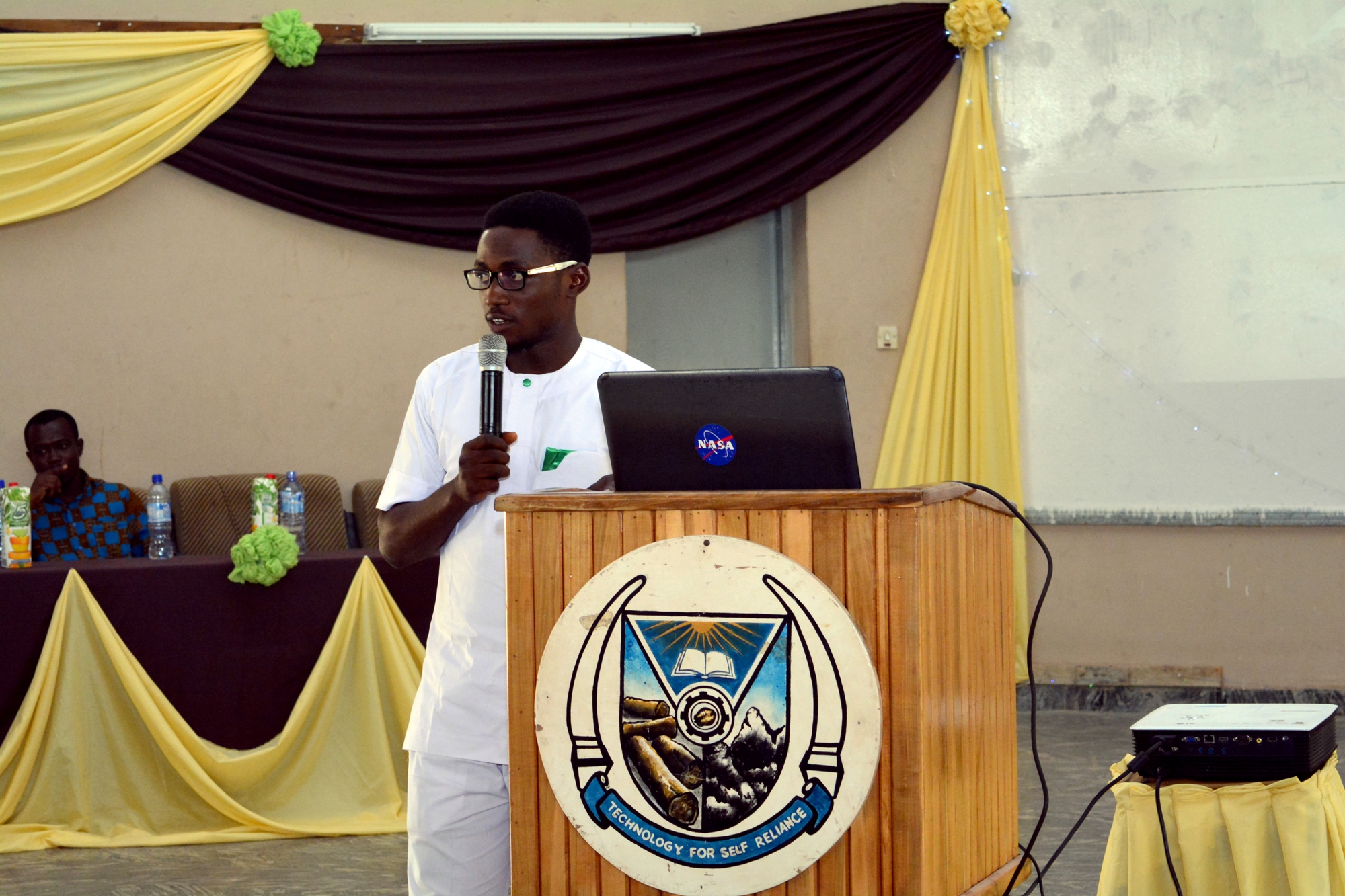
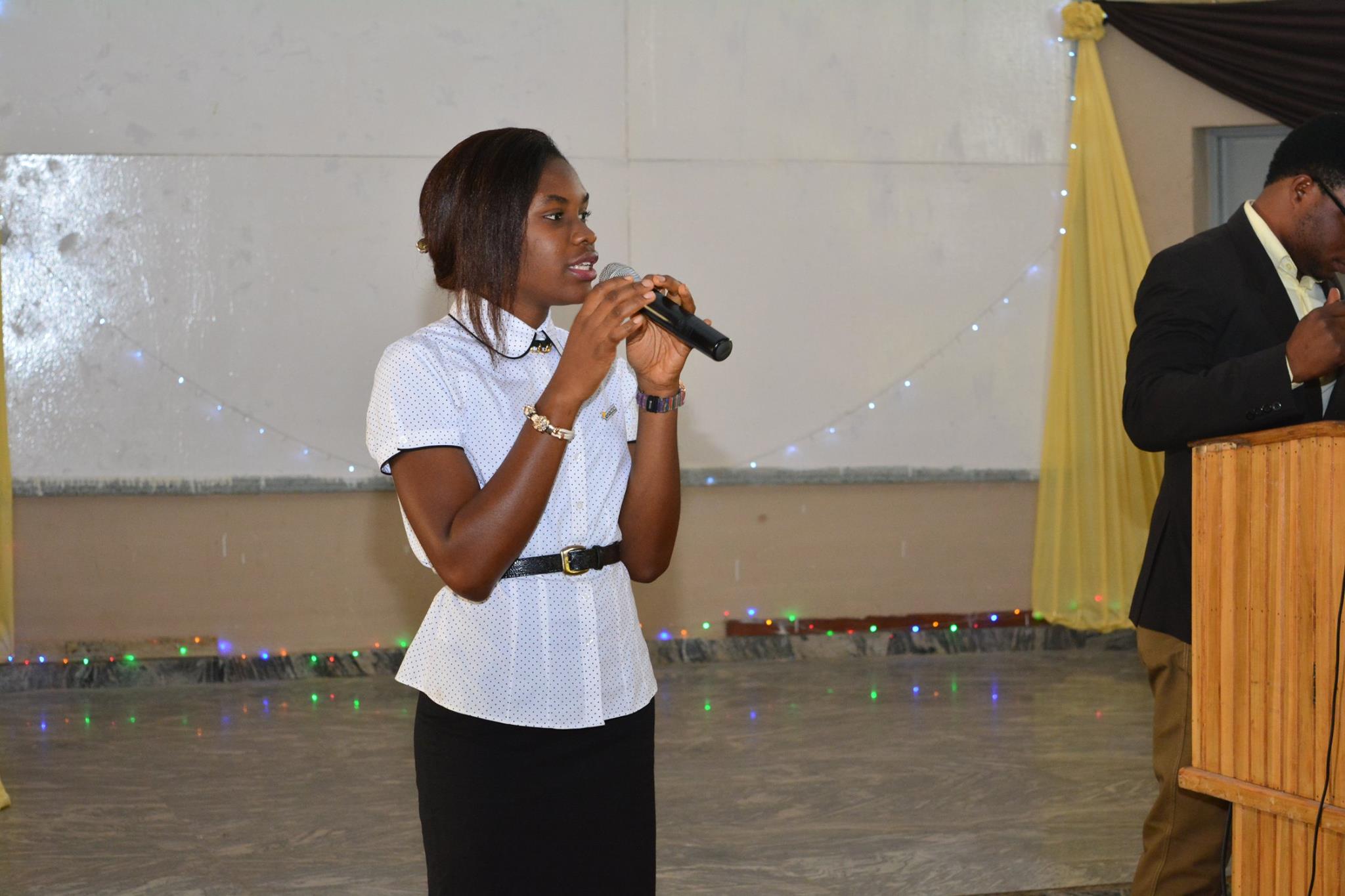
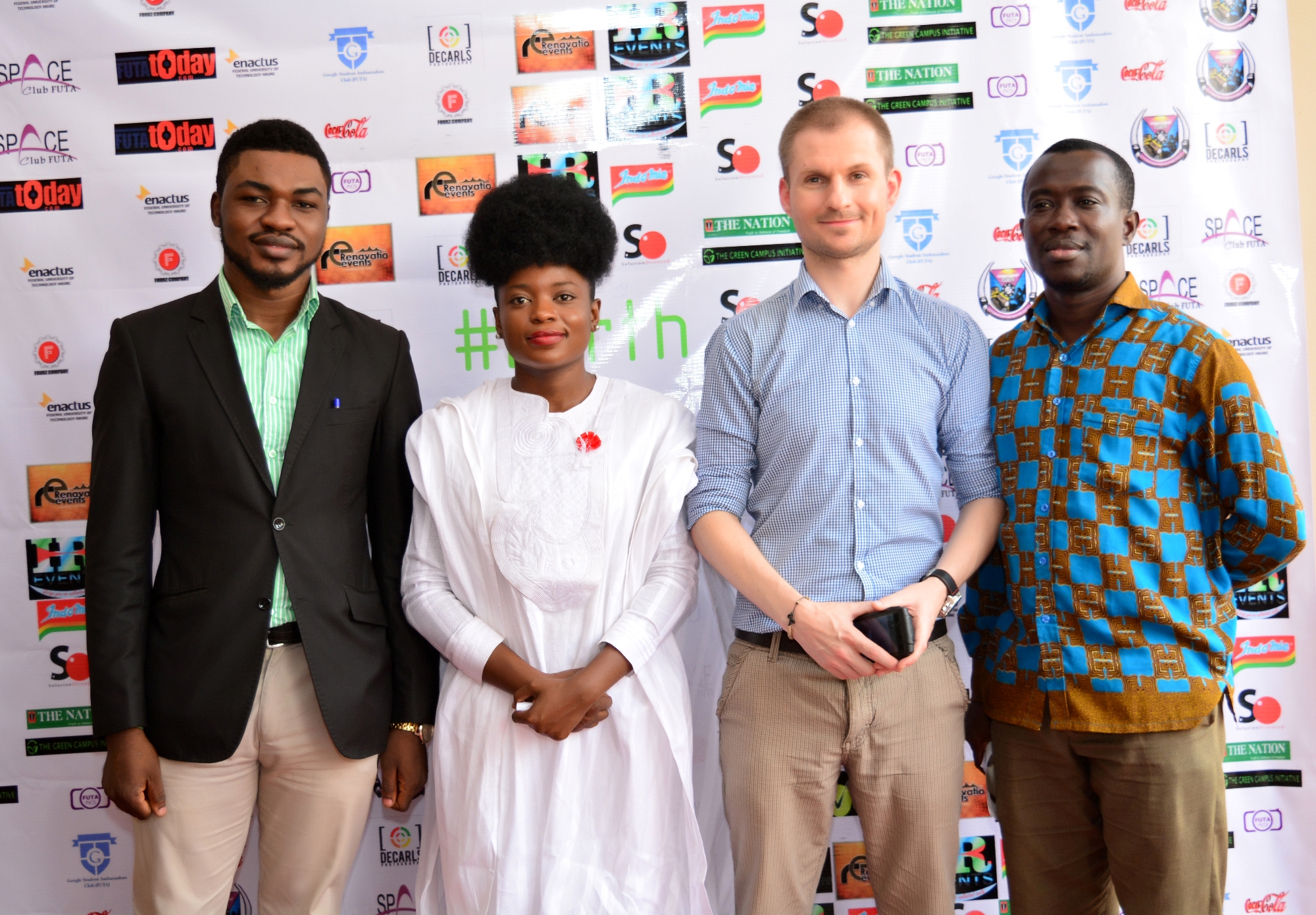
Theodore Idibiye Francis Auditorium, located at The Federal University of Technology, Akure, was ready to accommodate green minds from inside and outside of Nigeria. The warm and refreshing air, welcoming sounds, and rich blends of colours used in its interior confirmed that this would be the perfect location for Nigeria’s Earth Day celebrations. Before the event began, as a Green Campus Initiative Intern, I was able to join in the chats, banter, and healthy discussions going on among groups of lively, intelligent and energetic people. Their impressions, feelings, and comments about this stand-out climate event were positive and educative. All these people, discussions, natural and tranquil environment really helped set the mood up for what was to happen.
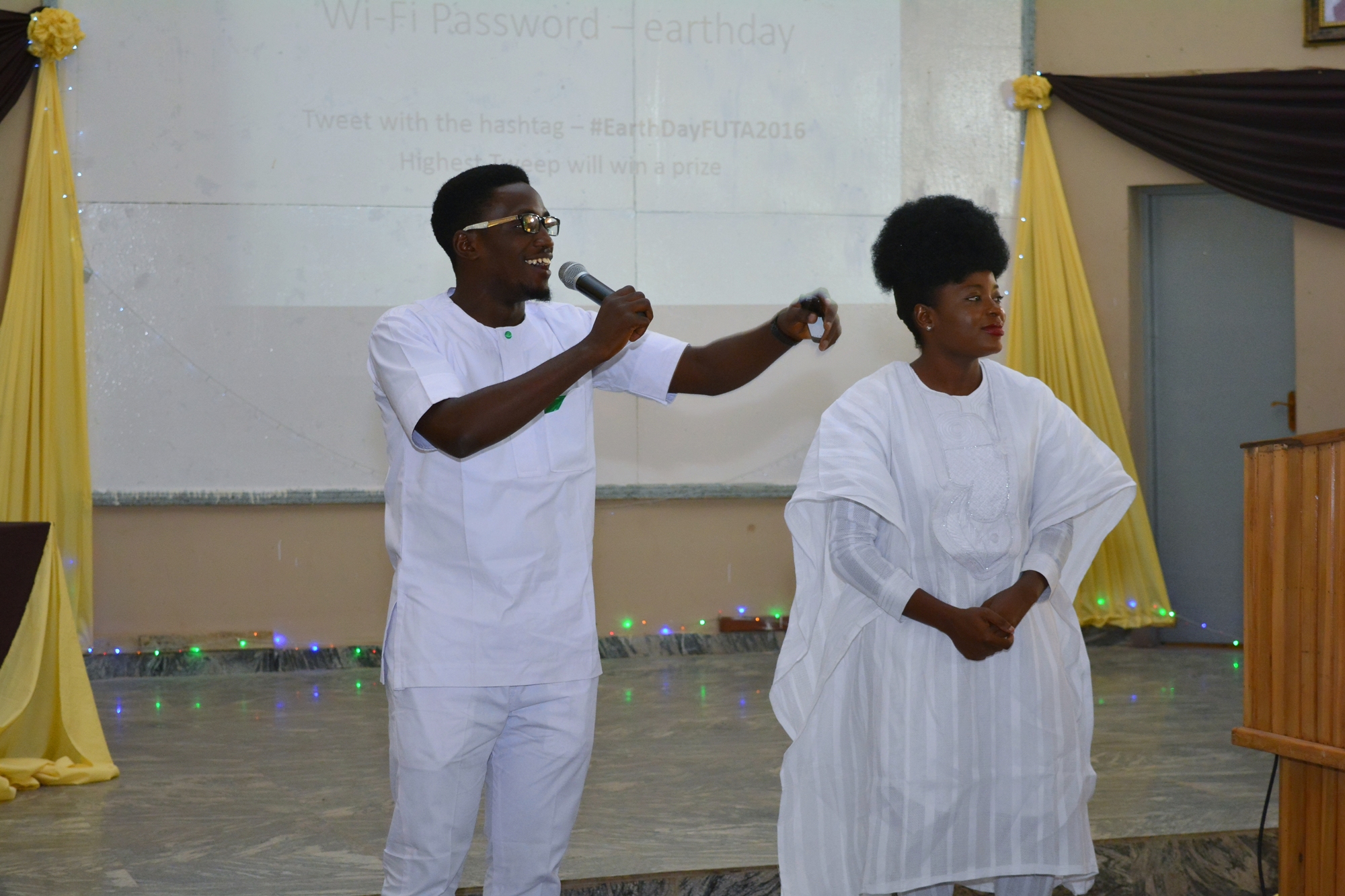
Earth Day is an annual event on which day events worldwide are held to demonstrate support for environmental protection. Founded by U.S. Senator Gaylord Nelson and first celebrated in 1970, it is now coordinated globally by the Earth Day Network, and celebrated in more than 192 countries each year. With the passage of COP21 and the release of new UN Sustainable Development Goals, climate awareness is at an all time high. In this spirit, the Space Club and ENACTUS Team of The Federal University of Technology, Akure, felt it timely to organize Earth Day: Climate Action 2016 on January the 15th, 2016. The event was aimed at promoting sustainable practices that people could adapt to protect the planet. It was also a platform for sharing ideas, exhibiting products and inventions that mitigate climate change.
What made the event special for me?
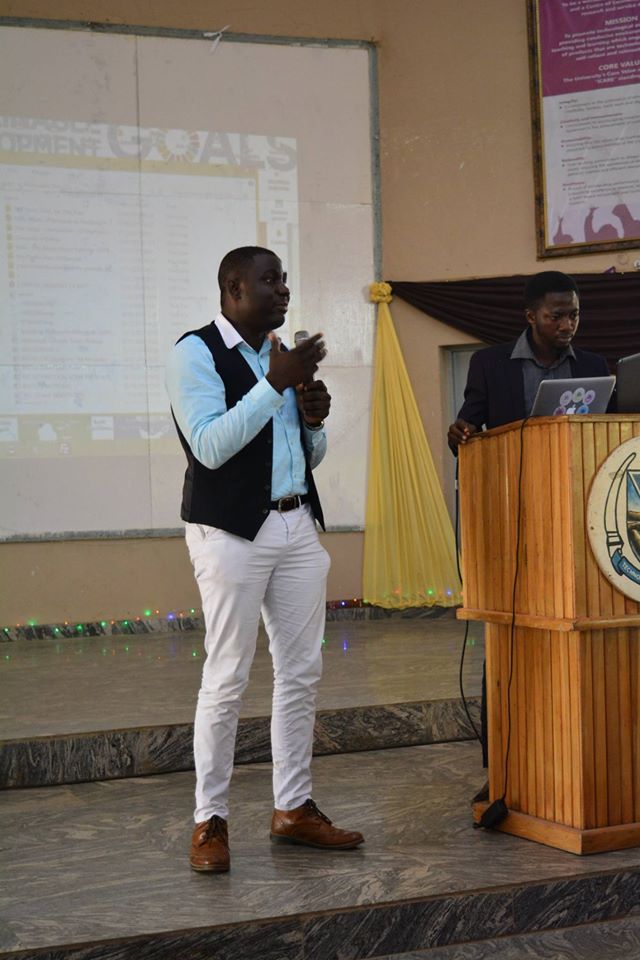
First, it was the highly educative and interactive oral presentations of the experienced lead speakers, which included Adenike Akinsemolu; the Founder of Green Campus Initiative, Toluwanimi Kolawole; a Research Associate at The University of Newcastle Upon Tyne, Prof. Ahmed Balogun; an Applied Meteorologist and the Coordinator of WASCAL (West African Science Service Center on Climate Change and Adapted Land Use).
Adenike Akinsemolu showed the audience, which comprised of primary school pupils, secondary school students, university undergraduates, and young professionals from around the region, simple and creative solutions that will help sustain earth and influence people. Some of these included: commuting green, raising eco-conscious kids, social entrepreneurship, investing in organic foods and products etc. Toluwanimi Kolawole continued the session by sharing knowledge on parts of the planet such as people, resources, and systems which are finite. He discussed the relationships between these element and, how anthropogenic activities influence the climate, and problem solving or critically thinking skills.
Also, the panel discussion and product and invention exhibition made the event special. Interesting questions were raised and discussed. One of such questions raised by a female undergraduate student of Industrial Design was on how art could be used to minimize climate change. One of the panellist, a Ghanaian and Team Lead of The Conservative; Mr Thomas Koffi Aboh emphasized that recently, art has become an important tool in reducing the effect of climate change. He went ahead and showed The Conservative eco-friendly products such as bags and caps all of which are made from local materials. Other panellists were, Olayinka Ojo; the Green Campus Initiative Minister for Innovation and Social Entrepreneurship, and also the Winner of the UN Spoken for Word Contest, Owoeye Josaiah Abolade; an Environmental Pollution PhD candidate, and Daniel Trump from the University of Edinburg.
Several teams, including The Conservative and Earthplus Africa from Obafemi Awolowo University, exhibited great ideas and products that are mitigating climate change.
Top Dignitaries of the University present at the event were the Dean of Students Affairs and First Bank Nigeria Professorial Chair in Computer Science; Prof. B. K. Alese, who also represented the Vice Chancellor of the University; Prof G. A. Daramola, the University Registrar; Dr. Mrs M. Ajayi, and Director of CESRA (Centre for Space Research and Applications), FUTA; Prof. J. O. Akinyede.
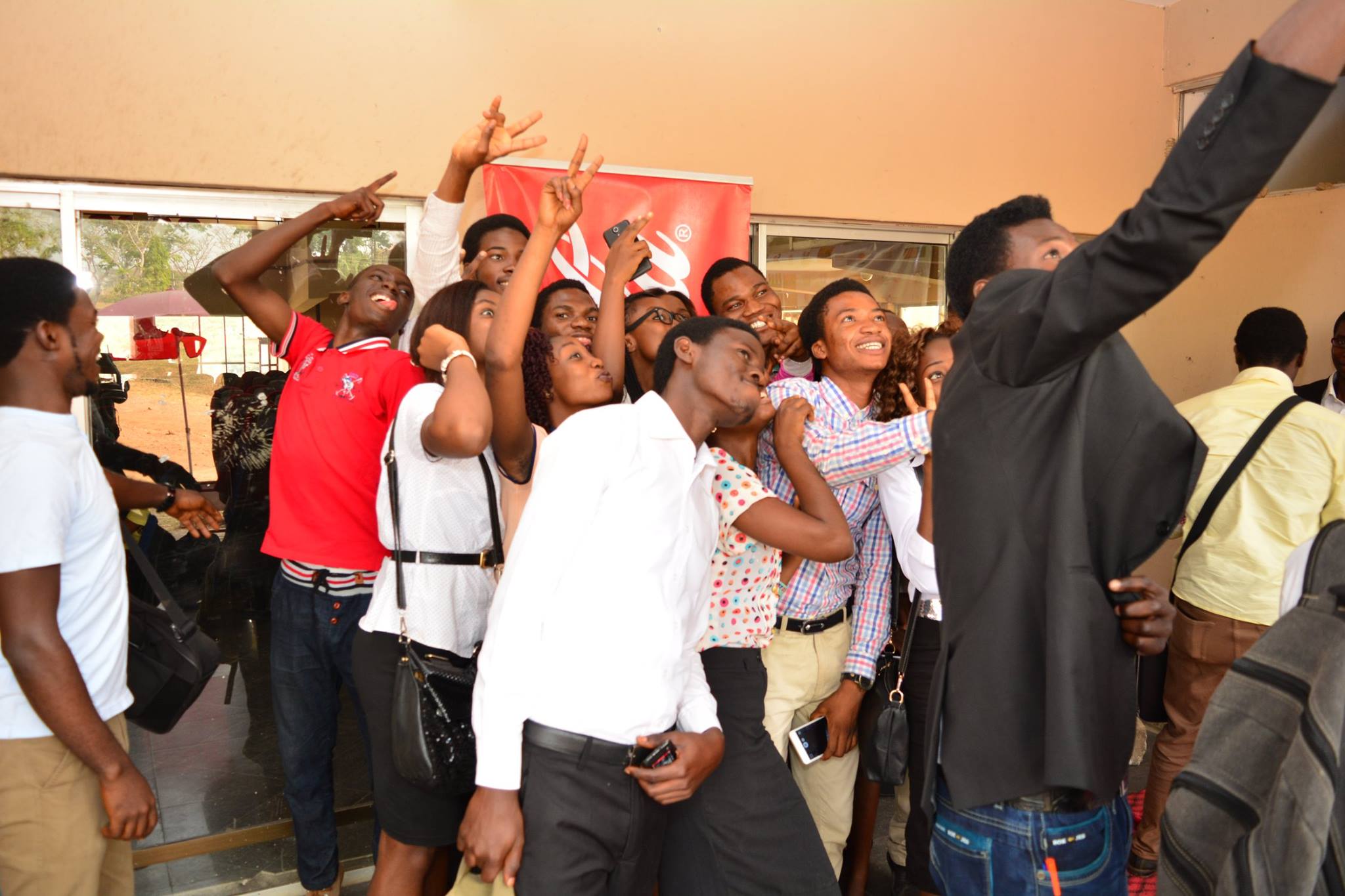
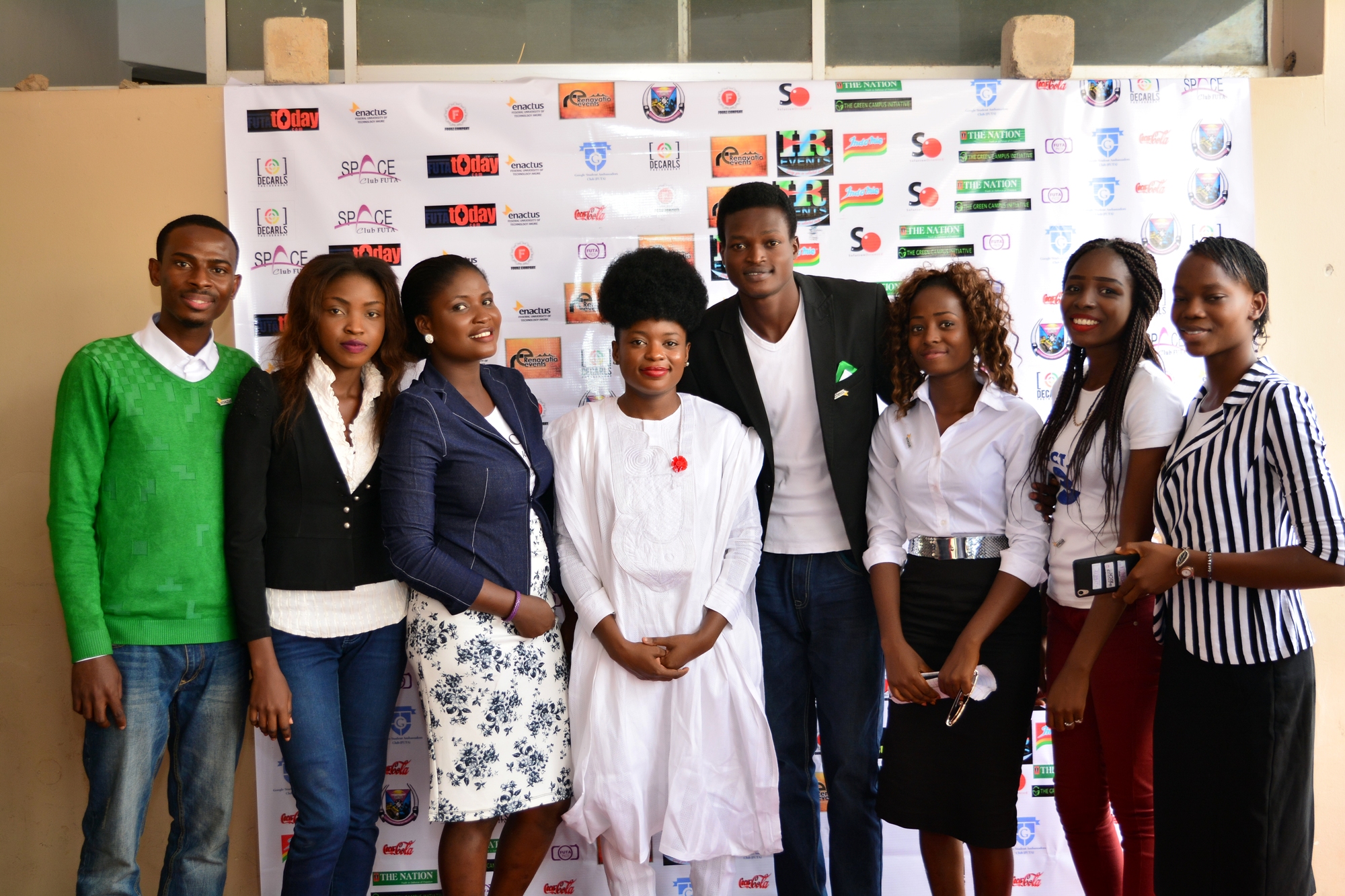
The Earth Day Event at FUTA was different from other green campaigns or activities because it did not just create awareness, but because it was a platform for sharing ideas and exhibiting various projects and innovations working to mitigate climate change. Attending this event alongside other team members from the Green Campus Initiative was worthwhile to me. The outcome has already started to be felt among other participants. This event should be held every year across campuses in Nigeria as this is a sure way of ensuring sustainability. Check out the pictures below:
ABOUT THE AUTHOR
Christopher Oghenekevwe Oghenechovwen , a B.Tech student of Meteorology and Climate Science (FUTA), is a decolonized African, environmentalist and ready volunteer. He is 2013 Citizenship and Leadership Certified by CLTC, Nigerian Federal Ministry of Youth Development, a 2015 UNESCO & Athabasca University student on Media and Information Literacy and Intercultural Dialogue, 2015 Senior Category Gold Winner of The Queen's Commonwealth Essay Competition, and youth correspondent at yourcommonwealth.org . His growing passions lie within the circle of Climate Action, Media and Information, IT, Youth Education and Leadership. Apart from volunteering with Earthplus, The Green Campus Initiative, and doing creative writing, Oghenekevwe loves to connect with people. Invite him for a healthy conversation via chrischovwen@gmail.com
Afe Babalola University Takes A Green Leap
“...Greening every campus in Nigeria, one student at a time.”
This is what The Green Campus Initiative is doing in Nigeria.
On January 22, 2016, Afe Babaola University, Ado-Ekiti (ABUAD) took steps towards becoming green, so as to promote sustainability in society. Hosting the Institute for Oil, Gas, Energy, Environment and Sustainable Development (OGEES) and The Green Campus Initiative research seminar, ABUAD has joined the league of Nigerian universities that are eco-conscious.
The theme of the research seminar was: TOWARDS CLIMATE SMART AGRICULTURE: ADAPTATION APPROACHES OF AGRICULTURAL HOUSEHOLDS AND COMMUNITIES IN EKITI STATE, NIGERIA. The session was held at the College of Law Auditorium, ABUAD. Participants included environmental law students, environmentalists, researchers, academics, and friends of the University.
The sessions and panel discussion gave the engaged audience a new perspective on the traditional theme. The insightful speaker session was led by Christinah Oyenuga, Associate Research Fellow, OGEES Institute, while the lively discussion was led by Adenike Akinsemolu, Founder of the Green Campus Initiative.
Another major highlight of the event was a courtesy visit from, the Great Aare Afe Babalola, the founder of Afe Babalola University. The stylish and jovial 87 year old educator had the Green team at his office, where they had healthy banters and interesting conversations.
Indeed, the Green Campus Initiative is spreading her wings over Nigerian university campuses!
Congratulations ABUAD! Go GCI!
Held by the Spell of Owena Lake, Ondo State
A young girl carrying a tray of fresh oranges on her head walked through the village market. A woman haggled noisily with the vegetable seller, while a young man picked some oranges from the pile that sat before a fruit seller. The small market was ubiquitously embroidered in a beautiful mosaic of colours: fresh red tomatoes and pepper piled up at different corners; bunches of unripe plantain stacked on a broad wooden plank, and heaps of ripened pawpaw and dirty-brown tubers of yam on sun-tanned sand.
It was the market day at Owena village- a settlement straddling Akure-Ilesa and Akure-Ondo expressways. Although the two busy roads are miles apart, this settlement nevertheless, had always made the same impression on every traveler-by on the roads. One could ply this road for decades and never come to the awareness of the presence of the Old Owena Dam, tucked in a forest on the outskirts of the village. A short dusty by-way through the market leads to the dam. The dam was erected about two decades ago and has been fitted with a chute-type spillway, large water pipes and a big pump. It appears to have been designed exclusively for domestic supply purposes.
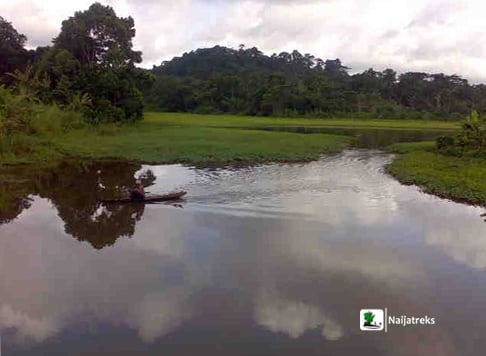
On approaching the dam premises, I quickly noticed a rapid attenuation of the cacophony from the roadside market. I walked into an old gate that leads into the dam. A structure housing a big machine sat on the left and a rigid iron bridge laid ahead of me, leading to a narrow field of bright-green elephant grasses arrogantly swaying with the gentle breeze as the field stretches into the far distance. The short iron bridge rested the dam's spill way. The beautiful Owena Lake sprawls behind the spillway like a long narrow sea of spilled oil. Verdant aquatic plants formed broad carpets on the waters. The skyline at the far end of the lake meets the earth above the undulating canopies of lush green forests, casting an unusual but awe-inspiring shadow on the tranquil waters.
A local fisherman slowly rowed his canoe at a distance while the lake glistened with a mild solar fire, capturing both the fisherman and his boat in a vague silhouette. Standing on the bridge and leaning on its railings to savor the rhapsodic aura of picturesque surrounding, I noticed schools of catfishes and Tilapias twirling happily with a sense of freedom that seemed to know no bounds. The cool breeze at the lake was satiating, engulfing me with a sensational ambiance of peace. On the other side of the bridge, where elephant grasses banked the lakeside, a man was busy cutting down an errant shrub near the water. I asked the man if tourists visit the dam, and he laughed. He said they rarely have visitors. I also asked him questions about the fishes in the lake, and he said ”there are plenty of catfishes and tilapias in this lake o! Infact, if you come when the fishermen are just returning from their daily runs on the lake, you will see plenty of our fishes”.
A visit to the lake might definitely leave one thinking why everyone in Nigeria have become so caught up in the vagaries of everyday city life that we don’t create time for adventure recreation. When admiring the lush forests on the far banks of the lake, one cannot but imagine those foreign lakeside resorts with water skis, canoes, fishing boats and wildlife water parks. This is nonetheless another bundle of economic potential, an incredible and viable investment opportunity for a keen business mind.
The noise from the village market returned as I departed the dam and approached the market, ushering me back into the world of men, away from the exhilarating and refreshing world of peace and tranquility I tasted at the shores of Owena Lake.
An Open Letter to Earth's Young People
Dear Youth,
How has the voyage on life's great sea been? I hope you have continuously learnt the lessons and kept your ship sailing after the early storms hit. More waters remain to be covered - more trends to be set. Therefore, hold on to your vigour and captain on. I am like you. I am young. I have vigour.
For a while now, sustainable development has been in the consciousness of leaders in almost all positive spheres of life, often it is on their lips, in their deeds it is also seen. This recent global action stirred me into reflection for a period. I reflected harder than I did when complex calculus problems stared up at me impatiently. Reflections on what little things you and I could do together for earth and her people with the fire in our bones, youthful values, knowledge, skills and vigour. I came up with simple Promethean ideas. These I will share with you.
Friend, I hit on the first idea on one of those days when I wasn't at a loss, when I didn't notice the unfair and imbalanced ratio between the vowels and consonants in words like 'hymn' and 'church'. Just like a perfectly designed spider web, we can connect, we can network. Yes, networking was the idea. By creating networks in our neighborhood, classes, markets etc we would exchange ideas, share and discuss or debate about the most up-to-date knowledge and technologies relating to people in our society and earth with the brightest of minds. The first network I belonged to, used WhatsApp as a platform for discussions. As simple as it was, we achieved by doing the little things that matter.
Also, you and I can support recycling. We may not have the resources for building a recycling factory but we can play parts in local ways. We can set up a small collection point in our lanes and drives for these factories with our plastic or paper labelled drums and baskets. We can gather recyclable materials with our friends. Moreover, using our Facebook and Twitter accounts we can create campaigns to promote recycling. By doing these, we fight land and air pollution, protect the environment, reduce energy consumption, amount of waste to land fills and global warming, conserve natural resources and ensure sustainable use of resources. I believe in you. You can do this. Small acts, great advantages.
It is an inarguable truth that water is life in another form. Recently, evaporation rates of water bodies have become more rapid due to global warming. Hence, water conservation is necessary as plants and humans cannot survive without it. We can preserve the planet by conserving water in the little ways possible; by not running the tap while brushing and by reducing our shower time. This is the third action plan, simple and practicable. Sounds doable? I trust your vigour.
Another thing we can do for the people and planet is to grow a tree (not plant a tree) and start thinking green. I didn't see a difference between planting and growing till I read a quote of a female Kenyan environmental activist. Wangari Maathai said, "Anybody can dig a hole and plant a tree. But make sure it survives. You have to nurture it, you have to water it, you have to keep at it until it becomes rooted so it can take care or itself. There are so many enemies of trees". You see the difference too? When we grow a 'lung of the planet', the air is purified and our people are given fresh strength.
Thinking green is being mindful of and sensitive to the natural environment in which we find ourselves daily! Everyday is Earth Day.
Lastly, we can share with and teach other people the importance of preserving the planet. We would take what we know and pass it to others. If every person we know could take one small step toward being greener, the collective effort could be phenomenal.
I believe in you. I believe in your vigour.
Yours Sincerely,
Your friend
ABOUT THE AUTHOR
Christopher Oghenekevwe Oghenechovwen , a B.Tech student of Meteorology and Climate Science (FUTA), is a decolonized African, environmentalist and ready volunteer. He is 2013 Citizenship and Leadership Certified by CLTC, Nigerian Federal Ministry of Youth Development, a 2015 UNESCO & Athabasca University student on Media and Information Literacy and Intercultural Dialogue, 2015 Senior Category Gold Winner of The Queen's Commonwealth Essay Competition, and youth correspondent at yourcommonwealth.org . His growing passions lie within the circle of Climate Action, Media and Information, IT, Youth Education and Leadership. Apart from volunteering with Earthplus, The Green Campus Initiative, and doing creative writing, Oghenekevwe loves to connect with people. Invite him for a healthy conversation via chrischovwen@gmail.com
REPOST: 2015 Green Ambassadors Training
The timing of the event could not have been more auspicious as it came on the heels of the just concluded COP 21 Climate Change Conference in Paris, France. About 150 students from various institutions of higher learning all over Nigeria gathered at the MIS building in Adeyemi College of Education, Ondo State. They were there at the behest of the Green Initiative located at the Adeyemi College of Education (ACE) for a program known as the Green Ambassadors Training (GAT) which took place on the 15th of December 2015.
Green Ambassadors Training (GAT) is an innovative initiative that is designed to train youths to adopt the “GO GREEN” ideology to enable them become agents of positive change to their community, nation and generation. The purpose of the exercise is to educate, engage and enlighten young people on what and how to GO GREEN as well as equip them with the requisite tools to practically transform their various campuses. Participants who were fortunate to be shortlisted from a pool of people that registered on the initiative’s website (www.greenthecampus.org), were subjected to intensive training on several topics of relevance by experienced speakers within and outside Nigeria.
The speakers were Prof Bryon Price from Baruch College, New York City, who talked about recycling and how it can be a steady source of income. Prince Akinwale Ojomo, the CEO Diaspora Innovation Institute, talked about social entrepreneurship using creative and innovative ideas to solve the immediate problems in the society. Mr. Kayikunmi Stefan Sogo from the University of Twente Netherlands enlightened the trainee on Renewable energy and focused on solar as an alternative source of energy serving homes and companies. He talked about his research of floating PV on the Kanji Dami. Mr Olayinka Ojo spoke on using art to promote campaign ideas and advocacy. Adenike Akinsemolu, the founder of the Green Campus Initiative elucidated on the core idea and mission of the Green Campus Initiative. According to her, “Going Green is not just about climate change, but living a healthy and happy life which implies that you do not hurt yourself, the people around you and your environment.” She also emphasized the need to raise eco-conscious kids who would be thoroughly oriented about their roles in keeping the ecosystem stable and healthy. She charged the participants to take the Green pledge and thereafter introduced the Green Ministers.
The event also featured some entertainment which included a dance display by a dance group and a performance by PDP (Purpose Driven Poets not the Peoples Democratic Party) comprising of poets Temitayo Bankole, Nifemi, Caleb, Odunayo and Succulent. They serenaded the audience with spoken word poems on the need to GO GREEN. At the end of the training, participants were appointed as GREEN AMBASSADORS and issued certificates OF GREENESS. Adenike Akinsemolu rounded off the session by telling the new ambassadors to replicate all they have learnt in their schools and communities. The newly inducted GREEN AMBASSADORS began executing their mandates by undertaking a community service round the campus. They also paid a courtesy visit to the Provost of the college and the number one green ambassador, Prof. Olukoya Ogen whose support for the Initiative has been extraordinary to say the least. He received them warmly and charged them to be good ambassadors of the program.
The Green Ambassadors Training is a laudable initiative that should be promoted and replicated in other parts of Nigeria and Countries in Africa as the world transitions into a new paradigm of sustainability, through the adoption Green Ideologies and technologies. Other institutions should borrow a leaf from Adeyemi College of Education (ACE) under the leadership of the amiable Professor Olukoya Ogen who has demonstrated visionary leadership in endorsing and assisting the initiative. Government MDA’s (Ministries, Departments and Agencies) at all levels, Individuals, International Organizations and corporate entities should support the Green Campus Initiative because it needs all the help it can get at this point in time. The Green Campus Initiative is an idea whose time has come thereby all hands must be on deck to ensure that the initiative transcends ACE by embarking on the training of more Green Ambassadors next year.
Written by Wajim Yakubu Nuhu via Sahara Reporters
ShopNig.com Launches at the Green Centre
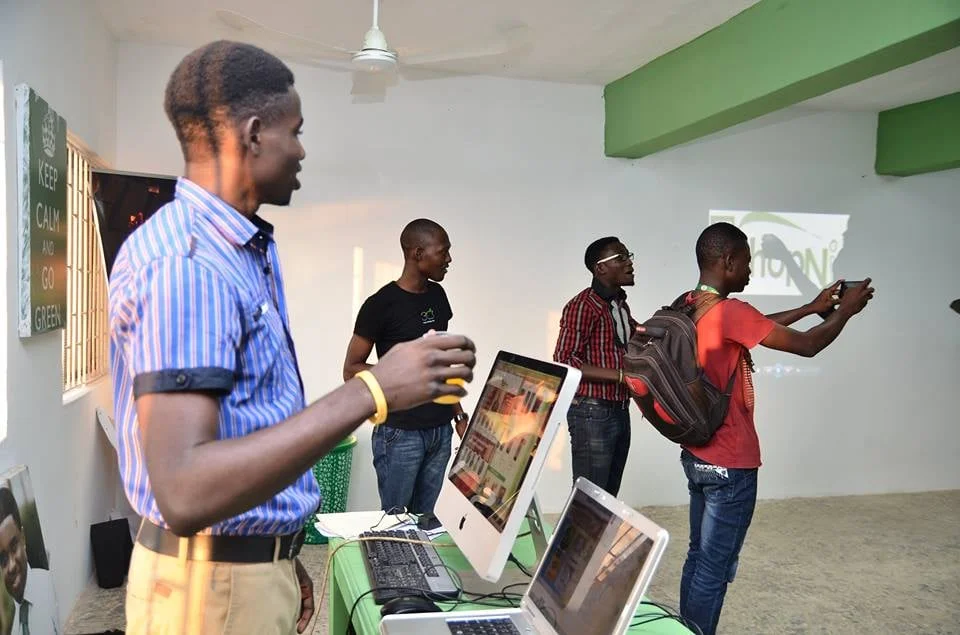
Green Ambassador, Aiyesoro Samuel launched ShopNig.com and ShopAdeyemi.com at the Green Centre on Dec 1st 2015. ShopNig.com offers a paperless, hassle-free online shopping destination in Ondo state and its environ. It is an innovative idea to complement the paperless policy of the New Nigeria, and reaffirm our commitment to environmental sustainability in campus communities.
The site is easy to use and with flexible payment options like cash on delivery. There is a large selection of electronics, mobile phones, computers, fashion, beauty products,books and a whole lot more. The system is effective and customers get their goods in less than 24 hours of placing order. Delivery is absolutely free within Adeyemi Community.
ShopNig.com is under the social entrepreneurship division of the Green Institute. We encourage social entrepreneurship as a way of promoting sustainable development. The Green Center offers a place for budding entrepreneurs to gather and innovate for social change. It is worthy to note that ShopNig.com, the umbrella company is the first online mall in Ondo state.
Check out pictures from the launch below:
Know Your Heritage: The Hidden Ancient Irefin Palace, Ibadan, and its Vernacular Architecture
Ingenuity and wisdom, speaks the creative works of art which were wrought by the aged hands of our ancestors. These can be seen in the way they designed and built their houses and palaces in the days of old. These relics lie strewn across our fast growing cities in Nigeria; we walk and drive past them every and pay little or no attention to them. These works have more to teach us about our values and history as a people and as a nation than even the much diluted present-day media.
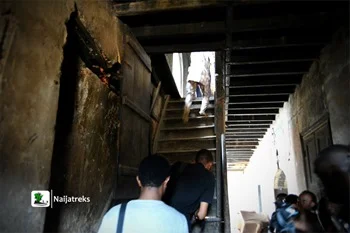
Here is an ancient palace, said to be over 200years old, was built with mud and timber (wood), and yet still standing strong on the soils of Ibadan city, southwest Nigeria. This palace is located in the tropical rainforest region of Nigeria, enduring over two centuries of countless rainfall and sunshine, and has not collapsed. This palace is definitely a unique cultural, scientific and historical object we must do all we can to preserve.
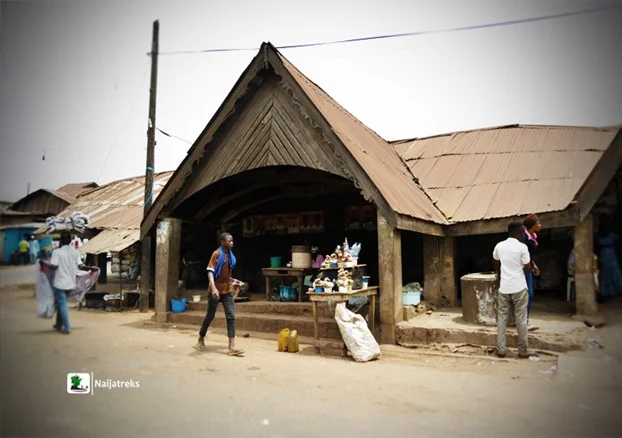
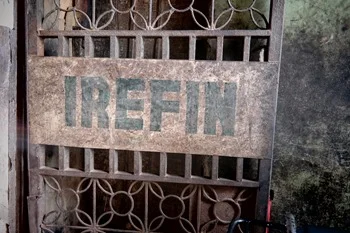
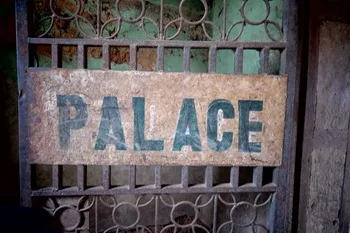
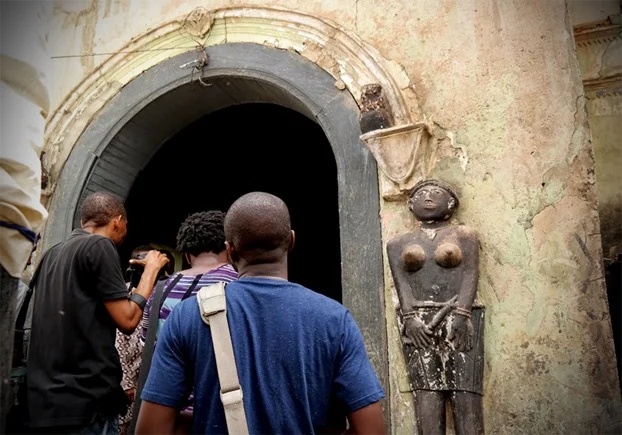
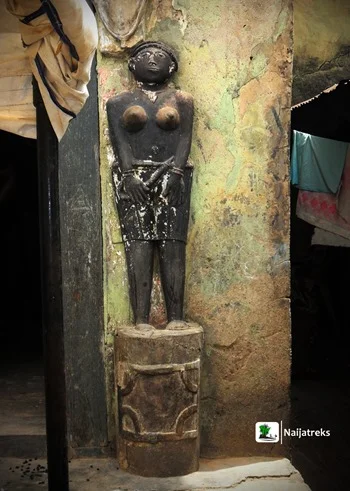
The Irefin palace belongs to one of the Royal families of Ibadan.The Irefin clans were warriors in the days of old who settled in the Ibadan area known then as a resting settlement for travelers. The palace was the abode of a powerful chief in Ibadan enclave, called “Ba’ale Irefin”, who ruled from 1912-1914. Preserved at the ancient palace are ancient diaries showing old records of events that took place at the Erefin Palace in the olden days. Among the numerous rooms in the palace are the clan’s ‘spiritual powerhouse’ and the judgment room where misunderstandings within the clan are resolved or punishment meted out to the iniquitous. It is worthy of note to mention here that a part of the palace was used in the popular old Nollywood movie Saworoide. It is however sad to know that the palace, although still occupied by the Irefin clan, is not treated as a historical object of great worth. The environment is dirty and not well taken care of, as dirt litter the floors and corners, and smokes from cooking fire places staining the old walls and roofs with sooth. See photos of Naijatreks' recent visit to the ancient palace here.
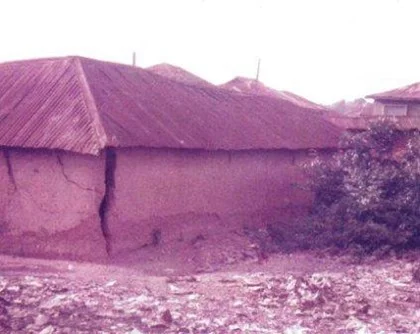
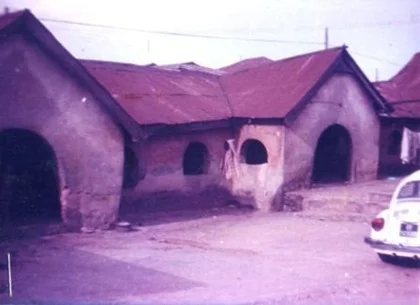
Some old photos of the Irefin Palace taken in 1985 show that at some point between 1985 and now, some parts of the palace was redesigned/reconstructed as it looks a little bit different.
Article Source: Naijatreks Travel Blog
Image Credits: Naijatreks and Berry Dakara