THE GREEN ROOM (Episode 3): Omoyele Sowore on Environmental Activism and Sustainable Development

GREEN ROOM: LIVE WEBINAR TRANSCRIPT

Enjoy the videos and music you love, upload original content, and share it all with friends, family, and the world on YouTube.

Summary of the Discussion

“I am a firm believer of direct action” These were the words of human and environmental rights activist, Omoyele Sowore featured in the latest episode of The Green Room. This month’s episode centered on Environmental Activism and Its Role towards Achieving Sustainable Development: LESSONS FROM KEN SARO-WIWA. With striking quotations and real-time analysis made by the former and future aspiring Nigerian presidential candidate, Sowore gave a descriptive account of activism in Nigeria. He narrated historical antecedents as he acknowledged the efforts of late Nigerian activist Ken Saro-Wiwa and his (Sowore’s) 30-year struggle with the Nigerian government.

DOWNLOAD full transcript

LISTEN TO PODCAST


ABOUT THE SPEAKER

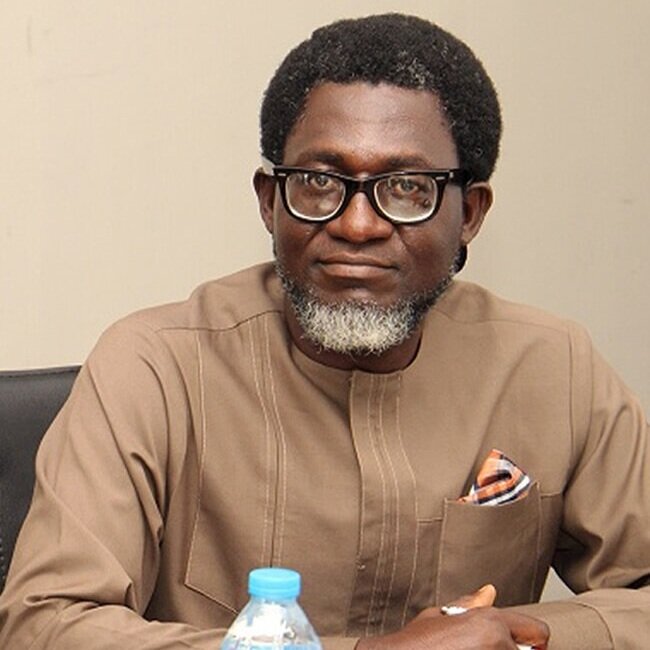
Omoyele Sowore is a Nigerian human rights activist, pro-democracy campaigner, writer, blogger, lecturer, as well as the founder of Sahara Reporters – an online news agency. Sowore was also a Presidential candidate in the just concluded 2019 Nig…

Omoyele Sowore is a Nigerian human rights activist, pro-democracy campaigner, writer, blogger, lecturer, as well as the founder of Sahara Reporters – an online news agency. Sowore was also a Presidential candidate in the just concluded 2019 Nigeria Presidential election, under the African Action Congress (AAC).

Read full bio

ABOUT THE MODERATOR

Olukoya Obafemi is an architect with many years of professional practice in architecture and construction. He obtained his PhD in architectural heritage conservation from Brandenburg Technical University, Germany. He is the Founder of Olukoya Obafem…

Olukoya Obafemi is an architect with many years of professional practice in architecture and construction. He obtained his PhD in architectural heritage conservation from Brandenburg Technical University, Germany. He is the Founder of Olukoya Obafemi & Associates and Vernacular Solutions Network (VAN).

read full bio

Q & A

Obafemi Olukoya: Environmental activism has had a very great success worldwide (I think we both agree on this). It has influenced government policies and is even happening in the process. On the other hand if we look at our country Nigeria, environmental activist have not received the type of attention that their colleagues in international communities are receiving. What the situation in Nigeria is all sort of participating, harassment, confiscation of properties and all that. So what, where do you think we got it from and how do you think we can move forward.

Omoyele Sowore: You know when Ken Saro-Wiwa was speaking to environmental issues in the country, the military did not allow that to percolate, he was seen more as some trouble maker who wanted to stop Nigeria for making profit from so-called God giving crude deposits. That was how Ken Saro-Wiwa was presented to the public and also Ken Saro-Wiwa's situation was complicated by The Biafran War because he wasn't on the side of Biafrans when the Biafran war was happening. He had a lot of opposition. I remember this heartbreaking situation that the day he was killed, there was a rally in Port Harcourt and I know it was sponsored but to even find out that it could be anybody in Nigeria, a thousand people or more who celebrated his killing and it was heartbreaking for me. (I was in NYSC then). So he was never forgiven for allegedly his role in opposing the creation of the Biafran nation, and because it was on the side of Nigerian troops or forces and he became one of the youngest Commissioners, Commissioner of education in Rivers State at the age of 28. So he's a prolific writer, a publisher and he created a show known as Basi and company that so far in the history of the Nigeria television Authority had the highest number of viewers, he was a business man too, he was doing business, he was into produce business. He had a big grocery store in Port Harcourt. All his kids were living abroad and going to school abroad. But what I'm trying to say to you here, If you haven't lost me and I haven't lost you is that ten was only the beginning, but he was in recent time the most prolific Fighter for environmental rights, and he opened the eyes of both the enlightened and unenlightened people in Niger Delta Region to the fact that resources belong to them and came out with facts and figures and internationalize the campaign for what the profit these companies were making and what members of the environment was asking from the onset Is that they should pay back to Nigeria's Niger Delta region where they had lost to oil exploration. And he was able to prove, it he had videos and shell participated as it was later revoked in aiding Nigerian government to kill Ken Saro-Wiwa and the Ogoni's who we're involved in the struggle for environmental salvation in Niger Delta region, lt is something that I think someday we will have a chance to review, bring to vocal those who were responsible for the atrocious killing of Ken Saro-Wiwa. Yes.

Obafemi Olukoya: Yes, thank you very much for offering this very important insight. Given the circumstances and peculiarity of Ken Saro-Wiwa, for example there we're divers allegations under the names which are castigated (for example his role in civil war and all of that).

Let's assume this was the peculiar circumstances of Ken Saro-Wiwa, but from 1995-2020, in Nigeria nothing has changed. So even environmental activist without such role, peculiarity or such circumstances still get similarly treated maybe not to the point of being owned but still get this kind of harassment and do not get this kind of attention and accolades their international colleagues do get. Where did we get it wrong? How do we change this status scope? So to encourage prosperity, have role because at the moment I don't think any young Nigerian want to be an environmental activist, given what is happening. You get the point?

Omoyele Sowore: There is no young Nigerian that would want to be an activism in this period because Environmental rights, Local Education activist, anything student activism. Nobody wants to be because this is very dangerous Venture. The system is very vicious when it comes to the way they react to activists, so we don't have to blame anybody when they say that. What has happened is that when you want to fight an environmental rights fight, if you have a person who is siding with your enemies then it’s dangerous. In other countries, even in the US, we have the EPA, they are very Independence, they issue policies, fine companies, sue companies who violates environmental rights. In Nigeria, the Environmental Protection Agencies are working for the violators of the environment. So the Nigerian Army, Police could easily be brought or hired to go and to enter an helicopter hired by Shell to go and shoot the villagers.  Infact, Shell has its own police at a point and they call them Shell Police and they don't even hide it, they pay them special salaries, they are the ones who buy weapons for them and arm them, so when you have that, is like double tragedy for you, because now you don't have any independent agency of government that is evenly willing to corrobate and fight on the side of people who are fighting for the dignity of the environment. They are fighting against you and that's what they did to Ken Saro-Wiwa and that's what they always did. So that's the reason why you saw that in Niger Delta Region people lost trust in peaceful agitation and started armed interacting against the government, but unfortunately the armed militants who fought for the environment they themselves ended up becoming very oppressive, they are out of the system. They're billionaires now and they of course at some point are engaging in environmental degradation through legal pipeline activities in their own illegal refineries because they breaking up this pipelines, they are doing more damage to the environment than you can ever imagine. So but that is their only way of getting a part of what you think they are entitled to. So, every other agency that has been created since 1995 or even before then were not created to deal with the environment but were created to make more money from the Niger Delta Region. And that means that you lose the environment. You see how because of acid rain in Niger Delta region, the Atlantic Ocean is destroying Villages because the more of these exploration you carry out, the more you tamper with the environment and then lack of power as someone was commenting, which I was gonna say you have people breathing in sooths, you sleep at night and the whole of your nostril is blocked over night and the level of cancerous diseases in Niger Delta region is way higher and resolving in any other sickness.

Obafemi Olukoya: Okay, thank you very much again for your insight to that specific question. So we would be moving now to question two which is that Ken Saro-Wiwa (which is our subject of discussion of course)  stood in opposition to the massive pollution emitted at the Royal-dutch Oil Company in Ogoni land (which you have explained to us very comprehensively). At this specific moment can you say that government have continued his legacy? But let me stop right here, does the government infact accept that Ken Saro-Wiwa has a legacy? That is question number 1

Omoyele Sowore: No, they do not, that's the interesting part.

Obafemi Olukoya: So if they do accept that he has a legacy, what have they done to ensure that his legacy is occasionalised through the regulation of oil companies to reduce the continued pollution and all of that? So we are told now that his legacy is not being accepted, what are the obstacles, reasons that you can give us.

Omoyele Sowore: To accept the legacy of Ken Saro-Wiwa, first the country owes history a duty to investigate who and who were responsible for killing Ken Saro-Wiwa and what were the conspiracies behind the Oil Company site or the multinationals. You know, there are paper trails, who were the persons who carried out the handling? To let you know that they're not interested, the judge, Ibrahim Auta who sentenced him to death unjustly eventually became the Chief Judge of the federal high court of Nigeria, the prosecutor who helped prosecute Ken Saro-Wiwa eventually became the President of the Nigeria Bar Association. These are recent history, one of the judge Advocates who was on the panel that killed him is currently the director general of customs in Nigeria, Hameed Ibrahim Ali.  So all of them had social promotions, they are still in the system. So if this happens in any sane country, those guys are supposed to be in jail or answering to some kind of sanction for what they did or be made to at least explain how they all ended up in the scheme or someone driving all of that process. But what did we do in Nigeria? Everybody who participated in the crime, they're doing very well except Ken Saro-Wiwa and his family. And you probably heard that his body has never been really found because they said they poured acid on him (I can't confirm that) after he was gone. Three of his kids have died since this thing started, you know his son who came to work with the Nigerian government at that time died I think two years ago. One of his son died of COVID this year. His 13 year old boy died when he started the activism and so Ken Saro-Wiwa lost pretty much everything but the Nigeria State didn't lose anything, the people who killed him didn't lose anything, they are doing well in the system. So that's what is wrong. His legacy is also declinable for Ogoni land even though the United Nation has come and said the Ogoni land needs total clean up. Till today, they have not. In fact, they are saying that three days ago that they re-awarded the contract again for the cleanup of Ogoni Land. You know, the Army, the police, the press system is still going after the little activism that is left in Ogoni Land. They are still there actively hunting down activists in the area. So, what Legacy are we talking about? The only legacy he left is in the minds of people around the world who appreciate what he did not the Nigerian government that I know of. There's still no Ken Saro-Wiwa University or Ken Saro-Wiwa highway or Ken Saro-Wiwa streets in Abuja, all the street in Abuja are named after the criminals who looted Nigeria, Babaginda, Obasanjo, Buhari, Dongoyaro, all these criminals they are the ones who have barracks, theaters and all kinds of public buildings named after them as we speak. So Nigeria must reached that point as well that the Black Lives Matter has ignited all over the world, the slave masters and their status are being toppled. The status of the oppressors and the destroyers and the robbers who put Nigeria in the condition it is today, but nothing like that is happening yet. So it feels like we have to start the fight all over again.

Obafemi Olukoya: I think I absolutely agree with your point especially if everybody that was involved got all sort of promotion, are still in power and they're still perpetuating all sort of evils through their diverse rounds, such is a very sad situation. As a matter of fact, the sort of situation Ken Saro-Wiwa actually stood against has actually multiplied today. I totally agree with you that there's no legacy in the situation right here. Before we proceed to the next question on my list, I will like to take one question from the Green Institute and one of the question says that Environmental activism and the SDGs, what is the way forward?

Omoyele Sowore: For those of us who know about this SDGs, international Policies for Local Development or International Development, we just laugh when we hear that there is an office of the SDG in Nigeria. Any SDG office or any office that is created in Nigeria to further this International policies are just another way of wasting money.  If you hear about SDG now, next time you'll hear about the UN they will be in New York annual jamboree and they would bring some 500 people with computers. So I don't really pay too much attention to when I hear this high ferreting buzzword, SDGs, Millennium Development, all kinds of buzz words that are used to confuse people here because we don't pay attention to them, we don't believe in them and we just create offices so that we tick all the boxes at the UN and oh, yeah, we have an SDG office, that's our SDG officer and they repeat the same thing everywhere they go to. But on the ground here, we have nothing to show that we're meeting any of the conditionality for the SDGs that the UN had to put in place. So because they come with performance indices and measures, so we just can't find that we are meeting any of those here. So but when it comes to the flamboyance of presence at the SDGs conferences, I'll tell you that Nigerians are doing a very good job for they wear the nicest suit, headgear and probably talk the longest, but on the ground here, there's nothing to show for it.

Obafemi Olukoya: Oh yeah, thank you very much for the logistic and very interesting summary of the situation. But coming from the point of view that I'm an optimist and I follow the SDGs programs in Nigeria, I can say that Nigeria is not exactly doing so bad. For example, Kaduna was able to submit the progress report on how it has been able to domesticated it so far and we have quite a lot of civil society in Nigeria that are trying their best to ensure this is making progress.

Omoyele Sowore: Let me just say this here, so Sustainable Development goals are not things for Twitter, it’s not glittering things. Yesterday I was reading on Sahara Reporters which is a paper I founded (I haven't been active there for a while), one of the worst school in Nigeria is in Kaduna State (which Kaduna are we talking about?). It's easy for Erufai as he likes to do, to grandstand by paving in a few rules for metropolis and to magnify it, you get some very good photography, get a lot of influencers to treat it but what about the schools we're talking about that have no rules, are they not part of the Sustainable Development Goals? They are. So the problem with our NGO is that they don't go beyond cities, they are all covering the cities, attending conferences and some of those conferences are guided. When we talk about the SDGs, it's not about air conditioned conference calls, it’s about everywhere. If I'm giving you an example (which I can send to you if you want) of a Secondary school in Kaduna State that has no roof and not enough teachers. Why are we using Erufai as an example of someone who's meeting SDGs, NLT goals. You said that you're an optimist, but it’s very difficult to live in Nigeria and be optimistic. Most of us are still hoping for the best but we keep getting worse.

Obafemi Olukoya: All right, I absolutely agree with your stance. Again I will talk from the point of view of an optimist, maybe we are not where we are not meant to be but at least there is awareness and a few steps are already take. So, we have now, Ryan in the room. Ryan Thompson, welcome and he also has some question for you.

Omoyele Sowore: I can see some of the questions at the right side of the screen. Welcome Ryan.

Obafemi Olukoya: Okay, very good. So Ryan please feel free to direct your questions now to Mr Sowore.

Ryan Thompson: Sure, I am familiar with a lot of activities in Nigeria, just wanted to hear from you what kind of areas have you seen progress in achieving some of the Environmental and Social goals? And what are the kinds of efforts that do prove to be successful?

Omoyele Sowore: I have seen a lot of things on paper, all kinds of things in paper, I just haven't seen them implemented, because when we're talking about these issues we can't divorce them from the issues that as they are before that they became prominent and became internationalized. So yes, I know that’s Nigeria has on paper a lot of things about why they don't want to address environmental issues. But I'm still telling you that they have not done anything that I know of that can meet the conditions that will make me announce to you gladly here that Oh, yes, we are doing so well, we've just been able to reduce carbon emission, we have reduced number of tax flaring in Niger Delta region to this cubic feeds or that we are capturing gas that do flair but what we hear from the Nigerians side of things or government side of things are, Yes we could be doing better but we are sorry the United Delta Militants are bursting open our pipelines. Right?  just excuses, but in terms of strategic agenda to end or start addressing so many of these issues, I haven't seen them but we still have soldiers patrolling Niger Delta Region, we have helicopters shooting at people who engage in this protest, assault women and the oil is exceedingly doing a great job of exporting crude to the world and also the Nigerian governments in the military are really doing a great job of stealing crude as well and selling to to international waters for their own benefit. So that's what I see here and If anyone has something different to tell me I'll be glad to look at that because it's just a question of tests, It's a question of accuracy of what they claim when they submit papers to the UN and all those conferences that they go to. Because I have met a lot of journalists who come to this country with the believe that they are going to find a cleaned up Ogoni land and they find out that they're not even allowed to go past Portharcourt, so that they don't get to see what's going on. So i have assisted some of those journalist to go around. I personally participated in the documentary that's documented how Chevron was assisting the Nigeria military in the kill and go police to shoot villagers. That documentary won an award in the U.S, led to a lawsuits in California. Chevron with very fantastic big lawyers won the case, but a lot of things were exposed in the process of dealing with that lawsuit.

Obafemi Olukoya: Okay, thank you very much Mr Sowore for doing justice to the question that was asked by Mr Thompson. So now, we bring on Ope. Ope also have another question for you regarding our topic of discussion today.  Ope, if you can hear me, please the floor is yours and feel free to introduce yourself and ask your question.

Opeyemi Awe: I'm sorry, I'm having a difficult time hearing. I can hear you now, thank you. Hi, Good afternoon, my name is Opeyemi Awe, I'm calling from Washington DC. So, my question for you is two for one and thank you for taking your time to join us. Number one, I'm curious about what you think the relationship between journalism and activism is?

Number two, I'm curious about what your vision of what a Nigeria would look like that did focus and emphasizing on prioritizing Black lives matter and what before you does that Vision look like and sort of pick and choose what an industry Nigerian youth should focus on, be it Environmentalism or journalism or really any of the things. Thank you for your time and engagement.

Omoyele Sowore: I think that I would never ever present myself as a journalist, I have presented myself mostly as an activists who usually use media, which is different from the others and I think there's a difference between journalism and media practice. And if you happen to be alive at this time that we are all alive now, media has changed the face of Journalism that is to say that you can have a lot of contents that can interact and can give bigger meaning to what context you want to present about social economic and political conditions of many areas. In the case of Nigeria, the reason why I found media very attractive is that there is a whole lot of stories needed to be told and sometimes actually to tell just one side of the story which is just something fascinating about Nigeria Africa because we're tired of hearing news of destruction and death. Media let you tell the story through photos interacting with videos and tags and all other forms of media and that's where I come in but also there is nothing wrong with journalism becoming activists because in very serious conditions that we find ourselves, everything we can deploy to tell our stories as aggressively as we can so that we can slow down the process of repression is needed. And I think that was what the Ken Saro-Wiwa's of this world didn't have during their own time, they didn't have Twitter, Facebook, maybe we could have saved him, if we could trend even a hastag that says release Ken Saro-Wiwa. So everything about Ken Saro-Wiwa, even when he died we didn't hear from Nigeria. We heard from CNN, VOA, nobody who was sufficiently aware of this but landscape has changed and it’s important for everybody who is a journalist to have an activist side to it. When we get to an equilibrium where senses of our leaders are restored maybe an activism can become a little bit less deliberant. But right now it is needed and the second question was asking, What is it we need to put in place in Nigeria.

Opeyemi Awe: What is your vision for Nigeria?  And I think we can have a long conversation.

Omoyele Sowore: My Vision for Nigeria is that I want Nigeria that works for everybody, and I know that this is broad, but we have broken it down to the basic things that we need to make them able to participate in the world that is just, fair and a little bit tolerant and i think we would probably have broken it down to about 10 things, which security is number one. In some cases, I consider security not as important as power, energy, this electricity that we don't have and solid infrastructure that like social and physical infrastructure schools, roads that can promote the industry that we have on ground, and of course, there's no way we can run away from the fact that we need a society that is not so corrupt that people steal more they need. There are people in Nigeria who are stealing for the future of the children and the children's children and you know, generational corruption, generational robbers, that's what you can call it and of course, an economy that is all-inclusive and economy that provides jobs for people, an economy that is not about papers, not about percentages but to put food in people's stomach, provides jobs for the Youth. Education is a big deal to me as well and of course people talk about reconstruction I have always believe that instead of reconstruction that we need a revolution first and then after that we can restructure. My activism came from the Advent of Technology and I'm a tech junkie in that regards. And I believe that Nigeria improvised the magnet for Tech companies of Africa, but first and foremost, you need electricity, you need to be able to charge your devices at the minimum. So those are the basic things that I think would make Nigeria a lovely place and I've always felt that if Nigeria we're to meet some of this basic conditions and I'll probably be right to say that we would be one of the happiest people in the world.

Opeyemi Awe: Good. Well, thank you so much for your time.

Jigo Chibuike: Good evening Mr. Sowore from the Green Institute. I've been following your activism you in Nigeria and I can say you are doing good work. When you talked about the SDGs does be just being a buzzword and the MDGs, as aspiring youth we've come to claim ownership of the SDGs goals as part of the agenda. How can we young people be encouraged to advocate for these goals even as we follow the footsteps of Ken Saro Wiwa?

Omoyele Sowore:  I just brought your attention to the United States of America and I'm saying this information. They are also aware of SDGs and MDGs but there are some people that at some time they don’t go along with the buzzwords and what did they do just step out and fight. Black live matter is probably not one of the 17 continues of SDG. It's imitable threatened and we have policemen.

Maybe SDGs and MDGs don't even anticipate that will be a problem. Look at what people did you, new people in that country stepped out, you know for several days to start a global movement. You can have all this very flowery beautifully written as SDGs and MDGs, but if you don't have the kind of leadership that time permits if you don't have the social-political conditions then you are deceiving yourself.

It's just like in those days where we're growing up, we love to sing the national anthem and pledge but these days you don't find anybody who wants to play to Nigeria my country because nobody sees Nigeria as their country anymore. It’s the country of the cabal, it’s the country, it’s the country of the incompetent, and it’s the country of the oppressor. So young people must understand that for us to even start talking of SDGs then we need to have an objective condition that puts our dignity and our persons as a priority to those in Government. We need to elect our own leaders, not their own leader who doesn’t care about us. This might sound a little bit pessimistic again, but I think it's a reality that young people must face, there is a fight that needs to be fought before we go on to enter the SDGs and MDGs. The SDGs and MDGs have been around for a long time and they don’t sound as if they have been around here.

Jigo Chibuike: Okay. Thank you very much. Thank you very much for the detailed response and secondly I would like to ask in terms of the revolution now movement what really inspired it.

Omoyele Sowore:  Revolution has always been part of my DNA since I started to work for all, democracy respect for human rights, social, jobs, healthcare, and it never really happened. In 2018 I ran for the office of the president and the people did not believe in democracy and elections. And one thing is very clear when you look at a spectrum of reforms and they don't have complete cannot carry you to your next destination. You start thinking about revolts and that's the revolution now came from the revolt against the system that the system for it to take us to the next level, real next level not the fraudulent next level for the governmental power. We articulated where we wanted and they resisted us, they arrested me for five months but the good news is that everybody is coming to the realization of democracy and people are talking along this line and people are starting to revolt on their own. Yesterday I saw the video of the wives of the police officers in Abuja saying their husbands are suffering.

Sowore Omoyele: Releasing videos, we haven't gotten there yet. It has to be this organic outreach that is coming from everywhere for us to achieve that but it requires a lot of work mobilization, and we are all doing that now, so I see a lot of that. I just hope it's sustained until it’s what we want.

Jigo Chibuike: Thank you for your words I appreciate it.

Obafemi Olukoya: Yes, can you hear me sir? I had some technical issues with the volume of my laptop so I had to change it quickly. Okay, so still on the revolution now moment. So I have a question just to continue from where Chibuike stopped. Look at history, right? For example. Let's look at the global South. We have the French Revolution, we have the likes of learning in Russia, and we have quite a lot of Marcus Garvey and revolution needs in the global South and also in Africa. We have the likes of Thomas Sankara. We have the likes of military man from Ghana and to even domesticate to our case in Nigeria in the 60s We had Uzegwu who did a kind of Revolution and when we look at all of this, it's all born out of the innate assumption that the status quo is not working and there should be something we should Implement and which is supposed to be better. However, the only tools for operationalizing these assumptions defers, in the military era they use coo, in the Democracy era we use protest. So why did you actually choose this specific period in our history given that this is not the worst of it, right? This specific dispensation is actually not the worse of them. So why did you choose this specific time in our history to start the RevolutionNow movement?

Sowore Omoyele: You know, I don't know what you mean by this is not the worst of it. Maybe you have not spoken to people who seek God's go to bed hungry. There are a lot of revolutions that happened in the world for specific reasons. I think there are revolution has happened because of a shortage of bread before so, Revolutions has happened for a variety of reasons there are Revolutions that happened even when people feel slightly comfortable but they don't want to lose comfort into the Future. So there's no better time in my view than now when you have some of the most divisive leadership, some of the most incompetent leadership, hunger starvation is rising in the Country. There are those jobs; we don't have an economic system that will take care of us the gap between rich and poor has expanded. We have a consonant that's not cool.  If anything is going to be worse than this then it will be a pandemics. Wiped out half of Nigerians and then with us it was done. But look people are dying as we speak, you know dying of Corona or dying of inability to feed, are dying of malaria, are dying of some of the most unbelievable aliment because their system cannot survive the harsh things. When you look at it on the other side of things, you have people who are building mansions. I've lived in Abuja for six-seven months now close to seven months and I went around Abuja a lot and I see mansions with nobody living in there and I go to the outskirt of Abuja in iyaya area and all those places where people are camping in one room.  So what's causing revolt is when you have a serious percentage of inequality and oppression and suppression of people. All those objective conditions have made Revolution happen in other places. Maybe what you should be asking is when are people going to rise and Revolt? That should be an easy question that's what I asked sometimes, is it police brutality you want to talk about policemen collecting 20 Naira and a driver that refuses to give they'll shoot or kill you. What caused a revolution is in Tunisia? The guy who was selling fruits and the police came and took his things and the next day he set himself on fire. Next moment that's what we're for the leaders in the country.

So I don't think people here will agree with you that this is not the worst and at any rate must we always go through the worse? Mostly we don't have to.

Obafemi Olukoya: I think that is a very important question. I hope the younger generation has been able to of course learn some lessons from your courage, you know for standing up despite how much persecution you had to face? So I am aware we are supposed to bring in now Paul Omorogbe from Tribune and I think he has a question for you.

So, is Paul Omorogbe available right now? Okay, so he posted his question so I think we can take it.

Paul Omorogbe: Real activism in itself is a dangerous venture in Nigeria. Environmental issues in this country are at the back burner. What support is available for individuals who want to take up Environmental Activism?

Sowore Omoyele: What Paul said is key, of course, very important because you know when they said an African adage that says that when trees fall on top of themselves after a tsunami or you know, any kind of wind, tornado you start by taking the first out which is the one on top, you know, that's the first record.

I was an average Nigerian and the kind of problems we have that stack on themselves environmental issue and quality of air is not your worry is not simply to eat your least worry is whether there's an oil spill in your area or the gas is loosening in the atmosphere. You just want to eat right. Ultimately when you get to the river where you've been fishing, where your grandparents fish you discovered that all the fishes have died. It means home to you that it's of environmental problems. Right? So and that is where it is important. We are still also living in a country Nigeria where people don't care, they have been made to believe that Niger Delta people are troublesome and they are preventing the export of food and it's affecting prices for goods and services. That's how they do it but regardless people must take on causes, you know, and I think environmental causes are very important because there are link to our ability to survive for a long time. After all, it was pollution in Niger Delta. Because some of the pollutions are airborne and it would pour rain on your house ijebu Ode one day, you know, it would affect your breathing in Lagos one day.

I will agree and accept that it is more difficult for people who are in the Environmental Activism sector to convince the generality of people that this is important and even world leaders educated people around the world so-called first world country.  If Donald Trump says to you that he doesn't believe in global warming to people how do you expect a woman in Arogbo or other places in Rivers State to understand the implication of Environmental Activism? So it's still its people like Ken Saro-Wiwa that made it easy for people to understand because he really did a fantastic job of carrying even the ordinary people whether educated or uneducated by tying their Survivor and well-being to the fact that these oil companies are shortchanging them and the Nigerian government kind of held them to Ransom over the years. But since he left I don't think the rest of us have done a good job of telling a story in that direction.

Obafemi Olukoya: Absolutely, I agree with you and thank you very much again for this your Insight. Especially I agree particularly with this huge gap between science and now the community and how we deal with these academic concept of climate change, global warming, ozone layer how do you explain that to a local my body system this is where the Civil Society is supposed to play a role. And this is where the Civil Society in Nigeria has been lucky because the Civil Society is supposed to domesticate some of this core academic Concepts and bring them down into everyday things you know for the local man to be able to understand that your crop is no longer yielding because the temperature has risen, because of global warming, because there's XYZ, right? So this is where I think Nigeria as a country can actually also look into to give more role now for the Civil Society to be able to domesticate some of these what are called International understanding of a lot of these Environmental issues. So we also have another person who has a question right now from the backstage, unfortunately, I cannot see who he is. I think it's somebody from the Green Institute.

Okay, in the absence of that, I would like to take one more question from the audience. The person is Oluwaseun Kuti Olukoya. In my research, the Nigerian people don't have adequate education and information about environmental impacts or even the SDGs. How can we get involved when we have no clue?

Sowore Omoyele: Well, I agree with the Seun, but it's not true that people don't have a clue. The problem is that people are so much weighed down by other problems and we are also distracted by how we provide solutions to some of our problems in which case, you know, you look at Nigeria and how people interpret Environmental problems. Some people think that when is global warming or there is disease or pandemic they think it is some Devil Inside the forest and they have the attention of a majority of our people including educated people. So when people in 2020 still think that where you cut the forest in your area and you know, and you have confronted with some environmental problem, that's the work of witches and wizards, you know, you have a problem getting that those categories of people to understand and look your well-being is directly proportional to the health of your environment. A lot of people don’t know that. So everybody's doing their just consuming in an unsustainable way. They're also taking in the destruction of the environment and when they are visited when environment or mother earth visits are anger on his constituents, they go run into, you know, religious places and worshipping me. I remember we growing up I grew up in Niger Delta Region 2 There was a forest that you don't go to it was later in life that I understood that our parents knew the value of our environment that’s why they don’t cut those trees because it was an equilibrium. They had to let the environment be so that the environments support them. But today it just takes one Chinese man with a license to cut all the trees in one place, all of these shipped to China and then fear you have no cover and now you are wondering why you always sick while you know since that is supposed to keep you healthy in your environment is no longer there. People who used to eat catfish that they get naturally from freshwater now how to buy frozen fish that they don't know where it comes from they eat it they poison their system. Half of our people are sick but sadly they have no hospitals to go to. And in those days when our environment is healthy our parents live longer they live 105 - 120 years old but these days we have 50 in Nigeria and you die people will say that you have tried the man really live long 50 years old. If you look at obituary is 50, 49, 65 Maximum. 65 is like the Hundred Years of those days and we have no natural cover that's ultimate that we should have and is everywhere and I'm not making this up. This is a situation right now, and it's sad.

Obafemi Olukoya:  Yeah, that's very true. Thank you very much once again for the response. So we have now Tosin Gbogi. Tosin Gbogi is an assistant professor from a university in the United States and he has a question of his own. So Tosin Gbogi please the floor is yours.

Tosin Gbogi: Thank you very much. Thank you very much Mr. Sowore. I think it's very important that the session began with issues around Ken Saro Wiwa that a lot of people forget today, you know, and that is really something that goes back to historical memory and how we forget people who have done different kinds of things for us in the country.

That is particularly important because on Ken Saro Wiwa’s name a lot of things have been doing. There are people cashing out, you know in different ways the weather in government today or in different ways. Ken Saro Wiwa was a great item in Nigeria and people are winning awards today, you know, and people are not thinking about it.

Today we are taking money from people who pollute the environment and nobody's asking questions and they're very important people that people need to ask people to stand up for. So I'm very glad that you know, this is coming up and you know are raising this question and beading around Ken Saro Wiwa as an activist who lived and was killed by the Nigerian government. I also want to jump on the thing that you said know our people make sense of the environment which earned the environment for globalization food Improvement of them. So they were to meet right cut the whole country that was the rationale to make people cut trees.

But my question of course a little bit different from what we've been talking about and this is the first and this is a question for me is to be up over and over again. How is it that was National companies in Nigeria for prospecting or able to destroy our environment with a reckless abandon, right? Whether from the military regime, so what is happening what in the Buhari regime right now, but they are not able to do that the same thing in Europe and the US kind of thing that Fela was talking about right, so you have democracy in your own country and the military cannot take all right. You do business with the military regime in the post-colonial country, right? So if this job because we have local collaborators for politicians who collaborate, it's always been difficult The problem of Africa is we have a problem of local collaborators whether from Slavery to colonialism or to the present government who collaborate with the western part of the world to destroy the environment or that there is, of course, the racist regime right? That racist idea that is full of black lives matter, you know protect all of that over that very, you know, so I am thinking about that racist control right of prospecting all in Nigeria. So when the oil spill happened the environment was cleaned up within that period right. I’m from Ondo State by the way and you know the environment has been despoiled from 1957 to now. So my question for you now is, for example, is an easy job that we have a local collaboration of the western multinational companies believe that these are dealing with animals, right the very idea that you racializing black body and the environment you got really think you go to the black body and nothing will happen. So it is a racist undertone that propelled what the multinational companies in Nigeria to believe that he can talk to anything to the environmental happen, or is it just that we are dealing with cases of a couple of great software testimony from or otherwise. I don't see any reason why all of these companies in Nigeria cannot do the same thing where everybody came running from them locally or otherwise to clean up the environment to do the same thing that they do in other Western countries in the world. Thank you.

Sowore Omoyele: Thank you very much. Great question you asked and universe apart of it. But I will be specific. It is rooted in racism and that racism took the African continent to the kind of leaders that Africans were saddled with even after colonialism. You see the easiest what to understand what we are going through is slavery. If people can bring ships from their country it’s not today that the ships can arrive through this some of the ships will be on the high seas for six months seven months a year. To physically and violently remove other human beings like them and go use them as slaves on plantations, you know as sex slaves, whatever the useless for any take the best out of them. There is no reason for you to doubt the fact that it is corporations have that mentality as their own official policy and relating with Africa also, so many of these corporations are carrying out these actions now have a relationship with corporations that were dealing in slavery and by produce from Africa and also is important historical to understand that Africa was designed for that purpose that you know, and part of it is that they have God knows to the point where we have accepted our inferiority, you know somewhere are simple as even the English teams we support today. We have Liverpool. You know what Liverpool represents in slavery it was Liverpool Port receiving slaves strolling good resources in the UK. But today we support the soccer team and most of our people don’t even know the history of Liverpool and people who set up the Liverpool soccer team did not even look back and think what this is offensive to these Africans who also play for the Liverpool soccer team. These are deeper issues, but I'm trying to answer your question contextually in a manner that you can understand that just don't happen from the blues if you trace the history of Anglo Goshel the people who started the complete you discover that their great grandfathers were slave masters. They just transformed the company into something that there was by produce and they now turned into what we now know as oil exploration, gold exploration. So racism is at the heart of it. There's no question about that and in they have weakened us so much but we have also weakened ourselves to the point that we are so mean to us as racist superstructure is the continent of Africa the environment of Africa the people of Africa the resources of Africa

As I have often described it, Africa is like a hotel to racist corporations and the people are going to Africa. They came one day and stayed in a hotel and the next time they stole the towel, you know, the next time they came they stole the bed sheets next and next time they came they stole all the soap. so I want you to look at it and said, you know why are we stealing small let's go and steal the hotel and now we the owner of the hotel have now become the workers that work as the cook and the cleaners and the bellman and woman in this hotel. So my analogy of how we have come this way. But if you look at it also, we look at even the continent of Africa and support particularly West Africa how they treated the West African section which was largely divided between the French and the British and the Portuguese having a little part of it. This African country today and in that resources that were found in them, you know Ghana used to be gold coast, Nigeria that we are in now and Togo used to be known as Slave Coast they didn’t even hide it before they came to rename it to Niger area. Some even call it Negro area we have the largest concentration of niggers. So that's how they treated us and till tomorrow they still treated us like until that situation is resolved by Africans themselves. We will continue to have people who are taking Africa for granted they don't want leaders of Africa to know what they're doing. That's what it did to bump off a lot of leaders during Independence. You know, anybody who is was too knowledgeable for them they killed or blackmailed or they strip off and they did it before then, you know, against the British explorers who first came and wanted to take over the family business, they finished all of them off so they have weakened the African leadership, hopefully, so we are left with dread and you start tonight.  If the president of France calls the meeting of African leaders today even if it is 6 pm by tomorrow morning you see all of them will on the plane running to France. And the guy is like thirty-something years old and you don't know ask why should we come to you. What is the basis? Are we like senior prefects? Yes, then some of these guys in their seventies will jump on the plan including the one here and jump on the plane and will run to France to go and meet the French president, Small boy, you know. French president used to work here as a bank teller France. In fact, the last now he is President and he invites everybody, African leaders as well as know this need for a total overhaul of the African mines you know awareness that give that gives the real African leaders the real African leadership of the continent and until then I'm sorry I don't think there is much hope.

Obafemi Olukoya: Okay, so I hope Dr. Tosin Gbogi is convinced because I am highly convinced of your response to the question which was posed by Dr. Tosin Gbogi. And I would just like to just add one more thing before we take the next the next question, which is that, you know, the relationship of this International companies in my view which our with our country with Nigeria and how there is a very large difference between what they do out there and what we do in Nigeria? Of course, we can narrow it down to slavery, to colonialism, but it has a very vast range of other factors which can also be considered which you and explain very succinctly which is the fact that there for political will and the reason why there is poor political will is that where is the power you have in the world. Because the way your country itself was designed, it has been designed in such a way that you would eventually not enough such a power to be able to contest a lot of things. For example, I researched gas flaring in the Niger Delta some years ago. I think it was in 2014 and I realized there are finds for gases flaring for every amount of gas explain to the anthroposphere or whatever. I cannot remember precisely how this was done, but they are fines and its companies at the end of each year and they go to the government to ask so how much is are fine for the year? Okay you're fine is 1 million Euros and they say it's okay. So here you go. And they continue right and this fine that is paid to Nigerian Government what is it used for? You know, it's no use for any sort of development. For example, we were currently we're in the middle of the NDCC Scam right now, right which is a body that is supposed to be responsible for the development of the Niger Delta people. Anyway, what I'm just trying to point out is that there's a complex of factors which one can also consider alongside the slavery mentality and all that.

So I would like to take the next question from our audience, which is from Temitayo Bankole who says what are the possibilities of solving environmental some of environmental issues here in Nigeria, perhaps if we Channel the same energy pumped into human activities and towards environmental activism.

Sowore Omoyele: I agree with Temitayo Bankole completely. I think we need to be holistic about how we fight you know environmental rights not to separate it from you know human rights because environmental rights are also human rights. So and I see that in other countries. Environmental activism is no longer maybe overtime is no longer an esoteric department of rights. Where only a few people special people scientists fight for environmental rights. No, it should be packaged of rights, you know that we fight for so that you know the way I'm fighting police brutality is the same way we find environmental rights because your Survivor in any environment depends largely on the health of the environment as it depends on the mentality of the police, you know police might kill one person at the time but the toxic environment can kill people over time a short time. But how do we get people to understand what impact this has on people well to such an extent that people can take it seriously? We should fight for our environment as bad as we fight for our humans. Yes, so I agree completely with Bankole on that one.

Obafemi Olukoya: Yes. I agree very completely. So I would just like to take the last question now because now we should be rounding up very soon because the question just keeps coming and coming and coming, unfortunately, our time will not permit us to take all of your questions. I think if you cover the next a few minutes so we can round up our today's session. So for my last question here is that the role of environmental activism towards achieving sustainable development is inevitable rights. I mean, we have talked on this severally. However, environmental activism in Nigeria can be seen as the confrontation of the power that is right as soon as you assume this responsibility of an environmental activist, you already are seen as an antagonist. Your philosophy is aphoristic with their own concept of progress, right? So what national measure can Civil Society take to pushing against the operation of these people in power to take this so-called power that is, how do we put pressure. What can be the role of this civil society?

Sowore Omoyele:  I'm a very strong proponent of direct action. So, you know, so we have indirect and direct action, I’m for direct action. Indirect action will work for people who are open Nigeria have leaders who are reasonable enough. If you write a letter to your Congressman or your Senator in Nigeria he doesn't open it.

If you send him a text message he will not respond to it. They don't care about you so you want the same channels that you can communicate with your Reps even in the democracy as would in other places. So when we have this, I think people should just engage in direct action. I’m in favor of big protest and that's why I love when women man and the kids take action against the oil companies occupies the margins, occupies the petrol stations to draw their attention to take care of the environment because look as we started this conversation if you go to San Ramon in the US, which is the help shape what color it concern about those environments they measure air valid. The air they breathe must meet a standard, if it drops, they will panic but the same doesn't apply to the Niger Delta. If you go to the Niger Delta today you will see a Chevron Brad just like Christmas trees the village next to it don't even have even light, if there is light in the village is most likely coming from the gas flare from Chevron or shell or to Total. So what they are doing to the Niger Delta not only Niger Delta to the environment of poorer countries the global south is what can be described as a crime against humanity. But they also control International institutions likely that regulate these places because is double standards. The standard for oil exploration in Texas is different from the standard of oil exploration in Nigeria. There is a practice I don’t know what they call it exactly in Texas if they explore oil from the place if there is gas flare they must inject the gas back to the ground but here they just put a light on it maybe its cigarette and it's welcome. Gas flare has been burning for 20 years and they send our own brother's policeman to wash it off the press so I met with the must get to the point where we declare environmental emergency just like every other emergency in the country and who fights for it and codified in our own law books and our constitution the condition under which water environment should be operated and it's of which there are no exceptions to multinational corporations. They live Above the Law of our country but you cannot run away from the fact that leadership is a major reason why you know, everything seems are falling apart according to Chinua Achebe.

Obafemi Olukoya: Absolutely, thank you once again for this year's very comprehensive response to the question that was asked. So I think now we are approaching the end now we have this very very interesting question for you from the audience, you know since it is a bit we digressed from our context? But I think now that we have the opportunity to ask you this now and a lot of people are watching I would like to take this as the last question of the day which was asked by Tobi Awolowo and the question goes thus: Would Mr. Sowore be contesting for president in 2023 and if yes the response of the first question is linked to the second question if yes would you invest in renewable energy if you become the president and if you will what type of renewable energies would you like to exploit.

Sowore Omoyele: In 2023, I have answered it several times but in a more direct way I am running from now I'm not waiting for 2023. If there has been a tsunami now in 2021 why do we have to wait for 2023? With regards to investments in renewable energy. If anybody follows that campaign during the last election 2018-2019 already very clear one of the pillars upon which our campaign promises stand on the sustainability of the Nigerian economy and society and I was one who talked mostly about bringing solar energy into the energy mix in Nigeria and using other in with who means of generating power employment and driving the Nigerian economy, right? So because I know that the oil economy as it is now that we will have on is a lazy economy of and that we expire with time I happen to also have discussed actually classless education when I was running for office and Pandemic now we're having classless education, but Nigeria has not been able to catch up we were caught napping, we're not prepared. We are never prepared for it. So, of course, renewable energy Is one of the sectors that will form the fulcrum of the administration that will be run by me and it's included in every sector in the educational sector, in the energy sector, in the health sector, and infrastructure sector that everything that is available in this country today is able to sustain us if we manage them very well because I describe some of these things to you and I know we don't have all the time to discuss it so that does this look like a campaign rally as opposed to a conversation with the environment. how we intend to sustain Nigerian economy renewable sources of energy and make sure that everything is sustainable so that we don't consume everything we and have nothing left in the nearest future because as that is the trajectory we are on now. There's no policy as we speak now about Renewables in this country, which is you know, up till today a country of 200 million people we don't have a gas pipe to houses. We still have to roll your gas cylinder to go and buy gas. Sometimes it explodes kills people. The whole place is littered with generators. But imagine that you're able to take charge of the country with all these policies that some of which I have explained today it is obvious that we will have a sustainable environment.

Obafemi Olukoya: Yes. Yes, so thank you very much for joining us Mr. Sowore. We are really glad to have you to have given us almost two hours of your time. And so our audience I would like to apologize if your question was not taken. This program was scheduled to actually hold for one hour and now we are 35 minutes above one hour, but I'll just like to quickly take a quick look at some of the questions. For example, Oluwatoyin Christiana talked about “the role of Situation in the Niger Delta and the impact they can have towards environmental activism in moving forward SDGs in this area” that is definitely something that can also be still be openly discussed with the green Institute even after this specific session. Sagacious Seunfunmi Swot also said how does the government age hinder the role of environmental activism? I’m sure Mr. Sowore has been able to do justice to this in the course of explaining some of the other questions that have been asked.

Yes. Dr. James Akanmu I think it is more of a contribution environment activism should be for all irrespective of our geographical location, tribe, and position there is an urgent need for the importance of a good environment.

Absolutely yes Mr. Sowore also talked on this and even made a very good example of life expectancy right where people now die at the age of 50- 57 and this looks normal and as a matter of fact, one odd factor is that life expectancy in the Niger Delta seems to be the lowest.  I think I read about this sometimes ago due to the enormous impacts of degradation that is going on in that area, Nigeria is a as a whole Is 47 then I think Niger Delta is 43, I'm not sure we have to check this out by ten years relatively. Anyway, the Life expectancy in Niger Delta is lower. So yes Dr. James Akanmu just to confirm of course your position. So very lastly Mr. Sowore how will Sahara Reporters be able to support now environmental activism in Nigeria. I know Sahara reporters have done a lot in the past right, a lot of voiceless voices as a matter of fact I personally was a beneficiary of Sahara Reporters.  I wrote an article in Sahara Reporters in 2015 and I think it was the role of poverty and voting behavior in Nigeria. I think I remember sometime in 2015 and I just sent that as an email just to the editor and it was published in Sahara Reporter so I would like to encourage anybody that has such articles I'm sure you can have your way in Sahara reporter.

I don't know if maybe as a closing remark you have something to say about how Sahara Reporters can help us provide and promote environmental activism in Nigeria going forward.

Sowore Omoyele: I think you know I maybe I should not assume the role of Sahara Reporters because it's an institution has grown beyond my person even though I found it and he runs on its own now. There are times that some of our stories became part of debates in parliament in Europe when we were following on Exxon Mobil and the pollution of the environment that was happening in Akwa Ibom in those days. So we still do and people should understand Sahara Reporters is a citizen reporting platform. We actually generate stories from Ordinary People. So if you see something say something to us, I mean to Sahara Reporters.

Obafemi Olukoya: Okay, so thank you very much. Mr. Sowore. I really appreciate that. You took out your almost two hours of time to be with us today and to everyone who participated also, we are very grateful for everyone that joined for making the discussion to be very interactive for us all and for the people in the opposition party now you heard it is from Mr. Sowore that in 2023 you should get ready he is coming for you again in 2023. I wish you the best of luck this time.

Yes, I don't know if you have any final remark if there's no final remark. Okay, so in the absence of no final remark, thank you very much for coming, and thank you very much everybody, and bye for now. 

Sowore Omoyele: Thank you.


Favourite Quote

I have seen a lot of things on paper, all kinds of things in paper, I just haven’t seen them implemented...
— Omoyele Sowore

Top Comments

Ọgbẹni Àjàkáyé: Thank God I voted for this man.

Oluwatoyin Christiana Onabola: There should be a ‘the common man matters’ activism in Nigeria in place of black lives matters.

Nnamdi Frank: Hi Sowore…… #RevolutionNow is the way forward.


REGISTER FOR THE NEXT GREEN ROOM

It’s Time to Hit the Sustainability Reset Button By Pamela Okutoyi

reset-button-salesforce-696x418.jpg

The Covid-19 pandemic has reinforced the urgency for collaborations in tackling global challenges. The Green Institute recently held a virtual summit on sustainability to mark the World Environment Day. The meeting gathered over 25 renowned sustainability specialists across the globe to provide practical insights into how nations can sustainably overcome the unfolding crises.

Below are the key takeaways:

  • Teaching ecology beyond classroom to tackle climate change

Noah Martin, a senior program designer at Georgetown University advocated for a switch to transformative learning of ecology, which plays a significant role in sustainability. According to Martin, humanity needs to build sustainability-focused technology and tap into the power of effective storytelling in promoting sustainable development. 

A multidisciplinary approach towards ecology, for instance, can attract the younger generation to this mission, he said. At the same time, to be effective, governments should give teachers more space by refraining from too much oversight. As for the role that ecology has to play in government policies, Martin said: “The role of ecology in climate change should be front and center in policy decisions.”

  • Green schools for better learning experience

Ruba Hinnawifrom Qatar Green Building Council (QGBC) shared the council’s successful case study of transitioning to ‘green schools’ in Qatar.

According to Hinnawi, the three main objectives of green schools are: to improve the health and well-being of its students, minimise its environmental impact, and use all of its physical features as a dynamic teaching tool. Such a school minimises its environmental impact as it gives great consideration to efficient use of energy and water, indoor environment quality, sight and surroundings, and transportation.

Generally, a green school features the following – efficient operation, sight and nature, sustainable building and transportation, comfort, responsible material and waste handling, and innovation.

  • Building resilient health structure to improve public health

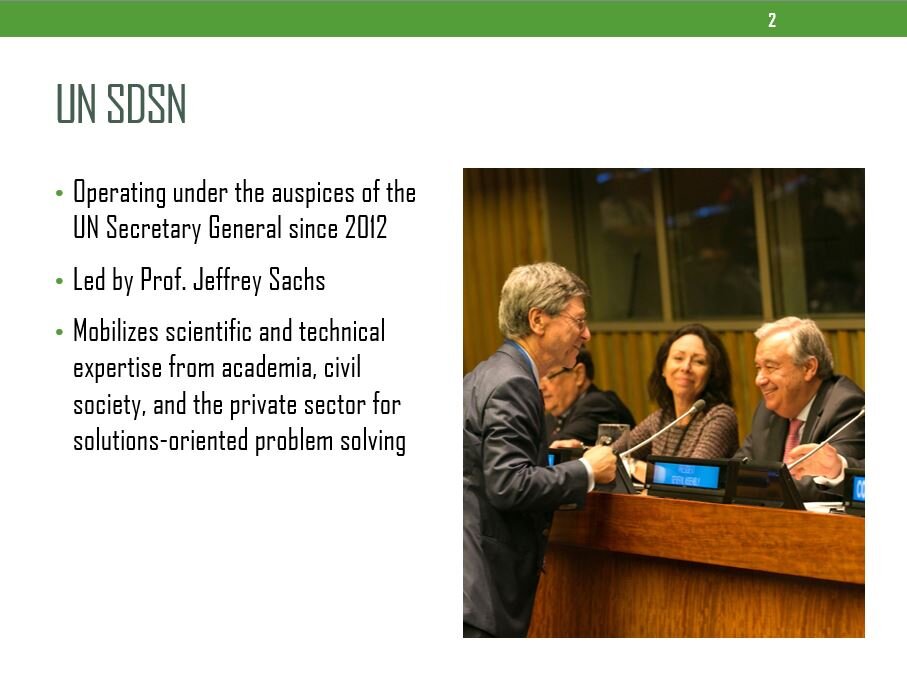
Prof Jeffrey Sachs, the director of the UN Sustainable Development Solutions Network (SDSN) proposed ways to combat novel diseases, using Covid-19 as a case study. According to Sachs, the One Health initiative is increasingly being put to the test by the ever-present risk of new diseases spreading from animals to humans. He highlighted the danger humanity faces when politicians refute scientific evidence about global pandemics.

“When politicians ignore signs as Trump does, people suffer and die,” he said.

Talking about his new book, The Age of Globalization, Prof Sachs recounted the human species’ relationship before civilization.

He said: “We have been interconnected as a species from the start over vast human distances. We have to learn how to cooperate on a global scale”.

Prof Sachs affirmed his belief in multilateral organisations as opposed to nationalistic views: “Extreme nationalists who are arrogant and chauvinistic like Trump don’t like the United Nations because it will have the United States obey international rules, not simply the president’s whims. This is why we need the United Nations. When we see such an unstable person in power, we need rules, not just the discretion of individuals with their armies under their command”.

Privatisation of healthcare in developed countries, precisely the US, has led to a high cost of medical services in the region, he noted. In contrast, unavailable health care services or untimely interventions in developing countries have led to the spread of infectious diseases. When asked for a solution to this dilemma, Prof Sachs recommended universal publicly-financed access to health care. Emphasising on developing countries, he said: “Development aid and tax reform are the two most important ways to help poor countries to close their budget deficit.”

The idea of the sustainable development goals (SDGs), according to Prof Sachs, is that everybody should be able to enjoy the benefits of modern technology and economic progress and live in an environmentally safe planet.

“Yet, the SDGs are goals; they are not yet our current reality. They should inspire actions,” he said.

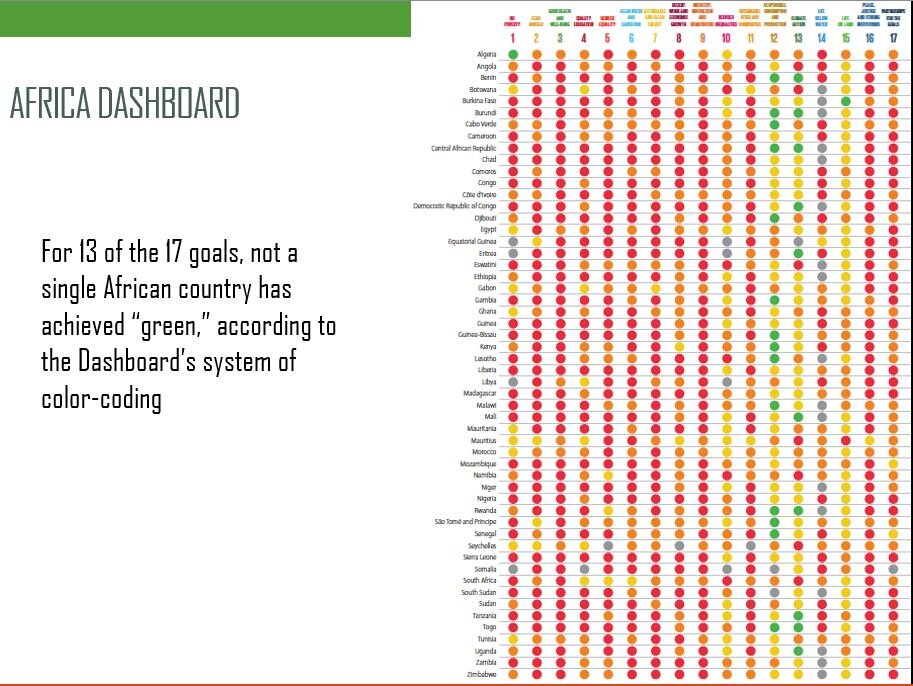
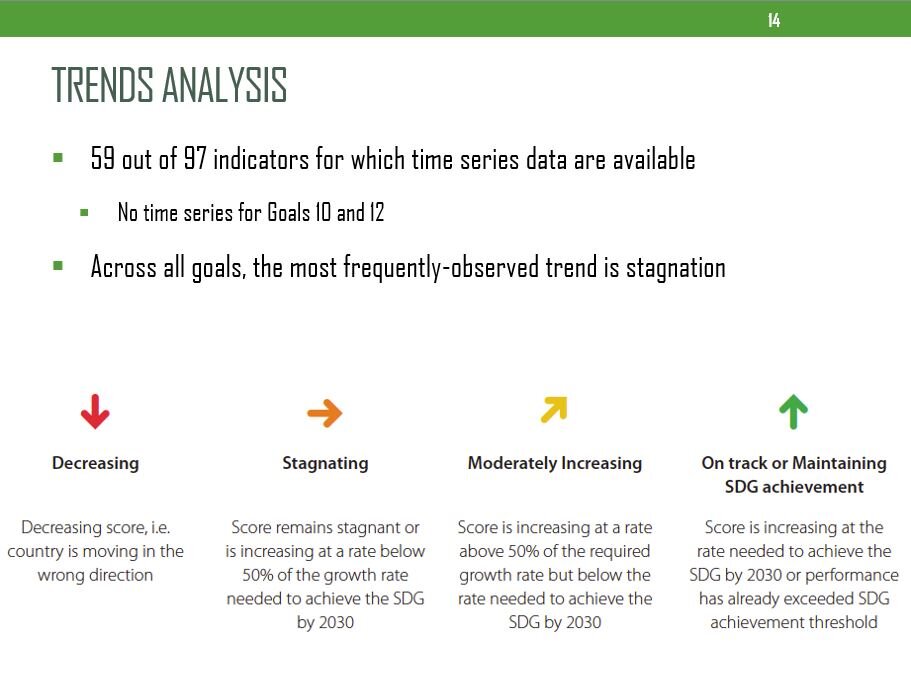
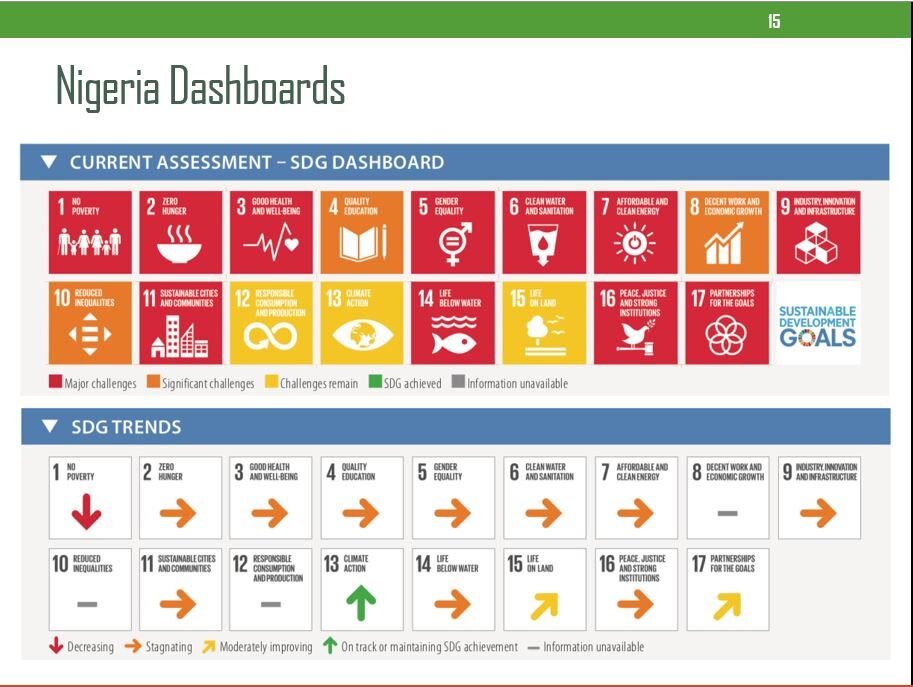
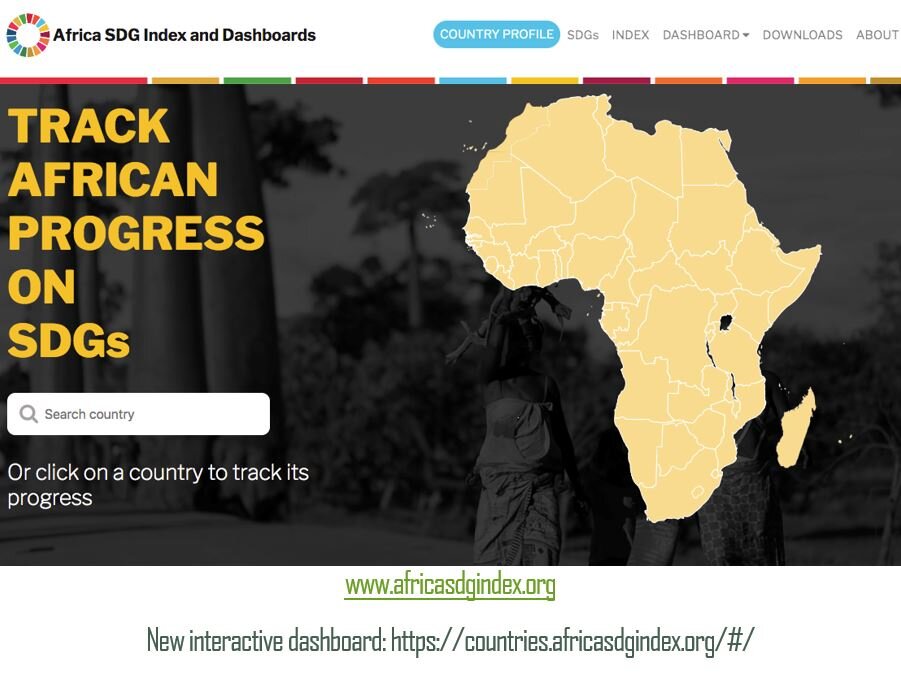
Discussing SDG progress in AfricaEve de la Mothe Karoubi, a senior manager at the UN Sustainable Development Solutions Network (SDSN), agreed that Africa’s track progress towards sustainable development has been overshadowed by inadequate data.

“Africa is not on track to achieve the SDGs,” said Karoubi, pointing out the need for African governments to revisit the drawing board and redesign workable policies to achieve sustainable development.

  • Redesigning waste management: integrated approach

Michael Waas from Terracycle shared that waste reduction, being viewed as one of the most unattractive economic industries in the state, is among the five principles of sustainability.

“The concept of building a circular economy and of promoting circular product streams seems like a new conversation, but what we found is that waste is a modern invention. Throughout the entire history of the natural world, there was no waste because it doesn’t exist in nature. The output of every system becomes the input for another”.

According to Waas, to combat the problem of rising waste, society has to rethink its design models to achieve the concept of a circular economy where no waste goes to waste.

  • Renewable energy has long-term advantage

Prof Marc Rosen, a professor of Engineering from Ontario Tech University suggested that governments should double down their efforts in stimulating renewable energy. Noting that conspiracies that exist within the renewable energy sector are not entirely factual, Prof Rosen stated: “In the long-term, renewable energy has an advantage that companies and governments overlook.”

  • Youth leadership for sustainability

Walid Machrouh, a youth activist for the United Nations program, affirmed the lack of sustainability knowledge amongst youths who are a big component of the society and highlighted the need for partnerships and leadership in sustainable development. In his words, he said: “As young people, we create opportunities. If we don’t collaborate or start by initiating small initiatives, we’re going to consume what’s happening in the world with no reflection and feedback”.

  • A new approach to agriculture

Samson Ogbole, a farmer and the lead trainer for Farm Lab, famous for using aeroponics in Nigeria, explained the crucial role of sustainable agriculture.

“Food production should not be seasonal because hunger is not seasonal,” he said.

Ogbole believes that farmers can come up with own solutions, without waiting for the government to solve all the problems.

“When we have tangible results, those in power by default will want to key into it,” he said.

According to him, the future of farming is urban farming in urban and peri-urban areas amid a population surge. He regrettably pointed out the negative attitude of individuals and governments towards farmers and farming in general, especially in developing countries like Nigeria. Unless such views are changed, he said, agriculture, which is one of the pillars of civilisation, won’t make much progress.

  • Impact investing, new business models and technology

Eva Andriyash, CEO of IxD Capital, highlighted that impact investing and impact entrepreneurship could help accelerate the global pace towards sustainable development. This is because such enterprises are primarily driven by the UN’s 17 SDGs. Investors and entrepreneurs, she said, should strive to – join forces to manage the challenges of Covid-19, strengthen innovations across sectors, implement the 2030 Agenda for sustainable development, and maximise the positive impact of private capital.

Businesses and the environment could co-exist harmoniously when sustainability is applied and reinforced. To this end, business models should always strive to not only hit home runs but be designed in connection to environmental well-being and social inclusion.

“As people, we are getting connected daily due to the revolution of technology. We should leverage this technology to bridge the gaps in our differences. That is the only way to achieve true sustainability.”

Jonathan Reichental, CEO of Human Future,explained the crucial role of data in urban innovation.

 “Our world is now running on data as if it is a new type of natural resource like oil. It has enormous value in how we make decisions, in private organizations, and increasingly in governments. We create 2-half quintillion bytes of data every day,” said Reichental.

He stressed the usefulness of technologies like GPS in monitoring and regulation. “We can observe and understand what happens during a natural disaster such as flooding, mudslides, oil spills, seismic activity, etc. It is also used to manage indiscriminate logging going on in different parts of the world. GPS is used for understanding the migration of animals. We use GPS to understand the health of our planet vegetation”.

“We have to be deliberate about how we treat our environment – whether by cycling or planting a few trees. Because when we are gone from this planet, we will be leaving it in the hands of those who come after us. We want to leave them a planet that will be comfortable for them. We want to create environmental legacies that they will adopt and improve upon.”

  • Interdependence vs. Speciesism

According to Prof Damilola Olawuyi, a leading advocate in the extractive industry, humans need to take responsibility as custodians of the environment.

 “We are all part of a complex web or chain that is interdependent. Any attempt to place humans above any other component is speciesism, and the result is what we are witnessing,” said Olawuyi.

He emphasized that one doesn’t need to wait until they get rich or powerful to protect the environment, as we all have a part to play, however modest.

Elizabeth Mremaacting executive secretary for the Convention on Biological Diversity, stressed that returning to the status quo, to the way society lived would lead to a recurrence of events. Humanity, therefore, needs to rebuild better resilient structures and avoid the destruction of biodiversity.

“It is time for urgent international sweeping cooperation to preserve nature, conserve biodiversity, and protect human health for generations to come,” said Mrema.

“We don’t often realise the commonalities, but spot the differences. To act together, to start any collective action, whether it is COVID-19, racism, environmental change, climate change, global warming, requires certain core beliefs and values at the initial stage so that differences can build on these commonalities,” said Dr Evren Tok, Assistant Dean for Information and Community Development at Hamad Bin Khalifa University.

Environmental Activism: Ken Saro Wiwa’s Legacy Forgotten In Nigeria —Sowore

Sahara-Reporters-Founder-Omoyele-Sowore-1.jpg

Activist and founder of Sahara Reporters, Omoyele Sowore said that the legacy of late Ken Saro Wiwa whose agitations for the betterment of Ogoniland, a Niger Delta community, has largely been forgotten in Nigeria.

Ogoniland is a Niger Delta community in Bayelsa State whose farmland and fishing waters have been ravaged by oil spills by international oil companies operating there.

Speaking during a webinar titled “Environmental Activism and its Role towards Achieving Sustainable Development: Lessons from Ken Saro Wiwa,” organised by the Green Institute, Sowore said, “Ken Saro-Wiwa lost pretty much everything, but the Nigerian state didn’t lose anything. The people who killed him didn’t lose anything.

“His legacy is also the clean-up of Ogoniland even though the United Nations has said Ogoniland needs total clean-up.

“The army, the police, the oppressive system is still going after the little activism that is left in Ogoniland. They are still there actively hunting down activists in the area. So what legacy are we talking about?

“The only legacy he left is in the minds of people around the world who appreciate what he did, not the Nigerian government that I know of. There is still no Ken Saro-Wiwa University or Ken Saro Wiwa Street in Abuja. It feels we have to start the fight all over again.

Responding to Ecoscope’s question on support for environmental activism, Sowore that agreed that with the numerous problems Nigerians contend with daily especially hunger, environmental issues tend to be relegated.

He however stated that, “People must take on causes, and I think environmental causes are very important because they are linked to our survival on the long term.”

Sowore said it was wrong for people to think that environmental pollution in the Niger Delta were not their concern.

“Some of the pollution is airborne, it goes into the atmosphere and it will pour rain on your house in Ijebu Ode one day; it will affect your breathing in Lagos one day.

“It is seen largely as an academic exercise here,” he said but added that it was people like Ken Saro Wiwa that made it easy for people to understand that reality of environmental issues.

A coronavirus vaccine would be a triumph, but the worst human impulses threaten its success

Polly Tynbee
Guardian columnist

An anti-lockdown protester in Hyde Park, London, in May. Photograph: Chris J Ratcliffe/Getty Images

An anti-lockdown protester in Hyde Park, London, in May. Photograph: Chris J Ratcliffe/Getty Images

The world has moved a step closer to ending the Covid-19 horror as researchers from Oxford University, among the 200 global teams working on vaccines, published promising results in The Lancet. The UK has already ordered 90m doses, in breath-holding hope.

A vaccine would mark another feat of astonishing human brilliance. But expect the usual human bad behaviour too. Vaccine researchers pledge to make them available to all as cheaply as possible, but we should brace ourselves for nationalists everywhere to fight for their country first, just as Donald Trump plundered other countries’ personal protective equipment and tried to corner the market in remdesivir. Countries agreed a framework from the World Health Organization (WHO) to share all vaccine information, but few expect an orderly queue: calls for solidarity and cooperation risk being swept away by those with the sharpest elbows, deepest pockets and crookedest swindling.

If the first successful vaccine turns out to be British, wait for the demand that every Briton gets it before the rest of the world, despite the fact that to end the pandemic scientists need to get it fastest to the places where the contagion is most rampant. But if the worst-affected nations are first in line this will include Brazil and the US, where presidents Jair Bolsonaro and Donald Trump bear personal responsibility for their countries’ high infections and death tolls due to their Covid-19 denials and lockdown refusals. Trump will seize the chance to boast he got vaccines early to boost his election campaign. If a British vaccine succeeds, wait for Boris Johnson’s cock-crows boasting of a world-beating triumph as it if were his own invention, hoping to wipe clean memories of his errors and the UK’s shameful death rate. Science must be blind to politics, plead the global vaccinators.

A vaccine will be held up as an emblem of rational human scientific success, but be prepared for an explosion of human unreason. The idiotic and criminal are already surging across the web spreading toxic anti-vaccine messages. A recent poll suggests one in six Britons would refuse a vaccine. Imran Ahmed, the chief executive of the Center for Countering Digital Hate, accuses Facebook of profiting from websites promoting bogus wellness gurus’ alternatives to vaccines and anti-vax conspiracy theories that Bill Gates created the pandemic deliberately.

In the US the anti-vaxxers are far-right conspiracists, but in the UK the spread of this anti-vax brain failure finds a home among the “wellness” folk peddling naturopathic junk. The Society of Homeopaths is under investigation by the Professional Standards Authority, which regulates health professionals, as a member of its staff posted messages on social media calling vaccines “poison”, claiming homeopathy had a “great track record of success in epidemics” including Spanish and bird flu. Celebrities including Novak Djokovic and Robert F Kennedy Jnr add their names to anti-vaxxing conspiracies.

No surprise that anti-vaxxer Andrew Wakefield has resurfaced to claim Covid-19 is a hoax and people must fight to the death to refuse vaccination, as he told a Health Freedom event. Covid-19 was “no more deadly than seasonal flu” and its death toll was “greatly exaggerated”, he said. Wakefield was struck off the medical register and disgraced when his research purporting to show the MMR vaccine caused autism, heavily promoted by the Daily Mail, was exposed as fraudulent. His pernicious influence continues: in 2018 Britain lost its WHO “measles elimination” status, bracketing us with Albania, as vaccination rates fell for the fifth successive year, now at 90%, when the WHO requires 95% of under-fives to be covered. Cases of measles and mumps among teenagers rose after parents failed to vaccinate them as babies due to the Wakefield scare.

However, the fall in take-up of vaccines now is more likely to be caused by government negligence than anti-science homeopaths or anti-vax conspiracists. The austerity decade stripped away services that helped to get babies vaccinated – health visitors, school nurses, social workers, community midwives, Sure Start centres and district nurses. GP appointments are in short supply. The help young parents need is depleted or nonexistent: the fall in vaccination rates is just another sign of neglect that has seen infant mortality rise for the first time in my life.

Britain’s Covid-19 experience has shown how bad policies and confused messaging from government can cause a large number of deaths, particularly in vulnerable groups. If a new vaccine works, if large batches are manufactured fast, will this government be capable of delivering vaccinations to everyone, after austerity has destroyed so much of the basic community health infrastructure?

Herd immunity requires a high vaccination rate, but if one in six is refusing, it will take a herculean effort in persuasion to shift those deep fears. Prof Martin McKee of the London School of Hygiene and Tropical Medicine says: “Trust is key. But the UK has not done well and that will be a problem.” Political polarisation is a danger: leavers tend to dismiss the danger presented by the virus, remainers are more obediently mask-wearing and cautious. “Compulsion can backfire. Reasoning with people is all there is,” says McKee.

Mixed, muddled, contradictory advice has spread confusion and an increasingly petulant resistance. Senior doctors are pleading with the public to keep to the social distancing rules for fear the NHS will be overwhelmed this winter.

Rightwingers, ever eager to make a culture war out of anything, are losing their absurd mask wars: polling shows that seven out of 10 support mandatory mask-wearing in English shops, with only 13% opposed. The public is more cautious than Johnson: they know it’s not over, lifting lockdown has not led to a spike in cases, but local and national lockdowns remain a risk.

On Monday the prime minister was at a school, oddly emphasising that: “We’ve got to continue with our current approach, maintaining social distancing measures … washing hands … wearing face masks in confined spaces like on public transport or in shops. And then we will continue to drive the virus down by our own collective action.” Yet only last week his “return to normality” message urged everyone back to stuffy offices on crowded public transport, bribing them with a tenner to cram into town centre restaurants and cafes.

Where will absolute trust come from when so much has been blown away by Johnson, and by the unapologetic Barnard Castle jaunt by his adviser Dominic Cummings? Failure in care homes and a track and trace system unfit for purpose will make it hard for any government figure to convince all doubters to follow best scientific advice.

The official scientists are now distancing themselves from the politicians moving dangerously fast towards “back to normal”. But will they be trusted enough after standing so long at their lecterns while Johnson made wrong and late decisions? If not, then who? Archbishops? The Queen? Internet influencers? Captain Tom? In persuading people to vaccinate, the most powerful influencers will be local: nurses and doctors, the only people who emerge from this national disaster still carrying public respect.

Coronavirus: Climate change 'bigger threat' than Covid-19

Steffan Messenger
BBC News

Poor air quality and climate change pose a bigger threat to people's health and the economy than coronavirus, NHS staff have warned.

BBC Wales has seen a letter sent on behalf of hundreds of healthcare workers to the Welsh Government.

It calls for environmental issues to be prioritised as part of a "healthy recovery" following the pandemic.

NHS.JPG

The Welsh Government said it was "committed" to a green recovery.

The letter calls for scientific advisors to be involved in developing economic policy in the aftermath of the pandemic.

Efforts to pedestrianise cities, encourage walking and cycling, and increasing how much energy is supplied by renewable sources should be sped up, it says, as well as businesses getting money to help cut energy consumption and waste.

Anaesthetic registrar at University Hospital of Wales in Cardiff, Dr Farzad Saadat, said: "What we're asking is that the government put clean air, clean energy and a cleaner environment at the centre of their policies for the future."

The Welsh Environmental Anaesthesia Network (WEAN), one of the organisations behind the letter, has worked with hospitals across Wales for the past 18 months to cut back on emissions of potent, planet-warming gases involved in treatment.

This has resulted in a cut of 130,000kg of CO2 per month "the same as flying to New York 130 times," said Dr Saadat, a WEAN member.

He added: "There's growing evidence, for instance, that air pollution makes us more susceptible to the disease and makes us more likely to have a bad outcome should we get it.

"There's convincing evidence too that diseases like Covid-19 are more likely to emerge as we destroy the natural world."

Member Yasmina Hamdaoui, a pharmacist, said pollution could lead to - and exacerbate - cardiovascular and respiratory diseases, with possible links also to dementia and diabetes, as well as weight gain in babies and lung development in children.

"We've seen during this period that we have the ability to make drastic changes to our way of life when we need to. We want to learn from these changes and not just return to old habits."

She said the letter was inspired by another sent to leaders of the G20 countries by more than 350 groups representing 40 million healthcare workers.

"This is our attempt to do something at a more local level, join forces as Welsh organisations and call on the Welsh Government to make a commitment too," she added.

Air quality in parts of Cardiff ranks among the worst in the UK when population is taken into account, and government data shows Wales has the highest levels of CO2 per capita emissions in the UK.

"Our record to date hasn't always been the best," Dr Saadat said.

"While I do think the Welsh Government have been active, the reality is we have to do better - we don't have a choice."

Mathew Norman, of Asthma UK and the British Lung Foundation in Wales, backs the plan: "The cost of air pollution to our NHS is £1bn pounds a year - that's just in Wales.

"If we improve air quality, we're not just improving the nation's health and our environment we'll also be helping the NHS."

The circumstances surrounding coronavirus could provide an opportunity to "fast-forward" some of the changes required, he suggested.

"More of us are working from home, we've seen in Cardiff and elsewhere measures to transform the city centre, bringing in cycling infrastructure and pedestrianising whole streets. All of this will limit the amount of pollution we emit.

Tracy Cross, of Llanishen, Cardiff, has chronic obstructive pulmonary disease and asthma and said every breath was like "breathing through straws".

She has noticed a "huge change" in air quality during lockdown.

"It used to make my chest feel really tight and restricted and I had to risk assess every time I wanted to go out. But during lockdown it's been fantastic - I've been able to get out a lot more into the garden with my children."

Ms Cross said it was important things did not revert to "normal" as there would be many people with lung conditions who have lost fitness while shielding at home and deteriorating air quality would lead to "a lot more people suffering".

A Welsh Government spokesperson said it was "committed to a green and socially just recovery, leading to a cleaner, healthier and more equal nation".

"This recovery will require working with partners across Wales," they said.

"Our Team Wales approach already includes work with Natural Resources Wales who have created a panel to advise on this recovery work, and through the Partnership Council for Wales we have jointly set an ambitious target to achieve a net-zero carbon public sector in Wales by 2030.

"Air pollution is the largest environmental threat to public health.

"We will be publishing our Clean Air Plan for Wales this August, which reflects how we will deliver our commitment to reducing emissions and delivering vital improvements for health and well-being, natural environment, ecosystems and biodiversity."

Sustainable Gastronomy 101 – A Chef’s Guide to Sustainable Dining By Caroline Williams

ANA-ROS-AUTOMN_SCH4781-960x720.jpg

There are two key reasons for moving to more sustainable gastronomy: one is because climate change is threatening our very food supply, and the other is that how we are currently producing food is contributing to climate change. The proverbial chicken and egg.

A few years back, the United Nations declared June 18th Sustainable Gastronomy Day in an effort to promote and encourage sustainable dining across the globe.

For many there’s the will to take action but not the know how to do it. So Chef’s Pencil talked to a few sustainability experts, chefs who have incorporated sustainable food practices, and researched specific steps chefs and restaurant owners can take to become more sustainability friendly.

Let’s start with the basics and discover what sustainable gastronomy is and why is it important?

We talked to Dr Adenike Akinsemolu, a sustainability expert and environmentalist from the Green Institute.

“Sustainable gastronomy is the process of cookery that focuses on the ingredients’ source, how food is grown, the means by which it gets to the market, and eventually, to the plates of consumers. It is about choosing food that is both healthy to the environment and our bodies, a crucial aspect of sustainable gastronomy,” says Dr. Adenike Akinsemolu.

It is estimated that roughly 1.3 billion tonnes of food is wasted each year, a clear motivation for thinking about reducing food waste to protect the environment. And a backdrop to this is the estimation that demand for food is likely to rise by 50% by the year 2030, while demand for water is forecast to surge by 30% and land use by 50%.

Sustainable dining out, and eating at home of course, is one way to reduce wastefulness of natural resources, both contributing to the protection of the environment and encouraging healthier eating habits.

Many people are refocusing their approach to food and rethinking what they buy, hence contributing to more sustainable food production and consumption. 

Now let’s talk look at the steps you can take to reduce waste and create a more sustainable dining system in your restaurant.

Designing a sustainable menu

  1. Reduce food waste: Food waste is one of the key issues and reducing food waste comes with tones of benefits.

  2. Keep it seasonal. This is one of the most powerful steps you can take toward sustainability.

  3. Offer more vegan and vegetarian options.

  4. Use less popular fish choices or those previously seen as ‘marine waste’.

  5. Be adaptable: be willing to change your menu depending on what is available.

  6. Design your menu to limit the number of ingredients and repurpose those usually thrown away.

Create plant strong dishes where the emphasis is on vegetables rather than meat or fish. Or you could have a vegan/vegetarian menu to which you can add meat or fish. Traditionally, vegan dishes are put together by removing other components. If you showcase a dish which is complete without animal products, you encourage people to eat more sustainably.
— Natasha Tatton of Bred, a 100% plant-based organic sourdough bakery in Whistler, BC, Canada
León has created a cuisine that elevates the disregarded into something exceptional. An example of this is the creation of marine charcuterie made completely with fish (comprised of sea bass, dogfish loin, sea bream, or mackerel sobrasada) to marine bacon (through the reuse of marine discards that were previously regarded as waste), to sea hare roe (similar to noodles). The latter was adapted from so-called waste to become an integral element of his three Michelin-star menu
— Chef Ángel León via Fine Dining Lovers
Gastronom 2.jpg

Serving up

  1. Use smaller plates: Many restaurants serve way too large portions of food.  Reducing the size is not only more sustainable but can help prevent overconsumption.

  2. Customize portion size: Offer multiple sizes such as regular and lite. Portions can also be customized to meet the needs of individual clients or groups.

  3. Go trayless: People put too much stuff on their trays that they end up throwing away. And trays drive up water consumption by quite a lot (see video below).

Sourcing your food

  1. Buy locally: Support local farms and producers.

  2. Buy from farms that practice sustainability.

  3. Buy sustainable seafood: The basic rule to follow is, if they won’t tell you how or where they caught it, don’t buy it.

  4. Grow your own: Look around you for space you can use to grow things that you use a lot, such as herbs and salad greens. You could even keep bees in a roof garden. Perhaps use a cultivator.

Permaculture designer Elle Meager helped one restaurant add “picking beds” along the walkway up to the door, with cherry tomatoes and strawberries for guests to pick and taste as they walked in. They also added several fruit trees around the back of the restaurant to secure their supply of citrus.  

Our philosophy is zero kilometers. We only buy from local producers and we follow the seasons. We avoid food waste and our wine list is highly sustainable, featuring mostly natural bio-dynamic wines.
— Chef Ana Roš, Hiša Franko

Dealing with waste

  1. Buy what you need: Buy optimized quantities for your daily or weekly needs rather than oversupply and then throw food away. Pastry shops that put foods on display should make displays appealing, but just that – don’t overstock.

  2. Strictly manage stock and expiration dates: Monitor expiration dates, food color, and smell and move menu items up to prevent as much food waste as possible. Look into point of sale systems that have an automated inventory management application. Some even allow you automate your inventory down to the ingredient level.

  3. Create a waste log: Write down what you’re throwing away and why. After a few weeks you’ll hopefully be able to discover some trends and can start making program adjustments to reduce waste. For example, if you find that on a certain day of the week certain dishes from the menu are ordered less, you can start prepping fewer of those ingredients on Tuesdays.

  4. Utilize every part of your ingredients: For example, don’t only use the best cuts from pork, veal, use it all.

  5. Set up an in-house composter or worm farm for all the left-overs. Worm juice and droppings
    are used to fertilize the picking beds.

  6. Food donation: There are many organizations out there using what you might call waste to feed the homeless or food poor.

  7. Are you recycling? No excuses now – get a program sorted!

We use whole animals primarily, sharing between the two restaurants and using all the parts we get.
Pork is from HindsholmGrisen and the farmer lets his pigs live twice as long as other farmers, allowing a slow and natural growth – one year rather than 6 months. The pigs feed on 100% organic grains, peas and plants, roots and worms found in the ground, and they are never fed soy or concentrates.
— Relae Restaurant Copenhagen

Irena Stein, sustainability advocate and owner of contemporary Venezuelan restaurant Alma Cocina Latina, has been implementing sustainable practices in her cafes and restaurants for over 15 years.

She feels it her duty as a restaurant owner to take control of the impact she has on her communities and guests. Simple things like reducing the amount of trash pickup is a cost-saving.

For her, composting is a solution, not an alternative. The more restaurants support mission-based businesses working to reduce their carbon footprint the more accessible these services can become.

She is also conscious of the growing concern of food waste in today’s world and is currently working with her purveyors on a new project.

Using food they would have wasted, she can make over 1,500 meals a week for those in need in the Baltimore area. It is about redirecting waste and using it efficiently and effectively to feed those who need it most.

Check for water waste

  1. Monitor for leaky pipes and faucets.

  2. Only serve water to guests who ask for it.

  3. Make sure your dish washers are full.

  4. Thawing food in the refrigerator, not under a faucet.

Equipping your premises

  1. Buy sustainable equipmentEnergy efficient equipment may initially cost more but having it can pay off more in the long run. Look for things like low flush toilets, energy star appliances, and energy star refrigeration. Make sure all your equipment like POS systems, lights, and ovens are turned off at close of business every day.

  2. Use green cleaning products.

  3. Buy apparel and napkins from fair trade materials.

  4. Use little or no paper.

  5. Buy furniture made from reclaimed wood.

  6. For your interior design, work with local, environmentally conscious artists.

  7. Use eco-friendly solar, geothermal for electric use where possible.

Dining in the wild – a fantastic new food concept in Sweden; Photo credit: Tina Stafrén

Dining in the wild – a fantastic new food concept in Sweden; Photo credit: Tina Stafrén

Ditch plastic

  1. Use washable serving equipment, glassware or reusable dishware.

  2. Don’t sell water in plastic bottles.

  3. Get rid of plastic straws.

  4. Drop the cling film and plastic vacuums.

We don’t sell pre-packaged bottled water at our restaurants. We use a filter system and we serve the water in our empty wine bottles. This means we have no transportation costs, no plastic waste and a way to recycle used glass bottles.

We have a policy of never pouring this drinking water into the sink, so when bottles return from the tables untouched, or partially consumed, we consolidate it and reuse it for cleaning the floor.
— Relae Restaurant, Copenhagen
We do not use cling film, vacuum bags nor foil – covers for pots and boxes were invented already centuries ago.
— Chef Peeter Pihel, Fotografiska, Tallinn, Estonia

Spread the message

  1. As a community service, restaurants, cafes, bakers, bars are all part of the social conversation. Once you’re happy with your sustainability, promote it. Let everyone know and you’ll inspire others along the same route.

  2. Think about “green” discounts. Perhaps reward guests who bike or walk to get their gastronomic fix.

How to Transform UN’s Environmental Goals into a People’s Agenda for Africa By Dr Olukoya Obafemi

Dr Olukoya Obafemi is a Researcher, Brandenburg Technical University, Institute of Graduate Research: Heritage Studies. He is also affiliated with The Green Institute, Ondo, Nigeria. 
 
The UN will commemorate World Environment Day 2020 on Friday June 5

Responding to Climate Change. Credit UNEP

Responding to Climate Change. Credit UNEP

BRANDENBURG, Germany, Jun 3 2020 (IPS) - The COVID-19 insurgence has highlighted the need for multilateral cooperation among sustainability stakeholders. As the journey towards achieving Agenda 2030 and the Sustainable Development Goals (SDGs) is fraught with imminent global challenges, global environmental leaders agree that now is the time to act collectively for nature, leaving no one behind.

The shortage of sustainability knowledge in Africa is particularly appalling, and it seems the continent is oblivious to the world’s agenda. This is evident through the data-based analysis of Africa’s lack of progress towards achieving sustainability.

In response, Dr. Adenike Akinsemolu, educator, sustainability advocate, academic associate with SDSN, and a scientific committee member of the 2018 ICSD at the Earth Institute, Columbia University, swung into action.

She founded The Green Institute, a sustainability education organization in Nigeria, and authored an indigenous sustainability text, The Principles of Green and Sustainability Science (Springer, 2020).

The Green Institute confronted this challenge in Africa through the instrumentality of home-based solutions of education, innovation, and advocacy. One pertinent question arose and resonated with Dr. Akinsemolu all through her efforts towards bridging the knowledge gap of sustainability in Africa.

How can we bring the Agenda of Sustainability to indeed become the people’s Agenda in Nigeria and Africa? Having entered a new decade, unless Africa embraces a virtuous cycle of sustainability, she will decline in a vicious cycle of poverty, social injustice, and environmental degradation.

To change this, her organization went further by organizing a virtual summit aimed to mobilize sustainability leaders to share their expertise in the face of a global pandemic.

On June 5, 2020, the Green Institute, in collaboration with Hamad Bin Khalifa University (Qatar Foundation), will host Jeffrey Sachs (SDSN) and over 25 renowned sustainability experts from across the globe, at a virtual symposium Time #ForNature for World Environment Day, a United Nations awareness campaign for environmental protection, held annually since 1974.

Unsustainable agriculture practices are taking an incalculable toll on biodiversity. Credit: FAO/Giulio Napolitano

Unsustainable agriculture practices are taking an incalculable toll on biodiversity. Credit: FAO/Giulio Napolitano

This hallmark event organized by a sustainability organization is a confluence of sustainability leaders in various fields endeavored at assembling individuals and organizations towards achieving sustainable development in Africa and beyond.

Armed with a plethora of speakers, the virtual symposium incorporates diverse fields of human endeavors ranging from sciences to arts, botany to engineering, health to et cetera.

The virtual symposium is also launching the indigenous sustainability text titled The Principles of Green and Sustainability Science, authored by Dr. Adenike Akinsemolu. “Everyday anthropogenic activities are responsible for the problems of our planet, and there is a need to salvage the situation through creativity, innovation, and critical thinking,” Dr. Akinsemolu stresses in her book.

She offers a detailed and step-by-step guide to understanding sustainability and discusses best practices to establish a more harmonious and balanced approach to living. In the words of Prof. Marc A. Rosen (Ontario Tech University), “The book enriches a global movement while highlighting efforts in Africa.”

Alongside the author is world-renowned sustainability leader Prof. Jeffrey Sachs who will be speaking on Building Resilient Health Structures to Combat Novel Diseases: A Case of COVID-19.

Sachs was twice named as Time magazine’s 100 most influential world leaders and was ranked by The Economist among the top three most influential living economists.

Among the topics discussed at the summit are biodiversity conservation, sustainable agriculture, sustainable building, urban innovation, minimal living, eco-feminism, waste management, renewable energy and others.

Over a century of civilization, humans have founded and established values that regulate human societal behaviors. With a new sustainable agenda spanning for the next decade, Dr. M. Evren Tok will explain the impacts of values and morality in sustainable development.

As the Associate Professor at the College of Islamic Studies (CIS) at Hamad Bin Khalifa University (Qatar Foundation), the Assistant Dean for Innovation and Community Development and Lead Project Investigator for a Qatar National Research Priorities Program on Localizing Entrepreneurship Education in Qatar, Dr. Tok has extensive experience in building disruptive mechanisms in education and learning in post-graduate studies.

He is the founder of the first MakerSpace in Qatar Foundation, built around the concept of Green Economies, Social Innovation, and Entrepreneurship.

The development of the world economy has consistently been at loggerheads with the environment. How can we simultaneously achieve economic growth and environmental wellbeing? Prof. Marc Rosen, Prof. Manfred Max Bergman (University of Basel), and Samson Ogbole (Farm Lab) strongly argue that both the environment and the economy could thrive simultaneously.

One of the essential directions for ensuring a shift in progress towards Agenda is education. The right to education is a fundamental human right that every nation aspires to fulfill. In an age of sustainability, what changes to our educational system are pivotal towards achieving sustainable development?

Ruba Hinnawi (Qatar Green Building Council) and Noah Martin (Georgetown University) will discuss the educational transformation that must occur if we are to transition towards sustainable development. The visual artist Data Oruwari will reveal the role that arts play towards achieving sustainability.

As the saying goes, “One is too small a number to achieve greatness.” The Green Institute has partnered with various international organizations that share the same commitment towards achieving sustainable development.

Organizations such as the Hamad Bin Khalifa University (a member of Qatar Foundation) and the Sustainable Solutions Development Network have been instrumental towards the success of The Green Institute.

The Nigerian organization behind the global summit believes that although SDG 17 is the last of the SDGs, it is by no means the least.

Ironically, it serves as an overarching framework for the successful implementation of the remaining 16 goals. To this end, The Green Institute continually extends its hand of partnership to collaborate with other organizations in achieving sustainable development.

The participating organizations include the UNEP, UNDP, Qatar Green Building Council, Qur’anic Botanic Garden, Farm Lab, Human Future, Springer Nature, Institute for Oil, Gas, Energy, Environment and Sustainable Development, University of Basel, the Open University UK, TerraCycle, Design Future(s) Initiative of Georgetown University, United Nations Development Program, and the Green Maasai Troupe Doha Qatar.

For more information, full schedule and registration: www.greeninstitute.ng/wed2020

Restore Fundamental Human Dignity And See Attitudinal Change Towards Environmental Issues — Akinsemolu

Restore fundamental human dignity and see the attitudinal change towards environmental issues, is a profound statement made by ADENIKE AKINSEMOLU, the founder of Green Institute, a sustainability research and education institution, in this interview by PAUL OMOROGBE. She also speaks about making waste management in Nigeria effective, funding education from recycling and other issues.


There are quite a number of institutes in Nigeria teaching environmental studies. Why was yours set up?

Environmental studies could be seen as an autonomous discipline, yet to get the best out of it, a multidisciplinary approach must be applied. The environment exists as a component of society, together with other components, including people, animals, plants, microorganisms, and the economy. The Green Institute teaches the environment in conjunction with these components in the context of sustainability. As a social enterprise, The Green Institute outlines the benefits of sustainability education, which has the environment as a fundamental tenet. Sustainability education should lead to measures geared towards the adoption of the knowledge, skills, activities, and attributes necessary to use resources in a way that does not compromise future generations. This is what is meant by going green, the motivation for the Green Institute. Fueled by this motivation, the Green Institute deploys education and resources to empower people, drive innovation, and build resilient communities.

doc.jpg

You recently held a World Environment Day event with several international speakers. What was the main take away from that event for you?

Global challenges like the coronavirus pandemic are real and should not be seen from a nationalistic perspective. While the coronavirus reminds us how fragile and unprepared we might be, the efforts deployed on a daily basis serve as a reminder of what we’re capable of when we work together towards a common goal. We must act together in solidarity #ForNature. There is mostly consensus on the need to develop proactive measures to protect and preserve the planet’s finite resources. This level of agreement on anything is rare, and we must not waste this opportunity to work together to solve our greatest problem(s).

Education leads to informed choices. Therefore, the epistemic community has a leading role in educating civil society and influencing government policies on sustainability. We can’t continue to stare at each other as the world burns. But action requires change, and change requires proper education, and this process must start now.

How has teaching on environmental matters been in a country where basic survival is foremost on people’s minds?

It’s been onerous. We can’t talk about environmental matters without ‘Going Green.’ You see, Going Green doesn’t come to us naturally as humans today as it once did. Today, it is a new and complex way of thinking. You are familiar with Maslow’s hierarchy of needs. He arranges human needs in a pyramid from most basic and necessary at the bottom to more complex and life-fulfilling at the top.  The need for food and shelter comes first, then the need for love, relationships, and lastly, self-actualisation. Going Green falls under self-actualisation. When we have provided for ourselves all of life’s necessities, we put our energy toward leaving a legacy and doing something great. Some would argue that Nigerian society is at the basic level of this hierarchy. Hence, the urgency to eradicate extreme poverty in a country like Nigeria cannot be overemphasized. People are less likely to respond to environmental matters when the struggle between life and death is a daily occurrence. Restore fundamental human dignity and see the attitudinal change towards environmental issues. Though the journey to collective self-actualisation seems daunting, The Green Institute more than ever is propitious and confronting this issue by fixing her gaze on the youths. Despite survival challenges, the Strength, Energy, and Enthusiasm (SEE) of the youth cannot be underestimated. It is this ‘SEE’ that The Green Institute leverages on to give eco-vision and chart a promising course of sustainable development to the youth. We must think and act to self-actualise our aspirations.

Why should studying the environment be a priority for young people?

Young people are tomorrow’s leaders. The lessons from previous generations on environmental degradation cannot be overlooked. Aside from being custodians of the environment, youths should understand the imminent threat of climate change on their collective futures. To manage what is unavoidable (adaptation) and avoid what is unmanageable (mitigation), youths must prioritise environmental studies as fundamental to their education.

One of our goals is to change the attitudes of young people towards their environment. To achieve this, we have to start from childhood. We have to teach kids to be ‘eco-conscious’. In this time of gadgets and social media, kids are no longer kids; they are always online. Let kids go outside to play, to read, to discover new things. Let nature inspire them to create, to innovate. Let them feel the sun on their faces and count the stars at night. As a matter of fact, a recent study conducted by the Green Institute shows that kids that spend more time in nature are usually healthier and happier.

How has paying for studies from the proceeds of waste management work for your institute?

The Trash for Education initiative, as an innovation of The Green Institute, strives to simultaneously reduce waste and provide basic sustainability education for participants. Though a daunting innovation, Trash for Education has proven to be workable and scalable. The Green Institute has brought about the inclusiveness of locals by providing educational materials for students in the community. Moreover, the reduction of plastic wastes and scrap tyres in the community is a huge milestone of this initiative. These plastics and tyres are upcycled into other meaningful products with economic value. For example, the scrap tyres are used in making furniture that provides similar comfort to new furniture made from raw materials. Although still in its early stages, the Trash for Education initiative shows the propensity to drive social impact and generate returns from impact investing.

What’s missing in Nigeria’s approach to waste management?

Behavioral change. According to ‘The Principles of Green and Sustainability Science’, “the global technology revolution will transform the way people think regarding waste management.”   Until we change our thinking towards waste management, our behaviors will remain indifferent. We are yet to fully grasp and appreciate the dynamics of waste management. This is a typical scenario where benefits far outweigh the cost, but people are unable to see it due to behavioral indifference. When we become conscious of reducing waste from kitchens to households, and on the streets, it is only then they will realise the health, environmental and economic benefits of waste management.

The Earth’s Littlest Creatures That Play a Big Role in the Environment By Johanna Read

Don't let their size fool you: These creatures may be tiny, but they're certainly mighty!

FLORINTT/GETTY IMAGES

FLORINTT/GETTY IMAGES

Small wonders

Humans often forget just how interconnected the world is—and just how much we rely on the work of animals to keep it healthy and buzzing along. As the saying goes, out of sight, out of mind. Still, when we do think about it, it’s pretty easy to see the effects that certain larger animals have on the environment. When beavers build dams, for example, they change the flow of rivers. But even the smallest creatures can make big changes and contributions, and without them, the world would be a very different place. Here are some of tiniest ones on the planet and the essential roles they play. When you’re up to speed, check out some of the biggest living animals in the world.the biggest living animals in the world.

FRUTTIPICS/GETTY IMAGES

FRUTTIPICS/GETTY IMAGES

Tardigrades

You may have first heard about tardigrades from Star Trek, with the USS Discovery using one of these creatures to jump through time and space. But tardigrades aren’t science fiction. The real ones, however, are rarely more than a millimeter in size. Live Science describes how tardigrades look a little like fat bears or piglets—hence their nicknames of “water bears” or “moss piglets”—except they have eight legs and a round telescoping mouth. National Geographic says there are about 1,300 different species of them, and they live everywhere from sand dunes to deep in the ocean. They can even live in the vacuum of space (but, as far as we know, can’t help spaceships fly). Tardigrades hold the title of the most indestructible species on the planet, but they need a layer of water around them to thrive or they’ll go into a kind of hibernation mode; this is why their preferred homes are mosses and lichens.

So, why are these tiny creatures such a big deal? Tardigrades are useful for the ecosystem because they’re a pioneer species, meaning they’re often the first creatures to inhabit an environment. They can survive where other multicellular organisms can’t, like in the deep seas or in the aftermath of a volcanic eruption. They create carbon, nitrogen, and phosphorus, essential building blocks of life, and therefore attract microscopic animals and plants, which eventually become part of the food chain for larger animals. Scientists think tardigrades will play an important role as the Arctic’s permafrost melts and could even pave the way for colonizing Mars. They might also help researchers learn how to extend human life in extreme circumstances. Powerful and cute!

SCUBALUNA/GETTY IMAGES

SCUBALUNA/GETTY IMAGES

Coral polyps

Coral polyps, small translucent creatures related to sea anemones and jellyfish, are essential components of coral reefs. They’re soft on top like jellies and anemones, but they have a hard skeleton made of limestone at their base, says zoologist Matthew Oldfield, cofounder of ZuBlu Diving in Asia. “As each polyp grows, it splits, budding off a clone of itself again and again,” he explains. Weirdly, coral polyps secrete their own skeletons, which are made of calcium carbonate. The skeletons protect the coral polyps from predators, plus give other polyps a hard place to attach themselves and grow. Eventually, a colony of genetically identical polyps creates a coral reef.

Healthy coral reefs protect shorelines from storms and are an important place for young fish, which eventually form part of the food chain. According to National Geographic, coral reefs provide support to 25 percent of all marine creatures, though the reefs cover less than one percent of the entire floor of the ocean. But reefs are under threat from ocean warming and pollution, which could seriously harm underwater ecosystems. Don’t miss these powerful photos that show why oceans still need our help.

DEBRALEE WISEBERG/GETTY IMAGES

DEBRALEE WISEBERG/GETTY IMAGES

Butterflies

All butterflies are excellent pollinators, including the tiniest among them: the Western pygmy blue, which has a wingspan of no more than three-quarters of an inch. Pollination is essential to maintaining our food supply, and in fact, one-third of the food humans eat relies on pollinators like butterflies, according to Sciencing. Some butterfly species help us further by eating tiny aphids, the garden pests that like to destroy many of our crops. Creating the conditions to attract and support some types of butterflies is an environmentally friendly way to keep aphids at bay.

K_THALHOFER/GETTY IMAGES

K_THALHOFER/GETTY IMAGES

Bees

Bees are another essential pollinator, and our food—including coffee!—is at risk because of the decline in bee populations from pesticides, climate change, and habitat loss. Honeybees are one essential species, but bees of all kinds are important to the world, and we’re learning new ways they can help us all the time. Mental Floss reports, for example, that a substance that bees use to create their hives, called propolis, has been effective in relieving human ailments like cold sores, cavities, and eczema.

Another weird bee fact: Bees have helped humans find abandoned landmines and identify toxic chemical spills. How? According to Nature Physics, trainers can actually teach bees to associate the smell of TNT and specific chemicals with food. Lasers are then used to track the parts of a potential minefield that the bees spend more time at. Because bees are so light, they can identify mines that might have gone off if a dog or rat was used to sniff them out. Find out some things we can do every day to help honeybees.

APISITWILAIJIT/GETTY IMAGES

APISITWILAIJIT/GETTY IMAGES

Termites

While you don’t want termites near your house, these bugs do provide a very useful service in the forest: They eat decomposing leaves and other plant matter. Plus, the soil from termite mounds is rich in nutrients, and farmers use it as fertilizer. In fact, using termite soil on farms can increase crop yield by 300 percent, according to environmental microbiologist Adenike A. Akinsemolu, founder of The Green Institute and author of The Principles of Green and Sustainability Science.

Akinsemolu also says that termites are an inspiration to human architects. For example, termites inspired the design of the Eastgate Centre in Harare, the largest office and shopping complex in Zimbabwe. Rather than using conventional air conditioning, she explains, the architect used “biomimicry principles” so that the building’s environment could be regulated naturally, much like a termite mound. Termites might be quite proud of that fact, but here are 13 secrets termites don’t want you to know.

BILLBERRYPHOTOGRAPHY/GETTY IMAGES

BILLBERRYPHOTOGRAPHY/GETTY IMAGES

Hummingbirds

Unlike termites, it is nice to have hummingbirds around your house. They’re one of the smallest birds in the world. The tiniest, the Cuban bee hummingbird, weighs less than a dime and is only about two inches long. Despite their diminutive size, hummingbirds are powerful—they can hover in place, fly backwards, and fly at elevations where there’s almost no oxygen. That’s especially important when it comes to maintaining certain ecosystems. Science Nordic says that many plants rely on hummingbirds for pollination, especially in lowland rainforests and cloud forests, where flying insects like bees have trouble with the rain. And that’s not all: Because each hummingbird is adapted to drink from a specific flower, it’s thought that they’re an important part of plant biodiversity, too. Here are another 19 facts about hummingbirds you probably never knew.

IPGGUTENBERGUKLTD/GETTY IMAGES

IPGGUTENBERGUKLTD/GETTY IMAGES

Frogs

Frogs help us by keeping insect populations in check. Like canaries in coal mines, they can also indicate to scientists when water quality is poor. If their environment isn’t healthy, they will change their habits, leave ponds and streams, stop reproducing, get sick, and sometimes die. And, like many little animals, frogs are important for providing food for bigger animals. Birds; snakes; fish; and mammals like raccoons, otters, and foxes eat frogs. Some carnivorous frogs even eat other frogs!

Did you know that not all toads are frogs, but all frogs are toads? That’s one of these 10 interesting animal distinctions you probably get confused. Also, we bet you didn’t know that frogs have teeth but toads don’t!

9.jpg

TONAQUATIC/GETTY IMAGES

Plankton

Plankton is the name we give to all the tiny organisms (both plants and animals) that float in currents but aren’t able to propel themselves. An individual plankton organism is called a plankter. If you think whales are cool, give plankton a big thank you because huge baleen whales eat tiny plankton almost exclusively. If we didn’t have plankton, many animals throughout the food chain would starve. “The biodiversity of our planet is disproportionately enriched by small animals,” says Richard Smith, PhD, a marine biologist, conservationist, and author of The World Beneath.

Plankton also help break down organic material in the water, which creates both food for other organisms and oxygen for the entire planet. In fact, phytoplankton are responsible for creating about 70 percent of the world’s oxygen, reports National Geographic. One type of plankton, called prochlorococcus, is so small that there are millions of them in a single drop of water. Discover another 13 fascinating facts about the world’s oceans.

PUMPPUMP/GETTY IMAGES

PUMPPUMP/GETTY IMAGES

Ants

Ants are the janitors of the forest, cleaning up dead stuff and making way for new life. They sometimes help spread seeds to grow new plants, too. When ants build tunnels in the soil, they aerate it and recirculate nutrients essential for plant growth. Ants are also social animals, notes Olav Rueppell, PhD, a biology professor at the University of North Carolina at Greensboro. “Social insects such as honey bees, wasps, ants, and termites not only provide many essential services by pollinating what we eat, preying on pests, and decomposing what we throw away, but also show us the power of cooperation and altruism,” he explains. Learn the truth about these  27 “facts” about animals that you have all wrong.

NOPADOL UENGBUNCHOO/GETTY IMAGES

NOPADOL UENGBUNCHOO/GETTY IMAGES

Snails and slugs

There are all sorts of snails and slugs, some ugly (we mean you, banana slug), some kind of cute, and some just weird (check out this snail that creates its own shell of iron). But these creatures, like millipedes, worms, flies, woodlice, and even lobsters, are detritivores. That means they eat detritus, or organic waste composed of dead plants and animals. We know, it’s not the most appetizing thing in the world, but it’s incredibly important, notes chemical ecologist Heidi Appel, PhD, dean of the University of Toledo Jesup Scott Honors College and a professor of environmental science. “Tiny animals like detritivores make our lives possible,” she explains, as they recycle nutrients in the circle of life. “[Plus], without them, we’d be buried in dead stuff and starved for nutrients.” So while slugs might give you the creepy-crawlies, life would be even grosser without them. If you’re feeling inadequate compared to these creatures, find out some little things you can do every day to help the environment.

SIMON LINDLEY / EYEEM/GETTY IMAGES

SIMON LINDLEY / EYEEM/GETTY IMAGES

Caddisflies

There are about 7,100 different species of caddisfly around the world, about 1,340 of them in North America. They’re usually found in lakes, ponds, and rivers, and the largest are only about one inch long. Think of the caddisfly as a water spider. In their larval stage, they produce nets of sticky silk to help them catch tiny particles of food that move through the water they live in. Their dinner preparations benefit the river by preventing the river gravel from flowing away downstream, which, in turn, reduces erosion. So maybe give the caddisfly a nod of thanks next time you take a walk by a beautiful river.

ROLF NUSSBAUMER/GETTY IMAGES

ROLF NUSSBAUMER/GETTY IMAGES

Lesser long-nosed bat

The three-inch-long lesser long-nosed bat spends its winters in Mexico and its summers in states like Arizona and New Mexico. They were declared endangered in 1988, but efforts to protect them were effective. In 2018, they became the first bat to be removed from the United States list of endangered species—not because they became extinct but because their numbers had improved. But now, their populations are decreasing again, and the International Union for Conservation of Nature (IUCN) has listed them as “Near Threatened.”

Why are these little bats so important? They pollinate a lot of plants, and they’re vital for pollinating blue agave, the plant that gives us tequila. So, the next time you have a margarita, give a toast to the lesser long-nosed bat and all these tiny creatures that help the environment. Next, learn about more incredible animals that came back from the brink of extinction.

Noah Martin on World Environment Day, 2020: Teaching Ecology Beyond the Classroom: Unlearning the way we learn to relearn how we’re Suppose to


Noah Martin a double Georgetown University graduate speaks on Teaching Ecology beyond the Classroom: Unlearning the way we learn to relearn how we're suppose...

Summary of the Event

The event kicked off at 7am GMT with a morning yoga video performed by Adriene.The Virtual Symposium hosted over 25 renowned sustainability leaders, environmentalists, researchers, specialists on health, botanic conservation, resource management sustainable agriculture and building from around the world. Speaker such as Jeffrey Sachs, Adenike Akinsemolu, Marc Rosen, amongst others share their insights on our path towards sustainable development.


LISTEN TO PODCAST


ABOUT THE SPEAKER
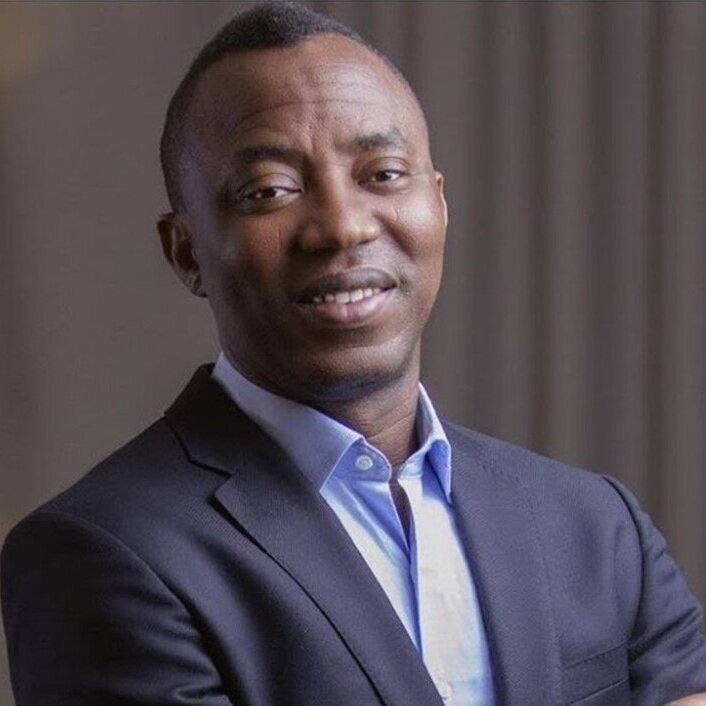
Noah Martin is a double Georgetown University graduate completing a bachelor's degree in the Biology of Global Health and a Master's degree in Learning, Design, and Technology. Noah is the founder and creative director of FM-31.

Noah Martin is a double Georgetown University graduate completing a bachelor's degree in the Biology of Global Health and a Master's degree in Learning, Design, and Technology. Noah is the founder and creative director of FM-31.

Read full bio

ABOUT THE MODERATOR

Caleb is an environmental and energy lawyer with Templars. He is the founder and team lead at Earthplus, an environmental nonprofit organization delivering sustainable environmental solutions across Africa.

Caleb is an environmental and energy lawyer with Templars. He is the founder and team lead at Earthplus, an environmental nonprofit organization delivering sustainable environmental solutions across Africa.

read full bio

Q & A

Caleb Adebayo: With the rampage of the current pandemic, do you think it is time to transform our traditional learning modules? If so, how can we leverage technology to bring about impactful learning accessible to everyone regardless of their socioeconomic status?

Noah Martin: I think it is time to ask to rethink how we learn, how university, school rethink the way that we learn to try something different because we really need to rethink how we do education and learn an online platform. Tech is useful in extending access so as engage with your student more. You need to meet students and learners where they are in the process through the experience of engaging. This is one of the principles of learning core.

Caleb Adebayo: Ecology is among the oldest sciences of nature. What incentives are formulated to stir up the interests of the younger generation to become ecologists amidst competing career courses?

Noah Martin: It’s a problem that is not going to go away overnight and is going to be used in context for everybody engaging over the course of generation to come and getting younger generation to get on board with this, engage with this, getting the meaning and a lot of access to this is very important.

One of the ways to go about this is by trying to make sure that institutions of higher education align the work that they do specifically to the work of ecology and broaden the sustainability efforts. It’s important and necessary to centralize those giant global challenges in a central experience of a student going to university or college so that they can align and engage at some point in a meaningful way around the question of ecology and sustainability. Therefore, making sure higher institution educations are incorporating it in everything that they do is crucial. One of the ways to do this is to make sure when we teach about climate change, ecology, we should do it in a way that is multidisciplinary and this put ecology in all the path of the people in all this disciplines. So thinking of ecology as it relates to all other discipline helps especially in the hope of trying to get people to engage in.


Quotes

Noah-quote-1-twitter.jpg
we no longer have to convey the urgency (to change how we learn) to everyone…we need to build technology on a sense of community.
— Noah Martin
the role of ecology in climate change should be front and center in policy decision.
— Noah Martin

Top Comments

Great session- T.D Roke

FURTHER READING

Brito, Rosa & Rodríguez, Columba & Aparicio López, José. (2018). Sustainability in Teaching: An Evaluation of University Teachers and Students. Sustainability (Switzerland).

Harte, Michael. (1995). Ecology, sustainability, and environment as capital. Ecological Economics.


REGISTER FOR THE NEXT GREEN ROOM

Eve de la Mothe Karoubi on World Environment Day, 2020: SDG Progress in Africa

Eve de la Mothe Karoubi, a Senior Manager for the UN Sustainable Development Solutions Network speaks on SDG progress in Africa on World Environment Day 2020.


LISTEN TO PODCAST


ABOUT THE SPEAKER

Eve de la Mothe Karoubi is a Senior Manager for the UN Sustainable Development Solutions Network. Previously, she worked for the OECD on capacity building in developing and emerging economies.

Eve de la Mothe Karoubi is a Senior Manager for the UN Sustainable Development Solutions Network. Previously, she worked for the OECD on capacity building in developing and emerging economies.

Read full bio

ABOUT THE MODERATOR

Caleb is an environmental and energy lawyer (Templars) and the founder and team lead (Earthplus) an environmental nonprofit organization delivering sustainable environmental solutions across Africa.

Caleb is an environmental and energy lawyer (Templars) and the founder and team lead (Earthplus) an environmental nonprofit organization delivering sustainable environmental solutions across Africa.

read full bio

PRESENTATION

DownLoad Pdf

Q & A (SELECTED)

Caleb Adebayo: With only ten years to the deadline of Agenda 2030, can you boldly say that Africa is on track towards achieving sustainable development? Give reasons for your answer.

Eve de la Mothe Karoubi: Sure yes, I actually had a few slides to share that can illustrate and support exactly what I'm saying. Essentially Africa is not on track to achieve the SDGs by 2030 not by a long shot. But there's also a lot of disparities and heterogeneity between African countries and I will like to share the results of some research that we've done in the context of our SDG index work. So just as a word of background, my organization the Sustainable Development Solutions Network. We operate under the auspices of the UN Secretary-General and we are led by Professor Jeffrey Sachs who will be speaking to this webinar a little bit later and our mission is to mobilize universities and specifically the scientific and technological and technical expertise to identify solutions for the SDGs. So we have a global network of knowledge institutions with almost 2,000 universities and research centers around the world all working on these issues of sustainable development. We also have an online teaching component called The SDG Academy which offers a number of free resources for teaching the SDGs and we also do policy analysis and this is the one that I'm going to be sharing some information about. So on policy analysis and SDSN has been leading thinking on many different aspects of an SDG implementation including financing, monitoring, getting started with the goals, and also long-term Pathways to achieve the goals. This is an example of some of the work we've done on monitoring progress on the SDGs. Our signature report is now called the Sustainable Development Report. It used to be known as the SDG index and dashboards report. We've had four global editions of that report and we've also developed a number of continental editions. So there's an Africa report, which I'm going to address in more detail an Arab region report, and the Latin America report, which is forthcoming. As well as a number of sub-national edition, looking at different cities and different states within countries and also within the European Union. 
So a few words on the Africa SDG index, it was first published in 2018. The 2019 report had a special focus on SDG implementation efforts in all African countries, and we also presented five case studies on best practices for SDG implementation. The 2020 report, we are just finalizing and it will be published in July. The special focus is on leaving no one behind and also on the context of the COVID-19 pandemic. To go back to the theme on implementation efforts. We conducted a survey across all 54 African States and we came up with these conclusions of where African governments stand in terms of implementing these goals. We've taken the angle of government implementation efforts because they are the primary stakeholders. It is government and Heads of States that signed on to these goals in 2015 and they have to really lead and set the stage for implementation. On the positive side, the SDGs have really been strongly endorsed by African Heads of State and really incorporated into the different National strategy and national development plans. So we see really good domestication, good ownership over these goals. Unfortunately, it sort of seems to stop there, where there has been not enough analysis on how far different countries are from actually achieving these goals and what kind of transformation is necessary to bridge that gap.

 The financial needs are also really important and there's been not enough analysis of actually how much it will cost in each country to successfully achieve the goal. Additionally, there has not been enough engagement of stakeholders. Whether it's Academia, Civil Society, or business. Governments having insufficiently reached out and involve them to raise awareness and get them involved in the implementation. 

 As part of our survey also, we asked people to identify what they thought were the most significant challenges to achieve the SDGs both to implement the SDGs and also to track and monitor implementation, and the lack of funding and resources was really raised across the board as the biggest challenge. So again, just to go back to the most committed areas that come out here. There are official statements in almost 90% of countries, three-quarters of countries have launched processes to map the alignment, and two-thirds of countries have identified key national priorities. So these are the most committed areas on the part of African governments with regards to SDG implementation. 

And the main challenges as you can see, 11 countries of these are of the ones that answer to be the qualitative questions. Really, the lack of adequate financial resources emerged, as well as, lack of capacity among civil society, as well as, civil service and a lack of data also emerged as a big challenge for monitoring. I wanted to talk a little bit about the methodology that we use to draw these conclusions and to explain the context for what I'm about to share in terms of where African countries stand today. We have global indicators that we've retained for the Africa Index but we've also added many indicators that are Africa specific. Some of which are also touching on the 2063 agenda. So for example, we've taken a number of indicators on regional integration and continental integration. We have a criteria and not only on the coverage but also on the quality of the sources, we take official data that's been internationally harmonized but also nonofficial data from academia and leading international research centers. For example, the Mo Ibrahim Foundation, Transparency International, and others. Unfortunately, despite our best efforts. They're still insufficient data availability and coverage, not only for certain countries but also for certain issues. In the 2019 edition, Libya and the Seychelles, we were not able to include them because of insufficient data and are out of the ranking and unfortunately, many of the data points are also out of date. Because we're counting on household surveys that are run by International organizations on an irregular basis and so we don't have the most timely data but we're doing the best with what we have available. So these are the results of the index ranking here. We have just the top 10 countries. So again, we have ranked all African countries except for Libya and the Seychelles. That's why Libya appears in Gray here. The top-ranking country in 2019 was Mauritius followed by Tunisia, Algeria. Morocco and Cape Verde. The score in there are all sort of in the in the mid-60s. This is a score from 0 to 100. 100 signifies all the SDGs have been achieved and zero is not a single at SDG has made any progress on. It's not surprising that the lowest-ranking countries on the Africa index are countries like South Sudan and the Central African Republic, Somalia that has faced a lot of internal conflict over the years. But the best-performing countries even Mauritius and Tunisia, you know, they're very close at 66 the score. They're still only 2/3 of the way to achieving the SDGs and a lot of what we're measuring here is the existing status of the country. There's still quite a bit of a way to go before we are close to achieving the goal. We also present in the report a dashboard where you will find a color for each goal. It is using a simple traffic light system. Where green means you've achieved the goal, red means you're seriously off track, and then orange and yellow are signifying, you know, varying degrees of challenges. Overall, I mean, it's difficult to see the details of it on this slide, but what's important to retain is that overall it does look very red and very orange and for 13 out of these 17 goals, there is not one single country that has achieved green, as you can see for just from the overall Impressions here. You can see that goals 12 and 13 as well as 15 are the ones that sort of overall the continent is doing the best on and the goals that we really have the biggest challenges on are, good health and well-being SDG 3 Education SDG 4, Gender Equality 5 SDG and also SDG 16 on Peace and Justice.

In the 2019 Report, we were also able to include a trend analysis for the dashboards that I just shared a really about where country stands today. And this is really a projection of whether by 2030 these countries will have achieved these different goals and unfortunately and this goes to your question, Caleb. Right now what we're seeing the most frequently observed trend in the 2019 edition is stagnation, that means that there's not enough progress less than 50% of the needed progress to achieve each goal by 2030 and that's really the majority of the dashboard that we're seeing and sharing here an example of the Nigeria dashboard in honor of our host, The Green Institute. So you'll see the top of the screen is the current assessment, that is where Nigeria stands today on these different goals as you can see we have six, seven, eight, nine, ten, 11 goals that are red that means major major challenges on all those said goals. Goals 4, 8, and 10 also are significant challenges, and the three remaining goals the 12 13, and 15 are only in yellow. So there is still, you know real challenges that remain and no goal that is currently marked in green.

What's interesting is when you analyze the current assessment with the trend. So that's the dashboard and that is below, you can see that on goal 13. It looks like the Nigeria is actually on track to achieve goal 13 by 2030. However, if you look at goal one, this chat is the situation right now, is a major challenge and you can see the trend is decreasing. That means Nigeria is seriously off track on SDG 1 on the poverty goal and otherwise, the assessment that we made over all of stagnation also holds trigger the majority of the arrows that we're seeing here are just showing a situation of stagnation. So I just wanted to share that, this information from this report and invite you all to go on our website, which is africasdgindex.org where you can explore the data for your country and download the report. If you're interested also in reading a little bit more about our implementation assessment and you're welcome to also email me if you have any questions, so I'll turn off my slides now and come back so we can have a bit more of a chat.

Caleb Adebayo: Africa is home to the largest number of youths in the world. What does this mean for Africa to achieve sustainable development? How can the government engage this youthful population to embrace sustainability?

Eve de la Mothe Karoubi: I think there's a role on both sides and I think this youthful population is a huge Advantage. They can only serve Africa and the future, the continent as you said is overall the youngest continent around the world and we need to harness that youthful energy. I think you know, we've seen such a transformation since the SDGs have been adopted, that young people are really taking ownership of the agenda and identifying ways that they can make changes in their community and that needs to be encouraged and supported. And the number one way we can also support youth is to educate them about this agenda. So real investments in education and investments in education for sustainable development. So that maybe young people who aren't yet aware of the role that they can play, understand and are educated about these issues and understand how they can make an impact. It can be as small as the choices that you make in your everyday life, to as big as you know, starting a movement in your community or in your country.

Caleb Adebayo: In the future trend of Africa, as highlighted by Dr. Akinsemolu in The Principles of Green and Sustainability Science, does focusing on the Common African Position (Agenda 2063) support sustainable development, or is it another regional partisan politics?

Eve de la Mothe Karoubi: I think there are a lot of partisan politics in the 2063 agenda. I think there's also a lot of parts of it that are difficult to measure and difficult to track. But there is overall a great deal of alignment between the sustainable development goals and the 2063 agenda. Though they do have very different timelines and I do think it's important to keep that in mind. I think the blueprint for me around the world should be yes to SDGs because 2063 agenda does have some gaps when it comes to the pillars of sustainable development. But there's a lot of things that are specific to the continent such as regional integration, free movement of people. These are the things which are important for the continent to be able to develop.


Quotes

Eve.jpg
We’ve seen such a transformation since the SDGs have been adopted, that young people are really taking ownership of the agenda and identifying ways that they can make changes in their community and that needs to be encouraged and supported.
— Eve de la Mothe Karoubi

FURTHER READING

Africa SDG Index and Dashboards Report

Ahenkan, Albert. (2014). Achieving sustainable development in Africa: Progress, challenges and prospects. International Journal of Development and Sustainability.


REGISTER FOR THE NEXT GREEN ROOM

Lois Afua Okyerewaa Damptey on World Environment Day, 2020: Furthering your Education through Scholarship

Lois Afua Okyerewaa Damptey a passionate STEM advocate and also a doctoral researcher in the Department of Engineering and Innovation at the Open University,...

Summary of the Event

The event kicked off at 7am GMT with a morning yoga video performed by Adriene.The Virtual Symposium hosted over 25 renowned sustainability leaders, environmentalists, researchers, specialists on health, botanic conservation, resource management sustainable agriculture and building from around the world. Speaker such as Jeffrey Sachs, Adenike Akinsemolu, Marc Rosen, amongst others share their insights on our path towards sustainable development.


LISTEN TO PODCAST


ABOUT THE SPEAKER

Lois Afua O. Damptey is a passionate STEM (science, technology, engineering & mathematics) advocate and doctoral researcher of Engineering & Innovation at Open University, UK.

Lois Afua O. Damptey is a passionate STEM (science, technology, engineering & mathematics) advocate and doctoral researcher of Engineering & Innovation at Open University, UK.

Read full bio

ABOUT THE MODERATOR

Chibuike Jigo is a Communication Strategist Intern at The Green Institute. He holds a B.Sc. in Zoology and Environmental Biology from University of Nigeria Nsukka.

Chibuike Jigo is a Communication Strategist Intern at The Green Institute. He holds a B.Sc. in Zoology and Environmental Biology from University of Nigeria Nsukka.

read full bio

Q & A (SELECTED)

Chibuike Jigo: What role should the government of developing countries play to effectively assist indigenous students in order to be able to secure scholarship?

Lois Afua Okyerewaa Damptey: One of the key role is being able to set out a very well developed plan or strategy in a terms that should be partnering with developed countries of which the SDGs have set out clearly an SDGs for quality education. Creating this environment enables empowerment of our local people or indigenes to be able to study in developed countries.

Another is that they need to create an enabling environment for them to come back to impact the knowledge they have studied out there. All these can be done by creating centre of Excellencies just like what the Green Institute is doing. 

Christopher Oghenekevwe: How do we manage information overload when applying for scholarship?

Lois Afua Okyerewa Damptey: One of those things that really worked for me was creating a Microsoft excel, writing the scholarships based on the earliest deadline and the document that is required of me, opening them portal by portal and then putting them down. So scan every documents that is needed like the essays and the things you need to upload and start your application now. Always start it because there are some that the requirements come up portal by portals. Also write along the line where you are and is required of you, keep an inventory specifically for your scholarship portals so that you don’t miss the deadlines. 


Quotes

Lois-quote- -twitter.jpg
one of the things you should know when applying for scholarships is that you should never give up
— Lois Afua Okyerewa Damptey

FURTHER READING

Gen Tenade & Kelly Tanade. (2020). How to Write a Winning Scholarship Essay: 30 Essays That Won Over $3 Million in Scholarships. Supercollege, Llc. 3rd edition.


REGISTER FOR THE NEXT GREEN ROOM

Walter Spearheart on World Environment Day, 2020: The Rhythms of Nature

Walter Spearheart a Music Therapist and Pioneering Harpist in Nigeria performs and speaks on Rhythms of Nature during World Environment Day 2020 Virtual Symp...

Summary of the Event

The event kicked off at 7am GMT with a morning yoga video performed by Adriene.The Virtual Symposium hosted over 25 renowned sustainability leaders, environmentalists, researchers, specialists on health, botanic conservation, resource management sustainable agriculture and building from around the world. Speaker such as Jeffrey Sachs, Adenike Akinsemolu, Marc Rosen, amongst others share their insights on our path towards sustainable development.


LISTEN TO PODCAST


ABOUT THE SPEAKER

Walter Spearheart (full names Walter Kolade Spearheart) is mostly known as a musician, composer and music therapist.

Walter Spearheart (full names Walter Kolade Spearheart) is mostly known as a musician, composer and music therapist.

Read full bio

ABOUT THE MODERATOR

Linda Moss is a handcrafted jewellery maker and the owner of Nzuri Gems, a handmade jewellery company.

Linda Moss is a handcrafted jewellery maker and the owner of Nzuri Gems, a handmade jewellery company.

read full bio

Q & A

Linda Moss: What impact has music had on the conservation of nature and what is the way forward?

Walter Spearheart: It is difficult to think of music without thinking about the lifestyle of people who are playing that music or performing the music. So when you think of music, you could naturally think of folklore and then culture. I would not like us to think of music alone but to think of music, folklore as one of the heritage of people and also think of culture. I would say that Africans have naturally had a sense of conservation when it comes to nature and so in their songs, folklore, folktales they use many elements like trees, rivers, animals to tell their stories and to describe things even in the music and this goes a long way to show their high natural respect and regards for nature. Having said that I think that it would be helpful to find something profound in our music, a relationship between our music, folklore, culture, something that is truly indigenous and that would go a long way in increasing the consciousness of the need to have regards  or respect for nature and the forces in nature.

Linda Moss: In The Principles of Green and Sustainability Science, Dr. Akinsemolu posited that social sustainability is instrumental in measuring 'soft' indices, like happiness in a community. What role has your genre of music played in elevating individual and communal happiness?

Walter Spearheart: To answer that question, I would like to tell some stories, experiences of mine as a harp music therapist. I have had the opportunity, privilege to play music at the hospital, to elderly people, people with dementia, people recovering from some illness or the other. The music is generally very soothing, helps to keep people calm, and gives people great sense of hope. It’s so effective in the area of hospital care and palliative care. It’s accepted and utilized around the world for this purposes. It’s generally happy music most especially for the harpist.


Quotes

Walter-quote-2-twitter.jpg
I would say that Africans have naturally had a sense of conservation when it comes to nature and so in their songs, folklore.
— Walter Spearheart

Top Comment (s)

Love this session-Foluke Arijeniwa

FURTHER READING

Kagan, Sacha & Kirchberg, Volker.2016. Music and sustainability: organizational cultures towards creative resilience – A review. Journal of Cleaner Production.

Jennifer L. Publicover, Tarah S. Wright, Steven Baur & Peter N. Duinker .2018. Music as a tool for environmental education and advocacy: artistic perspectives from musicians of the Playlist for the Planet, Environmental Education Research.


REGISTER FOR THE NEXT GREEN ROOM

Adenike Akinsemolu on World Environment Day, 2020: VIRTUAL BOOK LAUNCH: The Principles of Green and Sustainability Science

Adenike A. akinsemolu the author The Principles of Green and Sustainability Science, the first sustainability text to deal exclusively with sustainability is...

Summary of the Event

The event kicked off at 7am GMT with a morning yoga video performed by Adriene.The Virtual Symposium hosted over 25 renowned sustainability leaders, environmentalists, researchers, specialists on health, botanic conservation, resource management sustainable agriculture and building from around the world. Speaker such as Jeffrey Sachs, Adenike Akinsemolu, Marc Rosen, amongst others share their insights on our path towards sustainable development.


LISTEN TO PODCAST


ABOUT THE SPEAKER ABOUT THE MODERATOR

Adenike  is a passionate environmental educator and author of numerous studies in sustainability. Her most recent book, The Principles of Green and Sustainability Science She holds a Ph.D. Environmental Microbiology and a P.D in Education.

Adenike is a passionate environmental educator and author of numerous studies in sustainability. Her most recent book, The Principles of Green and Sustainability Science She holds a Ph.D. Environmental Microbiology and a P.D in Education.

Read full bio
Dr. Jason J. McSparren is an educator, researcher, and administrator with a PhD. in Global Governance and Human Security from Massachusetts Boston.He is also a Pre-Doctoral Fellow (2017-18) for the West African Research Association (WARA).

Dr. Jason J. McSparren is an educator, researcher, and administrator with a PhD. in Global Governance and Human Security from Massachusetts Boston.He is also a Pre-Doctoral Fellow (2017-18) for the West African Research Association (WARA).

read full bio

Q & A (SELECTED)

Jason Mcsparren: Today, we celebrate World Environment Day 2020. And in doing so, we recognize the wealth of natural resources provided by our planet. These natural resources are consumed across the global society. These natural resources are often referred to as ‘the commons’ because they are shared resources that are not regulated by law. Specifically, we consider the ‘commons’ to be resources such as the atmosphere, our oceans, rivers, the fish stocks and animal stocks we eat, among many others. In 1968, Garrett Hardin wrote an essay explaining the ‘Tragedy of Commons’ phenomena. Could you elaborate on this concept and give examples of cases?

Adenike Akinsemolu: Conceptually, the Tragedy of Commons describes a situation where individual users of a resource act independently out of self-interest. This behavior contradicts that of common good users since it depletes and spoils that resource. Examples of Tragedy of the Commons are mining in South Africa,Artisinal Mining in Ghana. Overgrazing among the Maasai of Kenya and the Fulani Pastoralists in Nigeria.

About fifty years ago, the Fulani pastoralists who are nomadic herders had long lived in relative harmony with sedentary agriculturalists before the recurring droughts within arid and semi-arid land regions. The droughts have resulted in desertification, which minimizes the arable land for farmers and cattle to graze. As a result, the Fulani have migrated to the Guinea savanna and tropical areas leading to competition with other farmers.  So, cattle grazing on farmlands sometimes occurs while managing the herd and driving cattle, leading to the destruction of crops and becoming a source of conflict, ultimately limiting to loss of biodiversity. Overgrazing has been one of the contributing factors to the overuse of available resources, alongside farming and climate change.

Taking Nigeria as an example, Nigeria's implementation of the land use act of 1978 allowed the state or federal government to assign and lease land and gave indigenes the right to apply and be given a certificate of occupancy to claim ownership of their ancestral lands. This placed the pastoral Fulani in an awkward position because most did not apply for lands of occupancy of their grazing routes, and recurring transhumance movement led to encroachment on the properties of others. The Nigeria government designed some areas as grazing routes, but this has not reduced clashes.

From 1996 to 2006, about 121 people lost their lives in Bauchi, and Gombe states Nigeria as a result of conflicts between pastoralists and farmers. Thousands of people have been killed since 2016 in clashes between farmers and semi-nomadic herders. About 24 hours ago, Sahara reporters confirmed that suspected Fulani herdsmen had invaded the Tudun Doka community under the Kajuru Local Government Area of Kaduna State, killing dozens of persons in the process, mostly women and children who were hacked to death with machetes by the attackers.

The Maasai used to live harmoniously with nature by cherishing Enkai, a higher spirit. Enkai would bring about life within the savannah and ensure that grass sprouted again for the livestock to feed after the dry seasons. Today, however, many of their stories and wisdom have disappeared and been overtaken by the desire to fit in and adapt to modern life. Overpopulation of the Maasai has made land sparse, while hunger has also become more frequent. The lack of knowledge over resource conservation has contributed to overgrazing that harms water resources and the land and has partly contributed to the destruction of the wilderness.

A report by World Wildlife Fund in 2016 highlights that people are using more natural resources than the planet can produce and this ultimately would lead to biodiversity loss.Certain flora and fauna are becoming scarce resources and could become extinct unless we intervene and change our behavior. The examples of the Tragedy of Common, such as the mining in South Africa and Ghana, have contributed significantly to the contamination of soil and water bodies through the release of heavy metals such as lead into our water bodies, soil erosion,loss of biodiversity, land degradation, deforestation, and diverted waterways.

These have several deleterious effects for the ecosystem as well as the environment on which humans, plants, and animals and of course the microorganism tribes, they depend on this.And this is where the concept of Going Green could be propitious.

So in the chapter one of my book, I talked about The five principles of Green are Reduction of pollution, conservation of resources, conservation of energy, reduction of waste, and protection of the ecological balance of the Earth. These principles, if applied judiciously/sagaciously/astutely, is crucial for avoiding Tragedy of the Commons.

Jason Mcsparren: Finding solutions that address problems related to the ‘tragedy of the commons’ and the transition to renewable energy generation is a multistakeholder endeavor. The state must work with business firms and civil society organizations to develop sustainable solutions. From your perspective, what sustainability capacities need to be prioritized and strengthened to improve governance and promote sustainable political economy. What should be done by communities, their leaders, and coalition agencies?

Adenike Akinsemolu: The government is understandably focusing on the present crisis, but they must heed the dangers in reacting to threats and remember one of the gravest in the world is climate emergency not just COVID-19. Implementing an ambitious ‘green’ package, with clear pathways for businesses and organizations to build aligned strategies and for investors to direct capital into ‘green’ projects at scale is now matter of necessity and no longer a matter of choice."

A government can also promote the utilization of best practices include recycling of e- equipment, the development of complex systems for renewable energy development, reduction of toxic contaminants in the use of materials, and encouraging the use of certain fuels other than hydrocarbons. Rwanda in Africa is among the countries that developed measures to ensure that eco-friendly practices are embedded in government activities.

As a country, they support private and public environmental projects. Rwanda's Green Fund (FONERWA), the largest of its kind in Africa, is a ground-breaking investment fund focused on environment and climate change. Essentially, it supports public and private projects that champion a green economy and have the potential for transformative change. So, I think we can learn from Rwanda. So far, it has committed investments of just under $40 million to 35 projects, created more than 137,500 green jobs and has reduced the equivalent of 18,500 tonnes of carbon dioxide emissions - and that’s just since 2012.

It is possible to live without single use plastic bags. A decade ago, Rwanda imposed an outright ban on all single use plastic bags. Not only can you not use them, travellers are not allowed to bring them into the country. In fact, it’s illegal to import, produce, use or sell them at all. Considering the UK only implemented a plastic bag charge in 2015, I found this pretty inspiring. Rather than using plastic carrier bags, businesses use paper alternatives and a few times while shopping I was handed my newly purchased items in reusable woven carrier bags. By doing this, water pollution, soil erosion and animal deaths have all seen a reduction, the most noticeable benefit was how clean the country is - not a roadside rubbish heap or plastic bag hanging from a tree branch in sight.

Rwanda is working towards banning plastic entirely and that’s the goal. With a clear vision to achieve a low-carbon and climate-resilient economy by 2050, President Paul Kagame has a firm stance on sustainability. Everyone I encountered on my trip highly praised Kagame and the country’s efforts towards maintaining a clean and healthy environment. What’s more, the Government hopes to build on the already present plastic bag ban and prohibit plastic bottles, straws and cutlery. The aim is to become the world's first plastic-free nation.

The government is really big on advancing sustainability. In building a sustainable economy, the roles of the government entail funding basic science that is required for renewable energy and technology, using the tax system for steering capital towards investment in sustainable technologies and businesses, investing in sustainable infrastructure, and minimization of ecosystem destruction. The government also has a role to play in implementing Climate Action. Community leaders need to come up with a Climate Action Network meetings open to everyone in the community. Everyone able to suggest and conduct project ideas and initiatives that can address climate change. Everyone needs to be able to start action at home and the local level and this would form cohesion in the process and build Confidence in the group’s vision. There is a quote that says “One is too small a number to achieve greatness”. Using the Green Institute which is located in one of the rural area of Nigeria and the program you are seeing right now is being broadcasted from this community, so it’s the willingness of the people to act, inspire change or greatness to everyone. A lot of programs we do at the Green Institute is not funded, it just takes passion and willingness for us to know that nature is something that we don’t joke with because we can’t exist without nature. Taking away the government roles. Individuals have a lot of roles to play in their various community.


Quotes

Adenike-quote--twitter.jpg

The government is understandably focusing on the present crisis, but they must heed the dangers in reacting to threats and remember one of the gravest in the world is climate emergency not just COVID-19.
— Adenike Akinsemolu
The five principles of Green are Reduction of pollution, conservation of resources, conservation of energy, reduction of waste, and protection of the ecological balance of the Earth.
— Adenike Akinsemolu
Certain flora and fauna are becoming scarce resources and could become extinct unless we intervene and change our behavior.
— Adenike Akinsemolu


Top Comment

Brilliant!- Olamide

An Awesome session that was. Looking forward to the next-Simmie

The time to start is NOW!-Elizabeth

FURTHER READING

Adenike Akinsemolu. 2020. The Principles of Green and Sustainability Science. Springer Nature

Adenike Akinsemolu. 2018. The role of microorganisms in achieving the sustainable development goals. Journal of Cleaner Production

REGISTER FOR THE NEXT GREEN ROOM

Jeffrey Sachs on World Environment Day, 2020: Building Resilient Health Structure to Combat Novel Diseases: A Case of COVID-19


Summary of the Event

The Virtual Symposium hosted over 25 renowned sustainability leaders, environmentalists, researchers, specialists on health, botanic conservation, resource management sustainable agriculture and building from around the world. Speaker such as Jeffrey Sachs, Adenike Akinsemolu, Marc Rosen, amongst others share their insights on our path towards sustainable development.


LISTEN TO PODCAST

Audio Block
Double-click here to upload or link to a .mp3. Learn more

ABOUT THE SPEAKER

Jeffrey D. Sachs is a University Professor and Director of the Center for Sustainable Development at Columbia University .He is also  the Director of the UN Sustainable Development Solutions Network and a commissioner of the UN Broadband Commission …

Jeffrey D. Sachs is a University Professor and Director of the Center for Sustainable Development at Columbia University .He is also the Director of the UN Sustainable Development Solutions Network and a commissioner of the UN Broadband Commission for Development.

Read full bio

ABOUT THE MODERATOR

Dr. Jason J. McSparren is an educator, researcher, and administrator with a PhD. in Global Governance and Human Security from Massachusetts Boston.He is also a Pre-Doctoral Fellow (2017-18) for the West African Research Association (WARA).

Dr. Jason J. McSparren is an educator, researcher, and administrator with a PhD. in Global Governance and Human Security from Massachusetts Boston.He is also a Pre-Doctoral Fellow (2017-18) for the West African Research Association (WARA).

read full bio

Q & A (SELECTED)

Jason Mcsparren: Dr. Akinsemolu, mentions in her new book, The Principles of Green and Sustainability Science that the ONE HEALTH INITIATIVE is practicing and promoting sustainable public health as it works to prevent infectious disease outbreaks. Can you offer the audience some insight into how the One Health Initiative has minimized the outbreak and spread of diseases in developing countries?

Jeffrey Sachs: The idea of the ONE HEALTH INITIATIVE which is an excellent idea is that we face the ever present risk of new diseases spreading from animal reservoirs to humans and we are in the middle of that pandemic right now with COVID-19. This is a disease where the virus has its host especially in bats, and spread to humans either directly through interaction between bats and humans or from bats to some kind of intermediates mammal species available to humans. We should be taking care of this kind of risk because we keep experiencing this kind of zoonotic transmission from animals to humans. The ONE HEALTH INITIATIVE is trying to draw awareness and preparedness, clearly we haven’t succeeded. COVID pandemic is worldwide and it is killing vast number of people. When politicians ignore science like Trump does, people suffer and die.

Jason Mcsparren: Your latest book, Ages of Globalization: Geography, Technology, and Institutions (Columbia University Press, 2020) Takes readers through a series of seven distinct waves of technological and institutional change throughout human history, starting with the original settling of the planet by early modern humans through long-distance migration then progressing to your reflections on our globally networked modern society. What reflections would you like to share with us about our global-human society and the challenges of environmental sustainability?

Jeffrey Sachs: We have been interconnected as a species from the start over vast human distancing. In other words, from the first dispersal out of Africa until now we have been communicating, moving, and trading goods over huge distances. The whole has been for the benefits of humanity but also carries great risks too like the spread of infectious diseases or war and violence when the trade is not in goods and services but in movement of armies and trade of the killing. This is another side of Globalization, so the book is really a reflection on this interconnectedness, how they get the best of Globalization and how to avoid the worst. We have tried even in modern times at various points to stop Globalization, that has been a disaster but we have to learn how to cooperate too and how to cooperate at a global scale. That’s why I’m a big believer in the United Nations (UN) as vital force and that’s why extreme nationalist who are very arrogant and chauvinistic like Trump don’t like the UN because it would have the United State obey international rules not simply the President whims. This is  all the more reason why we need the UN, when we see such an unstable person in power we need rules not just the discretion of individual with their armies under their command.

Jason Mcsparren: Great point, great point, yes, I would have to agree with you, I also support the idea of multilateralism in the United Nations and all of the other transnational organizations that, you know, the states around the world have put together, you know, the World Health Organization, et cetera, to protect citizens. And we are seeing a little bit of a fracture in that cooperation. So we are at some sort of an inflection point in not only our current society at home in the US, but also globally.

Jeffrey Sachs: I would say it's more than a fracture. It is an attempt by Trump and others to destroy these institutions, to pull the United States out of the Paris climate agreement, to pull the United States out of the World Health Organization, to pull the United States out of the Human Rights Council. They want to break these institutions because they think that the world belongs to the powerful. They also think they're powerful. I'm not so sure, but they are destructive. And that's what they're trying to do, is to destroy these multilateral institutions.

Jason Mcsparren: OK, yes. Yes, that is an interesting observation. I really do hope and I think that our institutions are strong. They are under stress, and we'll see, you know, what the future holds for them. However, there are a lot of people watching us today that feel similarly to to you along those lines and really do support the UN in other transnational organizations.

Jason Mcsparren: Dr Sachs, I have another question for you. This one relates to the United Nations Sustainable Development Goals. The UN Sustainable Development Goals were inaugurated in 2015 about five years ago. Can you remind us of some notable achievements in the healthcare system across sub-Saharan Africa, and what are the challenges of health coverage in the high-income countries since the declaration of the SDGs? And, what are some remaining challenges?

Jeffrey Sachs: The idea of the Sustainable Development Goals (SDGs) is that everybody should be able to enjoy the benefits of modern technologies and economic progress and to live in an environmentally safe planet. We are obviously far from this. The SDGs are goals. They are aspirations and are not our current reality but they are also an inspiration for action. The SDG 3 calls for Universal access to health care and even in difficult circumstances in Africa, there has been an expansion of access to basic health care often through very creative means such as deploying Community Health Workers (CHWs) backed up by good information technology because CHWs can play a huge role in monitoring the health of the community and helping to connect people in need, suffering from illness, for example pregnant women with the health systems to get antenatal, safe delivery in child birth or to fight the battle of malaria. This is a very positive side and it’s these CHWs that are now in the front line of the fight against COVID-19 in Africa. This epidemic spreads easily, very dangerous, creates lots of deaths, it needs to be fought and the Africa’s health systems needs to be guided urgently so that this epidemic is contained.


Quotes

Jeffrey-quote-post.fw.png
Development aid and tax reform are the two most important ways to help poor countries to close their budget deficit
— Jeffrey Sachs
We face an ever present risk of new diseases spreading from animal
reservoirs to humans.
— Jeffrey Sachs

Top Comments

Inspiring and Insightful conversations- Gideon


FURTHER READING

Jeffrey D. Sachs (2020) The Ages of Globalization Geography, Technology, and Institutions. Columbia University Press.

Jeffrey D. Sachs (2015) The Age of Sustainable Development. Columbia University Press.

Peter J Hotez, David H Molyneux, Alan Fenwick, Jacob Kumaresan, Sonia Ehrlich Sachs, Jeffrey D Sachs, Lorenzo Savioli (2007) Control of neglected tropical diseases. New England journal of medicine. Massachusetts Medical Society.

REGISTER FOR THE NEXT GREEN ROOM

Marc Rosen on World Environment Day, 2020: Ramping up Renewable Energy for Sustainable Economic Growth

Marc A. Rosen, Ph.D., a Professor at University of Ontario Institute of Technology in Oshawa, Canada speaks on Ramping up Renewable Energy for Sustainable Ec...

Summary of the Event

The event kicked off at 7am GMT with a morning yoga video performed by Adriene.The Virtual Symposium hosted over 25 renowned sustainability leaders, environmentalists, researchers, specialists on health, botanic conservation, resource management sustainable agriculture and building from around the world. Speaker such as Jeffrey Sachs, Adenike Akinsemolu, Marc Rosen, amongst others share their insights on our path towards sustainable development.


LISTEN TO PODCAST


ABOUT THE SPEAKER

Marc A. Rosen, Ph.D., is a Professor at University of Ontario Institute of Technology in Oshawa, Canada, where he served as founding Dean of the Faculty of Engineering and Applied Science

Marc A. Rosen, Ph.D., is a Professor at University of Ontario Institute of Technology in Oshawa, Canada, where he served as founding Dean of the Faculty of Engineering and Applied Science

Read full bio

ABOUT THE MODERATOR

Segun Adaju is the CEO, BlueOcean Nigeria and Consultant/ Financial Advisor to SolarNigeria Programme funded by DfID. Segun has provided expert services as a consultant.

Segun Adaju is the CEO, BlueOcean Nigeria and Consultant/ Financial Advisor to SolarNigeria Programme funded by DfID. Segun has provided expert services as a consultant.

read full bio

Q & A (SELECTED)

Segun Adaju: How can multinational corporations ramp up renewable energy in developing countries and what government policies could incentivize the transition of multinational corporations to renewable energy?

Marc Rosen: In many ways they are really well suitors to help multinationals by the nature of their work, do a lot of work and when they are involved in energy and renewable energies they bring strong expertise to the table. The expertise will develop the expertise that makes the biggest economic profit for them at that time. But once they have that expertise it is easy to extend it, to share it, to use it in other places where it wouldn’t have been a first choice. Multinationals can take new technologies development like solar, wind, the new geothermal, and apply in different areas where they do work, have relations and find ways to make those technologies work. They could maybe find ways to make economic implements that works or maybe environmental incentive that makes more sense to take advantage of those and tailor the work they have done in one country to work in another.

Governments need to help in government policies. They need to have incentives where it’s in the long term interest of the country to have renewable energies but maybe short term difficult like prices making it not economically useful or beneficial right now but in the next 20 years that won’t be the case and we want these renewable energies to come on board. Equally in terms of issues like Climate Change, the more the government can do to allow sharing of credits for work done.
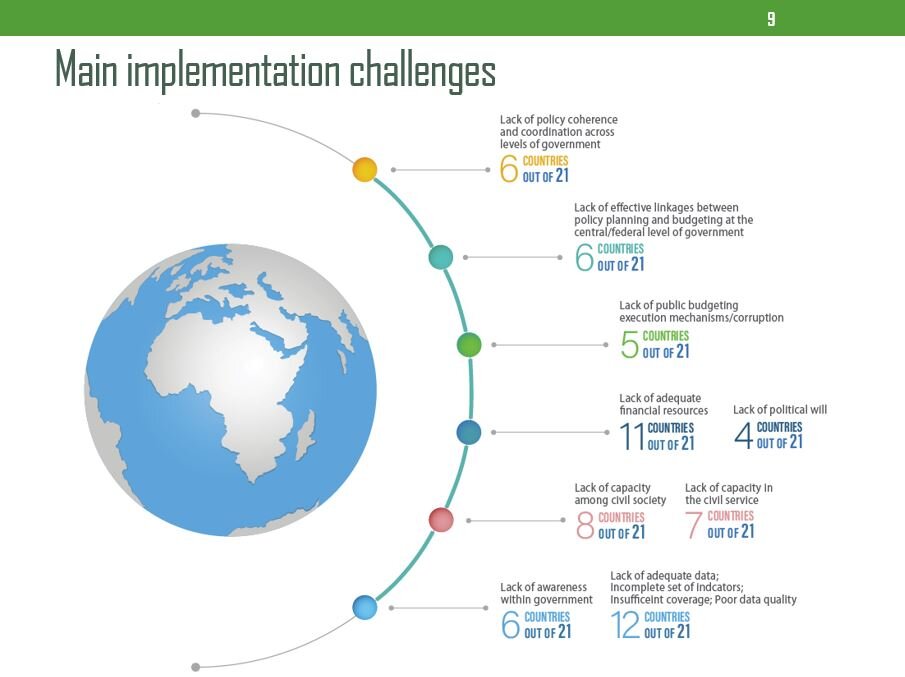
Segun Adaju: What is the role of private investment in accelerating the growth of renewable energy?

Marc Rosen: In some ways it extends on the previous answer. Private investment is interesting. Dealing with companies big and small, they are much more careful because it is their money, they don’t want to put their money out unless there is something beneficial coming back to them, otherwise they can’t answer to their bosses, owners or stakeholders depending on how the structure of the companies is set up. When it comes to helping, private companies are also very good at looking for the beneficial opportunities so that their consent make sense for them and they don’t need to worry about the world or country, they look for their own interests and they often have unique features where certain renewable energies make sense. It might be a type of renewable energy in a particular environment and the private company is suited to say we see an opportunity for us.

Private companies can often look for revenue for at most 2 years for an investment when they are willing and this is not easy looking long term but where they see investment pays off for 5 or 10 years which is often necessary for renewable energy resources that have larger front capital cost. Private companies can decide that we are willing to wait, we see the investment benefit and understand the benefit for the company and they can move quite aggressively on opportunities where they think it is the long-term interests for the company.

Segun Adaju: Dr. Akinsemolu in The Principles of Green and Sustainability Science enumerated emerging renewable energy technologies to include; solar glass, thorium nuclear reactors, cellulosic ethanol, space-based solar power, and fuel-cell electric vehicles. How can these technologies be subsidized, and their scalability increased?

Marc Rosen: I have read Dr. Akinsemolu’s book and I found it actually very fascinating, incredible good book and I enjoyed it very much. She does points out those emerging technologies and some of those are the toughest. I think they need subsidizes, researching development to bring them to commercial potential. All of these have a worth benefit and are worth looking at, the researches is how we look at them and determine whether the negatives kill them or outweigh them in the long run or whether the positive prevail and the negative can be off set, may have been somehow managed. Then we look at scalability, can we commercialize it, make many of them, drive the prices down and have many implementation sites (that is different countries that find them beneficial). And with that I think that subsidizes are needed for renewable energies not infinite but have to be proportional to the benefits of these technologies present and where they don’t plan out, the subsidize from ancient can be cut off but where they have huge benefits we need to create a commercial market. Of course subsidize maybe necessary but that’s a standard way for the government to kick start any new technology that shows benefits for the society.
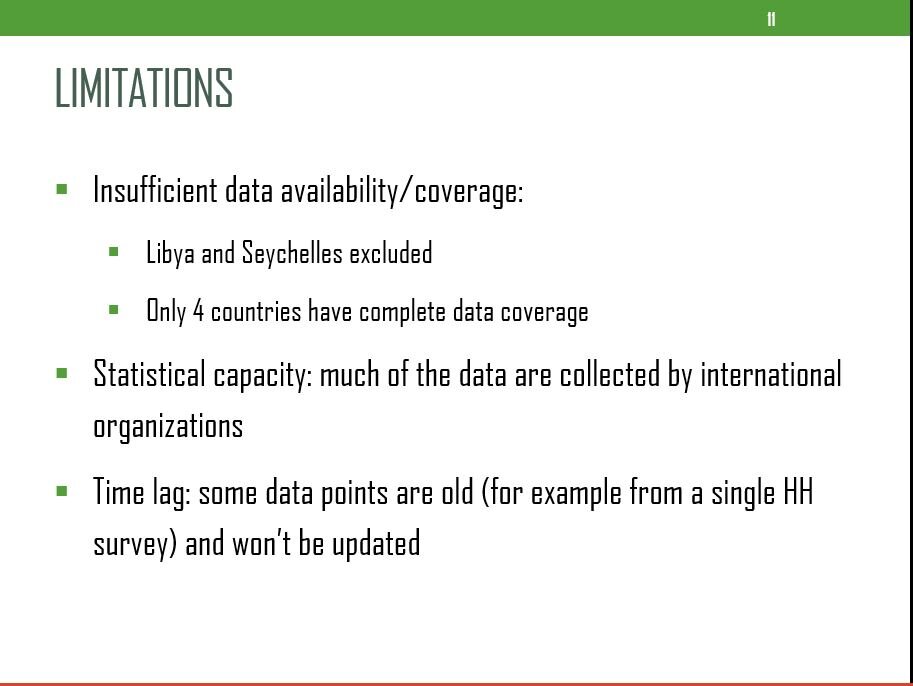
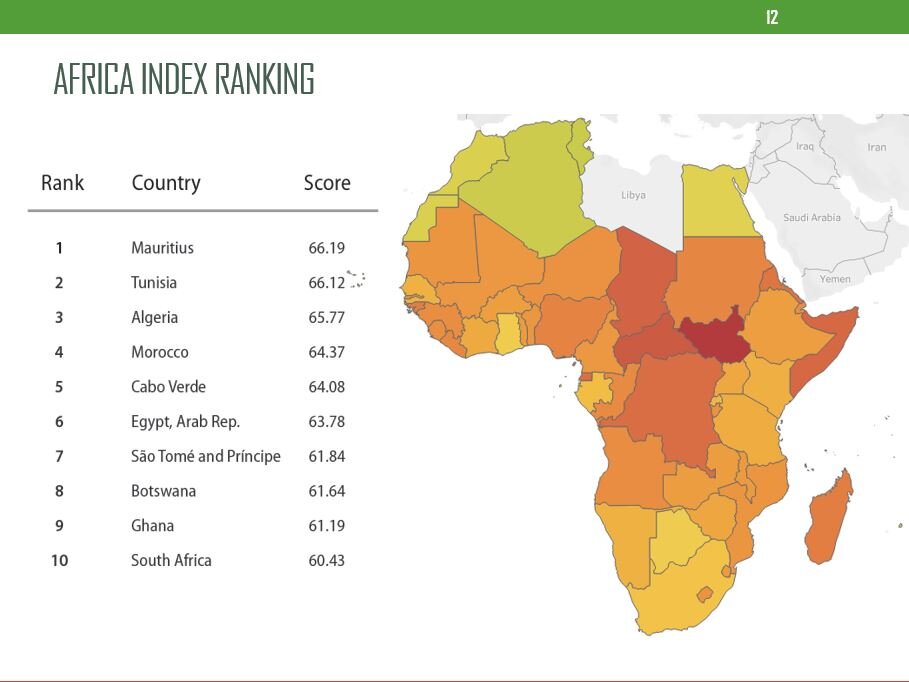

Quote

Marc Rosen-quote-2-twitter.jpg
When it comes to energy, there is no perfect solution,if there was… we would have taken advantage of it and everybody would have been using it 100%...
— Marc Rosen
When it comes to helping, private companies are also very good at looking for the beneficial opportunities..,
— Marc Rosen

FURTHER READING

S K Sansaniwal, K Pal, Marc Rosen, S K Tyagi. (2017). Recent advances in the development of biomass gasification technology: A comprehensive review. Renewable and Sustainable Energy Reviews

Marc Rosen. (2012). Exergy: energy, environment and sustainable development. Newnes

Marc Rosen, I Dincer, M Kanoglu. (2008). Role of exergy in increasing efficiency and sustainability and reducing environmental impact. Energy policy


REGISTER FOR THE NEXT GREEN ROOM

Walid Machrouh on World Environment Day, 2020: What Is the Role of the Youths in Achieving Sustainable Development


Summary of the Event

The event kicked off at 7am GMT with a morning yoga video performed by Adriene.The Virtual Symposium hosted over 25 renowned sustainability leaders, environmentalists, researchers, specialists on health, botanic conservation, resource management sustainable agriculture and building from around the world. Speaker such as Jeffrey Sachs, Adenike Akinsemolu, Marc Rosen, amongst others share their insights on our path towards sustainable development.


LISTEN TO PODCAST


ABOUT THE SPEAKER

Walid Machrouh is a Youth activist, social entrepreneur, and mind challenger. He's particularly focusing his efforts in enabling creative thinking, entrepreneurship, and innovation for the common social good.

Walid Machrouh is a Youth activist, social entrepreneur, and mind challenger. He's particularly focusing his efforts in enabling creative thinking, entrepreneurship, and innovation for the common social good.

Read full bio

ABOUT THE MODERATOR

S. Duygu Sever is a passionate researcher who works on the intertwined relationship between energy politics, sustainability and human security. She is a PhD Candidate in Political Science and International Relations at Koç University, Turkey.

S. Duygu Sever is a passionate researcher who works on the intertwined relationship between energy politics, sustainability and human security. She is a PhD Candidate in Political Science and International Relations at Koç University, Turkey.

read full bio

Q & A (SELECTED)

Dugyu Sever: Sustainability and the youth…how do you read the relationship between the two? What are the roles of the youth in the green growth and in the transition towards sustainable systems?

Walid Machrouh: I think discussing it is really relevant in the fact that when we talk about sustainability we talk about sustaining resources, opportunities, and something for the future. And talking about youths, they are big components of the society, like people of the age of 30 years old are presently more than 1.8 billion people which is a huge big number and 5, 4, 3, 16 years are the ones who are going to manage the resources. So we should sustain the resources so that they can manage it and also this should be part of their production and first reflection. This is why it is important to match these two topics, sustainable development and the youth. We make a big mistake in thinking it is just good to sensitize young people, to tell them that it’s good to preserve the environment, be responsible towards the society etc. and that makes us now in a supporting mode not in a change maker mood. And after 5 years we expect from them to be the change makers. There is this big contrast that says we are out of the future but they are out of present now and we should learn from the past, have the skills and abilities to analyze the good practices and the bad practices that we had. We keep doing it from the past to the present so that they can build with us together this future and a sustainable future.

Dugyu Sever: What is the knowledge level of the youth with regards to sustainability? How do we fill up the knowledge gap about sustainability among the youth? What institutions and platforms are available to educate the youth on sustainable development? (I merged questions 2and 3 here, I think this would also create a space to talk about all your innovative projects linking sdgs and the youth).

Walid Machrouh: Before the COVID era, I would say that there is only a minority of young people who are interested by this sustainable development and they know what they should do and how they should contribute. Before it’s like they don’t feel that sustainable development is a must to have but only on the state of it’s nice to have. They see it as a luxury thing like having only the basic needs such as food, drinks, having a good place where we can sleep, dreaming about their career, how they can succeed professionally etc. and they forget. Although it is the responsibilities of government, institutions, and schools to give them these big highlights, showcasing the importance of sustainable development. I have worked with so many youth organizations, each year as we support more than 6,000 students, we can see the values, change, progress, the soft care which is the important thing. It’s the soft care because we don’t give them the fire sure resources, an open door but we give them the trust to experiment and to fail. And I think that’s what we should expect from young people If we want them to be included on this reflection and to feel that they are concerned. They should start by trying to experiment why it is important to preserve the natural resources, think about an inclusive ecosystem, and care about prosperity and not having social inequalities. And this reflects to the pandemic, with the pandemic, as a human being we feel all together that we are equal, that we have to manage all the diseases, negative impacts, and if we don’t collaborate together and start by initiating a small initiatives. Subsequently, we as young people create opportunities we got to just assume that what is happening in the world, we just like consume it with no reflection and feedback.

And with the project we are working on with HBQ called Design Post-COVID normal and its idea is to have the participation of young people from 24 countries that they think all together about how they are affected, how they can switch the roles from an affected victim persons to the ones who created and think about the solutions. We are having so many amazing individuals. The UN are also doing a great job by having the youth envoy, the campaign relating to the UN 75 that engaged young people all over the world. Also all the initiatives related to technologies and advanced technologies or to the community resilience, they were initiated by young people in their countries because they want to see something change positively in their communities and that is how we can really build a good connection and the good bridge between young people and sustainable development.


Quotes

walid-quote--twitter.jpg
when we talk about sustainability we talk about sustaining resources, opportunities, and something for the future.
— Walid Machrouh
Before the COVID era, I would say that there is only a minority of young people who are interested by this sustainable development and they know what they should do and how they should contribute.
— Walid Machrouh

FURTHER READING

Bastien, Sheri & Holmarsdottir, Halla. 2017. The Sustainable Development Goals and the Role of Youth-Driven Innovation for Social Change.

K. Murthy, Ranjani. 2017. Sustainable Development Goals and the Youth.


REGISTER FOR THE NEXT GREEN ROOM

Michael Waas on World Environment Day, 2020: Integrated Waste Management System: Redesigning the way we Manage Waste

Michael Waas the Global Vice President of Brand Partnerships at TerraCycle speaks on Integrated Waste Management System: Redesigning the way we Manage Waste,...

Summary of the Event

The event kicked off at 7am GMT with a morning yoga video performed by Adriene.The Virtual Symposium hosted over 25 renowned sustainability leaders, environmentalists, researchers, specialists on health, botanic conservation, resource management sustainable agriculture and building from around the world. Speaker such as Jeffrey Sachs, Adenike Akinsemolu, Marc Rosen, amongst others share their insights on our path towards sustainable development.


LISTEN TO PODCAST

Audio Block
Double-click here to upload or link to a .mp3. Learn more

ABOUT THE SPEAKER

Michael Waas is the Global Vice President of Brand Partnerships at TerraCycle, an international leader in recycling difficult-to-recycle waste and the circular economy. .

Michael Waas is the Global Vice President of Brand Partnerships at TerraCycle, an international leader in recycling difficult-to-recycle waste and the circular economy. .

Read full bio

ABOUT THE MODERATOR

Amina holds a B.Sc. (Architecture, Ahmadu Bello University, Zaria, an M.Sc. (Environmental Design of Buildings, Cardiff University) and a PhD in Archit-ecture from Newcastle University both in the UK.

Amina holds a B.Sc. (Architecture, Ahmadu Bello University, Zaria, an M.Sc. (Environmental Design of Buildings, Cardiff University) and a PhD in Archit-ecture from Newcastle University both in the UK.

read full bio

Q & A

Amina Batagarawa: According to Dr. Akinsemolu in The Principles of Green and Sustainability Science, challenges of waste management in developing economies are exacerbated by issues of governance. What corrective measures should be taken in these countries by individuals, businesses, and society to check these issues of governance?

Michael Waas: In developed economies there is a highly standardized, formalized waste management sector. In most emerging economies and in most of the world that is an informal sector and so we see communities and waste pickers cohort emerging to fill the void which is important to realize that provides an important waste management function and economic function, and that provides income for many farmers globally. In creating guidelines and governance, it’s crucial to provide safe guards and measures that allow the enfranchisement and the ability to regulate the waste management industry in a way that provides for public and address this public health and safety measures that also acknowledges the critical role that the informal waste economy plays in waste management globally. Recently, 18 months ago, Terracycle Global Foundation was launched which focuses on taking many of the learning that terracycle has gathered over the last 20 years of doing this work and seeks to make them available to emerging economies and communities in the world.

Amina Batagarawa: What policies should be enacted to incentivize the waste management sector as a viable platform for job opportunities?

Michael Waas: There is a great example of legislation that was passed in Brazil some years ago. The National Solid Waste Law that mandated companies to recover through recycling at a percentage of waste compared to the production and it required the important stabilization that are percentage of that volume be collected through collapse which is part of the informal waste economy in Brazil and so in that way this National Waste Law includes the informal sector which is a crucial part of the waste management economy in Brazil as part of the formal Federal Law. I think that is a model that can be used in other regions because it includes an allocation and focuses on including that important sectors while addressing waste issues.     


Quotes

Michael- quote-1-twitter.jpg
what we found truly as waste is a modern invention
— Michael Waas
...throughout the entire history of the natural world, there was no waste because it doesn’t exist in nature the output of every system becomes the input for another.
— Michael Waas

FURTHER READING

Wilson, David & Velis, Costas & Rodic-Wiersma, Ljiljana. (2013). Integrated sustainable waste management in developing countries. Proceedings of the ICE - Waste and Resource Management.

Vidyadhar Durgekar. (2015).Towards Sustainable Waste Management through Technological Innovations, Effective Policy, Supply Chain Integration & Participation. Elsevier.


REGISTER FOR THE NEXT GREEN ROOM

Ruba Hinnawi on World Environment Day, 2020: Transitioning to Green Schools for better Learning Experience

Transitioning to Green Schools for a Better Learning Experience

Summary of the Event

The event kicked off at 7am GMT with a morning yoga video performed by Adriene.The Virtual Symposium hosted over 25 renowned sustainability leaders, environmentalists, researchers, specialists on health, botanic conservation, resource management sustainable agriculture and building from around the world. Speaker such as Jeffrey Sachs, Adenike Akinsemolu, Marc Rosen, amongst others share their insights on our path towards sustainable development.


LISTEN TO PODCAST


ABOUT THE SPEAKER

As a technical Specialist at Qatar Green Building Council, Ruba has managed and prepared a variety of sustainability oriented programs, workshops, guidelines and initiatives to promote sustainability and green practices.

As a technical Specialist at Qatar Green Building Council, Ruba has managed and prepared a variety of sustainability oriented programs, workshops, guidelines and initiatives to promote sustainability and green practices.

Read full bio

ABOUT THE MODERATOR

Olukoya Obafemi is an architect with many years of professional practice in architecture and construction. He obtained his PhD in architectural heritage conservation from Brandenburg Technical University, Germany.

Olukoya Obafemi is an architect with many years of professional practice in architecture and construction. He obtained his PhD in architectural heritage conservation from Brandenburg Technical University, Germany.

read full bio

Q & A (SELECTED)

Olukoya Obafemi: Green schools arose in the wake of achieving sustainability. How can stakeholders make them universal and accessible?

Ruba Hinnawi: We want Green School to be remotely as mentioned and we are open to everyone to participate in transforming any school into a green school. A green school doesn’t have to be designed from the beginning to be a green school. This is a good room and opportunity for every stakeholders to participate in this. So, private company, NGOs, government, anyone can participate in this, they can help a green school to become by corporate social responsibility organization (CSO) doing more to a green school, initiating a new project or helping to influence through funding any initiative the school is launching.

Olukoya Obafemi: Green School promises a holistic learning experience for children and young adults. In what ways does this differ from regular schools that have been a major contributor to both national and global development?

Ruba Hinnawi: There is a big difference between a regular school and a green school because, what we are focusing on is not just increasing the networking in curriculum and relation to environment education. We need to provide hands on activity, we need to engage students, reflect on all what they have studied in the book about the environment and caring about the environment into real time project so that they can see the impact of the activities or of their actions on the environment. And this is the main important difference between regular school and green school.

Olukoya Obafemi: The Principles of Green and Sustainability Science by Dr. Akinsemolu talks about the usage of “community-integrated entrepreneurial learning,” citing the Green School in Bali. How can educators incorporate this learning model to achieve sustainable development?

Ruba Hinnawi: Of course, community has a great role in sustainability. A Green school aim to include everyone in this green journey and disseminate the message to the whole community. It can be of help actually for any sustainable environment current activities. Meaning that the school can help in this for workshops, sessions that allow people to know about being sustainable. They can allow their neighbors or neighborhood to use their recycle bins or could use the school ground in an indirect way to engage the community to be more healthy and more active. The school can be an attracting point of sustainability. To fund a school initiative is another way to engage the community. For instance, a school trying to launch a composting project where the whole neighborhood can utilize and contribute to as it is open to community to try to play a part in the initiative or role in the program. Green School values the connection as the community is part of the school, the school is part of the community and so is a win win relationship.

Rakesh Verma (Audience): How can my school eco-club members participate in lockdown on sustainability as they could when school was open?

Ruba Hinnawi: I should mention and this is very important that what you really need is not just only an environmentally sustainable students but we need this student to disseminate this message back to their family and friends. So, in that way we also want to drive a social impact. This is a great opportunity for students during the lockdown to take all the knowledge, all they’ve learnt and probably achieved at their school back to their homes and implement them. They could start a garden at their homes, start planting, re-growing fruit from fruit-seeds or composting project.


Quotes

Ruba-quote-2-twitter.jpg
Green School gives a great consideration to site connectivity and to nature
— Ruba Hinnawi
There is a big difference between a regular school and a green school.
— Ruba Hinnawi

Top Comments

I believe your Qatar experience in a request to be spread to other countries- Hala Abosotah

FURTHER READING

Gough, Noel & Gough, Annette. (2019).The Green Schools Movement around the World.

Somwaru, L. (2016).The Green School: a sustainable approach towards environmental education: Case study. Braz. J Sci Technol.


REGISTER FOR THE NEXT GREEN ROOM

Samson Ogbole on World Environment Day, 2020: The Role of Agriculture in Sustainable Development

Farmer Ogbole Samson the Lead trainer for Farm lab speaks on The Role of Agriculture in Sustainable Development on World Environment Day Virtual Symposium.

Summary of the Event


LISTEN TO PODCAST


ABOUT THE SPEAKER

Farmer Ogbole Samson is the Lead trainer for Farm lab. Farmer Ogbole Samson has a B.Sc. Biochemistry Igbinedion University; M. Sc. Biochemistry, Ibadan, and a Biochemistry PhD candidate, Federal University of Agriculture, Abeokuta.

Farmer Ogbole Samson is the Lead trainer for Farm lab. Farmer Ogbole Samson has a B.Sc. Biochemistry Igbinedion University; M. Sc. Biochemistry, Ibadan, and a Biochemistry PhD candidate, Federal University of Agriculture, Abeokuta.

Read full bio

ABOUT THE MODERATOR

Nigerian born, American raised Opeyemi ‘Ope’ Awe is a  perpetually curious, globetrotter with a passion for governance and economic development in Nigeria. Ope was awarded the prestigious Posse Scholarship to attend Grinnell College.

Nigerian born, American raised Opeyemi ‘Ope’ Awe is a perpetually curious, globetrotter with a passion for governance and economic development in Nigeria. Ope was awarded the prestigious Posse Scholarship to attend Grinnell College.

read full bio

Q & A (SELECTED)

Opeyemi Awe: Tell us about your journey specifically in Nigeria, what role does seasonality play in food production experience in Nigeria. Also has your experiences being focused in Nigeria or globally?

Samson Ogbole: For seasonality, using tomatoes, the most consumed crop in Nigeria. The price of Tomato is going to crash in a week or two plus buying a basket of tomato for about #4,000-#5,000 because that period s when farmers are able to produce more than enough. Unfortunately, as the price of tomato crashes as farmers produce more than enough but majority of the tomatoes goes to waste. The price of tomato goes back up during October, November, and December that is because of seasonality in production.

The seasonality of food production is one of the major reason why food itself is super expensive. The gap I am trying to fill is having a technology that can produce a crop all year round for the cheapest price of a crop in its season so that the price becomes cheap all year round. However, there is a need to ensure the technology is climate smart in order not to burn the planet while feeding people therefore, winning in one area and loosing in the other areas.

Therefore, there is need to ensure that as the food production  is going on at the same process at the same time it does not have a negative impact on the environment. Balancing technology adoption with profitable is very important with local farmers as they do not want to spend so much money for nothing, which is seen via efficiency and productivity. So farmers are willing to adapt to technology that increases productivity and efficiency.

Opeyemi Awe: What would some of the infrastructure, institution of challenges of working in a place like Nigeria bring about?

Samson Ogbole: Urban and Peri-urban farming has been what we’re trying to push for about 3-4 years now because by having farmers in urban and peri-urban area. Soiless farming (growing crops without the use of soil is one that we’ve been trying to push) such that urban centers will have farm literally in their cities. With that it won’t be necessary to harvest down based on the market you are expecting.

Therefore to a large extent, the issue with transportation is also taken care of. However, we advise farmers to focus on crops that are non-perishable like cocoa, cashew because the values doesn’t depreciate regardless of the time it takes to get to the market. Having a proper dialogue with government requires a successful microscale with data to backup productivity in order to mitigate the problem to bring solutions because no one would want to fix a problem that doesn’t bring money to the table or contribute to the economy.

Opeyemi Awe: How did you end up in agriculture and why it’s important to you?

Samson Ogbole: First I started off with medicine at Madonna University and my passion was to study something that was really tangible. In the course medicine in my 5th year or so, I got in touch with top guys in medicine that said if truly you want to make change, you need to study a course that actually affects people live. Medical Doctors are awesome and great but they are more at the end of the delivery system. You won’t hear something like a medical doctor has discovered this drug or that   drug.

Fortunately for me, my school had issues with accreditation, so it was  easy for me  to switch to biochemistry, so I left Madonna University to Igbinedion, finished up with Biochemisty, During my NYSC year, fortunately I was posted to IITA for my compulsory  one year service. When I got there, I was fortunate to work with Dr Nobert Vamoma, the head of yam improvement for income and food insecurity in West Africa while I was with him, he showed me agriculture from a different perspective.

Opeyemi Awe: What is one challenge that you would like to the community to help you think about and What are you very about this year 2020 and looking forward to professionally and personally? 

Samson Ogbole: The major issue right now is how to translate the message we have into local dialect because of the language barriers so that they can understand.

That’s the fact that when we started soilless farming, people called me wizard, it was abnormal but now it is no longer a question of are you breaking nature? Going against God, it’s much more of how much money can I make. So I have won the fundamental part by moving in their direction.


Quotes

Samson-quote-twitter.jpg
Food Production should not be seasonal because hunger itself is not seasonal.
— Samson Ogbole
One of the ways to ensure that we can drive down the price is to ensure non-seasonality in food production.
— Samson Ogbole

Top Comments

I think the youth need to haer more of this from you Ogbole Samson- Augustina

FURTHER READING

Kalantari, Fatemeh & Nochian, Ashkan & Darkhani, Faiza & Asif, Nayeem. (2020). The Significance of Vertical Farming Concept in ensuring Food Security for High-Density Urban Areas.

Kalantari, Fatemeh & Mohd tahir, Osman & Akbari Joni, Raheleh & Fatemi, Ezaz. (2017). Opportunities and Challenges in Sustainability of Vertical Farming: A Review. Journal of Landscape Ecology.

Samson Ogbole.( 2016). Seed yam production using single node vine from plants in aeroponics.

Sharanaiah Umesha, Honnayakanahalli M.G., Manukumar, Bhadvelu Chandrasekhar. (2016). Sustainable Agriculture and Food Security. Biotechnology for Sustainable Agriculture.


REGISTER FOR THE NEXT GREEN ROOM